Category Archives: Podcast

Auto Added by WPeMatico

The Negativity Fast: How a Simple Practice Can Transform Your Life

The Negativity Fast: How a Simple Practice Can Transform Your Life written by John Jantsch read more at Duct Tape Marketing


The Duct Tape Marketing Podcast with John Jantsch

In this episode of the Duct Tape Marketing Podcast, I interviewed Anthony Iannarino, a renowned expert in B2B sales, bestselling author, and advocate for positivity. With decades of experience generating millions in revenue, Anthony shared insights from his latest book, “The Negativity Fast: Proven Techniques to Increase Positivity, Reduce Fear, and Boost Success.”

Embark on a transformative journey as Anthony breaks down practical strategies to eliminate negativity, increase positivity, and redefine success. Explore the surprising intersection of sales expertise and self-help wisdom as Anthony discusses his unique perspective on personal development.


Key Takeaways

In this insightful episode, Anthony Iannarino, a luminary in B2B sales and bestselling author, unveils the transformative power of his Negativity Fast method. He explores the dynamic relationship between positivity and success, sharing a practical 30-day plan to detox from negativity. Anthony emphasizes the game-changing impact of gratitude, backed by science, on cognitive function and overall well-being. Delve into cognitive behavioral techniques and the A, B, C model for reshaping beliefs and cultivating a resilient mindset. Lastly, discover the profound effects of acts of kindness on personal well-being, as Anthony shares heartwarming stories from his own journey.

This episode serves as a holistic guide for individuals seeking to break free from negativity, enhance their mindset, and achieve unparalleled success.


Questions I ask Anthony Iannarino:

[00:41] Positivity Buffet or Negativity Fast, how best will you describe your approach?

[01:21] How does someone with your experience in Sales find themselves writing a self help book?

[04:53] Explain the relationship between ‘lying to ourselves’ and positivity?

[06:01] What are some of the most fulfilling practices in trying to cultivate positivity?

[07:38] What are some of your morning and evening positivity enhancing rituals ?

[10:39] How do you maintain a balance between the unpleasant things to be aware of and a positive mindset?

[12:19] Do you find it easier to NOT let daily disappointments affect your mood?

[14:44] What advice do you have for someone to begin a negativity fast?

[18:17] Where can people connect with you and obtain a copy of your book?


More About Anthony Iannarino:

Get Your Free AI Prompts To Build A Marketing Strategy:


Like this show? Click on over and give us a review on iTunes, please!

Connect with John Jantsch on LinkedIn


John (00:08): Hello and welcome to another episode of the Duct Tape Marketing Podcast. This is John Jantsch. My guest today is Anthony Iannarino. He is a renowned expert in B2B sales with decades of experience and a track record of generating tens of millions of dollars in revenue. He’s also the bestselling author of five books, including one we’re going to talk about today called The Negativity Fast Proven Techniques to Increase Positivity, reduce Fear, and Boost Success. So Anthony, welcome back to the show.

Anthony (00:39): Thanks for having me back. It’s good to see you again.

John (00:41): So I got a kick out of Seth’s comment on the top that this book actually called the Positivity Buffet. So what gives, is it positivity buffet or is it negativity fast?

Anthony (00:55): It’s negativity fast until Seth says it’s the positivity buffet and then it’s the positivity Buffet. Just one of my favorite people and a great mentor for me. Yeah,

John (01:07): Kind to endorse my first book back in 2007. So he’s been a long time friend and mentor of mine as well. So you’re a sales guy. I mean, can I call you that?

Anthony (01:18): Yeah.

John (01:21): What’s a sales guy doing? Writing. What kind of feels like a self-help book?

Anthony (01:25): It’s a self-help book. And you know what? My friends that put it under sales and selling and management, and I had to ask them to put the self-help on there. So I went to a Barnes and Noble to see if they had it, and they’re like, why is that in business? It should be in personal development. And I’m like, I didn’t have anything to do with it. It’s a publisher, right? And

John (01:44): The

Anthony (01:45): Publisher decided what they were going to do. This has been a passion of me for a long time. I went to college when I was 26 after having two brain surgeries, I decided I should do something with what was left in my brain. So I went to college political science, all you do is argue with people instead of political science. That’s all you do. It’s just constant back and forth. Then I went to law school, which was even more political than school, and I ended up being angry about politics and geopolitics and all the ways I wanted the world to look better than it does right now. And eventually I realized you’re really angry. And I had one of my professors who said, you just have to let go of all this, which is the worst advice ever. How do you just let go? I don’t know how you do it.

(02:37): I’d say it to do it in this book, but I don’t know how to tell you how to do it. And I decided that I was going to do 30 days getting rid of all of the negative sources in my life. So any cable news that’s all gone. Am radio’s gone, everything’s gone. I got rid of all of it. I liked it so much, I did it 60 more days and then I did it 30 more days. And in that last 30 days, I realized not only do you have to get rid of the negative things, those negative sources, but you also have to replace it with something positive. So for me that was Les Brown Zigs, Anthony Robbins, Steven Covey, like anybody who was just positive and future oriented. That’s all I listened to for 30 days. And now I just have never gone back. So I’m now much happier. I’m not political, I’m what I’m calling post political because it’s just hard with all this divisiveness. So I’m not a divisive guy. So I think that the better way to do it is to try not to spend a lot of time with politics.

John (03:42): So I mean, in a lot of ways what you just described there was your fast, right? And that I’m guessing is obviously is what you’re prescribing as a path for many people to at least give a try.

Anthony (03:57): And I have to tell you that there’s 11 chapters before we get to the fast. And most of them I will tell you, is me explaining to you that you make yourself negative. And that’s a hard thing for people to understand. So the complaining that you do, that’s all you. And I wish I would’ve known this earlier when I was doing the research on this book. I cited everything in the book, but if you are a chronic complainer, your hippocampus in your brain will start to shrink and you will not be as good of a thinker as you are and you’ll have trouble solving your own problems. Who knows? That kind of thing. I wish I would’ve known it. It was not in the book, I got it right after that. But it’s us making ourselves angry and unhappy by what we say to ourselves most of the time.

John (04:51): And one of the things to tee another one of those up, you talk about how we lie to ourselves, unpack that idea.

Anthony (04:58): My younger brother is a comedian and he’s always unhappy driving from Ohio to Florida, and then I’ll spend months down there. And he believed that everybody had road rage because they were trying to get in front of him. And people drive poorly in Florida for sure. I know they’re the worst. But one day somebody was trying to cut in front of him and he looked at the guy’s face and he thought, this guy’s too far away from a rest stop and he really needs to get to a rest stop. And I said, now how would you know that? And he goes, it happens to me all the time. And because it’s happened to him now he has the empathy for this other person. And I said, all you did was lie to yourself. You don’t know that guy wasn’t road rage or I don’t know. But he decided that’s what he was going to do. He’s a lot happier. He just lets everybody go. And that was him making himself miserable for 20 years and now just dropping it just like that. I wasn’t prepared to have to put him in my book, but I thought that was a really good addition.

John (06:01): So you talked about how the first few chapters, I think it’s the first 10 or so, talk about the negative things that we do. But then obviously you get into some things like gratitude, I mean habits or practices that you talked about eliminating, but then filling. So what are some of the best filling, if you will, practices

Anthony (06:22): Gratitude’s the top of the heap? I mean, there’s nothing even like it. In fact, as I was writing this book and I was studying gratitude, the claims on gratitude are so many and so outrageous. You look at it and you go, it can’t be true. You will have better cognitive functioning, you will have less inflammation in your body. You will have less of a risk of having a heart attack. You will have less anxiety, stress, depression, all of these things. And you’re reading all these and you’re going, how much work does gratitude do? It does so much work and you don’t know that until you start to look at all the claims. And so I decided, well, I will cite that. And then my editor said, no, cite everything. So every claim in the book is backed by science. I read all the papers. I did my best to distill it and make it a fun book that you’re going to enjoy even though it’s got some science in it, but it’s not a science book. So it’s not a hard book to read. And everything in it is really practical and tactical. I think that’s what I want to write. I want to write something that you can read it and say, I could do that and that would help most people feel better.

John (07:38): So I think a lot of what you’re talking about, I’ve used the word habit, I think already you get into habits, better habits as opposed to the bad habits of waking up and reading CN or whatever. So do you have some rituals or habits yourself that you pretty much say every morning or every evening, I’m going to do X, Y, Z?

Anthony (07:58): Yeah, I’ll tell you the best one on gratitude. So for anybody that’s listening to this and you want to have less stress, less anxiety, and to feel a lot better, this comes from the person that we call the father of positive psychology. So Martin Seligman and Seligman is a wonderful writer. And one thing in the book called Hope Circuit, which is a really good book, he describes a study that they did and they called it Three Blessings and Three Blessings. All you have to do is at the end of your day, don’t do the gratitude journal in the morning. You do it at the end of the day and you write down the three good things that happened to you and why those things went well for you. And you do that according to Seligman for two weeks and for at least six months people have less anxiety, less stress, and less depression.

(08:52): He says in the Hope Circuit that he believes that this is more powerful than pharmaceuticals or psychoanalysis and these are the things that are not taught to us. I mean, you probably just heard this three blessings for the first time would’ve been nice to know this maybe in seventh grade or eighth grade or when you’re a teenager and you’re really grouchy all the time, you’re really negative through that period of time. But I’ve done this for a long time and I will say, I’ll give you one piece of advice. If you want to do this, get a journal and write it down. Write down the three blessings every single day, whatever went good. And then in about a month go back and just start reading those entries and you’ll start to think a lot of good things happen to me, like every day good things happen to me. And because you’re writing it down and you’ve got this record of having all these good things happen, it can start changing how you feel about things in other ways.

John (09:49): And I think that’s particularly, it’s powerful for everyone, but I know a lot of entrepreneurs beat themselves up because they haven’t achieved where they want to go. And I think a lot of that stress is just what you mentioned. They don’t turn around and go, but look how far we’ve come. And I think that what you’re talking about is celebrating the little wins because unfortunately, the only thing that seems to stick with us is how I failed today. Right. So great practice. You talked about some of the things you kept out of your life, you learned some things that I’m on social media only because it’s a channel for marketing for us, but it’s a terrible, I mean it can cause a lot of negativity. You mentioned politics, I mean, heaven forbid that it just seems like the last 10 years have just gotten worse and worse. I mean, how do we keep away from some of the stuff that, I mean there’s nothing wrong with, or I should say there are some potential positive things about being informed. So how do you balance that? You’re not saying stick your head in the sand, but I’m going to ignore all of that stuff out there when there is actually a level of news that maybe you should be aware of.

Anthony (11:03): I like The Economist because it’s not trying to divide Americans into two tribes. So I like that because British and they’re not so divisive as we are here. Anyway, the other thing I would tell you is that my wife is always unhappy with me because she’ll say, did you see that story today? And I didn’t get to see it. And when people say, how do you just leave all that stuff out? And what do you know when something happens? How are you going to know? All the negative people are going to tell you, you don’t have to wait very long. They’ll tell you something bad happened though. They can’t wait to tell you that. And most of those things I can’t do anything about. And I have an awareness, but I don’t have an attachment to it. So being aware is one thing being attached, and that’s a very different sort of problem for people to have.

John (11:54): You found that over time, because I think some of the practices you’re talking about, I feel like they’re cumulative. Would you say that’s somewhat true that you start practicing gratitude and things, it just starts working on other parts of you, but let’s face it, that big sale that you thought you were going to get didn’t come through kind of a bummer moment of the day. Do you find that you have more ability to maybe snap back out of that kind of change your state instead of letting it dictate your day?

Anthony (12:22): It’s either a loss or it’s a lesson. I mean, so that’s what a sales guy would say, but I’m desensitized to the word no or to losing a deal because after you do it for 37 years, you are pretty desensitized. So I would tell you over time, if you just look at a loss and you say, what did I learn? How could it make me more effective in the future? It’s a hundred percent worth trying to do with that. Instead of saying, well, I lost this and there’s no way for her to cover, I’ve lost deals plenty of times. I’ll tell you, it took me seven years to win PetSmart, seven years. And I had my peers saying, why don’t you give up? And I’m like, because I don’t get a commission check. If I give up, I have to keep going. The woman who kept me out let me in one day, and I was talking to the senior leader and I had seven years with 2 million a year from PetSmart. So just keep playing the game. If you’re an entrepreneur, I mean, I know that you’ve seen all of the cartoons of the path to success as an entrepreneur. It’s all over the map, right? So you get some progress, you go back. That’s just how any good pursuit actually goes. It doesn’t ever just go a straight line, you won. Nope. That’s rare, right? I would say,

John (13:45): Oh, absolutely. In fact, I’ve been at this game for a long time and one of the things you realize over time, and I think that’s why entrepreneurs are kind of a strange breed of resilience over time, I think you start to realize, you start seeing, I didn’t get that deal because I was meant to get this deal. And actually that deal would’ve been a bad deal. I think you start seeing examples of that happening and go, oh, maybe I shouldn’t sweat what I thought was a loss at the moment because something’s going to happen. But that takes time, that takes experience

Anthony (14:16): Of those clients that you’re describing. I know those. And when they say we might not be a good fit for each other, you’re like, how fast can I get out of here? I’m ready to go now.

John (14:27): Alright, so because it’s, and maybe it’s the last chapter, let me double check, but I think it’s the last chapter, the fast itself for the last bit that we have left here, kind of if somebody is listening and thinks, okay, obviously we want them to get the book so they get the full detail, but to give us a little taste of how somebody would get started, what a negativity fast would look like that you describe in

Anthony (14:50): That chapter, in that final chapter, what I would want you to do is to start to say, what are the kinds of things that trigger me? And you’re really triggering yourself when you do that, but it’s worth knowing that this isn’t something that bothers me. I’m too connected to politics or whatever else they’re connected to that’s negative. I would say you make a list of those things. I will tell you though, don’t start with people. That’s exactly the wrong way to do this. The people come at the end, which people do I need to spend less time with? But don’t do that at the beginning because you want to take care of the things that are really about you and what you do. And I’ll just give you a quick story. Albert Ellis is the guy that created CB Cognitive Behavioral Therapy, very powerful stuff. I actually did it at one time to help get rid of some of my anger and it worked perfectly.

(15:46): But Albert Ellison would say that you have an A, B and a C. The A is the activating event, and then the B is your belief about it. And then the C is the consequences on how you respond to that. And my brother, all they do is they switch the belief and if you switch the belief that it’s not road rage, that person’s trying to get a prescription home to their young sick kid or something. And you can lie to yourself like that all the time. You’re mostly lying to yourself about the triggers. Anyway, so you might as well get around that. And if I could say just one other thing that I would want to share. The thing that seems to be the most popular in this book is my love for being a bail bondsman for dogs. So I go to the Humane Society at the end of every year, and I buy all the dogs.

(16:37): That’s normally about nine dogs. I do not take these dogs home. I would be divorced immediately if I brought another dog into the house. They take the money and they’re happy. And the last time I was there, they said, would you just let us keep the money because we’re going to have some difficult dogs that need training? I said, you could use the money however you want. They said, well, you take a picture with this pit bull, big pit bull. Very not aggressive in a mean way, but just really wanted attention. So I took a picture with them and they put it on their website and it went on to Facebook. And some woman read this that said, this angel came in and bought these dogs. I didn’t think of it like that, but I thought was a bond Spellman. So the woman came in the next day and she bought all of the cats.

(17:24): I don’t know, that’s like 46,000 cats in a humane society. She bought all of them. And then two of my friends saw this and they said, you mean we can buy the dogs and we don’t have to take ’em? And I’m like, of course you can just go in. And so they went in and bought four or more dogs, just gave them the money. If you really want to feel good, if you’re really negative, if you really just don’t feel good, go do something for somebody else because you will disappear and you will be there just for that person and you’ll feel so good. It’s called Helpers High. Don’t even need a medical card to do it. You could just go out and help somebody, a homeless person, go to a pantry, do whatever you could do, but that will make you feel so much better just like this. You can’t be in both of those states at the same time.

John (18:12): Yeah. Awesome. Well, Anthony, it was great catching up with you and hearing about the negativity fast. Is there anywhere you’d invite somebody to connect with you or learn more about the book itself?

Anthony (18:22): LinkedIn’s a good place to connect with me. And then I think if you go to the negativityfast.com, that’ll take you to a page and you can also find it on Amazon and Barnes and Noble.

John (18:34): Awesome. Well, great book. Appreciate you taking a few moments to stop by, and hopefully we’ll run into you one of these days out there on the road.

Service Revolution: The Art of Turning Expertise into Scalable Products

Service Revolution: The Art of Turning Expertise into Scalable Products written by John Jantsch read more at Duct Tape Marketing

Marketing Podcast with John Jantsch

In this episode of the Duct Tape Marketing Podcast, I  unravel the intricacies of service marketing and dive into a groundbreaking approach that transforms expertise into scalable products. The discussion revolves around the revolutionary concept of productizing services and its profound impact on agency growth.

Key Takeaways:

Discover the game-changing strategy of productizing services, revolutionizing scalability, and enhancing profitability. From simplifying communication and shortening sales cycles to delivering a superior customer experience, learn how to navigate challenges and unlock unparalleled success in your service business.

In this episode, you’ll learn:

  • The evolution of service marketing
  • How to scale with clarity
  • How to achieve profitability beyond expectations
  • The customer-centric approach
  • How to overcome diverse challenges

Join me in this episode as we embark on a journey to revolutionize service marketing, unlocking the potential to turn expertise into scalable products. Listen now to gain a competitive edge and elevate your service business to new heights.


Get Your Free AI Prompts To Build A Marketing Strategy:

Like this show? Click on over and give us a review on iTunes, please!

Connect with John Jantsch on LinkedIn


John (00:03): That’s right. It’s just me. I got a topic I want to talk about. This is a topic that maybe I haven’t talked so directly about, but in a lot of ways it’s been a big part of my work. It’s something that I’ve talked about for years, but I want to hit it head on today. And that’s if you are a service provider. I want to talk about the idea of productizing your service. So what do I mean by that? What I mean is creating service offerings that you can describe, explain price deliver almost as though they were a product I have for years delivered something we call Strategy First, and it is essentially our approach to developing strategy. So it is a service that we offer to business owners and we have dialed that in so thoroughly. Frankly, it was actually the genesis of Duct Tape Marketing of me creating the approach to Duct Tape Marketing was that I was a little frustrated going out and essentially delivering my marketing services in not a one-off fashion, but in a custom fashion almost whatever somebody needed.

(01:15): That’s what we designed a proposal around. That’s what we delivered. That’s how I priced it. And a lot of agencies do that. You can build a nice business doing that. But I was frustrated because I just felt like I was working more and making less as I grew that. So I created this productized approach. I called a marketing system, and we all the way down to exactly what happens when a client signs on to all the way through the way they’re onboarded. Everything we deliver in the final is really packaged up in a way that I can call it a product. That’s why we gave it a brand name. So that’s the idea behind a productized service. Now, I used an example of marketing, frankly. Accounting can have productized services, legal services can be productized, any kind of consulting can and in my view should be productized.

(02:07): There are some, I think some glaring benefits to why you might want to do this. The first one I started talking about is scalability. It is very difficult to scale an offering that is made up every time that is new for every customer. That is, and here’s my favorite word, bespoke. It’s very difficult to scale that because in a lot of ways it takes the enormous experience and let’s call it brainpower of the person who can be that nimble and deliver every single time. Now, there’s probably a place out there in the world for completely customized versions of service delivery, and in fact, we do it in the right circumstances. But for the most part, if you want to scale a service business, you have to create something that is very easy to message, that is very easy to explain. And frankly, when it comes to scale is easy to actually delegate and hire people and to train people how to deliver that package.

(03:13): And that’s much harder to do if essentially everybody’s making it up every single time they go out and work with a new client. So to me, that scalability is probably the leading benefit of doing this. I already mentioned this a little bit, but the sales process gets so much simpler Instead of, okay, what do you need? Okay, we’ll put together a proposal. Okay, we’ll refine their proposal. We’ll make it fit to the budget that you have. When you’re able to walk in and say, here’s what I’m going to do, here’s what you’re going to do. Here are the results we hope to get from this approach. And by the way, here’s what it costs. Shortens the sales cycle, which to me is a great thing. You get a yes or a no, but it also makes it very easy for you to explain exactly what somebody’s getting.

(04:01): I mean, that’s one of the most valuable things you can have in a sailing situation is something that’s very simple to explain. Somebody can get it. They can see on one sheet of paper, here’s what we’re going to do. It also will lead to much higher profit margins. And one of the reasons for that is that when you’re constantly having to figure out how to serve a client, have to write proposals, how to create whatever the deliverable calls for based on the scope of their proposal, there’s a lot of learning that goes into that. And if you can create a repeatable process, you will get better at delivering value because you’ve done it before. You will get faster at delivering value because you’ve done it many times now. And consequently, those two things alone will lead to much higher profitability. But the final piece that I think a lot of people underestimate is when you’ve got something that you can actually show somebody, here’s a proven process to get you results, it is very simple to explain to them exactly what they’re going to get.

(05:15): You can also charge a premium. So you’ve got really that profitability working two ways for you. You can generally charge more for a name branded service offering that you can now deliver very affordably or much quicker, or you can delegate to work to people that are at a much less experienced than you. It just leads to a much more profitable, and here’s the final reason to do it. And frankly, if all those other reasons weren’t enough, the final benefit or reason for doing this is that it’s a better customer experience. I know that everybody, I mean, everybody we talk to, it’s like, no, I want want something that’s tailored just to my needs. Well, on the surface, that sounds really great, but you rather have something that I’ve actually worked on for years and refined and evolved and seeing what works and seeing what doesn’t work.

(06:12): I can deliver. You can deliver much greater value by having a proven process. Now it takes time to prove that, to refine it. I mean, we’ve been doing this for 25 years and it’s evolved every single year for us as well. So to me, the product itself, because we have focused on here’s what you get, here’s what it costs, has gotten much, much better. Now, are there challenges in productizing? Some of what you’ll run up against is just what I mentioned. People want a custom approach. They don’t want cookie cutter. They feel like if it’s not created just for them that there’s something less. And so it really becomes important for you to not only create that productized approach, but be able to communicate very effectively the value, what’s in it for them. I think when people start to realize that by creating a repeatable system, you give people not only the option of getting a better end service, but you also get far better at delivering it.

(07:18): There’s just so much more value in it for them. So I think that the messaging really has to be about that is a lot of times people focus on, well, we can deliver this better, or we just get, we’ve got this down so that we have a very fulfillment engine that is very productized. It’s very systemized. But the key of course, is helping that buyer, that customer, that client understand why that is so much more valuable to them. So how do you get started doing something like this? Because one of the challenges I think a lot of people have in productizing, if you will, is that they’re serving such a diverse market. It’s very hard to actually create one or two or three things, packages, products, if you will, for all of the services that they might be able to offer. So it does help if you can narrow your focus first off.

(08:10): So I’m not necessarily saying a niche, maybe it is for you, but at the very least, who are the top 20% of your customers? What do they need today? What are the problems that you’re solving for them? Could you actually create or think in terms of creating a package just for them? You’ve got to standardize the offering. It’s not enough to just say, oh, this is this and it costs this. You’ve got to work on even the promotional materials need to standardize. Here’s what you get. Here are the benefits of this. Here’s why this approach works. So just even creating marketing materials for it, you have to standardize, but then you have to start writing SOPs. You have to actually map out, whether you call it a fulfillment engine or whatever you call it, you have to map out when this happens, then this happens.

(09:00): So at the global level, you have to at least have the little boxes and arrows that point to that. But then each one of those boxes, particularly critical steps, you need to maybe create an entire training process or SOP around. And I know that this can sound like, well, it is time consuming and it sounds like it because it’s, but ultimately, if you spend several weeks even creating this repeatable system that then can serve you for years and that you can delegate and you can scale your business and you can be more profitable, probably the best couple of weeks that you’ve ever spent in terms of working on your business after you productize it, then it’s field testing. I mean, you could sit in a lab all day long and create what you think is the most brilliant approach to delivering your services in a productized manner.

(09:51): Just go out there and start doing it. Start telling people, maybe give ’em option A, B, and C, but this is what I’m going to do. This is what you’re going to do. Here are the results we hope to get, and here’s what it costs. Do you want it or not? And start fulfilling it. You’re not going to refine this thing until you’ve done it dozens of times. And that just takes practice. It takes experimenting, it takes trial and error. It takes listening to the feedback that you get from your customers. It takes really evaluating, are you getting them the result? Are you getting them a better result than they could have gotten somewhere else? So how do you market this productized service? Well, if you think about it, it is the same as marketing a product. In a lot of ways. People have to understand what it is.

(10:35): They have to understand what’s in it for them. It has to address a problem that they’re trying to solve. I mean, those are all things that really any good marketing does. But I think it’s probably important for you if you’re going to productize. It’s very important for you to, I think it’s very helpful if you give things a name, give it a brand, create collateral around it that shows somebody exactly what they are going to get, and then focus a great deal of your marketing. It’s the same for any professional services on trust building, on explaining not just the components, not just selling the components. In fact, in some ways, the productized approach doesn’t really even become an issue until somebody starts saying, how will this work for me? And then you’re able to give them the very specific way it could work for them.

(11:21): But all of your marketing education, even though you have a productized approach, is going to be around educating on the problems that this productized approach solves. I always make the joke that I sell a marketing strategy. Nobody ever wakes up and says, I’m going to go buy some marketing strategy today. But they do wake up and wonder why they’re competing on price. They do wake up and wonder why they can’t fill their pipeline. They do wake up and wonder why their competitors are always ranking ahead of them in search engines. And to a large degree, those are all problems that an effective marketing strategy can solve. So even though we’re productizing the service offerings as a way to scale, as a way to be more profitable, as a way to more easily help people understand the value they’re getting, we still have to build trust.

(12:11): We still have to create a customer journey that turns us into the trusted advisor and the productized approach happens just to be a delivery mechanism for how we get them, the results and how we communicate the results, and frankly, how we differentiate. So many people are in the marketing world, I’m sure in your whatever service world that you are in, so many people are just selling the idea of the week, are selling, the tactic of the week are going to clients and saying, what do you need? Sure, we can do that. And so this proven process driven way to deliver value in a way that’s very easy to understand is also a great different in a world of service offerings. Alright, that’s it for today. Always love to hear your comments and feedback. And if you’re on one of those services like iTunes or Spotify, make sure that you give us a review, a glowing review, of course. But we hope you like the show and hopefully we’ll run into you one of these days out there on the road.

Mastering Marketing Strategy: Simplify Your Success with These 5 Key Questions

Mastering Marketing Strategy: Simplify Your Success with These 5 Key Questions written by John Jantsch read more at Duct Tape Marketing

Marketing Podcast with John Jantsch

In this episode of the Duct Tape Marketing Podcast, I dive into the complexities of marketing strategy. I break down marketing strategy into five essential questions that you need to be able to answer if you want to be effective in your marketing efforts. This approach helps you focus on what’s important, saving time and improving effectiveness.

Key Takeaways:

From understanding the need for a clear objective in guiding your marketing, to choosing the right platforms that resonate with your ideal client, this episode emphasizes the importance of focused efforts.

An effective plan that aligns with your motivations and meets the needs of your ideal client is key. Developing the necessary capabilities is vital for successful execution, and measuring success with defined KPIs fosters continuous improvement.

In this episode, you’ll learn:

  • The real essence of a marketing strategy.
  • Five key questions to make your strategy more effective.
  • Tips to align your marketing with your business goals.
  • How to choose marketing actions that yield better results.

Join me in this episode as we clear the confusion in marketing by answering five critical questions, setting the stage for unmatched success in your marketing strategy.


Get Your Free AI Prompts To Build A Marketing Strategy:

Like this show? Click on over and give us a review on iTunes, please!

Connect with John Jantsch on LinkedIn


John (00:08): Hello and welcome to another episode of the Duct Tape Marketing Podcast. This is John Jantsch, no guest. Today. I’m going to do a solo show. So the whole basis of this show is the large confusion that I have seen around this idea of marketing strategy. What is a marketing strategy? This is, boy, I tell you, if I would ask 10 people, I would get 10 different definitions. If I were to ask Google, I’d get 10 different definitions. I think for a lot of people, this is a needlessly complex idea, but it’s also a terribly misunderstood idea. So today what I want to do is simplify this idea by boiling the entire thing down to answering five questions. Now, I’m not saying each of the answers to these questions are just going to pop off your tongue that you’re going to know exactly what these are, but these are the questions you need to be able to answer.

(01:12): And once you can, they become really the guiding light for your entire business activity or certainly your marketing activity. In fact, one of the benefits of having a solid marketing strategy around these five questions is that it really helps filter out what you shouldn’t be doing. And I think for a lot of business owners that can actually be more stressful than trying to decide what to do. So this gives you the filter to say yes to this, no to this. Is this helping us answer one of our questions? No. Is this helping us answer one of our questions? Yes, than let’s add that. And I think that that’s for a lot of folks. I think a lot of the confusion around this idea of marketing strategy is that there’s so many things that can be done that maybe you want to do, but what a good solid marketing strategy allows you to do is focus on what should be done in order for you to go where you’re trying to go.

(02:13): So let’s start with the questions. And this I think is a, you could make this, and there are plenty of folks out there pitching the idea of a one page this and a one page that you can make this a one page document if you like. So I suggest if you’re not driving in your car or running on a treadmill or something while you’re listening to this, I suggest that you make note of these five questions because I think that they can be a way for you to start maybe understanding what a marketing strategy is, but further how you would actually use it in your business. Because again, it’s one thing to define something in academic terms and quite a different thing to create a tool that you can actually use and build upon. So here we go. First question, this is the biggie. What is our objective?

(03:04): I mean, what is our purpose? What’s our motivating aspiration? What are we trying to do? What are we trying to win? I know that was more than one question, but some variation of that. The answer to that idea, here’s how we intend to compete, here’s how we intend to really grab market share. I mean, that motivating aspiration has to be a big part of where you start. And I will tell you from a down in the weeds detail standpoint, this comes across from messaging. We spend a significant amount of time with the folks that we work with working on what I call a core message. But a core message is not your nice to have thing you put on your business card thing that you put on the back of your invoices. A core message is your motivating aspiration. Here is how we intend to compete.

(03:54): Here is how we want to be seen in the market. We want to be seen as the high price leader. We want to be seen as the incredible experience. We want to be seen as the expensive but worth it. I mean, those are the motivating aspirations that come out of a core message that clearly communicates how you intend to compete. So that’s number one. Number two, where do we need to be seen? This I think is really tough for a lot of folks because there’s a lot of places you can be seen today. In fact, there’s probably been a new one introduced since I’ve been recording this. And I think that that’s, of course the problem is that we scatter ourselves everywhere because we don’t want to be missed on TikTok or we don’t want to be missed on this platform or whatever the new platform of the day is.

(04:44): And consequently, we spread ourselves so thin that we can’t really make any impact on any single channel. So where do we need to be seen is largely maybe completely driven by who do we need to see us? Who is our ideal client? We understand clearly who makes an ideal client for our business, who does not. Some people call it personas, whatever you want to call it, understanding the exact person or business that you need to attract the exact problem that you solve for that very specific business. That goes largely into this. Where do we need to be seen? So I like to call this one platform. This is really driven by your channels that you say, look, our ideal client is here, and so we need to dominate. We need to have so much energy around these, maybe two or three, maybe it’s content, maybe it’s SEL, maybe it’s LinkedIn, but we’re going to focus a great deal of our efforts.

(05:49): Whatever those efforts are on those channels, on that platform, that’s going to be our platform. So that again, does a lot weeding out where you don’t need to be seen. And sometimes you might need to be seen there, but the reality is you, I mean, you can’t make an impact. You don’t have enough resources. You have time constraints, you have budget constraints. So you want to focus on where can we make the greatest impact based on what we have? That’s our platform. Alright? Now that we have, I mean we’ve got message, we’ve got ideal client, we’ve got kind of the channels that we’re going to go into. Now it’s simply a matter of let’s create the plan. What tactics, systems, campaigns do we need to put in place that we believe will allow us to be seen and to communicate the message of the problem that we solve for a very specific person in a very specific way.

(06:45): So that’s number three. What tactic systems and campaigns must be in place. Some people call that a marketing plan, but so many people skip straight to that. What tactics do we need and miss this? What’s our objective? Where do we need to be seen and by whom? And those are core elements that come into deciding then what tactics that you need. Once we have those, and again, this is we’re trying to attract, maybe it’s a new message for us, maybe it’s new positioning that you’ve developed. Maybe you’re narrowed your focus on an ideal client. And now we’ve come up with the tactics that we believe are the best case. Like our plan is we’re going to dominate content. SEO, we’re going to dominate on Facebook ads, maybe driving people to that content. I mean, that’s what comes around the plan. But now we need to look back or step back and say, well, what new capabilities are needed for us to execute this plan at the highest level?

(07:47): Doesn’t mean you have to do it today, but you have to realize what are we missing? It might be people, some people generate a whole bunch of leads and realize we don’t have a great sales process, or we don’t have a sales process at all, or we don’t have a sales team at all. So if you are going to execute at the highest level on your plan, what people, what new offer, what new product perhaps, what constraints do we actually need to get rid of in many cases to execute on a marketing plan, the founder of the business needs to get out of certain aspects of what they’re doing. So it might be, if we’re going to do a new marketing plan, we’re going to grow this business and scale this business. Maybe a constraint is that the founder or the CEO or whoever you have in charge of marketing is doing too many admin type of tasks.

(08:37): So those may not on surface feel like marketing tactics, but in many cases, if we’re going to execute on this plan, the process for doing so, that’s number four. The process needs to be set up and planned. It may not happen today, but you need to say, look, our next hire needs to be X if we’re going to execute on this plan, or we need a better offer, or we need new services and products if we’re going to execute on this plan. So there is a linear order to the answering these questions, but also then addressing them. And then number four, how will we win? How do we know we’re winning? What does winning look like, right? So our objective, our motivating aspiration was to be X. How will we know if we’re making progress in that? So simply code for metrics. So we have to measure, we have to first identify what if we’re going to meet our objective, what are the milestones?

(09:40): What are the key performance indicators that are going to suggest we’re actually making progress? And certainly, what does winning maybe in the one year, three year look like? It might be revenue, might be new, customers might be profit, might be, heck, it might be reviews, it might be referrals. I mean, there can be many, many things that become a part of that measurement of winning, but we have to actually identify them and then start tracking them and start watching them. You’ve all heard the cliches, what get measured gets improved or something along those lines. It’s true. I’ve seen it over the years in my business when I didn’t measure. Sometimes good things happen, sometimes bad things happen. When I did measure, we always, if something bad was happening, if something wasn’t working, we always had the ability to jump in and say, why? Where’s the constraint?

(10:33): What’s broken? What’s not working? Where are people getting stuck? And those are things that clearly then allow you to build some momentum. So lemme just recap, what is our objective? What’s our motivating aspiration? That to me comes from message. Where do we need to be seen? What’s our platform in a large degree that is driven by who are we trying to attract? Who is our ideal client? What tactics, systems, campaigns, once we put in place, that essentially is the plan. Again, so many people skip to that, but that’s step number three. What new capabilities are needed? That’s the process. So people offer product solving constraints. And then finally, how will we win? What does winning look like? That’s the metrics. So there you go. Answer those five questions, message, platform, plan, process, metrics, and you’ve got a solid marketing strategy that you can then go ahead and execute on that plan at the highest level. Hopefully this was helpful. I’d love to hear any of your thoughts always on this idea of marketing strategy. Just remember strategy before tactics and you will win.

From Stress to Success: The Groundbreaking Strategies for Optimal Health and Performance

From Stress to Success: The Groundbreaking Strategies for Optimal Health and Performance written by John Jantsch read more at Duct Tape Marketing

The Duct Tape Marketing Podcast with John Jantsch

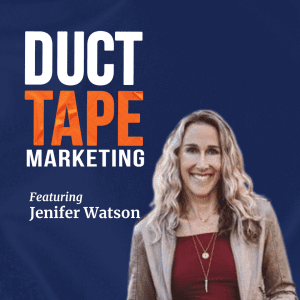
In this episode of the Duct Tape Marketing Podcast, I interviewed Jennifer Watson, a healer, high-performance coach, and breakthrough speaker. As the founder of Jennifer Watson Leadership, she is on a mission to help leaders heal and accelerate their deeper purpose of impact through vital wellness, leadership genius, and potent speaking.

Embark on a journey from stress to success as Jennifer shares groundbreaking strategies for optimal health and performance in leadership. Explore the transformative power of morning rituals, focusing on the vital connection between nature, breath, and movement.

Key Takeaways

In this illuminating episode, Jennifer Watson, a seasoned healer and high-performance coach, shares transformative insights to guide leaders from stress to success. Emphasizing the pivotal role of morning rituals, she unveils a 3-step formula for leadership mastery, emphasizing sunlight exposure and intentional breathwork. Watson explores the vital connection between nature, breath, and movement, advocating for the transformative power of outdoor exposure and mindful practices. Through a practical guide, listeners gain actionable strategies for morning transformation, delving into the science-backed rituals contributing to optimal health. Watson’s morning routine serves as an alchemical blueprint, merging stress reduction, mindset mastery, and physical well-being for holistic leadership excellence. From stress reduction strategies to fostering a people-centric culture, Jennifer Watson’s expertise provides a comprehensive roadmap for leaders seeking to navigate the complexities of work and creativity while achieving peak performance and optimal health.

Jennifer Watson’s expertise provides a comprehensive roadmap for leaders aspiring to thrive in both their personal and professional lives.

Questions I ask Jennifer Watson:

[00:41] What aspects of your background led to your entrepreneurial journey as a high-performance coach?

[04:11] Do you believe your experience as an athlete helped in your wellness approach to leadership?

[07:10] Would you agree that a lot of leaders are understanding the value of wellness in opposition to hustle culture?

[14:50] Would you agree that this approach could lead to a longer and more fulfilled life?

[15:06] When beginning with a new client is there a one-size-fits-all approach or is every step streamlined to each need?

[20:17] Where can people connect with you ?


More About Jennifer Watson:

Get Your Free AI Prompts To Build A Marketing Strategy:


Like this show? Click on over and give us a review on iTunes, please!

Connect with John Jantsch on LinkedIn


John (00:08): Hello and welcome to another episode of the Duct Tape Marketing Podcast. This is John Jantsch. My guest today is Jennifer Watson. She’s a healer, high-performance coach and breakthrough speaker on a mission to help leaders heal and accelerate their deeper purpose of impact through their vital wellness, leadership genius and potent speaking. She does this through her company, Jennifer Watson, leadership. So Jennifer, welcome to the show.

Jennifer (00:34): Thank you so much for having me, John. It’s an honor to be here going into the holiday season and just honored to serve your community.

John (00:41): So you have, let’s see, not necessarily a typical background entrepreneurial background. So I always sometimes love to say, how’d you get here? What was your journey that led you to this being what you were meant to do today?

Jennifer (00:56): Absolutely. I started as a high level athlete. I was a two-time, All-American track and field athlete. Used to be pretty fast everyone, and go figure. I had my chair of injuries and I started getting interested in the wellness and physical therapy world because I had physical therapy. I went to doctors to help with injuries. And during that whole journey I was also struggling with depression and anxiety. And I started realizing as an athlete that wellness and fitness actually incorporated more than physical. It was mental, emotional, spiritual. And it started my journey toward not only healing myself and optimizing overall health, but understanding that health is mind, body, soul. And because of my thought process on how to engage health in a more powerful way, I started my own practice just a few years after I graduated from PT school because I felt that traditional way of health care, at least in the areas of true healing and optimizing even performance with Hilo athletes was missing some pieces.

(01:57): So my practice has always incorporated mind, body, soul optimization. And from there I just took it in the last four to five years into coaching and consulting and speaking because what I found is beyond my four brick walls of healing, people in leadership positions and executive and business leadership positions wanted this information. And I knew, listen, how can I accelerate this information more powerfully in the workforce? And that’s when I became a coach consultant. And now I get to also speak across the country on aspects of mental emotional wellness as well as really staying into performance and team productivity, no matter the environment that you can truly be successful and keep your health no matter what life gives you. And that’s just an honor for me to do throughout the years that I’ve had here.

John (02:47): So I’m envisioning you working on somebody’s knee and then chatting them up about leadership skills and it just blossomed from there. Is there a little truth to that?

Jennifer (02:59): It’s absolutely, it’s really interesting because a lot of people that came to me, John, were high performers, business leaders, executives that had physical issues but also had some anxiety and depression or had some performance and productivity issues with their team. So of course after working with them for a while, that’s when they started getting some of my expertise. I was leading teams and I was pretty good at it and giving them advice on that. So it was a natural bridge. Such a great question, John, because people ask me, how did you go into coaching, consulting, and speaking from your PT practice, brick and mortar, it was actually a very easy bridge to craft because what you just said, a lot of people were drawn to the type of work I did as high performing business leaders, and I got to just use my skills as a wellness provider and a leadership person because I was growing my own business. So the two got married together to really bring out the coaching, consulting and speaking, and no one’s ever asked me that. So thank you for asking.

John (03:53): I also, I’ve always said for years, I think a lot of people underestimate the physical aspect and maybe the sort of parallels to being an athlete to running a business. I mean, it is very physically demanding. There’s a lot of the, you need to have rest, you need to practice, you need to perform on game day. I just think there’s a lot of parallels. Do you feel like your background as an athlete really helped you kind of understand what was missing maybe in leaders and in entrepreneurial journeys?

Jennifer (04:22): It’s interesting. A lot of executives and leaders that are drawn to me are prior athletes. So it’s funny you should ask that question. And I will say this, I learned about leadership performing in different environments, in environments that were not maybe optimal for race performance in a powerful way. So I would agree with you, there’s a lot of things I learned in performance, mental edge mastery and leadership as an athlete. However, I want all of you to get this. What I also found is some things that were detrimental as an athlete that I had to learn to transition into different skill sets for myself and for the people that I work with to help leadership and performance in a different way. What I mean by that is this, John, and I think it needs to be very clear because a lot of high performers and athletes, former athletes see performing hard as pushing through, as getting through the hard stuff as at all costs of often health, just get it done and be successful.

(05:22): And what happened is a lot of business leaders were tanked, were exhaust and overwhelmed, and I questioned that. I’m like, there’s got to be an easy way in the business leadership world to do things that you can actually be healthy and vital and actually still be a great business leader. So some of the things I took from being an athlete that you had to push through didn’t work in business. So the things I did extrapolate that were good as an athlete were powerful in leadership and performance. But one thing I really feel downloaded just to share with your audience is actually how the transition for me was different, becoming a leader that I had to get a different relationship with resilience, I had to get a different relationship with performance because if I kept up the whole athletic press on, don’t tell anyone, suck it up buttercup.

(06:08): That’s when I started self imploding to be quite frank in my health, in my relationships, Albany in my bottom line when I started shifting what performance meant to me and the relationship with it and shifting how I could shift that for my team and be a better leader in a healthier state is actually where my bottom line took off, where the productivity and performance of my team took off. So I did take powerful things from being an athlete, but the biggest caveat I would give the leaders now is be careful about the push push scenario. I’m not saying that’s not necessary once in a while, but I’ll say on average you need to be in a calmer flow state for you and your team to actually provide value and get things done effective on a time while keeping your health

John (06:52): Well. But one of the points there though, I think athletes are especially at a very high level where there’s millions of dollars on the line of their performance. I mean rest is as equally as important as practice nutrition is equally as important as weightlifting. And I think that a lot of leaders are starting to wake up to that whole, I got to take care of my body if I’m going to make it through this product launch or something. And I think that’s a really healthy thing that I think is finally starting to land and push out sort of the hustle hustle approach.

Jennifer (07:29): It’s interesting because people obviously probably like you, John, say, what are the top three things that you think leaders need, especially post to 2020, what do you think accelerates them? It makes them maybe above the rest, like go from good to great or even from average to good at a powerful rate. And I will say from a physical sense, sleep is hugely important. There’s so much research on this and I’m talking about sleep by the way, prior to midnight. You optimize more REM sleep and deep sleep when you’re getting more hours before midnight. And I would say it’s an active activity everyone. So that’s a number one. Number two, I’m going to go into a little bit later, but it has to do a little bit with nutrition. That’s a good thing that will help with all leaders. But a second middleman that I really want people to get, because people ask me this all the time, if you could pick just one thing, and I don’t think it’s just one thing ever, I don’t ever think, but if I had to pick one thing that would really help leaders be better leaders, help them accelerate their performance, their productivity, create good team culture and connectness in their team and make a lot of freaking money doing it, is this, everybody listen up.

(08:33): You have to learn to manage, refine and master your emotional state. It doesn’t matter if something external has triggered you into bad emotional state or something internal. A belief has put you in an emotional state, big or small, it does not matter Everyone, when you have emotions that you cannot harness to work for you instead of against you, you will lose hours perseverating in the emotion, perseverating in the belief and lose connection to your team and productivity. So I teach a lot of frameworks in my business and on my team as well as a lot of leaders in workshops and presentations on ways to master and harness no matter if it’s whatever it’s coming from. And you guys, that covers a lot of things from bottom lines to communication to losing staff at last minute to everything to maybe some personal stuff happening at home.

(09:27): And these templates really help people understand how to do that. When you do that, it game changes everything. And I see that leaders are understanding the value of that, especially since 2020. So I would say sleep is number one from a physical sense. Even over exercise, everyone, I’m a high level say that number one is sleep. Number two is the emotional regulation and mastery that I really, really want to delve into in the third. I can talk about in a second, but I’d love to answer any questions you have on that. But that’s a big one for a lot of leaders and teams.

John (10:00): Yeah, and I think a lot of it just becomes automatic response. I mean, there’s a lot of things that push our buttons throughout the day. And I do see this, and I know you talk a lot about meditation and pausing and mindfulness, which are all kind of practices to sort of bring all that back in, I think is the longer I stay in this, the more I realize how valuable that is. And I probably wouldn’t go as far as saying I control my emotions all the time, but I realize when I’m being acted on as opposed to me mindfully acting. And I think that becomes, that’s a tremendous skill for sure.

Jennifer (10:34): And the thing is, everyone, by the way, I can just give you kind of a tool right now just help gain traction on this. But there are some people that just have some core triggers that they just can’t get rid on their own. That’s why we have coaches and consultants to help people navigate through that. I mean, we’re human, everyone. And no matter how many tools we try on our own and download from our YouTube, there might be times that you need support and that’s okay. One thing that will help words are powerful, John, and what you said about trying to manage your emotions. I always say you guys shifting the words. So if you’re feeling depressed, angry, sad, frustrated, especially those I call ’em more the negative emotions or negative feelings, I always say change the words if you’re feeling angry, like I’m curious.

(11:14): Okay, curious everyone, that’s a powerful word. It has a higher frequency to, I’m curious why I am feeling anger right now. And when you allow yourself to choose a different word, it actually calms the nervous system everybody. It’s really important to calm your nervous system, to get it on board to chill out so it’s open to its pollution or an idea or a reason in this case why you are angry. So when you choose different words, it already starts chilling out a little bit. I’m not saying a lot all the time depending on where the trigger’s coming from, if there’s trauma behind that, but a lot of times it’s at least going to chill you out. And then that’s what the brain does when it starts calming down the calm, parasympathetic state, the calm state of your nervous system. It’s in more optimal use of brain resources.

(11:59): It wants to create an opportunity and solution for you. It’s going to start looking for answers when you ask a question. So when you ask questions, I’m curious, why am I having anger right now? You’ll find how you start journaling, figure out from their why and then often the solution. So that can create some momentum, you guys, for you, there’s sometimes more depth, there’s more layers to that, especially there’s other team members involved. But it’s a great way to help you start mastering that and moving forward because you’re going to gain productivity, performance and ultimately your bottom line. So those are big things for emotional regulation. So we talked about sleep, we talked about emotional regulation. And the third thing really even before exercise, you guys also didn’t say exercise yet. That’s the fourth. The third is really nutrition. And by the way, I’m a big believer that it’s specific to each person.

(12:44): Metabolic rate, blood type, your past milk constraint. I’ve been a practitioner a long time. So specificity to your type of food plan is necessary to optimize your body and brain to feel vital that day. However, one thing I will say for every American across the board, and I’ll say every American, okay, we genetically modify a lot of different foods in this country for a variety of reasons. And the thing is that’s happening is we have a hard time digesting that colors, food colorings, all this. And one of the things we genetically modify the most are wheat flour, our carbohydrates. And the reason why that’s important for Americans to understand is Americans, 90% of us eat too many carbs, too many wheat products. And most of us in research show that we have a mild to severe allergen to the genetically modified wheat products in everybody.

(13:35): So a mild to severe like celiacs where you have more of an anaphylactic response. And the reason why that’s important, everybody, it puts inflammation in your entire body, your brain, your gut, your whole body. So you think if your brain’s a little plane, do you think you’re going to be able to be more clear on your message, articulate well during the day, write up an email effectively? No. Okay. So those three are going to be probably the biggest dominoes for you to start gaining traction as a powerful leader to stay in your vitality and create connectness and good productivity communication with your team, sleep anything before midnight, that’s going to be the big chunk for you guys. Number two, learning how to manage and emotionally regulate your system. Sometimes you need coaching consulting here, but at least trying to shift your words will open up Pandora’s box in the brain powerful way. And then third, looking at not necessarily eliminating, I don’t eat gluten wheat flour, which is gluten itself, but at least in modifying its usage, which can help calm down inflammation in the brain. And then fourth, we could go into a whole nother podcast is movement and exercise. But those things I believe are really big things that can help people from a general level to create traction as powerful leaders and then delving in more powerful. We need more coaching consulting beyond that. She

John (14:51): Might actually live a little longer too. I mean, what you just gave was really a good recipe for having a more enjoyable life period, right? A hundred

Jennifer (15:01): Percent about the quality of life. Don’t we all want that? The quality of life, longevity of life, right?

John (15:06): So if somebody came to you and said, look, I listened to this or I went to your website and I’m ready to turn things around, is there kind of a recipe for optimal health? Or you maybe said this already that everybody’s different, but there’s probably a few truths I guess that are going to show up on anybody’s recipe, aren’t they?

Jennifer (15:27): No, absolutely. This is number one, we’re just optimizing health. And again, everyone, leaders, this probably goes without saying, this is your vehicle that God gave you. We don’t treat it well hardly at all. It’s really interesting. It’s actually really brilliant just by the way we go on a whole nother podcast on this, the brilliance of the body to rise even with all the junk we inhale from pollution to the food, food to the less activity, to the toxic environment from social media, it’s amazing. Our body actually rises as powerful. It does. So just be thankful and grateful for that everybody. But if you want to optimize this to actually work for you, because this is the tool, this is the vehicle we’re using every day to show up, not just as John just said as leaders, but in our life as husbands, as fathers, as just wanting to enjoy life.

(16:10): First and foremost. I don’t care if you’re a person that’s fit or a person that’s athletic, you don’t have to be get outside. The first thing I do in the morning all the time is get outside in the sun. Even if you don’t have a lot of sun in your area and it’s cloudy, it’s still indirectly getting sun from just being outside in the light. There’s so much that happens from vitamin D to actually grounding with the earth because we’re positively negatively charged. Being so is the earth. It helps pull us into a powerful state of calm state, a parasympathetic state for us to get ready for a day and optimize this. So get outside five minutes, you guys. I’m even saying three hours exercise, five minutes every day, get outside, put your head up in the sun and this is where you’re also going to second breathe.

(16:53): Okay? Breath is life. It’s not only necessary for all the interactions, it’s a catalyst for many things inside our body to happen autonomically, but it also is huge for stabilizing our nervous system, our brain to body to be in a calm state. Again, the reason why I keep saying this, everybody 90% of the day, our human beings are supposed to be in a calm, parasympathetic state is actually reversive that so many Americans and leaders are stressed out. But the reason why that’s important, research shows we need that for optimal brain and body to function. So that’s why they get outside. Now that you’ve been outside for five minutes, we start breathing you guys, there’s so many different types of breath work out there. I use Wim H method with some of my clients, depends on what your needs are with more performance based, trying to help with anxiety.

(17:40): But no matter what, just getting outside, taking 10 to 20 deep breaths starts that cycle, going to get you into a calmer state. Again, there’s more specifics. I teach to get more nichey. Depend what your needs are, but getting outside and breath is next. Third, the one thing that I always say you guys have to do is move. It doesn’t have to be exercise move. It could be dance for five minutes. It could be jumping jacks. It could just be you doing some burpees for five minutes. It could be you just walking your dog. The reason why that’s also important is it’s a triple kind of opportunity for you to not only get the blood flowing, okay, movement to the brain, the body get blood flowing. But guess what else it does. If you’re waking up with way, we talk about the beginning of all this emotions that don’t feel good.

(18:28): Emotions are energy. Just like food is energy. When you start moving, you actually start moving some of those negative anger, depression, anxiety, outside of your body. I’m not saying it’s going to be perfect, depends the layers of what’s going on there, but it can move it through you guys. I do this every morning. If I’m feeling anxious about something, I literally will jump up and down outside and it does move me into that calmer state because I’m moving energy that’s not good out of my body and I’m getting the circulation pump for the day. So get outside deep. And

John (19:03): It makes for some good Instagram posts too.

Jennifer (19:07): Yes, absolutely. Absolutely. Those are biggest, those are probably the biggest three things, John. But then I would say is this connection is key. We’re relational beings and one thing that’s going to help us from a vitality of physical standpoint and also an emotional standpoint is get connected to people that are your tribe. It’s not just your team that’s in your business that’s on the same mission and mission that love it, but also the people outside. We always hear this that the five people that you’re on the most also influence you the most, right? But get around people that you feel good around. Everyone that works on your physical, emotional, mental wellbeing. Let alone all the things that can help you and mastermind and get the things that you want done in your business. So connection with people is the right people. Moving, really making sure that you’re doing some breath and getting outside. If I give any tools, will be the that I would give to people to start your day off. This is going to help you get to a higher frequency, calm the nervous system to be ready to go and perform no matter what is happening in your environment that day.

John (20:10): Well, I happen to be lucky enough to live in a national forest, so forest bathing is certainly something I do every single day. Well, Jennifer, I appreciate you taking a moment to stop by the Duct Tape Marketing Podcast anywhere you want to invite people to connect with you.

Jennifer (20:23): Absolutely. So I’m the most active on LinkedIn and Instagram. LinkedIn. I’m Jennifer Watson and then on Instagram it’s the Jennifer Watson and I do answer my own dms. So if you have any questions about this podcast or connecting with me more and learning more about what I do and how I can support you, connect with me there. I’d be more than happy to support you.

John (20:43): Awesome. Again, thanks for taking a moment to stop by and hopefully we’ll run into you one of these days in Colorado. Soon.

Unlock Your Creative Compass: Merging Mysticism, Marketing, and Making

Unlock Your Creative Compass: Merging Mysticism, Marketing, and Making written by John Jantsch read more at Duct Tape Marketing

The Duct Tape Marketing Podcast with John Jantsch

In this episode of the Duct Tape Marketing Podcast, I interviewed Will Cady, Reddit‘s Global Brand Ambassador and founding Head of Karma Lab – a team of best-in-class creative and strategic minds, backed by media, marketing and ad industry experience that make them uniquely positioned to guide and collaborate with brands as they find their home on Reddit and around internet culture. Will’s unique background combines mysticism, marketing, and making, creating a rich tapestry of insights for navigating the world of creativity. His latest book ‘Which way is North?‘ outlines seven directions, which help professionals divide their inner world into different experiences through meditation to convert anxiety into action.
Key Takeaways

Embark on a transformative journey through the seven directions, strategically open-ended questions designed to unlock creativity at the intersection of mysticism, marketing, and making. Will Cady shares insights on turning anxiety into a catalyst for innovation, the power of divergent thinking in strategic questions, and the integration of head and heart in the creative process. The episode explores the normalization of meditation and its potential to unlock human potential, offering a comprehensive roadmap for navigating the dynamic landscape of creativity and self-discovery. Tune in for practical tips and valuable insights into building a people-centric culture in the ever-evolving dynamics of work and creativity.


Questions I ask Will Cady:

[00:43] What is Reddit?

[01:22] Is it fair to say the company is best at ensuring conversations in community spaces stay in context?

[03:03] What does a global brand ambassador do?

[04:36] How does being a brand ambassador integrate with leading at Karma Lab?

[05:58] Explain how your book title ‘which way is north’ diverges from the common saying ‘find your true north’?

[07:28] Given the context of the book, did you feel any creative pressure in writing it?

[08:40] How do you suggest people use the book?

[12:12] To what degree did your background in music influence the creation of this book?

[14:26] Can you touch on the line your draw between mental health and creativity?

[16:51] Can you talk more about the necessity and normalization of meditation in entrepreneurship?

[18:33] Can you pick apart what you call the seven directions in the book?

[22:52] Where can people connect with you and find a copy of which way is north?


More About Will Cady:

Get Your Free AI Prompts To Build A Marketing Strategy:


Like this show? Click on over and give us a review on iTunes, please!

Connect with John Jantsch on LinkedIn


This episode of The Duct Tape Marketing Podcast is brought to you by ActiveCampaign

Try ActiveCampaign free for 14 days with our special offer. Sign up for a 15% discount on annual plans until Dec 31, 2023. Exclusive to new customers—upgrade and grow your business with ActiveCampaign today!


John (00:08): Hello and welcome to another episode of the Duct Tape Marketing Podcast. This is John Jantsch. My guest today is Will Cady. He is Reddit’s global brand ambassador and founding head of Reddit’s Karma Lab creative strategy team. And we’re going to talk about his recent book, which way is North, a creative compass for Makers, marketers, and mystics. So will welcome to the show.

Will (00:33): Thanks for having me. Excited to be here.

John (00:35): So let’s pretend you were at a cocktail party and there was a person there that somehow had never heard of Reddit, and they just came up and said, what’s Reddit? How do you tell people? What’s the quick version of what is Reddit?

Will (00:49): Yeah, the quickest way to say it is Reddit is where the best questions live, and it’s been that way for over 18 years now, just celebrated it’s 18th birthday. So it’s pretty foundational to the internet and what makes it different than the other places is the questions that people ask remain and you can see the conversations and communities that form around them. So when I say best questions, I mean like Reddit is literally famous for some of its questions like the ask me anything or is a hot dog a sandwich, for example?

John (01:21): Well, it’s also pretty famous for policing too, right? I mean, there are a lot of people that are very passionate community members that you better up your game if you’re going to go there and answer a question or ask a question. I mean, is that a fair assessment?

Will (01:37): It’s become famous for figuring out how to structure the way we connect and converse online into these community spaces that have clear rules. And the community construct is something that is, it’s a part of the internet past, but it’s also looking to be a part of the internet future.

John (01:56): And I guess policing is probably not the right word. I think they’re just passionate about staying on topic, for example, and the topic is in some better than, I mean, there’s some topics on there that are so micro that they’ve probably collected the 10 people that care about that thing on that subreddit.

Will (02:16): Sure, yeah. Well, the keyword is context and that’s become such an important word for business as well. And when you have a context and a conversation that everybody’s trying to have in that context, then there’s things that do and don’t belong in there. If I started droning onto you about my baseball card collection right now, you’d be like, that’s nice, but that’s not what we’re here to talk about. Will we got to bring it back to the context that this conversation is supposed to be in. And that’s happening at the scale of millions upon millions on Reddit every day, people holding the context that they want to have a conversation in.

John (02:54): So my rookie Reggie Jackson card, you don’t want to hear about is that what saying

Will (02:59): Maybe do you want to pivot?

John (03:02): This is another dumb question, but I have to ask, what does a global brand ambassador do? Is there a job description of that?

Will (03:08): Yeah, the way that I approach it is with this speak, listen, build framework. So I’ve been at Reddit for over eight years now. I started expanding into Los Angeles. There was an experimental hire to see if there’s opportunity for Reddit as a business in la and of course there was. You’ve got so much going on down there and my role back then was really to tell our story and to share that and then listen to what people reflected back, like what stuck with people, what did they believe when we shared that story that Reddit actually is, and then bringing that back to the team and saying, here’s where the story is resonating. Let’s build against that common point. So a lot has happened in the eight years since I was just the one phone number in LA to call for Reddit and we’re a global business now, so I’m effectively doing that same thing at a different scale. This year alone, I’ve been to Amsterdam, I’ve been to Sydney, Australia, I’ve been to many different cities across the US and it’s bigger audiences, but it’s the same thing. Speak, tell the story, talk about community, talk about context, talk about where we’re going, and then listen to how people respond to it and then converse internally say, this is where the opportunities are because these are the stories that people are actually picking up that we’re putting down.

John (04:36): So the other part of your title I guess is founding Head of Karma Lab. So how do those two things, well, I guess you’re probably better describe what you do at Karma Lab, but then how do those two things kind of integrate?

Will (04:50): Karma Lab is Reddit’s internal creative strategy agency. So when I talk about those early days when me and a group of people were going out and we were telling the Reddit story and figuring out what people wanted from Reddit, when we were sharing that story, it started to build a little bit of a playbook for activation on the platform. If you are a business or a celebrity, we know the Ask Me anything, for example, that’s just one play in the playbook. And for those that don’t know and ask me anything is going to a community on Reddit. It could be the food sub Reddit, it could be the car subreddit. Again, the context for a conversation and having that conversation that’s relevant to what it is that you want to be talking about and the way that I have this book in the world and I want to talk about it. That’s one example of many different activation strategies for engaging with Reddit. Karma Lab is the creative strategy agency that is internal to Reddit that was built around that playbook that we started to develop and it was my privilege to be the leader and the founding that team.

John (05:57): So let’s talk about your book, shall we? One of the things that you and I were talking a little off air that there are some other books that are maybe sort of in this category that are structured much differently and I’ll just start with the title. There are a lot of books that encourage you to find true north, your true north and you start with which way is actually north. I think right off the bat, that’s a very different approach. There was supposed to be a question in that, but I really just wanted to hear if that resonates with you.

Will (06:27): There is a question in that. The question is the title. So one of my principles here is I believe in big questions. I believe in good questions. That’s what my time at Reddit has taught me is that questions are more powerful than answers because they are the beginning of a journey, not the end. So which way is north? It really describes the whole attitude of my voice in that book. I’m not telling anybody what their true north is. That’s not for me to say. What I am offering is a way to think about that. And so the book goes through a lot of other different questions that help people to unlock their creativity for themselves in their own language, in their own terms, identify their purpose, and it’s a formula that I’ve used over and over again with many different people and with businesses and it works. It’s the questions that make it work.

John (07:23): I want to get into the directions because obviously that’s the heart of the book, but I’m curious as an author, if you’re going to throw a book out there for makers, marketers and mystics, did you feel any creative pressure yourself to feel like, oh, I have to be extra creative in this writing?

Will (07:42): I did. I felt like I was betting on the de-stigmatization of the topic of mysticism as the years go on following the de-stigmatization of things like mental health and following the cultural response to uncovering the human elements that AI can’t reach. So where I felt the most pressure was how do I write this book in a way that is going to be relevant years from now, five years from now, 10 years from now, and still be relevant for when it comes out in 2023?

John (08:28): The book is for when people pick it up and read it, a collection of essays, meditations, somewhat memoir, which is not a classic format necessarily, especially for a nonfiction book. How do you suggest people use this book?

Will (08:44): Best way to use it is to pick it up and give it a read through and then have an ongoing relationship with it, like an oracle in a way. Just open it up to any page and see what that first sentence has to say that pops into your vision. You could even start with that too, so you could buy the book and never read it front to back and just use it like that. And it’s really, it’s a book that’s written in the age of short form Hot Takes, right? Everything from Twitter slash x to all of these 120 character, whatever. I wrote it with a sense of prose, but also with a sense of at the beginning of some paragraphs, at the end of some paragraphs, I’ll condense big ideas into one pithy line because it’s meant to be a little bit of a fortune cookie in that way.

(09:38): When do you open up a page? So that’s one way to use it and another way to use it is to really dive deep into it. I did write every sentence with a lot of intention. I did create every exercise and meditation with a lot of intention and a lot of people have reflected back to me that they’re taking this book very slow and that they’re really digging into what each page has to offer, and they’re experiencing very powerful positive transformations because of that. So it’s designed to meet people where you’re at whatever your level of comfort is. This book is designed to meet you there.

John (10:17): It’s my pleasure to welcome a new sponsor to the podcast. Our friends at ActiveCampaign. ActiveCampaign helps small teams power big businesses with a must have platform for intelligent marketing automation. We’ve been using ActiveCampaign for years here at Duct Tape Marketing to power our subscription forms, email newsletters and sales funnel drip campaigns. ActiveCampaign is that rare platform that’s affordable, easy to use, and capable of handling even the most complex marketing automation needs, and they make it easy to switch. They provide every new customer with one-on-one personal training and free migrations from your current marketing automation or email marketing provider. You can try Active Campaign for free for 14 days and there’s no credit card required. Just visit active campaign.com/duct tape. That’s right. Duct Tape Marketing podcast. Listeners who sign up via that link will also receive 15% off an annual plan if purchased by December 31st, 2023. That’s activecampaign.com/ducttape.

(11:22): Now, this offer is limited to new active campaign customers only. So what are you waiting for? Fuel your growth, boost revenue and save precious time by upgrading to active campaign. Today I want to get into the questions you called ’em the seven directions, because you’re right, I can see where people would take a long time because they might just not be able to answer number two for a long time when they got there, right? Yeah, we’ll get to that because people don’t know what I’m talking about, but I want to back up a little bit. I didn’t read in your bio but on air, but I know you have a background in music as a musician, and I’m wondering what role in the classic sense, you don’t practice music today, but I’m wondering what role that background played in the writing of this book, in the nature of which in songwriting, every line has to be so intentional in a short song, right? So I’m wondering what to the degree you understand that role or that background played in the creation of this work?

Will (12:21): Here’s the thing, I’m trying to be a voice that represents the rebalancing of the humanities in our education and our investment because during my upbringing, and when I say we, I mean America. We rightfully invested in STEM because science, technology, engineering, and mathematics, they build what we need in order to create our future. But we divested from the humanities in that process. We made humanities, arts and music and understanding different cultures. We made that pay the price for this investment. That wasn’t the path that I went on. It wasn’t the path that I was originally going to be on. I wanted to be an astronaut. I went to space camp and I was like a math whizz, but then somebody put a guitar in my hand and it was over and I went into art. The truth of my career as it’s born out is that my greatest skills that I’ve had to offer have come from my education in the humanities.

(13:24): And while technology is able to build the future that we want, it’s the humanities that help us choose it. I think we all feel right now, we haven’t chosen the future that we want. There is a crisis of humanity. So my musicianship, yeah, just a bass player, but also not just a bass player because through the base I learned so much about the human experience that can’t be put into words, that can’t be put into technology, that can’t be calculated, that can’t be engineered. It’s not about this domain of explanation and logic. It’s about the domain of experience and intuition. So music really is the backbone of this entire book, and if I as a musician can put forward a perspective that helps people to think about the importance of prioritizing humanities again, then I believe that others that come from similar backgrounds and creativity, we’ll be able to do the same.

John (14:24): One of the other important threads, you already mentioned mental health, but there’s a line in there where you talk about transforming anxiety into creativity. So talk a little bit about the role of anxiety in makers, marketers, and mystics. Is there an elevated sense of anxiety if you consider yourself a creator?

Will (14:46): Relate to this? I haven’t really shared this perspective before, but maybe the core experience, there’s a lot of core experiences where this came from, and I recount them in the book, but this is not in the book. Learning how to take a solo in a improvisational jam session, especially as a bass player when that’s normally what you do. I mean, you want to talk about turning anxiety into creativity. Everybody’s watching you, and then all of a sudden the light is on you. You got to say something interesting. That is the current that I learned to play with that I have put into this book. It also comes from some of my experience on the mystical side. There’s a scene that recounts a sit that I had with a zen master that talks about fear. There’s a lot of other different stories and exercises in the book like that. But what I feel is that, well, it’s not even a feeling, it’s a fact. I mean, we’re in a anxiety pandemic right now. The amount of anxiety that everybody is suffering through is enormous. And my submission into the conversation is basically, Hey, y’all know about art therapy, about this idea of taking what you have on the inside and getting it out. Here’s a formula for doing that. And it’s not really just about feelings. It’s actually an engine for inspiration, for innovation, for driving purpose in your life and your business. It’s really a reframe.

John (16:14): You talked about, I don’t think you used the word normalize, but meditation is still one of those things that I think increasingly, I have been practicing probably for 30 years, and it was very out there from a western standpoint. Even then it’s come into business conversations now, I think particularly as people talk about MINDBODY spirit for entrepreneurs, a lot of this book is about, I mean, you’ve even called these questions meditations and going into meditation to consider them. Is that something that’s just, if you’re going to call yourself a mystic or a maker, are you just going to accept that or do you still find some resistance in just the concept of meditation and how people think about it?

Will (16:55): It is being normalized. Meditation. It’s really moved a long way. And if you’ve been meditating 30 years, then you may or may not agree with the sentiment I want to share here, but there is so much more to go than the first steps that our popular culture is currently on. And isn’t that an incredibly exciting premise that we as a modern culture, as a working culture are just beginning to bring meditation into the workplace? But it’s an infinite game that keeps going, and your human potential expands with every step that you take. So imagine what’s ahead for you, listener. If you’re just beginning meditation right now, it keeps going. And as it keeps going, you keep going. You become more creative, you become more purpose driven, you become more aware, you become more calm, you become activated. Whatever that descriptor is, it’s further down that road.

(17:56): At the beginning of writing this book, and I talk about this in the opening, the identity as a mystic felt like a bit of an embarrassment to my identity as a marketer and vice versa. But they’ve integrated. They’re all coming together into this one identity. So I do think that my hope is that this book will stand the test of time, but my hope is that the subtitle will be non-essential within a couple of years because I’m pointing to three different things that are coming together right now. And I hope that in five years people will be like, oh, that’s just a creator.

John (18:33): Yeah. So let’s talk about what you call the seven directions. And maybe I’ll just let you run with it because I don’t want to pick which one is your favorite direction, but I’ll throw out their example. Question number one, what is in front of you? And I mean on the surface, that’s a lot from a question standpoint. I’m curious, however you want to talk about the seven directions, because I think the questions are all so insightful and so deep, but they seem so simple.

Will (19:02): I refer to them as strategically open questions, and that comes from the merging between my, well all three of the maker, the marketer, and the mystical background. So as a maker, as a creative, you have something that’s called divergent thinking. How many different things can you do with this pen and all these different ideas that you come up with, all these different ways to interpret something. So this question is designed to be up for interpretation. As a marketer, it’s similar because I have participated in countless brainstorms, I have led countless brainstorms, and there’s a way to set the table to billiard break into a conversation. And it’s a strategically open question that does that. And then as a mystic, a lot of the esoteric systems, a Jewish esotericism, for example, Kabbalah is extremely pronounced in how it stretches your brain to hold multiple different ideas at once.

(20:08): And so this idea that is being put in front of you is what is in front of you. And so that could mean many different things. The maker, the creative, knows how to really just expand into a bunch of different ways to play with that. In the same way that you can come up with dozens of different things to do with a pen, the marketer knows how to apply to be directional to that, to make it actually valuable. What are we going to do with this idea of what’s in front of, this is my future. Okay, well here’s where I think the market is going, right? Or what have you. And then for the mystic, it’s the ability to sit in the discomfort of allowing what’s in front of you to be something completely unexpected. And so when I lead meditations or the two places I do this the most, utilizing these questions is leading meditations or advising businesses.

(21:08): When I’m leading meditations, I just let it hang and I walk people through a visualization process so that they can be surprised by what’s in front of them. For business advising, I just let them journal. And it’s interesting how sometimes what comes up is their personal hopes and fears more so than their business. And so then it’s like, well, okay, so that’s what we’re really dealing with here. And then you work through that. And then to your point, you ask, which is my favorite? It’s meant to be different every day, every time you ask. And you might feel a little bit more of an attraction to one question over the other, or you might interpret one question differently from one day to the next. What’s in front of you on one day could be about your future, what’s in front of you the next day? It could be about what is literally in front of you, the book that you hold in your hands, or it’s this item that’s on your desk and you’re like, I’m noticing my glasses now. I never really paid attention. Is that a story that I’m telling myself about clarifying my vision? I’m not wearing my glasses enough. Why don’t I wear those more? And it’s just, it’s making sense of your head chatter through the lens of these questions,

John (22:23): And we ultimately end up at what’s in your heart, which could be a good place to start too. But maybe it takes a lot of work to get there, doesn’t it?

Will (22:31): It’s a great place to start. Most of us, myself included, have a hard time getting there. The modern experience keeps us in our heads. So maybe I just wrote this book for myself.

John (22:45): Well, those are the best books. Those are the best products that people create. Well, will, it was a pleasure having you stop by the Duct Tape Marketing podcast. Is there a place you’d invite people to connect with you or obviously to pick up a copy of which way is North?

Will (23:00): Yeah, pick up a copy at your local indie bookstore. Support your indie bookstore, and you can find me at will katy cady.com. I’m on LinkedIn, I’m on Instagram. Will Cady, you know where to find me. Happy to chat.

John (23:15): Awesome. Well, again, thanks for taking a few moments out of your day to stop by, and hopefully we’ll run into you one of these days out there on the road.

Will (23:22): Likewise. Thanks for having me.

Generating Leads in Professional Services: Proven Tactics You Can’t Ignore

Generating Leads in Professional Services: Proven Tactics You Can’t Ignore written by John Jantsch read more at Duct Tape Marketing

Marketing Podcast with John Jantsch

In this episode of the Duct Tape Marketing Podcast, I’m steering the ship solo, diving into the intricate world of marketing for professional services. Whether you’re a consultant, agency, fractional CMO, or part of the legal and accounting landscape, this episode is tailored just for you. Join me as I unravel the unique challenges of marketing in the professional services industry and provide valuable insights to elevate your client-building strategies.

Key Takeaways:

Businesses often find themselves ensnared in seven deadly marketing mistakes, hindering growth and success in the professional services realm. Let’s explore these pitfalls and uncover strategies to sidestep them:

1. Lack of Vision (01:25): Embark on a journey to success by establishing a clear vision for your business. Without a roadmap, you risk wandering aimlessly. I delve into the importance of having a strategic direction to guide your professional services endeavors.

2. Trying to Please Everyone (02:32): Discover why attempting to cater to a broad audience can be detrimental. I share insights on the power of narrowing your focus and tailoring your services to a specific target audience for more effective client connection.

3. Being Just Like the Competition (05:54): Stand out in the crowded professional services landscape by avoiding the pitfall of mirroring your competitors. I shed light on the significance of embracing your uniqueness to carve your niche and attract the right clients.

4. Wasting Marketing Resources (08:49): Every marketing resource is precious. I discuss the pitfalls of mismanagement and offer strategies for optimizing your marketing efforts to achieve maximum impact in the professional services industry.

Stay tuned for the next episode, where I unravel the remaining three deadly marketing mistakes and provide actionable tips on steering clear of these traps.


Get Your Free AI Prompts To Build A Marketing Strategy:

Like this show? Click on over and give us a review on iTunes, please!

Connect with John Jantsch on LinkedIn


This episode of The Duct Tape Marketing Podcast is brought to you by ActiveCampaign

Try ActiveCampaign free for 14 days with our special offer. Sign up for a 15% discount on annual plans until Dec 31, 2023. Exclusive to new customers—upgrade and grow your business with ActiveCampaign today!


Building A People-Centric Culture: From Employees To Contributors

Building A People-Centric Culture: From Employees To Contributors written by John Jantsch read more at Duct Tape Marketing

The Duct Tape Marketing Podcast with John Janstch

In this episode of the Duct Tape Marketing Podcast, I interviewed Kai Anderson, a seasoned strategist and the leader of workforce transformation at Mercer. Kai has spent years guiding organizations throughout Europe. His book Digital Human (2017) championed the concept of prioritizing humans in the digital transformation. Amid the pandemic’s upheaval, Kai continued his mission, helping clients reimagine their work and navigate decisions in a time of immense pressure and uncertainty.
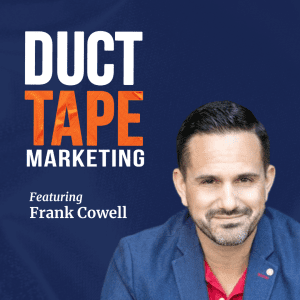
Kai brings a wealth of experience, guiding organizations throughout Europe. Today, our discussion centers around his latest book, “Work, different: 10 Truths for Winning in The People Age.”

This podcast episode with Kai Anderson offers a deep dive into the transformative journey from employees to contributors, defining the people age, navigating the new rhythm of work, evolving leadership styles, and understanding the dynamics of the great resignation. Tune in for valuable insights on building a people-centric culture in the ever-evolving landscape of work.

Key Takeaways

Gain valuable insights into navigating the transformative shift from employees to contributors in the dynamic landscape of the people age. Kai illuminates the essence of this era, emphasizing the paradigm shift from command and control to a more balanced relationship between employers and contributors. Addressing the challenges of remote work, he introduces the concept of “The New Rhythm of Work” and advocates for finding synchronization in virtual environments. The discussion extends to the evolving role of leadership, with a focus on empathy as a crucial competency. Additionally, Kai delves into the great resignation phenomenon, shedding light on the quest for purpose and the changing preferences of individuals in the workforce. This episode offers a comprehensive exploration of building a people-centric culture in the context of the ever-evolving dynamics of work.

Questions I ask Kai Anderson:

[00:48] How do you describe “the people age”?

[01:32] What aspects make today the people age?

[02:37] According to your book, what are the most significant truths about the people age?

[04:21] How does the popularity of remote-work relate to the people age?

[05:58] What advice do you have for people trying to develop leaders in this new age?

[08:04] How does desire for individual wellbeing manifest itself in the workplace these days?

[10:58] Explain the value individuals have towards diversity and inclusion in the workplace?

[12:04] How do the 10 truths outlined in your book, help create a more inclusive environment?

[13:49] How do you leverage AI while keeping the human touch?

[15:12] How do you create a culture of learning that feels natural?

[16:58] How do you help people realize the return on investment in their people?

[19:25] Where can people connect with you and find a copy of your latest book?


More About Kai Anderson:

Get Your Free AI Prompts To Build A Marketing Strategy:


Like this show? Click on over and give us a review on iTunes, please!

Connect with John Jantsch on LinkedIn


This episode of The Duct Tape Marketing Podcast is brought to you by ActiveCampaign

Try ActiveCampaign free for 14 days with our special offer. Sign up for a 15% discount on annual plans until Dec 31, 2023. Exclusive to new customers—upgrade and grow your business with ActiveCampaign today!


John (00:08): Hello, and welcome to another episode of the Duct Tape Marketing Podcast. This is John Jantsch. My guest today is Kai Anderson. He’s a seasoned strategist who started with his own company and now leading workforce transformation for Mercer has spent years guiding organizations throughout Europe. His book, digital Human, championed the concept of Prioritizing Humans in the Digital Transformation. And today we’re going to talk about his new book Work, different 10 Truths for Winning in The People Age. So Kai, welcome to the show.

Kai (00:41): Thanks much, John. Great to be here with you.

John (00:43): So I always like to pick apart titles and subtitles particularly, and so let’s start with people age. How do you describe this thing you’re calling the People age?

Kai (00:52): I’m glad you’re picking that, John, because in fact, the idea was that the initial title was the People Age, but we turned it around. So why is it the people age? We had some major trends evolving in the past like 50 years, which brought us from the industrial age into another age. Some people argue it’s the digital age, we say it’s the people age, right? And of course we have some short-term events like the Pandemic that also accelerated some of these trends.

John (01:26): So what are some aspects that make this, I mean, what you referenced the industrial age, what are the aspects that make this the people age?

Kai (01:36): John the industrial age was very much the core paradigm of the industrial age was command and control. And that worked pretty well. And we have to see that employers and employees were not on eye level. So this was, as we see still in some organizations like military, that was a different kind of organizing work and it was a different relationship. And that has changed significantly through of course, demographics. Now that labor, we all face labor shortage, things have turned around, values have shifted. So that is something which is very different to what we’ve seen in the industrial age where we are now coming towards, well, the balance of power, if you would like to say. So where we’re coming to a new kind of relationship between employers and employees or contributors as we say.

John (02:36): Yeah. So the book also unveils 10 truths. I’m not going to ask you to name your favorite truth or name all 10 truths, but I wonder if there’s one or maybe two that you would say, Hey, these are the most significant things, or these are the things people get wrong the most in this age.

Kai (02:54): It really starts with John, what I just mentioned, the contributors. So the first chapter is Goodbye employee, hello contributor. And I think we need to get rid of the idea of an employee. People want to contribute, they want to bring their very best to work, and they want acknowledgement for that. And that is something that has changed a lot. I guess when we started working, it was all about getting a good paycheck and that was it. And that has changed dramatically. So the contributor, and we see that in our global talent trends, you might know that we do annual of course, surveys on what is trending and what people expect. And more than 40 of people say that they want appreciation for what they bring to work for their contribution. So that is a very important chapter. One of my favorites. It’s the first one. Of course, I have others.

John (03:46): And I also like the use of new language too, because I think a lot of times old language employee is kind of loaded with how people think about that. And I think it probably in some cases almost takes an entire, you mentioned paradigm, almost a paradigm shift of what an employee or the term employee even is.

Kai (04:03): Absolutely.

John (04:04): So you also mentioned the pandemic, and it’s hard to talk about any kind of thing around team and staffing without bringing it up. Hopefully we’ll grow out of that at some point. But remote work certainly has been around for a period of time, but talk about accelerating that. It’s certainly changed a lot of organizations dramatically. How does the people age, how do the 10 truths really relate to the idea that so many people now are not physically in a building with their place of employment?

Kai (04:31): I’m glad you’re asking. Of course. We have a dedicated chapter on that. It’s called The New Rhythm of Work. And that is, by the way, we have a lot of musical references. So if you’re not into music, you might not like the book, but if you’re into music, we have a lot of references here. And the new rhythm of work is the good thing. There was one good thing about the Pandemic then it was that it showed us what is possible with regard to working virtually. And in the beginning it worked out pretty well. But then we kind of struggled in organizations started to struggle because we were getting out of sync. So some people were starting early, others were starting late, some were commuting, others were working from home. So we are not in sync anymore. And that is why some companies are calling people back into their offices, which is of course not the answer because the ghost is out of the bottle. You cannot turn it back. But we need to find that new rhythm. We need to get back in sync with each other to make that entire thing work.

John (05:42): If the workplace is changing, if organizations are realizing this is the people age, what leadership, how does leadership have to change? Does training need to change? Do who we think of as a leader need to change? Certainly the hierarchical structure of leadership has to change. What do you tell people now when they’re trying to think, how do we develop leaders in our organization in this kind of new age?

Kai (06:04): First of all, leaders should read our book, John, obviously, of course,

John (06:09): Yes. Well, that of course,

Kai (06:14): Because, no, I think the book is not targeted at HR people, not primarily it’s targeted at leaders, at executives. It’s targeted at people that want to understand how this new world of working is working and what it takes. And I think we have some really great advice also for leaders in here. Let me take one or two things. The basics of good leadership have not changed, not really being on eye level, these kinds of things. But of course there things that are new. And let me take empathy for example. Empathy is something that has really emerged strongly with the pandemic because we had to get into the other’s shoes, really understand what is bothering you, how do you feel? And that kind of notion, think back 30 years ago, that would’ve been impossible, but now it’s a leadership competency we’re talking about. And empathy is the beginning of inclusion. And what we all want is a diverse and inclusive workforce. So the basis for that is empathy. So we are drawing the line here to make sure that people understand what is good leadership about what has changed and what do you need to know as a leader in the people age.

John (07:40): So there were a couple of terms that were certainly used throughout the us. I’m not sure if they were used as much in Europe, quite quitting, and the great resignation where people were up and leaving, choosing other jobs. And I think a lot of people initially kind of pegged that as, oh, people just don’t want to work anymore. But I think what really came out of that was people just don’t want to work for you anymore or at this place. So how does this real sort of desire for engagement, for wellbeing in the place that they work manifests itself?

Kai (08:12): It’s also something that has very much been accelerated by the pandemic. We were sitting in our homes, we were considering and thinking about what’s life about and what do I expect from life and what do I expect from work? What do I expect from my employer? And so it wasn’t really surprising that people in the pandemic and after the pandemic thought, is that it or is there more to it? And what am I going to do? And of course, we have to be fair, John, this was fueled to some extent by the labor market situation. Of course, when I can change like this, that’s not that much of an issue. I think it’s now a bit harder and the great resignation has stopped as a movement. But also here, I think we see a genuine shift of preferences with people. And we see people asking for purpose, for purpose of their companies, for purpose in their lives. And I think that’s a good movement.

John (09:20): It’s my pleasure to welcome a new sponsor to the podcast. Our friends at ActiveCampaign. ActiveCampaign helps small teams power big businesses with a must have platform for intelligent marketing automation. We’ve been using ActiveCampaign for years here at Duct Tape Marketing to power our subscription forms, email newsletters and sales funnel drip campaigns. ActiveCampaign is that rare platform that’s affordable, easy to use, and capable of handling even the most complex marketing automation needs. And they make it easy to switch. They provide every new customer with one-on-one personal training and free migrations from your current marketing automation or email marketing provider. You can try ActiveCampaign for free for 14 days and there’s no credit card required. Just visit active campaign.com/duct tape. That’s right. Duct Tape Marketing podcast. Listeners who sign up via that link will also receive 15% off an annual plan if purchased by December 31st, 2023. That’s active campaign.com/duct tape.

(10:25): Now, this offer is limited to new active campaign customers only. So what are you waiting for? Fuel your growth. Boost revenue and save precious time by upgrading to active campaign today. So you already mentioned diversity and inclusion. I think that workplaces have become more diverse generationally, I think, which is probably driving some of this. You think of some of what we’ve talked about has really been attributed to millennials. The I want to work at a place that matters necessarily that’s higher than what I’m paid. Maybe talk a little bit about, I know you have a whole chapter on diversity and inclusion and not as a regulatory process and more of a people want to work in companies that value that.

Kai (11:11): That is also some of the shift in preferences that we are seeing that is very much tied to, I want to bring myself to work. I want to be looked at as an individual. That entire idea of the workforce, the human resource is a very abstract thing. And that is not John. We are living in a world of hyper individualization. People want to be seen as an individual. I have been working with the former CHO from Betina Fox, and she’s a great woman. I did my last book with her and she said, everybody wants to be seen. That was her mantra. Everybody wants to be seen with an airline. Imagine. That is so true, isn’t it? And that is the genuine idea of inclusion and diversity.

John (12:04): So how do the truths that you share in this book or the insights you share in this book help people create a more inclusive environment, help people be more seen?

Kai (12:15): I think it’s the combination, and I think it starts with a general idea of this people age that has come and we have a dedicated chapter on AI and technology, but the idea is it starts with the people. And if you consider that when you ask executives what’s your most valuable resource? What will they answer to the people? It’s the people. But that has been a lip service, John, for years and years now. It’s becoming true. Now people start realizing it is the most valuable resource and that is the first thing I think that needs to not necessarily change, but that needs to be top of people’s mind to say, yeah, it’s the people that will make us successful or not. And it’s the diversity of people that will make us more successful. And we have studies on that. We know that diverse teams are better performing than non-diverse teams. So we know that. And I think you don’t have to argue about that anymore. The question is in fact, how do you do it?

John (13:29): Right? So you mentioned ai. That was my very next question. Certainly a lot of hand wringing in some circles just about the idea that AI is going to replace people, that robots are going to replace people. So how do you leverage technology? Because we also know that this technology sometimes affords us some great things. So how do you leverage technology with also then keeping some sort of human touch?

Kai (13:55): John, I’m a big tech fan, frankly, and I’m a big believer of technology being an amplifier for our capabilities, which is why the chapter on AI we call intelligence is amplified. So we see it as an amplifier for our intelligence. And then you mentioned the gains. We’re talking 10 to 30% productivity increase. So this is incredible, especially if we consider that the past years have been stagnating with regard to productivity increase. So here’s the kind of boost that we all want, and I see it as a means, or we see it in the book as something that is highly beneficial for the organization, of course, but also for the contributor for people within the organization. If we manage to of what we call have a fair distribution of the digital dividend.

John (14:56): I know in my organization, most of the members of our team are fit into the millennial generation, age wise. And one of the things that I find is very valuable to them, they always want to continue to learn what we talk about it every week. You learn this week, what’s a new thing you can share this week? How do you cultivate that kind of culture without also cramming stuff down people’s throats? It’s like you have to keep learning, you have to keep training, you have to keep reading. How do you create that in a way that feels very natural?

Kai (15:28): That’s a cultural thing first. And look at Microsoft. They did an entire campaign on learn it all versus know it all and look at where they are. So to me, that is first of all, really cultural development. And you need to get to a culture that first of all is about curiosity, being curious, trying new things, exploring things. I think we have cultural differences when we look at the US versus Europe versus Asia. Europeans are much more hesitating when it comes to new technology that’s different in different parts of the world. But start with the chances first, have that kind of curiosity. And then it’s about of course, embedding learning into everyday work, giving people the tools, giving people also some time, and most importantly, having the freedom to fail. So what we call psychological safety, create that psychological safety. You say you try it goes wrong, doesn’t matter. You’re not supposed to do it wrong twice, but once is.

John (16:41): Yeah. Right, right, right. So I’m sure you get this question, especially in a consulting role. If you’re talking to a CEO, you’re talking about change in some instances. This is not how every business is run, right? Today. So you’re talking about some significant change sometimes equates to significant investment. So how do you help people realize the return on an investment in their people? Like we’re talking about, is there a way to measure this has been successful?

Kai (17:07): Good question, John. When we are embarking on these exo, the first thing that we make sure is we are not really convincing people like the return of investment, but rather is it the right thing to do? So you want to get more profitable? Where does it start? What are you going to do without the kind of performance mindset? You want to be more innovative, you want to be more customer centered. Is that a structural thing or is that a mindset kind of thing? So this is first of all, you believe it or not, and there are people that don’t believe it, that rather want to get into structures, into processes and say, this is not about people. More and more people buy into the idea of at least people have something to do with it. So I’m not saying that we are not, of course we are setting objectives like net promoter scores where there’s a whole bunch of objectives and we are doing extensive employee listening to see what arrives with employees, with contributors. So this is something, and in the end, of course you want to see the business results of all of that, but it’s caused an effect. I know, and we know we have great examples also in the book from organization that managed to kind of become a digital champion, for example, by at least investing heavily into their people, into their cultures and their people practices. There’s the hardwired stuff as well. There’s objective setting, incentive systems, performance management, you name it. Of course, that plays a role.

John (18:54): I suspect if you want to default or what I would default maybe as a simple metric is retention too. I mean that’s so many people left companies they didn’t like working for and it was very expensive to replace them.

Kai (19:09): Retention. Meanwhile, retention is a business objective. Exactly. Just diversity is just as diverse, just as engagement. Of course. You’re absolutely right.

John (19:22): Well, Kai, I appreciate you taking a moment to stop by the Duct Tape Marketing Podcast. You want to invite people where they might connect with you. Obviously find a copy of your latest book work different.

Kai (19:33): John, thank you so much. Yeah, please reach out LinkedIn, great channel. Make sure that we follow you, John. Great talking to you. Good fun.

John (19:41): Yep. Awesome. Again, thanks for stopping. Bye. Hopefully we’ll run into you one of these days out there in Europe.

Mastering Growth Momentum: Unveiling Your Agency’s True North

Mastering Growth Momentum: Unveiling Your Agency’s True North written by Tosin Jerugba read more at Duct Tape Marketing

The Duct Tape Marketing Podcast with John Janstch


In this episode of the Duct Tape Marketing Podcast, I interviewed Frank Cowell, the Chief Revenue Boss at Revenue Ranch. Frank Cowell is a speaker, best-selling author, and entrepreneur in the San Diego, California area. With over 20 years of sales, marketing, and leadership experience, Frank serves as Chief Revenue Boss at his latest venture, Revenue Ranch. He works regularly with business owners and executives who are looking to grow faster and smarter.

Frank is author of Building Your Digital Utopia, which details a concept he pioneered to help brands create digital experiences that systematically accelerate growth. An energetic and entertaining speaker, Frank presents regularly to regional and national organizations on topics related to revenue operations, business strategy, and digital marketing.

Renowned for his expertise in accelerating agency growth. Frank’s insights into mastering growth momentum and unveiling your agency’s True North are invaluable for those seeking to elevate their agency success.

Key Takeaways

Emphasizing the importance of a clear True North, Frank guides listeners in defining a razor-sharp strategic direction that informs every decision. He introduces the concept of identifying the number one blocker to growth, encouraging a systematic approach to chip away at obstacles in quarterly cycles. Frank underscores the power of intimate knowledge about your audience, advocating for the ownership of a specific niche to navigate technological shifts successfully. The journey to agency success is framed as a continuous process, with a focus on success stacking and the creation of a culture of momentum. Tactical adaptability is key, with Frank advising agencies to leverage their relationships to initiate collaborative discussions within their niche, navigating evolving landscapes with confidence and purpose.

Questions I ask Frank Cowell:

[00:54] Why do you believe the title ‘Chief Revenue Boss’ is well suited to you at this stage of your career?

[03:44] What key moments in your career best prepared you that title?

[06:51] In your book “Digital Utopia,” what’s the meaning of systematically accelerating growth through creating experiences?

[11:55] How do you apply ‘Momentum Management’ in the world of business ?

[18:05] What advice do you have for scaling in a world where technology seems to affect everything ?

[21:16] Where can people connect with you and learn more about your work ?


More About Frank Cowell:

Get Your Free AI Prompts To Build A Marketing Strategy:


Like this show? Click on over and give us a review on iTunes, please!

Connect with John Jantsch on LinkedIn


This episode of The Duct Tape Marketing Podcast is brought to you by ActiveCampaign

Try ActiveCampaign free for 14 days with our special offer. Sign up for a 15% discount on annual plans until Dec 31, 2023. Exclusive to new customers—upgrade and grow your business with ActiveCampaign today!


John (00:08): Hello and welcome to another episode of the Duct Tape Marketing Podcast. This is Jon Jantsch. My guest today is Frank Cowell. He is a speaker, bestselling author and entrepreneur, currently serves as the chief revenue boss at Revenue Ranch. He works regularly with business owners and executives who are looking to grow faster, and he’s also the author of Building Your Digital Utopia, which details the concept he pioneered to help brands create digital experiences that systematically accelerate growth. So Frank, welcome to the show.

Frank (00:40): Hey, Jon, thanks for having me. I’m excited to be here.

John (00:42): So a couple things I want to get in a little bit into your, I love always to hear people’s entrepreneur during like, how’d you get here? Right? But I want to focus on one thing. Revenue Ranch is your company. You’ve given yourself the title Chief Revenue Boss. Does that imply automatically what you think is the most important role for you currently in that business, or is that just what needed to be filled?

Frank (01:06): I think for me, the play on the Revenue Ranch aspects, so Boss is a common term on a ranch, and then revenue tying into the company name. Ultimately it’s my job to create direction for the company, but in this chapter of my life, after having exited an agency, this business is less about growing a massive team of people and more so about working with agency owners as they try to navigate this journey of being an agency owner. So I help guide them on that journey and we put a program together to make that happen. So Chief Revenue Boss is more so just a tie into the company name and that kind of ranch theming.

John (01:49): I guess what I was getting at a little bit is I see a lot of business owners, let’s call them rather than CEOs, who really think revenue and vision and maybe culture are my only real jobs because they’re so down in the weeds doing everything else, and I think it almost feels like a luxury if you get to a point in your business where you can say, look, these are the only three things that I need to focus on because they’re the only three things that matter necessarily to scaling.

Frank (02:18): What’s interesting about the CEO role is the CEO is responsible for what I call true North, and it sounds simple, but it’s a massive decision to make regarding what goes into creating true North. And then, oh, by the way, making sure that the decisions within the company and how you align the team so that they all are inspired by, they’re clear on true North, and they also make decisions about True North. That’s a very big deal, even though it sounds simple on paper. And then ultimately, if we look at the KPIs, if you will, of the other functions in the business, the major functions, those aren’t directly the responsibility of the CEO, but indirectly they are. If you were to go to the shareholders or the board, they don’t really care that there’s a head of marketing responsible for active lead generation that ultimately is going to fall on the CEO’s shoulders as to why the company isn’t growing at a respectable rate. So it’s kind of a yin and yang thing there.

John (03:19): Yeah, no, I actually agree with you. I think that a lot of people, it’s easy to explain the concept and a lot of books do of True North, it’s probably the hardest thing to actually get around to getting right, and I think that’s where people are really struggling. Give us a little bit of a snippet of your journey to how you got here. You talked about owning an agency already, and obviously we know what you’re doing today, but it’s always kind of fun, I think, to go through what molded you to this place.

Frank (03:47): Yeah, so I’ve always been a salesperson at heart ever since I was a kid. I was in love with this idea of product and creating a business and selling things and moving something into a market and satisfying the market. Even as a kid, I would order these products that I was responsible for selling and my parents would be like, what did you just commit to this? Hundreds of dollars of stuff that’s in our house now that you have to go and sell. I was like 12 years old, and so I’ve just always been that way, and if we fast forward, along comes the information superhighway. That’s what we called it back then, the internet, the worldwide web, we called it the Information superhighway, and there was a big theme back then of the information Superhighway is coming. That was the big message out there, and none of us really knew what that was.

(04:38): Well, me being very curious, I started dabbling and trying to figure out what is this thing? And it wasn’t long before I said I could probably sell stuff on this thing, and that’s when I launched my first web page through my America online web space, and I paid some guy 50 bucks to do it. I found him on America online, and at the time, 50 bucks, I had to ask my wife for $50. I said, Hey, is it okay if I spend $50? That was a big deal to me back then. And so she said, sure, I believe in all your crazy wacky ideas. So I got this thing uploaded and I was selling some information products, and then I decided I wanted to change it, and I was like, oh, this guy’s going to want 50 bucks again. And then I thought to myself, Frank Computers and back in junior high, you did a certain amount of programming that you learned, I could probably figure this out.

(05:31): So I cracked open a text editor, and lo and behold, I saw the words on the screen that I wanted to change. I changed it, saved it, uploaded it, and my mind was forever blown. I was like, oh my gosh, the power I now possess. So that led me on a journey to teaching myself how to program. I started programming in flat file databases using a language called Perl. Back then we’re talking, this was the late nineties, by the way, and so when it comes to the internet, I’m an old guy, and so that led me into creating my own content management system, and then I launched a web design shop, and then that eventually morphed into a branding agency and creative agency, and I went through that whole journey, did M&A type stuff, and then last year I exited my agency. So yeah, it kind of was a roundabout way of this sales marketing career that was underpinned by my desire to build things and deliver things to a market.

John (06:29): Yeah, it’s funny, I started my agency over 30 years ago, so yeah, pre-internet as well. But I always tell people the only thing I was sure of is I could hustle work, and I think a lot of entrepreneurs kind of have that bug, and sometimes it could be a weakness, right? We don’t stay focused because we’re able to do that. Talk a little bit about,

Frank (06:48): That’s such a point, John, such a

John (06:49): Great point, and we can come back to that. I want to talk about the book Building Your Digital Utopia. You talked about this idea of creating an experience that systematically accelerate growth. So kind of unpack that idea for us.

Frank (07:01): Well, I’m a systems guy. I’m a frameworks guy. Everything I do, I want to put a system around. I want to put a framework around, I want to put an ABC 1, 2, 3, so much so to where my wife sometimes is like, oh my gosh, there’s a right way to do everything, isn’t there, Frank? Because that’s just how I view everything. There’s a ABC 1 23 when it came to my agency experience and what we were doing for clients, which was essentially inbound marketing, content marketing. I wanted to create a way for our clients to understand the complexity of content marketing. Now to marketers that might be listening, we might think, oh, it’s easy to understand, but we also have to remember the people that buy what we have to offer, let’s say content marketing, it’s not so easy for them to understand and they don’t understand the strategic aspects of it.

(07:46): So I wrote a book that intended to teach the strategic aspects to get a business owner, a business executive, to understand what good inbound slash content marketing looked like. And oh, by the way, the underpinning, the big theme of that was relationships, that we can actually build relationships in a digital format. We have to just take that relationship psychology and apply it to the content. And so once you do that and you overlay that idea of relationship psychology, you now have specific types of content you need at various stages. And it’s not just so, it’s not enough to say, oh, awareness, decision, consideration, that’s not enough to say that we actually have to understand the psychology of meeting the psychological need at that place. And so that’s what we attempted to do was apply that psychology to that process and it works really well because now we can teach people, business executives a strategic understanding of content and digital marketing.

John (08:48): Yeah, 15, 20 years ago we were talking about content is king. You remember everybody was saying that and then it became air, frankly, and I think today we’ve risen it to the strategic level. You don’t talk about content as a blog post or as a content management system. It’s actually how are we going to use it to be the voice of strategy is how we talk about it, because I think it’s become that important, but it’s also, it’s complex. It’s changing, it’s getting harder. There’s so much garbage out there that I think I understand the confusion, right, and I’m sure you see it too. Yeah.

Frank (09:23): I think when, and this is Go ahead,

John (09:25): Finish that point.

Frank (09:27): I was going to say, I think when businesses don’t, I’m going to bring back something I mentioned at the top of the conversation, and we’ll get into it too. When we talk about the number one thing that I think CEOs are responsible for, especially in agencies, but what a lot of businesses lack what’s called a true north. And when you don’t have a true north, it affects everything. So specifically we’re talking about content marketing. Well, guess what? That’s why you’re going to produce a bunch of stuff for SEO and you’re going to produce a bunch of stuff for social and it’s all over the place. And then people wonder why it’s not getting traction. Well, because to get traction with marketing, this was true yesterday, and it’s so true today. To get traction, you need longevity. The problem is if you don’t have a true north, you will constantly be changing directions and you will never have the longevity required to get momentum going. And that’s actually the key word that drives everything I do right now with my clients and my methodology. It’s this idea of momentum. It’s the only magic elixir that ever truly exists in business and in life, and you could actually harness it.

John (10:38): It’s my pleasure to welcome a new sponsor to the podcast. Our friends at Active Campaign Active Campaign helps small teams power big businesses with the must have platform for marketing automation. We’ve been using Active Campaign for years here at Duct Tape Marketing to power our subscription forms, email newsletters and sales funnel drip campaigns. Active Campaign is that rare platform that’s affordable, easy to use, and capable of handling even the most complex marketing automation needs, and they make it easy to switch. They provide every new customer with one-on-one personal training and free migrations from your current marketing automation or email marketing provider. You can try Active Campaign for free for 14 days and there’s no credit card required. Just visit activecampaign.com slash duct tape. That’s right. Duct Tape Marketing podcast listeners who sign up via that link will also receive 15% off an annual plan if purchased by December 31st, 2023. That’s active campaign.com/ducttape. Now, this offer is limited to new active campaign customers only. So what are you waiting for? Fuel your growth, boost revenue and save precious time by upgrading to active campaign today.

Frank (11:54): Yeah,

John (11:54): Let’s talk a little bit, I think you call it momentum management even. So let’s talk a little bit about that concept. Again, unpack that a little bit so that, I mean, I think people conceptually can get that, but how do you apply that in a real world, in a business?

Frank (12:10): Yeah, simply put, momentum again is the only magic elixir that really exists. It’s this magical thing that’s infectious that when you start harnessing momentum, everyone gets caught up in it, everyone gets excited, and you have people working together towards a common cause. Without momentum, things start to feel stale and stagnant. And as agencies, we know that is awful in the agency space because our people, which is essentially the product, when they start feeling stale and stagnant and the business isn’t going somewhere, they’re easily distracted by other opportunities. There are many other organizations willing to woo our talent. So we have to create momentum. So how do we do that? The way we do that simply put is by making sure that we obsessively work on the right things in the right order, and disproportionately deploy time, money, and resources against those things. So there’s a few things to define that and get there.

(13:10): I’ve already mentioned true north quite a bit, and I’ll go back to that. It’s really critical that you as the agency leader or any business owner that you e established a true north for the business. Well, the true north, what is it? The true north basically says this is who we’re for. This is what we do in the world. This is the transformation we bring and this is the mission we’re on to get there. It needs to be so sharp, it could metaphorically cut. Meaning when you come across opportunities, it’s either going to cut yes or cut no, and it’s going to be very black and white. The problem with most businesses, they’re not willing to make that sharp of a business strategy decision. So they end up taking some things over here, some things over there, some things right there, and then before you know it, you don’t have the focus.

(13:58): So the true north needs to be something that is razor sharp. Again, I like to tell my clients it should metaphorically cut. If you touch, it cuts you. It’s that sharp. And then your job as the owner is to make sure that all plans align to true North. All people that you hire align to true North, and all the day-to-Day behaviors and decisions align to true North. So that’s number one. We must have a true north, right? So we’re talking about things like vision, mission, values, how you articulate the brand, and then how you define what I call the boulder in the business. And the boulder in the business is the number one strategic imperative that you have to accomplish in the next one to three years. So that’s your true north. So if we start there, if we don’t have that, then gaining momentum is going to be really difficult.

(14:43): And then I can go on to a couple of more points if you want, but yeah, let’s do it. Are we good? Okay, so we’ve got true north. The next thing we need to do is is that we need to uncover the number one blocker towards True North, and we need to analyze that number one blocker on a consistent basis. I like to say in nighty day cycles or quarterly cycles. So what is our number one blocker towards True North? Now, I talk about there being seven core capabilities in every business. One is True. North two is exceptional execution. We’ve got world-class offering systematic sales process, actively generation, empowered work experience, and cash and profit optimization. Those, by the way, align with job titles, but I don’t use the job titles. Those are the seven capabilities. So what you have to do as a business owner is you have to regularly understand of those seven capabilities, which one is our number one blocker to growth.

(15:41): And you as a business owner must know that at any given point in time, and once you define your number one blocker to growth, then what you’re going to do is the third thing is you’re going to chip away at that blocker in nighty day or quarterly cycles. So the plans you come up with aren’t to boil the ocean, aren’t to get rid of that blocker to growth in one plan, your objective is what can we accomplish in this quarter to chip away at it and understand that growth getting to a place of big success is a journey, and it’s about success stacking those little wins quarter after quarter. So what happens when you do that? Well, you gain momentum because not only are you chipping away at the blocker, which frees up and makes your company spend faster, but you’re creating a culture of winning with your team. And when your team feels like winners, they start to get caught up in the excitement and enthusiasm of it. So those are the three things that I would say as know your true north, know your number one blocker to growth, and then in quarterly cycles relentlessly execute, chipping away at it in small chunks, quarter after quarter.

John (16:54): As I listened to you described that one, how often the number one blocker for people is they don’t have a true north, right?

Frank (17:02): It’s interesting enough, John, it’s actually if we put those in the right order, a lot of people might say, well, I don’t need strategy at this point in time or company’s small. It’s like, well, could you spend just a handful of weeks getting together with the few people you have and agree on what the strategy is? We’re not talking about spending months or years on this, but could you get together and just create some clarity around where you folks are going? Because if you can’t do that, you’re going to continue to spin your wheels.

John (17:32): So one of the things I’m seeing in the agency world is, and we’re picking on the agencies it sounds like, because we both serve a lot of agencies, but this is business in general, is just that they see what everybody else is doing out there. It’s like this is how it’s always been done, and I see a whole lot of pressure right now on marketing tactics, price pressure on marketing tactics today, and a lot of agencies going, we are just throwing bodies at stuff, but we’re making less and working more. So I’m curious if you see that same mentality out there, but also what do we need to be doing or how do we need to be looking at things differently if we are going to scale in a world where technology is constantly changing and creating a lot of pressure on price or on profit?

Frank (18:17): Yeah. Again, I’m going to be redundant here, but I go back to true North. I think about there’s two agency relationships in particular that come to mind for me in one relationship. In this one agency I know of, they made the decision to get really sharp on their true north, and they stuck to it and they relentlessly executed against it. The other agency who by the way, was bigger than this other agency has stagnated because they did everything else, but they didn’t have the courage to make the decisions about True North because they had this fear of missing out. So what ends up happening is they’re not magnetic to anyone audience, but because they’re kind of there for many audiences, now, why is this the answer to the thing that you just brought up? The reason it’s the answer is because as tactics shift, and let’s say we have these massive shifts like AI coming in with content, and how does that affect SEO and how does that affect content marketing?

(19:21): These massive shifts coming in. When you own an audience and you own a particular problem, then you are the one that has the voice within that community to start having conversation with them about how they’re going to leverage this technology or if it’s even applicable at all. When you have that kind of intimate knowledge about that audience, it’s okay that you may not have the answer, but you have the audience and you have the conversations there, and you have the relationships to go back to that audience and say, why don’t we do a roundtable? Why don’t we do a forum where we talk about the disruption that’s happening with this new technology? I’m not claiming to have the answers, but I do know your industry and I do know your problems, and I do know what we have to get you to where you’re wanting to go from a strategic standpoint.

(20:11): When you have that kind of intimacy, the tactical problems come and go. As you know, there will be another massive shift in the future, and there will be another one that will always happen. When you have that intimate knowledge of a given market and you understand them better than anyone else, and you’ve put in the work to develop the relationships in that market, you can then go to them and not claim to have the answers. And that’s really the big revelation. You don’t have to have the answers of knowing what to do with the technology, but you do have to have the relationships with an audience that’s greater than your competitors, so that way you can bring that question to that audience and have a round table discussion and start to create insights and ideas about what that industry can do with the new tech.

John (20:59): Such a great way to build such a great way to build trust too, with that audience doing exactly what you described. Well, Frank, we have run out of time somehow. I wanted to get to stepping away from your agency, which I know we could do a whole show on. So maybe we’ll have you back to cover just that one topic, but I’d invite you to invite people to connect with you or where you’d like to connect or find out more about the work you’re doing there at Revenue Range.

Frank (21:23): Yeah, I think the biggest thing I can do for listeners, because we talk so much about momentum and figuring out which area is your number one blocker and what you should do about it, that probably the best thing I could do is direct people to an online tool that I developed where people can go through and answer some questions about their business, and it will help uncover your exact blocker to growth. So if you just go to Growthmomentumroadmap.com Growthmomentumroadmap.com, you’ll have access to a tool where we’ll walk you through exactly what your number one blocker to growth is, and it’ll give you a roadmap on what to do about that.

John (22:01): Yeah, and we’ll have that link in the show notes as well. Well, frankly, again, I appreciate you taking a few moments to stop by the Duct Tape Marketing Podcast, and hopefully we’ll run into you one of these days out there on the road.

Unlocking Exponential Growth: The Blueprint to Scale Your Business

Unlocking Exponential Growth: The Blueprint to Scale Your Business written by John Jantsch read more at Duct Tape Marketing

The Duct Tape Marketing Podcast with John Janstch

In this episode of the Duct Tape Marketing Podcast, I interviewed Tony DiSilvestro. Tony is a seasoned entrepreneur, business consultant, and author of the Business Scaling Blueprint. With a passion for helping businesses achieve exponential growth, Tony shared valuable insights into the challenges and misconceptions surrounding business scaling.

Key Takeaways:

Tony highlights the essential principles of scaling a business successfully by emphasizing the intrinsic nature of every business as a people business, underscoring the importance of human interaction and fostering a culture that prioritizes growth. The significance of meticulous systemization is highlighted, with a focus on defining brand pillars and implementing robust internal processes. Tony advocates for embracing technological advancements like AI while maintaining a balance with genuine human engagement for sustained relevance. The holistic approach to management involves continuous improvement, rigorous attention to Key Performance Indicators (KPIs), and recalibration for effective decision-making, laying the groundwork for unlocking exponential growth in any business.


Questions I ask Tony DiSilvestro:

[00:45] How did you get to this incredible stage in your entrepreneurship career?

[01:11] What are the common misconceptions about business scaling?

[02:13] What is business scaling?

[03:00] According to your book: what are the core concepts of business scaling?

[04:20] How do you monitor business scaling as well as technological advancements in your industry?

[06:32] How do you deal with clients who resist the idea of being called a people business?

[07:52] Is there a framework for building a people-centric culture?

[09:59] How do systems build a better culture?

[11:35] How do you change the mindset of a non-people-centric culture?

[12:54] Are there must-have performance indicators, and how do we use them to make better decisions?

[14:24] What advice do you have for businesses that want to grow but feel stuck?

[16:10] After AI, what trends should we look out for in business scaling?

[18:01] Where can people connect with you and find out more about your work?


More About Tony DiSilvestro:

Get Your Free AI Prompts To Build A Marketing Strategy:


Like this show? Click on over and give us a review on iTunes, please!

Connect with John Jantsch on LinkedIn


This episode of the Duct Tape Marketing Podcast is brought to you by the DeskTeam360

Desk team 360 is the #1, flat-rate, digital marketing integration team, that helps small businesses and marketing agencies with graphic, web design, and on-page marketing services.


John (00:03): Hello, and welcome to another episode of the Duct Tape Marketing Podcast. This is John Jantsch, and my guest today is Tony DiSilvestro. He is an entrepreneur, business consultant and keynote speaker, passionate about helping businesses realize their exponential growth, Tony’s successes, and these are his words and failure too, have afforded him life’s lessons that he enjoys sharing with others. He’s also the author of the business, scaling Blueprint, which we’ll probably dive into a little bit today as well. So Tony, welcome to the show.

Tony (00:34): Oh, thanks for having me today. Excited to be here.

John (00:36): So let’s talk about, we could take the whole show talking about your entrepreneurial journey, but let’s give a few high spots that give people a sense of where you learned your hard-earned lessons.

Tony (00:49): Yeah, I grew up on the Jersey Shore as a kid and learned what the value of a customer at such a young age, and it’s really given me the path to understand business and understand it doesn’t really matter what business I’m in, I’m in the people business. And that’s kind of where it all started for me.

John (01:04): So let’s just dive into, I think this is a good jumping in point for all the positive lessons we’re going to talk about. What are some of the things that people get wrong, the misperceptions about scaling, why it’s so hard to do, why people beat their head against the wall? I mean, what are we all doing wrong that’s not allowing us to scale sort of elegantly?

Tony (01:23): There’s a couple things. We all started out as business owners, we think we’re great at something. So we say, Hey, we get this wild hair and we start a business. And the problem with that is everybody thinks they’re entrepreneurs, but you don’t truly become an entrepreneur until you start systemizing your systems. Learn how to delegate and then invest in your people. So one of the things that I find with a lot of companies, whether they’re doing three to 5 million, 10 million a year, it doesn’t matter, they’re stuck. You know what I mean? They’re wearing every hat in the company still, and they can’t get out of their own way and trust people.

John (01:55): I can’t remember where I heard this or who said this, but somebody said, business owners look at everything that needs to be done. They say, how are we going to get this done? Entrepreneurs look at everything and said, who can we get to do this? And I think that’s a pretty key distinction. Right? Yeah. So this may sound silly, but let’s define for the context of this conversation, what is scaling even mean?

Tony (02:16): Well, it’s funny. Scaling for me means different things for every entrepreneur. So some entrepreneurs want quality of life to spend more time with their family. Some people want 10 x 20 x hundred x their business, so it doesn’t matter. And I work with so many ceos all over the world and founders of companies, and every one of ’em has a different vision of what scaling means and what success means to them. So it’s really, I don’t put entrepreneurs or ceos in a certain box. I’m constantly just working with them, working with their c suites and really helping them understand what scaling truly means to them.

John (02:51): Yeah. I assume though there are a few key concepts, a few strategies that you probably bring to everybody to at least explore. So maybe you could, especially from the book itself, what are some of the core concepts that you have to be maybe are overlooked or people just don’t think about them, that you find that you have to really focus on to get people started in the right direction?

Tony (03:12): The first thing I always start out with is really defining their brand. What are the three pillars of your brand? So many companies are disconnected with truly what the purpose of their company is. And it’s not just the founder. The founder has this vision but doesn’t resonate with the employees, and then ultimately it doesn’t resonate with the customers. So I redeveloped their entire brand and make them truly think some of this processes takes over two months to develop. And then I go into systemizing their systems. So I’ve been in franchising for 14 years, and systems are everything. Anybody that’s in franchising knows you’re not selling, say a restaurant or a handyman company. You’re selling a system, and that’s what people want to buy. And that’s why the failure rate in franchises is so much lower than regular entrepreneurs that are starting a mom and pop shop or a family owned business because they focus so much on the systems of the company. And then you can delegate and then you can train, and then you can market.

John (04:09): Talk a little bit though about one of the things that I know a lot of businesses, I’ve been doing this for 30 years, we can pick a change. I mean, there’s so much change that goes on in business. The current change is probably a technology one that’s got the most people buzzing right now, and that’s ai. I mean, how do you continue to scale or have a vision for a business while constantly monitoring wholesale changes that might be going on in your industry?

Tony (04:34): It’s funny, I love ai, but everybody’s got to understand AI is a tool, and if you’re not putting it in your tool bag, you’re going to be left behind because it’s happening so fast and you have to utilize it and see how you can adapt your business. I’ve changed so many parts of my business with AI already, but adapting technology is something I’ve done for over 30 years. Whenever there was something new out there, I’m wondering what’s going on. When Bitcoin first came out, I tried to take it in my restaurants and I wanted to accept Bitcoin, and this is before it was even out. It was like $4 of coin. And I wish I would’ve known to buy a wallet at that time, but I didn’t. But the thing is, if you’re not adapting to change, if you’re not understanding friction and understanding what’s happening in your business, then you’re going to die. You’re never going to make it. Change is inevitable in our companies, and you have to be a change advocate.

John (05:26): I often tell in the marketing world, people are talking about AI replacing their jobs. I mean to do content and all the things AI can do. And I said, no, AI’s not going to replace your job. Somebody’s as good as you that’s using AI is going to replace you. And I think, yeah, I think your point of it’s just a tool. It’s like, how can it allow us to do something faster and better? If it can’t, then it’s not useful. You mentioned my

Tony (05:51): Business,

John (05:52): Go ahead, finish. Go ahead. Was going to got just enough lag that we’re talking over each other. Alright, one of your businesses go,

Tony (06:00): I said one of my businesses a marketing company as well, and the same thing is always looking for results. And I’m always looking for AI and other avenues to help people grow their businesses and scale. So I mean, every tool that’s out there and it’s as accessible, you need to be educated on it and learn from it. Go on YouTube, find a video. It doesn’t matter. Just educate yourself.

John (06:19): So you mentioned already, and I want to dive into it, but every business is a people business. It doesn’t matter what they sell, what they do. So talk to me a little bit about that idea, but then let’s get into some specifics because I bet you get some pushback from somebody’s like, no, we sell blah, blah, blah widget. We’re not a people business.

Tony (06:37): So a lot of times I go into business and I truly mean it. We’re in the ninety-eight 0.6 degree business. That’s the business we’re in. And I’ve founded over thirty-three different companies in different industries. And every single business I’m in, it’s all about human capital and how are we helping human capital accomplish their goals and the results that we’re looking for? And people will push back and they’re like, no, we’re architects. I said, no, you’re designing somebody’s home. You’re not designing their house. This is where people are going to live. So I’m very results-driven, right? So if I walk into a sales team, I’m looking at sales-centric versus results-centric motivations of selling because if you’re selling, you’re dying. But if you’re focused on results, then you’re going to actually do something. So when we’re looking at human capital and businesses, we need people to grow. And when you talk about scaling, the number one way to scale is through delegation, as we alluded to before. But that is people. And I don’t care if you’re selling cars, widgets, food doesn’t matter, building homes. I mean, that’s what it is.

John (07:37): So yeah, it’s interesting. Your portfolio of businesses is all over the map. I mean, you have a building company, you have a restaurant. You already talked about some professional services that you offer. So do you have, not templates the wrong word, but do you have a framework that’s a better word for this idea of building a people-centric culture?

Tony (07:57): Yes. Invest in your systems immediately. Entrepreneurs go out of business right away. But when I’m talking about investing your systems, I’m talking about as granular as you possibly can. If I would’ve taken that time when I first opened my business to really think about the processes and procedures and really document every system, I wouldn’t have had two major failures in my life because I would’ve been way more educated. I would’ve had better systems, and I would’ve been able to delegate and actually avoid mistake avoidance to something I work with a lot with entrepreneurs all over the world. How are you handling mistake avoidance, right? Learn from those people. I was always surrounded, everybody’s like, go talk to those old people. They’ve been there and done that. You can’t replace wisdom. There’s no doubt.

John (08:38): Hey, have you ever tried to hire freelancers and found that the quality of work was lacking? Or you got all the outsourcing excuses as to why the work didn’t get done on time? Well, desk Team 360 has revolutionized the outsourcing game with their insourcing program that eliminates all those frustrations and excuses. You get unlimited graphic designs, website funnels, crm, email automation integrations, automations, really anything that requires you to log into software. Imagine all the time and frustrations you can save from trying to get your tech work done properly. We use Desk Team 360 every day in our business, and so I’ve negotiated you a 10% deal. That’s right. Just go to Deskteamthreesixty.info book a discovery call, and you’ll receive the special duct tape marketing 10% off because hey, your pal John always takes care of you. So that’s it. Go to Deskteamthreesixty.info and book your call today. I know where you’re going with this, but let’s make it as clear as possible for the listeners. How does systems build a better culture? How does that relate to people being happier or more satisfied in their jobs?

Tony (09:50): Sure. There’s no doubt. Systems create confidence, right? Systems give people a clear expectation. My training company is all about upper mobility training. So we train employees and give them a clear path to growth, but you cannot create that clear path to growth unless you give them a system, set proper expectations. And if they do fail, what are you looking at when that employee fails? You’re going back, fix your system because it’s not the employee that’s going, it’s typically your system that’s broken. So when I talk about systems, I constantly, I love friction. There’s nothing better than friction because the problem is an opportunity. Opportunities create solutions and solutions create results. And I’m driven that way every single day. We don’t have problems in our companies. We have opportunities. And if you’re focused that way and you’re creating systems that help people grow and achieve the result that you’re looking for, then the culture’s better in your company. They love coming to work every day. They know the path and they see a growth path. Because I’ll tell you, I’ve hired so many employees recently, and the one question, is there an opportunity to grow? Everybody right now is so focused on growth.

John (10:55): Yeah, yeah. More so than sauer is on there, but it’s way down the list, isn’t it?

Tony (10:59): Right? No doubt. Yeah.

John (11:01): So alright, if company hires you, I’m sure, especially if you have a training company, people are like, will you train those idiots for me? Right? I mean, unfortunately there’s a little bit of leadership mentality that still has that. How do you get the lead? Because you can train until you’re dead, right? I mean, if it doesn’t start at the top, how do you get people who have the wrong mindset to shift their mindset or just tell ’em, Hey, I can’t help you.

Tony (11:25): No, I show them a path. So it’s not only our training system, we go through the roi of the company. How are you increasing incremental sales? How are you working on customer satisfaction, employee satisfaction? So you can’t just walk into a founder or a CEO and say, your training’s terrible. You need to just train these people. So what we’ve developed is a very in-depth training system that’s all about upper mobility. And it’s not just for the low level employee, it’s all the way up to the top level managers. How are they improving themselves? So our system really gives them, they can self-analyze themselves and realize where they’re at any given time, and we equate it even to their salaries. So they can say, Hey, I want to make more money. Okay, well let’s do this evaluation on you, figure out where you’re at, and then show them a clear path for success. But most companies train six to 12 weeks, and that is it. The employee, we train 52 weeks a year. So training is about communicating. If you’re not communicating with your staff, it’s very hard to train them.

John (12:26): So we’re kind of getting into measuring. Everybody realizes they need to measure, they need to have kpis. Rarely do people do it or use it to manage by. Are there performance indicators that we absolutely all need to have? How can we get better at using the data to make decisions?

Tony (12:46): You have to know your numbers. So every company I go into, I can’t tell you how many companies I walk into, they don’t have a p&l. I’m like, how are you running a company without a p&l? You don’t know your numbers. So the biggest problem, and it’s so prevalent, you want to believe it, but the biggest thing is going into the companies KPIs are only as good as the person actually using them. I like to say, a lot of times meetings are useless. It’s what you do after the meeting, bringing KPIs and bringing solutions. Anybody can bring a problem to a meeting, but can you bring the solution and how we’re solving things going forward? KPIs follow systems. If your kpis aren’t working now you’re recalibrating your business. So I love KPIs. I mean, I use ’em in every business I do. We have weekly meetings with all of our top level managers every single week, and they are forced to bring it to the meeting. You better come with something. And a lot of companies don’t even invest time in meetings. They think they’re a waste. Oh my God, that’s all we do is have meetings. It’s because the meetings are useless. They’re not bringing enough to the meetings, they’re not holding their people accountable.

John (13:47): I love in marketing, not only kpis, but just every step of the funnel, so to speak, or something we’re doing. I mean, a lot of times people go, oh, this isn’t working. We’re not getting enough leads. It’s like, no, this one little place is not working. And if we fix that and we’ll fix everything. But if we just throw out the entire process because we’re not measuring happens all the time. So if somebody’s thinking, gosh, I want to scale, I’m stuck. You mentioned stuck from the stage give. Here’s my advice for how to get started.

Tony (14:18): Oh, for sure. If it’s a new business, I mean if they’re stuck, a lot of times what I go in and I analyze what they’re doing, it’s typically a trust issue or they have corporate fatigue. Entrepreneurship is the loneliest question in the world, and it’s because we’re afraid to talk to other entrepreneurs and we’re not getting out there and explaining. But if we realize we’re all in the same boat, there’s so many fundamentals that I go through when I’m coaching a CEO or an entrepreneur. It’s not just one. It’s typically, so if I teach eight fundamentals, eight modules that I teach, it might be delegation, it might be systems the next month, it might be marketing after that. Are you an experience creator? What is the experience you’re delivering to your customer? I’d love to say it’s a cookie-cutter system, but it’s never that way because every entrepreneur at different stages in their career are suffering from a different fundamental that they didn’t perfect well enough or they want to grow. And if you want to go from 5 million to 10 million, you probably have to retool everything in your company. So what I do a lot of times is I reverse-engineer. Every single company I go into, I say, where are you at today? Every process that got you to this point, because we have to redo everything to get you to the next level.

John (15:29): Yeah. You talk about the startup. To me, the sadder one is somebody that’s been in business 16, 18 years, they’re making a salary. There’s no joy in it anymore. To me, that’s the one that’s the saddest, quite frankly.

Tony (15:42): It happens all the time too. All

John (15:44): The time. A lot of jobs just get boarded up called companies after they just run out of steam, right? Yeah. So alright, let’s bring out the crystal ball. What should we be looking future-wise trends, things we should be having on our radar as we talked a little bit about ai, but what’s next?

Tony (16:02): Yeah, I think we talked about technology, but I mean it’s rapidly changing the business environment, especially in the marketing. I know you do a lot of marketing changing. Instant gratification is right there for everybody. And AI is making that even worse. We thought the cell phones were bad. Now you really have instant gratification. So it’s really adapting to the marketplace. Watch the news, watch the trends in the world and making sure you’re adapting your business to it because you’ll be left in the dust. And it’s seriously a big problem right now, but there’s still a point where humans like human interaction and don’t forget that. So making sure whatever, if you’re selling widgets or you’re selling jewelry, you’re selling whatever you’re doing, that human interaction is very essential because even though we’re in the people business, customers are our people, but they do want things faster. And I think they have to move very agile. And if you’re not focused on that and you’re thinking the old way’s going to work, it’s just not going to happen.

John (17:00): Well, you’ve been doing this for a while. I’ve been doing this for a long while. You constantly, you stay in this long enough, you see the pendulum swing back and forth, right? I mean, it’s like everybody’s into technology or social media or whatever the thing of the day is, and then all of a sudden direct mail works better than ever. It happens so often. I mean, you can’t just say, this is it. It’s like every 60 days, this is, it is going to be something new.

Tony (17:24): My daughter’s in peril. She’s many skirts are coming back.

John (17:29): Yeah, no question. I was just in Europe last week and they were in Brussels. They’re all wearing hot pants. So remember that from the seventies, right? So, well, Tony, I appreciate you taking a moment to stop by the Duct Tape Marketing podcast. You want to invite people where they might connect with you, find out more about your work,

Tony (17:47): Go to Tonydsilvestro.com and my whole website’s there, come see me, love to give you a copy of my book, come see me. And then just, if I can help entrepreneurs all over the world, that’s my goal.

John (17:58): Awesome. Well, again, I appreciate you taking a moment to stop by, and hopefully we’ll run into you one of these days out there on the road.

Crafting Unforgettable Experiences: The 3 M’s of Event Success

Crafting Unforgettable Experiences: The 3 M’s of Event Success written by John Jantsch read more at Duct Tape Marketing

The Duct Tape Marketing Podcast with John Janstch


In this episode of the Duct Tape Marketing Podcast, I interviewed Phil Mershon. Phil Mershon is the director of experience for Social Media Examiner and author of Unforgettable: The Art and Science of Creating Memorable Experiences. He’s been designing the Social Media Marketing World experience for over a decade. Drawing from over 25 years in creating customized events, Phil loves to create memorable moments and transformational experiences.

Phil introduces the concept of the three M’s—Memorable, Meaningful, and Momentous—as the foundation for crafting unforgettable experiences. He breaks down how events need to stand out, provide personal value, and create significant moments to become truly unforgettable.

Key Takeaways:

Phil Mershon emphasizes the importance of understanding the customer journey, surprising and delighting attendees with unexpected elements, and transforming event audiences into a supportive community. Phil shares insights on measuring success through post-event surveys and a 30-day engagement plan, ensuring that the impact of the event extends well beyond its conclusion. Whether you’re an event planner or looking to enhance your understanding of crafting exceptional experiences, Phil’s expertise provides actionable strategies for hosting events that leave a lasting and meaningful impression.

Questions I ask Phil Mershon:

[00:57] What makes an event unforgettable?

[02:50] Describe the 3 M method?

[05:22] How can you utilize social media marketing to convey the purpose of an event?

[07:52] How can you serve both audience and community ?

[09:45] What are some of the ways to make both customer and employee experiences unforgettable?

[12:29] What are some of the best practices for virtual event planning?

[15:17] How do you measure the success of an event?

[17:54] What are some of the ways to get people engaged before, during and after an event?

[20:39] Where can people connect with you and grab a copy of Unforgettable?

More About Phil Mershon:

Get Your Free AI Prompts To Build A Marketing Strategy:


Like this show? Click on over and give us a review on iTunes, please!

Connect with John Jantsch on LinkedIn


This episode of The Duct Tape Marketing Podcast is brought to you by ActiveCampaign

Try ActiveCampaign free for 14 days with our special offer. Sign up for a 15% discount on annual plans until Dec 31, 2023. Exclusive to new customers—upgrade and grow your business with ActiveCampaign today!


John (00:08): Hello, and welcome to another episode of the Duct Tape Marketing Podcast. This is John Jantsch. My guest today is Phil Mershon. He’s the Director of Experience for Social Media Examiner. It’s been designing the social media marketing world experience for over a decade, drawing from over 25 years in creating customized events. Phil loves to create memorable moments and transformational experiences. In addition, Phil is a jazz saxophone, so I didn’t know that. And a pickleball enthusiast who isn’t, and the author of Unforgettable, the Art and Science of Creating Memorable Experiences. So Phil, welcome to the show.

Phil (00:47): Thank you, John. It’s great to be here.

John (00:48): So I guess a lot of times I pick on titles. I don’t pick on ’em, I just want to pick ’em apart a little bit. So the first obvious question is what makes an event unforgettable?

Phil (01:00): So I just find it this way. There’s three M’S that go into it. So you make this easy, like the company three M. So it’s memorable, it’s meaningful, and it’s momentous. So let me break those down for you. It’s memorable. So it’s got to do something that stands out, something that’s going to get your attention, something that maybe you’re not expecting. It’s a surprise, it’s unusual, it stands out, but it’s also memorable in the sense that it’s engaging as many of your senses as it can. Even virtual events can do this, but live events, especially if you tap into all five senses, then it will become memorable, meaningful, it’s significant. It’s something that you personally are getting value out of. It’s going to stand the test of time for you. And momentous is leading on the work of Chip and Dan Heath. I don’t know if you’ve read that book, the Power of Moments, but it’s knowing that some moments are more meaningful than others. It’s Andy Stanley’s quote, you do for one, what you wish you could do for everyone. So you’re trying to do things that you’re leaning into those moments that really matter, and you’re causing those to stand out. And when you’ve got a bunch of meaningful moments, it’s been designed for you. So it’s like a customized, personalized event, and it’s memorable. Now all of a sudden we’re leaning into something that’s become unforgettable. You’ll be talking about it for years, hopefully decades, maybe the rest of your life.

John (02:26): Alright, so I’m going to put you on the spot a little bit because I know you’ve designed or been very instrumental in designing a certain experience that’s quite large. I’ve attended, I don’t know, you said a decade. I’ve been there at least six years, maybe seven years. I’ll be back this year to social media marketing world. Obviously I have a lot of context. Maybe listeners don’t kind of frame how you think about that experience based on what you just described, the three M method.

Phil (02:53): Yeah, so some of it comes down to looking at the customer journey. A lot of your audience are in marketing, so you’re used to looking at customer journeys. Well, the customer journey for an event believe starts the minute they buy a ticket and it’s all the way up until the event. So you’re looking at the phases of someone’s experience and saying, how can we make this more meaningful? What are they looking for right now? And three months before an event, people aren’t looking for a lot. About six weeks out, they’re starting to think about what’s the agenda? Who am I going to meet up with? What am I going to do before and after and during the event? So you’re trying to anticipate that journey. You want to make people feel as comfortable as you can. You want to understand what their goals are so meaningful.

(03:34): I’m trying to understand who are these people? What are their goals? How do I create experiences for them that they care about? Momentous. I’m looking at what are those key moments that are going to make the event better or worse. Again, you can’t pay attention to every single moment within an event. If you did that, then you would go crazy. So what are those moments that I can make a big impact that will become memorable? And then I’m looking at what are those opportunities to do something that is maybe unexpected? So you’ve been there for six or seven years. You’ll remember probably one of the years at least, where we had a musical that was on stage and people were not expecting that, especially the first year we did it. Mike finished his keynote and instead of getting up and making announcements, we broke into a 10 minute parody on Wizard of Oz.

(04:22): Totally memorable, totally unexpected. People who left the room had FOMO because they missed out on it. Not everybody did, but it was unexpected, and so it gave people something to talk about. So we’re trying to look at things like that, but also leaning into what did they really come for? They came to, first of all, learn from people like you, John, right? So how do we make space where you can show your expertise in not only in the classroom, but in the hallways and the conversations that you have. We want you to walk away having had a great experience, not just the people who’ve paid money to be there. We want the vendors that we work with to have a great experience. So the three M’S helped me to work with all those different people and create that experience.

John (05:07): I read in a book somewhere, it was called The Art of Gathering. I can’t remember the author’s name, but pretty big book, and she gets into dinner gatherings even. But one of the things I was struck with is she talks about this idea of before you ever design any thing logistics, it’s like what’s the purpose of the event? Do you feel like social media marketing world starts there?

Phil (05:27): We do start with what is our purpose? What’s our customer? I mean, some of that hasn’t really changed in the 10 years that we’ve put the event on, but we definitely start there. What’s changed in the industry? Who are these people? When we’re designing the content, we’re doing deep analysis on what’s going on in the industry, how do people respond last year? What are they responding to in terms of the things that we published, the research that we do, making sure that we have a lineup that matches the people are coming to the event so that we can put on the best thing. And then we’re doing the same thing with the experiences that we create. How did they respond to that last year? Who are the people that are really coming? We’ve made some mistakes over the years because we didn’t understand who the people were.

(06:11): And this is one of my mistakes, and this is something any marketer can do this. If you start to assume that your audience thinks and responds the same way that you do, you’re probably on a path to trouble. So John, I’m a jazz saxophonist, and so I assumed that people enjoyed jazz and that it would be good background music. That’s really all it was supposed to be is background music for people to network. Well, it turns out not everybody received it that way. They said it’s good, but it actually was taking my energy down. I want something that’s going to build my energy up. So when I started to realize that the average attendee at our conference is a 40 year old woman, not a 58 year old man, which I’ve been doing it for a decade. So I started in my forties, but that’s when I said, oh, they’re probably not listening to the same music that I am. I should probably figure out what they do listen to, and it’s an obvious point, but it’s easily overlooked. When we get busy, we start to think, well, everyone kind of looks at things the way that I do, and that’s not the case.

John (07:17): Well, I love jazz, but I am reminded of the joke. Country music is three chords played to thousands of people, and jazz is a thousand chords played to three people. That’s

Phil (07:25): About right. Yeah, there’s a thousand starving jazz musicians in New York, but they’re really good.

John (07:31): Oh, that’s every town. I mean, I live in this little rural town of Colorado, and they’re incredible bluegrass musicians just hanging out in bars. It’s amazing. So audience is a big part of an event or really of any marketing. Talk a little bit about, because I think, and I hate to keep leading on social media marketing world, but that’s certainly something we have in common. How do you view audience versus community? I know that the social media marketing world community is something that you talk a lot about as well. So how do you differentiate those? How do you serve both of those?

Phil (08:04): So yeah, that’s a really good point. We are trying to build community and certainly social media Examiner itself has a community. People who follow us, whether they’re getting emails from us, whether they’re reading our content, whether they’re following us on any of the social channels, I would say there’s that broad sense of community, but they’re really more consumers, the things. So people who come to the event now, they have the chance to become a community, and we are intentional. Usually about 60 days prior we launch. Right now it’s a Facebook group. In prior years, it was a LinkedIn group, and we’ve done other various ways to bring community together, but we try to get people together, meeting each other, knowing each other, making plans, supporting one another. That community ends up being something that people take part in all year long. And obviously there are deeper forms of community.

(08:57): So when I say audience, that’s, I’m a performer. And so when I look out from a stage out at a group of people, it’s an audience, but we want them to support each other as if they’re community, they know each other, and there’s clearly different levels of that emerge based on people’s own behavior, but also by our intention. We get a group of people that their whole job is to help people make connections before the event and while they’re on site, and it’s actually two different teams of people, and that’s what they do. Make connections with people and help them meet other people like themselves or that would be supportive of them.

John (09:35): So we focus primarily on a physical event, which obviously is an experience, but we have customer experience and we have employee experiences. What are some ways that that unforgettable should, could be applied to those environments?

Phil (09:51): So I think again, this principle of doing something that is unexpected or beyond expectations might be a better way to say it. I heard someone say creating little moments of wow, I think that’s in customer experiences. That’s what you can do when someone clearly goes above and beyond. I had this happen with an insurance company yesterday, John, where I was trying to get some information, and a lady literally spent an hour on the phone with me while she made all the phone calls for me to all the places and just let me stay on hold so that I didn’t have to go chase this information down myself. To me, at the end of that hour, I was like, okay, yeah, I spent an hour, but I actually probably only spent 10 minutes talking to her while she did all the work. I was wowed by that.

(10:36): So she went above and beyond my expectations. So I think that’s one of those things we can do in customer experiences, even in employee engagement. I think if we get to know who the people are and listen to them instead of assume we can start to create unique experiences. If I knew when your birthday was, and I happen to know that you’re a Chiefs fan living in Bronco country, I think we did this for you one year, didn’t we, John? Didn’t I buy you a hat, a chiefs hat or something like that when I know I’ve done that? You did.

John (11:07): You did. You did.

Phil (11:07): Yes. Yeah. So I think when you get to know people and you buy things for them, they don’t have to be expensive, but you do something special for a birthday or for a celebration. Those are things that when they’re not expecting it is when it’s the best.

John (11:22): Hey, have you ever tried to hire freelancers and found that the quality of work was lacking or you got all the outsourcing excuses as to why the work didn’t get done on time? Well, desk Team 360 has revolutionized the outsourcing game with their insourcing program that eliminates all those frustrations and excuses. You get unlimited graphic designs, website funnels, CRM, email automation, integrations, automations, really anything that requires you to log into software. Imagine all the time and frustrations you can save from trying to get your tech work done properly. We use Desk Team 360 every day in our business, and so I’ve negotiated you a 10% deal. That’s right. Just go to a desk team three sixty.info, book a discovery call, and you’ll receive the special duct tape marketing 10% off because hey, your pal John always takes care of you. So that’s it. Go to desk team 360 info and book your call today. So technology is kind of crept into everything, including experience. I mean, we’re doing a lot of events virtually now. There’s some things, advice or best practices, knowing that in some cases we’re not going to get together and hug, we’re going to do this.

Phil (12:37): Well, number one, I think when you’re doing things virtually, we know that people’s attention is very short. So you’ve got to keep things moving. You’ve got to have some things that you’re interrupting patterns that keep their engagement. The same is true for you, John, when you’re speaking on a stage, I’m sure you probably are having to design your talks in a different way than you did 20 years ago because people are not sticking with you. But I think in virtual environments it’s even more so because before this call, I had 20 tab jumping. You told me to shut them all down through the app that you sent me, so I did, but I could have 20 tabs open and then I’m tempted to go look at one of them when a notification shows up. That’s what’s happening in virtual events. People are being tugged by things on their screen as well as in real life, most of us are working remotely anymore, and so there’s things happening in our real life that the dog’s barking the cat, the kids are crying, the other phone’s ringing.

(13:33): So I think that’s one of them is looking for ways to keep the content engaging. That can be the visuals that you’re using. That could be you’re interrupting patterns by telling a story. Stories are awesome, but it could also be just the way that you present something. One of the things I did, the core analogy in the book, John, is about baking bread. So in one of the talks that I did, I actually had a table set up on the stage and I had all the ingredients for baking bread laid out there, and I mixed it together on the stage while I talked about the importance of each one of these ingredients. And then we had some real life lessons where I didn’t have enough water. I had misdiagnosed how much I needed because the recipe I used was not fully accurate, which was a great learning because if you don’t have enough water flour or the dough becomes very lumpy, and some of it just the dough or the flour never gets folded in. Well, water is communication. So if you don’t have enough communication, people are getting left out, people aren’t getting folded in. The whole experience is going to have clumps of good stuff and bad stuff. And so it was just like this great visual learning that we had right there on the stage, on the screen. It was on video too, where people got to experience, huh. That’s real life right there,

John (14:55): Especially events. I mean, you can plan all you want, but something’s going to happen, right?

Phil (14:59): Something’s going to happen.

John (15:00): So I’m sure, well, I don’t know if you get this question all the time, but I’m going to ask this question. A lot of folks are cutting back on budgets and things and easy place to cut sometimes or frills at events, but a lot of that goes because we’re not measuring the success. So talk a little bit about how you measure success. I mean, let’s say our goal is we want people to be engaged and energized and happy. I mean, how do you measure stuff like that?

Phil (15:26): Funny enough, I was on a call yesterday with some people at Google xxi, and their whole goal is try to improve engagement at events. Like Google is putting aside a lot of money to help events get better at what they do, and particularly serving the neurodivergent communities. But there’s a company out there that can measure people’s delight through their face at an event. So if you’re online or even in person, they had cameras set up and they determined that eight out of 17 sessions that we did had above expectations in terms of people’s delight in what was happening. And that’s based on smiles in their eyes and who knows what, all kinds of things. So there’s that level of measurement that can be done. That’s next level, and that’s probably something that’s coming where all of us can do it. But I do think it’s the surveys that you do and what questions you ask, obviously will need to be things that you’re going to act upon, but they’ll tell you, did they really enjoy the way you did this or that?

(16:30): And so to me, very important, we send out several surveys after the event to understand the quality of the content. That’s obviously what people paid for. So we measure that. We want to know every single session, how did they do? Is there any feedback that we want to give the speaker so that they can get better at their craft? I think every speaker should want to get better. If they don’t, then maybe they ought to stop. You bet. But we’re also looking at all the other things, the intangibles, what did they care about? I had this suspicion that people really cared about the quality of the video on a camera in the recordings. Then I went and looked at the data of what people told us and like, well, nobody mentioned that. Maybe they don’t care about it as much as I thought they do. I mean, we do expect to see faces, but what we’re really there for is the learning. Maybe we don’t care to see what the speaker looks like when they’re saying, here’s how to do a Facebook ad.

John (17:28): So you started to go there, and I was going to ask you about, I think a real opportunity for a lot of people. I think a lot of people put a lot of energy into the actual event or the actual experience, but I know that you’ve hinted a little bit at some things you do to get people fired up ahead of time, and then some things that you do to keep them. Now, in your particular case, you want them coming back next year. You’re probably going to do it. You’ve probably signed a contract for three or four years on that convention center. So what are some things you do to get people fired up before they come, and then what do you get them to do to stay engaged with the experience they had? So it wasn’t just a Oh, that was nice.

Phil (18:03): Yeah, so I learned this from Aaron King who used to do social media for the Oscars, and she came up with a 90 day social media plan, which I don’t mimic perfectly, but I mimic to the way that works for us, and that looks like this 60 days before. You’re doing a lot of content that’s slowly building the engagement and the enthusiasm and getting people talking to each other, making plans, suggesting plans, giving guidance to the newcomers. We do a newcomers orientation so that they can come and learn, here’s the things that you want to make sure that you take advantage of. Then there’s the actual event itself, and so that’s also got this slow burn, and it’s kind of like yeast. You want it to slowly rise. So we’re trying to get it to slowly rise to this place where everyone’s really excited and happy to be at the event when they leave.

(18:59): Then there’s another 30 days. So we spend 30 days after the event, and most events I’ve noticed, and ours is included, after about a week or two, the attention drops off dramatically. I’ve tried to do a 21 day challenge to get people practicing the things that they learned at the conference, and I’ve noticed that it doesn’t happen. So this year, we’re actually going to make it seven days. Let’s make it realistic, something that people can actually do. Just say for the next seven days, here’s a prompt and we’re going to do this together, and we’re going to have some prizes. We continue to correspond with them, but eventually they become part of the broader social media examiner community. Again, that group, that Facebook group does stay open all year long, but we don’t keep pumping it with content after 30 days. 30 days, we do.

(19:46): We’re actively managing it, promoting it. We’ll even do some follow-up meetups after the event. But those are mostly just for networking and encouraging people that I’ve found that the majority of people, once that one week after Mark hits, they’ve moved on to the next thing. So we do everything we can during the event to help them make plans for how they’re going to follow through on this, and then they’ll get the videos, they get the recordings. We remind them of those things for a couple of months, and that’s pretty much where we are. It’s not a year long community for us. I know it could be, but that’s just a business decision we’re making of saying, you know what? We’ve got another paid all year long community that’s called a social media marketing society. So for us, that’s where we want people to be engaged all year long, the conference is more of a seasonal but annual event.

John (20:36): Yeah. Well, Phil, this was great. I appreciate you stopping by the Duct Tape Marketing Podcast. You want to invite people to where they might connect with you, and then obviously check out a copy of Unforgettable.

Phil (20:46): Absolutely. So philmershon.com is probably the best place to go. There’s a way to get on email list with me. All of my social handles are there on the top. If you want to buy a signed copy of my book, there’s a way to do that directly there, or there’s a page slash purchase that will give you all the links to most of the places in the United States where you can buy books and you can support local bookstores or go to the big boys, Amazon, target, any of those that sell books, they’re all there.

John (21:15): And you’ve got a podcast as well, right?

Phil (21:18): Well, my podcast is currently doing it, so I would say I plan to start one related to events and experiences, but that’s going to be a next year project.

John (21:27): Well, for people who haven’t done a podcast are not a simple thing, let’s put it that way. They take a fair amount of work to get right. So again, I appreciate you stopping by and we’re going to run into you soon out there in San Diego.