How AI Is Changing Trust, Content, and Customer Relationships written by Alex McQueen read more at Duct Tape Marketing
Catch the Full Episode:
Overview
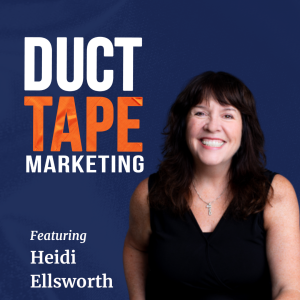
In this episode of the Duct Tape Marketing Podcast, Sara Nay sits in for John Jantsch and talks with Heidi Ellsworth, president of Roofers Coffee Shop, about how small businesses build trust with customers. Ellsworth has spent more than 30 years in roofing, much of it helping tradespeople and small business owners tell their stories online. She and Nay talk about why online communities, directories, networking, and content still work together, and how that combination matters more now that AI shapes how people find and judge a business.
Ellsworth breaks down how she builds content: record your conversations, turn them into transcripts, then let AI help with the first draft. She and Nay also talk about what happens after the sale, where staying in touch with customers pays off, and why the best referral programs start with genuinely strong service.
This episode is for small business owners, marketing agencies, and consultants who want a grounded take on combining offline relationship-building with online content and AI tools without losing the trust that got them there.
Guest Bio
Heidi Ellsworth is president of Roofers Coffee Shop, an award-winning media and community platform serving the roofing, coatings, metal, and outdoor living industries. Ellsworth is a nationally recognized leader in the roofing industry and has helped shape how the industry connects and communicates online, she helped launch Roofers Coffee Shop with business partner Vicky Sharples in 2002, joining the company full-time in 2015. She also leads Ask A Roofer, connecting homeowners and business owners with roofing contractors.
Key Takeaways
- Recorded conversations and phone videos are raw material for content. Turn them into transcripts, then build articles, posts, and case studies from there.
- AI can speed up content creation, but it’s a drafting tool. Skipping the edit and read-through step is where AI-generated content goes wrong.
- Combining online directories, articles, and podcasts with offline efforts like community involvement and networking builds the kind of consistency that earns trust, from both people and AI search tools.
- It’s fine to talk publicly about the good work you do in your community. Sharing it amplifies the impact and supports your marketing.
- Referral programs only work when the underlying service is excellent. Incentives do not make up for a weak customer experience.
Great Moments (Timestamps)
- [00:59] – Heidi shares how watching her father, a general contractor, inspired her mission to help small businesses tell their stories.
- [03:34] – Why the combination of online communities, directories, networking, and content works so well for small businesses.
- [06:08] – How AI has raised the stakes for consistent, authentic online content.
- [09:45] – Heidi’s case for why “transcripts are gold,” and how to use AI as a tool without losing your voice.
- [14:50] – The overlooked importance of nurturing customers after the sale.
- [18:54] – Heidi’s closing advice on getting to know your online resources.
Memorable Quotes
- “It’s easier than it’s ever been [to produce content]. Transcripts are gold. If you’re looking for gold out there, transcripts are gold. So taking your phone and recording your thoughts, recording conversations, thought leadership conversations.” — Heidi Ellsworth
- “We always say people do business with people, right? They want to know who they’re doing business with, and they want to feel good about buying from you and trust.” — Heidi Ellsworth
- “You gotta think about yourself as a customer. As a customer, what do I want and what do I wanna do? And if I have a great experience, how many people am I gonna tell?” — Heidi Ellsworth
- “Do those good deeds, but it’s okay to talk about it. It’s okay because other people, other small businesses will see what you’re doing and they will follow. So it amplifies the good deed, and it also helps your marketing.” — Heidi Ellsworth
Resources
Sara Nay (00:01.474)
Hello, and welcome to another episode of the Duct Tape Marketing Podcast. This is your host, Sara Nay, stepping in for John Jantsch. Today, my guest is Heidi Ellsworth, who is a nationally recognized leader in the roofing and business building industries, serving as president of the coffee shop, an award-winning group of digital platforms. With more than 30 years of experience in roofing in sales, marketing, and business development, she has played a pivotal role in advancing how the industry connects, communicates, and
Rose. Welcome to the show, Heidi.
Heidi J. Ellsworth (00:33.167)
Thank you so much. That was such a nice introduction. Thank you.
Sara Nay (00:36.59)
I’m excited you’re here. and so let’s dive on in. Let’s get to the point. so you started in roofing I believe in nineteen ninety-three. So you’ve been in the industry for quite some time now. And over the years you ended up building one of the most influential media and community platforms. So I’m curious what caused you to see a need for building a platform like you’ve built?
Heidi J. Ellsworth (00:46.12)
Yes. Yeah.
Heidi J. Ellsworth (00:59.979)
you know what it it actually started when I was really young. My dad was a general contractor. And as kids, we’d be in the back of the car and we’d be driving someplace. And my dad would point out everything, every job that he had done, right? Every job, every house, every roof, every light pole. And as I grew older and, you know, worked with him in the business as a teenager, and then watched him as I started my marketing communications, I realized how
Much he would have appreciated to have someone put together a case study for him to tell his story, to share his successes, you know, more than just pointing them out to your kids and spouse. And that really stuck with me. And I wanted to be able to tell the stories of the amazing small businesses and in my case, craftsmen and women who build.
America, right? Who build and we we’re just not America who build everywhere. and so that that inspired me. And my business partner, Vicky Sharples, had actually started Roofer’s Coffee Shop back in 2002. And when she asked me to join her full time, I helped her launch it in 2002, but then sh I joined her full time in 2015. And it gave me that opportunity, that opportunity to do something I’d really kind of thought about for many years before I
Actually started full time with the coffee shops.
Sara Nay (02:27.566)
I love that story and and we actually have some in common because John Jance is my father and he actually founded Duct Tape Marketing and so I grew up watching you know the impact that he was making in small businesses’ lives and it really inspired me to kind of follow along on on the path that he laid.
Heidi J. Ellsworth (02:43.512)
Yeah, exactly. Exactly. My my kids actually work for me now. And nothing that, you know, I probably much like you, they came to me and they said, you know, we just we’re interested and we love what you’re doing. And so they they will also tell that story about their grandpa. So it’s yeah, it’s I love family businesses.
Sara Nay (02:48.073)
nice.
Sara Nay (03:04.822)
Yeah, it’s amazing they came to you. I I came to my dad about 16 years ago and was like, I need a job. But it worked out. I’m still around 16 years later. Yeah. Awesome. Well, one of the things that I know you talk about obviously is marketing, and that’s a lot of what we focus on as well. And a lot of people, when they think about marketing, they think, you know, I just need more leads or I need to run ads or I need a website in place. But you and I both know that it’s a lot deeper than that. So I know you talk a lot about
Heidi J. Ellsworth (03:08.81)
Yeah, it worked out obviously very well.
Heidi J. Ellsworth (03:32.184)
Yes.
Sara Nay (03:34.316)
A combination of like online communities, directories, networking and content. So why does that combination work so well in trades or just small business in general?
Heidi J. Ellsworth (03:45.039)
Yeah, you know, I think it honestly has worked for decades, right? The the idea that you build trust with your customers and that you’re authentic, that you help them guide them in making good decisions for their whether it’s their home or their business or whatever, that it’s it’s more than just a sales call. It’s a relationship, it’s it’s consulting on what makes what is a win for everyone involved.
and that’s always been the case, I feel, in in in with successful small businesses, with successful businesses, period. That’s always it’s about trust, it’s about your brand, it’s about your culture, all those kind of things. Well, now let’s throw in technology and what has happened the last, you know, five years, but really the last year when we’re talking about AI and the things are changing the landscape, is that it has created
This transparency that wasn’t there before. I mean, when I started and when I was first mark helping contractors and small businesses, because I worked with a number of small businesses doing their marketing too. it was about, well, should you name your company with starting with an A so you can be at the beginning of the yellow pages section. And it was about being part of, but it was still a part of being that little league team of doing all those things. Today, your whole life.
Your whole business is out there online. And so if you do not have a consistent message, a consistent brand, really authentic real story to tell and to share, it’s gonna come out and people are going to see it. So what we started in 2002, Vicky and I, with online articles and directories, and then grew it, you know, starting 2015 really into a multimedia platform with podcasts and webinars. Today.
ha has created this rich, rich environment for AI to search, to find content, to be able to see real stories. And so we are encouraging small businesses, all businesses, in and right now we serve the roofing industry, the coatings industry, the metal industry, and the outdoor living industries to get their directories up.
Heidi J. Ellsworth (06:08.622)
Get their art give their articles, do podcasts with us, just like we’re doing right now. All of this feeds that AI need for information. And we really, like you do, work with them to really tell their story and make sure that there’s a consistency between their website and between what they’re putting on our site so that as people are finding things online, whether that’s AI or real people.
Sara Nay (06:21.464)
Yeah.
Heidi J. Ellsworth (06:36.308)
they’re finding consistency so they can build that trust in that brand. So it’s just a different way, but it’s even more important today than it’s ever been, I think.
Sara Nay (06:44.578)
Yeah, that’s great. And a lot of times when we’re working with businesses, we’re we’re helping them diversify like what they’re doing from a marketing perspective. And so you mentioned a few things like the directories and communities and content and credibility online, but are you also advising people to focus on offline efforts as well? And what does that look like?
Heidi J. Ellsworth (07:04.92)
Yeah, big time. offline is being involved in your community, giving back through charitable activities, doing that sign at the little league field. but here’s the difference. And and I don’t know if you’ve seen this, Sarah, in all the different folks you work with, but I can tell you in the construction industry, we have a number of very humble, very humble business owners who are like, Yeah, I donate, I I re-roof people’s homes every day. I
I helped build the little league dugout. I I’m not gonna tell anyone because you know we’re not supposed to. We’re just supposed to do good deeds. And so the conversation we have now is do those good deeds, but it’s okay to talk about it. It’s okay because other people, other small businesses will see what you’re doing and they will follow. So it amplifies the good deed and it also helps your marketing. It’s cause marketing is so important.
Sara Nay (07:50.094)
Yeah.
Heidi J. Ellsworth (08:02.232)
And then I also am very much about networking. You know, it’s marketing is about networking also. So if you’re talking about off-grid, whether you’re online or you’re going being a part of an association, being part of your chamber of commerce, being, you know, that is also marketing because you are taking the time to be there, to give back, to help with your community. So we encourage all of that, but we encourage them to talk about it, to share it.
Sara Nay (08:26.392)
Yeah. Yeah, that’s great. I always think about marketing as, you know, going out there and focusing on your online presence, obviously, but also then having conversations with people is a big part of marketing and people don’t always think about it that way. But it’s as you said, it’s, you know, donating, it’s attending events, it’s having conversations, it’s networking, it’s finding strategic partnerships. Like that should always be a conversation, regardless of what industry you’re in. It should always be a focus while you’re also building all out your online presence to support those efforts as well.
Heidi J. Ellsworth (08:45.91)
Exactly.
Heidi J. Ellsworth (08:55.32)
Right. We always say people do business with people, right? They they they want to know who they’re doing business with. They want and and I know that’s a little muddier in today’s world when you think of Amazon and some of these things. I I really don’t know who’s on the other side of that screen, but on a local small business basis, people want to be with people and they wanna know you and they wanna know who you are and they want to feel good about buying from you and trust.
Sara Nay (08:55.638)
Ultimately.
Sara Nay (08:59.415)
Yeah, exactly.
Sara Nay (09:22.238)
Yeah. Absolutely. And I would argue that’s becoming more important in the age of AI right now. But going back to the content piece, because we have been preaching content, content, content for years. But what if someone’s listening and they’re like, Okay, I get it. I need to be producing content, but I don’t know how to get started. How what would you advise on how to get started with content production that’s representing a business?
Heidi J. Ellsworth (09:45.113)
Yeah, I tell you what, it’s easier than it’s ever been. It’s much easier than when I was doing it when I started out in my career. but I I just said this on a call earlier today. Transcripts are gold. If you want, if you’re looking for gold out there, transcripts are gold. So taking your phone and recording your thoughts, recording conversations, thought leadership conversations. Obviously, you have to be careful of privacy and all that stuff, but and then
Sara Nay (09:59.119)
Mm.
Heidi J. Ellsworth (10:15.118)
videos on your phone, taking videos, having those, you know, referrals or talking to the your customers about what they like, what was successful, why they’re happy. And then taking those videos or those audio tracks, turning them into transcripts, and forgive me, Sarah, I’m sure there’s gonna be a few people out there who are gonna be like, no, don’t say it. Put it into AI. Put it into AI.
Sara Nay (10:39.5)
Yeah.
Heidi J. Ellsworth (10:43.514)
put it into AI because it’s a tool. It’s a tool to be used. Now, here’s where people go sideways with AI and building content. And that is they don’t read what comes out, right? So it’s it’s just like if you’re putting something in and cooking it and making something and you never taste it, and you just put it out on the table and it’s terrible. That’s exactly what will happen with AI. You can put all the ingredients in, your thoughts, what you’re doing, everything, you put it all in.
It bakes it and comes out. If you don’t take the time to read it, to edit it, to change it, to make sure it fits exactly who you are, then it’s not a very good tool. So that’s what I’m like. Capture the thoughts up front, make it easy, use it as a tool to run through and then edit, edit, edit, and read it. That is so incredibly important. But it’s just, it’s created an opportunity. I mean, and there’s
That’s just writing, right? But I mean, there’s also a lot of programs out there that will help with video editing. There is, you know, that phone is the best tool you have. Although Sarah, this morning I was on with a contractor who does metal roofing and he just got his metaglasses and he’s blowing it up on social media with the videos the job site and talking to his customers. And he singing its praise, loves it.
Sara Nay (11:55.554)
No.
Sara Nay (12:03.352)
That’s amazing.
Yeah. Yeah, that’s amazing. I feel like those glasses would take some of the pressure off. You almost forget that you’re recording ultimately. ‘Cause they’re just on your face.
Heidi J. Ellsworth (12:12.12)
Yeah. Yeah. Exactly. Yeah. And he says it’s so easy. And then there’s software to edit those, you know, say pull me a clip. yeah. So it it I think it’s easier than ever, but you have to not be afraid and you have to check your work. I can only say that like 10 million times because I believe it so strongly.
Sara Nay (12:30.658)
Yeah. Yeah. Awesome. Well, I know I you actually interviewed me on a podcast yesterday. So we reversed roles and we talked a lot on that podcast about the customer journey. and so so far today we’ve talked about a lot of things that people can be doing to get awareness when it comes to getting in front of people. but how do you see like the customer journey changing in the age of AI?
Heidi J. Ellsworth (12:36.611)
Yes.
Heidi J. Ellsworth (12:52.866)
Yeah, I think it’s become even more important. I think you have to stay in touch with your customers. You need to have the touch points along the way to make sure that they’re getting what they need, that you’re delivering what you promised, that they’re happy. the the communication’s a little bit easier because of automation. So you can automate a lot of your messaging that goes the touch points, you can automate and making sure they’re getting communication they need to have a good customer experience. But
That one on one, I think will never go away. You s you still need that touch point with your customers. And I mean, it depend there’s so many small businesses on so many different levels, but it’s obviously if it’s retail, it’s little bit easier to have that face to face. But in construction, law, all those other things, making sure you s stay in touch in that customer journey. and I I would say at the very beginning, there’s nothing more important than listening.
Listening and understanding the needs and the pain of your customer and how you can solve it and then deliver.
Sara Nay (13:58.947)
Yeah, exactly. I think that’s so key, like especially in like the sales process I’ve been sold to so many times over the years where it’s like, did you even listen to what I was saying or are you just going through your script to like pitch what you think I need, even though I just told you that’s not what I need? And so I think it is really key to listen and ask the questions and stay curious. But you also made another great point in the customer journey. There’s also a lot of businesses that focus like
Heidi J. Ellsworth (14:06.778)
Yeah.
Sara Nay (14:21.816)
primarily on marketing and just getting more and more and more people in the door. But then like once people become customers, they kind of like forget about them and they don’t really communicate well. Like I’ve signed up for services and products over the years and it’s like, okay, I paid this money, what’s next? It’s crickets. Like what can I expect? And so I just think like it’s sad, but communicating with your clients and customers after sale can go such a far way. And often a lot of businesses forget about that piece because they’re so focused on leads, leads, leads.
Heidi J. Ellsworth (14:30.01)
Right.
Heidi J. Ellsworth (14:50.713)
Mm-hmm.
Sara Nay (14:50.796)
And so from your perspective, like any advice there on how to like how to nurture people and take care of people more after they actually become customers?
Heidi J. Ellsworth (14:57.241)
Yeah.
Yeah I think a lot of times you gotta think about yourself as a customer. As a customer, what do I want and what do I wanna do? And if I have a great experience, how many people am I gonna tell? And I I I that to your point is that’s the best way to generate leads or to generate people coming to you. You know, that they heard, Yes, we love these guys, they are so great, they did all of this for us. You you gotta go see them. I had a a chiropractor in
lady in town who was just so phenomenal. And I told one person who told another person and they told another person. I mean, and everybody keeps coming back, going, Thank you, she’s so amazing. and so I think yes, new leads are important and branding and having your name out there so that when someone does hear your, you know, or someone has a need, they’ve seen you, they’ve heard about you from the community.
And that’s really that’s the ultimate lead generation. But I really feel with lead generation today, too many people just want that instant lead and ’cause because Google has kind of trained them that way. Those are they take a lot more time and usually are not nearly as qualified.
Sara Nay (16:03.586)
Yeah.
Yeah.
Sara Nay (16:11.842)
Yeah, absolutely. I mean referrals are the most, I feel like, the easiest can to convert when it comes to leads because there’s already a lot of that trust built in. but I’m curious in your work, have you helped different businesses build out referral programs or is it more just built on in sp like helping people feel great where they want to refer ultimately the companies they’re working with? What’s your approach there?
Heidi J. Ellsworth (16:18.521)
Yeah.
Heidi J. Ellsworth (16:33.4)
I yeah, I’ve worked with a lot of different companies who have done it. I mean, in construction, it’s all about referrals, right? I mean, in fact, some some folks they don’t even do marketing, and now we say that’s not a good idea either, because you need that full schedule around it. But I’ve worked with people helping to put together, I mean, I’ve worked for contractors, small businesses that where we put together referral programs, how we’re going to communicate that. And that starts all the way.
you know, you your sales team needs to understand it. And then you need to be consistent and talking to people and finding out. But you can put together a lot of referral programs. You can give a lot of gift cards away. You can do all those kind of things. But if you don’t have stellar work and great communications, people won’t care about a gift card. So I I believe in referral programs, but I really believe in delivering the what people need and then and then following through.
Sara Nay (17:26.147)
Yes.
Sara Nay (17:30.498)
Yeah, absolutely. And your chiropractor example sets the table for that exactly. I mean, I have a person that’s done our taxes for years, and I think everyone I know he also does their taxes. And it’s just because he’s done a great job and he communicates well and he’s on time and he’s responsive and we can rely on them. Like it’s all those things that you want. And once you find someone like that, like literally the next time someone’s like, Who does your taxes? I’m more than willing to refer them because I’ve had a good experience. And so I think that really highlights
Heidi J. Ellsworth (17:38.938)
Yeah, exactly.
Heidi J. Ellsworth (17:48.547)
Yeah.
Sara Nay (17:58.255)
Regardless what industry you’re in, like yes, as we were saying, I do think referral programs have a place. But as long as you’re nurturing people throughout the whole experience and you’re delivering on what you promise, they’re just gonna refer you naturally as well, which is a win all.
Heidi J. Ellsworth (18:12.672)
Exactly. Exactly. And I I use myself a lot as my own focus group, right? I’m like, how do I want to be treated? What is is a gift card gonna really make that big of a difference to me? No, really good service is gonna make a big difference to me. And so now and knowing that I’m there’s a lot of people who have different opinions and so you need to ask and talk to a lot of people. But if you kind of start at home and build that out, treat others like you wanna be treated.
Sara Nay (18:37.346)
Yeah, absolutely. Love it. Well, thank you. We are coming towards the end of our show. So I always like to ask a couple questions as we get towards the end. based on what we discussed today, is there one tip or one thing that you want to leave the audience with before we go?
Heidi J. Ellsworth (18:54.098)
Yes, I would say get to know your and purely selfish here, but get to know your online resources. Get to know the people behind those. sign up for podcasts, sign up for send in articles, get your directories. there’s really nothing more important right now for your online presence, which is a part of your bigger marketing plan than that. And so if anybody has questions and they want to see what we have done at Roofers Coffee Shop.
It’s easy. Heidi at Roofers Coffee Shop dot com. I’m more than happy to answer any questions.
Sara Nay (19:26.67)
Awesome. And then one final quick question I like to ask because I’m a bit of a book nerd. Are you reading anything right now that you would recommend or have you read anything lately?
Heidi J. Ellsworth (19:31.343)
Yeah.
Heidi J. Ellsworth (19:36.182)
Yes, I’m kind of a I’m really big into sci science fiction and fantasy and stuff like that. So Onyx Storm is one of the ones that I just finished and I can’t wait for the fourth book. So yeah.
Sara Nay (19:44.609)
Awesome.
Awesome. Love it. All right. Well you already shouted out there where people can connect you with you online. anywhere else that you want to connect online?
Heidi J. Ellsworth (19:56.93)
yeah, roofers coffee shop dot com. That’s our oldest and our first brand. And so you’ll see a lot of different things there. If you’re looking for a roofer, go to askaroofer.com. And as a homeowner or a business owner, if you’re looking for you know help to pick that roof and get something great, askaroofer.com has all kinds of resources and you can ask and find a con a contractor. And that’s also part of our platform.
Sara Nay (20:21.056)
Awesome. All right. Thank you so much, Heidi, for being here today. I really enjoyed our conversation. And thank you all for listening to the Duct Tape Marketing Podcast. We’ll see you next time.
Sign up to receive email updates
Enter your name and email address below and I’ll send you periodic updates about the podcast.
