Category Archives: Podcast

Auto Added by WPeMatico

Mastering Intrigue: How to Shoot Video That Doesn’t Suck

Mastering Intrigue: How to Shoot Video That Doesn’t Suck written by John Jantsch read more at Duct Tape Marketing

The Duct Tape Marketing Podcast with Steve Stockman
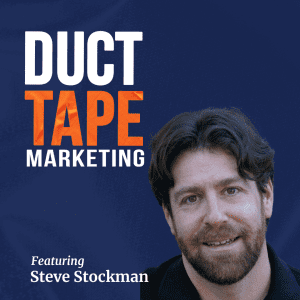
In this episode of the Duct Tape Marketing Podcast, I interviewed Steve Stockman, a seasoned producer, writer, and director with over 200 commercials under his belt. His expertise spans various mediums, including web series, films, music videos, and TV shows. The discussion revolves around his book, How to Shoot Video That Doesn’t Suck, where he shares invaluable insights into creating compelling and effective marketing videos.

Embark on a journey to master the art of video production with Steve Stockman as he shares insights on shooting videos that captivate your audience. Discover the crucial elements that contribute to the success of a video, from storytelling techniques to understanding your audience’s needs.

Key Takeaways

Embark on a transformative journey into the world of video production with Steve Stockman in this episode of the Duct Tape Marketing Podcast. Gain insights into the power of intrigue, emphasizing authentic storytelling over sensational tactics to captivate your audience from the first few seconds. Steve highlights the importance of preparation, urging creators to consider their audience’s needs and deliver value through thoughtful planning.

Simplifying the technical aspects, he dispels the myth that expensive equipment is crucial, focusing on the storytelling element. Learn to storify your marketing videos, turning mundane showcases into engaging narratives that resonate with your audience. Steve also challenges the notion of ideal video length, stressing the importance of conveying your message effectively without wasting the audience’s time. Elevate your video marketing game with Steve Stockman’s actionable insights for creating compelling, engaging, and impactful content.


Questions I ask Steve Stockman:

[00:44] How long will somebody watch a video that sucks?

[01:13] What are some of the things that make a video hard to watch?

[03:08] What things do you have to have prepared before turning on the camera?

[05:56] Much like a hook in copywriting, how do you get people intrigued in the first 5 seconds?

[07:56] What’s the difference between narrative and storytelling?

[13:27] What are some of the most important things to consider in the technical aspects of videomaking?

[17:57] How long should a video be?

[19:27] Tell us a bit about the video course that accompanies your book?


More About Steve Stockman:


Get Your Free AI Prompts To Build A Marketing Strategy:


Like this show? Click on over and give us a review on iTunes, please!

Connect with John Jantsch on LinkedIn


This episode of The Duct Tape Marketing Podcast is brought to you by Work Better Now

Visit WorkBetterNow.com mention the referral code DTM Podcast and get $150 off for your first 3 months.


John (00:08): Hello, and welcome to another episode of the Duct Tape Marketing Podcast. This is John Jantsch. My guest today is Steve Stockman. He’s a producer, writer, and director of over 200 commercials that’s probably gone up since he wrote that web series films, music videos, and TV shows. He wrote, produced and directed the award-winning MGM feature film Two Weeks with Sally Field, and he’s also the author of a book we’re going to talk about today, how to Shoot Video. That Doesn’t suck. So Steve, welcome to the show.

Steve (00:37): Thanks for having me, John. I appreciate it.

John (00:39): So you probably don’t have empirical data on this, but you probably have some anecdotal data. How long will somebody watch a video? That sucks?

Steve (00:48): Oh, that sucks. Three seconds. We’re very attuned to good video versus bad video. If you remember the buttons on a radio, because I used to be in radio, it took a while to understand that it takes about three seconds for someone to decide they don’t like what you’re doing, and that’s true in video as well, I think.

John (01:12): So let’s talk a little bit about what are some of the things that make a video hard to watch, which essentially probably fits it into the category of sucks.

Steve (01:20): Well, the first thing that makes it hard to watch is, oh, let me back up philosophically. The thing that makes video hard to watch is when you don’t feel comfortable that it’s going to a place that you’re interested in. So what I mean by that is that it’s kind of like turning the pages on a book about marketing. If you’re reading the first couple pages and you go, this person doesn’t know what they’re talking about, this is not for me. This book is badly written. I don’t understand the language, the points are nonsense. You’re going to stop reading that book in about three pages. And there are things that we do as people who produce videos that clue people in the same way that we have no idea what we’re doing, which makes sense because until 10 years ago, nobody ever asked normal human beings to make a video.

(02:11): They called people like me and said, can you come in with your crew and make a video? But now we carry around our cell phones and we are expected all day to be shooting video. And the truth is that we grew up on video from the time we were born. So we understand how it works, but we don’t speak it very well. So the shorter answer is that the minute somebody shows you that they don’t know anything about how to light a scene or that they’re pointing the camera in a way that’s unattractive, or their camera is shaking or their audio is terrible, or they cut between two things that make no sense to you, basically the minute that happens, we lose faith that you’re taking us on a journey and instead go, oh, this is terrible. Is it over soon or can I go? And then we click to one of 300 billion other things that we could be watching instead of your video.

John (03:08): So the book title is How to Shoot Video, which sort of implies, oh, you get out your camera and you turn it on, right, that’s the shoot. But there are many component parts, right to go to make a video that is something somebody’s going to watch. How do you think in terms of even preparing before the camera?

Steve (03:26): Well, I think the term of preparing is surprising to some people, especially because we’re used to, for home videos, we just pull out our camera and point, or we get to the Niagara Falls and we go, oh, that looks cool, and we go click and we roll for a couple seconds. But in truth, preparing is probably the biggest difference between what a professional does and what an amateur does. And so any preparation is good, but the key thing is to think about what you want to communicate to your audience, and you need to think about that not in terms of, oh, I want to promote a big sale that I’m having. You need to communicate that in terms of what’s in it for the audience to watch my video. Because a video that doesn’t get watched is like a tree that falls in the forest with no one around, right?

(04:19): It’s like nobody hears it. If you do a video that’s so bad that you drive people away, you might as well not have made it. And in fact, you would’ve been better off not spending the time or the money or calling in the favors or whatever you were doing to cause that video to come into existence. So the first thing you need to do is think about what your audience wants from you and what they want from your video. Seriously consider how you might deliver that to them. Video does some things really well. It does motion, it takes you on a trip or it does emotion. It makes you feel or laugh or cry or whatever. So motion and emotion are big things. Marketers often get hung up on information delivery and video doesn’t do pure information delivery particularly well, which is why commercials are never Hondas are on sale. Go buy them in big letters on black because if it were that easy, everyone would do it, right? Video just doesn’t do information. We won’t sit still for it without a story or without some emotion. And so your prep of what you’re going to say to people that they’ll value and how you’re going to deliver it is the first most important thing for you to do.

John (05:34): So in marketing copywriting specifically, there’s all kinds of advice that spend 90% of your time on the headline because you’ve got to get people interested in reading the rest of the copy. You see a lot of videos, especially on YouTube that are essentially an ad and you’ve got five seconds because I can click away after five seconds. So what’s the similar approach to the headline? I hear people talk about a hook. You have to get somebody really intrigued in five seconds. Do we overdo that? Does that make sense?

Steve (06:08): Yes and no. First, let me completely agree with the premise. Intrigue is the most important thing that you can supply to your audience, but if you make films or television shows or commercials, you quickly realize that’s true. Every single second of all two hours that you’re making that is intrigue is making the audience want to know what happens next. And in the hooky kind of YouTube first five seconds world, people tend to go for something sensational in hopes of intriguing. But there again, it’s not that easy. Car crashes are intriguing, but once we know it’s a car crash, we drive by, right? YouTube videos are the same. Once we know you’ve used some schlocky, come on, then you’re kind of in the neighborhood of those clickbait headlines like Elon Musk opens up about his feelings about something and you click on that once and you go, they don’t know anything about Elon Musk that I don’t know. And then you go look at something else, right? So trying to do a hooky opening that’s based on cheating the audience or grabbing them with a car wreck, it doesn’t pay off in the long run for you because trust is the most important thing you can provide to your audience. Yeah,

John (07:30): They feel cheated. They feel cheated, right? Yeah,

Steve (07:32): Exactly. But intrigue is saying to them, Hey, I’m going to show you something and let me show you the beginning of it, and now let me show you where this is going, and I want you to think about how it could all end up. And that’s really storytelling in a true sense.

John (07:50): I wouldn’t ask a lot of people this, but just in the time we’ve spent together, I think this is going to make a lot of sense to you. What’s the difference between narrative and storytelling as far as what you just described, the common movie where they start with the car crash, but that’s because that’s where the protagonist ended up, and now we’re going to go back to how they got there and tell the story. Am I making sense there? I mean, do you bring this idea of narrative into your story?

Steve (08:18): Yeah, even in commercials, story form is very important in video. So a story has a hero, a beginning, a middle, and an end, right? Right. And if you get that wrong in a commercial, then the end of the commercial is very dissing. And if you get it wrong, if you don’t set up a good beginning where you have a hero who has some sort of dilemma or problem or question or is in a situation that becomes very not intriguing, in other words, we need to immediately care about a character and where they might be going. And if we do that, then we are in a story. And I would argue that all marketing video needs to be storified skillfully. So let me give you an example of what I mean. If you have a, I don’t know, a guitar shop, one of a big music store where you sell guitars and other musical instruments to kids and people in your community who buy those things, and you’re known for antique guitars, not antique a hundred years old, but you’ve got the classics, the Stratocasters, and all those things that are like the ones that the rock stars played in the olden days, and maybe you even have a few of those around the shop and you’re known for that.

(09:37): There’s two ways that you could do a marketing video to put on your website. One way is to show, look, here’s a Stratocaster, and it was once played by somebody in Chuck Berry’s band and it’s $1,500 and then here’s another one and it’s $670. And your audience would basically be gone in about that three seconds. But the other way you could do it is you could think about what your audience loves about your store and how they love the fact that you have these vintage guitars. And you could tell a story of a high school girl who comes into your store and wants to buy the same kind of double barreled guitar that Jimmy Page played on Led Zeppelin Stairway to Heaven. And you could show in this video how she comes into the store, tries the one that you have draws a huge crowd with her virtuoso playing, loves the guitar, plunks down her 1500 hard earned dollars, this antique guitar, and then fast forward to her debut recital at high school where she’s playing with her band and killing it. That’s a story about what people love about your store that is way more intriguing and gets across exactly the same message as showing a picture of a guitar with a sign. The difference is nobody’s going to watch the pictures of the guitars with price tags, and everybody’s going to watch the story of this amazing young woman. And so by thinking in terms of story and delivering a story to your audience, you’ve vastly elevated the kind of marketing video that you’re doing.

John (11:19): And now a word from our sponsor, work better now. Work better now provides outstanding talent from Latin America, hand matched to your business with over 40 roles across various industries, including marketing. They’re a reliable partner for consistently finding the perfect fit for your business. Simply tell them what you need and they’ll handle the rest hassle-free. We have two work better now, professionals on our team, a marketing assistant and a marketing coordinator, and we’ve been blown away by their abilities, responsiveness, and professionalism. They’ve really become an essential part of our growing team. And to top it off, each dedicated and full-time work better Now, professional is 2350 per month, and there are no contracts to schedule a 15 minute consultation with a work better now rep and see how they’ll support your business growth goals, visit work better now.com, mention the referral code DT m podcast, and you’re going to get $150 off for your first three months. That’s work better now.com. And don’t forget that DTM podcast code. Yeah, you take people on a journey as opposed to shoving something down their throat, I guess.

Steve (12:30): Yeah, exactly. And also giving them something of value so that entertainment is of value to them, that emotion that they feel is of value to them. The chance to be with the hero of your story, this young woman and see her have a goal, have a way to get it done at your store and then succeed with it. People love that. I mean, that’s what we pay to go to the movies for, that we buy our subscription to Netflix for is those kinds of stories. So if you can do a real story that your customers will be interested in, that’s gold.

John (13:06): So let’s talk a little bit about the technical aspects. I know that we could spend all kinds of time unpacking all kinds of equipment and whatnot, but there’s the camera itself, there’s sound, there’s lights. I mean, there’s a lot of things that need to be considered, especially since a lot of my audience are amateur, so to speak. They’re producing video that they need as content, let’s put it that way. What are some of the most important things to consider as you consider the technical aspects?

Steve (13:32): There are two super important principles of learning to shoot video better from a technical aspect. One is that your smartphone shoots better video than Alfred Hitchcock could shoot with a crew of 150 mid 20th century. So it is smarter and more adept at lighting. It does focus beautifully. It does 4K video. It looks amazing, and you can shoot a movie on it. And that’s important because if you go on YouTube and you get all these tips about how to shoot video, you’re going to see a whole bunch of stuff that’s about three point lighting and framing and all that stuff. And that’s good information, but it’s not the information that you really need to create an effective video because in truth, your camera will light for you. It has algorithms in it that make it very hard to produce a picture. Not impossible, but hard.

(14:37): The only thing cameras don’t do particularly well is sound or cell phone cameras. And for that, if you’re doing a marketing video that you expect your customers to watch, you really need to get an external microphone or two and make sure that everything sounds really great, but looks-wise, your camera will do it all. And the reason I start with that is because amateurs especially get hung up on, well, what equipment? I need equipment. It’s like if you think about if you’re a golfer, if didn’t go out and buy the $25,000 golf clubs day one of your journey to the first lesson, what you did was you probably either rented or borrowed some clubs. And the reason you did that is because when you’re a complete amateur, you don’t know the difference between the $25,000 golf club and a $10 golf club. You’re learning that. And so learn with what you have.

(15:36): So most of us have smartphones, which are terrific if you’re going to shoot your own video. Some of us have DSLR cameras that also shoot great video and maybe have better lenses. If you’re a photographer, a skilled photographer, you will notice the difference between the lens of a really nice DSLR and an iPhone. But what you want to do is find a piece of equipment that’s easy for you to use so that you can focus on getting the message that you want to cross and telling the story you want to tell without having to worry about how the equipment works. And as you practice and get better, you’re going to realize that the $10 golf club is a piece of crap and you’re really going to need to upgrade. But you’ll learn that that’s part of your learning process, and you’ll learn what you like to shoot on. And you’ll get frustrated with, the phone doesn’t do this or this, and I really wish it did, so I’m going to upgrade to a prosumer black magic camera or Sony or something. But you don’t need to worry about that until you’re really good at video. People worry

John (16:40): About, yeah, you might learn that. You might learn that you just need to hire somebody that you don’t like doing it.

Steve (16:45): Yes. And there’s no shame in that, right? I mean, for example, I’m a director and I love video, but I don’t actually shoot it. I hire people who love to shoot video to work on my crew, and they make the pictures beautiful, and I look at them and go, could you tweak that a little here? Or Could you point a little more this way? Or We missed that part of the shot. That’s my job, but I don’t handle the camera because it’s not my thing. And the same with audio. I mean, I would never do my own audio, but I know a guy who’s brilliant and can mic 27 people at once and capture everything they do perfectly, and he’ll never make a mistake on the set. And he comes to all my shoots because he’s great at that. So yes, I think it was one of my favorite philosophers of the 20th century. Alf, do you remember Alf, the puppet prime alien life form? Sure. Yes. Alf said, the secret to happiness in life is to figure out what you don’t do and then don’t do it. So I’ve always tried to live by that.

John (17:53): So true. This is a silly question, but I have to ask it because everybody asks me, how long should a video be?

Steve (17:59): Video should be long enough to tell the story you want to tell in an interesting way, not a second longer. So if you think about it, if I have very good luck and a very skilled cast and crew and a pant load of money, I can make a movie like Marvel Avengers, and it will last three hours, and you will sit there through the whole thing and enjoy all of it. If I’m a bad videographer, 30 seconds will make you want to chew your leg off like you were caught in a bear trap and run, or hobble, I guess, if you chewed your leg off. So you definitely, it’s really all about the story and the skill of the storyteller, and not at all about the length of this should be. We used to think that the web wanted short videos, and sometimes it still does, but YouTube encourages its creators to do 10 or 20 minute videos on a regular basis. TV shows have always been half an hour or an hour long, or really 22 minutes and 46 minutes long with commercials. Movies have always been about two hours. They were an hour and a half maybe in the forties, and now they tend toward three, but they’re in there somewhere. The question is how long is it interesting? And what real estate do you need to tell the story? Because the minute you waste the audience’s time, they’re gone, right?

John (19:25): Yeah. When we were starting off air, you told me you have a video course that actually accompanies the book or that has supplemented the book. You want to tell us a little bit about that?

Steve (19:34): Yeah. I wrote the book 10 years ago and it’s been updated since. So the current version is very current and how to shoot video that doesn’t suck, doesn’t really talk about equipment. It talks about this communication, how to take your audience on a journey, how to think about communicating to them with video. And over the years, people have written me and said, why isn’t this a video course? Which I always thought was kind of funny. I always figured it as a book. And then the audio book did really well, and none of it has much to do with pictures, but people asked for it. And so I thought about it and it sort of became an opportunity to add things that weren’t in the book. So I did this video course that you can get at my website, steve stockman.com, and it’s 22 lessons, 22 short lessons with exercises that cover most of the key things from the book and then a bunch of other things.

(20:28): There’s a whole separate section on marketing video and how to do something that your customers are going to love to watch and that will help them understand more about you and make them feel good about working with you. And then there’s a whole bunch of other stuff, and you get the exercises, and I demo the exercises. And so different people like to learn different ways. If you like reading books, the book is there, and if you would rather have somebody show you for a couple hours how it’s done that you can break up into little bits and do on your own, the course is there as well.

John (21:03): Awesome. Well, Steve, I appreciate you stopping by the Duct Tape Marketing Podcast, and hopefully we’ll run into you one of these days out there on the road.

The Zero Dollar Consultancy

The Zero Dollar Consultancy written by John Jantsch read more at Duct Tape Marketing

The Duct Tape Marketing Podcast with John Jantsch

In this episode of the Duct Tape Marketing Podcast, I interviewed Phil Gerbyshak, a small business expert, author, and keynote speaker with over two decades of experience in sales and marketing. Phil shares valuable insights from his latest book; The Zero-Dollar Consultancy: How to Start Your Consulting Business with Little or No Money.

Embark on a transformative journey as Phil unveils strategies for launching a consultancy with minimal financial investment. Learn how to navigate the challenges faced by those starting out in the consulting world and discover practical steps to initiate and grow your consulting business.

Key Takeaways

Phil Gerbyshak, a seasoned small business expert and author of The Zero-Dollar Consultancy shares invaluable insights on mastering the art of launching a consultancy with minimal financial investment. In this episode you’ll learn actionable steps for beginners, the importance of finding a focused niche, practical pricing strategies, building strong client relationships through trust, and smart scaling strategies. Phil’s expertise provides a roadmap for both aspiring and experienced consultants to navigate the complexities of starting and growing a consultancy successfully.


Questions I ask Phil Gerbyshak:

[00:52] Why did you think that people needed advice to start a zero-dollar consultancy?

[03:26] If somebody thought to start a business. Where should they go to figure out what their focus should be?

[06:31] What’s your take on the concept of picking a niche?

[08:23] Tell us about 3 of the 10 essential free tools you mention in your book everyone needs to get started

[11:34] What’s the best way to secure your first 3 clients?

[14:07] How does a beginner with no track record or case studies determine how to price their services?

[16:53] As a consultancy with a few clients how does one determine their first hire in order to scale?

[18:22] What are some of the common mistakes consultancies fall into when they get started?

[20:06] Are there any things, trends, changes that you see coming that that are going to impact this industry?

[21:25] Where can people connect with you and obtain a copy of your book?


More About Phil Gerbyshak:

Get Your Free AI Prompts To Build A Marketing Strategy:


Like this show? Click on over and give us a review on iTunes, please!

Connect with John Jantsch on LinkedIn


This episode of The Duct Tape Marketing Podcast is brought to you by ActiveCampaign

Try ActiveCampaign free for 14 days with our special offer. Sign up for a 15% discount on annual plans until Mar 31,2024. Exclusive to new customers—upgrade and grow your business with ActiveCampaign today!


John (00:08): Hello, and welcome to another episode of the Duct Tape Marketing Podcast. This is John Jantsch. My guest today is Phil Gerbyshak. He’s a small business expert, author and keynote speaker, boasting over two decades of experience in sales and marketing. Throughout his career. He has worked with a range of enterprises from Wall Street firms to Main Street establishments, and today we’re going to talk about his latest book, $0 Consultancy, how to Start Your Consulting Business with Little or No Money. So Phil, welcome to the show.

Phil (00:38): Hey, thanks John. It’s great to be here with you.

John (00:41): So with a compelling title, like How to Start With No Money or $0 Consultancy, let’s start really first with the premise. This is an awful question to ask an author, but I’ll ask it anyway. Why did you think that people needed advice to start a $0 consultancy?

Phil (00:57): So Million Dollar Consultancy is already out there with Alan Weiss, right? Alan wrote the book, it’s a great book. It’s great book. It’s how to Make a Million dollars and that’s great. I think though a lot of people struggle to get started, the questions that I get from folks like me are like, Hey dude, how do I get started? What’s the first thing I do, not the 15th, the first? What’s the 10 things I do? So I said, huh, let me think about that. Well, I don’t know about you, John, but if somebody asked me a question more than 10 times, I’m probably going to write down the answer and make it into something for them. So that’s what I did.

John (01:30): So give us a little, other than the fact that you’ve been doing this for a while, give us a little background on what equipped you to feel like you were going to be the voice for those people trying to get started.

Phil (01:40): Well, when I started, I had no clue. I remember back in 19 what? No, not 19 2006, not 1996, 2006. When I got started, I was like, well, what the heck is here? And before that, I mean, I did some work, but I wouldn’t call it formal. It was like I’d get paid for doing random stuff and alright, well, in 96 there was nothing out there. And so I started doing things and then people would ask me questions and I’d end up coaching them, and then they’d ask me more questions and coach ’em some more, and then they refer to their friends and I’d coach ’em a little bit more. So I think of that as consulting, right? Because coaching, I’m not talking ICF. So tell me about your feelings and what do you think, John? But really in my zone of genius, which is tech, marketing and sales, inside my zone of genius, I know a lot of stuff.

(02:31): So people would ask me questions and it would be way more complex than I could write in an email. So I was like, huh, okay, well maybe I should charge you some money for this and people would gladly give me money. And then so it just happened that I would do this, but I never ever found just that startup bible that I needed. Not hardcore Eric Rice type of stuff, just simple, actionable, do this stuff. So here we go. I said, this is the stuff that I coach. This is what I teach, this is what I believe, this is what I know works. So let’s write a book.

John (03:05): So the technology, the world we live in, all the things that have changed. I mean, it made it really pretty easy for anybody to get into any kind of business, regardless of the type of business. And frankly, there are heck of a lot of people that are doing the same thing. They worked for a company for a while, they didn’t like it anymore. It’s like, I think I’ll do my own thing. How does somebody decide? How would you suggest that somebody decide some sort of focus? I mean, it’s one thing people are asking you to help ’em a little bit. You sort of get led into it, right? But if somebody’s thinking today I’m going to start a business, I mean, where do they go to figure out what their focus should be?

Phil (03:42): Sure. Well, I read a little bit about this in the book because it’s hard to find a focus if you don’t have a guide. Here’s the key, right? Find a guide, find a mentor, find someone you trust, and to ask them to ask you some questions. Some of those questions might be, so what are you good at? What do you enjoy doing? What do you not want to be doing? Who do you likes? You? Those are the types of questions that help. And then take some assessments. Take some assessments, see if that’s really true. You know what? I like that. And I believe we make the most money and the biggest impact in our icky guy. If we think about that, what people pay you for, what we’re good at, and then what we love. If we can combine those things, what gives us that juice?

(04:25): We combine those things, that little sliver there, that’s the best money. But from there, pick one of those three. I mean, you don’t have to be the biggest expert to be able to consult with people. You just have to be a few steps ahead of them and understand, okay, so this is what they need. I’m not telling you that you should claim that you can take people to $10 million if you’ve never done it, but what I am telling you is if people ask you questions and they ask you them over and over again, you can work with people like that to start your business. And that can be your focus.

John (04:57): And I think for a lot of people, I know to some degree in my experience, you evolve with clients. So some of those first clients you have to, may not be a perfect fit, may not be the right thing, but you learn what you do, what you don’t like, what you’re good at. So sometimes it’s just a matter of get out there and start swinging, right?

Phil (05:16): Absolutely. So that’s the biggest thing. I’ve got a whole chapter on it, just getting started. I do think that’s the hardest thing. I don’t want people to overthink that. That’s one of the reasons why I have 10 free tools. They might not be the greatest tools on the planet. There’s thousands of tools though. Like John, how do I build a landing page? Oh my gosh, how much time you got? Or go to card.co and go build yourself a landing page. That’s the thing. Just get started. And I agree with you. We do grow. We do pivot. I got to ask. Somebody asked me today, they said, so Phil, what advice would you give to people just starting out? And my answer would be prepared to change. It will not look anything like you expected when you started.

John (06:01): Yeah, that’s interesting. There’s certainly a lot of common advice out there now, talking about people picking a niche and going really deep in that. And I think there certainly can be some value in that. If your whole world background is in a industry, it probably makes sense for you to start there. But I think it’s really hard. I always tell people, just go get a few clients. Your niche will find you. Rather than saying, I’m going to today, start going forward, I’m going to work with dentists. It’s like, I’ve never worked with dentists. I don’t know if I’ll working with them. Right? So what’s your feeling on that idea of, because I mean, you can find plenty of experts talking about that’s the way to go pick a niche and go deep in it.

Phil (06:40): Well, it is hard. It’s so hard because you might hate what you did. So instead, let’s pick how you can pick instead of that, right? Instead of what you should pick. So how you can pick, you might say, you know what, I like working with middle managers. I like working with business owners. I like working with entrepreneurs. I like working with program managers. I like working with software developers. I mean, pick one of those, even if you’re not one of those and pick one. Get a couple clients and say, test your hypothesis. Do I like working with them? And if I do a good job, do they pay me? You know what I would love? There’s a lot of companies, a lot of nonprofits, a lot of people that I’d love to work with. But if you’re going to pay me 10 bucks an hour, well, I can make more than that at McDonald’s. That’s not worth my time. I mean, I don’t like that. Now that being said, maybe you do give away your first couple gigs. You waive your fee to get testimonials, to get feedback.

John (07:40): Case studies,

Phil (07:41): Case studies. Maybe you waive your fee, but you don’t just give it away. You don’t advertise. This is free. Then you get free suckers. And I hate free suckers,

John (07:50): People just suckers. Well, plus I think you devalue what you do as well. I often tell people that are just getting started charge more than you think anybody’s going to ever pay you because there’s less competition at say, $5,000 a month than there is a $2,000 a month. And as long as you know can deliver value, it’s a lot easier to work with fewer clients at a higher retainer. So let’s talk about, I do want to come back to the 10 tools because everybody loves tools. So maybe let’s go there right now. Don’t give out the whole list because people need to buy the book to get the whole list. But let, let’s go with three free tools that you think these are foundational. Everybody needs these when they’re getting started.

Phil (08:29): Sure. Well, I talked about card. CAR d.co is a free landing page tool. I think you should have an offer. I don’t care what it is. It could sadly just be for a newsletter that you give out coupons. That’s okay. Something though. Start capturing email addresses with that. Connect that to a MailChimp. MailChimp is free. ConvertKit is free under a certain amount. Find a free one just for and start gathering those. So those are two. And then the other one is, I don’t know about you John, but I like money. Do you like to get paid?

John (09:03): That’s what a lot of folks that are starting out. That’s like an afterthought. But yeah, that should be the first thought, right?

Phil (09:09): Right. That should be right here. So wave.com. Wave apps.com. A, it allows you to invoice. Now you say, Phil, I don’t want to take money online. Okay, you don’t have to, but you can use that to have professional looking invoices. And I will tell you, professional looking invoices get paid faster than ones that look like your 8-year-old. My 8-year-old made them with his crayons. So please get that set up. And do accept credit cards. Do accept aach H because it’s a small fee. It’s a small fee mark. If you can’t afford 3%, raise your rates. Raise your rates. I mean, come on now. Don’t charge it to your client. Raise your rates. And with that, as you get more money and you understand it, continue to raise your rates.

John (09:59): Yeah, no question. It’s my pleasure to welcome a new sponsor to the podcast. Our friends at ActiveCampaign. ActiveCampaign helps small teams power big businesses with the must have platform for intelligent marketing automation. We’ve been using ActiveCampaign for years here at Duct Tape Marketing to power our subscription forms, email newsletters and sales funnel drip campaigns. ActiveCampaign is that rare platform that’s affordable, easy to use, and capable of handling even the most complex marketing automation needs. And they make it easy to switch. They provide every new customer with one-on-one personal training and free migrations from your current marketing automation or email marketing provider. You can try Active Campaign for free for 14 days and there’s no credit card required. Just visit activecampaign.com/duct tape. That’s right. Duct Tape Marketing podcast. Listeners who sign up via that link will also receive 15% off an annual plan if purchased by March 31st, 2024. That’s active campaign.com/duct tape. Now, this offer is limited to new active campaign customers only. So what are you waiting for? Fuel your growth, boost revenue and save precious time by upgrading to active campaign today. Let’s talk about getting clients.

Phil (11:19): Yeah,

John (11:20): I got sidetracked there for a minute because the whole pricing thing I want to come back to as well. But as far as getting clients, again, we’re probably talking about selling professional services to other businesses, B2B, right? So are there certain tactics or approaches that we should focus on first? I see a lot of people go jumping into business and they want to build the perfect funnel and have thousands and thousands of subscribers. And what’s the best way to get client? 1, 2, 3.

Phil (11:50): Well go see them in person would be best way, if you can, and I know that sounds so old school, but really these should be people that you know already trust you, people that know you, right? So go knock on the door. Hi John, how’s it going? Hey, you got 30 minutes, we can talk. And most people be like, yeah, hey, let me buy you lunch. Great. Well, here’s what I’m working on. Do you need this service or do you know somebody who does? That would be step one, step two, pick up the telephone, pick up the phone and ask people again. The good news is you should already be in their phone. You should already be in their phone. They’re going to answer it. So that’s your second way. And if that fails, well good luck. They’re not really good friends. I mean, really, those are the only two ways as you’re starting out to get your client 1, 2, 3.

(12:40): That should be a way that you do it. Now, if they’re across the world, I understand, get on Zoom, start a podcast, ask them questions, get to learn who the heck they are so that when you do send that email, it doesn’t go to spam that they don’t just ignore you. So that when John Chance sends you an email, I’m like, yep, what do you need, John? As opposed to John sends the fifth follow-up and like, dude, did you get swallowed by alligators? And I’m like, no, man, I’ve never got a message from you before that went in the spam bucket. I’m sorry.

John (13:12): Yeah. So a couple things I want to throw in there, and I know you agree with this too, but LinkedIn, that’s the equivalent, can be the modern equivalent done right, of reaching out to people that already know you and already trust you. I’m glad you used a trust word because that’s what I always tell people is I said, your target market should be people that already trust you because you really are going to go out to them and say, here’s what I’m doing. Got any ideas for me? You’re not necessarily pitching them. Maybe if they’re a perfect fit, you’ll pitch. But a lot of what you’re doing is just talking to people. Every single one of us knows somebody who needs you. And so a lot of times you’re just talking to people so that they can go, oh, you know what? I just had a conversation with Phil yesterday and he was telling me that he needs this.

(13:53): And so five times a day, you got to be doing that early on if you’re going to get in any kind of momentum going, particularly when you’re just getting started and you don’t have this rock solid offer and website and all that kind of stuff. Let’s talk a little bit about pricing. I know a lot of people struggle with how to, especially when they don’t have a track record, they don’t have all kinds of case studies that can prove that they get the results. So how do I go about finding what would be the right price? I mean, am I just saying, well, how much do I think people will pay me? Am I looking at industry guides? I mean, how do I go about pricing my service?

Phil (14:31): Well, either of those are valid, but I like to do this instead. I like to figure out how much do I need to make a month? So let’s do round numbers here. I like round numbers. I need to make $10,000 a month. I want to work a hundred dollars a month. That means I need to charge a hundred dollars an hour. Now that being said, here’s the thing, you’re not working every hour. So I would say take that and double it, and that should be your price. So $200 an hour should be your start. If you want to make 10 grand a month, and you’ll be lucky if you work 50 hours a month. Now, that’s not to say you’re not going to do 200 hours of work, but you’re going to do 50 hours of billable time. Think of an attorney who before they make partner, has to do their own research, has to do their own outreach, who has to do their own marketing?

(15:17): Who has to still answer their own phone? Who has to answer their own email? Who has to go to networking events? That’s you. That’s you. So 50 hours of billable time a month would be awesome, and that will get you there. But it’s hard. It’s hard to get there. So I would tell you, Dan Rome said to me, John, I was at an event at 800 CO read years ago, and Dan’s advice for everybody starting out was two words. Second mortgage, meaning it’s going to be expensive, right? It’s going to be expensive to get started. And don’t be disappointed by that. Just know that until you get a cooking. That’s why I don’t recommend you leave with zero clients. Take your day job, use that as your capital infusion and your business, and start freelancing. Start moonlighting. Start getting some clients that my first coaching clients were at five in the morning or at 10 at night.

(16:09): They were in different parts of the world. That’s how you started out. You got to be willing to hustle it a little bit at the beginning. I mean, this whole hustle culture, once you get to a certain point, you don’t have to work as hard, but you still got to work hard always. So start out people that know you, people that trust you, people you can talk to, figure out your hourly rate. And then here’s the thing, it’s okay to negotiate. It’s fine. You don’t have to hold that rate. But if you start if a hundred dollars and then negotiate down, you get $75, they start at $200 and then negotiate down $50, you’re still getting 150. So that start high.

John (16:53): Alright? So I’ve got a few clients, actually, things are starting to fill up. I’m feeling a little stressed because I’m working a lot. What’s my first hire? How do I take it beyond just me and the time that I’ve got? Because let’s face it, that doesn’t scale.

Phil (17:09): Yeah. So where are you weakest? What part of your business takes the most of your energy? If you hate sales, well, you probably shouldn’t go into business for yourself, but if you

John (17:20): Do, because no matter what you do,

Phil (17:22): It’s sales. Maybe it’s sales, right? But beyond that, you need to hire a money person, C-O-C-A-O, whether it’s part-time or full-time.

John (17:34): Somebody to send out your invoices, right? Yeah.

Phil (17:38): Well, or someone that isn’t you to hound dog, someone who didn’t pay the invoice. I hate that. I dunno about you, but I hate being a beggar. I don’t be like, hi John, you still owe me $112. Hi, John. Still $112, right? I hate

John (17:51): That. I tip for you. I’ll tip for you, Phil. We get paid upfront. We don’t invoice anybody. We put

Phil (17:58): Love that too. Love that too. Absolutely. But people you trust though, people you trust, though I trust you’re going to pay me, John. So okay, I’ll get started on the work and then I get 10 hours in and again, right?

John (18:12): So I keep losing my question there that, oh, I know. Yeah, I have it here. I was going to go to mistakes. So we’ve talked about a lot of the things to do. Sometimes people learn Best Buy, like what not to do. So what are a handful of common things that you see, mistakes that you see people fall into when they get started?

Phil (18:32): Don’t partner too soon. First of all, stay by yourself. I’ve had more failed partnerships than I can tell you, both relationships as well as business wise, because we go too fast. I get happy years. People get happy years, and they’re like, oh yeah, that’s perfect. No stop. Is this really perfect? Or does this just feel good? So everybody’s got to bring their own clients. So the next mistake that I’ve made is putting people on payroll too soon. Somebody who does what I do does not double business. I still have to manage them. That’s a hard thing. That’s money that I don’t get that they get, which is really paid. They are getting paid for me to mentor them. That’s a big mistake. So don’t do that. And then I would say probably the third big mistake is don’t save for your taxes. Take that money, put 33% aside. You make a dollar, you put 33 cents aside. Make a hundred bucks, you put 33. I’m still paying my taxes from early in my career. Later I’m better, but I’m still paying early career taxes because I didn’t have that sensibility about me. I’m like, oh, I’ll make more money. Sure you will. And then you have lean times and then the IRS loves you and they’ll call you every day. No, don’t do that.

John (19:46): Yeah. I think human nature for a lot of us that if money’s in the bank, we’re going to spend every bit of it. But if we put it in, if we take it out as a bill every month, it’s like, well, I don’t have that money anymore, so I better figure out how to do with less. So. Absolutely. Right. That’s right. So I always quite often like to look ahead. Are there any things, trends, changes that you see coming that are going to impact this industry or this way of going to work?

Phil (20:13): Well, AI of course, is going to change the whole game. AI will make things faster. You’re not going to be replaced by ai. You’re going to be replaced by somebody who knows ai. So start to learn AI now, whether it’s Grammarly or chat GPT or video editing, or insert your thing here, use AI and get used to it. That’s the biggest trend. Stay on top of that. And then you know what? That could be something that you add to your arsenal. Don’t gin up a business and say, oh yeah, I’m an AI expert. You’re lying. You’re not.

John (20:46): Well, we both have been around long enough to remember all the people that built their business as Twitter experts, and so it’s not the platform. Fundamentally, what AI does for fundamentally what we are here to do hasn’t changed. AI just gives us another set of tools in order to do that. But if you’re not providing strategy context, it’s just a bunch of lousy tools. And frankly, in two or three years, it’ll all change. So absolutely, 100%. There’s a whole lot of snake oil being sold under the AI get rich bucket right now, but don’t fall pre to it. So Phil, I appreciate you taking a moment to stop by the Duct Tape Marketing Podcast. You want to invite people to connect with you somewhere, or certainly find out where they can grab a copy of $0 Consultancy.

Phil (21:33): Sure. So go to ZDC for $0 consultancy book.com. That’s the easiest place to get it. And then find me on LinkedIn. Spell Gerb Hack. You’ll find me G-E-R-B-Y-S-H-A-K. Just

John (21:45): Find me. Awesome. Awesome. Again, Phil, thanks for stopping by taking a moment, and hopefully we’ll run into you one of these days out there on the road.

Unlocking the Profitable Power of Trust

Unlocking the Profitable Power of Trust written by John Jantsch read more at Duct Tape Marketing

Marketing Podcast with John Jantsch

In this episode of the Duct Tape Marketing Podcast, I’m going to talk about the profound impact of Trust in your business. This isn’t just about a buzzword, I touch on the intricacies of building and maintaining trust with your clients and how it can significantly influence the success of your marketing efforts.

Key Takeaways:

Trust is not just a foundation but a driving force behind successful client relationships. As we explored in this episode, the dimensions of trust, its value, and practical steps for building and measuring it are pivotal in today’s business landscape.

In this episode, you’ll learn:

  • The Dimensions of Trust in Business
  • The Value of Trust in Business:
  • Building Trust with Clients
  • Measuring Trust Levels

Embrace trust as a strategic asset, and watch how it transforms your business in 2024 and beyond.


Get Your Free AI Prompts To Build A Marketing Strategy:

Like this show? Click on over and give us a review on iTunes, please!

Connect with John Jantsch on LinkedIn


Speaker 1 (00:08): Hello and welcome to another episode of the Duct Tape Marketing Podcast. This is John Jantsch and it’s another solo show. Today I want to talk about trust, and that sounds like a big fat hairy topic, doesn’t it? So I’ll be more specific. As a service provider, I want to talk about the idea of becoming the trusted advisor for your clients. I’m going to go into the benefits. I’m going to go into how to do that, but I’m guess let’s start with what I mean by trust in the context of business. Trust shows up in a lot of ways. It shows up in your reliability. Can somebody count on you to do what you promised to do? Comes out in credibility. I mean, do you have proof? Can you show that you’ve gotten results for other people that seem to have the same problem that I have or that your client or prospect has?

(01:02): It’s an element of intimacy. We deal with a lot of private information with clients. I mean, we get into their business so deeply. Sometimes I feel like we’re providing therapy, and I think that is a level that is wanted, but it also requires a level of vulnerability on their part, and that’s certainly something that you have to earn. There is an element of what’s a good term for it? Orientation and trust, meaning that a client comes to believe that you have their best interest at heart rather than just your own to make money. And how these elements that I’m defining as trust come about is varied. I mean many ways, but let’s talk about some of the dimensions of trust. And I made a list, so I’m going to kind of read from it. Competence, you build trust by demonstrating your capability and proficiency in your field.

(01:56): A lot of the way that we do that is by actually showing a proven system, installing a proven system for us. Consistency. We’ve been at this 30 years, so there’s a trail, a long trail. We hear it every day from people who come to us as you’ve been around for a long time, you keep doing this. There’s nobody saying anything bad about you. I mean, those are things that lead to the dimension of trust care. I mean, a lot of times people will think of trust as I can trust you because you care about our results. And that’s very true character that shows up every day in every word, in every meeting, even in your marketing. I think character shows up as a dimension of trust and then communication, certainly owning up to mistakes, being honest about what somebody can expect, celebrating the wins with folks.

(02:48): I mean, that’s all part of it. And then a level of commitment that you can show that you really are in it to win it, in it to help your client get the results or the value that they’re after. So those are all things that have to come into play in your marketing, certainly in your fulfillment to be a trusted advisor. So far have built up just what it is, maybe the definition of it, just for this context. I mean, I think we all growing up we’re taught what trust meant and what it didn’t mean. But in the business context, I think there are special elements that go with it. However, now I’m going to talk about the value of trust on top of it, creating what I think are much more fulfilling relationships with clients is far more profitable. Let’s just be honest. You can charge a lot more money if you have a reputation for trust, if people believe that what you’re, I mean, if you can prove that you’ve gotten results for folks, people are going to pay more for that.

(03:50): You think about the example of a referral. If somebody is referred to you quite often, I mean, we still need to ask what the reasonable price is going to be, but quite often price goes down the list. It’s not the number one component because there’s risk, particularly in service providers, right? I mean, you’re selling air, so there’s risk in engaging anyone. And so the reason prices is such a consideration is because we don’t trust that there’s going to get a result or we’ve never worked with you before, so we don’t know. So the idea that somebody who I already trust you allows me to borrow that trust, that’s why referrals are so, such a potent way really to build a business, word of mouth, such a potent way to build business because there’s a level of trust that is extended with that relationship. But I think that it’s also important for you to build that level of trust through your marketing, but also through your fulfillment.

(04:53): One of the things that we do is we offer strategy, but a lot of agencies just offer retainers. So you come to ’em and say, okay, it’s whatever amount per month the rest of my life, hope you can get the result. We have a process we call strategy first, and everybody goes through that process first. We don’t sell a retainer. We have to develop the strategy before we can really even develop what a plan or retainer engagement would look like. And what we found is that certainly that attracts a certain type of client, an investor client, which we have found to really be for our services, the best type of client. But it also gives us the space and the ability to develop a level of trust where we become a trusted advisor. So I encourage you, regardless of the industry you’re in or the business you’re in, can you have a way to have a, it’s really a trial in a way, a project or engagement or offering that would allow you to develop not only a level of trust in the results, but just a trusted, high level, trusted advisor relationship that is really going to allow you to then recommend maybe without much pushback what needs to come next and what needs to come next.

(06:13): And I think that if you have any issues with clients that they’re just not a good fit, they push back on things. They don’t take your advice, they hired you to consult, but then they won’t let you consult. A lot of times, well, one of the reasons is because they’re not the right fit. So that certainly happens. But the other element of that is they don’t trust you enough, and sometimes that’s on them. Sometimes that’s on you because you haven’t done whatever the step is that will allow you to build that. So let’s talk a little bit about, now kind of switch gears a little bit to how do you build trust with clients? Well, trust is one of those things I suppose that can be repaired, but it’s certainly one of those things that first impressions matter. I mean, how they see you, how they experience you, what leads them to even want to have a sales conversation with you.

(07:01): That’s a level of the customer journey. That trust building is going on completely. I talk all the time about the marketing hourglass stages. For us, the customer journey is no like trust, try, buy, repeat and refer. And that is a level of guiding people that have to come to know about you. But then the first impression makes a huge impression on whether or not we want to even spend our time and energy to go any farther. Obviously, we’re not going to engage somebody at any level without a level of trust. And then as I talked about, the try for us is really almost our first engagement. We are being tried there and we are putting everything into building that relationship and that trust there. Communication and transparency. Tell people what you’re going to do and do it. Stick to it. Communicate over. Communicate frankly, is a way that we build trust.

(07:53): A client will tell you, a prospect will tell you, that’s enough. I don’t need that much. I got it. Just give me the highlights, and that’s fine. You can always dial it back, but it’s much harder to dial it in from a communication standpoint and from a transparency standpoint, here’s what we’re doing and why. Delivering on promises obviously and promises are funny because they’re really, in a lot of ways, they’re just expectations, right? I promise that this will be done by Friday, sets an expectation that’ll be done by Friday. And so you either meet that expectation or maybe you exceed it, but if you miss that, you’ve broken up promise. And so that’s really be careful what you promise to some degree. But breaking those promises is really going to erode or withdraw from the trust bank pretty quickly in terms of establishing yourself as a trusted advisor.

(08:41): Some of that is demonstrating your expertise, being able to communicate what you’ve done for others. But I think it’s also, I know one of the things people say to us all the time, I’m just very interested in all the new tech and AI and all the things we’re about, and that to me is a level of people trust us to bring them the next thing when they need it, not because it’s the next thing. And I think that continuous learning that adapting what we do based on what we learn is certainly a marker, a great marker of trust and something that people come to rely on. What you do in the community, how you network, those are all who you know, your network members of your network. I mean, those are all elements of the trust puzzle in terms of maintaining and growing trust takes work.

(09:29): You think of any relationship, right? I mean, you ignore a close relationship and it will start to erode. You put in work, you continue to build that relationship over time. In fact, some people are so focused on new client acquisition. We’ve kind of forget about retention and the long-term benefits of really having those clients that have worked with you for years that love you, that trust you explicitly. Mistakes happen, challenges happen. Those are all part of doing business, trying to scale business. We’re all human. We all make mistakes. Obviously, how you respond to how you respond to challenges says a lot about whether or not somebody can trust you. I’ve seen that many times over the years that people will forgive you for making a mistake, but for lying about it, for not owning up to it, for trying to push blame off on somebody.

(10:25): That’s where you really cut into a trusted relationship. So how do you measure trust levels for us? Retention and referrals and even engagement. The level of engagement. Now we have so many digital platforms that we’re on today. In some ways it’s not an exact science, but in some ways that goes greatly into are we putting in the time? Are we nurturing the relationships? Are we having X amount of conversations? Are we retaining clients? Are we getting referrals from clients? Those, to me, are obviously pretty significant markers of trust. So kind of a non tactical topic today, but there’s so much value in becoming a trusted advisor, seen as a trusted advisor in your industry. Certainly seen as a trusted advisor with your clients. There’s financial value, there’s relationship value. It’s just more fun to do business in that environment than it is to constantly have that tug of war with clients because you haven’t put in the time and not even just the time.

(11:37): I mean, the systematic approach to onboarding and to communicating. Those are all elements that will eliminate a lot of the back and forth struggle that you might have. The other tip I would give you is create that systemized, repeatable process that you can do on the front end that really focuses on developing that trusted advisor relationship so that whatever your work is beyond that will go much smoother. Alright, that’s it for today. Again, love those reviews on iTunes or wherever you listen to your podcasts. If you’ve got ideas or thoughts that you want to share based on what I shared today, feel free to send me an email at any time, john@ducttapemarketing.com. All right. That’s it for today. Hopefully we’ll see you on these days soon. Out there on the road.

Unveiling Business Clarity: Strategies to Work Less and Achieve more

Unveiling Business Clarity: Strategies to Work Less and Achieve more written by John Jantsch read more at Duct Tape Marketing

The Duct Tape Marketing Podcast with John Jantsch

In this episode of the Duct Tape Marketing Podcast, I interviewed Jim Vaselopulos, a seasoned business advisor and the founder of Rafti Advisors, LLC. With a wealth of experience in guiding companies through various stages of growth, Jim shares profound insights from his latest book, “Clarity: Business Wisdom to Work Less and Achieve More.”

Embark on a journey of business transformation as Jim unveils strategies for achieving clarity in the ever-evolving business landscape. Learn how his approach helps early-stage companies kickstart their growth, assists growth-stage companies in overcoming plateaus, and guides mature organizations through strategic shifts and complex challenges.

Key Takeaways

Embark on a journey of business transformation with Jim Vaselopulos as he unveils strategies for achieving clarity in the ever-evolving business landscape. Discover the power of clarity and how it enables leaders to focus on essential aspects, achieve more with less effort, and overcome common challenges faced by businesses of all sizes.

Gain insights into the significance of recognizing mentors and benefactors, expressing gratitude, and fostering a collaborative work environment. Explore the parallels between business symptoms and medical symptoms, emphasizing the importance of identifying root causes for lasting solutions. Learn Jim’s strategies for making time an ally, including the power of focus, intentional decision-making, and mastering the art of timing, sequencing, and patience, and dive into the concept of conscious competence, understanding why you do things to increase efficiency and effectiveness. Jim’s insights offer a fresh perspective on achieving clarity in a busy world, making this episode essential for those seeking to enhance their business acumen and effectiveness.


Questions I ask Jim Vaselopulos:

[01:12] Explore the significance behind Rafti in Rafti Advisors

[01:46] Tell us about the business background that led you to where you are today

[04:45] Have you come to understand that the keyword: clarity is the most significant thing missing in business today?

[06:00] Why is it common that it takes a third party to give clarity?

[10:56] Explain the parallels between business and medical symptoms as you highlighted in your book

[12:51] Talk about making time your friend and how this is a challenge a lot of small businesses face

[15:17] How does one get to the point where they can comfortably work less and achieve more?

[17:28] Where can people connect with you and obtain a copy of your book?


More About Jim Vaselopulos:

Get Your Free AI Prompts To Build A Marketing Strategy:


Like this show? Click on over and give us a review on iTunes, please!

Connect with John Jantsch on LinkedIn


This episode of The Duct Tape Marketing Podcast is brought to you by ActiveCampaign

Try ActiveCampaign free for 14 days with our special offer. Sign up for a 15% discount on annual plans until Mar 31,2024. Exclusive to new customers—upgrade and grow your business with ActiveCampaign today!


(00:08): Hello and welcome to another episode of the Duct Tape Marketing Podcast. This is John Chance. My guest today is Jim Vaselopulos. He is a C level business advisor with a proven record as a leader, strategist, rainmaker, and new business development expert. He’s the founder of Rafti Advisors, LLC, where he helps early stage companies get off on the right foot growth stage companies push through plateaus and mature organizations with strategic shifts and complex challenges. He’s also the author of Clarity, business Wisdom to Work Less and Achieve More. So Jim, welcome to the show. Yeah, thank you for having me, John. Appreciate it. So I do with that very Greek name. You did great. You did great. A lot of people just don’t even give an attempt, so I really appreciate it. Most people go by Jim V, you look at my name, it’s spelled very, A lot of conson is crushed together, so I know a lot of people struggle with it, so I make an attempt to get everybody’s names.

(01:09): So I’m always curious about names being of names, business names. So Rafti advisors, what’s the rafti? Well, seeing as I’m Greek rafti is, or Rafti actually in Greek is a small town in the mountains of Peloponnesian, Greece where my dad was from and where I hearken from my relatives. And that pays homage to my heritage and from which I gained a lot of the, I think, wisdom that is ever present in the book I just wrote. Awesome. Well, I’m glad I asked that. Alright, so give us a little lot of times when people write a book, they’ve had a long journey that brought them to that point. Give us a little bit of your business background that led you to where you are, but maybe also give a sense of what kind of experience you were able to gain that, let’s face it, allowed you to write a book to tell people how to do stuff.

(02:00): Yeah, I mean, I’m one of those guys that probably needed to learn lessons the hard way and I think sometimes that’s the best way to learn. But I’m writing a book, so not everyone has to learn the hard way, but I’ve been very fortunate to have a lot of great mentors and people along the way guiding me, nudging me, giving me advice. I was always just very mindful of those moments that you could almost recognize in your life that were kind of pivotal. I just wanted to capture all that. I had a pretty successful corporate career, started as an entrepreneur pretty early in my life, in my early twenties, and then I’ll tell you, it’s been wonderful, but it hasn’t been something I did alone. It was always with the help of other people and I wanted to kind of credit many of those folks that were known benefactors of mine and some of them that I call in the book momentary benefactors, people who played an outsized role, they didn’t even realize it, and I think that’s important in life.

(03:00): That’s interesting. A lot of entrepreneurs, I’ve read thousands of books, certainly when I was getting started, I leaned very heavily on people like Peter Drucker and Seth Godin, who’s become a good friend, and I always tell people that they were mentors to me. They didn’t know it at the time. Certainly Peter Drucker was not even alive, but I think probably most entrepreneurs have that collection of people that we sometimes just forget really played a role. Yeah, I mean I think it’s important to be intentional and one of the great joys actually, and I just sent a batch out of books today, mailing them to some of these folks, just I wanted ’em to have a copy of say, listen with a nice little note inside saying, you really helped me and you may not realize it, but you had an outsized impact on my trajectory.

(03:47): And I think that level of gratitude and is important to having a good life where you feel fulfilled and it also moves the needle forward and makes everyone else in your sphere feel maybe an inch taller as well so that they feel like, Hey, I didn’t realize I had done something good. That’s always a nice thing to do. I’ve written a number of books and I occasionally hear from people that have little stories, big stories about the impact. And I will say that you’re right. Sometimes you write these books and you think, is anybody even reading these things? And then you hear a story from somebody and it made a difference. That’s why I do this. Yeah, exactly. Break down both parts or a number of parts of your introduction, but going to the book, it’s interesting clarity a, I think if you went to business owners, I know that I do it all the time.

(04:34): I don’t think a single one of, well, I shouldn’t say most, would not say my greatest challenge is I don’t have clarity. They know something’s wrong, they can’t figure it out. They’re doing what they’ve thought is the right thing to do. That word clarity, have you come to discover that when you can get people to understand that they realize that is the most significant thing missing? It’s one of those things that I think as you said, people don’t go looking for it, but they typically are looking for something they don’t know what it is and they feel confused or burdened or just overweight with just all kinds of stimuli that are coming at them. And really it was my clients that told me that’s what they valued in the beginning. I thought they would’ve said like, oh Jim, you’re wise and we value your wisdom.

(05:24): But they really didn’t value the wisdom. They valued the results of the wisdom, which was clarity. They said, I feel like less encumbered. I feel like I know what to do next. I feel like some of the worries I had are muted or at least put on the side because I know that which matters most right now is in my sights and I’m going to go after it. And so clarity was the word that came up time and time again for my clients and I thought, wow, that really is what people value. And if I’m going to write a book, let’s put that right front and center. This is what people value. So why do you suppose that it quite often, most often takes a third party from the outside to come in and give you clarity? I mean, why is business owner the person that’s in it day to day, not able to see that’s the missing piece?

(06:14): Well, I mean because human, I think it’s really hard to kind of sit through your own head trash sometimes. And we have so many filters that we put between us and reality. I mean, the first part of the book talks about from a business sense of what goes on with business problems you’re trying to deal with, but really as you get deeper into it, it gets very much more into the kinds of things that distract us, how easily distracted we are with assumptions and is let astray by our emotions and to try and understand how to peel back those layers of the onion. It’s always easier to see a fault in someone else’s golf swing or in their tennis stroke, but it’s hard to see it for yourself. And so these are the kinds of things that getting objective partners, and it doesn’t always need to be someone who has more experience than you.

(07:06): I will tell you I work with a lot of entrepreneurs and business leaders who are, I believe far more accomplished than I ever was, but they’re human and so it’s easier for me to see something going on than for them to see it themselves. And so I think there’s a partnership there between a player and coach that can be productive when people lean into that relationship. I’ve had examples over the years where I’ve had a 10 or 12-year-old look at a website that we had designed for somebody and we thought was perfect, and they’re like, well, how do I make it do this? And you’re like, all these experts looked at it and they didn’t have that question. I think you’re right. Sometimes it just takes somebody who’s not involved in a way that could show you something. You work with businesses in numerous stages and I’m curious, do you find that they come to you with very similar characteristics?

(07:56): So the startup phase has similar characteristics, somebody who’s plateaued as you talked about, they’ve got the same challenges, almost all of ’em, somebody who’s now a mature business. Talk to me a little bit about what you see as the characteristics at each stage, because I’m guessing also there’s a level of lack of clarity that maybe changes at each stage. Yeah, I think one of the dirty little secrets having been a consultant for many years is that most businesses actually face very similar problems across the board, even spanning industries and sizes, et cetera. I mean, they’re very similar. No one wants to hear that, but that’s the truth. If I were to say though, some things that tend to be more, I’d say popular with smaller companies, I think a lot of times smaller companies get sequencing wrong. They know all the things they need to do, they tend to do ’em in the wrong order.

(08:47): They might obsess about operations and efficiency when they really should be focused on sales. And it’s not that both aren’t important, it’s just one might not be as important yet. And so I think that plagues smaller businesses in bigger businesses. I think you get in a lot of time management issues around delegation and accountability and trying to come up with systems that allow you to manage the broad scope of things because it’s too big for any one individual to try and get their arms around. And it maybe was easier 30 years ago when we had a lot of layers of middle management, but now that we’ve got pretty flat organizations, those problems become a lot more severe, more quickly. And so just getting the structure right on how you’re going after things and sometimes that just is getting a focus on what to do much about that from a management standpoint, it’s about saying no, management isn’t about approving things.

(09:45): Management is about saying like, Hey, this is what we should not do. Or if I approved, this is the implicit no, that goes with it. So let’s make it an explicit no. Yeah. And now a word from our sponsor. Work better now. Work better now provides outstanding talent from Latin America, hand matched to your business with over 40 roles across various industries, including marketing, there are a reliable partner for consistently finding the perfect fit for your business. Simply tell them what you need and they’ll handle the rest. We have two work better now, professionals on our team, a marketing assistant and a marketing coordinator, and we’ve been blown away by their abilities, responsiveness and professionalism. They’ve really become an essential part of our growing team. And to top it off, each dedicated and full-time work better now. Professional is 2350 per month and there are no contracts to schedule a 15 minute consultation with a work better now rep and see how they’ll support your business growth goals, visit work better now.com, mention the referral code DTM podcast and you’re going to get $150 off for your first three months.

(10:54): That’s work better now.com. And don’t forget that DTM podcast code. That’s interesting. I often tell people that all the time that half the job I do in developing strategy for people is selling ’em what not to do because I do think that’s a real challenge for most businesses. They’ve got everything. Everybody’s telling them they need this idea and this idea, and it’s really easy to get scattered. We fall into this trap where we say, oh, this is a good idea or this is bad idea. Most of the ideas tend to be pretty good. I mean, it’s just a matter of it’s not good now. And I think putting things in the context of time, we can’t do it all, can’t do ’em all. This is a good one. This is probably the best one to do now with the limited resources we’ve got, whether it’s time, money, people and then say, it’s not that the other ideas were bad, it’s just not yet.

(11:45): And so when it comes to strategy, strategy is about the sequencing of all the tactics, all the initiatives we want to put together, and I think we frequently kick people to the curb with their ideas and have them think their idea was bad. It might be a perfectly great idea, just not yet. You talk about in the book the idea of business symptoms being like or medical symptoms. Talk a little bit about how they are the same and maybe how they’re different. I often talk about a business comes to us and they have symptoms of not having a good strategy and they’re trying to cure the symptoms. Talk a little bit about your view of that. The reason I compare ’em to medical symptoms is because I want people to kind of internalize this in a way that makes sense to them. And so accountability is a huge problem most businesses face.

(12:33): And I kind of talk about how it’s kind of like having a fever, it’s really common, but just because you have accountability. I mean you might treat a fever with aspirin, but there’s a root cause behind that. There’s a reason, there’s a fever. The fever isn’t the problem, the problem is an infection or something else. And so we always have to dig deeper. And what I like to help people realize is that the symptoms are always outcomes. An outcome is if you have misalignment isn’t the problem. That’s an outcome of other issues. And so you want to be really careful with that being too busy or having conflict with the organization. Those are outcomes. Even culture, probably the most controversial symptom I have in my book is an outcome because I always talk about that like the immune system of your body. It’s not that you have a bad culture or a good culture.

(13:25): You’ve got a culture that is sometimes weak and sometimes strong, and the culture is really a manifestation of the actions you take on a daily basis. It’s an outcome. What are the things driving those actions? Well, that starts getting you closer to the ground truth and where you can really have an impact solving a problem. And I love that analogy because there are definitely a lot of businesses out there that are just trying to treat tactics or treat what they see as a problem with the tactic, the tactic of the week, and that they really just end up creating another problem. A lot of times you talk about making time your friend probably the greatest challenge. Certainly small businesses face how I’m sure listeners are waiting. How do you make time your friend part of it’s focus saying no to things, being very intentional about stuff.

(14:13): I think one of the other great ways to make time your friend is to really understand, take the time to think through what matters most. There’s so many things we do that we don’t need to do. Okay. And you just need to really think about that, make a little bit of time to evaluate what you’re doing on a daily basis, on a weekly basis, on a monthly basis and just say, did that move the needle? Why do I keep doing that? Who’s telling me I have to do that? Is there a reason? Is there a discussion? I can have to stop doing that. And in my career, I was able to do things that formally or took me 40 to 60 hours a week to get done and get that down to four to six hours a week. And everyone says, oh, that’s crazy. But I really just applied some of the same thinking that Tim Ferriss had in his book, the Four Hour Work Week.

(15:02): And I just said he always just threw the rule book out the window and just said, let me question everything. And that’s really a good practice. Then I think there are a couple other little things I’d add to that mentality. One of them is timing, sequencing, timing in patience. Really those are really powerful things that can make time your friend knowing the right order to do things and then timing the same amount of energy goes in hitting a foul ball versus a home run. It’s just a matter of hitting the ball at the right time. And so understanding your timing and knowing what the right time is and are you spending a little bit of extra time here and there to really figure that out. Because when you figure that out and you start Hint home runs all the time, well guess what? Work gets really easy and then you build up more time to learn and improve.

(15:50): So it’s like this self-fulfilling prophecy if you just spend a little bit of a time trying to figure out the right timing for things, the right triggers for things. And that is a process I really call conscious competence, which is do you know why you do things? Do you know why this particular phrase or this particular process works so well at this time? And if you know the right things to do at the right time, work gets easier, time becomes your friend, and you get to invest way more time getting even better at it. So the promise of the book really shows up in the subtitle, work less, achieve more. How do you get to that point where you actually can experience that as a reality? So literal this really busy world, we’ve all got a million things coming at us and whether it’s from the internet, tv, our clients, our email, I think it gets down to stripping away layers of the onion and getting to that which matters most is so you can have the most impact with the least amount of work.

(16:47): So I’m inherently a super lazy guy. I’ve had a lot of success in my life, but I’m always going to take the leap path of least resistance. So I’m like water, I’m going to find the easiest way to get through something. And so the outside layer is don’t focus your time on symptoms, recognize symptoms, peel them back, understand where the problems are. Once you understand the problems, peel those back and understand what’s clouding your perception of those problems. Because it’s the little things that cloud our ability to kind of see the world clearly and cleanly that slow us down. And so you peel that away. Then I kind of add in this kind of emotional aspect of trying to see other things that affect our demeanor, our temper, our perspective. Then you get into sequencing, timing and patients. I have a clear view, but now I can order things and organize them in the right way so that I can have the most impact and start hitting home runs instead of foul balls.

(17:42): And then as we get further into the book, it says, and here is the process you use and it’s really this conscious competence and working with other people to help them feel empowered to get to a point where you’re getting a lot done, you’re working a lot less and you’re achieving your goals much more because you’re not wasting a lot of time on stuff that doesn’t matter or move the needle and it can be done. And I just wanted to share that with folks because I mean, literally at the end of my professional career before I got into coaching and advising, I was doing the work that other people were taking 60 hours to do in less than a day. And it got to the point where it was annoying people. They’re like, well, how do you do that? And I said, well, this is the recipe.

(18:28): This is how you do it. Awesome. Well, Jim, I appreciate you taking a few moments to stop by the Duct Tape Marketing Podcast. Is there someplace you’d invite people to connect with you and obviously pick up a book or find, I got a terrible last name. It’s hard to find on LinkedIn and everywhere else, so I tried to make it easy for everyone. Business wisdom.com. If you go to business wisdom.com, you can connect with me on LinkedIn and you can see information about the book and about my business and everything you need is right there. Awesome. Well, I appreciate it again for you taking a few moments and hopefully we’ll run into you on these days out there on the road.

The Rise of Fractional CMOs and the Game-Changing Approach to Business Growth

The Rise of Fractional CMOs and the Game-Changing Approach to Business Growth written by John Jantsch read more at Duct Tape Marketing

Marketing Podcast with John Jantsch

In this episode of the Duct Tape Marketing Podcast, I go solo and dive into the trend in the marketing consultancy agency world that is: Fractional Chief Marketing Officers or CMOs.

This episode is a must-listen for business owners, marketing professionals, and consultants seeking a game-changing approach to business growth.

Key Takeaways:

Explore the game-changing concept of Fractional CMOs, highlighting the growing trend and its appeal to business owners seeking strategic marketing direction. In this episode I emphasize the cost-effectiveness of this model, comparing it to traditional Chief Marketing Officer hires. The importance of leading with strategy is underscored, challenging the conventional project-based approach. The episode encourages your business to evolve their customer journey intentionally, emphasizing the transformative impact of strategic marketing. By embracing Fractional CMOs and prioritizing strategy-first methodologies, businesses can navigate the evolving marketing landscape and position themselves for sustained growth in 2024 and beyond.

Get Your Free AI Prompts To Build A Marketing Strategy:

Like this show? Click on over and give us a review on iTunes, please!

Connect with John Jantsch on LinkedIn


John (00:08): Hello, welcome to another episode of the Duct Tape Marketing Podcast. This is John Jantz, and I’m going to do a solo show. It’s been a while since I’ve done one. So there’s a couple topics I want to get off my chest, so might do a couple shows in a row. Who knows? This first topic I want to talk about today is a trend, I guess definitely a trend that I’m seeing, and it applies to anybody in the marketing consulting agency world as well as frankly to anyone who owns a business in terms of how to get your marketing done, how to think about your marketing more strategically, and that’s the trend of what I will call the fractional CMO Chief Marketing Officer. This idea of fractional whatever titles, accountants, fractional management consultants, fractional hiring consultants. I think that this idea has really taken on a life of its own recently, probably like so many things here in the beginning of 2023, very influenced by the pandemic, but what I’ve seen is many, many business owners over the years really are looking for a marketing agency, a marketing consultant, somebody to get the tactical things done.

(01:25): They quite frankly, rarely hire unless they’re from a marketing background. They rarely hire strategic marketing folks internally because quite frankly, when you bring somebody in at a really high level to do marketing in your business as an employee, and you’re the owner of that business and don’t feel like you know that much about marketing or how to direct really a strategic marketing, dare I say, CMO type of role in your business, it can be a little intimidating. And I’ve experienced that over the years. A lot of times I’ve been hired, my firm’s been hired because there’s something easier about saying, Hey, this isn’t working out. It’s not an employee, it’s a vendor almost. And so they can part ways, but I think what’s happened over the last few years is people have dramatically increased their understanding and desire to really start with strategy. I mean, it’s been my mantra for 20 years strategy before tactics, but I think people are finally getting it right.

(02:23): And so this idea that they would hire a C-suite type of role where the implication is that that person’s going to be strategic, that person’s not going to write copy necessarily or do social media posts. They’re going to really develop the grand plan for how you’re going to go from where you’re today to where you want to be, certainly from a marketing standpoint, but they’re going to get involved in the dollars and cents of it, the objectives overall for the organization, maybe a little deeper relationship than you would think of your traditional marketing agency, but we are finding that both business owners are really embracing this idea of hiring us or somebody as a fractional CMO. And certainly a lot of consultants, agencies, coach implementers I’m finding are really drawn to this idea of maybe having a handful of clients that they are very deeply involved with and have a seat at the table for making or helping make big decisions, and obviously orchestrating the tactics, the implementation, maybe in some cases the team that’s already been assembled.

(03:31): So just the textbook definition, what is a fraction CMO? It’s a marketing strategist brought into an organization on a part-time basis to help set strategic direction and orchestrate marketing implementation using internal and external resources. So I spent the last 10 minutes just talking about what I just described there, but again, this role, this idea really has a lot of, I think a lot of appeal to business owners because it is a necessary piece that I think that you can acquire, or at least the idea you can acquire for much less. I mean, look at Google Trends if you ever do that. The term fractional CMO is definitely on the rise, and I think a lot of it has to do with, I think people are tired of the tactic of the week of no real direction. Everybody says they want customers, but a lot of the CEOs, business owners that I talk to, what they really need is some clarity first and the confidence that they’re making the right decisions and some control over their marketing.

(04:31): And I think that that’s a big part of what you get by at least taking this strategy approach and by bringing in somebody that is very strategic to help you get those customers. And the role of a typical CMO in an organization is strategic planning, brand management, obviously the marketing campaigns, analyzing data, helping develop and use a budget, and maybe even managing team players. And frankly, what most people do is they hire somebody just to do marketing campaigns and all those other things are left by the wayside. The reason I think this model works and why business owners should be really addressing it, looking at it, understanding it better, and certainly agency folks or consultants ought to be positioning themselves this way because typical, or I should say the average salary for a chief marketing officer according to salary.com, this last year was between 208,300 75,000.

(05:29): And that really doesn’t include any kind of implementation or other people that you might hire to actually supplement that. The typical average fractional CMO probably costs somebody 60 to $75,000 a year, plus a lot of the implementation now is done on demand. It doesn’t necessarily mean that you are going to hire those people as full-time people. Your CMO fractional CMO is going to bring them in as needed from a consultant or an agency standpoint. If you do the math on what the average is working with five or six clients, that can be at the top, the absolute top of the CMO chain. So it really works for both parties as far as I’m concerned. And so what the typical sort of agency project-based path looks like. You put out free content as a marketer, you get a sales meeting as a business owner, you then ask for a proposal project gets worked on, or maybe a handful of projects get worked on, and then everybody starts over again.

(06:33): And I think the fractional CMO approach is more that the very first thing you do for 30, 60 days is that you’re going to actually develop strategy first. And what that’s going to mean is you’re going to really drill into the ideal client. Who is the ideal client you should be attracting? What is the core difference that your business makes out there in the market? And it’s not what you sell, it’s the problems that you solve for your ideal customers. What is your customer journey look like? What should it look like? What could it look like? What’s a content or editorial content approach going to look like? What are the near term priorities that you need to be looking at? I mean, those stopping and taking the time to develop that allows you to then month by month, look at, look, here’s what we’re doing this quarter, the next quarter, the next quarter, because we’re going to evolve our marketing.

(07:22): It’s going to grow. We’re not going to simply just throw another tactic at everything and see if it works. Some of these concepts, the idea of developing strategy, in fact, we have a set, I’ve done a strategy as I’ve described it here, probably in the neighborhood of a thousand times with businesses. I have taught hundreds of agencies and consultants how to do our product, if you will, called strategy first. It’s really how we start every engagement. And as far as I’m concerned, if you are buying marketing services, you should actually be engaging somebody who is going to demand that you do strategy first. And as a consultant agency, that ought to be the way that in my mind, that you lead with every engagement strategy has become more important, quite frankly than ever. It is the way that you not only differentiate your business, it is the way that you actually charge a premium for what you do because you are able to understand how to guide the perfect customer journey.

(08:26): You’ve heard me talk about things like the marketing hourglass for years, our approach to the customer journey that has seven stages, no, like trust, try, buy, repeat, and refer. Just understanding what you need to move people through those stages that are essentially marketing, sales, and service or success is how you build long-term growth intentionally focusing on those stages. This is a tool that I’ve seen it change dramatically change businesses in the way they view marketing. But then secondly, this approach to marketing, hiring a fractional CMO who is going to become a senior, you’re not going to pay them as such. They’re not going to be their on-premise every day, but you can view them as a senior strategic hire in your organization. Even if you have people doing various marketing tasks, is an absolute game changer for most of the businesses that really can address or engage or embrace this idea.

(09:27): So that’s all I had for today. I wanted to introduce this idea of the fractional CMO. Whether you are a business owner who doesn’t understand why marketing’s not working the way it should, or you are a coach or a consultant who doesn’t understand why you’re always getting beat up on price and getting tired of just doing the tactics that are demanded of you lead with strategy and that will change completely change the relationship you have with your clients. So if you’re either one of those, a business owner or somebody who is in marketing consulting world and you want to see how this fractional CMO model could change your business, just visit duct tape marketing.com. You’ll see at the very top there, you pick your flavor. I’m a business owner, or I’m an agency that wants to license this fractional CMO approach. We’d love to talk with either one of you. Have an amazing day, week, month, quarter whenever you’re listening to this, and thanks for tuning in to the Duct Tape Marketing Podcast.

From Subscribers to Revenue: A Tactical Guide To Mastering Newsletters

From Subscribers to Revenue: A Tactical Guide To Mastering Newsletters written by John Jantsch read more at Duct Tape Marketing

The Duct Tape Marketing Podcast with John Jantsch

In this episode of the Duct Tape Marketing Podcast, I interviewed Russell Henneberry, a renowned digital marketing consultant, speaker, and the founder of The Clikk newsletter. Our deep dive into the world of email newsletters unveils tactical strategies for transforming subscribers into revenue-generating assets.

Russell shares invaluable insights on the resurgence of email newsletters. As the founder of The Clikk, Russell has witnessed the evolving landscape of newsletters, recognizing them as a powerful intersection of content marketing and direct response promotion.

In this eye-opening discussion, Russell mentions the significance of email newsletters as a prime platform for making direct calls to action. Highlighting the importance of engagement derived from content marketing, he guides us through the balance of providing valuable content while seamlessly integrating strategic calls to action.

Key Takeaways:

Russell Henneberry provides the tactical strategies to transform subscribers into revenue. Discover the resurgence of email newsletters as a dynamic tool for content marketing and direct response promotion. Russell emphasizes the art of crafting engaging content with a purpose, seamlessly balancing information, inspiration, and entertainment. Dive into the approach of nurturing subscribers towards meaningful engagement and strategic calls to action. Uncover diversified monetization strategies, including advertising, consulting, and info products, ensuring a sustainable and profitable newsletter business. Learn crucial metrics for success, from open rates to the quality of subscribers. Russell Henneberry provides a roadmap for mastering newsletters, offering insights to elevate your digital marketing strategy and turn subscribers into a valuable revenue stream.

Questions I ask Russell Henneberry:

[01:51] How have you seen newsletters evolve over the years?

[03:40] Do you believe putting newsletters behind pay walls will have sustainable longevity?

[04:53] What’s your editorial strategy to getting and keeping subscribers?

[06:15] Would you agree that a key approach in Newsletter writing is having a voice?

[09:34] Has a Newsletter writing career always been part of the plan or was it just another digital marketing tactic for you?

[11:18] What is your approach to monetizing?

[15:09] What are some of the metrics that showcase success in Newsletter writing?

[17:17] What approach might you recommend to somebody to build a list?

[20:36] Do you feel like you have a different relationship as an advertiser because of the relationship with your readers??

[21:34] Has AI impacted your thoughts on producing content?

[25:26] Where do you want to invite people to connect with you?


More About Russell Henneberry:

Get Your Free AI Prompts To Build A Marketing Strategy:


Like this show? Click on over and give us a review on iTunes, please!

Connect with John Jantsch on LinkedIn


This episode of The Duct Tape Marketing Podcast is brought to you by ActiveCampaign

Try ActiveCampaign free for 14 days with our special offer. Sign up for a 15% discount on annual plans until Dec 31, 2023. Exclusive to new customers—upgrade and grow your business with ActiveCampaign today!


John (00:52): Hello and welcome to another episode of the Duct Tape Marketing Podcast. This is John Jantsch. My guest today is Russell Henneberry. He is a digital marketing consultant, speaker and co-author of Digital Marketing for Dummies. He’s the founder of the clikk an email newsletter about digital marketing. Russell also consults and trains employees of companies through his digital advisor program. So Russ, thanks and welcome to the show.

Russell (01:20): Hey, thanks for having me on.

John (01:22): It’s an honor. So do you go by Russell or Russ or Depends on who you’re talking to.

Russell (01:26): It doesn’t matter, but most people call me Russ, but Russ.

John (01:29): Okay. There are

Russell (01:30): Several people.

John (01:30): I just jumped right into it. Alright. I mentioned that you have a successful newsletter called The Click, so I thought we’d talk about newsletters. Newsletters have been around for ages. I’ve been putting one out at least for 20 years myself. How have, and I know that you’ve studied, we are alluding to some of the old timers before we got on the air here, how have you seen newsletters evolve? Because I think they were in sort of phase one of digital marketing. They were kind of a standard tool, but then social media came along and other stuff came along. They fell out of favor. Now they seem to be really back in favor. What do you see happening in the space in general?

Russell (02:10): Well, what I see right now is a return to email newsletters. They’re hot right now, and I think of email as this intersection of content marketing and sort of direct response promotion. Email is still a great place to make and probably the best place to make a direct call to action, which is sort of frowned upon most of the time in social. But when you can take the email and turn it into content so you’re not just continuously pounding your email list with promotions, you can get this sort of best of both worlds where you get that engagement that you get from content marketing plus the bonus big bonus of being able to make direct calls to action.

John (02:58): Yeah, I mean I started mine to share, educate, build, trust, all those things. But let’s face it, it was a way to build an email list. I literally remember people 20 years ago saying, oh, I got your newsletter. I’m so excited. I that was before we got tons and tons of email every day. So in terms of how, I mean I think I look at your newsletter, I subscribe to your newsletter and it is pretty classic format in terms of education. There’s not any new crazy technology necessarily that’s showcased there, but I know it works. I mean, just looking at some of your statistics, I know it works for you, but before we go into that, LinkedIn has newsletters now there are people putting newsletters behind paywalls. Do you see those as approaches that will be with us for a long time because it’s very curated content or do you think the classic approach that you take is still valid today, obviously?

Russell (04:00): Yeah, absolutely. And I’ve looked at moving my newsletter over to things like substack or moving into LinkedIn and publishing there. Personally, I want to be able to control that technology because I want to be able to do some other things with it, and I’m not afraid to mess around with that technology. But I think the barrier to entry into starting a newsletter because of things like substack and then the competitor, their beehive is also something to look at. If you’re looking at starting a newsletter, the guy who I believe was in charge of list growth at Marketing Brew or Morning Brew started beehive. So there’s some really great out of the box options there. I like to have more control over everything, so I end up with sort of that patchwork of tools. But yeah, I mean, getting into the newsletter business is easier than ever today.

John (04:51): Yeah, so getting subscribers is one piece of it, but then keeping them, because it’s worth reading is obviously a huge part of this. What’s your editorial strategy? I’m curious, how do you decide? I’m sure you don’t wake up on Monday and go, here’s what I’m going to write about.

Russell (05:11): Yeah, well, so the content marketing side of the editorial strategy, I’m always in all the top of funnel content and sort of mid funnel content that I produce. I’m looking to either educate, inspire, or entertain, and I do try to get a little bit witty inside of there, and I have some editors that do a pretty good job of helping me not tell too many dad jokes in there. But yeah, I mean my goal when I talk to my editors when I think about my own stuff is that I want to give you something educational, but I want to do it with a spoonful of sugar and that’s that entertainment don’t take myself too seriously angle. I think we see a lot of that because competing against other publishers like say Digiday or Adage or something like that, that are probably a little bit more buttoned up. And so if you like my style, then you’re going to read my stuff and you’re going to anticipate my stuff coming into your inbox.

John (06:12): So you didn’t say it as directly to this, but I mean I think certainly a best practice would be have a voice of some sort that’s going to either repel people or attract people.

Russell (06:23): Right. Yeah, I think a good way to think about this is an exercise you can do when you’re looking for a voice is you can say to yourself, I want to be the blank of blank. So if you know what niche that you’re in, let’s say you’re going to be creating a gardening newsletter, you might say, I want to be the

John (06:43): Seinfeld of gardening newsletter,

Russell (06:45): Jerry Seinfeld of gardening or whatever, of gardening. And that can help you start to box out what maybe you’re looking for from a voice perspective.

John (06:53): Yeah. What would Jerry say? So you threw out the terms top of funnel, middle of the funnel. Maybe explain how you differentiate your content based on maybe where somebody is in a potential buying situation.

Russell (07:08): Yeah. Well, and we were talking about this before you hit record. We were talking about newsletters are a great way to build trust and they’re a great way to connect with people. You’re right there in their inbox and you do that consistently over time. You’re going to build that know and trust, but it’s still making a really high ticket offer. It’s tough to do in an email. So I’m typically looking to get people to engage with my content and then I’m going to ask them to do, so. For example, last week I ran an article and then I said, if you’d like me to shoot you a little video to expand on this and show you some examples, click this link and I’ll tag you in my system or whatever. And so then I shot a Loom video and I sent that out just to people that were tagged and had asked for it. And then inside that video, I make a call to action for a service or a product or a horse or whatever that I’m looking to do, but I only want to do that with people that are really engaged strongest parts of my list. It’s sort of that whole, don’t ask somebody to marry you on the first date type thing. Where we want to kind of build up that know and trust with people over time.

John (08:20): And you make a great point because I think a lot of people they have, you just said a high ticket item, let’s guess at a price $9,700 thing. And the idea that somebody’s going to read a newsletter mean if they’ve been following you for years, they’ve decided time’s, right? But the idea that somebody’s going to click on a button and buy something like that, it really needs to be much more of a dance to get their, doesn’t it?

Russell (08:42): For sure. Whenever I’m talking to anybody in my consulting work about what they’re selling, I try to immediately put it in one of two buckets. I’m putting it in, I can close this deal on a webpage bucket or I put it in, I got to get this person on the phone bucket. And if it’s a phone bucket, which if you’re hitting that 10 K mark, that’s phone bucket for me, you’re going to need to get somebody on the phone. There’s going to need to be a sales process and so forth. You might be able to close that online depending, but probably not. And so those kinds of calls to action are difficult to make in a newsletter. And so what I like to do with that is you’re trying to nurture people towards a phone consultation, and that takes a lot of touch points

John (09:27): Unless you over promise something you can’t actually deliver.

Russell (09:32): There’s always that.

John (09:34): So we’re waiting into monetization. How do you think, actually, let me back up before I ask that question. I want to ask a broader question. Was there a point in time where you said, I’m going to go all in on newsletter, this is how it’s going to fit my business model? Or did it start more as, yeah, this is a normal standard digital marketing tactic?

Russell (09:56): So I kind of did go all in. So we are email first. So I like to think when I’m thinking content marketing, I think about where’s the genesis of this content going to be? And I think podcast, by the way, are a wonderful place to create original content and that’s where it’s born. And then you can hand that out to writers, for example, and have them chop that up into pieces and go out to social with it and cut the video up and different things like that. And my newsletter is that for me, so I produce original content only there in that newsletter, and then that stuff is then chopped up and cut up and put into different places. So the reason I did that is because I was spending a lot of time thinking, well, how am I going to get this person from social media onto my email list and how am I going to get this person from listening to this over here?

(10:43): And I’m from this YouTube video and from my website, and I said, well, why don’t I just start there? Why don’t I just start with them on the email list and focus all the attention there and then I can move them out from there. So just like you could do with a podcast, just like you could do with a YouTube channel is just where are you producing that original material? And then you can then kind go and do what you want with it from there. And a lot of times you can hire somebody to go do a lot of it from there.

John (11:10): So again, now as I alluded to monetization, maybe I’ll just let you much as you’re comfortable sharing about all the ways you think about monetizing, and I know there are some very direct ways that you do it, but I’d love to hear your theory on that.

Russell (11:27): Well, I like to keep it diversified because things go up and down. So for example, I sell advertising and it’s very easy to sell advertising in the fourth quarter because everybody’s fleeing Facebook and Google for cheaper clicks elsewhere because of all the retail ads are cranking up prices and things like that. For me, advertising can be kind of seasonal. So I also sell trainings and courses. I use it to fill my consulting work. If I need a consulting client, I’m going to start working towards that through that list. And so yeah, it’s advertising, it’s consulting, and some info products like courses and so forth.

John (12:14): So if I’m a potential advertiser, I’m guessing top of funnel ads, like list building ads, give away a great resource ebook, lead magnet kind of ads are really what work in a newsletter like yours. They,

Russell (12:28): I think it’s, when I speak to advertisers, I advise them to try to move people from my list onto theirs because people that are reading my newsletter have shown that they use email as a source of information. So it’s smart for them, in my opinion, to use a lead magnet offer or a webinar offer or something like that can move them into that person’s email list because that person is an email reader. But we do get a lot of advertisers that know we want to go straight for free trial or we want to go straight into an offer or something like that. And we’ll do that too, but absolutely love the, and we see great response from people that give out a solid high value lead magnet to my list.

John (14:57): Let’s talk about metrics. Again, going back to when I started, I remember 83, 80 4% open rates. Those days don’t exist for anybody today, but what are some of the metrics that, not just that you should be tracking, but that show you’re doing things right?

Russell (15:18): Well, so when you start to get involved in buying traffic to get subscribers, it becomes pretty important that you’re buying subscribers that are opening because especially if you’re selling ads, because think about it, you might be measuring, for example, your cost per lead and it might be let’s say at a satisfactory $4 per lead, but then you’re finding that these leads are only opening at 30%. Well, are they really only $4 leads when you’re only getting three out of 10 to open? So it really is important to be watching the quality of the subscribers that you’re getting and whether they’re opening, and it might be worth paying six or $8 for a subscriber that will open. And so I do love the idea when you’re running a newsletter of advertising and other newsletters, because again, that person’s shown the propensity to read newsletters and use email as a source of information. So yeah, I mean, it’s the classic ones. Open rates, click rates, cost per lead if you’re buying traffic. I also look at sort of the virality. How can I take any subscriber that maybe I’ve bought right at $4, $6 or whatever and turn that into 1.5 subscribers so I can get them to spread the word and get me. And that cuts. If I can get one every one person to bring somebody else, then I cuts my lead costs in half. And there’s some cool tools out there that can be used to do that

John (16:48): Referral tool. Yeah,

Russell (16:51): Up viral is a cool one that works really well to get people to share and using a unique link and then you can reward them with more content, things like that.

John (17:02): Let’s talk about list building then. Obviously a lot of your success, a lot of your ability to sell ads, a lot of your ability to have reach is that you’re getting subscribers. So what’s kind of your approach or what approach might you recommend to somebody to build a list?

Russell (17:21): Well, so when I started out, I said I want to build a list that advertisers will find attractive. So that’s kind of where my brain started. So that comes down to your ad targeting that you’re going to use when you buy traffic. So I was looking to build a list of people that are doing marketing work for other people. So they’re either agency workers or freelancers, because software companies and service companies oftentimes find these people very valuable, A software company especially where they can roll, if they can get an agency to adopt their tool and roll it to all their clients, that’s a big client for them. So we set out to build that list and that’s on this list, and it’s all comes down to your targeting. And that particular subscriber might cost you more. You might be able to go find other people that would want to read the same content for cheaper, but is that what your advertisers want? And I think if you’re going to sell advertising, you need to be thinking about building a valuable list, not just any old list.

John (18:26): Yeah, yeah, yeah, absolutely. Well, and also if the diversification you want to sell to that list, they should be people that are obviously interested in what you’re selling. So you do recommend buying subscribers, so to speak, or buying at least traffic that you hope to turn into subscribers?

Russell (18:43): Yeah, I mean, if you want to advertise, I think you need to hit that 10 K subscriber mark before they start getting interested. You got to remember that you’re dealing with advertisers that could just go into Facebook and access a limitless, nearly limitless group of people. So there’s an unlimited scale, in other words, inside these other platforms. And so you got to have at least some scale in order for them to take a look. So I do like the idea if you’ve got your advertising packages in place and you’re able to do it, but I don’t recommend that you start there. So with advertisers, your monetization model, I would encourage people to, especially if you’re just getting started to sell services or information products, until you can get to that because you’re going to want to, unless you’re funded and you’ve got a giant dumpster of cash that you want to burn, you’re probably going to need to be r oi if you’re buying traffic and you need to be r oi it a little bit faster. And so you can’t just sit here and build up until you hit 10 K and then start selling advertising. So I would recommend that you sell either even physical products, but physical products or info products or services until you hit that 10 K mark. Then you can add that, start adding in that advertising revenue.

John (20:00): So over the years, I actually sell sponsorships. It’s just kind of a package with our podcast and things like that. But I’ve always felt like, well, now I have a personal relationship with my subscribers. They really see it as me, and a lot of that is on the trust that I don’t try to shove stupid stuff down their throat. So do you sometimes find yourself really having to, we’ve turned away sponsors because we’re like, no, and I mean, they’re obvious ones, but even sometimes where we just don’t feel like that’s a very good tool or a very good resource, we’ll say No. So do you feel like you have a different relationship as an advertiser because of the relationship with your readers?

Russell (20:43): Well, I turn people down all the time, and it’s because it’s just, I’m the end decision maker on all that. But I can see how larger publications must have a battle between editorial and monetization, right? Because you do get people that want to just put your stuff in front and you could just take their money and put it in front of people. But I know that’s not the good long-term strategy for my business, is not to just shove things on their throat. And I can always, if I don’t have an ad to run that, I just run my own stuff. This is sponsored by this course or this whatever, this event that I’m going to or whatever.

John (21:22): Yeah. All right. So I’m going to end on the question that we could have spent the whole time talking about, but I’ve been throwing this into pretty much any conversation, especially about content, but ai, how has that impacted your thoughts about producing content?

Russell (21:42): Well, obviously things are shifting daily with this, so check the date on this podcast because it depends. But what I’m seeing now is every tool that I use is overlaying on top of chat GPT. And so I am using AI every day. The way I use it for content creation is typically for things that would’ve maybe taken me a half hour. For example, I, I won’t go into why, but I needed to have the details of Dwight Eisenhower’s career for a little article I was writing, and I just popped it into chat, GPTI was like, give me a bulleted list of Dwight, and it was done. And because it wasn’t completely crucial, that was even correct, a hundred percent, I just popped it in there. I didn’t even check the information. It all looked pretty, right. So I popped it in there, and if somebody would’ve come back and said, actually, he didn’t start the highway program or something, he did this, I would’ve been like, well, that wasn’t really the point of the article, but I’m using it for stuff like that.

(22:50): I do come down on the side right now that if you are, you’re not creating content that’s better than what CHATT PT can put out. You shouldn’t be creating content. You’re probably not getting any traction anyway. It does lack voice now. I mean, you can get some pretty incredible stuff out of it, but still, in fact, at the top of my newsletter, what I’ve been doing, just to be sort of cheeky, is today I just finished it up and I said, this newsletter was written by a human with real arms and legs and everything. And I do see a world where it’s going to have value for you to state that you’ve chosen to continue to write or produce your content yourself. I think there’ll be other places where people are going to be tolerant of what, I don’t care if that’s a bot that wrote that, or a person, but other places where we are going to find a lot of value in the fact that someone is writing this is a real human with experiences and memories and thoughts and all those things.

John (23:52): Yeah. Well, I’ve definitely am telling people that if you can’t ignore it or you won’t be able to compete, but we’re definitely a long way. In fact, I don’t even think it’s artificial intelligence. I’ve been kind of jokingly switching it around and calling it ia. It’s informed automation is what I really think it is. And just as your example, I mean, imagine if you were trying to come up with a killer headline and you had three or four people sitting around and you all brainstormed it. Well, that’s the way that I use Chad GPT is, it’s like, make this headline better. Give me 10 ideas. And it’s like, there might be one word that I go, yes, that’s the word, but that’s really how I use it almost as a research assistant.

Russell (24:31): Yeah, I mean, it’s open on my desktop right now, and I can’t see myself going away from using it anytime soon. It’s here to stay, so it can’t be ignored. But you and I have both been doing this a long time, so we’ve seen people try to take things like this and look for a shortcut built. I’m sure there’s people building giant content filled websites with AI content in them, and I’ve been doing it long enough to know that in the long run, it’s not going to be a sustainable business model.

John (25:05): Well, and what I love is the Make Seven Figures as an AI consultant courses that are being sold right now, too.

Russell (25:13): Yeah, they’re everywhere,

John (25:16): But such is life. Right. Well, Russ, thanks so much for dropping by and kind of sharing some of your knowledge on the newsletter. The Click we’ll have how to subscribe in the show notes, but certainly anywhere you want to invite people to connect with you,

Russell (25:31): Well, yeah, just come over to the newsletter, the click, CLIK k.com and the subscribe and say hello. You can always reply. I read all the replies to my emails, and then if you want to connect me on social media, I’m Russ Henneberry on LinkedIn.

John (25:46): Awesome. Well, again, thanks for taking a moment out of your day to share with our listeners, and hopefully we’ll run into you one of these days out there on the road.

Russell (25:53): Yeah, it’s been my pleasure. Thank you.

Walking Billboards and QR Codes: Revolutionize Your Sales Strategy

Walking Billboards and QR Codes: Revolutionize Your Sales Strategy written by John Jantsch read more at Duct Tape Marketing

The Duct Tape Marketing Podcast with John Jantsch

In this episode of the Duct Tape Marketing Podcast, I interviewed Amanda Holmes, CEO of Chet Holmes International, and a maestro in the realm of sales strategy. We dived into the fascinating world of unconventional marketing tactics and the transformative power of the Dream 100 strategy.

In this eye-opening discussion, Amanda Holmes, a trailblazer in sales strategy, reveals the unconventional yet highly effective methods she employed to revolutionize the sales game. As the CEO of Chet Holmes International, Amanda inherited a multimillion-dollar enterprise and doubled its sales by 1176% in the first year.

Holmes emphasizes the significance of the Dream 100 strategy, a potent approach that originated from her father’s work with billionaire Charlie Munger. By targeting a select group of high-value prospects, Amanda explains how this strategy, rooted in old-school principles, became the fastest and least expensive way to double sales for numerous companies.

Amanda’s unorthodox approach at trade shows involves walking around with a four-foot billboard strapped to her back. Discover how this attention-grabbing tactic, combined with strategically placed QR codes, became a powerful offline-to-online conversion tool. Uncover the secrets behind Amanda’s ability to create a buzz, capture attention, and convert leads seamlessly across different mediums.

Key Takeaways:

In this episode:

  • Learn how in-person engagement, coupled with digital elements like QR codes, can significantly enhance your sales strategy.
  • Explore the impact of unconventional marketing tactics, such as walking billboards, in creating brand awareness and generating leads.
  • Understand the synergy between offline and online efforts, and how blending traditional and modern strategies can revolutionize your sales approach.

Amanda Holmes takes you on a journey into the heart of revolutionary sales strategy. From the Dream 100 concept to walking billboards and QR codes, uncover the tactics that propelled her success in doubling sales and transforming businesses. Embrace the fusion of old-school principles with modern marketing techniques, and revolutionize your sales strategy for unparalleled success in the digital age.

Questions I ask Amanda Holmes:

[03:02] As a family member, what was it like being thrust into an ongoing organization?

[06:13] In turning things around, what was the hardest thing for you to change?

[08:14] What’s been the most enjoyable part for you?

[09:43] Has your background in music brought a level of creativity to the organization that did not exist before?

[13:19] Who’s your typical client?

[14:43] Describe the concept of the ‘Dream 100’?

[19:30] Would you say in some ways older processes are working better than ever?

[21:28] Where can people connect with you and obtain a copy of your book?


More About Amanda Holmes:

Get Your Free AI Prompts To Build A Marketing Strategy:


Like this show? Click on over and give us a review on iTunes, please!

Connect with John Jantsch on LinkedIn


This episode of The Duct Tape Marketing Podcast is brought to you by ActiveCampaign

Try ActiveCampaign free for 14 days with our special offer. Sign up for a 15% discount on annual plans until Dec 31, 2023. Exclusive to new customers—upgrade and grow your business with ActiveCampaign today!


Speaker 1 (00:57): Hello, and welcome to another episode of the Duct Tape Marketing Podcast. This is John Jantsch. My guest today is Amanda Holmes. She is the CEO of Chet Holmes International, which is worked with over 250,000 businesses worldwide. At age 24. She inherited her father’s multimillion dollar enterprise, which specializes in helping companies double their sales. A lot of their work’s based on the bestselling book, the Ultimate Sales Machine, of which they have a new edition coming out. Amanda’s name will be all over the new edition as well. And she has merged her father’s proven process with her own forward-thinking Ideas to connect the old school sales process with hybrid, online and offline, instant gratification and short attention span that we see in consumers today. So Amanda, welcome back to the show.

Speaker 2 (01:47): Thank you so much, John. It means so much to me that you interviewed my father and then you interviewed me so many years ago, and here we are again. It means a lot. Not a lot of people interviewed my father either.

Speaker 1 (02:00): I was going to say, I might be one of the few podcasters who has interviewed you both.

Speaker 2 (02:06): Yes, I have never heard it from anybody else, and I’ve done hundreds of interviews, so you are the only one.

Speaker 1 (02:12): That’s funny. That was about 29, 20 0 9, 20 10, something like that maybe. And podcasting was in its infancy at the time, but somehow I’ve stuck with it.

(02:24): So we also have another shared connection. My daughter has actually worked for me for about 12 years. She is our chief operating officer, so I really kind of have to go there. You didn’t work in the business as a family member, you really brought, came into the business. I would have to think in some ways that was a pretty tall order. In fact, I think you were studying music in college and not necessarily preparing for a career as a CEO. Right. I guess I was going to ask you what’s like working with family, but that’s not really, it wasn’t really your experience. So what was it like really? And I know you’ve told this story many times, what was it like basically being thrust into an ongoing organization, but as a family member?

Speaker 2 (03:11): Yes. Well, it was hard because me and my father were very close. I was actually born on his birthday. We shared the same birthday February 13th, and it was as if just the stars aligned. And so losing him was like losing air. It was like I didn’t know where up was or down was. I couldn’t eat. I couldn’t sleep. So getting all of that while at the same time, I can remember just days after his funeral. And the only reason why I remember that, because all that time is such a blur, but I just remember all of these flowers around my room from his funeral, and I was sitting there and they had just sent me the PL of all the companies, and it was the first time I’d ever seen it, and it just felt like this p and l was never ending. I kept scrolling and scrolling and I just broke down.

(04:01): I was like, how is this possible that, so my father battled with cancer for a year and a half before he passed, and he spent 352 nights in the hospital, and never once did he spend it alone. So it was me, my mom, and my brother. We rotated spending all nighters with him. So I spent easily a hundred all-nighters with my father in the hospital. Never once did he say, Hey, Amanda, let me explain to you what my businesses are. Let me explain to you who runs them. Let me tell you about where I’d like this to go. We never had that dialogue, and there was time, and I speak on that because I think it’s critical that more parents take responsibility for the fact that there are other people that if you leave this world without a plan, you’re hindering them. So I do talk on that every once in a while.

(04:57): So it was utterly shocking and it really is. I look back and I think it’s a miracle that we’re here today based on the fact that I knew nothing. I was trying to get over the loss of my father while couple hundred staff, this crazy enterprise, but here we are. I stepped in and it took me two years to step in because it just looked like, this is crazy talk. I don’t know why I ever would. But then over time I fell in love with our clients. I recognized that there was something that was really beautiful about what my father had built, and it could be carried on. It just needed that heart in the center of it to make it all work. And yeah, I increased our leads by 1176% the first year I stepped in and doubled our coaching clients multiple years in a row, and this year we’re up over 300%, and that’s without the book releasing just yet. So it’s a lot of wonderful things. My father had a great system and a great framework for how to grow organizations, and I had to learn it from his books and his training programs instead of him explaining it to me. But nonetheless, I think I am probably one of his greatest success stories just because of that. Right.

Speaker 1 (06:13): What was hard for you? I mean, you obviously made some changes. What was hard for you to change? I mean, not necessarily resistance, but just really hard for you to even wrap your head around changing.

Speaker 2 (06:27): So we had never processed an order online. My father was very strict around every sale should come from a salesperson having a conversation either over the phone or in person. So I could remember the first time that I put some pricing online and I took a moment and it was like, I’m so sorry, dad. I know you said this, but times have changed and I have to do it. I have to put some of our stuff online. So that was a big turning point in learning how to do digital marketing was critical in selling things online. And then also a huge change was for me, the people that I surround myself with, a lot of them were very different than who my father surrounded himself with. So I find that the culture that he thrived in is different than the culture that I thrive in and making that distinction, because at first it was anybody that my father respected, ultimately they would say, well, your father said I was the best in the planet on this.

(07:30): And I’d go, okay. And I’d put them up on this pedestal of who was the best, right? Because my father said he was the best, even though I started realizing that everyone said that my father said they were the best. So then I started reading through his emails to try and figure out what he really thought of them. That was the way that I would find out. And then the next level was okay, just because my father said he was the best, now I have to discern, is this somebody that I can work with? And there were quite a few of them that did not work with me very well. And that’s okay. It’s just a little bit of a different modus operandi, but still the strategies are the same. So it was interesting to see that culture shift.

Speaker 1 (08:10): So shifting gears a little bit to maybe a more positive, less of a challenge, what’s been the most fun for you?

Speaker 2 (08:17): The marketing and sales part. Oh my gosh. Oh, you’ll appreciate this, John. So I just, I’m in this whole book tour thing going on right now. I just went to all these different trade shows. I spoke at HubSpot’s inbound. That’s where I saw that you’re in HubSpot Network. Congratulations on that. That’s awesome. So I went there with a four foot billboard strapped to my back. I was looking for a way for people that my father teaches, the first thing you need in a trade show is to get noticed. And I was googling like, oh, maybe we’ll do a backpack and we’ll design a backpack or something. And then I found, I typed in human billboard and this huge thing, it’s a backpack that straps and it lights up. It glows a billboard sign. So I’ve been walking through all these trade shows with this four foot billboard on my back. I call her Bessie now because I’m very fond of her. And on the last day of trafficking conversion, actually they shut me down because I was creating such a buzz and generating so many sales that the sponsors, the booths were getting jealous. But that’s been a blast, and just being really creative about ways to get attention and then converting that attention into sales and leads and sales, that’s a ton of fun for me.

Speaker 1 (09:39): Would you say that your, and I know this is going to sound sort of stereotypical, but would you say that your music background, your arts background, has brought a level of creativity that maybe didn’t exist?

Speaker 2 (09:51): Absolutely. So the new addition of the book, the foreword, instead of saying, dear Reader, I instead said, dear dad. And that was something that Julia Neeson, my book coach at the time, had suggested I do. And when I wrote it, everyone that read that majority of grown men that read it would cry reading it, and they thought out of every page, every sentence, I made sure that it was some way to double sales. But that letter to my dad, everyone said, lead with that because that’s going to touch more people than just doubling sales techniques. And I put that into a video, actually, and that’s been what I’ve been using to promote the book. So to me, that video is a music video. I wrote the lyrics, even though I’m not singing them, they’re written. But everything that I had as a songwriter, I put into that video. To me, that’s the single that came out with this new edition of the book, which is kind of funny to think about, but man, it is hitting people in a completely different way that I never expected, and it was the most nerve wracking thing on the planet to put that thing out. I really thought that. I didn’t think that people would like it, but everybody kept saying, I love it. I love it. You should put that out. And it’s been such a loving response. So yeah, that songwriter in me, I think helped

Speaker 1 (11:16): Describe who CHI, Chad Holmes International works with. Who’s your typical client?

Speaker 2 (11:22): Yes. Okay. I’ll answer that by asking you a question, and you probably know the answer to this. What percentage of businesses do you think make it to a million in annual sales?

Speaker 1 (11:32): I don’t know the exact answer other than it’s relatively small. The numbers, yeah, you have to guess. I’m going to say 9%.

Speaker 2 (11:40): Okay, that’s close. It’s close. 5% of companies make it to a million of that 0.08%, make it to 5 million of that 1.5%, make it to 10 million so it gets a little bit better. Then 0.004%, make it to a hundred million and beyond. So what we teach is how to get from a million to five, from 5 million to 10, from 10 million to a hundred million and beyond, because it’s actually not about our product or service, which majority of entrepreneurs think, yes, if I just tweak this a little bit more, then I’ll get more. Right? If that was true, wouldn’t be the number one grossing hamburger joint in the world. Right? It’s a terrible burger skills it takes to grow the business and skills can be developed. So we assist entrepreneurs to grow from that one to five, from five to 10, from 10 to a hundred million and beyond.

Speaker 1 (12:34): One of the core concepts, I have actually not seen what you’ve done in the second edition yet, but certainly in the first edition, and I know it’s a core concept of your coaching, is this concept of the Dream 100. I wonder if you could describe that. I know that’s a big E for you.

Speaker 2 (12:49): Yes. It’s the fastest, least expensive way to double sales. This one strategy has doubled the sales of more companies than any other. My father invented it working for billionaire, Charlie Munger, co-chairman of Berkshire Hathaway. So he doubled the sales of nine different companies for Charlie all within 12 to 15 months, and several of them multiple years consecutively. So he realized that he had a system for doubling sales, and it went something like this. So he was given a list of 2200 potential prospects, and they said, okay, go cold. Call these 2200. But when he did some research, he realized that only 167 of them purchased 95% of the space. So instead of going after 2200, he led an intensive Dream 100 to just those 167. Now, it being in their face, in their place, in their space, what can we do to provide the most value for them?

(13:41): For him, back then it was direct mail, cold calling and faxing. So twice a month, he was doing direct mail. Four times a month he was cold calling and following up with a fax in an email every once in a while. And he did that for months. For the first four months, he got nothing and talked around the office, what is this? Why is this expert in sales? And he hasn’t generated a thing. But in the sixth month, he closed the largest contract that the industry had ever seen, and then subsequently after that doubled and doubled and doubled. Now. So by definition, there’s always a smaller number of better buyers than there are all buyers. That means that marketing and selling to them is cheaper than marketing and selling to all buyers. And I’ve even, as I look at this, and what you’ll see in the new edition is so many people get, they see the Dream 100 and they go, oh my gosh, how do I do direct mail?

(14:31): How can I make this work with direct mail? And how do I get a hundred people on my list? You’re missing the point if you’re super focused on just those two things, because we have so many marketing mediums in our use today, I show how I used a dream. One, I focused on one potential dream client, and I followed up with them every single day using social media. Every time they post something on social, I’d comment with something of value. Every time they posted another thing, I’d add another piece of value and another comment, and another, for every single day, for three months, I commented on every single thing that this person said, and three months in, they came back to me and said, Hey, I’d like to buy 650 books of the Ultimate Sales Machine. I’m still reaping the benefits of that three months of pigheaded discipline and determination.

(15:19): Today, they bought another thousand books. Actually, it was the CEO of ClickFunnels. So Dave Woodward I did this with. So the point is, it’s about picking who’s one person that could completely change your world, and then can you multiply that even by, you could have four, you could have 10. I’m calling it the Target 12. It doesn’t have to be a hundred, right? The whole point is just to get laser focused and follow up with pigheaded discipline and determination, whichever medium that may be. If you want to use direct mail, that’s great because it will land doing direct mail. But if you want to do it on Instagram dms, that’s where I did it to get that client right. It could be on LinkedIn, it could be on voice drops, on cell phones, or

Speaker 1 (16:03): All of them. Or all of them. Or all of them, right?

Speaker 2 (16:06): Yeah. If you only have a hundred, right? And if you’re doing Facebook ads to them, if you are sending them text messages, if you’re arriving at their door, they’re like, you are everywhere. It’s like, yeah, I’m only everywhere to the select 10, select a hundred. So they’re just amazed, right?

Speaker 1 (16:21): Yeah. And I think what’s so important about that lesson is you can now afford to spend money and time and energy that is going to just swamp what anybody else is doing to that same person, because they’re spraying it 10,000 people at a time.

Speaker 2 (16:39): Absolutely. We had a client, so I’ve created these bootcamps, and a client went through the bootcamp. They went after four people that had already said no to their services. It was a hard, no, I’m definitely not interested. And then he led with an education to those four. After he gave the presentation of an education, he closed $8.4 million worth of sales in just six weeks. Six weeks, and the average sales rep would sell 8 million in an entire year. He did it in six weeks. He targeted his dream. He only needed four, dream four to generate 8.4 million.

Speaker 1 (17:17): So one of the challenges, you kind of alluded to this, we’re so focused on digital right now, you have yourselves firmly in what you’re calling old school processes, but they really, in some ways, some of the old school processes are working better than ever. They

Speaker 2 (17:36): Absolutely, I mean, take what I just did at trade shows, it’s shocking how many people at trade shows have no idea how to have a face-to-face conversation. I’d walk up to a booth and 90% of them had no idea how to start asking questions. I’d ask, what do you do? And they have no idea. They look starstruck. Like What? You’re talking to me in real life? I don’t know what to do. It’s so bizarre how we’ve lost the frameworks and the basic foundational principles. Everyone thought, oh, a billboard. Yeah, that’s brilliant. But then I also had a QR code there so that I could collect people that were taking pictures. Anyways, the first few days they were taking pictures of me. They thought it was hysterical, but then they didn’t realize that now I’m converting them because they’re clicking on that I’m getting their email, and then they’re buying.

(18:25): So it’s blending of the two. My funnel online got me the sales, but me walking around with a four foot billboard on my back in a trade show got the attention and the press, and now I’ve taken video that I got from influencers in the space that were recording me. They thought it was hilarious. And I’m using that in my ads and I’m repurposing it. So there’s so many different ways that I think in person too. I was just at a mastermind with Grant Cardone two weeks ago, and there were 80 people in the room, all of which would’ve loved to talk to Grant Cardone. He walked out of the room and nobody followed him. And I’m looking around the room going, are you kidding me? That’s a billionaire. I’d love to talk to Grant Cardone. Why not? So I run out there and I start to have a dialogue with him. It’s as if we only can communicate through a text or in a social media aspect. He was right there live and breathing, and I handed him the book and I said, you should watch Dear Dad. It’ll make you cry. I’ll send you a book. And he’s like, I will definitely cry from that. I’m sure I will. I love that. Thank you,

Speaker 1 (19:26): Amanda. Thanks for dropping by the Duct Tape Marketing Podcast. Tell people where they can find all the work that you’re doing and certainly get a copy of the new book or the revised, updated, fully updated book.

Speaker 2 (19:37): Yes. Ultimate sales machine.com is where everybody can pick up the book. It’ll give you a bunch of extra bonuses that you wouldn’t get on Amazon. And then if you want to online, I’m a lot of different places, but I spend more of my time on Instagram. My name Amanda Holmes was taken, so I’d use my salsa name Manita Holmes, so you can find me on Instagram at Amanita

Speaker 1 (19:59): Homes. Alright, awesome. Well, great having you back on the show again, and hopefully we’ll run into you again. One of these days out there on the road.

Decoding the AI Dilemma: Unveiling the Hidden Pitfalls, Ethical Quandaries, and Future Realities

Decoding the AI Dilemma: Unveiling the Hidden Pitfalls, Ethical Quandaries, and Future Realities written by John Jantsch read more at Duct Tape Marketing

The Duct Tape Marketing Podcast with John Jantsch

In this episode of the Duct Tape Marketing Podcast, I interviewed Kenneth Wenger, an author, research scholar at Toronto Metropolitan University, and CTO of Squint AI Inc. We uncovered the intriguing world of artificial intelligence, exploring the complexities and ethical considerations associated with this rapidly evolving mainstream technology.

Key Takeaways:

In this insightful episode, Kenneth Wenger, author and CTO of Squint AI Inc, navigates the intricacies of our society’s delimma with this rising technology: AI. Discussing its ethical considerations and societal impact as highlighted in his book: Is the Algorithm Plotting Against Us? A Layperson’s Guide to the Concepts, Math, and Pitfalls of AI. Wenger discusses the current state of AI, emphasizing the exponential progress in models like the Transformer architecture. Unveiling the challenges and pitfalls, he stresses the need for responsible AI usage, exemplified by Squint AI’s mission. Calling it Informed Automation, as opposed to Artificial Intelligence, our conversation covers the future of this technology, envisioning AI systems with a deeper understanding of context and autonomy. Wenger’s thought-provoking insights provide a comprehensive guide for listeners, addressing the complexities of artificial intelligence and its potential impact on diverse industries.


Questions I ask Kenneth Wenger:

[01:44] What does Squint AI do?

[02:31] In the title your book why ask the question: Is the algorithm plotting against us?

[03:44] Where do you think we are in the continuum of the evolution of AI?

[07:56] Do you see a day where AI begins to start asking questions back?

[09:25] Can you give lay-person explanation of how AI works?

[15:30] What are the potential pitfalls of relying on AI?

[19:48] Can some of the so called ‘informed decisions’ made by AI be wrong?

[24:014] Where can people connect with you and obtain a copy of your book?


More About Kenneth Wenger:

Get Your Free AI Prompts To Build A Marketing Strategy:


Like this show? Click on over and give us a review on iTunes, please!

Connect with John Jantsch on LinkedIn


This episode of The Duct Tape Marketing Podcast is brought to you by ActiveCampaign

Try ActiveCampaign free for 14 days with our special offer. Sign up for a 15% discount on annual plans until Dec 31, 2023. Exclusive to new customers—upgrade and grow your business with ActiveCampaign today!


John (00:07): Hello, and welcome to another episode of the Duct Tape Marketing Podcast. This is John Jantsch. My guest today is Kenneth Wenger. He’s an author, research scholar at Toronto Metropolitan University and CTO of Squint AI Inc. His research interests lie in the intersection of humans and machines, ensuring that we build a future based on the responsible use of technology. We’re going to talk about his book today is The Algorithm Plotting Against Us, a Lay Person’s Guide to the Concepts, math and Pitfalls of ai. So Ken, welcome to the show.

Ken (00:44): Hi, John. Thank you very much. Thank you for having me.

John (00:46): So we are going to talk about the book, but I’m just curious, what does Squint AI do?

Ken (00:51): That’s a great question. So Squint AI is a company that we created to do some research and develop a platform that enables us to do AI in a more responsible way. So I’m sure we’re going to get into this, but I touch upon it in the book in many cases as well, where we talk about ai, ethical use of ai, some of the downfalls of ai. And so what we’re doing with Squint is we’re trying to figure out how do we try to create an environment that enables us to use AI in a way that lets us understand when these algorithms are not performing at their best, when they’re making mistakes and so on.

John (01:35): So the title of your book is The Algorithm Plotting Against This? It’s a bit of a provocative question. I mean, obviously I’m sure there are people out there that are saying no and some are saying, well, absolutely. So why ask the question then?

Ken (01:53): Well, because I actually feel like that’s a question that’s being asked by many different people actually with different meaning. So it’s almost the same as the question of is AI posing an existential threat? It’s a question that means different things to different people. So I wanted to get into that in the book and try to do two things. First, offer people the tools to be able to understand that question for themselves and first figure out where they stand in that debate, and then second, also provide my opinion along the way.

John (02:26): And I probably didn’t ask that question as elegantly as I’d like to. I actually think it’s great that you asked the question because ultimately what we’re trying to do is let people come to their own decisions rather than saying, this is true of ai, or this is not true of ai. Right?

Ken (02:40): That’s right, that’s right. And again, especially because it’s a nuanced problem and it means different things to different people.

John (02:48): So this is a really hard question, but I’m going to ask you where are we really in the continuum of ai? I mean, people who have been on this topic for many years realize it’s been built many things that we use every day and take for granted. Obviously chat, GPT brought on a whole nother spectrum of people that now at least have a talking vocabulary of what it is. But I remember I’ve, I’ve had my own business 30 years. I mean, we didn’t have the web, we didn’t have websites, we didn’t have mobile devices that certainly now play a part, but I remember as each of those came along, people were like, oh, we’re doomed. It’s over. So currently there’s a lot of that type of language surrounding ai, but where do you think we really are in the continuum of the evolution?

Ken (03:37): That’s a great question because I think we are actually very early on. I think we’ve made remarkable progress in a very short period of time, but I think it’s still, we’re at the very early stages. If you think of ai, where we are right now, we were a decade ago, we’ve made some progress, but I think fundamentally at a scientific level, we’ve only started to scratch the surface. I’ll give you some examples. So initially, the first models that were great at really giving us some proof that this new way of posing questions, neural networks, essentially they’re very complex equations. If you use GPUs to run these complex equations, then we can actually solve pretty complex problems. That’s something we realized around 2012 and then after around 2017, so between 2012 and 2017, progress was very linear. New models were created, the new ideas were proposed, but things scaled and progressed very linearly.

(04:39): But after 2017, with the introduction of the model that’s called the Transformer, which is the base architecture behind chat, GPT and all these large language models, we had another kind of realization. That’s when we realized that if you take those models and you scale them up and you scale them up in terms of the size of the model and the size of the dataset that we used to train them, they get exponentially better. That’s when we got to the point where we are today where we realized that just by scaling them, again, we haven’t done anything fundamentally different since 2017. All we’ve done is increase the size of the model, increase the size of the dataset, and they’re getting exponentially better.

John (05:18): So multiplication rather than addition?

Ken (05:22): Well, yes, exactly. Yeah. So the progress has been exponential, not only in linear trajectory, but I again, the fact that we haven’t changed much fundamentally in these models, that’s going to taper off very soon. It’s my expectation. And now where are we on the timeline, which was your original question. I think if you think about what the models are doing today, they’re doing very element. They’re doing very simple statistics. Essentially the idea of these models being called artificial intelligence, I think it’s a bit of a misnomer. I agree, and it leads to some of the questions that people have because there isn’t much deep intelligence going on. It’s just statistical modeling and very simple at that. And then where we are going from here and what I hope the future is, that’s when we start. I think the things are going to change dramatically when we start getting models that are able not just to do simple statistics, but are able to understand the context of what it is they’re trying to achieve and are able to understand the right answer as well as the wrong answer. So for example, they’re able to know when they’re talking about things they know and when they’re kind of skirting around this gray area of things they don’t really know about. Does that make sense? Yeah,

John (06:43): Absolutely. I mean, I totally agree with you on artificial intelligence. I’ve actually been calling it ia. I think it’s more of informed automation is kind of how I look at it, at least in my work. Do you see a day where prompts asking questions, that’s kind of the street use, if you will, of AI for a lot of people. Do you see a day where it starts asking you questions back? Why would you want to know that? Or what are you trying to achieve by asking this question?

Ken (07:10): Yeah, so the simple answer is yes, I definitely do, and I think that’s part of what achieving a higher level intelligence would be like. It’s when they’re not just doing your bidding, it’s not just a tool, but they kind of have their own purpose that they’re trying to achieve. And so that’s when you would see things like questions essentially arise from the system is when they have a goal they want to get at and then they figure out a plan to get to that goal. That’s when you can see emergence of things like questions to you. I don’t think we’re there yet, but I think it’s certainly possible.

John (07:44): But that’s the sci-fi version too, right? I mean where people start saying the movies, it’s like, no, Ken, you don’t get to know that information yet. I’ll decide when you can know that.

Ken (07:56): Well, you’re right. The way you asked the question was more like, is it possible in principle? I think absolutely, yes. Do we want that? I mean, I don’t know. I guess that’s part of it depends on what use case we’re thinking about, but from a first principle’s perspective, yeah, it is certainly possible to get a model to do

John (08:17): That. So I do think there are scores and scores of people. There are only understanding of AI as I go to this place where it has a box and I type in a question and it spits out an answer. Since you have both layperson and math in the title, could you give us the layperson’s version of how it does that?

Ken (08:37): Yeah, absolutely. Well, at least I’ll try. Lemme put it that way. A few moments ago when I mentioned that these models, essentially what they are, they’re very simple statistical models. That itself, that phrase itself a little bit, it’s controversial because at the end of the day, we don’t what kind of intelligence we have. So if you think about our intelligence, we don’t know whether at some level we are also a statistical model. However, what I mean by AI today in large language models like chat, GPT being simple statistical models, what I mean by that is that they’re performing a very simple task. So if you think of G pt, what they’re doing is they are trying essentially to predict the next best word in a sequence. That’s all they’re doing. And the way they’re doing that is that they calculate what are called probability distribution.

(09:35): So basically for any word in a prompt or in a corpus of text, they calculate the probability that word belongs in that sequence, and then they choose the next word with the highest probability of being correct there. Now, that is a very simple model in the following sense. If you think about how we communicate, we are having a conversation right now. I think when you ask me a question, I pause and I think about what I’m about to say. So I have a model of the world and I have a purpose in that conversation. I come up with the idea of what I want to respond, and then I use my ability to produce words and to sound them out to communicate that with you. It might be possible that I have a system in my brain that works very similar to a large language model in the sense that as soon as I start saying words, the next word that I’m about to say is one that is most likely to be correct, given the words that I just said. It’s very possible. That’s true. However, what’s different is that at least I already have a plan of what I’m about to say in some latent space. I have already encoded in some form what I want to get across, how I say it, that the ability to produce those words might be very similar to a large language model, but the difference is that a large language model is trying to figure out what it’s going to say as well as coming up with those words at the same time.

(11:08): Does that make sense? So it’s a bit like they’re rambling and sometimes if they talk for too long, they ramble in a nonsense territory because they don’t know what they’re going to say until they say it. So that’s a very fundamental difference. Yeah,

John (11:24): I have certainly seen some output that is pretty interesting along those lines. But as I heard you talk about that, I mean, in a lot of ways that’s what we’re doing is we’re querying a database of what we’ve been taught are the words that we know in addition to the concepts that we’ve studied and are able to articulate. I mean, in some ways we’re querying that to me, prompting or me asking you a question as well, I mean it works similar. Would you say

Ken (11:51): The aspect of prompting question and then answering it, it’s similar, but what is different is the concept that you’re trying to describe. So again, when you ask me a question, I think about it and I come up with, so again, I have a world model that works so far for me to get me through life, and that world model lets me understand different concepts in different ways. And when I’m about to answer your question, I think about it, I formulate a response, and then I figure out a way to communicate that with you. That step is missing from what these language models are doing. They’re getting a prompt, but there is no step in which they are formulating a response with some goal, some purpose. They are essentially getting a text and they’re trying to generate a sequence of words that are being figured out as they’re being produced, right? There’s no ultimate plan. So that’s a very fundamental difference. I

John (12:57): Do want to come to what the future holds, but I want to dwell on a couple things that you dive into in the book. What are the, other than the fear that the media spreads, what are the real and obvious pitfalls of relying on ai?

Ken (13:18): I think the biggest issue and the real motivator for me when I started writing the book is

(13:28): That it is a powerful tool for two reasons. It’s very easy to use, seemingly. You can spend a weekend learning python, you can write a few lines and you can transform, you can analyze, you can parse data that you couldn’t before just by using a library. So you don’t really have to understand what you’re doing and you can get some result that looks useful, but hidden in that process. The fact that you can take data, a large amounts of data, modify it in some way and get a response, get some result without understanding what’s happening in the middle, has huge repercussions for misunderstanding the results that you’re getting. And then if you’re using these tools in the world in a way that can affect other people. For example, let’s say you work in a financial institution and you come up with a model to figure out who you should give some approval for credit for a credit line and who you shouldn’t.

(14:41): Now, right now, banks have their own models, but if you take the AI out of it, traditionally those models are taught through by statisticians, and they may get things wrong once in a while, but at least they have a big picture of what it means to analyze data, biasing the data, what are the repercussions of bias in the data? How do you get rid of all these things or things that a good statisticians should be trained to do? But now, if you remove the statisticians, because anybody can use a model to analyze data and get some prediction, then what happens is you end up denying and approving credit lines for people with repercussions that could be driven by very negative bias in the data. It could affect a certain section of the population negatively. Maybe there’s some people that can’t get a credit line anymore just because they live in a particular neighborhood, or there’s many reasons why this could be a problem.

John (15:37): But wasn’t that a factor previously? I mean, certainly neighborhoods are considered as part of the, even in the analog models, I think.

Ken (15:46): Yeah, absolutely. So like I said, we always had a problem with bias, right, in the data, but traditionally, you would hope, so two things would happen. First, you would hope that whoever comes up with a model, just because it’s a complex problem, they have to have some statistical training, right? And an ethical statistician would have to consider how to deal with the bias in the data. So that’s number one. Number two, the problem that we have right now is that first of all, you don’t need to have that decision. You can just use a model without understanding what’s happening. And then what’s worse is that with these models, we can’t actually understand how the, or it’s very difficult traditionally to understand how the model arrived at a prediction. So if you get denied either a credit line or as I talk about in the book bail, for example, in a court case, it’s very difficult to argue, well, why was I denied this thing? And then if you go through the process of auditing it again with the traditional approach where you have a statistician, you can always ask us, so how did you model this? Why was this person denied this particular case in an audit with a neural network, for example, that becomes a lot more complicated.

John (17:00): So what you’re saying, one of the initial problems is that people are relying on the output, the data. I mean, even I use it in a very simple way. I run a marketing company and we use it a lot of times to give us copy ideas, give us headline ideas for things. So I don’t really feel like there’s any real danger in there other than maybe sounding like everybody else in your copy. But you’re saying that as people start relying on these to make decisions that are supposed to be informed, a lot of times predictions are wrong.

Ken (17:37): And so the answer is yes. Now, there is two reasons for that. And by the way, let me just go back to say that there are use cases where, of course, you have to think about this as a spectrum. There are cases where the repercussions of getting something wrong is worse than other cases. So as you say, if you’re trying to generate some copy and if it’s nonsensical, then you just go ahead and change it. And at the end of the day, you’re probably going to review it anyway. So that is probably a lower cost, the cost of a mistake that will be lower than in the case of using a model in a judicial process, for example. Now, with respect to the fact that this model sometimes make mistakes, the reason for that is that the way these models actually work is that, and the part that can be deceiving is that they tend to work really well for areas in the data that they understand very well.

(18:36): So if you think of a dataset, right? So they’re trained using a dataset or most of the data in that dataset, they’re going to be able to model it really well. And so that’s why you get models that perform, let’s say, 90% accurate on a particular dataset. The problem is that for the 10% where they’re not able to model really well, the mistakes there are remarkable and in a way that a human would not be able to make those mistakes. So what happens in those cases that first of all, when we’re training these models that we get, we say, well, we get 10% error rate in this particular dataset. The one issue is that when you take that into production, you don’t know that the incidence rate of those errors are going to be the same in the real world. You may end up being in a situation where you get those data points that lead to errors at a much higher rate than you did in your dataset, just one problem.

(19:30): The second problem is that if your use case, if your production application, it’s such where a mistake could be costly, like let’s say in a medical use case or in self-driving, when you have to go back and explain why you got something wrong, why the model got something wrong, and it is just so bizarrely different from what a human would get wrong, that’s one of the fundamental reasons why we don’t have these systems being deployed across safety critical domains today. And by the way, that’s one of the fundamental reasons why we created Squint, is to tackle specifically those problems, is to figure out how can we create a set of models or a system that’s able to understand specifically when models are getting things right and when they’re getting things wrong at runtime. Because I really think it’s one of the fundamental reasons why we haven’t advanced as much as we should have at this point. When models work really well, when they’re able to model the data, well then they work great. But for the cases where they can’t model that section of the data, the mistakes are just unbelievable. It’s things that humans would never make, those kinds of things.

John (20:40): Yeah, and obviously that’s certainly going to, that has to be solved before anybody’s going to trust sending a man’s spacecraft guided by AI or something, right? I mean, when human life is at risk, you’ve got to have trust. And so if you can’t trust that decision-making, that’s certainly going to keep people from employing the technology, I suppose,

Ken (21:04): Or using them, for example, to help in, as I was saying, in medical domains, for example, cancer diagnosis. If you want a model to be able to detect certain types of cancer given let’s say biopsy scans, you want to be able to trust the model. Now, any model, it’s going to make mistakes. Nothing is ever perfect, but you want two things to happen. First, you want to be able to minimize the types of mistakes that the model can make, and you need to have some indication that the quality of the prediction of the model isn’t great. You don’t have that. And second, once a mistake happens, you have to be able to defend that the reason the mistake happened is because the quality of the data was such that even a human couldn’t do better. We can’t have models make mistakes that a human doctor would look at and say, well, this is clearly incorrect.

John (21:54): Yeah, yeah, absolutely. Well, Ken, I want to thank you for taking a moment to stop by the Duct Tape Marketing Podcast. You want to tell people where they can connect with you if you’d like, and then obviously where they can pick up a copy of is the Algorithm Plotting Against Us?

Ken (22:09): Absolutely. Thank you very much, first of all, for having me. It was a great conversation. So yeah, you can reach me on LinkedIn and for the copy, for a copy of the book, you can get it both from Amazon as well as from our publisher website. It’s called the working fires.org.

John (22:22): Awesome. Well, again, thanks for stopping by. Great conversation. Hopefully maybe we’ll run into you one of these days out there on the road. Thank you.

Decoding the Top 5 Marketing Trends of 2024

Decoding the Top 5 Marketing Trends of 2024 written by John Jantsch read more at Duct Tape Marketing

Marketing Podcast with John Jantsch

In this episode of the Duct Tape Marketing Podcast, I’m going to talk about the top 5 marketing trends for 2024. We’re cutting through the noise to focus on practical strategies that are actually making a difference. This isn’t about chasing the next shiny object; it’s about understanding the shifts that matter to small and mid-sized businesses. We’ll dive into how these trends can help you connect more effectively with your audience and make a real impact in your marketing efforts and your business.

Key Takeaways:

Join me as we navigate what 2024 has in store, focusing on the implications of AI, video, and the future of consumer privacy just to name a few.

In this episode, you’ll learn:

  • Artificial Intelligence (AI) has transitioned from being a trend to an integral part of daily operations.
  • The search engine paradigm shift
  • How integration of AI tools with video content creation is expected to enhance efficiency
  • How the decreasing availability of third-party data and the growing importance of building trust to acquire first-party data
  • How businesses need to go beyond automated solutions and provide personalized interactions to stand out in the competitive landscape.

These learning points offer insights into the evolving marketing landscape and provide a foundation for businesses to adapt and thrive in 2024 and beyond.

Get Your Free AI Prompts To Build A Marketing Strategy:

Like this show? Click on over and give us a review on iTunes, please!

Connect with John Jantsch on LinkedIn


John (00:08): Hello and welcome to another episode of the Duct Tape Marketing Podcast. This is John Jantsch and no guest. Today I’m doing another solo show. Some of you may not like these. I get a lot of great feedback when it’s just me. It gives me a chance to kind of break down some of my thinking, my opinions, quite frankly. And today is no different. I’m going to talk about trends for 2024. Now, before I get into any of my prognostication, that’s a big word to use in the morning. Trends shows trend, post trend predictions are stupid. And the reason I say that is because a lot of times by the time you spot a trend, it’s not really a trend anymore. It’s happening or you’re just taking guesses at stuff that you think should happen. There’s so many over the years, there’s so many things that people talked about.

(01:11): This is the next trend, and 10 years later we’re still talking about it. I’m going to mention a couple things today that we’ve been talking about for a long time, and that’s the thing about trends. I think that really make them difficult to identify with any clarity. I think it’s really more a matter of acknowledging something that’s coming maybe and saying, well, gosh, how could that impact me? And then going about your business, it reminds me of the 1926 novel by Ernest Hemmingway. The Sun Also Rises. There’s a character in there and he asked, I think his name’s Bill. Bill says to Mike, so how’d you go bankrupt? And he said, two ways. Gradually and suddenly. And I think that’s the thing about trends is there’s a lot of things that we’ve talked about for years. It’s kind of the gradual it’s coming. And then by the time it gets here, it’s like, wow, that was fast.

(02:08): AI is a perfect example. I’m going to talk about ai. Of course, how could I not? But AI is a perfect example. It’s actually been coming for probably close to 10 years, certainly just in the very guts of things. I mean, if you’ve ever used Google Maps to get somewhere that has used AI forever, Siri has used AI since its inception. Obviously it’s gotten better, the technology’s gotten better, but those things have been baked into things for a long time. And then chat, GPT comes along and all of a sudden it’s the masses and sudden as a trend. So that’s my table setting. Before I get into it, I’m going to talk about five things that I think will impact the agency world, will impact the marketing world for small to mid-size businesses as well. So the first one, as I already mentioned, is ai.

(03:05): It’s certainly moved past trend, it’s here. But there were a lot of things that came along that way. Social media, mobile marketing, even search quite frankly, all came along slowly and then suddenly they were here. And I think AI certainly fits into that category. I think it’s going to be a little different. We talk about some of those other things like search and pay-per-click when it came along, and social media, we talk about those now as channels. And I think that the realization that we all need to understand on it with ai, we won’t be talking about it as some trendy new thing. It’s just going to be baked into everything. It’s going to be how we go about our day. So for example, a lot of people are using it for content writing, which is absolutely a great use. We teach it. We hold bootcamps to teach people how to use it quickly and efficiently.

(03:59): But I also use it to take a spreadsheet and say, tell me what’s in this. To summarize a document and say, give me the high spots to take a video and say, I recorded a video with a client, for example, a testimonial video and I have it. I could go through the transcript of that, but I take the transcript and say, give me three or four great sound bites. And it extracts from the already great content very efficiently. So I think that kind of usage is going to become just commonplace. We won’t even think about it. We’ll go to chat GBT or some other AI platform every single day to accomplish some of the tasks that we accomplish. We’ll write SOPs that will allow people who have maybe no experience in the field that we’re asking them to work in, and they’ll be able to efficiently use some of these tools like any good research assistant might use in aiding somebody writing a book and aiding somebody who is trying to come up with a draft for some content.

(05:04): It’s certainly going to filter in. I mean, right now there are people that play with Dolly and play with the other image creating tools, but that’s going to get better and it’s going to spill into video. There are platforms today, I’m not saying that they’re there or perfect yet, but there are platforms today that you can actually train with some amount of your voice of you actually speaking and you actually on video and they will actually be able to take any transcript or text that script that you feed it and then create very synced up live looking videos. So those advances are going to just keep coming every single day. But I think the real power of many of the AI tools is just the efficiency and the time saving aspects of it will maybe someday get to the point where it can write better than a human being.

(06:04): I don’t know that we’ll ever get there because again, I always tell people that it can create great content, but it can’t create context. It can’t understand the context in which somebody might be consuming that content. And I think that’s always going to be the element that a strategic marketer can certainly add to anything. Alright, let’s move on to number two. Search. I think it’s, again, it’s one of those that has evolved gradually. I mean whatever Google wanted it to be, it became to a large degree, but it’s gotten, I don’t know if it’s gotten better or not. It’s certainly evolved in terms of the results that they show. And from an SEO standpoint, from a marketer’s standpoint, certainly evolved in terms of how you get those results. But I think we’re actually going to see in 2024 some pretty dramatic changes in really the whole paradigm of search and how search is done and how we get results and what results we’re looking for.

(07:09): Things like answer engines are going to and optimizing free answer engines are going to happen. The fight is always going to be with Google because Google wants to show paid ads. I mean, that’s where they make their money. They don’t make any money in search. They make their money because they’re able to show all those ads right along with search in a very contextual way. So are they going to kill the golden goose or is the golden goose going to be taken from them in a lot of ways without them, unless they respond in an entirely new way in which we get results, I think there will be ad free search engine opportunities. I think that there will be ways in which we can just similar to what you do in chat GPT today, that’s not far off from the model I think of search, where you just go and put in, I’m going on a trip to blah blah blah and I want to visit these and I have five days and here’s who’s going to be in my group.

(08:11): And it’s going to spit out an itinerary for you as opposed to just giving you what TripAdvisor says of the top 10 spots or to go visit because TripAdvisor is able to dominate the search results. Doesn’t mean they’re any good, but a lot of people rely on them. And so I think that that ability to create custom very detailed search is similar to what I think people experience in chat GPT today chat. GPT is not perfect. It’s not real time. It doesn’t have, it’s terribly inaccurate. Its citations are bad, its data is bad. It sometimes says, well, here’s an answer. I don’t know where that came from. But I think the experience that people are having with that type of search query is certainly going to be what we expect. And I think you’re going to see some sudden changes. We’ve had gradual changes and I think we’re going to see some sudden changes in search number three, this is another funny one, video live streaming.

(09:20): They’ve been around now, well 20 years really live streaming maybe 10 years. People have used them in various ways, certainly promotionally. I mean you look at what’s going on with the micro video snack video in places like TikTok and every other platform that copies them. And so it’s not a matter of saying, oh, video’s here, it’s finally here now we should be using it. I mean, people have obviously been using it effectively for many, many years. The reason I put it on here as a trend is I believe that it is going to become, become the basis for how content is created. And what I mean by that is it will be video first for almost all content. And the reason I say that is because marrying it with some of the AI tools I think gives you the ability to get some amazing efficiencies out of a 10 minute video where you’re explaining something.

(10:23): You can take that transcript and create a 3000 word blog post that is formatted exactly the way the current search engine crawling is looking for. You can take that video and cut it up into 27 TikTok type videos where it’ll take out the ums, which I do frequently give you. So I think that while the trend itself of video is hardly a trend, but I believe we’re going to see an explosion in the creation of video because it is the content first platform for lots of your video creation. There’s no denying the trust factor that comes across in video. There’s no denying that people like to consume video. Look at what happens in YouTube every single day. So I think it’s been around, but I’m leaning into the trend, the idea of a video first in terms of its content. Alright, another one. See I’m going to say this.

(11:30): This doesn’t sound like a broken record. Another one that’s been around for quite some time data privacy and complying with data privacy. It’s the whole reason we have Google Analytics four curse it all you want, but Google got tired of being fined by countries that had passed strict data privacy rules. Facebook is certainly moving towards it. Do you remember the days when you could have all these selects that really allowed you, I remember seeing in the early days of Facebook targeting somebody that was trying to target his wife because it was her birthday and he wanted her to be the only one in the audience that could actually see the ad that he placed. And he was able to get that granular that he was able to accomplish that. So the days of that granular level of targeting are certainly gone. And so we’ve been talking about this one for a long time.

(12:28): I mean GDPR, when was that passed five years ago? And you’re not really hearing people talking about it. You certainly are hearing people give lip service to it. You’re hearing people that are doing some just kind of basic compliance with it with privacy policies and terms of services and things like that that have become kind of standard fair. But I think that the adoption came about punitively, right? It is like if you don’t adopt this, you’re going to get slapped on the hand or worse. And that’s never a really great motivator for most people. What’s happening now certainly is that the ability to get third party data is just online, at least is going away. It’s kind of funny, but again, I came into this world of marketing before we had online and digital and you still can today offline get some pretty incredible amount of data.

(13:32): You can buy list of people that live in a certain geography, make a certain income and have a certain disease, have been diagnosed with a certain disease that you want to target. That’s a terrible example. But that’s the kind of stuff you can get offline. So it’ll be interesting to see if that level of privacy ever comes to the offline world, but it’s certainly here in the digital world. Third party data is just going to get harder and harder to get. So what’s the trend part of that? Obviously building enough trust to get first party data and that’s the game we’ve been at forever, right? Enough trust that somebody will give you their email address and other information, maybe their phone number and their mailing address because they want to buy a product from you. That level of data collection and trust building to get that level of data collection I think is going to become the event.

(14:27): It’s going to become more and more apparent that people that don’t have that are not going to just be able to rely on bombing Facebook ads. Alright, the last one, not a trend at all, except aspects of it are, and this is one of those that has been with us forever. I’m just going to throw it out, it’s customer experience, but it’s one of those that I think the pandemic here, I’m here, I’m in end of 2023, still blaming the pandemic, but it’s one of those that I think really elevated people’s expectation when it comes to customer experience and frankly that’s employee experience, that that’s culture inside of organizations. I think those all go very much hand in hand. And I think we’ve seen a lot of rebellion almost with organizations that don’t really get that. And customer experience means a lot of things. And that’s probably the thing that’s changed the most is what that actually means to people.

(15:28): It used to be solely that somebody answered the phone and that they were nice and that somebody was able to get a resolution to a problem that they had when somebody became a customer. It was a, if not joyful, it was at least a convenient experience. And I think that today there are a lot of companies that aren’t doing that, even matching that level. I mean, try getting an insurance company on the phone. Try getting a rental car agency that you left your prized water bottle in their car. I know that’s a very specific example. Try getting them on the phone, right? It’s not going to happen. So there’s a lot of people that are not doing it. So in a lot of ways what the digital presence has really done and AI bots have really done is they’ve given people one of two paths.

(16:26): They’ve given them the ability to wall off any need for human interaction, right? It’s like, here, talk to our bot. Go through, fill out this form, go through the phone tree to get to the answer that you want. So it’s given people the ability to actually provide no service in a lot of ways, but it’s also given people the ability to provide the level of experience that somebody wants. There are certain instances in which, I’ll use an example of my eye doctor. When I am up for an annual exam, I can go to their website and I can make an appointment. I will get a notification when that appointment is coming, I’ll go to the appointment. And there was no need. It was actually far more efficient for both parties to have that online scheduling. So there was really no need to have somebody answer a phone and say, oh, okay, well we’ll get back to you like five times later.

(17:27): We finally get the appointment schedule. So it offers the ability when used correctly to offer a frictionless, very speedy, very convenient experience. And I think those are elements of an elevated customer experience that people want and expect today. Married then with true trust building value at every possible interaction. And I think that that is clear to me that if we’re not reaching out to our existing customers and making sure that we are meeting their evolving needs, that we are helping them achieve the goals that they want to achieve, we are helping them with the transformation that they want to achieve. That’s our job. Having an AI bot or having an FAQ section on our website, those are nice. Those are things that give people the speed and convenience that they want, but then we need to supplement that I think with what I used to call hugs and handshakes that we can do, even if it’s done online, done via Zoom, done via one-to-one video on Loom.

(18:38): Those types of touches people are expecting. And the beauty of elevating your customer experience is that not everybody’s doing it. So it is a brilliant way to stand out. Alright, that’s it for my wrap up of the 2024 trends. Nothing too trendy in there. It’s more a matter of recognizing that trends happen gradually and then suddenly. Alright, take care. I’d love to hear your feedback. If you’ve got any comments or thoughts on these trends you’ve got, anything you want to add? I’m just John at Duct Tape Marketing and of course we love those reviews and five stars that you give us in the various places that you listen to your, all right, take care. Hopefully we’ll run into you one of these days soon out there on the road.

Unlocking Your Unfair Advantage: How Your Unique Story Powers Your Entrepreneurial Success

Unlocking Your Unfair Advantage: How Your Unique Story Powers Your Entrepreneurial Success written by John Jantsch read more at Duct Tape Marketing

The Duct Tape Marketing Podcast with John Jantsch

In this episode of the Duct Tape Marketing Podcast, I interviewed Ash Ali and Hasan Kubba, award-winning authors, entrepreneurs, and advocates for unlocking your unfair advantage. With their extensive experience in the startup world, Ash and Hasan share profound insights from their book, “The Unfair Advantage: How You Already Have What It Takes to Succeed.”

Embark on a journey of self-discovery as Ash and Hasan discuss the concept of unfair advantages and how your unique story can be a powerful catalyst for entrepreneurial success. Gain valuable insights into the Miles framework, a strategic approach to identifying and leveraging your strengths.


Key Takeaways

In this insightful episode, Ash Ali and Hasan Kubba, renowned authors and entrepreneurs, introduce the transformative concept of unfair advantages in the entrepreneurial journey. Through the Miles framework, they guide listeners to identify and leverage their unique strengths, turning constraints into creative opportunities.

The discussion explores the proactive approach to luck, emphasizing strategies to create one’s fortunate path. Underscoring the power of insight and innovation, showcasing real-life examples of individuals who harnessed their unique perspectives for success. Additionally, it highlights the role of gratitude and a growth mindset in nurturing a positive entrepreneurial mindset, offering practical techniques such as the ABC model and cognitive behavioral strategies. This holistic guide empowers aspiring entrepreneurs to unlock their unfair advantage, embrace their stories, and chart a path toward unparalleled success in the business realm.


Questions I ask Ash & Hasan:

[01:01] What is your take on the expression ‘life is unfair’?

[02:53] What are some easily recognizable advantages of unfair examples?

[04:38] Luck and hard work, does success really lie in the middle?

[05:55] Would you characterize your book as a business book or a self help book?

[07:47] What are some hidden unfair advantages that people don’t realize they have?

[10:02] How do you respond to the notion of creating your own luck as an entrepreneur?

[13:20] What are your unfair advantages?

[18:39] What do you say to someone who believes they have zero unfair advantages?

[22:08] Where can people connect with you and obtain a copy of your book?


More About Ash & Hasan:

Get Your Free AI Prompts To Build A Marketing Strategy:


Like this show? Click on over and give us a review on iTunes, please!

Connect with John Jantsch on LinkedIn


This episode of The Duct Tape Marketing Podcast is brought to you by ActiveCampaign

Try ActiveCampaign free for 14 days with our special offer. Sign up for a 15% discount on annual plans until Dec 31, 2023. Exclusive to new customers—upgrade and grow your business with ActiveCampaign today!


John (00:00): Welcome to another episode of the Duct Tape Marketing Podcast. This is John Jantsch. My guest today is Ash Ali and Hasan Kubba. We’re going to have two guests today. They’re award-winning authors and entrepreneurs. And despite not going to University, Ash became a serial tech founder and the first marketing director of the Unicorn Startup Just Eat. Hassan built a successful startup from his bedroom with nothing more than an online course and a yearning to escape the rat race. They’re now international bestselling authors, coaches and keynote speakers, and we’re going to talk about their latest book, the Unfair Advantage, how You Already Have What It Takes to Succeed. So Ash and Hasan, welcome.

Hasan (00:43): Hello. Thank you. Thanks for having us.

John (00:45): Hi. Awesome. So the book starts out with this premise, and we could probably do the whole show without me asking another question, but here it is. Life is fundamentally unfair. Who wants to take that dollop of hope?

Hasan (00:58): I’ll take it. I’ll take it. Go on. So life is unfair. Yeah, that is the underlying principle behind our book is that life is not fair. And sometimes when you get into self-development like I did, and I still enjoy a bit of self-development, you learn that what you got in life is what you deserved. You built the life that you’re living now. You designed it, your decisions led to the moment you’re in now, and all these kinds of quotes and beliefs and mental models to make you take responsibility for your life, which is a very useful tool, but it’s limited because it’s not actually that accurate. So one of the ways to look at when we talk about this in the book is it’s all about mental models. So there’s one extreme, which is to think that all success is based on hard work and merit.

(01:46): And the other extreme is to think it’s all luck and unearned. And the reality is squarely in the middle, there’s a lot of serendipity in life. There’s a lot of luck of births and genetic lotteries, and there’s a lot of things that just happen because you are in the right place at the right time. But at the same time, you can stack the deck in your favor, you can make the right decisions, you can be consistent in how you think, in how you behave and the decisions you make to lead towards success. So it’s a mixture of both. Life is unfair and ultimately we’re so lucky and we should all be so grateful for everything that we have going for us. And at the same time, we can also exert our own agency on the world. We can also take bear some responsibility. We can also take control of our lives to an extent.

John (02:30): Yeah, it is interesting. I mean, we all know people have had everything handed to them, all the funding, all the backing, all the mentors, all the whatever, and they’ve still found a way to piss it away, haven’t they? So it really is kind of that combination. So let’s maybe start out by defining what an nfa, maybe some examples of what you would call an unfair advantage that people tend to recognize.

Ash (02:54): So an unfair advantage is something that’s unique to you based on your circumstances and also based on your background and who you are as an individual. There’s so many books out there that talk about strengths, but what we do is talk about your strength, but also about yourself as an individual, as a unique person. So we talk about life is unfair and it’s not a level playing field, but sometimes when life is unfair and it’s not a level playing field, some people can grow up with a victim mindset and a victim type of thinking say, I didn’t have this, I didn’t have that. But actually what we say in the book is actually how do you turn that around? How do you make that stuff that you felt was unfair growing up in poverty or growing up in an area that wasn’t great? How can you turn that around and make it part of your authentic story and use it to an advantage? So an example for me would be I grew up with little money and when I start companies now, and I know a lot of listeners are listening here who run small businesses when you don’t have a huge amount of money for marketing budgets, for example, I’m the perfect person to come in and work with you because I know how to be resourceful because I had no money. And so my mindset is always based around being resourceful. That’s just an example of something that you could use

John (03:59): Straight. But again, the flip side of that, I guess we all know people who had everything and should have made it. We all probably know at least somebody, or at least you’ve read their story of somebody that never should have. Like you said, they didn’t have the education, they didn’t have the backing, they didn’t have the money. They didn’t really, seemingly didn’t seem that smart. They’ve made themselves successful the way we define that. So I guess to Hassan’s original point, it’s kind of somewhere in the middle. It

Ash (04:32): Is somewhere in the middle. It’s interesting because I’ve got a daughter now who’s growing up in privilege, and I look at her and I look at my life and think, okay, does she have the fire in the belly? And what can we do to help her have the same mentality of working hard and trying to achieve things in life? And one of the things I found was that interestingly is that constraint does kind of foster creativity. And if you just give everything to your children, for example, straight away, then they’re not going to feel grateful for it straight away unless they’ve worked for it. So sometimes having constraints does make you more resourceful and more creative. And that’s as an example of something. We live in an abundant world now where everything is available quickly. You can order your takeaway quickly, you can order your cab quickly, and they’re growing up in a different environment compared to us where we had to wait for something, but we had to have some patience around something. So it’s understanding what constraint is and how to manage that, I suppose was,

John (05:27): Yeah, of course, it’s so cliche now, but I like to tell even 30 year olds about a dialup internet and things of that nature. Can you imagine that now it would take 10 minutes and we had to take turns. Who could use it? Only one person could be on at a time and pretty crazy. So I think would you classify or would you characterize this book as a business book or a self-help book?

Hasan (05:50): Yeah, good question. It really is in the middle because what we’ve done with our book is we’ve the origin of the book, let’s get into the origin. We did this book because we were getting pitched by loads of startups for funding, and it was just like Shark Tank essentially that’d come in and pitch us. And we thought, what is the difference that makes a difference here? When we confer between ourselves, we’re like, what is it with some people that we’re like, even if we did believe in them, they’re not going to close out their funding ground. Nobody else is going to believe in them and they’re going to really struggle here. And what is that difference? And we start thinking about this and really diving into it, and we decided to write this down, this idea of the unfair advantage, it’s essentially a sustainable competitive advantage for a big business.

(06:32): It’s the type of thing Warren Buffet talks about in value investing. You want a business that has the economic moats, the defensibility that it’s going to sustain. And it’s the same thing for individuals because at that early stage of a business, when you don’t yet have a product, even sometimes when you don’t yet have customers, you don’t yet have traction and sales, how are you going to judge it? Well, you’re going to judge it by the team, by the co-founders. And when you’re judging it by the co-founders, that’s when you have to try and decide, okay, what have they got going for themselves? What do they have that’s going to allow them to push through? Do they have a track record? Do they have something that gives you the idea that they’ll be able to get into this? Do they have the unfair advantages? And essentially that was the idea behind the book, and that’s what made us think about how we can help people to gain that kind of self-awareness to know what kind of business to go for, to know what kind of strategy to go for. Should you raise funding? Should you bootstrap? Who should you partner with? These are the kind of decisions we wanted to help people with at that early stage. So we’re just bringing it back to the individual. So that’s why he’s in between a business book and a self-development. It’s about the early stages of a startup to

John (07:39): Workshop. So I think there are some unfair advantages that are pretty obvious that people could identify. But if I’m out there listening, what are just some of the places that you go looking? I know you have a framework you call the Miles framework, so we can kind of go letter by letter for the acronym, but what are some of the places maybe that are less obvious that you’ve said, Hey, these are unfair advantages that people don’t even realize they have? So

Ash (08:03): The Miles framework is, it stands for money, intelligence, location, and luck, education and expertise and status. And it sits on top of mindset. And we talked earlier about why it’s important for people to understand the unfair advantage in the context of business because business is all about people. And most investors invest in small startups and early stage startups because of the people, not because of the idea itself. It’s the founders themselves. And so if you can identify your unfair advantages and then amplify those in your pitch, in your message to hiring people to your or getting customers, it’ll help you get your early traction, which is what starts a business. So coming back to the Miles framework, it’s about understanding within each one of those miles frameworks in each one of those letters, what you have that’s going for you. And one of the big ones is insight.

(08:54): For example, when you’re starting a company, if you have insight into something that nobody else has and you are starting a business around, that’s a very powerful unfair advantage. And there’s so many case studies in our book around that about specific insights around that. Another one is being in the right place at the right time, the location and luck. Can you find the right co-founder? Can you find the right customers who are close to you potentially who can become customers straight away? Status is another one, your network. And here, when you are starting a business, if you know how to raise money quickly and you have a network, that’s an unfair advantage. And if you need to go out to the market to raise money from ground zero and have nobody, no network, it’s much harder to do, much harder to do. And we know that’s how investment generally works. So there’s lots of little examples in different places for different types of projects or businesses. It depends where you want to apply the framework itself, whether it’s a project, whether it’s your career, whether it’s a business itself.

John (09:48): I want to come back to insight in a minute and have you share some examples to help clarify that one. But let’s talk about luck. Some people are purely lucky. I mean, they run into luck, right place, right time, like you said. I would say a lot of entrepreneurs have come to the realization that they make their own luck, and that’s almost something that’s earned as opposed to something that’s an unfair advantage. How would you respond to that notion?

Hasan (10:12): I totally believe in making your own luck as well. So we talk about luck and we talk about the fact that it’s overlooked and luck exists. Hey, luck does exist, talent does exist. All these books has become trendy to say there’s no such thing as talent. Just work super hard and get the 10,000 hours in. And that’s enough. These things exist. Tiger Woods could swing, a golf could swing a club before he could walk. These are the kinds of things that is pure talent. Oprah Winfrey was giving speeches to whole congregations at church when she was three years old. So these things exist, but making your luck also definitely exists. We talk in the book about how you can actually increase your luck. There have been psychologists who’ve studied the phenomenon of people who think of themselves as lucky, less of people who don’t, and how the fact that they think of themselves as lucky just makes them more proactive, makes them more observant to opportunities that come up. And it’s been literally proven in studies. So it’s quite interesting that you can make your own luck. We say, put yourself out there more, increase your surface area to luck, and maybe more lucky things will happen. So it’s essentially rolling the dice. Just keep rolling it. No one’s counting how many you’re throwing the D, how many times you’re throwing the dice. If you keep rolling, you’re more likely to roll the double six.

John (11:25): Yeah, I actually, I started my blog in 2003 that I talk about being in the right place at the right time. That was luck to spot that technology. But also it led to my first book four years later. But that point, I had also written a thousand blog posts. So I always talk about, really that was a lucky decision on my part to go that route. But then I do think you can also then turn that luck into something that is very fruitful.

Ash (11:52): Yeah, absolutely.

John (11:54): So what’s your unfair advantages? And I’ll let you both answer that one. Go on. For example, as you mentioned, you didn’t go to college, so we can

Ash (12:03): Take, okay, I’ll

John (12:03): Stop the college degree from Oxford off the table, right?

Ash (12:07): Yeah. That can be an unfair advantage if you know how to use it. Some people don’t know how to use that as well. We see people coming to us and like, oh yeah, I went to Oxford in Cambridge or wherever, and it’s just par. It’s normal for them. But actually that could be an unfair advantage if you know how to use it properly. An unfair advantage, there’s several different things with strength. They can be double-edged swords as we call them. So having something and not having something, and we talk about constraint earlier on. I’ll go through it from my perspective, which is the double-edged sword version of it, and has someone go through it from his perspective. So from my perspective, I had no money growing up. So now when I’m building startups, I’m really shrewd and very lean and I can build things very quickly and I’m very resourceful.

(12:46): And actually what it does has done to me is made me more creative. So one of my high skills is creativity, intelligence, and insight. I have lots of insights with businesses because I’m doing things all the time. I’m always taking action. So I’m seeing opportunities and getting insights and different things and intelligence. There’s different types of intelligence. A lot of people said to me, Ash, you’re really cool. You’re the glue amongst your friends. So I’m good at bringing people together and doing things together, which is cool. And I don’t like to be the smartest person in the room. I’d rather not be the most intelligent person in the room, but I can learn from other people quickly. So I suppose that’s the eyesight location and luck. I was born in Birmingham, which is the second biggest city in the uk, an automotive retail industry kind of community.

(13:24): And the tech industry was booming in London. So I moved to London at the age of 19. If I didn’t move, I wouldn’t have had the same opportunities, wouldn’t have been able to join companies like Juste and do the IPO and luck, the IPO, how many companies IPO, far and few between once again, and there’s a luck factor behind that and the right timing of that. And then seeing how that would work out. Education, excuse. I didn’t work university, so I didn’t feel entitled. So that’s why I kind of did everything and anything. And I built my expertise up in digital market and the time when everyone wanted to know how to do SEO and online marketing, I was there. And then status a few, and your Rolodex of contacts, I didn’t know many people, but now I know lots of people. So if I need to do anything now, for example, I can open my black book of contacts, LinkedIn network connections and make things happen because of my status of having connections that I’ve built up over time. So that’s become an unfair advantage for me.

John (14:14): It’s interesting, as you said, the degree from a prestigious school used to really mean a lot. It feels like particularly in the entrepreneurial space, it’s more about what were you doing for your summer job than what degree you got or your side hustle or whatever. It seems to actually hold more weight than college. And I think a lot of it’s because people realize college is great for making connections. What they teach in a lot of a marketing course in college will have very little application to what it’s like to market in the real world. And so that education, the actual learning classroom education is probably not that valuable.

Ash (14:52): I mean, if you want to learn,

John (14:53): So Hasan, how

Ash (14:54): Then the fastest way to learn is reading blogs like yours, John. And if you want to learn about marketing, you can learn a lot more from reading blogs and marketing books can get old very quickly. What happened some time ago, timing-wise might not work now. So it’s keeping fresh and up to date with knowledge. I think that’s really important. And we talk about this in a book about, there’s three aspects of university, but I’ll let Hasan talk about the Miles’s favorite from his side and what his advantages are.

Hasan (15:20): So for me, so it is easier to simplify it to what is your unfair advantage. But the reality is we all have a set of unfair advantages and a unique set of them. And that’s why Ash goes through so many. For Ash, I would definitely say his creativity is just one of the top things about him. And the fact that he just gives things a go, he just goes for it. So for me, I would say that it’s my ability to learn really fast. So I think I have that kind of the intelligence where I pick things up fast and then I’m able to communicate them. So one thing that really helped me to get my initial clients and start to develop and get referrals is the ability to build rapport and build trust very quickly. So I think that’s partly just from my ability to absorb information and knowledge in a space that’s so new and something, one of the main things I was doing was SEO.

(16:08): I was doing branding and website stuff, but SEO and getting people to the top of Google was huge. And so the fact that I was able to explain it to local businesses, build connections with them, build trust, I think that massively helped me. So that was huge for me. And then you can go further back and just say, listen, I was born in Baghdad, Iraq, and I came to the UK and London when I was three years old with my family to escape the war and all of that. So my unfair advantage is we moved to the UK when I was a baby, and I grew up here in London. If you imagine if I’d come when I was 20 years old and I’d have the thickest accent, and I’d have so much difficulty in terms of just how I come across the status side of it in terms of building rapport, building trust. So this is so lucky. So you can kind of go into the genetic cluttery of it all. You can go into where you grew up and what kind of schools you went to. You can go into your ability to skill stack and build your skills and expertise and learn things quickly. So I think that learning side is kind of the massive piece for me.

John (17:06): So I suspect as you’ve both gone out there and maybe given talks on this or done webinars on this, that ultimately somebody comes to you and says, look, this is great, but I don’t have any unfair advantages. What do you say to that person that feels, especially since mindset really sits on top of this, what do you say to that person that has that mindset?

Hasan (17:28): So I would say that essentially this idea, and as has touched on this idea of double-edged swords, what you think is a disadvantage, you can turn into an advantage, and I’ll give you an easy one. So we have a few examples in the book of people who had a kind of classic disadvantage. So a classic disadvantage is a woman entrepreneur. So woman founder. The example is Sarah Blakely, founder of Spanx. Now, if you think about it, what was her unfair advantage? Okay, well, it was tough. She had no idea about how to raise funding. Nobody would believe in her. She had no connections in that space, et cetera. But what did she have? She had an amazing insight into a problem based on her status as a woman, which is that this idea of shapewear and Spanx turned out to be Spanx. She would cut off the feet off tights.

(18:15): A man wouldn’t have come up with that, wouldn’t have had that insight. The same with Tristan Walker, who’s another example in the book. He grew up in the projects in, I think he was the Bronx maybe, if I’m remembering correctly. Queens actually Queens in New York and really poor. His dad was murdered when he was young. But hey, he was smart. He got scholarships, he got into good schools. He spent a long time thinking about what his big idea is. In the end, his insight was that black men need a different shaving system than other people do because they have more ingrown hairs. And so he developed this single blade shaving system. He used different wrappers who also from his location, so the wrapper Nas grew up also in Queens, and then he promoted his brand, and then eventually he was acquired by Procter and Gamble for $30 million.

(19:00): So it’s like what seems like a disadvantage you can use to your advantage if you grew up poor. Then you have an insight into how poor people live, what needs they have, what mass market products you might be able to create, let’s say. Or if you grew up as whatever, you grew up from another country or you’re learning languages or there’s all these different aspects to everything. So it’s all about your mindset. If you have a growth mindset, and we talk about in the book the growth, the reality growth mindset because we want to root it in some reality, then you can grow and you can turn what seems like a disadvantage into an advantage. And listen, if you’re listening to this podcast, if you’re able to read this book, if you probably have a lot to be grateful for, so you just need to do a sort of an audit. And gratitude is one of the underlying themes of our book.

John (19:46): And it’s interesting too because as we grow up, a lot of the things that drive our parents or teachers crazy ultimately come out as an advantage. We were told they were a negative. For example, my parents used to always joke about how curious I was and always getting into things because I had to teach her same thing. I was told for a long time that that was a problem that has served me extremely well in my professional life. And I think that’s sometimes we just have to overcome what society has told us is a negative, don’t we?

Ash (20:15): Yeah, absolutely. When people focus on your weaknesses more than your strengths, that’s when you start to misunderstand really what your unfair advantage is, because we’ve all got strengths. And the idea of the premise for the book is to double down on your strengths rather than focus too much on your weaknesses and then plug those gaps where you can appropriately and understand that we work in teams and people is about business, is about people. So it’s not just about you as an individual.

John (20:41): So Ash Hasan, tell people where they can find more of you, more of the work you’re doing, and obviously grab a copy of the unfair advantage.

Hasan (20:49): Yeah, we’re all over social media. So I’m @startuphassan. Hasan is spelled with one s and Ash, is it @AshAliuk. Ash, for most of your socials you can find us and our website is unfairadvantage.com

John (21:02): Awesome. And the book is, will be available in, I don’t believe there’s an audio version, is there?

Hasan (21:07): There is,

John (21:08): Yeah, there is. Okay, so an audio and then in ebook format as well as hardcover and available depend upon when you’re listening to this available everywhere that you buy books.

Hasan (21:19): Yeah, it’s available now at time of recording. It’ll be released tomorrow, so it’ll be available by time

John (21:24): From that. And I should have mentioned this, but the book has been awarded. I don’t have it written here. Tell me the best business book in the UK in 2021 or something. You could do it better than I just did. Tell me what the award was.

Hasan (21:36): So we were surprised and happy to learn that we’d won our category of the startup category of the business book awards. And then it was like 12 different categories, and then it turned out we’d won the whole thing as well over all the categories. So we’d won the business book of the year 2021. It was actually, it’s based in the uk, but it’s an international award as well. The only country that the book hasn’t come out yet until now is in the US and Canada in North America. So yeah, it’s done really well. It’s really popular on Goodreads, it’s on YouTube a lot. Viral videos on YouTube summarizing it. So if you want to check it out a bit further, you can see some summaries on YouTube. You read all the reviews it’s doing, it’s thankfully, it’s spreading by word of mouth. People are loving it.

John (22:21): Awesome. Well, thanks so much for stopping by the Duct Tape Marketing Podcast, and hopefully we’ll run into you both, somewhere out there on the road.