Category Archives: AI

Auto Added by WPeMatico

The Role of AI in Modern Copywriting

The Role of AI in Modern Copywriting written by John Jantsch read more at Duct Tape Marketing

Catch the Full Episode:

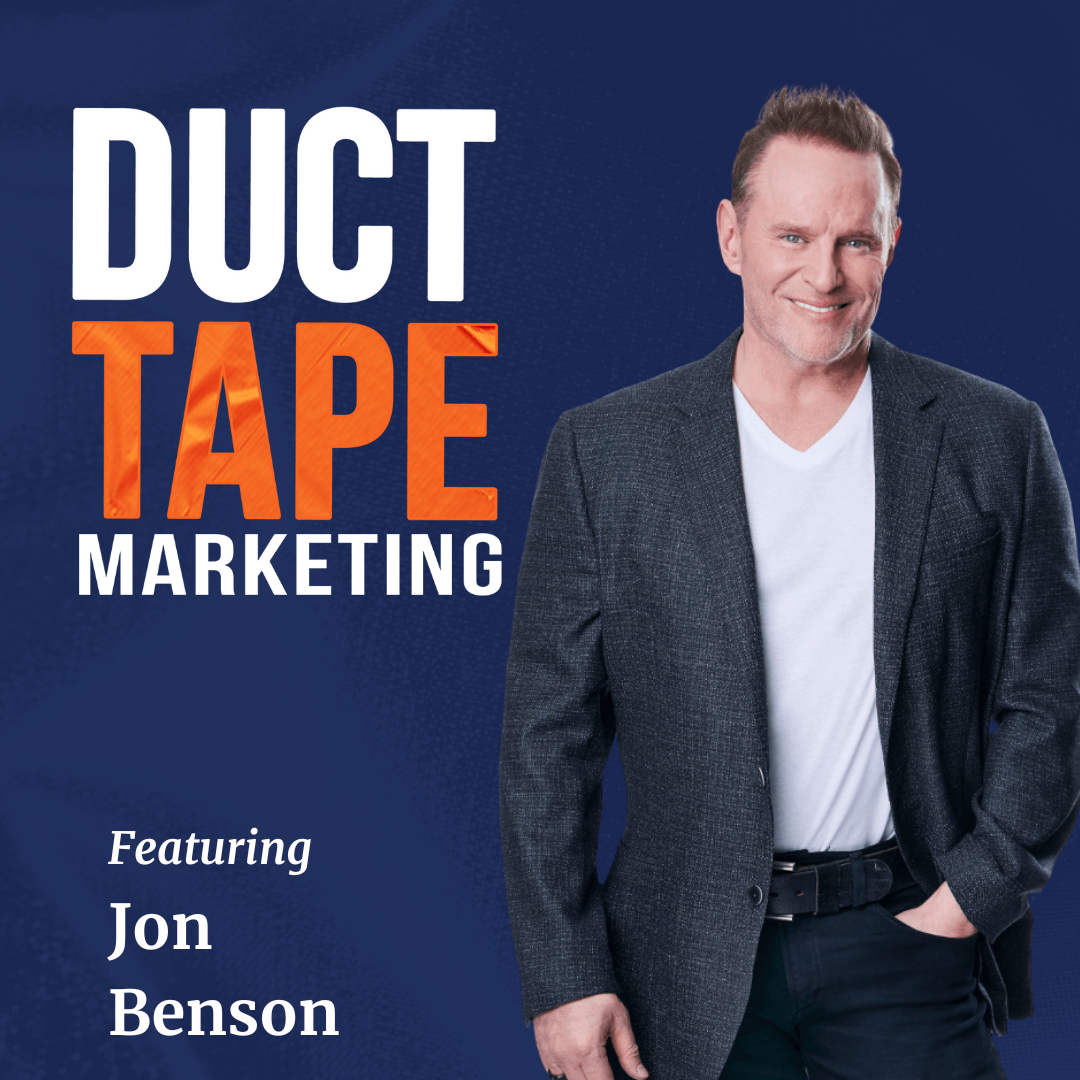
jon bensonOverview

In this episode of the Duct Tape Marketing Podcast, John Jantsch sits down with Jon Benson, creator of the Video Sales Letter (VSL) and founder of the AI platform Benson. Jon shares how AI is reshaping the world of copywriting, not by replacing human creativity, but by amplifying it.

The conversation explores the evolution of VSLs, why they continue to outperform despite industry skepticism, and how AI is changing the way marketers create, test, and optimize content at scale. Jon also dives into the importance of maintaining a human voice, building ethical persuasion frameworks, and avoiding the trap of generic AI-generated content.

Guest Bio

Jon Benson is a copywriter, entrepreneur, and AI innovator best known for creating the Video Sales Letter (VSL), a format that revolutionized digital marketing. With a background in persuasion and behavioral psychology, Jon has spent decades refining ethical copywriting techniques. He is the founder of Benson, an AI platform trained on high-converting campaigns designed to help businesses create more effective, human-centered marketing.

Key Takeaways

1. AI Should Amplify Creativity, Not Replace It

The real opportunity with AI is turning marketers into better editors, strategists, and decision-makers, not eliminating the human role.

2. VSLs Still Work After 20 Years

Despite claims that they’re outdated, VSLs continue to drive strong results when built on solid messaging and persuasive structure.

3. Words Matter More Than Format

Whether it’s video, text, or ads, the effectiveness of marketing still comes down to the quality of the words and messaging.

4. Most AI Content Fails Due to Lack of Input

Generic prompts produce generic results. AI needs context, personality, and values to generate effective copy.

5. Personality and Values Drive Connection

Great marketing aligns with what customers already believe and value, rather than trying to force persuasion.

6. AI Enables Massive Scale in Testing

Top marketers run hundreds of variations simultaneously, something only possible at scale with AI.

7. Ethical Persuasion Requires Guardrails

Without clear boundaries, AI can drift into manipulative messaging. Defining what to say and what not to say is critical.

8. AI Is a Power Tool, Not a Replacement

Like upgrading from a hammer to a power tool, AI removes manual effort so humans can focus on higher-level creativity.

9. Training AI Is Essential

To get quality output, users must teach AI their voice, values, and audience rather than relying on default behavior.

10. Copywriting Still Requires Strategy

Even with AI, understanding persuasion fundamentals and customer psychology remains essential.

Great Moments

00:01 – AI as a Creative Multiplier
John introduces the idea that AI enhances, not replaces, human creativity.

01:16 – The Birth of the VSL
Jon shares how Video Sales Letters transformed his career and the marketing landscape.

04:08 – Early Adoption of AI in Copywriting
Jon explains his long-term vision for AI-powered copy tools.

06:21 – Are VSLs Overused?
Why VSLs continue to perform despite years of skepticism.

08:46 – Why Words Still Win
The importance of messaging over format in marketing success.

09:11 – The Problem with Generic AI Content
Why most AI-generated content feels robotic and ineffective.

11:40 – The Role of Personality in Copy
How values and voice shape better marketing outcomes.

14:26 – AI as a Creative Partner
Using AI to enhance, not replace, human creativity.

16:37 – The Power of Testing at Scale
How AI enables massive experimentation and optimization.

18:23 – Ethical Guardrails in AI Marketing
Why defining boundaries is essential for responsible persuasion.

Memorable Quotes

“The words are the consistent thing. If the words don’t reflect a human, people sense it immediately.”

“AI isn’t the answer, it’s a tool. You still need to bring strategy and voice to it.”

“You’re not trying to convince people, you’re aligning with what they already value.”

“Think of AI as a power tool, it removes the grunt work so you can focus on creativity.”

John Jantsch (00:01.651)

So what if the real opportunity with AI is not replacing human creativity but expanding it by turning entrepreneurs into better editors, directors, and decision makers? Hello and welcome to another episode of the Duck Tape Marketing Podcast. This is John Jantsch. My guest today is Jon Benson. He’s a copywriter, entrepreneur, and AI pioneer best known for creating the video sales letter, one of those terms that people just use like it’s been around forever.

A format that shapes modern digital marketing. is long centered on ethical persuasion and authentic connection. And more recently, he developed BNSN, an AI platform trained on high converting campaigns for small businesses. So John, welcome to the show.

Jon Benson (00:29.9)

Yeah.

Jon Benson (00:47.212)

Hey, John. Thanks for having me.

John Jantsch (00:49.585)

So let’s, I assume you have to do this a little bit of your time when you go on shows like this, but the term VSL, you know, is kind of entered the, the marketing vernacular. Talk to me a little bit about, I’ve been doing this for 30 years. That was probably 12, 15 years ago, really, when that kind of burst on the scene as an innovation. You want to talk a little bit about what that’s done to your trajectory, I suppose.

Jon Benson (00:55.202)

Mm-hmm. Yeah. yeah.

Jon Benson (01:02.04)

Mm-hmm.

Jon Benson (01:16.216)

Yeah, believe it or not, it’s 20 years old this year. So 2006. Yeah. Yeah. Crazy. It’s, mean, it was, it, yeah, everything changed that the, day that happened, the 30 days later, everything changed from my offer that I did it for, you know, we went from like struggling onto my second book that I wrote in, in fitness and then went to a million dollars.

John Jantsch (01:18.537)

20 years, okay.

Jon Benson (01:39.886)

a week and a month rather in traffic cost, you people buying that kind of money and going up to even higher than that. So it was crazy. And then, and then all of people started calling me and asking me to write VSLs for them. And I’m not, I wasn’t a copywriter. that’s not, never been my claim to fame until after this happened. And then I had to get good at writing copy. So that’s what happened.

John Jantsch (02:01.939)

That’s funny. So you said you had written a book about gym ownership? Is that what you said?

Jon Benson (02:10.663)

I’ve written six books in fitness, so weight loss, fitness, bodybuilding, yeah, so that whole thing has been a passion.

John Jantsch (02:12.947)

Fitness, fitness, okay. Okay, so are you one of those people that that was your passion and you just had to learn how to do marketing? And so this whole idea of studying persuasion and conversion and innovation, is that something that was really just picked up because you’re like, I better get good at that?

Jon Benson (02:24.748)

Yeah.

Jon Benson (02:34.478)

It was picked up specifically for copywriting, yes, but I studied persuasion in college. Actually, I was studying MLP in college. I was fascinated by how you can basically get people to listen to you and hear what you’re actually trying to communicate and motivate them to make changes based on things that you believe at least are good for them. So you’re not trying to manipulate them. You’re just trying to motivate them. And I was always into like, how can I motivate and connect with people deeper? So I studied the MLP back then, way back then.

John Jantsch (02:39.731)

Mm.

Jon Benson (03:03.22)

and mail order course from, from Bandler. And that got me into Tony Robbins and that led me into even deeper persuasion issues. And, and just was always really fascinated by it. And that led to me being into the advertising world. And that would, that led eventually to writing a book with it. Yeah. I actually would have the book thing came about because I’d always been passionate about, bodybuilding and fitness and things like that growing up and athlete. I was an athlete most of my life. And then

ended up sedentary and got ended up obese in my late 20s and early 30s. I had 50 inch waist and had a heart attack at 38. So I was like, it was like a train wreck of health. And that got me back into it. So that’s the Fit Over 40 book was written based on that, on turning that around. And then I interviewed a bunch of other people because I didn’t think I was enough for a book. So I did 52 people that did the same.

John Jantsch (03:55.283)

So I’m curious, this is a question, unfortunately, I feel like I’m asking almost every guest these days, but how has AI changed that element of copywriting for good or bad?

Jon Benson (04:00.942)

It’s

Jon Benson (04:08.494)

So my goal with AI and copywriting, I’ve been doing copywriting software since 2010. So this is going to date me a lot, but in AI, in early nascent AI in 2017 and working with early LLMs in 2019. So very, very, very early into this thing and trying to convince everybody, this was the thing that we wanted to do. And the reason why is because I was, I had these courses that I would teach people how to write VSOs and I knew how hard it was for me to learn all the copywriting in and outs and

and develop my own style, which I did. And I said, well, what, what if I could have software that would do it for them? And the average business owner doesn’t have time to do that. They just want the copy that converts. So I’ve seen it from 15 years away going, I know this is going to happen eventually. And so we decided that the software is pronounced Benson. That’s not my last name. It’s just my last name without the vowels. And, and yeah, yeah, but it’s, cool that you can spell it out. That’s all right. and so we did Benson originally, it was going to be called,

John Jantsch (04:56.529)

okay. Not BNSM like I butchered it, okay?

Jon Benson (05:06.35)

It was going to, because it was the first AI to actually write a long form VSL. And I was working with, with Jasper at the time they were called Jarvis, but I was the first guy in the copywriter to train anything on an LLM. And they ended up with a 62nd VSL out of all the training. I think, yeah, I think we can do this in a different way. And we ended up being, you know, having a 7,000 word VSL come out of our AI and it sounded like a real VSL.

John Jantsch (05:14.729)

Sure, yeah.

Jon Benson (05:32.663)

It didn’t sound like chat, GBT, it didn’t sound like Claude, it sounded like a real VSL. And so that was our claim to fame. And since then we just, of course got, we were very early into the agentic phase. So we’ve just gotten better and better at that. And so my goal was to replace myself. That’s what I wanted to do. I wanted to say, if I can, if I can use this to write a VSL, which I have, sells pages for my own stuff, which I have, then I know that it’s going to be good enough to, for prime time. And that was the, that was the goal to do. yeah.

John Jantsch (06:02.549)

So talk to, obviously we’ve got more to explore in AI, but talk to me a little bit about the VSL itself. mean, it has become very mainstream. I mean, you hear people talk about it, whether they know what it is or not. They talk about it as part of their funnel, you know, today. So is it overdone? I mean, is it over?

Jon Benson (06:06.094)

Mm-hmm.

Jon Benson (06:10.316)

Mm. Yep.

yeah.

Jon Benson (06:21.806)

Yeah, every year I hear that I’ve heard that for 20 years. So it literally 20 years. So the first year I came out with it and said, Oh, it’s already and then Ryan Dias, who’s a good friend of mine made the mistake of saying when he came out and promoted his own little mini VSO course and he later gave me credit for which was really nice of him and everything. But he said, Oh, sales letters are dead. You’ll never do another sales. And I’m like, dude, I’ve never said that, you know, I think everything works if you let it and VSO is just happened to keep on working and they just ask, ask Agora.

John Jantsch (06:24.157)

Yeah. Yeah. Yeah.

Jon Benson (06:51.022)

They work. I mean, yeah, they work. They work really well and now people are using BSLs in feed So you’ve got the meta ads that are basically short BSLs that use the same psychology Just compressed into five two to five minutes. So we’ve been doing that for 15 years as well So yeah, and then they go to a longer BSL So they they still work just as sales pages work just as webinars can work everything can work It just depends on what you’re wanting to sell and how you’re and how you approach it But the words are the consistent thing

So if the words aren’t there, if the words don’t reflect an actual human underneath it, people sense it a mile away, which was our goal with Benson was to create humanized AI. How do we do this? How do we create AI that doesn’t sound robotic? It doesn’t sound like, you know, chat GPT writing an email, it’s asking a rhetorical question. And the very first sentence, you know, this kind of really bad AI copy that we see all the time. How do we do this and actually sound like a real A-list copywriter? And that was, that’s been our focus for three and a half years now.

John Jantsch (07:20.456)

Yeah.

John Jantsch (07:48.413)

You know, initially the large innovation was that it was not a talking head on video. It was the words. Is that a key component of it?

Jon Benson (07:56.174)

Mm-hmm.

Jon Benson (08:01.113)

You know, it depends on what you’re trying to sell. We have seen split tests with video beating words only, and we’ve seen words only beat video. It really depends on what it is. And what works today, a year from now, will be something you want to reverse. So for a while there was like my friend Craig who writes for Golden Hippo, and he’s done amazingly well building a billion dollar company from, he’s an amazing writer. But he was one of the first guys working with Gundry to do a lot of video.

on the front end of a VSL, but talking to him behind the scenes, so to say, we know that it’s still like a Google Doc and the words are everything. So he slaves over the words, man, getting the words just right. So all the video in the world is not gonna save you if your words suck. It just isn’t gonna happen. So the words are still the most important.

John Jantsch (08:46.077)

Yeah, yeah, yeah.

So one of the knocks on AI, of course, is it’s made it very easy for people to create really crappy content. you see it all the time now, right? It’s like volumes of really bad content. So why can’t people create better content? What’s the mistake they’re making? Is it simply just a matter of being lazy?

Jon Benson (08:54.831)

Yeah, yeah.

Yeah.

Yeah.

Jon Benson (09:11.983)

No, it’s the matter of the LLMs or the in our case, it’s the agents not knowing you. And this is where it gets a little bit a little bit hairy for people, because there has to be an element of your personality that’s OK to be known. as the same thing would be true if you went and hired me as a copywriter. Like I would ask you if you had an offer and you wanted to whatever your offer would be. I would start asking you lots of questions that you probably don’t think is related to your offer.

John Jantsch (09:19.719)

Yeah, yeah,

Jon Benson (09:40.336)

Now I’m not talking about like when asking all these really intensive personal questions, but I want to know what your values are. I want to know where you stand. Who do you want to attract as customers? What are you against? What are you not just what the, what the product does? Cause the product or the offer, whatever it does, I that’s, that’s not that difficult. Um, what’s difficult is to make that story resonate with people that will automatically hear and go, Oh, that sounds like something that I can automatically relate to. And that’s what a really good copy. does. We don’t try to sell people that are

not interested or just completely need to go from a level one to a level five awareness, that’s really not what we wanna do. We wanna target people that are already there, because you got plenty of people like that, but if you write, if you go into a chat or clod or whatever and you say, write me an email or write me an ad or rep me a VSO, and they don’t know who you are, they don’t have a good feel of your words, feel of your personality, it’s gonna write stuff that’s schlocky, because it’s trained on the internet. So if you just think about this for a moment, and everyone listening to me will get this,

John Jantsch (10:35.294)

Yeah, yeah.

Jon Benson (10:39.043)

It’s like, can you imagine training anyone to do anything by telling them, go read the internet and get back to me tomorrow? That’s what we’ve done with LLMs, right? It’s like, well, that’s going to give you a lot of knowledge, but most of it sucks. mean, so most of what’s out there in copy is terrible. So it’s learning models have been terrible. So that’s why specialty AI is like ours and in our, in our industry, you have to have it to where the people that know what they’re doing actually trained individual.

John Jantsch (10:46.665)

Right.

Jon Benson (11:06.487)

in our cases, agents that use not one LLM, but a dozen, you know, can use as many as we need one model rather, but you know, doesn’t whatever models are we know are going to be the best ones for the right tasks. So that takes that. And then what we do is a little different. We ask people to go through an assessment to figure out what are their values? Where do they stand? Who are the people they want to attract? And how do they want their their words to appear? So we take care of the persuasion element, but also we see that with the words and phrases that

John Jantsch (11:14.739)

Yeah, yeah.

John Jantsch (11:25.885)

Mm.

Jon Benson (11:35.681)

are closer to who they are as a person. So it starts feeling more human. It’s important.

John Jantsch (11:40.457)

Yeah, it’s interesting. know as we’ve worked with clients, you know, a lot of them have a fairly large body of work of them talking about things, explaining their products, being who they are. And that element, you know, allows you to build that voice or that brand. But then there is a technical framework element to it as well, isn’t it?

Jon Benson (11:58.348)

yeah, totally. mean, if you go too far outside that framework, you’re going to lose a lot of the things that we already know work so well, persuasion wise. So the goal is not to try to convince somebody of something, it’s to compel them to take action on what they already hold valuable. So all you’re doing is aligning your offer with what they already hold to be valuable. And that’s the skill of copywriting. that’s something that AI is, I think, obviously I’m biased.

John Jantsch (12:05.639)

Yeah. Yeah.

Jon Benson (12:27.481)

So I’m gonna say we’re kind of the exception, but AI in general has gotten a little better at this. I’d like to think we’ve led some of the way in that, to getting to where there’s more of that human element involved.

John Jantsch (12:39.091)

So talk a little bit about that because there’s certainly a lot of people, creatives in particular, that have felt like they have this special sauce, this special talent to create that content, to create beauty, to create things. And maybe AI has kind of taken that. I mean, it’s eventually going to get good at doing video and graphics and things. So where is the human element, know, remain?

Jon Benson (12:57.314)

Mm-hmm.

Yeah, yeah.

So think of it as like, I look at it as the difference between using a hammer and using a jackhammer or something that’s a powered hammer, right? It’s a pneumonic hammer or whatever they call those automatic hammers. So you’ve got an automatic hammer and there’s a skill to hitting a nail with a hammer, right? The question is, as a carpenter, is that really what you want to be known for is I strike a nail head perfectly with a hammer every single time.

Or if you could have that done for you instantaneously with something that just tapped it in, what would you do with the time that you have left now? You would probably spend that doing the creative portion of things and like, I can do this, I can build this. And this is what the same thing is true of AI and copywriters. It’s like, we’re not trying to put people out of business. We’re giving them the ultimate power tools. So a lot of the grunt work, a lot of the research, a lot of the structure you don’t have to worry about. Then you can go in and finesse it.

and everything sounds so much better when you do that. We want people to do that. there’s still a knowledge factor that I think that copywriters need to have. And sure, some people do use tools like Vinson. They just don’t think about it. They click a few buttons and they go, because it works. But the copywriters, they want to put their signature on it. And this just gives you the ultimate way of doing that. It’s like hiring the best ghostwriter you can think of. So if I hired a copywriter to write something for me and they sent it back and I read it, went, wow, that’s just freaking fantastic.

Jon Benson (14:26.768)

then I could find these little bitty things in there that I only know or that I primarily know. And then I’m gonna go, oh, you I’m gonna change this over here. And then I might find a creative thing that he said or she said that I wouldn’t have thought of. And that now becomes a campaign. My mind goes, oh, wow, I didn’t think about that. I can turn this into a campaign. Well, that’s not AI, that’s me, right? So if the AI wrote it or a human wrote it, wouldn’t matter. And so that’s what we do that’s a little different because we coach people live once a week so that we can help inspire them to.

Use the words that are coming out and how can we use it to help market their business more effectively.

John Jantsch (15:01.011)

So I think one of the areas that obviously is a breakthrough is in testing. Obviously, any copywriter worth their salt is like, I think this is good, but let’s test it, right? And now we can test 200 versions for not much more time than it took us to create that one beautiful one. What do you think that that is going to ultimately do in terms of people’s effectiveness?

Jon Benson (15:07.088)

Mm-hmm.

Jon Benson (15:15.087)

Right.

Jon Benson (15:26.992)

If people knew what the guys that are making hundreds of millions of dollars at this stuff do, if you knew the amount of testing that went into it, most people would just give up. would stop. I’ll give you an example. I have a good friend of mine that is the top of their industry on meta and they flew out to meet the actual real meta heads of ads because there’s the ones that they give people and there were ones that give these people.

You know, they give them $100,000 to spend just to play with just because we want to see what your new creative team can do. They will run 800 ads at a time in any given month. They’re running 800 versions of an ad. So there’s just no way to do that effectively without AI. that’s when they were the early adopters to this. Now they can run those kinds of things. And it’s like, they can figure out what works and guess what? One or two might scale or three. It’s, it’s, doesn’t matter how good the writers are.

It’s like some hook, some angle may work and that angle if it works can just skyrocket a business. So I think it’s one of the best things about AI is the ability to split test leads of a sales letter or VSL, the split test, obviously campaigns and then add campaigns and things like that. It’s very helpful.

John Jantsch (16:37.907)

So you’ve spent a lot of time building a reputation about ethical persuasion, but it’s not a very far leap to go to things that are maybe not that ethical, right? To go from just what you talked about as getting people to do something that they want to do or that’s good for them and they just, they need to hear it, to manipulation. So, and I feel like

Jon Benson (16:43.12)

Mm-hmm.

Jon Benson (16:55.346)

yeah.

Jon Benson (17:01.796)

Right.

Right.

John Jantsch (17:07.503)

AI doesn’t really care in some cases. how do you, what are the guard rails that you really use to kind of stay within what, you you talked about beliefs, your beliefs.

Jon Benson (17:10.072)

Mm-mm. Mm-hmm.

Jon Benson (17:20.24)

Yeah, well the guardrails I use that we actually that’s a technical term and we use specific guardrails in our agents that are that when somebody sets up Benson correctly, we use it’s called a buyer alignment profile that we have people go through. In fact, I’m going to give it to your listeners for free that could go through that and get their buyer alignment, which is a 15 page report of the words and phrases you should use and not use. And that exactly fits that bill of that sets up guardrails. It’s like use this because I value X, Y and Z. What do the words of I

value X, Y, and Z translate to in copywriting lingo? Because it doesn’t mean like if I value freedom, you don’t want to use like, hey, since you love freedom as much as I do, then you’re going to love so and so shoes. That doesn’t make any sense, right? And so it’s just too hamfisted and heavy handed and all that stuff. So what phrases do people that love freedom as a core value? What usage would they use and what would they never say? And it’s what they would never say that the Garbrills of that. So in other words, that prevents the

John Jantsch (17:58.441)

All right.

Jon Benson (18:16.913)

AI from going over the balcony, so to say, when it comes down to overly persuasive language.

John Jantsch (18:23.251)

So for some of the folks that you’ve worked with, you’ve probably started to catalog kind some of the biggest mistakes people are doing, making right now using AI. Where do you see people really need to make a shift to make AI more effective for them?

Jon Benson (18:40.579)

it’s it to stop thinking of AI as the answer and start thinking of it as a tool is a huge step in the right direction. Also to train whatever AI you’re using. Ours is built to be trained, so it’s copy paste kind of thing. But if you’re going to use Claude or chat GPT or whatever, you need to be able to train it with who you are, what your values are, how what words or phrases to use, what not to use. And you’ll find that the memory on this is pretty short. So.

unless you know what you’re doing and then we can get into things like instances of open claw and the clawed code and all that stuff. That’s very technical and most people don’t want to go down that rabbit hole. mean, our guys go down that rabbit hole because we’re kind of geeky when it comes to that. But most people want just the best answers that they can without having to become a software engineer. so to do that, yeah, it’s a lot of knowledge. It’s a lot of like time to say, here’s who I am.

John Jantsch (19:08.713)

Mm.

John Jantsch (19:15.774)

Yeah.

John Jantsch (19:29.822)

me

Jon Benson (19:33.774)

And here’s what I want you to do. Now, you can do that to a limited degree in chat and cloud and tools like that. You can do it to a huge degree in our tool because we built it to do that. And that’s super important to get the language patterns down. But also, and this is the last thing I’ll say, but this is true of copywriting in general. So when people used to hire me, because I don’t write copy anymore. I’m solely focused on Benson. when people used to hire me, it was very expensive. I was like.

the probably the most expensive guy in the world for like five or 10 years. And they’re certainly one of the most expensive guys in the world. And they would hire me and I would give them a first draft of something like usually a BSL or a sales letter. And they would say, this doesn’t sound like me. go, yeah, I know. It’s because you suck. Yeah, you don’t want to sound like yourself, man. You really don’t. it’s and it’s like, I, I mean, that in kind of a funny way. It’s like you’re the copy they were writing was just terrible.

And so they were trying to make their terrible copy kind of polish, you know, a poly put, put lipstick on a pig’s episode. So you can’t do that. You have to like be able to understand some basic persuasion and then work in. And this is what I didn’t do when I was a pro when I was writing early days of copywriting work in their values. I figured this out later in my career. It’s like, I can work in their value statements and figure out what the words are. But that was just tons of research. We’d charge like 15, 20 grand just to do the research to figure out like

John Jantsch (20:33.415)

Mm-hmm.

Jon Benson (20:58.491)

What are the words we should use and shouldn’t use and phrases and all that stuff. And unless somebody came along that was like an identical client, we’d have to do that all the time. Now it’s automatic, which is fantastic.

John Jantsch (21:06.473)

Yeah. Yeah. Yeah. Well, John, I appreciate you dropping by the duct tape marketing podcast. Is there someplace you mentioned that you had a gift you wanted to invite people? And obviously I’d love to know where they can find out more about Benson.

Jon Benson (21:15.471)

Yeah. Yeah. Sure. If you go to free buyer profile.com, that’s free buyer profile.com. You can take our buyer alignment profile, which will test to figure out your core values, help you figure them out. We use a lot of different standardized testing models in these questions. And in about 10 to 15 minutes, we’ll get you a report.

that you can use in your marketing that will tell you words and phrases that you should think about using and words and phrases you should definitely avoid. will give you all the NLP, all the magic sauce while still sounding like you and will also help elucidate what you already hold valuable and the people that

John Jantsch (21:53.481)

Great tool for training any AI tool, suspect, that you’re going to use. Awesome. Well, again, I appreciate you dropping by. It’s freebuyerprofile.com and hopefully we’ll run into you one of these days out there on the road,

Jon Benson (21:57.125)

Yeah, definitely. Yeah.

Hmm.

Mm-hmm.

Thank you, John. I appreciate the time.

AI Is a Survival Skill for Consultants

AI Is a Survival Skill for Consultants written by John Jantsch read more at Duct Tape Marketing

Episode Overview

John Jantsch welcomes Steve Cunningham, former agency owner, startup founder, and creator of the book summary platform ReadItForMe. Steve shares how generative AI nearly wiped out his business and forced a complete reinvention of how he approaches consulting and knowledge work.The conversation explores the rise of the AI-native full-stack consultant, the importance of context engineering, why deliverables must be built for both humans and AI, and how agencies must adopt factory-style workflows to survive. This episode is essential listening for consultants, agencies, and service professionals navigating rapid AI-driven change.

Guest Bio

Steve Cunningham is a former agency owner, startup founder, and AI-native business strategist. He built the successful book summary platform ReadItForMe, backed by a billionaire investor, and read a book a day for nearly ten years.

After generative AI disrupted his business model, Steve pivoted to helping consultants, agencies, and service professionals redesign how work gets done with AI. He is the founder of Simple and the author of The AI-Native Full-Stack Consultant.

Key Takeaways

  • AI replaced entire categories of work: Tasks that once took hours can now be completed in minutes or seconds.
  • AI-native is not the same as using AI tools: AI-native businesses redesign workflows, systems, and deliverables around AI.
  • The full-stack consultant is emerging: With AI handling execution, consultants can deliver value across marketing, sales, operations, and strategy.
  • Context engineering is the real advantage: High-quality, reusable context enables AI to perform at expert levels.
  • Knowledge work is becoming a factory: Repeatable workflows, quality control, and standardized processes are now essential.
  • Deliverables must serve humans and AI: HTML and structured formats outperform PowerPoint and Word in an AI-driven world.
  • The cost of variations is nearly zero: Infinite testing and personalization are now practical and affordable.

Catch the full episode

Great Moments from the Episode

  • 00:01 – 02:34: How AI nearly destroyed ReadItForMe
  • 03:18 – 05:41: Defining the AI-native full-stack consultant
  • 06:24 – 07:52: Why consultants must go beyond marketing silos
  • 07:52 – 10:05: Context engineering explained
  • 10:57 – 11:16: Hyper-personalization at scale
  • 11:36 – 12:36: Why betting on one AI platform is risky
  • 14:18 – 15:43: The decline of PowerPoint and Word
  • 17:43 – 19:56: Guardrails, QA, and the factory mindset
  • 19:26 – 20:14: The future of agencies and consulting

Memorable Quotes

“AI doesn’t need more prompts — it needs better context.”

“If you don’t turn your marketing agency into a factory by 2026, you’ll be out of business.”

“We need to build deliverables for humans and AI, not just humans.”

Resources & Links


John Jantsch (00:01.371)

Welcome to another episode of the Duck Tape Marketing Podcast. This is John Jantsch. And my guest today is Steve Cunningham. He’s a former agency owner, startup founder, and now AI native business strategist. He built a successful book summary platform called ReadIt.ForMe, backed by billionaire investor, read a book a day for 10 years. I feel like I do that sometimes. But when AI disrupted his industry, it nearly wiped him out. So now he coaches.

Steve (00:01.71)

I’m to you to sign up for the presentation. I’m ask you to for the I’m going ask to up for I’m going ask sign up for I’m you to I’m to ask you to I’m going you to sign up presentation. I’m going to sign the presentation. I’m going you to going I’m

John Jantsch (00:30.425)

solo consultants, agency owners, and service professionals to make more money faster and easier by becoming AI native through his company, Simple and his brand new book, the AI native full stack consultant. So Steve, welcome back to the show. I say welcome back. think this is your first time actually on the show, but, you and I tried to record and I was like in a hurricane and it didn’t work out. so I’m glad you were able to come back.

Steve (00:31.822)

Thanks for having me, John.

Steve (00:56.622)

Good to be back for the first time.

John Jantsch (00:58.683)

So, I mentioned the AI destroyed your business. You want to talk a little bit about it or tell that story as I’m sure you have a number of times.

Steve (01:08.75)

Yeah. So read it for me was a business that I hoped would last the rest of my life. I loved that business. I like to joke if I could get in the time machine, travel back to 2022 and destroy all the AI, I would do it. That’s how much I love that business. I got to read books from my favorite business authors like yourself. I live here in San Antonio, Texas by the Riverwalk. I would literally go outside.

John Jantsch (01:24.283)

Ha ha ha.

Steve (01:37.134)

I would take my, I would read on the phone. So I read Kindle on the phone and that was my job. Uh, so I loved it. And so when Chad GPT came out, um, you know, this is a content business, right? So it would take me about eight hours to read a book and summarize it, take notes and do all the, all the stuff from beginning to end. And when I realized that you could get a passable book summary, which is by asking for it and maybe, then with some good prompting.

get a finished product in much less way less time than it would take for me to read and summarize the book. I knew that we were in trouble. so it didn’t happen overnight. We still have people reaching out wondering, can they bring Rita for me into their business? I, two and a half, three years later, it baffles me that people still have not figured out that they don’t need us anymore for that. But

John Jantsch (02:31.579)

you

Steve (02:34.478)

Yeah. So the revenue went down, not overnight, slowly but surely. And so we realized that we had to do something about that and saw the writing on the wall transformed our operations with AI. Then lots of folks wanted to know how we were doing it and started showing them. And here we are two and a half years later and we’re fully AI native and doing lots of fun and exciting things.

John Jantsch (03:01.231)

So I suspect, maybe I’m wrong, maybe I’m naive, but that most marketers today are consultants have figured out, know, yeah, I need to use this AI thing. You use the term AI native full stack consultant. How does that differ from someone who say just uses it in their workflows?

Steve (03:18.798)

Well, one of the things that has happened in the last few months is that the easiest way to put it is the AI has gotten really good. So there was this, we were on a short timeline for the podcast. We don’t have time to dive into it deep, but there were studies done through OpenAI. So take that with a grain of salt, but it’s called the GDPVAL. And what they did was they took…

bunch of subject matter experts. got a bucket of tasks across most knowledge work. And they said, give us your best blank. And there would be a task. And so they would do it. And then they would have the AI do the exact same task. And then they would give it to another subject matter expert. And they would say, which one of these is better? And so 2024, wins or ties by the AI was like a 10%. Now it’s a caveat that the AI has all of the context it needs in order to do

the job. And most people don’t get anywhere close to giving the AI all the best, all the contacts they need. So 10 % like people would say, yeah, it’s not a 10%. Well, it’s probably not a 10 % because you didn’t give it all the context. anyways, move forward into 2025, middle of 2025, we’re approaching 50 % wins or ties by the AI. So we’re getting close. We call that the AI tipping point. As of a couple of months ago, the wins and ties by AI were

John Jantsch (04:17.56)

Yeah, right,

Steve (04:42.414)

70 % and since then you can feel if you’re using AI, this is getting better and better and better. So what we mean by full stack consultant is if you understand what good looks like across any subject matter expert domain, you can get pretty close to doing an incredible job for your clients in all functional areas of a business. So a marketing agency can do

sales enablement, but they can also do some CFO work. They can do some strategy work. And that is what we mean by the full stack consultant. And the idea is that if you get very good at some new skills, which are not obvious to most people, like how to produce a really good, robust context library for your clients, you and the company can do amazing work. It can be done.

John Jantsch (05:15.385)

Mm-hmm.

Steve (05:41.166)

incredibly quickly and we’re learning more and more every day about what that looks like. So today, this morning, I did about, and this sounds ridiculous when you hear it from the outside and I understand that it sounds ridiculous, but I did about, in about two hours with 30 minutes of my work and an hour and half of just waiting around for the AI to finish its work, about 260 hours of design, interface work, copywriting.

and development. I don’t do any of those things in the past life. I have no skills in those things, but I know what to ask for. I know what I want and I know what good looks like and now I can get it. So it’s an amazing time that we live in.

John Jantsch (06:14.232)

Mm-hmm. Yeah.

John Jantsch (06:24.731)

I want to go back to a point you made there because, I have jokingly, but seriously said, you know, marketing is everything. And what I really meant by that was in a lot of small businesses, I would go into, there were a lot of things I had to fix that weren’t under the, you know, the heading of marketing a lot of times, because if marketing was going to work or we were going to grow the business, I had to get involved in this area over here. Sales was a typical one. Customer service is another one that, know, that you don’t always hire a marketing agency for.

But I would get into it out of necessity. And I think what you’re really pointing to is a great point, this idea of, you go into a business, it’s not just a matter of offering a suite of like, what do you need? It’s more like I can be more effective at doing my job that you hired me for if I can actually easily fix an area over here that I may not have true expertise in, or I couldn’t spend the time because I wasn’t being paid to fix their P &L, for example.

so I think that’s a great point. Let me back up again, because I I circled, I wanted the word context. that, let’s spend a little time talking about that. Cause I think AI has gotten better, but I also think prompters are getting better. and we’re realizing, you know, we get better output with, context. how do you give a, how, how in your view is probably a really long answer. How in your view, do you give AI the proper context?

Steve (07:52.408)

So when most people talk about context and there’s a term called context engineering, they’re mostly talking about it in the terms of like a single task that’s going on. What we mean by context engineering is how does the AI know everything about your business? that whenever you pull up a task to do that you actually, the AI can, it’s really hard to explain without getting into the weeds, but here’s my best shot.

John Jantsch (07:58.512)

Mm-hmm.

Steve (08:22.668)

So imagine that you have like the world’s best employee on every single task that could be done in your business, but they have amnesia. Every single time you give them a new task, they know nothing. So you have to train them. And that sounds like a really painful thing to have to do. But if you build a context library and only has to be done once to start, you can train that, you can give that AI like,

10 years of training in about 10 seconds. So it forgets all the time, but it learns like years in seconds. So all you gotta do, like this is how I boot up my instance of how I’m AI in my world as the CEO of our company. I onboarded the AI, I go look at the, I literally create an onboarding file. I say, go look at the onboarding file and get yourself onboarded. And 10 seconds later, it knows exactly like,

John Jantsch (08:54.629)

Mm-hmm.

Steve (09:20.418)

from a meta perspective, how we’re going to do our work today. And I’ll say, go look at that folder and let’s do this task, like redesign our interface for this page in our system. And knows exactly how I like to work. It knows exactly how I want design options. And as a marketer, you’ll appreciate this. you can go in and you’re doing, let’s say you’re doing ad variations. You go and ask for

You don’t even have to be that specific. If it knows everything about your business, you just say, give me five ad variations on this one topic or this one offer we’re making. Sends it back. You look at it. You’re like, like that one the most. And I’ve had the AI give me like the rationale for like, is scored it and ranked it. Then I could give me five more variations on that one. And then five more on that one. And one of the things that’s not obvious to people is that the cost of variations is almost zero.

John Jantsch (10:05.177)

Mm-hmm.

John Jantsch (10:10.768)

Right.

Steve (10:17.58)

So you can ask for an infinite number of variations of.

John Jantsch (10:17.594)

Yeah.

Yeah, I do that with subject lines for emails. mean, same thing. It’s like, kind of like the idea of this one. Iterate on that 10 more times. Yeah.

Steve (10:27.31)

Yeah, but you can do it for really big things too. So it’s not just like a single subject. You can do it for an entire interface, like an entire set of code. so like, because it works so fast and the cost of its work is so low, it transforms the way you approach the work. so customizing campaigns down to the individual level, not a problem anymore.

John Jantsch (10:31.193)

Yeah, yeah. Right.

Mm-hmm.

Steve (10:57.25)

Like I can find your LinkedIn profile, can scrape it and I can send you like an entire landing page that’s speaking directly to you. And it cost me a penny to do. And so there are things that we can do that were quite literally impossible before that now makes sense.

John Jantsch (11:16.543)

This might be good time to talk platforms and technologies a little bit. Are you agnostic or have you really gone all in and maybe it’s so complex that you can’t really say it in one sentence, but is like, are you a Gemini person? Are you a Chad’s EBT person or have you really building your own stuff?

Steve (11:36.942)

We’re definitely not building our own stuff. We have a very particular point of view, which is we’re serving companies and companies will eventually choose their LLM of choice. And that’s what they’re going to do all of their work on. So we are, we’re not hitching our wagon to any one LLM. We also have the point of view that for the most part, most AI rappers go away. So an organization is going to build their own software.

John Jantsch (12:01.679)

Yeah, yeah, yeah.

Steve (12:06.894)

So that’s our long-term bet. And so we’re just using whatever one is most productive. I personally have the max subscription on Claude, OpenAI and Gemini. I’m mostly using Claude right now because Claude Cowork and Claude Code just came out. And so if you listen to this like a month later, maybe I’m on something else by then, but Claude Cowork has been that tool alone.

John Jantsch (12:28.558)

You

Steve (12:33.548)

has transformed our operations in two weeks. Like we literally operate day to day differently now because of that tool. So, whatever one’s working the best when the next time we talk is the one we’ll be on then.

John Jantsch (12:36.346)

Yes.

John Jantsch (12:45.349)

Yeah.

Yeah. You know, I contended for a long time that just what you said, it’s, it’s going to be plumbing. It’s not going to be, Oh, I use this tool or that too. It’s going to be, no, this already works with what I use. And I really feel like, doesn’t that give Microsoft and Google because of their installed user base? mean, you know, I fire up Gmail and all of a sudden it’s like, Oh, there’s a new tool. Um, you know, I can opt into, you know, I mean, doesn’t that give them an advantage? And also I think the other thing, the first version of AI tools.

Is there better kind of use them by themselves? Well, now all of sudden we got collaboration built in, which I think was a big missing part. And so it’s like working the way people work already.

Steve (13:27.214)

Yeah, I think the like all other things being equal, Microsoft and Google have the biggest moat around it. However, for the longest time, Chad GPT was the best tool. And now Claude is by far the best tool. so I would have thought that if it was true that Microsoft and Google would be like for sure would win, it would have happened.

John Jantsch (13:34.372)

Mm-hmm.

John Jantsch (13:51.525)

Yeah, yeah, yeah, yeah.

Steve (13:52.224)

I know because they had not only they have the user base, they have all the documents and that’s, that’s what the AI needs for context. But as it turns out, the AI does not read and work with the file formats that we all produced over the last 20 years, which was PowerPoints and Word documents and all of those kinds of things. So there’s, there’s going to be a shift around that as well, which I think will loosen.

John Jantsch (14:08.995)

the

Steve (14:18.382)

the moat that they have because we’re not going to be stuck on PowerPoint anymore. Like I, the, in the last couple of weeks, I’ve been on this kick of, and I think this is just true. I will never use keynote or PowerPoint ever again. Um, and I’m not using like another AI tool. just build HTML documents and it does exactly what I want. And I, that’s my presentation style. Um, we do SOPs in our business. Everybody in our company builds HTML.

John Jantsch (14:32.155)

Mm.

Steve (14:46.132)

S O P S because you can just speak into a computer. HTML files open everywhere. And it’s also a good language for the LLMs to understand because it’s way easier to read than, than a PowerPoint. There’s others. If you pay attention to how software engineers are using AI, you’ll have a, you’ll have a glimpse of the future. They’re mostly using file formats that they’re comfortable with and that are, that work well for.

John Jantsch (14:57.147)

yeah.

Steve (15:15.182)

development, like markdown files and things like that. So that’s what you’ll see them suggest. Like you have to use markdown files for these things. And, what our point of view around this, and I think this will just prove to be true is that we need to be building like artifacts or deliverables, whatever you want to call it for humans and AI, not just humans. Like humans only is like PowerPoint, like LLMs hate PowerPoint. I hate word document.

John Jantsch (15:17.722)

Yeah, yeah, yeah.

John Jantsch (15:43.201)

can’t can’t can’t read them at all.

Steve (15:44.878)

There’s so much code around it, right? So then you have the like markdown files and things that most humans they look at it. Like I can’t, I can’t, a picture is worth a thousand words. It’s a real thing. Like we need to see visuals and workflows and all those things. And so HTML happens to do both of those incredibly well. So whether or not we’re right on that, I don’t know, but for now it’s like transforming the way that we do work because we can now.

build things that both our humans understand, the LLMs understand, and also there’s this magical thing that happens when a non-technical person speaks a website into existence, and just presses a button and it’s live. So it’s also a really good AI adoption tool, because it’s cool, right? Like it’s cool to like, you build something beautiful. So as a marketer, if you have a design system,

Most companies would never spend 30, 40, $50,000 on. You can speak one of those into existence. Like you can do it right now. Then everything that gets designed looks great in your company. And now everybody’s sharing beautifully designed. SOP documents. Like that’s, that’s a weird thing to think about, but it’s like, I like doing it. It looks nice. it explains what I explains my thoughts and my process. And so, yeah, I think, I think this year is going to be.

transformative in how we all do work and I don’t think it’s going to look the same by the end of the year.

John Jantsch (17:17.11)

So, and I know you have an answer for this, but this, I’m guessing listeners are out there going, okay, if I can just speak this stuff into existence, am I going to just start creating stuff without any kind of guardrails and without any human intervention? where’s the, you know, the pushback you’re getting from people that hate AI. So imagine the people that love AI, but don’t want to be embarrassed.

Steve (17:43.31)

What do you mean by guardrails specifically?

John Jantsch (17:46.123)

just, just meaning like, if I can design all these things, who’s going to actually go and make sure that they’re, they’re being done right. That they look good, that they say what they’re supposed to say. Cause you know, some of, particularly some of the image, you know, generates today. I mean, there’s, it’s just like appalling. Some of the things that show up in, in some of those.

Steve (18:06.478)

Well, I think there’s trying to figure out the 32nd way of answering this question. So the way we look at how work is done is by deliverables. you can look at it as a process, you can look at it as tasks, you can look at it as deliverables. But if you look at it as a deliverable, is that that’s when the thing ends. And that’s when the human has to look at it. It’s when the deliverable is done.

John Jantsch (18:18.864)

Right.

Steve (18:31.182)

First of all, should have the AI do a QC process on itself. You can do that. And it actually does a really good job of QCing its own work. So that’s the thing that most people don’t understand. But then once it comes off the press, whatever metaphor you want to use, and a human looks at it and says, are we sending this out? And if you treat it, and this is a language that most knowledge workers don’t like, it’s a factory now. And so you don’t QC every

energy drink can that comes off the line. But you look at some of them, right? And you know that if this one is this one’s off, well, we got to look at the ones that just went out the door because maybe they have a defect as well. So it becomes more of a factory mindset, knowing that if you if you have a good manufacturing process and that this again, like marketing agencies will hate this like, but that is that it but

John Jantsch (19:02.97)

Right.

John Jantsch (19:22.297)

Yeah. Yeah. Even the word factory there, they’re going to cringe at. Right.

Steve (19:26.894)

Like if you do not turn your marketing agency into a factory in 2026, you will be out of business. Like let’s go have a, we’ll do it next year and we’ll see whether or not that’s true. Like you have to, you’ll have to learn good workflows. You need to learn good work instructions. You need to learn good QC process. And so, and once you do, you can start mass producing things that are top notch and

John Jantsch (19:37.403)

Yeah.

Steve (19:56.138)

knowledge work will be turned into a factory. And then what gets layered on top of that is a new skill set, which is not 100 % clear what that is yet, but we will invent new things to do that will just add value on top of that.

John Jantsch (20:14.085)

Fascinating, Steve. Appreciate you stopping by the Duct Tape Marketing Podcast. Where do you want to invite people to find out more about, I think it’s simpleconsultants.ai and obviously about your book?

Steve (20:26.978)

Yeah, well, if you’re up for it, I would love to give everybody in your audience free access to our BlackBelt training. We’ll create a page specifically for your network. It’ll be roiassociation.ai.

John Jantsch (20:47.931)

Awesome. And we’ll put that in the show notes as well. So that was ROI.association, is that what you said?

Steve (20:54.824)

roiassociation.ai.

John Jantsch (20:56.973)

dot, dot A. Okay. Got it. Awesome. Well, as I said, we’ll put that in the show notes as well. So Steve, again, appreciate you stopping by. This is awesome. And hopefully we’ll run into you one of these days out there on the road.

Steve (21:11.662)

Absolutely. Thanks, John.

A “Moore-ish” law for marketing

A “Moore-ish” law for marketing written by John Jantsch read more at Duct Tape Marketing

Marketing is quietly crossing a threshold.

Not because we can “make more content” with AI.

Because every time the cost of thinking drops, the amount of experimentation and personalization you can afford explodes. And that changes the shape of marketing from campaigns you launch to systems you operate.

I’ve spent decades teaching small businesses to stop chasing shiny tactics and install a marketing system that creates clarity and consistent growth. That “system-first” mindset is exactly what this moment demands, except now the system can learn faster than your team can type.


The “Moore-ish” Law of Marketing: When the Cost of Thinking Drops, Experimentation Explodes

Table of contents

  1. A “Moore-ish” law for marketing
  2. Three forces changing marketing right now
  3. What this means in the near term
    1. Content shifts from assets to streams
    2. Personalization shifts from segments to situations
    3. Agents start eating coordination work
  4. The role shift: from makers to operators of systems
  5. What to do right now: a near-term playbook
  6. How this fits the Duct Tape Marketing system
  7. FAQs

A “Moore-ish” law for marketing

Here’s the framing:

When the cost per marketing experiment keeps falling, the number of experiments you can afford rises dramatically.

If it gets 2x cheaper, or 2x faster, to generate, quality-check, and deploy a new variation, you do more of them. Over time, that pushes marketing from campaign-centric (big launches, big bets) to system-centric (continuous learning, continuous improvement).

The unlock is not “AI content.” It’s collapsed time-to-learning.

When time-to-learning collapses, the limiting factor shifts:

  • Not “can we produce it?”
  • But “can we measure what’s true and decide well?”

That is the big idea in one sentence:

Execution moves from human throughput to machine throughput, while humans move up the stack to judgment, strategy, constraints, narrative, offers, positioning, and ethics.


Three forces changing marketing right now

1) Cost per experiment is falling

The ability to create variations is no longer scarce. What is scarce is the ability to run clean tests, protect the brand, and decide.

2) Time-to-learning is collapsing

Shorter loops mean you can improve messaging, creative, and offers continuously instead of waiting for a quarterly campaign post-mortem.

3) Coordination work is becoming automatable

Most marketing teams spend more time coordinating work than creating leverage. As tools integrate into work apps, AI can draft, route, repurpose, tag, schedule, and execute multi-step workflows under human supervision.


What this means in the near term

1) Content shifts from assets to streams

The near-term change is simple to say and hard to implement:

Your team stops “shipping one landing page” or “one email sequence” or “one ad set.”

You ship:

  1. A message system
    Positioning, proof, objections, tone rules, prohibited claims, and brand constraints.
  2. A modular content library
    Claims, examples, stories, CTAs, offers, proof points, and objection-handling modules.
  3. A generation and QA pipeline
    A workflow that continuously produces variants, checks them, deploys them, measures performance, and feeds learnings back.

Role impact

  • Copywriter becomes editor-in-chief plus conversion strategist
    Owns voice, truth, persuasion, compliance, and performance feedback.
  • Designer becomes system designer
    Builds templates, components, motion rules, and brand constraints.
  • Content lead becomes content operations lead
    Owns workflow, governance, QA, and measurement loops.

2) Personalization shifts from segments to situations

Segmentation is still useful, but the economics are changing.

When personalization gets cheaper, you stop asking only:

  • “Which segment is this?”

And start asking:

  • “What situation are they in right now?”
  • “What job are they hiring us for?”
  • “What objection is active?”
  • “What constraint is binding: budget, time, risk, internal approval?”
  • “What is the next best step that fits their reality?”

Role impact

  • Campaign manager becomes journey architect
    Owns triggers, decisioning, orchestration, and next-best-action paths.
  • Marketing ops becomes decision ops
    Owns data quality, identity, measurement, guardrails, and evaluation standards.

If you want one practical takeaway: the “unit of personalization” is shifting from a persona to a moment.


3) Agents start eating coordination work

Most marketing teams spend more time coordinating work than creating leverage:

  • Creating briefs
  • Routing approvals
  • Repurposing content
  • Tagging and organizing assets
  • Scheduling and posting
  • Producing “version 14” of a variation
  • Summarizing results and sharing updates

As AI integrates with workplace tools, these coordination tasks can be automated or semi-automated with human checkpoints.

Role impact

A new role emerges, especially in teams that want scale without chaos:

Marketing agent wrangler
The person who builds repeatable agent workflows, monitors outputs, tunes prompts, sets permissions, and makes sure “automated” never means “unaccountable.”


The role shift: from makers to operators of systems

If change keeps accelerating, the safest career position is not “the fastest maker.”

It is:

The person who can design the system that produces outcomes repeatedly.

Here’s a simple mapping.

Roles that shrink (execution throughput)

  • “Write 20 posts”
  • “Make 30 ad variations”
  • “Draft 10 nurture emails”
  • “Create first-pass briefs”

These become machine-default, especially for first drafts and variant generation.

Roles that grow (judgment, leverage, trust)

  • Positioning and offer design
    What to say, to whom, and why it’s true.
  • Creative direction
    Taste, narrative, cohesion across channels.
  • Performance strategy
    What to test, what to stop, what to double down on.
  • Marketing operations and governance
    Permissions, QA, brand safety, compliance, evaluation.
  • Customer research synthesis
    Turning messy reality into usable direction.

What to do right now: a near-term playbook

If you want a practical playbook that fits this Moore-ish acceleration, focus on four builds.

1) Build a truth layer

Your team needs a single source of truth that answers:

  • What claims can we make?
  • What proof supports each claim?
  • What is disallowed legally, ethically, or brand-wise?
  • What language do we never use?
  • What industries, customer types, or outcomes require extra care?

This is how you prevent fast nonsense.

AI without a truth layer produces confident randomness. AI with a truth layer produces scalable clarity.

2) Standardize a production pipeline

A healthy pipeline looks like:

Brief → generate → fact-check → brand-check → legal-check (if needed) → deploy → measure → feed learnings back

Notice what’s missing: polish endlessly.

If the system is meant to stream variants, your job is not perfection. Your job is controlled learning.

3) Create an evaluation habit

The question is not “did AI write it?”

The question is:

Did it move the KPI while protecting the brand?

This is where many teams will break. If you cannot evaluate, you cannot scale.

At minimum, define:

  • Your primary KPI by channel
  • Your guardrail metrics (complaints, unsubscribes, refund rate, brand sentiment indicators)
  • Your decision cadence (daily for ads, weekly for emails, monthly for site and SEO)
  • Your stopping rules (when to kill a test quickly)
  • Your doubling rules (when to scale a winner)

4) Reskill around leverage

Train marketers to do the work that scales:

  • Design experiments
  • Write constraints
  • Critique outputs
  • Interpret results
  • Orchestrate tools and workflows
  • Document learnings so the system improves over time

Many teams will run more tests, but fail to compound the learning. The habit of documenting what worked and why becomes a strategic advantage.


How this fits the Duct Tape Marketing system

This moment does not replace strategy. It punishes teams who try to skip it.

Duct Tape Marketing has always been rooted in the idea that marketing is a system, not a pile of tactics, and that clarity beats chaos.

AI acceleration rewards that approach because:

  • A system gives you the message constraints that prevent garbage at scale.
  • A system gives you the customer journey structure that makes personalization meaningful.
  • A system gives you a measurement discipline so “more output” becomes “more learning,” not “more noise.”

Or said another way:

AI makes tactics cheaper. It also makes strategy more valuable.

If you want to future-proof, build the machine, but lead it with principles:

  • Strategy before tactics
  • Truth over hype
  • Consistency over novelty
  • Learning over launching

FAQs

1) Is this just about creating more content faster?

No. The advantage is not volume. The advantage is iteration, testing loops, and faster time-to-learning. Volume without evaluation just creates more waste.

2) What is the biggest risk as experimentation gets cheaper?

Scaling bad assumptions. If your truth layer is weak, you will publish confident errors, drift off-brand, and damage trust faster than ever.

3) What should small businesses do if they do not have a data science team?

Start simpler. Use AI to increase iteration on high-leverage assets where measurement is clear, like ads, landing pages, and email subject lines. Keep the loops tight and focus on one KPI per test.

4) How do we prevent brand inconsistency when AI is generating variants?

Operationalize brand constraints, not just guidelines. Build templates, component rules, disallowed language lists, and a review checklist that enforces your standards.

5) Do we need “agents” right now?

Not to start. Begin with a standardized pipeline and a truth layer. Agents become valuable when you have repeatable workflows worth automating, and clear checkpoints for approvals and measurement.

6) Which roles should we hire or promote for this shift?

Look for people who can design systems, run experiments, and make decisions with incomplete information. “Taste plus rigor” becomes a premium combination.

7) How does personalization change first for most teams?

You move from broad segments to situational messaging on the same core journey. Think objection-based variants, industry-context variants, and stage-of-awareness variants, all measured and refined continuously.

8) How do we know we are using AI in a way that drives growth, not just efficiency?

If your AI program only measures time saved, you are still in productivity mode. The shift is tying AI-enabled workflows to business outcomes, with clear accountability for impact.


Next step: If you share your context (agency serving SMBs, in-house B2B, local service business, SaaS, ecommerce), I’ll translate this into the three highest-leverage workflows to automate first, the roles to redesign, and the metrics that keep the machine honest.

The Marketing Operating System: Why Strategy Alone Isn’t Enough Anymore

The Marketing Operating System: Why Strategy Alone Isn’t Enough Anymore written by John Jantsch read more at Duct Tape Marketing

How to Move From Random Acts of Marketing to a Scalable, Predictable Growth System

Table of Contents

Introduction: Strategy Isn’t the Problem

For years, we’ve said it: Marketing is a system.

Most business owners nod in agreement. But very few actually treat it like one.

Instead, what we often find is this: campaigns are built in isolation, tools get added reactively, teams stay busy — but results stay unpredictable.

The problem isn’t strategy. It’s the lack of a system to run that strategy.

When Marketing Lacks a System, Everything Feels Harder

If your marketing feels disorganized, reactive, or overly dependent on a few high-performers to hold it together, you’re not alone. That’s not a marketing problem. It’s a systems problem.

Here’s what it looks like in the wild:

  • Priorities change week to week
  • Campaigns launch at the last minute
  • Results are hard to explain or scale
  • Tools and platforms aren’t integrated
  • Leadership doesn’t know what to invest in next

Even successful businesses experience this behind the scenes. Growth may be happening, but it’s fragile. It depends on effort and intuition, not structure.

Why Strategy Alone Falls Short

Most businesses have some kind of strategy — or at least a slide deck with one.

But strategy doesn’t:

  • Set monthly and quarterly priorities
  • Assign ownership across people and teams
  • Decide what gets launched — and what doesn’t
  • Convert insight into repeatable execution

Without a system, strategy becomes a one-time conversation instead of an ongoing guide.

What Is a Marketing Operating System?

A Marketing Operating System (MOS) is not software. It’s not a campaign calendar. And it’s not a tech stack.

It’s a structured approach for running marketing — all year long.

A solid MOS answers five essential questions:

  1. What matters most right now?
  2. Who owns what?
  3. How does work flow?
  4. How do we measure progress?
  5. How do we decide what to change next?

When these questions are consistently answered, marketing stops being reactive and starts compounding.

Want to find out if the MOS is right for your business? Book a strategy call

The 5 Core Components of a Marketing Operating System

Let’s break down what a functional, scalable MOS actually includes.

1. Strategy First

Every strong system starts with a clear direction. That means defining:

  • Your ideal client
  • Your positioning and point of differentiation
  • A short list of strategic priorities
  • The complete customer journey

This becomes your filter. Without it, your team defaults to what’s urgent — not what’s important.

2. Campaign Planning & Prioritization

Campaigns shouldn’t be surprises.

An MOS creates a predictable campaign rhythm that:

  • Ties directly to strategy
  • Sequences campaigns intentionally
  • Aligns outcomes with business goals
  • Gets planned quarterly, not in a rush

This creates calm, not chaos.

3. Roles, Workflows & Operating Rhythm

Without clearly defined responsibilities and workflows, marketing turns into guesswork — or worse, heroic efforts.

A true operating system outlines:

  • Who owns which parts of the engine
  • How tasks move from idea to execution
  • Where decisions are made
  • How internal teams and external partners collaborate

With this in place, marketing becomes scalable and sustainable.

4. Measurement That Informs Decisions

A healthy MOS doesn’t track everything — it tracks the right things.

Focus on:

  • A handful of critical KPIs
  • Signals that guide smart decisions
  • Regular (but not obsessive) review cycles

The goal isn’t to prove activity — it’s to enable better investment of time, money, and energy.

5. A Consistent Leadership Cadence

Systems don’t run themselves. Someone has to steer.

A Marketing Operating System needs a clear owner who:

  • Sets priorities
  • Makes tradeoffs
  • Interprets metrics
  • Guides iteration and improvement

Without this leadership layer, systems degrade and decision fatigue creeps in.

Why AI Makes This More Urgent — Not Less

AI has revolutionized how fast we can create and execute marketing tactics.

But AI can’t tell you what should be done.

And without a system, it can actually make the chaos worse — more content, more ideas, more busy work.

Within a Marketing Operating System, AI becomes leverage.

Outside of one, it’s just noise.

What Changes When You Install a Marketing Operating System

When you commit to running marketing as a system, things get noticeably better:

  • Strategy gets activated — not just documented
  • Campaigns align to real business goals
  • Teams know what to do and why it matters
  • Tools and data connect into workflows
  • Leadership finally sees the full picture

You stop reacting and start building momentum.

The shift isn’t about doing more — it’s about doing the right things with less friction.

This Is a Leadership Conversation

If marketing still feels like a recurring problem to solve, this is your moment to reframe the question.

Don’t ask:
“What should we do next?”

Ask:
“How should marketing operate inside our business?”

That shift leads to structure.
Structure leads to momentum.
Momentum leads to sustainable growth.

Conclusion: Less Friction, More Momentum

Marketing doesn’t fail because people aren’t trying.

It fails because it wasn’t designed to function well in the first place.

Installing a Marketing Operating System won’t eliminate the work.

But it will eliminate unnecessary confusion, misalignment, and wasted energy.

And that’s what makes marketing a driver of growth — not a source of stress.

Want to find out if the MOS is right for your business? Book a strategy call

FAQs: Marketing Operating System for Small Business

Q: What exactly is a Marketing Operating System?
A: It’s a structured approach to running marketing across your business. It connects your strategy to daily execution, planning, measurement, and leadership rhythm.

Q: Do I need special software to build this?
A: No. This is about process, not platforms. Tools support the system, but they don’t create it.

Q: How long does it take to install a Marketing Operating System?
A: Most businesses can establish the foundation in 30–60 days with the right guidance and ownership.

Q: Is this just for big companies with large teams?
A: Absolutely not. In fact, smaller businesses benefit most — because it reduces the chaos and helps small teams do more with less.

Q: How does this work with AI tools like ChatGPT or Jasper?
A: AI can amplify your system — but only if you have one. A MOS gives you the strategic and operational clarity to use AI effectively, instead of just generating more content.

Are Algorithms Making Us Stupid?

Are Algorithms Making Us Stupid? written by John Jantsch read more at Duct Tape Marketing

Spotify Wrapped is a brilliant marketing play. Every year, millions of people gleefully share their top songs, favorite artists, and most-listened-to genres, essentially turning their personal data into free advertising for the streaming giant. But while it’s fun and feels personalized, it also sheds light on something deeper—and a little unsettling—about the world we live in today.

This year, my #1 song was “Boulder to Birmingham” by Emmylou Harris. It’s a beautiful, haunting tribute to Gram Parsons, her mentor, who died of a drug overdose. My wife and I sing along every time it plays. The thing is, I never asked Spotify to play that song. Not once. And yet, it kept showing up in my mix, again and again. Along with it were several John Prine tracks I didn’t seek out either. In fact, I didn’t actively choose any of the top songs Spotify says I loved this year.

This might sound like a minor quirk in an otherwise delightful digital experience, but it’s actually symbolic of a much larger issue. Increasingly, the world around us is being curated not by us, but for us, by algorithms that interpret our past behavior and then decide what we should see, hear, and engage with next.

Sure, this applies to music. But it also affects our news feeds, our product recommendations, our search results, our social media content, the ads we’re exposed to, and even the lies we’re told. The more we click, the more the algorithm “learns” about us. And the more it learns, the narrower our world becomes.

This is the filter bubble in action. Over time, our exposure to new ideas, unfamiliar perspectives, or even just different kinds of content diminishes. We’re not discovering anymore; we’re being fed what the machine thinks we already like, or worse, what will keep us clicking.

On the surface, this kind of personalization feels convenient. But in practice, it can be dangerously limiting. It traps us in echo chambers, reinforces existing biases, and makes it harder to challenge our assumptions or grow intellectually and emotionally. When the only ideas we hear are the ones we already agree with, how do we grow?

This isn’t just a tech problem. It’s a human one. And it has consequences that reach far beyond our Spotify playlists. It’s affecting how we think, how we relate to others, and how we understand the world. It’s part of what’s driving polarization, misinformation, and a culture of outrage. We’re not just being shaped by what we consume; we’re being shaped by what we’re allowed to consume.

It doesn’t have to be this way.

The good news is that we still have agency. We can choose to seek out opposing views. We can read books from outside our usual genres. (I’m not an architect, but Christopher Alexander is one of my favorite authors). We can listen to podcasts that challenge our thinking. We can actively resist the passivity that algorithms encourage. But we must do it intentionally.

Because left to their own devices, the algorithms will not feed us what we need—they will feed us what keeps us comfortable, entertained, and clicking.

I didn’t always see it this way. For a long time, I appreciated the convenience of curated content. But now I’m convinced: algorithms, as they are currently used, are making us intellectually lazy. They’re dulling our curiosity. They’re making us stupid—not in terms of raw intelligence, but in terms of awareness, perspective, and growth.

So here’s my challenge to myself—and maybe to you too: go out and discover something. Don’t wait for it to be served up by a machine. Curate your own experience. Choose what you want to see, hear, and learn next.

Because if you don’t, someone, or something else, will do it for you. And you might just find yourself singing along to a song you never chose in the first place.

The Human Side of AI Branding

The Human Side of AI Branding written by John Jantsch read more at Duct Tape Marketing

Listen to the full episode:

Mark KingsleyOverview

On this episode of the Duct Tape Marketing Podcast, John Jantsch interviews Mark Kingsley, renowned brand strategist, consultant, and author of “Brands in the Age of AI.” Mark shares how AI is reshaping the landscape of branding—putting pressure on brands to act ethically, think humanely, and redefine the meaning of differentiation, trust, and emotional connection. Mark and John discuss why algorithm-chasing alone leads to commoditization, how true brand value now lies in human insight, and the new risks and opportunities for companies of every size in an AI-driven world.

About the Guest

Mark Kingsley is a brand strategist, consultant, and author with deep expertise guiding global organizations through digital transformation. His latest book, “Brands in the Age of AI,” is a practical guide for leaders, marketers, and entrepreneurs navigating the new rules of branding, trust, and differentiation in an AI-powered landscape.

Actionable Insights

  • AI is a force multiplier: It amplifies both good and bad brand behaviors, putting greater pressure on brands to act ethically and humanely.
  • Don’t chase the algorithm—brands that focus only on efficiency and optimization become replaceable and lose emotional connection.
  • Humanizing brands means moving beyond calculative thinking to contemplative, meditative thinking; focus on flourishing, not just transactions.
  • Trust is at risk in the AI era: Brands must be transparent, consistent, and prioritize removing friction for the customer—not just for the company.
  • The best AI-driven storytelling isn’t just a sequence of events—it creates moments of transformation, transcendence, and genuine recognition (“I see you”).
  • Integration and database silos are a real challenge for delivering seamless, frictionless experiences; the future belongs to brands that can connect data and remove barriers.
  • Small businesses can leverage AI to “level up” and deliver greater value, but must avoid eroding value through simple efficiency or automation.
  • The real opportunity is delivering more human, more insightful, and more emotionally resonant experiences—AI should be a tool for that, not a replacement for it.

Great Moments (with Timestamps)

  • 00:47 – Is AI Changing the Rules or Raising the Stakes?
    Why AI is a force multiplier for both good and bad brand behavior.
  • 01:50 – Can AI Actually Humanize Brands?
    Why contemplative thinking and ethical choices matter more than ever.
  • 04:54 – Trust, Technology, and the Pendulum of Progress
    How brands can rebuild trust in an AI-driven world.
  • 06:56 – Don’t Chase the Algorithm
    Why marketers focused only on optimization are the first to be replaced.
  • 09:12 – Storytelling, Recognition, and Transformation
    Real-world examples of brands using AI to create “aha” moments.
  • 13:42 – The Brand AI Integration Model
    How database integration (or the lack thereof) shapes brand experience.
  • 18:23 – The Human Skills That Matter Most Now
    Why leadership, education, and redefined goals are critical in the age of AI.
  • 19:35 – Risks and Opportunities for Small Businesses
    How small firms can use AI to punch above their weight (and where they must be careful).
  • 21:29 – Delivering More Value, Not Just Efficiency
    How to thrive by focusing on insight, innovation, and customer outcome.

Insights

“If all you do is chase the algorithm, you’re replaceable by AI. Real brand value is in the human insight, not just the optimization.”

“AI is a force multiplier—it can help you deliver more human and more meaningful experiences, but only if you choose to use it that way.”

“Trust is built by removing friction for the customer, not just for the company.”

“Storytelling is about transformation and recognition, not just a series of events.”

“Small businesses can use AI to compete with the big players—but value comes from insight, not just automation.”

John Jantsch (00:01.08)

Hello and welcome to another episode of the Duct Tape Marketing Podcast. This is John Jantsch and my guest today is Mark Kingsley. He’s a renowned brand strategist, consultant and author with deep experience in guiding global organizations through digital transformation. His latest book we’re going to talk about today, Brands in the Age of AI. It’s an essential guide for leaders, marketers and entrepreneurs seeking to thrive in a landscape where AI is rapidly changing consumer expectations, brand trust and the

very nature frankly of that key brand element of differentiation. So Mark, welcome to the show.

Mark Kingsley (00:37.992)

Pleasure to be here. Thank you.

John Jantsch (00:40.076)

Let’s just let’s just hit it right off the bat. How is AI changing the fundamental rules of branding, if you will?

Mark Kingsley (00:47.55)

Does it change the rules or does it put a more pressure on people’s behavior? It puts more pressure on what I would, know, ethically I would call like better behavior. Because AI does multiply. It’s a force multiplier for the ability to extract more attention and to extract more profit from brands and transactions to extract more attention and etc.

But I see it also as an opportunity to, in the book I speak about like connecting with the I thou connection, me I and you thou and seeing each other with open eyes, seeing the other person as a person, not as a target, as a member of an audience or a potential transaction. And AI does.

offer these opportunities. It just comes down to like what is the choice that people are going to

John Jantsch (01:50.602)

We’ll say a little more about that because I mean, you’re talking about it as a force to actually humanize some marketing and there certainly are people that are saying just suggesting just the opposite. It’s turning marketing into a more robotic exercise.

Mark Kingsley (01:56.211)

Yes.

Mark Kingsley (02:00.766)

Mm-hmm.

Mark Kingsley (02:05.756)

Yeah, well, it’s very easy. In the beginning of the book, I talk about the way in which I’m approaching it. And I do it differently than most other people that speak about AI. Like if you go to LinkedIn, there were volumes and volumes of gibberish every day about the best prompts and how this company is going to market cap, blah, blah, you know, all that stuff. That’s what I call calculative thinking. And that’s basically figuring out how am I going to get from here to there. It’s logistics, right?

John Jantsch (02:22.498)

Right, right.

Mark Kingsley (02:35.742)

And I’m proposing that we also enter it’s also an opportunity for us to enter into what I call a more contemplative or meditative thinking which is I am I am going to consider the way that AI is going to impact my relationship and our relationship to each other to time to history to Society to knowledge all of that and so that this is it’s more of like an inflection point It’s very easy. We are rewarded

for good calculative thinking. We are rewarded with year-end bonuses. Name any domain, any kind of industry, you’re rewarded for returns. But that only goes so far. mean, aren’t we on this planet? Don’t we offer products and services in such a way to encourage the flourishing of human beings? One would hope.

John Jantsch (03:31.918)

Sorry to chuckle there, but I had forgotten all about that.

Mark Kingsley (03:36.486)

That’s the thing. It’s easy to forget, right? Because we get caught up in our professionalism. We get caught up in our engagement. We get caught up in results. And those are things that we can track. How does one track an emotional… mean, brands in theory, everyone that works in branding talks about brands making an emotional connection to people. So that’s hard to track. That’s hard to rationalize on a spreadsheet at the end of the day. And that’s hard. So it’s…

I know that I am shouting in the wind. I know that, right? But, you know, at least someone is doing that. It’s I’m like the, you know, the classic myth of the little boy in the dyke and trying to keep his finger in the dyke trying to keep the sea at bay.

John Jantsch (04:25.304)

Well, it’s interesting because, you know, I’ve been doing this for 30 some years. And I mean, I’ve seen a lot of new technologies come along and you see this huge, you see this huge swing towards what, what the promise of this technology is. And then inevitably you see the swing back to like, here’s how it failed us. So one of the most important words, I think you talked about emotional connection, but certainly trust is a huge part of that. So what role does AI play in

Mark Kingsley (04:51.133)

You

John Jantsch (04:54.19)

enhancing trust as opposed to eroding it. You know, you hear people saying all the time now, one of the negatives about AI is I don’t know what to trust because am I seeing something that’s real or not? So I think there’s going to be this swing both ways to like not trusting and then how do we get back to humanizing the emotional connection?

Mark Kingsley (05:15.729)

This is humanity’s relationship to technology in general, regardless of whether it’s AI or it be computers. could be the… I was just gonna say that, exactly, right? So we all rush to new technological innovations and advancements, and we see the benefits that it’s going to bring us, but technology is never positive or negative. It’s kind of like a neutral thing. What technology does, and this is a…

John Jantsch (05:20.386)

Yeah. Or automobiles. Yeah.

Mark Kingsley (05:44.766)

this is an idea that comes out of Heidegger, is that it reframes our relationship to things. For example, the technology of taking sawdust, mixing it with glue and coming up with medium density fiberboard, right? That gives us Billy bookcases. And it’s amazing that we can kind of use this material that was once considered to be, know, detritus, we can now use it for an actual building material and make money with this, right? What that does is that

There are forests in Romania that have been decimated just to build Billy bookcases, just to make sawdust for the Billy bookcases. So that’s what I mean about the constant reframing that technology does in our society.

John Jantsch (06:23.502)

Yeah.

So one of the things that I hear a lot of people talking about is sometimes marketers are just responding to what the algorithms give them, right? You have to do X, Y, and Z if you’re going to show up in AI overviews. And so you see a lot of people just chasing the algorithms that really truthfully are making decisions, in some cases, for our customers. So how do you kind of fight that no, let’s be human to no, let’s chase algorithms?

Mark Kingsley (06:56.889)

If that’s all you’re going to do as a marketing person is chase algorithms, you are replaceable. You are replaceable by AI. And so it’s it’s it’s short sightedness to even to even think that way. I mean, in the book I describe and it’s a it’s a constant example that people use if you look at lawyers. Right. And the education and training of a lawyer is you become you go through law school and then you become a junior partner and you sit there all night long going through paper and going through cases, reading cases.

and looking for ways in to a case or some sort of insight. That is you learning how to be a lawyer, right? But we can now offshore that work to AI and have AI go through and do this analysis. But what we’re doing is we are basically robbing the future. We are robbing new generations of lawyers. So how do we now educate a lawyer? it’s even in marketing, there’s

There has to be some sort of constant readjustment, resetting about how does one learn how to be a marketer, how does one act as a marketer, how does one kind of identify good marketing techniques.

John Jantsch (07:57.998)

Thank

John Jantsch (08:07.598)

Yeah. A phrase just popped into my head. know, know, the first kill all the lawyers, which was part of a much larger phrase, but, but I think it’s now first kill all the paralegals. that.

Mark Kingsley (08:16.477)

Yeah.

Mark Kingsley (08:23.325)

No, I would you know, I I you know, I’m much more cynical than you are I say first let’s kill all the mid-level marketing managers

John Jantsch (08:30.606)

Right. So if chasing algorithm, and I’ve totally agree with that. mean, the people that are just looking to like find efficiencies and things like that with AI are essentially almost playing right into the hands of being replaced themselves. Right. So in branding, I think we’ve said this way before AI way before, frankly, anything digital came along storytelling is the one of the key, you know, the key assets. So

Mark Kingsley (08:47.057)

Right, right.

John Jantsch (09:00.472)

Do you have some examples? know you do in the book, plenty of examples, but give us an example of a brand that you think gets storytelling that’s AI driven.

Mark Kingsley (09:12.657)

Well, first off, have to identify what storytelling is. And so I would, first, I think I potentially may take cause with how you’re identifying storytelling. Because a lot of storytelling is basically, at least within the brand world, like the whole idea of the customer journey. A lot of that isn’t necessarily storytelling, but it’s events. It’s a repetition, and it’s a chronicling of events that happen this, then that, then that, then that, then that.

John Jantsch (09:24.494)

Okay.

Mark Kingsley (09:41.487)

I look at storytelling as some sort of, requires some sort of like, aha moment. So I’m like, a moment of transportation, transcendence, transformation. And then, I see the potential here. And so my favorite example, and this all comes down to like, how do I?

create a sense of being seen, of that I-thou relationship, right? So an example that I give when I give talks is I talk about one of my favorite bars in Chelsea called Chiquito. And I used to walk in and the person behind the bar, she would look at me and she’d go, you know, she opened her hands about, you know, like a bottle length and I’d nod. And then as soon as I sat down, there was a bottle of the Barone Reserva ready to go, right? She knew my wine and that’s how I ordered it, right? She knew me.

I knew her, we had a little secret link. We didn’t sit down, I didn’t meet her after work and go, hey, when I walk in, you need to know. It just happens naturally because we saw each other. And so to take that kind of notion of like, you’re seeing, another example that I use in the book is talking about going to JFK in a long-term parking lot. So you can make reservations at JFK, you kind of have to, to do long-term parking.

John Jantsch (10:39.63)

You

Mark Kingsley (10:58.318)

And there are a couple of parking lots there where you type in your license plate. That’s how you do your reservation like any other place. And the first time I showed up at this one parking lot, there was no one there. There was no booth. And I was like, I was ready to get really angry very quickly. I’m a New Yorker, right? I’m ready to get angry. But I pull up just a little bit closer and the gate opens. It’s because there was a tiny little camera that saw me and my license plate and put it together and said, here’s Mark.

And that was that moment of transformation where I’m like, I instantly went from feeling ready to fight to welcome, to like, come on in. You’re here. We get it. In you go. And these kind of innovations are slowly happening in airports. We’re going to get to a point where I don’t need to do bag drop off because AI has been watching my gate.

bio kind of information, biometric information is already out there in the world. I mean, I go to other countries and it scans my face and it recognizes me. My face is already there in that country, even though I haven’t been there since the introduction of AI. So it’s already out. So I’m going to walk into an airport that will recognize me by my gate, by my face, and it’ll recognize my bag. And I’ll do all that stuff. I just put the bag on the thing, off I go, and then it’ll track it for me. I already get.

When I I check my bags, already get text messages from various airlines going, oh, the bags on the plane, the bags off the plane, the bags coming to you. So this is this is all part of that that push to like a sense of subjectivity, I guess, or a sense of like, I don’t need. And part of that is removing all the friction, removing all the bumps along the way where I don’t have to worry about, oh, geez, I’m going to have to stand in this line. Oh, here’s the check in line. Oh, my God, it’s 15 people long. I’m just going to walk from taxi to gate.

John Jantsch (12:28.056)

Yep.

John Jantsch (12:40.416)

Mm-hmm.

Mark Kingsley (12:51.472)

Relatively soon, right? And so that for me is That’s a transformation. That is some sort of transformation in the story

John Jantsch (13:00.878)

Well, I think you used a really key word there because I think where people get tripped up with any kind of automations is when they’re used to make things life easier for the company as opposed to removing the friction for the customer.

Mark Kingsley (13:14.16)

Yeah, exactly. this is part of the frustration, right? Because a lot of the innovations that are spoken of to people to each other in boardrooms is usually on the calculative sense. How are we going to get more churn? We’re going to get more transactions, more exactly. How do I do it with more efficiency, right? Yeah, that kind of thing. So that’s why I say that. that’s why I say that. I feel like I’m shouting in the wind at times.

John Jantsch (13:31.544)

I’ve less people.

John Jantsch (13:42.766)

One of the key elements is a framework or a model you call the brand AI integration model. So do you want to unpack that one for us?

Mark Kingsley (13:53.501)

So it’s there’s there’s an idea and this comes from a friend of mine Ali madad who It has has like a strategy firm that he’s beginning these experiments with like ideas of like what he calls like a like a brand operating system and There is potentially a way to kind of automate the donkey work. It’s the donkey work of strategy, right? Can I can I set up my criteria and my parameters?

John Jantsch (14:10.242)

Yeah.

Mark Kingsley (14:21.636)

and set off a system to do the automatic customer segmentation, to do the automatic logistics, the automatic ordering supply chain, all that stuff can potentially come together if we get to that point where we properly integrate databases. the integration of databases is a problem right now. For example, Starbucks. Starbucks is in the middle of closing locations all around the world right now. They’ve closed like 900, no, they’ve laid off 900 employees

and close like a couple hundred locations in the United States in the last couple of weeks. What’s happening is that I’m seeing more more licensed Starbucks opening up in the Barnes and Noble bookstore or in a hotel, that kind of stuff. So that’s not really Starbucks. They call themselves Starbucks, but they don’t act like Starbucks. So what that means is that I have my app, and I can go order a

John Jantsch (15:07.342)

In the supermarkets.

John Jantsch (15:13.966)

Peace.

Mark Kingsley (15:20.774)

coffee 10 minutes out and show up and then the coffee is waiting for me. I can’t do that anymore because the databases aren’t connected. Right. And so Starbucks has gone for the efficiency and the profit, but not necessarily the customer experience.

John Jantsch (15:36.332)

Yeah. Yeah. I mean, you see that I hate to pick on airports, but particularly in the airport ones. mean, those are concessionaires and those that employee may have been working at Chick-fil-A, you know, two days ago and now they’re at Starbucks. I mean, so you don’t get the same. You also don’t get the same vibe as well as the database issue.

Mark Kingsley (15:53.116)

Exactly. Yeah. and so like and the idea of like a like a brand, sorry, a brand OS, an operating system with AI. So those licensed Starbucks, if they need like stirrers or like coffee lids or something like that, they can’t call up another Starbucks a couple of miles down the road and go, hey, can you loan us some until like the shipment comes in? They have to go through the home company that owns the licensee that owns a license.

John Jantsch (16:14.252)

Yeah.

John Jantsch (16:21.218)

Yeah. Yeah.

Mark Kingsley (16:22.201)

And then it’ll take like a month for the material to get there. And it also comes down to training. So I can’t go to another Starbucks and train there. I have to train within my own little group. So it’s this kind of like segmentation and silo database issue, which I would, know, fingers crossed in the future, if I was king, know, like AI would help kind of integrate all that stuff. And that’s basically friction, removing friction.

John Jantsch (16:47.17)

Yeah. And I think that’s going to be one of the, you know, the, the promise of this agentic AI. think that’s going to be a real stumbling block for that as well, because a lot of stuff has to talk to other stuff. and we’re a ways away from, from that. And frankly, some of the big players are actually going to resist that because they want to keep their proprietary approach or protocols to themselves.

Mark Kingsley (17:11.429)

Well, there’s also, and then on top of it, there’s like a purely a linguistic and epistemological issue there, right? Because if I am going to use agentic AI, anything that I type in is symbolized. It’s called tokenization, right? So like words and sentences and like syllables will be put into a token, like given a numeric value, and then that numeric value is put into the AI. The AI then predicts.

John Jantsch (17:27.554)

Yeah.

Mark Kingsley (17:39.152)

What’s going to happen next if I get this kind of input and will give me some sort of predictive output? So it’s like a game of, it’s like a very fancy game of computer telephone. When I think of tree, I may be thinking of an elm. And when you hear me say the word tree, you’re thinking of a pine tree. And so this is, in semiotics, it’s called an open semiosis. It’s like, it never really quite matches the original idea.

John Jantsch (17:49.4)

Yeah.

Mark Kingsley (18:06.692)

And this is going to be part of that problem of agentic AI is how are we actually going to know with any degree of confidence that, right? And so this is part of the complexities that are before us.

John Jantsch (18:23.64)

So one of the, I mean, there’s certainly plenty of people you talked about being out there, you know, trying to hold back the dam. I run into a lot of people that are like, no, this is the opportunity to be more human. I’ve certainly heard that. But how do you think leaders, you know, are we talking about different human skills, different human beings that need to be employed in that kind of capacity for us to make that change?

Mark Kingsley (18:45.711)

Yeah, yeah, yeah, yeah. Different human beings, different ways of educating leadership, different ways of defining leadership, different ways of defining employment, different ways of defining goals, defining profit, all that stuff. This is part of the exciting thing, is like there’s great potential for a transformative change which can enhance human life. That’s my hope and dream.

John Jantsch (19:16.878)

So many of my listeners are small business owners. Right now they’re overwhelmed, I think, is the greatest emotion they’re feeling with everything of AI that’s coming at them. What are some of the biggest risks and opportunities you think that AI presents for particularly small businesses?

Mark Kingsley (19:35.899)

One of the risks, small business, let me make it a little bit bigger first and let’s think through this thing together, shall we? So if I was a branding agency, like one of the larger branding agencies, and I sent an invoice for kind of strategic work, for work that had been done that had been delivered and approved by the client,

John Jantsch (19:48.686)

Okay.

Mark Kingsley (20:05.114)

The client has every right to go, wait a second, why are you charging me this much? Because I knew you used AI and you didn’t have as many people, right? So there’s going to be a certain kind of arbitrage that happens within organizations. Now, if I was a smaller, more mobile agency or client or whatever, that’s where the opportunity is, right? I think it may help you kind of level up to the behavioral capacity of a larger firm, right?

John Jantsch (20:11.169)

Yeah, yeah, yeah.

John Jantsch (20:31.758)

No questions. Yeah.

Mark Kingsley (20:34.939)

I mean, and quite honestly, the truth of the matter is like, you know, so my experience is in agencies and brand firms and design firms, et cetera. So the truth of the matter is that most branding teams, regardless of the size of the company, are five people at the most, right? You have like a client person, you have strategy, a couple designers, a creative director, and like kind of an executive director of the thing. That’s five people at the most. And that’s basically what I had when I was at Lander working on Citi. And we were the global brand team.

Working with the global brand team at Citi, we were the global brand team at Landor. We were just five people, and we’d bring in people extra here and there. And so AI now gives smaller agencies and smaller players the capacity to level up to that. So that same amount of practice, as long as you also have an equal amount of insight and an equal amount of innovation.

John Jantsch (21:29.122)

Yeah, and what I find in our agency, we are doing is instead of just saying here’s the same deliverable, we did it faster because we could, but we’re still going to charge you the same amount. We find that we’re able to take the same amount of people and the same amount of input and give them a lot more output, a lot more value than we could have for that same fee, quite frankly.

And so I think that’s how people, or at least that’s how I believe people need to be looking at it is, is you can deliver more.

Mark Kingsley (21:55.28)

Yeah.

Mark Kingsley (21:59.715)

Yeah, I see, see, yeah, but John, I see the problem in that though, right? Because what you’re doing is you’re eroding value. You’re eroding what you can potentially charge. And so there, there does need to be a certain kind of larger societal reckoning about value, right? Because the employee productivity has grown over the last 50 years, you know, because of information technology, communications technology, you name it, right? Our productivity is through the roof.

but waitress have remained the same, right? And so there is going to be a problem.

John Jantsch (22:36.238)

Well, I think we’ve solved all the all of the problems we have the time to solve today, Mark. So I appreciate you.

Mark Kingsley (22:43.643)

Oh, well, John, you and me over a drink over like a weekend. We’ll just get to like maybe one percent of the problems being solved.

John Jantsch (22:50.582)

That’s right. Well, I appreciate you taking a moment to stop by. Where would you have people invite people to learn more about your work, about the book, obviously connect with you.

Mark Kingsley (22:59.515)

So basic is my website is malcontent.com, M-A-L-C-O-N-T-E-N-T. Yes, I do have that URL. It’s one of the proudest possessions that I have. And basically, I do business under the name malcontent because it really describes my approach and my feelings about established processes and established procedures, knowing that there’s always a better way out there. So therefore.

John Jantsch (23:09.87)

You

John Jantsch (23:24.13)

Yeah, that’s right. There are no best practices, right? There’s only better practices.

Mark Kingsley (23:29.371)

And there’s it’s everything situational everything is totally situational

John Jantsch (23:33.559)

Yeah, that’s Well, again, I appreciate you stopping by. Hopefully we’ll run into you one of these days out there on the road.

Mark Kingsley (23:39.014)

Great, thank you.

How to Build Your AI Team, Task by Task

How to Build Your AI Team, Task by Task written by John Jantsch read more at Duct Tape Marketing

Listen to the full episode:


Eva GutierrezOverview

On this episode of the Duct Tape Marketing Podcast, John Jantsch interviews Ava Gutierrez, founder of ThinkWithAI.com and a leading educator and consultant on practical AI adoption for business leaders. With a background in behavioral science and communication, Ava demystifies how AI can be integrated into business workflows, not as a magic replacement for jobs, but as a task-by-task partner that enhances decision-making, brainstorming, recruiting, and day-to-day operations. If you want to move beyond AI hype and build a real-world plan for smarter, more human business, Ava shares a practical, mindset-shifting framework for getting started.

About the Guest

Ava Gutierrez is the founder of ThinkWithAI.com, an educator, consultant, and trusted voice on AI adoption for business. With expertise in behavioral science and communication, she helps leaders and teams get more value from AI by integrating it into real-world processes, decision-making, and strategy.

  • Website: thinkwithai.com
  • AI First Business System & Notion Agents: Learn more on her website

Actionable Insights

  • AI isn’t about replacing entire jobs overnight—it’s about offloading specific tasks and freeing up time for more impactful work, one step at a time.
  • The biggest shift is seeing AI as a “hire”—give it as much context, onboarding, and clear instructions as you would a new employee or VA.
  • Build an org chart for your AI “agents”—each person on your team can recruit AI to assist, strategize, and advise on their specific workflows and tasks.
  • Don’t treat AI as a generic assistant—define clear roles for each tool/agent, and be intentional about which tasks you offload and which you keep.
  • Hybrid intelligence is the future: the best outcomes come from humans and AI collaborating, with humans making the final decisions and setting guardrails.
  • To create a plan, have every team member list their daily/weekly tasks, then use AI itself to suggest where it can help as an assistant, strategist, or advisor.
  • Leaders must proactively guide and train teams on how to use AI—don’t just say “go use it” and hope for the best.
  • The skillset of AI is foundational—learn enough to know what to delegate, what to automate, and when to bring in expert help.
  • AI can also be your “recruiter”—use it to audit your workflows and identify where hiring an AI agent will have the highest impact.
  • The real mindset shift: AI isn’t just a tool to tell what to do—it can help you discover what’s possible (and what you don’t know you don’t know).

Great Moments (with Timestamps)

  • 01:08 – The Mindset Shift: Task-by-Task, Not Job-by-Job
    Why AI adoption is about gradual, practical changes, not sweeping replacements.
  • 03:34 – Treating AI Like a New Hire
    How giving AI more context leads to better results and less frustration.
  • 07:31 – The New Org Chart
    Envisioning each person with their own suite of AI agents supporting their role.
  • 10:42 – Hybrid Intelligence Defined
    Why humans plus AI are stronger together, with humans setting the constraints.
  • 12:22 – Should You Hire an AI Agency or Build the Skill In-House?
    Why every leader (and team member) needs foundational AI skills—even when outsourcing.
  • 15:36 – How Leaders Can Build a Company-Wide AI Plan
    Why your team is waiting for guidance, and how to map out opportunities for AI support.
  • 17:31 – Using AI as Your Own “Recruiter”
    How to have AI audit your workflows and suggest high-impact automation.

Insights

“The true power of AI is in letting it take over the tasks you don’t want to do—so you can focus on what matters most.”

“Treat AI like a new hire: the more context and clarity you give, the better the output.”

“Hybrid intelligence is about humans and AI collaborating—humans make the decisions, AI gives you superpowers.”

“Don’t outsource your understanding of AI; learn enough to know what’s possible, so you can lead your team (and not get left behind).”

“_

John Jantsch (00:00.664)

Hello and welcome to another episode of the Duct Tape Marketing Podcast. This is John Jantsch. My guest today is Eva Gutierrez. She is the founder of ThinkWithAI.com, a leading educator and consultant on practical AI adoption for business leaders with a background in behavioral science and communication. Ava’s methods empower companies to get more value out of AI, integrating it into decision-making, brainstorming, recruiting, and day-to-day workflows.

guess we’re going to talk about AI today. Ava, welcome to the show.

Eva Gutierrez (00:33.321)

I’m sure you haven’t been talking about AI a lot. It’s hardly getting brought up these days.

John Jantsch (00:38.958)

I kind of have a running joke with my guests to say, okay, we’re six minutes in and we haven’t mentioned AI yet, you so we better get to that, but you’re right off the bat. We, we’re going to go into it today. So let’s set the table. My, one of the things I think there was this period where it was all like whiz bang, like, my God, look at all this incredible stuff it can do and the future and you know, who’s going to lose their job. I mean, that seemed to be like all the conversation. And I feel like people are kind of settling in now and saying, well,

Eva Gutierrez (00:44.723)

Ha!

Eva Gutierrez (01:02.783)

Mm-hmm.

Eva Gutierrez (01:07.669)

Mm.

John Jantsch (01:08.334)

here’s what it can do, here’s what it can’t do. What do you find is kind of the biggest mindset shift that you think people need to make to look at this in the right way?

Eva Gutierrez (01:21.845)

Number one is how you’re thinking about AI supporting your work. So we tend to read the headlines exactly what you just mentioned of like, you might have a job today and tomorrow it’s gone. And all of this like really big macro thinking of AI is just going to take over tomorrow and that’s the end. And the reality is that I teach the founders and business operators that I work with is so much more tangible. What we look at is saying, hey,

John Jantsch (01:26.531)

Yeah.

Eva Gutierrez (01:48.881)

AI is going to start taking over some of your work, but it’s going to do it task by task. And it’s your job as the human part of this AI relationship that you’re building with your new AI team members to be the one recognizing, okay, this is a task that I should offload to AI. And I say this because what AI allows for all of us is this hyper-personalization, especially as business owners or operators or people that really enjoy their jobs.

It’s the ability to say, I don’t want to do this thing, so I want AI to do it. And even though AI can do this thing, I still am going to do it. So it’s really focused on that task by task and within those tasks, not telling yourself that you have to give it to AI because AI can. It’s saying, what do I now have more time for that I wish I had time for that I can just give to AI and looking at it from a month by month basis.

John Jantsch (02:29.005)

Yeah.

Eva Gutierrez (02:47.314)

What am I having or where am I recruiting AI to help me out this month? Task by task, like bring it way, way smaller. That’s when it becomes tangible and something you can actually create a plan around.

John Jantsch (03:01.198)

You know, it’s funny, I’ve owned my own business for 30 years, so I’ve seen a lot of these things come. And, you know, I remember, I feel like there’s a little parallel to when it all of a sudden became kind of trendy to get a virtual assistant. You know, right? And it was like, oh, I can get somebody from the Philippines to do this work for, you know, whatever, you know, rate. But they still had to figure out what that work was. You know, it wasn’t a magic pill. Right. And I think there’s, I know that

Eva Gutierrez (03:15.38)

Mmm

John Jantsch (03:31.138)

This is not a person doing the work, but I think there’s some parallels, aren’t there?

Eva Gutierrez (03:34.709)

absolutely. And this is the perfect way to set this up as well. What I teach people as well is saying when you go to offload that task to AI, I need you to picture AI as if it was a person and you just hired them. And bonus points is to give them a salary in your mind saying, I just hired this person. I’m paying them $2,000 a month. I just hired this business advisor. I’m paying them $8,000 a month to just talk to me and help me. Right. Put a number on there. This is for your mind.

John Jantsch (03:53.24)

Yes.

John Jantsch (04:01.122)

Mmm.

Eva Gutierrez (04:04.98)

Because what you want to do is now look at that situation and say, how much context would I give this new VA I hired in order to expect them to do this job well? And then in order to expect them to do this job extraordinarily well, right? At the end of the day, it’s the amount of context that you’re giving that person, right? How many SOPs? What about the context of the business and the products and all the things you’ve tried before and what’s working and what’s not working, right? Looking at AI the exact same way,

as you did when you went to hire that VA. I think we’ve all hired a VA, didn’t give them enough context, and then we’re like, man, they didn’t give me what I was looking back.

John Jantsch (04:43.106)

Well, they actually became a, they actually became a pain because you had to like think up stuff for him to do every day, right? Cause you hadn’t really planned it.

Eva Gutierrez (04:48.52)

Yep. Exactly. And so with AI, that’s exactly it as well. What we’re looking to do is say AI should take over your work, just task by task. Don’t make it any bigger than what it really is. It’s task by task. It’s the tasks that you want to offload. This is AI. Like you get to choose what you keep working on and you get to choose what you say. I would love AI to take that on. And then when you hire AI for that task, imagining it’s a person that you hired with a salary.

John Jantsch (04:59.522)

Yeah.

Eva Gutierrez (05:18.192)

and saying how much context would I give to this person? What type of onboarding would I put them through? What would I make sure they have access to before I even let them start working on this project? That immediately helps you get way more success out of that experience with your new AI VA, for example.

John Jantsch (05:36.738)

So you’ve used the term several times and I was going to ask you about this. You intentionally used the term hiring AI. So maybe kind of unpack what you mean by that or how that’s different than people are typically engaging AI. Let’s put it

Eva Gutierrez (05:43.027)

Mm-hmm.

Eva Gutierrez (05:51.313)

Mm-hmm. So I use hiring AI for the human mind because a lot of AI takes just it’s all about reframing the way that we’re thinking about it, right? And we’ve all had conversations in chat to BT where you’re like, wow, this is the most brilliant, incredible thing that just happened. And we’ve also all had conversations in there where you’re like, I am so close to throwing my computer out the window because are you right? Exactly. Like, no, that wasn’t a good idea.

John Jantsch (06:13.774)

Stop agreeing with me.

Eva Gutierrez (06:20.754)

Right? And AI is like, you’re like the, you’re the most brilliant person that ever existed. And so that’s what we try to do here is instead of just like winging it and hoping that it gets the job done, it’s you reframing it in your mind to say, I am approaching this. Like I am hiring a person to do the job. And the only difference here is that AI has the ability to look through way more context than that person would.

And so instead of saying, I’m just going to try to figure out this AI use case, I’m going to just try to put it together. It’s you as the human in your mind saying, as I sit down to situate this, I am hiring AI for this role. I’m not just trying to see if it can work and taking it seriously because it’s however serious you take it is the output that you get.

John Jantsch (07:11.598)

So does this change how we think about the traditional org chart? I mean, when we used to hire a person, it was to fill a role, and that role did all these things. And in a lot of ways, are we saying, no, we want to hire specific AI tools to do specific tasks, and we might have 100 of them.

Eva Gutierrez (07:31.22)

Yes, it definitely changes the org chart. What I teach is this idea of you have the org chart if you’re a business owner, for example, of you up top. And then normally you would have had like employees under you, right? Now you have you up top. You have a bunch of your own AI. Let’s just call them agents for now as a placeholder word here. A bunch of little AI agents that can do a bunch of tasks for you. But you still have your team underneath that. And then your team under each of one of them, they have a bunch of agents that are underneath.

John Jantsch (07:49.452)

Yeah.

John Jantsch (07:59.832)

Mm-hmm.

Eva Gutierrez (08:01.032)

them. Because if we just look at an org chart and then start to say what is the task that each person has to do every day, that’s where we start to go back to the beginning here and we say, okay, let’s start bringing AI support in as much as possible for each of those tasks and looking at that support, not just in terms of can it do the task, right? It shouldn’t just be an assistant, but while it’s hypothetically over there.

Why doesn’t it also be a strategist and help you strategize something that you hadn’t thought of previously with this new context? And then why doesn’t it also act as an advisor while it’s doing that thing too? And looking at the bigger picture of the goals of the company and making sure that this is aligned to them. So looking at hiring those AI agents for everybody with the goal of not saying we should replace our whole team, but the whole team can be monumentally enhanced if they have this AI assistant strategist and advisor.

helping them see what they previously couldn’t see.

John Jantsch (08:58.742)

So does it then, as I listen to you describe that, in my experience, even working with our own team, is it really kind of changes what their role is as well. mean, you talk about these agents, they’re much more of a manager in a lot of ways, managing the agents or managing the output, directing, overseeing, strategizing. so does, while I think that people are getting that,

Eva Gutierrez (09:08.584)

Mm-hmm.

John Jantsch (09:26.478)

Does that cause some disruption inside of organization where you’ve got a bunch of doers?

Eva Gutierrez (09:32.055)

Yes and no. So I think what happens here is if we were to think about two, three years ago, we look at AI and we couldn’t even fathom where we would be, right? 2023, ChatDBT just comes out. There’s a lot of question of how good is it going to be at things? How smart can it get? Right? And it was hard to predict, okay, here’s where we are now going to be. Here’s what the future looks like. And I feel that same sense today.

John Jantsch (09:39.491)

Mm-hmm.

John Jantsch (09:43.843)

Mm-hmm.

John Jantsch (09:51.34)

Yeah.

Eva Gutierrez (09:59.518)

that it’s extremely difficult to predict and say, here is where we will be. Because we hadn’t even predicted that AI would be such a big part of the workforce like four or five years ago. And so to me, it’s so much more about just getting there and then saying, okay, now what is the plan based on where AI is and what its capabilities are and what people are interested in doing and how people and AI come together in this hybrid intelligence? Like where’s our role now? It’s gonna be different than it was two years ago.

John Jantsch (10:08.76)

Yeah.

Eva Gutierrez (10:28.979)

today in a few years.

John Jantsch (10:31.758)

Explain what you mean by hybrid intelligence because I know that that was something I was going to ask you about because I know you’ve talked about that before so explain where that fits.

Eva Gutierrez (10:42.643)

So I love this term hybrid intelligence. I’ve been shouting it from the rooftops for two years now since 2023 when I read this incredible book called the intuitive executive. It’s a textbook and it inside it talked about this idea of hybrid intelligence, which means humans will always be central to decision making with AI in a complimentary supporting role.

And so when we look to saying, all right, let’s have AI come in and help us as people, whether you’re a business owner, whether you’re an employee, whether you’re a consultant, whether you’re an advisor, what we’re really doing is creating a hybrid intelligent relationship. I have a relationship with AI where it supports me a certain way. You have a relationship with AI where it supports you a slightly different way. We’re both business owners, so it’s pretty aligned, but there are still different things there that it’s supporting us with. And that’s what’s going to happen across that org chart as well.

That’s when I start to say, well, you know what? It’s pretty difficult to predict where we’re going because the AI support that I need as a business owner is much different than the AI support that maybe my virtual assistant needs. And so as we start to predict these things, it becomes more of a question of, well, at certain roles, what does that change look like? Instead of deciding that there’s going to be this one big macro change.

John Jantsch (11:59.64)

So do you see a window, not necessarily a trend, but a window here where companies will say, I get what you’re talking about. I want to hire that recruiting agency that does this work. Just like, you know, recruiting or people that place, you know, VA’s. Do you see that that’s an opportunity, a business opportunity for people to actually come in and do this for companies?

Eva Gutierrez (12:22.875)

You mean like bringing in AI support, helping them set up on.

John Jantsch (12:25.79)

Yeah, actually be the one that defines the role and then trains and then, you know, installs it, so to speak. Yeah.

Eva Gutierrez (12:29.587)

absolutely. There are a lot of AI agencies these days that are ready to audit and install whatever it is that you’re looking for. What I tend to push back on here, and there is a time and a place for this, don’t get me wrong, if it’s an incredibly complex setup, you should hire somebody to situate it. But I think one of the most important things that all of us should know right now is the skill set of AI.

Because to me, this is kind of like saying, let’s say it’s like 1999, 2000, right? And you’re saying, I’m just going to hire someone that knows how to use a computer. And then I’m just going to tell them what I want to do on the computer for my business. To me, I’m like, that doesn’t sound that smart, right? And that’s where we are now, I believe, where you don’t want to just say, well, they know how to use AI.

John Jantsch (13:10.04)

Okay.

Yeah. Yeah.

Eva Gutierrez (13:24.027)

You want to be able to say, they can build out something super complicated that would take me hours and hours and it’s not worth figuring out. There is totally that use case, but the skillset of AI, I don’t believe is something that is just like something you outsource. It’s something to say, I’m going to take some time to learn this. And the thing about AI is that it is just a skillset. And so what is the difference between someone that has a skillset and doesn’t? And that is literally just the amount of hours that they have put in.

to learning that thing, right? And so all of us have the capability of learning the skillset of AI and just learning the foundational skillset that you need. Once you know that, then you can start to understand, this new platform came out. It’s actually not useful to me because of X, Y, and Z. this new Chat GPT feature is out. This is awesome for us because of A, B, and C. That’s when you can really start to figure out, okay, this is what I should learn how to do. This is what I should set up.

John Jantsch (14:11.384)

Yeah.

Eva Gutierrez (14:23.088)

and then here’s the complicated stuff to bring to somebody else.

John Jantsch (14:26.798)

Yeah, it’s funny. parallel for me, you know, is in SEO. A lot of people are like, I don’t know how to do SEO. I’m just going to hire somebody to do it. And I always tell people, look, you have to you have to actually be smart enough or know enough about SEO in order to buy it. And I think that that’s kind of the parallel, because otherwise you’re going to get ripped off by people that are selling you stuff that’s not really going to be your thing. But you’re just like, I don’t get that stuff. You do it. So I totally agree. So.

Eva Gutierrez (14:35.26)

Mm-hmm.

Eva Gutierrez (14:42.45)

Mm.

John Jantsch (14:58.168)

How does somebody go about, and you’ve kind of hinted at it, think, to the first step is get stuff you don’t like to do off your plate, right? But how do you go about as a business, let’s say you’ve got 10, 12 employees that probably could all benefit in their job functions in some way. How do you go about kind of structuring what our plan’s gonna be? Because I think if you just, I see a lot of companies just, couple of their people are dabbling in it because they like that stuff. And so they’re using it this way and this way and the.

Eva Gutierrez (15:18.812)

Mm-hmm.

Eva Gutierrez (15:23.794)

Mm-hmm.

John Jantsch (15:27.594)

owner of the business hates it. So they’re like, I don’t care what they do with that kind of, mean, how do you like have a comprehensive plan that’s really going to serve the business well?

Eva Gutierrez (15:36.306)

So I’ll answer this in two parts. The first part here is that I’ve talked to business leaders and I’ve talked to their teams, separate conversations. And if you are a business leader, I can promise you your team wants you to give them guidance on how to use AI because they don’t want to spend their time, their nights and weekends going through some course that they had to buy themselves in order to be able to do this. Right. This is learning and development. They are waiting for you to say,

John Jantsch (15:44.28)

Yeah. Yeah.

John Jantsch (16:00.376)

Yeah, yeah, yep.

Eva Gutierrez (16:06.395)

here’s how we’re going to start learning about AI and how we’re going to bring it into the workspace. So it’s a really important thing for leaders to know right now. Your team isn’t going to raise their hand and say, I don’t really know how to use it well, because what benefit does that give them? So it’s creating this awkward tension where the business leaders are like, we want you to use AI more. Please go use it more. We’re more than happy. We’ll pay $200 a month for a chat GPT enterprise account for you. And then the team is using it as glorified Google search.

John Jantsch (16:18.552)

Yeah. Right, right, right, right.

John Jantsch (16:34.7)

Yeah.

Eva Gutierrez (16:35.1)

So as a business leader, like however you want to go about it, just make sure that you’re giving your team guidance and courses and teaching them, hey, here’s the skillset of AI, instead of just saying, go use it and you figure out how to do it. So that’s step one. Step two here, we get a bit meta. This is something that I teach in my AI First Business system, is that what you can do is just tell AI what you do all day and then have AI give you an opportunity map that says,

John Jantsch (16:47.01)

Yeah, yeah, yeah.

Eva Gutierrez (17:03.132)

Hey, here’s where you can use me. Here’s where you can use me at the assistant strategist and advisor level. So what I teach in that AI first business system is essentially recruiting AI to tell you where to hire AI. And then again, now you have task by task. You can say, okay, you know what? I hate doing this one task every day. Let me prioritize situating that and having AI support with that. Or being able to say AI is helping at the assistant and strategist level of this one task.

John Jantsch (17:03.502)

I like that.

John Jantsch (17:15.746)

Yeah.

Eva Gutierrez (17:31.516)

But if we just made this one little tweak, it could actually now be an advisor as well within that whole task. And now we’re getting so much more information. We’re making better decisions. We’re more prepared, for example. That’s the way that I see it. So leaders making sure that you’re giving your team actual guidance and a plan as to how to use it because they are asking for it. They’re begging you for it, but they don’t want to raise their hand and say it. And then two, create that opportunity map.

John Jantsch (17:54.254)

Yeah.

Eva Gutierrez (17:59.344)

Go through and tell AI what you do every day and have AI tell you where it can help.

John Jantsch (18:05.184)

So you use the term using AI for recruiting. I may have messed that up. You may have done it the other way around. explain kind of what, I know what you mean by that, but I think you kind of went by it. So I want you to kind of specifically highlight that idea.

Eva Gutierrez (18:20.464)

Yeah, so, and this kind of puts me out of a job hilariously when I give this advice, right? Because I help people figure out where to add AI to their work, but at the end of the day, the best thing I can do is actually teach you the skillset of AI, which is this hybrid intelligent relationship where you’re going to rely on AI to help you move forward with AI. So you can go into ChatGPT and say, hey, here’s everything that I do every day.

John Jantsch (18:26.062)

You

John Jantsch (18:45.133)

Mm-hmm.

Eva Gutierrez (18:45.836)

Here’s where I use AI support. Here’s where I don’t use AI support. Here are the tools that I’m using. Here are the tools that I kind of want to use, but I’m not using. And what it can do is create this opportunity map for you. I have a full workflow of this whole thing, but you can duct tape it together, of course, and be able to have AI just say, here’s all the tasks that you do every day. Here’s how AI could help at the assistant level. Here’s how it can help at the strategist level. Here’s how it can help at the advisor level.

John Jantsch (18:59.074)

Mm-hmm.

Eva Gutierrez (19:12.122)

And so what you’ve really done is just upgrade AI into your recruiter, right? Because you haven’t hired AI to do any of those things yet. You’ve just essentially told AI, can you come audit my business and then tell me who I should hire and where it would be the most helpful? But instead of being like, well, you need a full-time salary role here, you need this over here, we get to do it a little bit differently in this case and just go task by task.

John Jantsch (19:38.006)

And I think what you just shared right there is really the biggest mindset shift, you know, because I do think a lot of people look at a chat GPT window and say, I need to tell it what to do. You know, I need to tell it to give me this output. And I think a lot of times they really struggle because they don’t know what they don’t know. And so I think just this idea of asking it first is such a mindset shift.

Eva Gutierrez (19:43.078)

Yeah.

Eva Gutierrez (20:03.986)

Exactly. And that’s really all AI is if you start to think about it, right? It’s a mindset shift to say, okay, I just need to start to bring this on task by task. It’s a mind shift to say, you know what I’m going to do here? I’m going to give it as much context and maybe more context than I normally give someone that I hire for the role. It’s all of these reframes that are the reason that it’s like a hybrid intelligent thing.

John Jantsch (20:09.102)

Mm-hmm.

Eva Gutierrez (20:31.829)

This is a relationship we’re building where we’re learning who AI needs us to be in order for AI to be exactly what we want it to be. And the thing about AI, and I talk about this all the time, say AI is like a golden retriever. It’s ready to go whenever you’re ready to go. It’s like, where are we going? To the kitchen? Awesome, I couldn’t be more excited. Are we going on a walk? I cannot wait. You just tell me where you want to go, because let’s go over there. I don’t even care. And it’s our job to put the constraints on it.

and to say, is awesome, I love having intelligence on demand, but my role as the human part of this hybrid intelligence is to constantly put the guardrails on intelligence on demand and force it to funnel this intelligence through the specific guardrails that I need for this specific task or this thing I wanna think through or a workflow that I’m building out. So it’s our job in order to do that. And that is like the macro reframe that we all need.

John Jantsch (21:28.046)

Yeah, and it’s my hope, we never know, but it’s my hope that that’s the 5 % we need to guard, right? And own as humans because that’ll become our job. Well, Ava, I appreciate you stopping by the Duct Tape Marketing Podcast. Is there someplace you’d invite people to connect with you and learn about your work?

Eva Gutierrez (21:33.947)

Mm-hmm.

Eva Gutierrez (21:45.605)

Yeah, you can go to thinkwithai.com and that’s where I have that AI first business system as well as I’m building out some really cool stuff with Notion agents right now that I am so stoked about. So you can check everything out over there.

John Jantsch (21:55.726)

Awesome again. Well, I appreciate you stopping by. Hopefully we’ll run into you one of these days out there on the road.

Eva Gutierrez (22:04.242)

Likewise, John. Nice to meet you.

From The Vault: How to Stay Visible in the AI Search Era

From The Vault: How to Stay Visible in the AI Search Era written by John Jantsch read more at Duct Tape Marketing

Listen to the full episode:

Episode Summary

Back from the vault! In this rerun of the Duct Tape Marketing Podcast, I revisit a solo episode where I—John Jantsch—explore a topic that continues to reshape the foundation of online marketing: search visibility in an era dominated by AI search, zero-click results, and evolving Google behaviors.

Search engine optimization (SEO) has always been about rankings, but today that’s no longer enough. In this episode, I explain why the focus has shifted to search visibility—your brand’s presence across the entire digital ecosystem. From featured snippets and branded SERPs to Google Business profiles and authoritative content that aligns with E-E-A-T principles, visibility is about showing up where people actually find answers.

As AI overviews increasingly deliver information without clicks, your strategy must evolve beyond chasing keywords.

Key Takeaways

  • SEO is now about search visibility, not just rankings. Brands need to show up in multiple answer-delivery formats.

  • AI search and zero-click results mean most users get what they need without leaving Google, so multi-platform visibility is essential.

  • Google is now an answer engine. Structure your content to provide direct, trusted answers.

  • E-E-A-T (Experience, Expertise, Authoritativeness, Trustworthiness) signals matter more than ever.

  • Use structured content like FAQs, TL;DR summaries, and hub pages to boost your chances of surfacing in AI answers and snippets.

  • Local SEO still drives results. Treat your Google Business Profile as a publishing platform.

  • Refreshing older content improves freshness signals and knowledge graph visibility.

  • Prioritize quality, experience-driven stories, and unique insights over generic AI-generated content.

  • Don’t chase head terms. Focus instead on long-tail queries and intent-driven content formats.

Chapters:

  • 00:09 Opening
  • 00:58 Evolution of Search Engine Optimization
  • 03:01 The Current State of Search
  • 03:41 Focus on Search Visibility Instead of Rank
  • 06:13 How to Demonstrate EEAT
  • 09:04 Audit Your Content Gaps
  • 10:07 Help Pages
  • 11:46 FAQ Pages and Trust Elements
  • 13:03 Refreshing Your Content
  • 13:41 Utilize Your Google Business Page
  • 14:35 Find Out How AI Is Sourcing Information
  • 15:42 Common Mistakes

Sponsored By:

Morningmate_logoMorningmate is the all-in-one work management platform for client-facing teams.

Manage projects, chat, and files in one place—simple to use and scalable as you grow.

Get a 30-day free trial today


John Jantsch (00:01.506)

Hello and welcome to another episode of the duct tape marketing podcast. This is John Jantsch and I’m doing a solo show. I’m going to talk about search engine optimization or as I’ve started to call it search visibility because the game has changed. Now, the first question you might be asking yourself is why is John wearing a cowboy hat? Those of you that are on the video version, I’m wearing a Stetson open road. this is the straw version in the cognac.

color is my favorite summer hat. just decided it’s Friday when I’m recording this. just decided to put it on and wear it for the show. My grandfather and father had this style hat and a number of US presidents over the years chose this as their primary hat as well. So Stetson Open Road, there you have the story. All right. As I said, I’m going to talk about search engine optimization, what we’ve always long called, not always.

Believe it or not, a 20 year history with something called search engine optimization, which is really moving completely. There’s been lots of changes over the years, different algorithms, different things, different search engines come along. But this is a fundamental shift in how that tactic or approach really is going to be applied going forward. And what what it actually is even going to mean to business and website owners going forward as well.

So I thought I would start with, before I jump into like eat and generative AI and AI overviews and things, just do like a 30 second kind of timeline on search. Well, I started actually playing around with search in 1998. And really, again, was my first website and it was, do we rank?

and get on page one, you know, what are the things we need to do? I won’t go into all what all those things were, but most of them are not relevant today. At least, you know, that was in the early days of search engines. They were little infants and they were, you know, the game was to trick them into putting your stuff on page one. That lasted till about 2010. And then, you know, the search engines just got more and more complex and more and more, you know,

John Jantsch (02:21.142)

ability to understand what a page really was about rather than what we wanted them to think it was about. And so now you start having mobile be part of the deal. You’ve got the local search packs. You’ve got answer boxes starting to show up about, you know, from 2010 to 2016, roll up to about 2017. And now all of sudden voice search is a factor featured snippets become a factor.

near me becomes a factor also searched for. So a lot of things just keep getting injected. And of course, all the while the ad units and how they display all over the page, you know, are changing as well. Kind of really shifting what even ranking, you know, on page one even meant anymore. So I guess fast forward to today, 2024 or so it happened, you know, AI overviews.

Um, SGE from Google, 60 % of, of, of us Google searches ending with no click at all, according to search engine land, uh, the, uh, the infamous zero click searches, uh, instead of, you know, a list of 10 links on a page. Um, you know, we’re now to the point where maybe you get featured as a source in an AI answer and hope that that generates a click, but,

six to seven times out of 10 today. That search is just gonna end in somebody getting the answer or getting the information that they wanted.

What I’m talking about now is this idea of a complete mindset shift away from search and optimization, away from trying to rank for keywords and more about this idea of search visibility. It’s kind of your brand’s share of the answers, the mentions, the knowledge panel, real estate, local pack slots.

John Jantsch (04:19.086)

really clicks for everywhere that, um, that, that a prospect looks, I think that’s what we have to do today. So, you know, chasing one phrase or two phrases or something. mean, it’s really going to have very, very little value. Um, unless it’s just a very high intent phrase that, uh, if somebody searches that they’re not looking for an answer, they’re looking to purchase. Um, those are really going to be the, um, you know, the, the, the highly sought after, guess, um, types of searches.

So I think instead of, of thinking now in terms of like position ranking or impressions, it’s really going to be this, this whole collection. And this is going to be hard for people to measure, but this whole collection of like branded SERP coverage, is really going to be the, you know, the, example. I use a case, a local dentist publishes like does whitening hurt. they have an FAQ short vid, TikTok video, Google business posts, a patient story.

you know, now that now they have the chance to actually own the FAQ snippet for that, maybe the local, local rank, map pack for that, maybe a YouTube carousel. mean, so that’s how I think we have to start thinking about these is, know, there’s no more. There’s no more, you know, I want to show up on for this, you know, key search is it’s how do I put myself into this idea of answers? And in fact, you know, a lot of people are actually calling,

you know, not even calling them search engines anymore. They’re really answer engines. And the consumer behavior, you know, has changed so dramatically. Search behavior has changed so dramatically. You know, we were all very conditioned to type in six, eight words for what we were looking for and then hoping or maybe refining that search if we didn’t find what we were hoping for. But now we can actually, instead of typing in, you know, plumbing contractor in my town, you know, now it’s

plumbing contractor with 24 hour service, more than 4.7 star reviews within two miles from me, whatever. mean, you can type that long search in now and you’re going to get that very specific, in most cases, you’re gonna get that very specific result returned to you that you were able to kind of custom tailor to what you wanted rather than saying, okay, Google, give me what you think I want.

John Jantsch (06:49.39)

One of the things that, and I have to set this up a little bit, that we have to start thinking about when it comes to our content, you know, writing the 101, the how to blog content. And many people are finding that they’re losing all the search traffic that used to come for that because why would they send them to your page? They can answer that very easily because it was just basic information to begin with.

you’re wasting your time. If you continue down that path of just creating the 700 words on blah, blah, blah. very generic. And the bad thing is of course AI makes that really easy to do. You can, you can spin out 10 of those a day now, without really much sweat, it’s, it’s practically useless unless you are in just such a niche category that nobody else is trying to create content around it. It’s practically worthless. So Google has this new

No, fairly new couple of years, acronym called EAT. And there’s two E’s in there. So E-E-A-T. And forgive me if you know all about this, but I’ll explain it in very basic terms for those who may not understand it. But the idea behind it is that they want to see not just expertise. That’s one of the E’s, but they want to see experience. Have you actually done what you’re talking about?

They want to see authoritativeness. That’s the, the other a, or I mean, that’s the a. So they measure that by, know, are you getting links mentioned, you know, are you in local press? I mean, are you appearing in industry lists? So they’re measuring like, are you an authority on this thing that you’re talking about? So experience, expertise, authority, and then the last one is trustworthiness. are there signals, of trust, warranties, refund policies, secure checkout badges.

real contact info. mean, all those kinds of things go into the mix as well. So what we have to do, I think, is it’s no longer enough to write this article about how to do something. You have to actually have a case study in there. You have to have examples of maybe you doing it in actual real time or behind the scenes.

John Jantsch (09:02.603)

So that it’s very clear that that you’re not just talking about this. This is something that you do. This is something you’re an expert on. This is something somebody can trust for you to do for their business.

John Jantsch (09:16.844)

So in March, 2024, I’m reading a stat here. Knowledge graph update extended each signals by 38 % to really surface credible people and brands again, according to search engine land. that certainly signals that this is not going away. I mean, that this is going to be a significant piece as well. So how do you compete in an eat world, in an AI world?

In a world where really the need for producing content is still there. mean consumers still need the information So now it’s a matter of you know, how do we how do we stay visible so that we can get them the opportunity even to get them that information? first thing is There’s five step plan here, right? Okay. Number one audit your content gaps. So

Export all of your site URLs. List the top 25 customer questions and use Google Search Console. Again, what we’re trying to do is find how can we become an answer engine? So take a lot of your content. And again, this is a place where some of the AI tools are really good at this. You’ve written good, useful content. How could it be better? How could it answer more questions? How could you add FAQs?

to the end of all of your service pages. How could you add a table of contents to your long form content? How could you add a description box? Some people call it too long, didn’t read TLDR, you’ve probably seen that. How can you add that at the top of your content so that these…

They’re not really search engine spiders, but so that the AI tools that are going out there and trying to surface good sources for content can have a very quick view of what it’s about. It gets very user friendly. It’s very structured in a way that shows kind of the hierarchical structure.

John Jantsch (11:24.718)

I have for years been talking about this thing called hub pages. Um, and the idea behind that is that if you write about, I use an example, if you’re a kitchen remodeler and you’ve got a whole bunch of blog posts about various aspects of remodeling a kitchen. Um, what if you turn that instead of just having them randomly placed on a blog, uh, out there in the ether, what if you turn that into a kitchen, uh, the ultimate guide to remodeling a kitchen and you took all of your content that you’ve written over the years.

And you placed it on that page. don’t mean physically all of it on that page, but at least structure it in such a way that somebody can jump around to how to pick countertops, how to pick cabinets, how to pick finishes, um, how to pick lighting. And then those all, uh, you know, kind of becomes a playlist for anybody who’s thinking about, uh, designing, um, or remodeling a kitchen. So we’ve been talking about that for, I would say at least eight or 10 years.

and the good news is it was a very effective SEO tactic. mean, it, as soon as we would build those for people, it would immediately change, how, how Google viewed their website, but it’s also very user friendly. Somebody comes to that hub page and they want, they are interested in information. It’s like, here’s the whole guide, you know, on what I’m trying to do rather than I just found one, you know, I went out and randomly searched and found one, one blog post on something. So the, the, you know, the,

Again, doubly good news is that those pages really are highly rewarded in an AI world as well. So think about your top three or four services, your top three or four products, your top three or four things that your company does. And think about ways that you could create a very useful guide or a hub page around those and collect it. It’s really, in some ways, it’s the same content. You’ve just structured it dramatically different. Boy.

FAQs, and again, in an answer engine world, having answers to the questions that people ask is a clearly makes a lot of sense. It’s also been a very useful piece of content anyway, but now really being rewarded in this answer engine world. So every single one of your service pages, every single one of your product pages, even your About Us page now, I think should actually, whether it’s structured as a Q &A, or just has an FAQ section,

John Jantsch (13:42.826)

at the bottom of it and you know, pay some attention to the questions you’re being asked. Again, the AI tools are pretty good at that surfacing, you know, common questions around things, but you might think in terms of even some of the questions that you’re not being asked necessarily, but you should be people should be paying attention to so you can use that as an opportunity to educate around like why you and what you know, what you do that’s different than competitors, for example, that they might not actually be asking about.

You know, monthly case studies, you know, measurable results, quotes from customers, those kind of trust elements, even, you know, badges that, that symbolize that you’re in professional organizations and things that you’ve achieved certain certifications. mean, those, you know, the more we can double down on, on just proving that we do what we say, really quite frankly, the better. and then the last piece of the puzzle is.

John Jantsch (14:43.128)

How can you keep this fresh? So, what I’m telling people, and I need to do this myself as well, is we’ve got reams and reams of content that we wrote years ago. it needs to be freshened up. In fact, about every quarter, you ought to make a goal of saying, Hey, I’ve got these five blog posts that, know, are decent blog posts. How could I freshen them up, add more links, add more experience, add more proof.

in these, maybe I can structure them, you know, with a table of contents in that TLDR, maybe I could add FAQs to them. You will be highly rewarded for for refreshing that content. And I would last thing I would say is. Start thinking, and this is particularly true for local businesses, not as much for somebody who’s really more of a national scale, but that Google business page, think of it as another

publishing platform. Now you don’t own that platform, of course, but you have a lot of leeway and how optimized it is all the photos, the videos that you can add there, all the service descriptions you can add there. And you can post there. I would be taking again, in some cases daily if you’ve got a lot of content, but certainly weekly, create a Google or post in your Google Business page that can come from

can be just a shortened version of something that you’ve written, and published, you know, years ago, but you’re giving it a new place, a new home. And again, it’s just going to add all up to the soup of, know, how you get noted or, or quoted as a valuable source. The other thing I would tell you to do is to do a bunch of searches, in some of the AI tools that there were searches you’d love to show up in, you’d love to win. Now, hopefully you show up in front of those. So.

I use my kitchen contractor, remodeling contractor. So best kitchen remodeling contractor in X city would be a link that or something that they’d want to really show up for. Right. And take note of who shows up. That’s important. But also one of the things the AI tools do is they tell you the sources that they went to, to, to make that determination. And in some cases, these are directories in some cases, you know,

John Jantsch (17:03.63)

common in the remodeling industry is one called house, that, they actually got a lot of that information from. So if you’re not participating in any of those sources or you don’t even have a listing in a directory as obscure as it may sound, there’s your checklist of some things that you probably need to add to, what you do to get in those directories or to start participating in, you know, a Quora or a Reddit or a house, dependent upon,

you know, the industry that you’re in. So, all right, a couple of common mistakes. Stop obsessing over a handful of head keywords. It just doesn’t matter anymore. Don’t write for algorithms. I think this has always been true. Think in terms of the human question behind any query that somebody is asking. We use a tool called Answer the Public. I highly recommend that you go there and…

If you’re, if you’re at a loss for what questions people are asking in your industry, that can be a great resource for that. Frankly, the AI tools are pretty good at it. They can surface what questions people are asking in, certain industries. You can’t set and forget your website. You know, if I go and I look and there’s your last blog post was 2022. We probably got some work to do. This is something that.

You just need to make it a weekly, monthly, quarterly plan that you’re going to do X, Y, and Z and just commit to doing it. don’t obsess over all the tools. mean, don’t go down the rabbit hole. mean, Structured schema is important. there are plugins that, that can actually do that. So that when you write FAQs, the, underlying code, tells Google or tells the.

Whoever’s visiting your website, this is an FAQ section. So, you know, spend some time on that part. Don’t over obsess about, you know, over engineering tools on this. So here’s what I would say. If you’ve got some ideas today, pick one. If you don’t have any FAQs, that’s where I would start. If you don’t have any case studies, I would certainly think in terms of that.

John Jantsch (19:23.666)

if you haven’t visited your Google business profile, I would highly recommend that you think in terms of your strategy there. pick, pick one of the things that, that, I mentioned here today and just start working away at it. mean, don’t, don’t listen to all the gloom and doom and look at your Google analytics and say, my traffic search your traffic’s down because

there’s a good chance that a lot of that search traffic wasn’t that meaningful. Anyway, it was somebody looking for that how to article. They were not actually looking for your product or service. So search visibility being seen where people go to get their information, being seen as an answer engine, as opposed to an information engine is how we have to change the mindset. So if you got value, hopefully you will subscribe either to the YouTube channel or to the podcast itself.

Love those reviews on Apple or Spotify or wherever you listen, share the interview, share this episode with, one business owner who needs a little marketing clarity, who would like a little, simple, effective and affordable, good old duct tape marketing practical advice. All right. That’s it for today. Thanks for tuning in. Hopefully I’ll run into you one of these days soon out there on the road.

Adapting Agencies for the AI Era

Adapting Agencies for the AI Era written by John Jantsch read more at Duct Tape Marketing

Listen to the full episode:

Brent Weaver (1)Overview

On this episode of the Duct Tape Marketing Podcast, John Jantsch interviews Brent Weaver, CEO of E2M Solutions—the leading provider of white label WordPress, SEO, content, and AI solutions for agencies. Brent shares his view from the front lines of agency evolution as AI, automation, and changing client expectations reshape the digital marketing landscape. They dive into the real impact of AI on agencies, the future of marketing leadership, the enduring value of strategy over tactics, and why human expertise still matters more than ever.

About the Guest

Brent Weaver is the CEO of E2M Solutions, a top white label provider of WordPress, SEO, content, and AI solutions for digital marketing agencies. With deep experience both running and supporting agencies, Brent is a recognized voice on AI, agency growth, and the new skills required to thrive in a fast-changing industry.

Actionable Insights

  • AI is rapidly raising the bar—not just for agencies, but for clients who now expect faster, better results and more transparency.
  • The white label model is evolving fast, with providers like E2M embracing “AI first” internal training, education, and even offering fractional AI services to agencies.
  • The hype of AI often exceeds reality—experiments abound, but many projects never deliver, so agencies and business owners must remain adaptable and strategic.
  • There’s still no “all-in-one” AI marketing operating system, but the industry is heading toward more integrated, seamless solutions.
  • SEO is far from dead; but marketers must get creative, focus on proprietary expertise, and optimize for both LLMs and Google—especially for local businesses.
  • Human leadership and strategy are more vital than ever. AI makes agencies more competitive, but also increases client expectations and the need for specialization and niche expertise.
  • The human element remains central: The future belongs to those who can combine AI tools with strategic thinking, EQ, and deep client understanding.
  • Agencies—and marketers—need to retool, learn continuously, and be ready to lead and manage, not just “do.”

Great Moments (with Timestamps)

  • 01:10 – The Elephant in the Room: AI’s Impact on Agencies
    Brent shares how AI is changing agency operations, results, and client expectations.
  • 02:25 – White Labeling in the Age of AI
    How E2M is retooling with “AI First Saturdays,” fractional AI services, and ongoing education.
  • 04:46 – Will We Ever Get a True AI Marketing OS?
    The reality (and limits) of current AI tools and what’s coming next.
  • 06:18 – The Hype vs. Reality of AI Projects
    Why many AI initiatives fail—and why experimentation is still worth it.
  • 08:10 – Is SEO Dead?
    Brent’s take on what’s changed, what still works, and how local and LLM optimization are evolving.
  • 11:55 – Why Agencies Are Working Harder, Not Less
    AI may automate, but competition, complexity, and client demands are rising.
  • 13:31 – The Human Element and Future-Ready Skills
    Why strategy, specialization, and leadership will define the next era of agency growth.
  • 15:17 – AI Agents, Frictionless UX, and What’s Next
    How AI will reshape customer journeys, jobs, and digital marketing roles.
  • 18:17 – From Doing to Managing: Evolving Careers and Teams
    The growing need for strategic thinkers, EQ, and continuous learning.

Insights

“AI has raised the bar for agencies and clients alike—faster, better results are expected, but human expertise is still at the center.”

“There’s no magic all-in-one AI solution yet, but those who combine tools with strategy and leadership will win.”

“SEO is evolving, not dying—marketers must focus on unique value, local search, and optimizing for new AI-driven experiences.”

“Agencies need to retool for an AI-first world, but the need for deep specialization, leadership, and EQ is greater than ever.”

“The future of digital marketing belongs to those who can marry the best of AI with strategy, creativity, and relentless learning.”

John Jantsch (00:01.405)

Hello and welcome to another episode of the Duct Tape Marketing Podcast. This is John Jantsch and my guest today is Brent Weaver. He is the CEO of E2M Solutions, the leading provider of white label WordPress SEO content and AI solutions for digital marketing agencies. So guess what we’re going to talk about today? We’re going to talk about agencies and we’re going to talk about digital marketing. So Brent, welcome to the show.

Brent At E2M (00:28.728)

Great to be here. Thanks, John.

John Jantsch (00:30.427)

I did get the title right. Didn’t I? You’re the CEO currently. Yeah. Okay. I was.

Brent At E2M (00:34.446)

Yeah, yeah. Joined E2M in June of 2025. So I’m wrapping up my ninth week on duty. So it’s been a new adventure for me.

John Jantsch (00:40.198)

Yeah.

Ha ha ha.

John Jantsch (00:47.197)

Well, E2M is not new necessarily, so it worked with hundreds of agencies. Just in your time and what you’ve learned or from the folks there, what do you see as some of the biggest changes in the agency landscape right now? And I know it’s evolving rapidly, but I’m curious what you’re hearing because you pretty much talk to agencies all day long.

Brent At E2M (01:10.722)

Yeah. I mean, the obvious elephant in the room is artificial intelligence and what that’s doing both in terms of how agencies are run and also how they’re deploying services and also how clients are expecting, you know, what the clients are doing with AI as well. So it’s not just like the agency using it, but the clients are using it. So I think some expectations are changing and also speed to results is changing because a client might say, well, Hey, if I can just have AI do this in

three minutes, right? Like, why is it gonna take you three or four days and just kind of working on how to up level your level, know, what you’re doing for your clients in terms of results. mean, that bar has certainly been raising very, very quickly in terms of what expectations are. And so I think a lot of agencies are feeling a little bit of squeeze, but at the same time, they’re feeling a lot of excitement. So there’s that whole topic, yeah.

John Jantsch (02:00.833)

Well, so to tag, I was going to say to tag onto that though, of course, your primary function is to, in most cases, act as a white label support for that agency. So I’m curious, has the white label mode evolved? mean, how are you, because it’s affecting agencies. So how’s it then in turn affecting what a white label provider like yourself is doing?

Brent At E2M (02:25.614)

And we’ve really like planted a flag that we want to be an AI first agency. And so we are doing lots of internal, kind of retooling education. have a thing called AI for Saturday where our whole company comes in every first Saturday of the month. some of that time has been dedicated to education, working on projects kind of, you know, within the teams doing demo days, hackathons. and so we’re definitely taking AI very seriously. Our team’s taking AI very seriously.

we’re also doing fractional AI services for agencies. So actually going in and helping the agency implement AI solutions. And so I think it’s, you know, people want better results. They want them faster, right? It’s kind of like, you know, dealing with Amazon, right? Like people used to think, I ordered something on the internet. It’s okay that it takes seven to 10 days to show up, right? But in the post Amazon world, you’re like, well, like my kids, for example, they’re like, why I ordered this

30 minutes ago, why is it not already at the front door? I think some of that impatience is seeping its way into the business to business service model. And I also think some of that kind of what people expect in terms of a customer centric centered business, like Amazon will give you refunds on just about anything. think customers are expecting some of that for some of their agency customers, but you know, it’s certainly having a huge impact on the overall industry.

John Jantsch (03:40.967)

Yeah.

John Jantsch (03:49.917)

So, since you opened the AI can of worms, I’ll go there directly. You know, what I’m seeing a lot of people do is, you know, it’s like we’re in this wild west days still where there’s 473 tools. People are hacking this $20 a month thing together with this $20 a month thing. They’re talking about agents and what they can do. What I’m seeing on the business side, the small business side, it’s like, okay, I get it. I get it. We need to do AI.

but this is exhausting. And, you know, is, there ever going to be a day you think where some, a business owner can actually buy the full like marketing operating system that is AI run and installed in their business and not, you know, have to lean on their agency to do this and an SEO person to do that with AI to me. And again, I’m, just asking your opinion because it doesn’t exist today, but, but I feel like that’s where we’re going to go.

Brent At E2M (04:42.083)

Yeah.

John Jantsch (04:46.237)

There’s going to be the $5.99 a month solution that’s sort of an all in one as opposed to custom this and custom that and custom, you know, whatever.

Brent At E2M (04:56.494)

And perhaps, you know, I think John that the more I’ve gotten into AI personally and the more Like projects and use cases that I’ve seen it. It’s it’s like the more, you know The more you realize you don’t know and I certainly think that that’s true with AI and and we’re seeing a lot of people do some what I would almost consider to be magical things with AI but then there’s also this like

maybe they do something where they don’t really have the foundational skillset. They’re using a tool like lovable and they’re doing vibe coding and they build an application that gets to a certain point. And then the client says, well, hey, we actually need this for a business requirement thing to do this other thing. And then all of a sudden that other thing maybe isn’t possible within the vibe coding interface. And all of a sudden you have this thing that an agency has spent weeks on in terms of a vibe coding application build.

John Jantsch (05:27.292)

Yeah, yeah.

Brent At E2M (05:49.6)

And then the thing that they needed to do from a business case is not possible within the AI. And so then we’re hitting this wall and we have to go, my gosh, we’re going to have to completely, we have to build this new ground up without vibe coding in order to make the business case work. I there was a study that said that something like 40 to 60 % of enterprise AI projects, and I should probably have a source on this of them quoted, but 40 to 60 % of AI projects at the enterprise level are being abandoned or never seen the light of day.

John Jantsch (06:18.609)

Yes.

Brent At E2M (06:18.85)

and if we all know, from reading wall street, like how much money is being invested in AI, that means like over half of the investment that major corporations are making are, basically being thrown in the trash. And I I’m seeing that same level of kind of experimentation, happened at the agency level and also at the small business owner level. And so I think there’s still, gosh, there’s just so much learning that has to be done. And the upside though, is you find an AI, automation or

agentic workflow that, that works, it gets to a hundred percent. it can have game changing impact on the business, right? Like the ROI on it can be, you know, infinity. And so it’s certainly worth making these investments, but it doesn’t mean that every investment is going to pay off.

John Jantsch (06:51.869)

Mm-hmm.

John Jantsch (06:57.223)

Peace.

Mm-hmm. Yes.

Yeah, I think one of the challenges in the the window that we’re in right now is, is in some cases, the hype of AI is actually outrunning the reality of it. And I think that a lot of people are like, we can fire everybody and do it all with AI. I mean, you see these people, you know, on Facebook ads, like, I have a $16 billion company and I only have two employees, you know, you’re like, you know,

Brent At E2M (07:13.848)

Sure.

Brent At E2M (07:26.982)

They like show this big like screenshot of all their automation crazy I’ve replaced 64 employees right like maybe I don’t know I mean usually I find when you kind of double click on those things and you go in there’s there’s usually some smoke and mirrors around those things but I don’t want to like bash anybody that’s

John Jantsch (07:31.482)

You

John Jantsch (07:35.909)

Yeah.

John Jantsch (07:41.341)

Well, they’re 100 % there is. And I think that, you know, it’s like all things. It’s kind of like taking advantage of the craze is actually making the reality a lot worse and a lot harder for that business owner that just needs a couple things, you know, figured out to, you know, to make, to not even to replace people, you know, but to actually empower their people in ways to do better and more work. All right. So I’ll get off my soapbox on that one and move to, let’s talk about SEO.

Brent At E2M (08:06.993)

Hahaha.

John Jantsch (08:10.727)

you know, which is a tactic, of course, a channel, if you will, that, that you guys play in quite a bit. There’s that’s another one of those where there’s, you know, like, it would take me about two minutes to find somebody who, who today put on LinkedIn SEO is dead. And so, you know, how are you, how are you, by the way, it’s not, but how are you advising clients? How are you changing even your routine and working around the reality that a lot of top of funnel

Brent At E2M (08:10.819)

Yeah.

John Jantsch (08:40.679)

types of content that used to generate traffic has certainly gone away. We can debate whether or not it was that valuable anyway. But how are you evolving your model when you think about SEO practices?

Brent At E2M (08:54.414)

I mean, if there’s a piece of content that you could easily just ask, you know, chat, and you would get a great answer for that content, if that’s what you’re gonna be putting on your client’s website to help them grow their rank or grow their traffic from the LLMs and things like that, I mean, that’s certainly probably not gonna be a great strategy. And I think most people got that memo when they saw how much traffic decreased for…

John Jantsch (08:58.781)

Right.

Brent At E2M (09:19.566)

Those kind of common things right like how do I make great guacamole? Right is just going to be the user experience to ask that question on On chat is going to be far better than on a Google browser unless somebody has some type of proprietary ingredient or approach or they can actually build some intellectual property around it and kind of protect that unique recipe right in that case or they have a really great personality around

John Jantsch (09:36.199)

Yeah, right.

John Jantsch (09:42.727)

Mm-hmm.

Brent At E2M (09:47.054)

teaching people how to make guacamole or whatever, and they’re a great YouTuber, and there’s some type of thing that’s unique that AI cannot replicate that they can bring to the marketplace. So I do think marketers have to be a little bit more creative. There’s kind of a reinvention that’s going on. That being said, there’s also a ton of people that are now using LLMs to search for business recommendations, to search for services. And certainly there’s…

John Jantsch (10:09.307)

Yeah, 100%.

Brent At E2M (10:13.248)

a whole cottage industry. our, amount of SEO business that we’ve had has, has categorically gone up year over year, right? And that’s kind of in the post AI world. And a big thing on the, on the E2M team is how are we optimizing our clients’ websites and search strategy for the LLMs, right? Kind of the AEO strategies while we’re also using, you know, continuing to invest in Google. And I think Google, for instance, I I don’t know if search traffic, you know, the

John Jantsch (10:15.035)

the

John Jantsch (10:21.661)

Mm-hmm.

Brent At E2M (10:40.738)

The Google usage has necessarily gone down. mean, I think they’re still driving a lot of traffic to businesses. Google Local, massively important for businesses to be active, right? Especially if they’re a service business or they’re working locally or regionally, right? That’s something that I think the LLMs aren’t doing nearly as well as Google. And so there’s certainly still lots of blue oceans, I think, on the SEO side.

John Jantsch (10:47.132)

Mm-hmm.

Yeah.

John Jantsch (11:02.119)

Yeah.

John Jantsch (11:05.853)

Yeah, and I think you’re 100 % right. mean, I’m speaking in a conference next month of all remodeling contractors. And they’re all talking about like, what do need to be doing to change? And it’s like, hey, you know, show up in that map pack, do a better job of your reviews, you know, that, you know, answer, you know, have a lot of FAQs, you know, that answer questions that people would have about remodeling, because that the trust, I think, with the map pack, whether it’s deserved or not, you know, that the consumer has is going to, I think, give that

a life for a long time. And I don’t think you’re going to see the AI overviews for somebody that’s, I mean, you can go there and say, you know, in AI mode, you can say, what’s the best for modeling contractor in this town. And it will give you an opinion. But I think people still value the map pack and the proximity and all the things that come with it.

Brent At E2M (11:55.086)

You know, one thing I think there was this like undertone of like, is AI going to make agencies like obsolete or something? And, and it’s weird because like I’ve asked this to a lot of agency groups have been like, okay, in the post AI world, like who here is working less, right? And I asked people like raise their hands and like, nobody raised their hand. I’m like, okay, the, the right, they’re working more. They’re working way more. Right. It is weird. It’s a weird paradigm, right? Because you would think, Hey, artificial intelligence, the computer is going to do all the work for me.

John Jantsch (12:00.955)

Yeah, yeah, you bet.

John Jantsch (12:11.133)

It’s more. They’re all working more, in fact.

Brent At E2M (12:24.718)

You know, it’s like the logical outcome of that would be that we wouldn’t have to work as hard. And, you know, even though these tools do magical things, I don’t think they make finding leads and customers any easier. If anything, they’re just making it even more competitive. They’re giving advanced marketing tools to a lot larger group of people. And so it’s getting more competitive out there. And that means that businesses…

John Jantsch (12:42.993)

Yeah.

Brent At E2M (12:52.51)

still need agencies and specialists now more than ever. In fact, they need specialists that are specialized in specializations instead of specializations. And that was the other thing I was going to kind of bring as a theme is, is looked like knowing who your customer is, having niche expertise, you know, really knowing your market backwards and forwards, knowing your market better than your clients know their industry, I think is now more important than ever. You know, the idea of just being a general

John Jantsch (13:15.783)

Mm-hmm.

Brent At E2M (13:21.432)

Hey, I’m Brent, I’m the web guy, right? Like I don’t think that’s gonna fly in 2026 and beyond if it is even flying right now.

John Jantsch (13:24.401)

Yeah, right.

John Jantsch (13:31.293)

So let’s talk about the human element. think a lot of people are wringing their hands around. mean, every time you see these headlines that, you know, Microsoft says are 40 % of all jobs will go away by, you know, the next three years. I think you have a lot of people kind of wringing their hands around about like, is this going to destroy the world? know, if people, 40 % of people are out of jobs. How are…

I tell you what we see is I see a lot of people that are working more, as you said, and a lot of it’s because the consumer or the business owner behavior has changed a little bit in that they expect more. So that’s part of it. our mantra has always been strategy before tactics. We actually feel that if you develop a great marketing strategy, marketing becomes less complicated, but far more effective.

and, and so, you know, what I see is a whole lot of agencies that were, have always been delivering tactics are now just using AI to deliver a new set of tactics. and not still not thinking strategically. I think what Mark, what businesses are going to need in the future is marketing leadership and not marketing doers.

Brent At E2M (14:48.78)

Yeah. Yeah. mean, I think we’re running this event. It’s all about AI for agency owners. And I promise this is not just a direct plug for our event, but obviously it’s my duty to promote our event right now. But one of our attendees, and he’s kind of an AI first person, he registered for our event, right? Went in and purchased a ticket.

John Jantsch (14:50.845)

I should have posed that as a question, but it was really more of a statement.

Brent At E2M (15:17.166)

All using his chat GPT agent. So he literally just you know driving in the car Said hey Go buy a ticket to Vistara and his agent, know went and it takes screenshots and says hey This is what I’m doing along the way, but you know, he just kind of had to say yep Yep in the agent already has all of his information and it has all of the information that it needs in order to make that fill out the web forums and actually purchase a product and

It’s, it’s almost like every business from that perspective, every business’s website just became kind of the Amazon one click shopping experience. You know, if, we fast forward two, three years, if we all have these agents that have, you know, secure access to our banking details and to our PII and they know kind of our preferences. mean, what could you do if you can line up an experience that you know is going to meet the needs of a specific target audience? you know, you have.

very few barriers standing between you and them making a transaction, becoming a customer. And I think in that way, AI is going to be disrupting some of these workflows, some of these user interfaces, just as web professionals and digital agencies, how we view creating those experiences. And so I think that while AI is certainly going to destroy some number of jobs, whether it’s 40%, 20%, I don’t know what the number is.

John Jantsch (16:40.976)

This is…

Brent At E2M (16:42.646)

I trust Microsoft, they’re now worth $4 trillion. They must be doing something right. But I think for every job that it destroys, there’s going to be new jobs created. You know, if I was, if I lived in a Waymo city, I was just out in California. I rode in my first driverless taxi. Would I still have a car? I don’t know because I’m like, well, what if I just used Waymo to get everywhere I needed to go? And when I’m in the car, I’m going to work on

John Jantsch (16:45.309)

You

John Jantsch (16:52.625)

Yeah, I’m seeing that already, right.

Brent At E2M (17:10.094)

I’m going to be productive. I’m going to do work. I’m going to be calling, I’ll call 10 more agencies to see if they can come to my event. Right. So I do think that there’s like some things that are not super exciting in terms of jobs in the marketplace right now that likely are going to go away, right? Like data entry, data harvesting from the internet, you know, content editors, right? Like I can get a lot of my content. can dictate it to chat and

John Jantsch (17:28.943)

Mm-hmm. Just basic research. Yeah.

Brent At E2M (17:38.52)

gives me pretty good content. It even gives me some suggestions on how to evolve it and gives me different, know, hey, here’s a version for LinkedIn. Here’s a version for Facebook. Here’s a version for Instagram, right? Here’s a script that you can go and put, take a video and record, right? So things that I would have relied on three, four or five people before I can get done myself. And a lot of times I don’t think I was necessarily hiring those people. I just wasn’t doing it, right? I’d post maybe on one platform instead of four and I wouldn’t hire a social media person to do that.

John Jantsch (17:45.917)

All right. Yep.

Brent At E2M (18:07.022)

And so I think that some of these things are certainly going to destroy jobs, but you know, like what will my kids’ jobs be in 15, 20 years? I have no idea, but they’ll have something to do, I’m sure.

John Jantsch (18:07.867)

Yes.

John Jantsch (18:17.841)

Yeah. Yeah. I’m even seeing that in our organization. you know, people that, that really were good doers, good implementers, you know, we’re really pushing them to, know, they have to be more, they, whether they have employees under them or not, they have to really think more like leaders and think more like managers, who are going to optimize, you know, some of these tools, as opposed to, you know, writing the, every bit of social media content, they’re going to be, you know,

looked more as managers. And I think that that from a skill set standpoint, that’s, that’s probably not everybody’s sweet spot. I mean, there definitely are people that are just very good at give me an SOP and I’ll follow it. But I do think that from a career standpoint, you know, if you’re one of those people, you probably need to really start looking at how do I, know, how do I, my strategic thinking, my EQ skills, you know, over and above, you know, being able to, to manage a spreadsheet.

Brent At E2M (19:15.79)

And sometimes, you know, not to like be like capitalist or whatever, but like, think at some point, right, if people aren’t willing to move towards that opportunity voluntarily, they will, you know, maybe have to earn some, learn some hard lessons. And in those, some of those might be expensive lessons. think certainly as an entrepreneur, I’ve had to learn some expensive lessons when I didn’t pivot hard enough or, you know, change my business or change my mindset fast enough. And then you…

John Jantsch (19:32.327)

Yeah, Yeah.

Brent At E2M (19:43.51)

And then you’re like, was a hard lesson. I’m never going to do that again. So I think, you know, people don’t evolve right now and they don’t invest time. Like again, we’re doing these AI first Saturdays as a team. And at first people were like, I to come in on Saturday. we’re like, Hey, look, this is the reality. Like we’re all working an extra, an extra day right now to make sure that we can properly retool and learn enough about this tech because during the week, we’re all very focused on client work. We’re focusing on.

John Jantsch (19:46.097)

Right, Yeah.

John Jantsch (19:55.121)

Yeah, right.

Brent At E2M (20:11.758)

know, doing the day-to-day business. so, you know, we’ve, we’ve made that as a priority all the way up to our leadership team. Right. I mean, I’m waking up at four o’clock every Saturday, joining, joining the team and you know, working on AI stuff.

John Jantsch (20:25.713)

Well, Brent, we’ve frittered away a perfectly good 20 minutes here trying to help people talk people off the cliff a little bit. Is there some place you’d invite people to learn more about e2m’s solutions?

Brent At E2M (20:39.34)

Yeah, you can definitely check us out at e2msolutions.com. You can always email me brent at e2msolutions.com. We’re running an event called Vistara at the end of September, depending on when this episode airs, join vistara.com. So we’re doing two full days on artificial intelligence and agency growth. So, I mean, we’re, think this is such an important topic. We’re running a full two day event on this in Denver, Colorado. So if you’re interested, certainly reach out.

John Jantsch (21:01.319)

Yes.

John Jantsch (21:06.791)

Well, I’m just down the road. should probably come down and speak at the event. Well, let’s make, let’s, let’s make it happen then. All right. Awesome. Well, again, I appreciate you stopping by and hopefully we’ll see you soon out there on the road.

Brent At E2M (21:10.606)

I think so. I think so. should. Let’s make it happen.

Brent At E2M (21:20.942)

Thanks, John.

Empowering Small Business with AI & Strategy

Empowering Small Business with AI & Strategy written by John Jantsch read more at Duct Tape Marketing

Listen to the full episode:

Overview

In this episode of the Duct Tape Marketing Podcast, John Jantsch interviews Sara Nay, CEO of Duct Tape Marketing and author of “Unchained.” Drawing on over 15 years of experience in every agency role—from intern to CEO—Sara explains why the traditional marketing agency model is broken for both clients and agencies. She introduces the “anti-agency” approach: a practical, strategy-first, AI-enabled model designed to help small businesses own their marketing instead of renting it. The discussion covers timeless principles, the new role of the fractional CMO, how to leverage AI for impact (not just efficiency), and the steps any business can take to reclaim control and clarity.

About the Guest

Sara Nay is the CEO of Duct Tape Marketing and author of “Unchained.” With two decades of hands-on experience, Sara is a leading voice in strategy-first marketing systems for small businesses. She has helped hundreds of entrepreneurs and agencies design sustainable, scalable growth through a blend of foundational principles and forward-thinking technology. Sara is a sought-after speaker and advocate for empowering business owners to take back ownership of their marketing.

Actionable Insights

  • The traditional agency model struggles with client demands, scope creep, profitability, and talent retention—especially as AI transforms execution.
  • The “anti-agency” model empowers small businesses to stop renting their marketing and start owning it, with strategy and leadership at the center.
  • Timeless marketing principles (ideal client, deep messaging, strategy before tactics) are more important than ever in the AI era.
  • Rushing into AI tools without strategy amplifies chaos and inconsistency—start with business and marketing goals, then select and train the right tools.
  • Fractional CMOs offer small businesses affordable, high-level leadership, managing strategy, budget, and metrics while leveraging lean teams and AI systems.
  • Owning your marketing brings control, clarity, and the ability to scale—CEOs should focus on their “zone of genius” and let marketing leaders orchestrate execution.
  • Agencies must shift from execution services to strategic leadership and AI-empowered team enablement to remain relevant.
  • Every business can start reclaiming ownership by auditing team structure, clarifying partnerships, and aligning technology to strategy.
  • AI should be used to elevate human talent, not replace it—future-proof your team and business by identifying high-impact skills and integrating AI support.

Great Moments (with Timestamps)

  • 01:06 – Why the Traditional Agency Model is Broken
    Sara shares her experience across agency roles and the pain points that inspired “Unchained.”
  • 03:02 – Defining the Anti-Agency Model
    How AI and strategy are turning the old agency/client relationship upside down.
  • 04:59 – Timeless Marketing Principles in the Age of AI
    Why ideal client profiles and deep messaging still matter most.
  • 07:07 – The Dangers of Jumping Into AI Without Strategy
    Sara explains how “amplified chaos” is the real risk for small businesses.
  • 08:55 – The New Org Chart: Fractional CMOs and AI-Powered Teams
    How small businesses can afford leadership and execution at scale.
  • 11:05 – From Renting to Owning Your Marketing
    The mindset and structural shifts required for true business growth and clarity.
  • 14:26 – How Agencies Must Evolve to Stay Relevant
    Why leadership, strategy, and AI team enablement are the future of agency services.
  • 16:06 – Practical Steps for Taking Ownership This Week
    Sara’s advice for businesses ready to move from chaos to control.
  • 18:08 – Elevating Your Team With AI
    How to future-proof your people and business by blending skills and technology.

Pulled Quotes

“Stop renting your marketing and start owning it. With the right strategy, small businesses can take back control and scale with confidence.”
— Sara Nay

“AI should be used to elevate your team—not replace them. Future-proof your business by blending technology with high-impact human skills.”
— Sara Nay

John Jantsch (00:00.866)

Hello and welcome to another episode of the Duct Tape Marketing Podcast. This is John Jantsch. My guest today is Sara Nay. Sara is the CEO of Duct Tape Marketing, where she spent over 15 years helping small businesses build strategy-first marketing systems that actually work. Now being my daughter, Sarah has lived the small business reality from every angle as a teenager, as a team member, as a fractional CMO, and now as the CEO. In her new book,

Unchained, she makes the case that traditional agency model is broken, both for the clients and agencies and lays out a practical AI enabled strategy first approach she calls the anti-agency model. We’re going to touch on that. Permission helps small business owners stop renting their marketing and start owning it. Unchained, breaking free from broken marketing models. So Sarah, welcome to the show.

Sara Nay (00:53.858)

Thanks for having me on.

John Jantsch (00:55.778)

So you and I have been talking about marketing models for a long time. Was there a time when you kind of said, you know what, the agency model is broken and I got to create something different?

Sara Nay (01:06.455)

Yeah, I mean, as you mentioned in the introduction, I’ve been part of the agency space for about 15 years. And in that journey, I’ve moved from intern to community manager, account manager, fractional CMO for our clients among other roles. And so I’ve really been in all the different areas of the agency space. And throughout that journey, there’s definitely been times where I’ve noticed things that didn’t quite feel right in the agency space. And even further than that,

there have been several moments over the last 15 years where I’ve been burnt out and on the brink of saying, does this make sense to pursue even more, even further? And so I’ve lived a lot of challenges along the way and there’s no secret in the challenges I’ve seen. think a lot of people experience this in the agency space. And so starting on that side, on the agency side of things, there’s challenges with meeting client demands and managing scope creep and scaling and maintaining profitability and

retaining great talent and those are a lot of the things that I’ve heard from other agency owners struggling with, but I’ve also experienced it myself. Also in my roles, I’ve been on in the sales side of our business for a while now. So I’ve spoken with hundreds of small business owners who have worked with different agencies or outsourced solutions over those years. And I have heard all of their stories of

things along the lines of marketing doesn’t work or I’m paying this agency for X and I have no idea if I’m getting results or if anything’s happening with my marketing efforts. And so there’s been a lot of this going on for years in the agency space. But I think it’s becoming more more heightened now with the evolution of AI.

John Jantsch (02:49.518)

So you actually use the term anti-agency model. Now know you’re not an agency hater. so, so what makes this anti or, and not just a better agency.

Sara Nay (03:02.379)

Yeah. So the whole play with the anti-agency model, as you identified, like obviously we’re not anti-agency. We’re an agency ourselves. We have been for 31 years. We love agencies. And so I do keep, I keep explaining that because I don’t want people to think this book is against agencies, but what it’s with the anti-agency, what it’s saying is the model is broken essentially for some of the points that I had highlighted just a second ago. So it’s anti-agency model specifically.

And so the way we have been doing and functioning for years as agencies were being forced in some ways to evolve because of the evolution of AI. so previously to AI, it made sense for agencies to hold onto things like marketing, execution, content, social, SEO, paid ads, all of the execution elements. But with the evolution of AI, I believe small businesses are able to take some of that stuff in-house.

They still need strategic leadership and direction, but they now have an opportunity to stay a little bit more lean with their in-house marketing team by layering in AI systems below them to help with the heavy lifting of execution. And so that’s the whole idea of stop renting your marketing and taking back ownership of your marketing. You still need strategy. You still need direction. You still need leadership.

But now you can build a marketing department or team that is a bit leaner because they’re overseeing orchestration of marketing, which is done by AI systems.

John Jantsch (04:39.086)

So one of the things you and I talk about a lot, cause I say it all the time is I, you know, I’ve been doing this 30 years and while a lot of new shiny things have come along, the fundamentals of marketing have not really changed or what we’re here to do as marketers has not really changed that much. What timeless principles do you think from, our system? As you know, it’s still worked today.

Sara Nay (04:59.085)

Yeah. And so that’s the second really section of the book we get into the timeless after the intro and all of that, we get into the timeless principles. And so some of the things that I touch on there are things like target market, identifying your clients on a very deep level. I think that’s becoming even more and more important with the evolution of AI, because what I see is a lot of small businesses bringing in something like a chat, GBT or a clod or whatever their tool of choices. And they’ll start just like,

creating content and so it’s all over the place. It’s not consistent. It’s not on on brand. And so in your original book duct tape marketing, you talked a lot about identifying your ideal client on a deep level, understanding them emotionally, what keeps them up at night, what drives them. And so with the evolution of AI, you still need to understand your clients on a very deep level. But then if you’re going to bring in an AI tool, you then need to train the chat, you’d be to your tool of your choice that you bring in.

on that information. So when you’re creating content moving forward, you’re creating content that speaks to your ideal client on a deep level and isn’t just generic. Another timeless foundational principle is core messaging. We talk a lot about that over the years. So identifying your core message or we’ve talked a lot about talking logo as well. And so that’s really identifying what makes you unique, but also what messaging resonates with that ideal client.

That is still incredibly important today, but it’s also important to take that messaging and train your AI tools of choice on that messaging as well. So again, you’re not creating generic content, you’re creating content that speaks to your ideal clients with the messaging you’ve identified is really important. And so those foundations are still the same, but the way we’re using them is evolving a bit because of the technology that’s now available.

John Jantsch (06:48.733)

So, you know, we’ve, we’re all seeing people run into AI and just like, look what it can do, makes life faster, better, cheaper. Um, where do you think the danger of this, that like eyes wide open, you know, jump in and start using the tools? What do you think the danger of that is for many small businesses?

Sara Nay (07:07.987)

It complicates things that causes confusion. causes inconsistency. It causes noise. It amplifies the chaos that’s already there. It causes so many issues for the internal team or the team using the program, but also for the clients and prospects that you’re putting out content to as well. And so it’s causing confusion in both of those areas. And so a lot of what I encourage small businesses to do is take a step back.

John Jantsch (07:12.916)

amplifies the chaos that’s already there, right? Yeah.

Sara Nay (07:33.767)

And if you’ve been following duct tape marketing for any period of time, you’ve heard us say strategy before tactics. But it’s now strategy before tactics and technology is the conversation we’re having with clients. And so if you’re thinking about, okay, we need to be using AI tools instead of just diving into tools first, take a step back and answer some very important questions as to what’s the business actually trying to accomplish? What’s the marketing strategy look like based on that?

What’s the team strategy or what’s our current team structure look like? And then you can say, okay, what tools can help us accomplish our goals? And then once you identify what the tools are, you then need to train the tools on your strategy that you would have created to then get to the point where you’re ready to execute on them efficiently. So don’t dive into tools, take a step back, create the strategy, and then answer the question of what tools are gonna help us get from where we are today to where we’re trying to go.

John Jantsch (08:30.936)

So, you know, the fractional CMO plus concept is a big part of our model. what do you tell that small business owner that’s got kind of a smaller budget and it’s thinking, I really just need somebody to do stuff rather than like, you know, I can’t really afford or I, or maybe I’m not big enough to even think about the idea of having fractional leadership. What do you say to that business as to why they need to maybe change their mindset?

Sara Nay (08:55.403)

Yeah, I mean, think, again, I keep going back to AI, but it’s causing small business owners or small businesses an opportunity that we haven’t had before. so, you previously, let’s think of traditional marketing org chart. You would have a CMO in a company and then you would have a lot of different executors under them, essentially. So you’d have like a paid specialist, an email marketing specialist, a social, you know, all of the different channels and categories. That’s never really been feasible to small businesses because

they wouldn’t even have a budget for a CMO, let alone all the other people that are involved in that story. And so I think the best opportunity that small businesses have is right now in terms of the org chart, because you can bring in a fractional CMO. So you’re not paying a full-time salary. You’re paying a set fee every single month. That fractional CMO is then tasked with creating the overall strategy, managing the budget, owning the metrics.

overseeing all of the marketing department essentially. And then under that fractional CMO, believe instead of, I don’t know if we’re quite there yet, but the direction I believe we’re going is instead of having a specialist in all the different channels, small businesses can have marketing executors that are familiar enough in writing great copy and understanding social media, but they’re really systems oriented and technology first people.

where you can bring in AI systems below them to help them execute at a higher level than they’ve ever been before. And so now you’re getting a marketing org chart with all of these different roles that you previously probably couldn’t even think about affording as a small business.

John Jantsch (10:35.832)

So going back to the theme of renting, mean, the opposite of renting is owning. and so to a large degree, you know, what you’re describing there is kind of that path towards owning your, your marketing, you know, as a business, as opposed to maybe it wasn’t even renting. was abdicating like going here, you do it. I don’t care what you’re doing over there, but how does that change the business owners mindset in terms of.

Sara Nay (10:54.124)

Yeah.

Yeah.

John Jantsch (11:05.262)

people in terms of structure, in terms of process, if they’re actually, you know, now they’re going to have those people in their organization or they’re going to have those functions in their organization. Who manages that? How do they hire for that? Are they, are they bringing in more overhead that makes sense for their business if they’re going to start thinking that way, or is this the ultimate path to, truly scaling a business?

Sara Nay (11:16.557)

It obviously depends on the business situation, revenue size, long-term growth goals. And so there’s a lot of factors that I would need to consider to answer that specifically. But for me, if you’re a small business and you’re looking to scale up,

when you’re doing a certain level of revenue, you’ve been in business for a few years, let’s say you’ve passed the 1 million revenue mark, I think it’s time to start considering you need marketing leadership of some extent. And so when small businesses scale up to a certain point, if they haven’t looked for marketing leadership, the CEO becomes the CMO and they either have marketing experience or they learn marketing. And now it’s this necessary evil that

they’re having to spend a lot of their time on where they never wanted to become a CMO in the first place. And so if you’re scaling up and you have high growth goals, looking for someone like a fractional CMO, I think makes a lot of sense because the whole idea is as the CEO or founder, you stay in your zone of genius. You stay focused on the why behind you building the business in the first place. then you… In selling, yeah.

John Jantsch (12:34.798)

or in selling, you know, stuff that actually is going to make money for the business rather than you having to figure out how to manage the technology.

Sara Nay (12:46.121)

Exactly. And then you bring in a fractional CMO or a marketing leader of some extent that then is tasked with what you identified earlier in terms of managing team, bringing in partners or hiring full-time team, running the technology, building the systems and processes, running the budget and the metrics. so the fractional CMO is really tasked with leading the marketing department and working alongside you to help you reach the specific business goals that you would have laid out.

John Jantsch (13:15.566)

You know, if somebody, whoever you’re working with is going to bring you strategy first, you know, as the first step, it doesn’t really matter what you call that person, right? What their role is, right? I mean, it’s really more the idea of thinking strategy first, isn’t

Sara Nay (13:21.901)

Yeah.

Sara Nay (13:31.137)

Yeah, absolutely. And so we’ll throw out all different terms. I mean, we talk a lot about fractional CMO, but if that feels like too elevated of a term, know, marketing leader, marketing strategist, marketing advisor, you know, the point is what they’re doing. They’re, leading the marketing initiatives and not just being an order taker.

John Jantsch (13:51.672)

So let’s flip to agencies that are listening, because I know we have agencies listening as well. How do they have to shift their mindset to really stay relevant? mean, I think in some agency, you look at some of these agencies that are providing SEO and content and social media, that’s their package, right, of done for you services. There might be a time in the very near future where that’s just not that relevant.

Sara Nay (14:19.372)

Yeah.

John Jantsch (14:19.423)

or people aren’t going to be willing to pay what you need to run a profitable business. So how do agencies need to shift their mindset?

Sara Nay (14:26.705)

Yeah, and there’s been a lot of stuff coming out there that I’ve seen on LinkedIn and different articles about how many agencies are going to shut down in the next few years. I think a lot of that stuff’s hard to predict, but I do think if you just keep offering execution, it’s a race to the bottom in a lot of cases because small businesses, even if they’re not doing it that effectively yet, they are bringing in AI solutions to cut costs in certain areas. And I think that marketing execution is one of those.

areas. And so, you know, I think if agencies keep offering execution as their core services, it’s going to be very challenging in the next few years moving forward, because AI is becoming more sophisticated. So you’re basically competing against AI in that scenario versus if agencies shift their offering and they step more into this leadership role, where they’re, you know, focusing on strategy.

they’re elevating team, it can be their own team or it can be internal team, but they’re elevating humans essentially with AI systems below them. Then they’re working alongside AI versus competing against it.

John Jantsch (15:35.64)

So if I’m a small business owner listening and.

Obviously picking up and reading the book is going to be step one. But what are a couple steps towards taking this ownership mentality that somebody could start this week? If you’re stuck in the old kind of way of thinking, here are a couple things you can do this week to start changing your mindset or maybe even changing your marketing.

Sara Nay (16:06.165)

Yeah, of course. There’s two things that come to mind right off the bat. One of the first things, and I talk about this in the book as well, is the marketing strategy pyramid. We talk a lot about it at Duck Tape Marketing, but it’s really taking a step back and answering some business strategic questions first. So really analyzing what are your business goals? What are your objectives? What’s your revenue? Where are you growing towards? What are your mission, vision, values? And so really analyzing some of those things.

And then thinking through what is your marketing strategy to help you move in the right direction. And then thinking through what is your team strategy. So you have to have those two bottom layers of the pyramid first to then think about team. But, know, to the question of how can businesses take back ownership when you’re analyzing your team structure, think through like, these internal roles? Are we relying on outsourced vendors? If we’re relying on outside outsourced vendors or solutions.

Do we have clarity and confidence and control or ownership as to what they are doing or are we kind of left in the dark? I if you’re left in the dark through some of your partnerships, that’s when it’s time to analyze, does it make sense to continue on with this partnership or is there a way where we can get more ownership and control? So that’s where I would start is kind of going back to the basics there and analyzing your current structure, your current relationships, your current team.

and making sure that you have clarity in what everyone is doing.

John Jantsch (17:35.672)

So I’m going to go a little in the weeds here on AI, mainly because it’s on everybody’s mind right now. There are a lot of some of these agencies that we’re talking about are shifting their whole model to being calling themselves AI agencies, where they want to come in and show you how to put in agents and how to automated this and automated that. How do you think small businesses should be looking at?

Sara Nay (17:51.703)

Yeah.

John Jantsch (18:02.806)

I mean, I don’t think we have to convince them that it’s not going away, but how do you think they should be looking at getting the most out of AI as really the end to end solution or the end to end assistant at this point that it can be rather than just looking at it as, here’s how I can automate stuff and or worse yet, here’s how I can fire people and do more with less.

Sara Nay (18:08.909)

Yeah, a big part of that I think is doing an analysis of who’s currently on your team and you’re not asking the question.

How can we get more work out of them or how can we get them to move faster or be more productive? What you’re answering is how can we elevate them to make more of an impact? And so one of the exercises that we’ve done with our team fairly recently, and this is also in the book as well, is we had everyone on our team analyze what skills are they doing on a regular basis. And then we basically had them identify what are human-led skills that they should continue to focus on, things that light them up, that they love.

And then we also had them identify what skills can be AI assisted and what skills and tasks could be executed by AI. And so we went through that exercise so people could essentially analyze their roles and think about how they could future proof their careers moving forward. And so I think that’s a really great exercise for anyone listening as a business leader or for your whole entire team is you should all be thinking about how can we future proof the business as a whole.

And that’s a lot of what you and I talk about when we talk about shifting our model in a new direction. But you also need to be considering everyone on your team. How can you help them elevate with AI instead of be replaced by it? And then how can you help them continue to grow and focus on the skills that are becoming more important because of the evolution of AI?

John Jantsch (19:54.414)

talking with Sarah Ney, the author of Unchained. Sarah, I appreciate you spending a few moments to talk about Unchained. Is there a place that you’d invite people to go to find out more about the work you do, of course, but then also the new book?

Sara Nay (20:08.269)

Absolutely, so unchainedmodel.com is the book’s website, so love for you to check that out and also connect with me on LinkedIn. Again, my name is Sarah Ney.

John Jantsch (20:18.23)

Awesome, well again, I appreciate you stopping by. Hopefully we’ll see you one of these days soon out there on the

Sara Nay (20:24.589)

Thank you.