Author Archives: Trafficblast

Rewiring Organizations For A Successful Digital Transformation

Rewiring Organizations For A Successful Digital Transformation written by John Jantsch read more at Duct Tape Marketing

Marketing Podcast with Rodney Zemmel
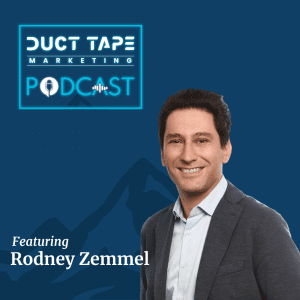
Rodney Zemmel, a guest on the Duct Tape Marketing PodcastIn this episode of the Duct Tape Marketing Podcast, I interview Rodney Zemmel. He is co-leader of the McKinsey Digital Practice,  a senior partner based in New York, and a member of McKinsey’s Shareholders Council, the firm’s board of directors. He serves clients across a range of industries on growth strategy, performance improvement, and value creation by harnessing the power of data and analytics, digital culture and capabilities, and modernized core technology.

He is the co-author of Rewired: the McKinsey’s Guide to Outcompeting in the Age of Digital and AI. This book shares the lessons McKinsey has learned helping companies deliver successful digital and AI transformations into a detailed “how to” manual. 

Key Takeaway:

Digital transformation requires organizations to rewire their processes and operations, leveraging new technologies to achieve value. It’s important that organizations take ownership of their digital transformation as an ongoing journey and actively learn to implement changes in order to keep improving. Rodney highlights the significance of selecting the right areas for transformation that can deliver a differentiating value, plus the importance of upskilling and reskilling existing talent within digital changes.

Questions I ask Rodney Zemmel:

  • [01:48] How much collaboration or maybe fighting goes on to structure a book like the McKinsey guide, that’s effectively going to represent the brand itself?
  • [03:20] Do you see this book as something you can take to a client and say we’re going to walk each of the sections here?
  • [04:28] Why is the title of the book “Rewired”?
  • [08:56] How does somebody start addressing what is essentially a line-by-line audit of everything they’re doing?
  • [12:22] Would you look at the value derived by digital technologies differently than by producing customer value or revenue?
  • [14:23] Are you advising companies that they might need to get different people or new people on these digital changes?
  • [16:32] Are there organizations that are significantly behind in this rewiring?
  • [17:50] Is there a correlation between leadership inside of an industry by how digital it is?
  • [19:02] Are you seeing people wasting a lot of time and money on AI because it’s the trendy thing of the moment?
  • [20:07] How crippling is any of this without access to data inside an organization?

More About Rodney Zemmel:

More About The Agency Certification Intensive Training:

Take The Marketing Assessment:

Like this show? Click on over and give us a review on iTunes, please!

John Jantsch (00:00): Hey, did you know that HubSpot’s annual inbound conference is coming up? That’s right. It’ll be in Boston from September 5th through the 8th. Every year inbound brings together leaders across business, sales, marketing, customer success, operations, and more. You’ll be able to discover all the latest must know trends and tactics that you can actually put into place to scale your business in a sustainable way. You can learn from industry experts and be inspired by incredible spotlight talent. This year. The likes of Reese Witherspoon, Derek Jeter, Guy Raz are all going to make appearances. Visit inbound.com and get your ticket today. You won’t be sorry. This programming is guaranteed to inspire and recharge. That’s right. Go to inbound.com to get your ticket today.

(01:03): Hello and welcome to another episode of the Duct Tape Marketing Podcast. This is John Jantsch. My guest today is Rodney Zemmel. He’s a co-leader of the McKinsey Digital Practice, a senior partner based in New York, and a member of McKinsey’s Shareholders Council. The firm’s board of directors serves clients across a range of industries on growth strategy, performance improvement, and value creation by harnessing the power of data and analytics, digital culture and capabilities, and modernizing core technology. We’re gonna talk about a book that he co-authored called Rewired: The McKinsey’s Guide to Out Competing in the Age of Digital and AI. So Rodney, welcome to the show.

Rodney Zemmel (01:46): Thanks for having me on, John, it’s a pleasure to be here.

John Jantsch (01:48): So I have to ask as an author also, but as an author who basically has only an editor to answer to, I’m wondering how, how writing a McKinsey guide like so a, a tool that’s effectively going to represent the brand and be put out there as the tool that everybody uses. How much collaboration or maybe fighting goes on to structure a book like that?

Rodney Zemmel (02:11): Your podcast is only 20 minutes, right? ? So it’s actually, I think this is the first book that we’ve ever put the words McKinsey Guide on. Okay. So this was a very conscious step on our part. Yeah. And the model we had in mind, there’s a book called Valuation, which our, our firm has had an updated every year for the past 20 years or more. And that really is like the guide for corporate finance executives on how to value a company. And it’s sort of become like a standard business school textbook. Yeah. There’s no equivalent in the world of digital. And there’s a bit of a sense that digital was a bit sort of the wild west in terms of, oh, it’s all about agile and people improvise the method and you can’t measure things as well. And you know, you’ve gotta try it and see, and we don’t believe that, right? We believe there is a systematic method that has proven to get results. That’s what we tried to create. And the three of us who did this together, myself, Kate, and Eric, we actually worked together and different clients around the world all the time. So we had a lot of fun on it. So, you know, there was maybe, you know, debates around the best way to say something or whose data and whose examples to use, but there wasn’t much, uh, sort of real, you know, real, real tension and putting it together.

John Jantsch (03:19): So, so is this the, you know, junior consultant at McKinsey’s, you know, book to take into a client and say, this is, you know, we’re gonna walk work through, you know, each of the sections here. Obviously everybody’s different, but I mean, is that how you see it?

Rodney Zemmel (03:32): I actually think this is the client’s book to read, right? And for them to like understand how to do things themselves in their own organizations, and of course by all means, call us if there’s a need to help. But, you know, we actually do think there’s a better way to do this. And you know, we know the fact that only 30% of digital transformations are hitting the value that they’re intended to hit. And we wanna see the world do better. And frankly, we we’re, we’re far enough down the learning curve here that I know we’re putting sort of a lot of intellectual property out in the world through publishing this book and, you know, anybody that can have it and therefore, you know, do you, do you need to call us or not? We’re confident that this is about sort of a learning journey for clients and people who are further down the learning curve are always gonna want to get better and better. So I feel like we’ve sort of published the, you know, the 2.0 version here and there’s always gonna be a 3.0 and a 4.0 that people will need help on.

John Jantsch (04:25): So why rewired? I mean, I think a lot of people would say, well, you know, for the last 20 years I guess since we came on the internet, we’ve been wired, right? I, again, I’m tossing that up for you to smack it outta the park, but, but I think that, you know, a lot of people would think, why are we having to rewire what’s different?

Rodney Zemmel (04:44): Great

John Jantsch (04:44): Question. Is it just an evolution?

Rodney Zemmel (04:46): No. So I look, I I’ll give you an example, uh, the answer to that using like generative AI, which is like the hottest conversation topic in the world right now, right? Generative AI is the coolest thing and it’s deceptively easy to go pilot and go trying your business, you know, in the marketing function, in customer engagement and go do a cool pilot and get things up and running. However, it’s really hard to get it working at enterprise scale and get real measurable value from it, right? So if you wanna write somebody a birthday poem or if you want to on a one-off basis send some cool customized things to a customer, it’s easy to do. If you want to build a system where you can send tens of thousands of customized things to customers every day in a way that is safe, in a way that really reflects the personalization preferences of that customer in a way that doesn’t let bias creep in a way that has measurable economic impact, then it’s not enough just to go launch a piece of technology. You actually need to rewire your commercial function around that technology. So there’s this idea that it’s not about like, you know, sticking a coat of paint on it that you actually do need to go and fundamentally rewire the house to take advantage of these technologies.

John Jantsch (05:58): A and do you get the sense that all over, you know, companies in, in all over the world that there are little pockets of people just doing this on their own and that’s that there’s a real danger in what you of not sort of institutionalizing, you know, whatever methods you take.

Rodney Zemmel (06:12): Absolutely. So, you know, when we did our interviews with companies, so what we tried to do is say, look who’s creating value from digital transformation? And you know, there’s about a quarter of companies who we think are really hitting their economic targets between 25 and 30%, depending on the kind of transformation. And we did interviews with them and then we did interviews with the ones who were missing and then with some who were somewhere in between. And one of the most common things we heard, like one of the most common failure modes was I’ve got more pilots than an aircraft carrier , right? So, you know, a CEO or a chief marketing officer says, you know, we’re going big on personalization, we’re going big on digital customer engagement and next thing you know, it’s everywhere. But there isn’t actually a top down roadmap of how to do it with real milestones and metrics and uh, around it.

(07:01): And a real fundamental change in the operating model. If you’ll let me actually, sorry, this maybe a longer answer than you’re looking for, but there’s a beautiful example in the banking industry. Um, so if you use any banking app, right, the customer banking apps, the private banking apps, whatever, every bank’s app is basically the same, right? Some are designed a little bit better than others, but they all have the same functionality. So we were at a round table with consumer banking CEOs and a few of them said, you know, digital is table stakes. It’s something we have to invest in, but it’s not, uh, competitively differentiating. We said, we don’t think that’s true, let’s actually go look at the data. And what we did was we got the data on actually how they were doing digital. We looked outside in and did some interviews at the work practices across the different banks, and then we looked at their economics and we saw that actually again, it was about the same ratio.

(07:47): About 25% of them were actually making money. Were showing positive return on equity, were showing positive growth per, in value per customer through their digital initiatives. You could not tell that if you just looked at the customer apps, right? They were the same mm-hmm. , you could tell that if you started asking questions like, how does business and technology work together in your organization, right? Do you really have a proper agile operating model? Right? Do you have a single set of digital priorities across the company? Do you have a, a clear technology architecture with the specific set of features to it? Do you have, so when you went through and it sort of wasn’t just, you know, the front of house, but that actually rewired all the way from front to back, those were the ones who were making money from it.

John Jantsch (08:32): Yeah. It’s kinda like the apps were just an interface and really nothing more .

Rodney Zemmel (08:36): Yeah, yeah. And the necessary, right, but not sufficient.

John Jantsch (08:39): Yeah, they were, they, they replaced tellers though is how they looked at it. So, so the book is broken up into sections. The first one really is the transformation roadmap. So I mean, how are you advising people? Because just what you explained was a transformation of how somebody would look at their entire business. So what, you know, how does somebody start addressing, you know, what is essentially, you know, a line by line audit of everything they’re doing?

Rodney Zemmel (09:04): Yeah. So I don’t think it shouldn’t feel like an audit, right? So I will, I’ll use generative AI as an example again, right? So I was with a company a couple of weeks ago who said they’ve got 75 different pilots going across their organization on Gen AI. And their question for us was how should they organize and govern those and prioritize them and resource them and so on. And you know, answer to that a little bit qui is don’t do that, right? It’s just right. If you’re doing 75 things in this new and fast moving area, you’re not gonna be able to do them well. What you actually need to do is to step back and say, where is the value really going to be in changing your business? And yes, there are easy things to do with gen ai, maybe in HR around recruitment or maybe in finance with, you know, being able to pull from different feeds across your finance systems and so on.

(09:53): But is that really gonna drive differentiating value for your business? Is that something you should spend time on? Or is that something that all the various software companies you work with, they’re gonna go innovate within their own product? Instead, pick the area that’s unique to you and that can really drive value. Don’t pick tons of areas, pick one area. It has to be an area that’s big enough to matter. And our rule of thumb is 20% of ebitda, it’s not gonna drive a 20% EBITDA improvement in a particular area. It’s not gonna be big enough to sustain people’s attention. So pick an area unlike that and then develop the real plan around that. And it’s never gonna be one use case, right? A while ago, five years ago, there was this idea of like the silver bullet use case, right? If only we could do amazing, you know, supply chain forecasting, right? We wouldn’t get caught out in the chip shortages or whatever it is, but it’s multiple use cases that need to sort of feed together Our, our data actually says it’s 11 companies who had 11 use cases within a particular domain or adjacent domains were the ones who were more likely to sort of cut through into being in that quadrant that’s creating value.

John Jantsch (10:58): And now let’s hear a word from our sponsor, Marketing Made Simple. It’s a podcast hosted by Dr. JJ Peterson and is brought to you by the HubSpot Podcast Network. The audio destination for business professionals marketing made simple brings you practical tips to make your marketing easy and more importantly make it work. And in a recent episode, JJ and April chat with StoryBrand certified guides and agency owners about how to use ChatGPT for marketing purposes. We all know how important that is today. Listen to marketing made simple. Wherever you get your podcasts.

(11:34): Hey marketing agency owners, you know, I can teach you the key to doubling your business in just 90 days or your money back. Sound interesting. All you have to do is license our three-step process that’s gonna allow you to make your competitors irrelevant, charge a premium for your services and scale perhaps without adding overhead. And here’s the best part. You can license this entire system for your agency by simply participating in an upcoming agency certification intensive look, why create the wheel? Use a set of tools that took us over 20 years to create. And you can have ’em today, check it out at DTM world slash certification. That’s DTM world slash certification.

(12:22): So, so let’s talk about value then for a minute. Because some of the AI, for example, or some of the tech technology, digital technology, maybe it doesn’t deliver customer value, it actually delivers convenience or efficiency inside the organization. So would you look at that as a different, would you look at that value derived in that manner differently than you would say producing customer value or revenue?

Rodney Zemmel (12:48): So again, we’ve seen a shift here, right? So when we looked at our sort of digital transformation surveys of three, four years ago, cost was 70% of the focus, right? Um, and that’s because it was the most measurable part and because a lot of the early customer journeys were very tractable to cost. Like how can we, you know, get people out of branches, right? And into the app. How can we get people instead of making phone calls to using the website, right? And you can very easily look at, you know, sort of per employee productivity and manage that cost down what we’re seeing now, it’s not, that’s gone away, right? That’s still there, but there’s been a flip, I would say it’s now 70-30 growth to cost and even things that initially look like cost. So again, I’ll talk gen AI cuz it’s the flavor of the moment, right?

(13:34): Gen AI is gonna be a great way of saving cost in customer contact centers, but it’s even better at creating unbelievably strong customer engagement, right? I mean there’s this amazing survey from the UK where people who were using a gen AI chat bot, instead of talking to a real physician, they could tell it was a chat bot, right? So the original test was can you tell whether it’s a robot or a human? And they could tell it was a robot, however they found it more engaging and more empathetic, right? Than the real doctor, right? So if you think about what that means for a customer center, yes you’ll be able to save some costs, but more importantly you’ll be able to create a level of engagement that’s gonna drive cross sell, that’s gonna drive growth, that’s gonna drive new product ideas in a much better way than what you’re doing today. So we’re really seeing a shift to people using it for growth.

John Jantsch (14:22): Would you, are you seeing or are you advising companies that they might actually need to get different people or new people on the bus?

Rodney Zemmel (14:32): I’ll give you a yes, but right. So there was this giant trend, you know, five to eight years ago around go to Silicon Valley or you know, go to London or you know, New York and you know, sort of hire the cool kids from digital natives to come to your company. And that turned out to be a great way to change the dress code , but not a great way to change the corporate culture. And some of those people have been successful, but many of them have actually not stuck. And a little sprinkling of digital talent is not enough to change the company. So the whole sort of chapter two about talent here is as much about upskilling and re-skilling as it is about hiring in, you know, the digital natives. And we’ve been amazed by how far companies can go in particular companies that are in industries where there’s already a high degree of sort of numeracy like people with engineering backgrounds and so on, how far they can go with reskilling and up-skilling their existing workforce drive real digital impact.

(15:29): We work with a company in, in Baghdad that’s Baghdad, Arizona, not the other Baghdad a copper mine. And they’ve built an amazing data organization and I sort of feel like if you can do it in Baghdad, Arizona, which you know, it’s probably only a two hour flight from Silicon Valley, but it’s pretty far from Silicon Valley, sort of, you know, spiritually, if, if you can do it there then you know this idea that you need to be in one of the big metro areas and you need all the, you know, young digital native talent. It’s just not true.

John Jantsch (15:57): Yeah. And I’ve seen a lot of initial research that is suggesting, again, AI is actually allowing people with maybe less experience to do more complicated work. And so I think there is part of that, that they’re using the tools to, up to your term upscale, uh, some of the workers. But I think it’s also allowing people, you know, call center example, you know, they have access to real time answers and you know, they’re, even though they’re less skilled. So I think that’s, it’s a combination of those things probably.

Rodney Zemmel (16:24): That’s right. Provided you do it with the senior management layer as well. Right? So any upskilling needs to be about the frontline and the senior people.

John Jantsch (16:32): Are you finding that there are organizations that we maybe wouldn’t guess this to be true, that are just significantly behind in, in this, uh, rewiring?

Rodney Zemmel (16:42): You know, there’s a chart, I can’t remember if we put the chart in the book or not, actually I think we didn’t. But we have a survey that we call dq or Digital Quotient survey. And it’s basically a, a questionnaire you can rent to see how digital a company is. When we first started doing this, there were very nice patterns by industry, right? You’d see like high was all the way at one end and you know, public sector was all the way at the other end. Retail was somewhere in the middle. And you know, energy was also, you know, off to the slow end. What we see now is first all industries have moved, but second of all, the variation within industry is actually bigger than the variation between industries. Mm-hmm. So, you know, the energy company that has really embraced digital is as digital as the average high tech company. And the consumer goods company that’s been on laggard in embracing digital is as behind as, you know, the public sector or, or you know, or healthcare services company. So the spread has gone much, much wider. In addition to that, there’s a learning curve, right? It takes a while to get going, but then once people are going, you see them getting better and better on the digital quo.

John Jantsch (17:49): And are you also, is there a correlation with leadership inside of an industry by how you digital it is?

Rodney Zemmel (17:53): Great question. So one of the things we asked in the survey where we were passing the companies into sort of the digital leaders, the digital average and the digital magnets was how many people on your executive team are digitally savvy? Mm. And when I first saw the data from that, I actually thought the team was giving me a chart with like the dummy data. Like this was like the chart to fill in once we have the real data. Cuz the correlation was sort of perfect, but it turns out that was the real data. And if you have an executive team that might have, I don’t know, a dozen members on it, if you’ve got seven or more people who are digitally savvy, your chance of ending up in the high performing segment are really high, like 80%. And if you’ve got one or two people who are digitally savvy in that group, your chance of being in the high performing segment are less than 20%. So the thing it most clearly correlates with is actually the savvy, the tech savviness of your leadership. Now of course there’s correlation and causation there and you can debate the order and so on. Yeah, yeah. But it’s still very clear that, you know, it’s hard to be a digital leader if you’re just, if you know, if every conversation someone’s looking to the CDIO or the CMO, right? It needs to be the team.

John Jantsch (19:01): Yeah. So are you also seeing people wasting a lot of time and money on we gotta do that AI thing , because it’s the sexy thing of the moment.

Rodney Zemmel (19:10): You know, I, that’s sort of why we wrote the book. I mean, it’s, this is being done. There’s so much swirl, right? It sort of gives the field almost a bad name, right? There’s so many people who are running around, you know, saying they’re agile or, you know, launching the demonstration projects or talking about things in their annual report or in investor days that don’t actually follow all the way through. It’s just massive wasted effort. I mean, you know, if you’d have bought stock in the world, digital transformation in 2015, right? You’d be very wealthy now just based on word usage. This is why we’re sort of arguing for this more organized and less wasteful approach. And you know, while I’m excited about gen ai, I think part of the worry with Gen AI is there’s a little bit of a risk that it sends us, like back to 2018 in digital transformation where it’s just so easy to fire up these pilots. But if you don’t actually rewire the house, then you’re not gonna get the value from it.

John Jantsch (20:06): How, um, crippling is any of this without access to, uh, data inside an organization?

Rodney Zemmel (20:16): So there is no question that all these trains ride on rails of data, right? You need the data. So, but maybe like, maybe just a couple of surprises to us, or maybe they’re not surprises, but things that we learned did the research, first of all, it isn’t just about your own data, right? That there’s almost no company who’s been super successful here just relying on their own, you know, amazing trove of proprietary data. It’s actually about how you put your own data and the world’s data together in interesting and safe ways. That’s thing one. Think two is while data is critical, having the most modern systems in the world is not critical. And I think one of the big unlocks in digital transformation has been moving away from an excessive focus on core technology modernization and into a focus on solving back from where the value is.

(21:09): So we’ve worked with companies who’ve had the data, I mean literally in filing cabinets, right? Not even digitized, right? And by being very selective with what are you trying to do? Therefore, what data do you need? Now that data, the data you need, you know, does need to be in the cloud, right? But you can build very efficient now sort of cloud, you know, we explained in the book sort of cloud like data extraction layers, just focus around what you need and the old fashioned approach that says, first let’s build this like giant data lake with everything in it. Right? Then let’s splash around in the lake for a while and see what comes out. Right. Ends up being quite wasteful.

John Jantsch (21:45): Yeah. I mean that’s part of the challenge with data is there’s so much of it and we can measure everything. And like you said, most of it doesn’t matter, probably . Yeah.

Rodney Zemmel (21:53): But we would say in data, start back from where you think the value is. Think as much about the world’s data as your own data, and then think about quality over quantity. And then don’t get concerned about legacy systems. There’s almost always a workaround, right? To allow you to decou on looking at the data from, you know, pinging your system every time. Yeah.

John Jantsch (22:14): So final question. Uh, do you see Rewired making any, some fun summer beach reads, uh, list, uh, this year

Rodney Zemmel (22:23): ? I hope so. I’m certainly gonna be sitting on the beach reading it.

John Jantsch (22:28): The other problem is it’s a bit of a beast. So it, it was way down that bag.

Rodney Zemmel (22:32): You know, I just flew across the country with a few copies of it in my backpack and I certainly, uh, got, got some, uh, some exercise from it. Look, I think that it, it, it, it is definitely written to be dipped into, right? It is the manual to say, okay, let’s talk about technology. Right? Let’s go to chapter four on technology rather than the straight end-to-end read. But, uh, you know, I hope people, if people enjoy reading it nearly as much as we enjoyed writing it, then we’ll have succeeded.

John Jantsch (22:57): Awesome. Well, Rodney, I appreciate you taking a few moments to stop by, uh, the Duct Tape Marketing podcast. You wanna invite people where they might connect with you or obviously get a copy of the book.

Rodney Zemmel (23:07): Sure. I mean, all the info’s on, mckinsey.com or you can, uh, reach me directly on, uh, rodney_zemmel@mckinsey.com. And, uh, I hope you liked the book.

John Jantsch (23:17): Awesome. Well, again, I appreciate you taking a few moments to stop by and hopefully we’ll run into you one of these days, uh, soon out there on the road.

Rodney Zemmel (23:25): Fantastic. And John, you can read more about the book on, I think it’s mckinsey.co/rewired, but I’ll, I’ll correct that URL if I’m giving you the wrong URL

John Jantsch (23:33): Background. Okay. And we’ll have that in the show notes as well. All right.

Rodney Zemmel (23:36): Okay. Thank you.

John Jantsch (23:38): Hey, and one final thing before you go. You know how I talk about marketing strategy strategy before tactics? Well, sometimes it can be hard to understand where you stand in that, what needs to be done with regard to creating a marketing strategy. So we created a free tool for you. It’s called the Marketing Strategy Assessment. You can find it@marketingassessment.co, not.com. Co. Check out our free marketing assessment and learn where you are with your strategy today. That’s just marketing assessment.co. I’d love to chat with you about the results that you get.

This episode of the Duct Tape Marketing Podcast is brought to you by the HubSpot Podcast Network.

HubSpot Podcast Network is the audio destination for business professionals who seek the best education and inspiration on how to grow a business.
 

Weekend Favs June 17

Weekend Favs June 17 written by John Jantsch read more at Duct Tape Marketing

My weekend blog post routine includes posting links to a handful of tools or great content I ran across during the week.

I don’t go into depth about the finds, but I encourage you to check them out if they sound interesting. The photo in the post is a favorite for the week from an online source or one I took on the road.

  • Anyword – This AI copywriting tool assists marketers to generate and optimize marketing copy for various channels and formats, offering a predictive performance score for decision-making and enabling the customization of content based on customer personas.
  • Wudpecker – This tool automatically joins your meetings, records them, transcribes them, and generates high-quality notes.Allowing users to save time and focus on more important tasks.
  • Softr – This user-friendly platform enables you to build personalized web apps and client portals using your Google Sheets or Airtable data, without requiring coding skills.

These are my weekend favs; I would love to hear about some of yours – Tweet me @ducttape

If you want to check out more Weekend Favs you can find them here.


How To Retain Top Talent While Prioritizing Their Quality Of Life

How To Retain Top Talent While Prioritizing Their Quality Of Life written by Felipe Orrego read more at Duct Tape Marketing

Marketing Podcast with Joe Mull

Joe Mull, a guest on the Duct Tape Marketing PodcastIn this episode of the Duct Tape Marketing Podcast, I interview Joe Mull. He is the founder of the BossBetter Leadership Academy and hosts the popular BossBetter Now Podcast, which was recently named by SHRM as a “can’t miss show for leaders” along with podcasts from Brené Brown and Harvard Business Review.

He is the author of 3 books including his newly released Employalty: How to Ignite Commitment and Keep Top Talent in the New Age of Work, a framework for creating an employee experience that leads people to join a company, stay long term, and do a great job. This book will teach you how to attract and retain talent and turn ordinary people into devoted employees.

Key Takeaway:

Employalty emphasizes the idea of attracting and retaining top talent by creating a more humane employee experience that focuses on their quality of life. The goal is to create an environment that recognizes employees’ individual needs and allows for a better work-life balance. Companies should become a destination workplace and for this, they should win in three areas of the employee experience: an ideal job, meaningful work, and becoming a great boss.

Questions I ask Joe Mull:

  • [01:55] What were you hoping to add to the topics of hiring and quitting with this book?
  • [04:00] Employalty sounds about employee loyalty, but that’s not what it is. What is Employalty?
  • [04:55] Gen Z wants different things in work, can you explain the “myth of lazy”?
  • [07:31] How do leaders and business owners turn their company into what you call a Destination Workplace?
  • [11:52] You say that every employee in every company has an internal scorecard that determines whether they stay long-term and commit to their work. Please explain that idea.
  • [12:58] Can you elaborate on the phrase: “the era of hiring the best person for the job is over”.
  • [18:08] Where do diversity, equity, and inclusion, you know, initiatives fit into the idea of Employalty?
  • [20:09] Where’s AI going to fit in the destination workplace?

More About Joe Mull:

More About The Agency Certification Intensive Training:

Take The Marketing Assessment:

Like this show? Click on over and give us a review on iTunes, please!

John Jantsch (00:00): Hey, did you know that HubSpot’s annual inbound conference is coming up? That’s right. It’ll be in Boston from September 5th through the eighth. Every year inbound brings together leaders across business, sales, marketing, customer success, operations, and more. You’ll be able to discover all the latest must know trends and tactics that you can actually put into place to scale your business in a sustainable way. You can learn from industry experts and be inspired by incredible spotlight talent. This year. The likes of Reese Witherspoon, Derek Jeter, Guy Raz are all going to make appearances. Visit inbound.com and get your ticket today. You won’t be sorry. This programming is guaranteed to inspire and recharge. That’s right. Go to inbound.com to get your ticket today.

(01:03): Hello and welcome to another episode of the Duct Tape Marketing Podcast. This is John Jantsch. My guest today is Joe Mull. He’s the founder, the boss, better Leadership Academy, and the host of the Boss Bette Now podcast, which was recently named by SHRM as a “can’t miss show for leaders” along with podcasts from Brene Brown and Harvard Business Review. He’s the author of three books, including one we’re gonna talk about today. And I’m gonna stumble over this word every time cuz it’s a made up word. It’s awesome, Employalty. It’s a mouthful. How to Ignite Commitment and Keep Top Talent in the New Age of Work. So Joe, welcome to the show.

Joe Mull (01:44): Thank you John, and you nailed the title my friend. I’ve gotten a lot of different iterations of that. And you were pitch perfect. It’s Imploy. .

John Jantsch (01:52): Awesome. So obviously the topic of hiring and quitting and , you know, whatever you wanna call it, is high on people’s minds right now. So what were you hoping to maybe kind of tap into current wise with this book?

Joe Mull (02:10): Well, this book was really born after I continued to get frustrated with some of the dialogue that was taking place around why it was so, so hard to find people in the aftermath of the pandemic, why it was so hard to get people to stay with an organization and why so many people were actively changing jobs.

(02:27): There’s this narrative that’s been taking place that, you know, nobody wants to work anymore or that this is really a generational issue and we have a ton of data that tells us that it’s not true. Yeah. What we’ve been calling the Great Resignation, it actually has been going on for about 13 years. When you look at the number of people who have been voluntarily changing jobs to take better jobs. Yeah. We know a lot of that is being driven by quality of life and that’s really at the heart of what this book’s about.

John Jantsch (02:53): Yeah. , it’s become sort of a joke, you know, it seems like every episode I do lately, I go, well, don’t wanna blame this on the Pandemic, but , it’s like, but it’s so easy. I mean, I think a lot of what happened in the Pandemic is it just accelerated everything, didn’t it? Like you talked about, this has been going on for a long time and now a whole swath of people woke up and said, you know, life sucks. My job can’t suck too. Right,

Joe Mull (03:17): That’s exactly right. There was a sort of values reshuffling that took place. Yeah. And then if you think about it, the covid didn’t cause the covid, I just called it the Covid Covid.

John Jantsch (03:27): It’s like the Google was That’s the Google, isn’t it?

Joe Mull (03:29): Yeah, the Google. Yeah. You know what Covid did do to the workforce is it made everybody braver.

(03:34): Right? Prior to the pandemic a, a major job change was a major life decision. You’d weigh the pros and cons and talk to people in your network, and then the pandemic arrived and it injected so much instability and uncertainty into the job market for so many people who then lived with that for two years. And so our risk aversion to job changes got obliterated by this massive global happening. So now it’s not such a big deal to think about a change.

John Jantsch (04:00): Yeah. So the title, which apparently I nailed loyalty, you know, has the word loyal, sort of right smack in the middle of it. And just because you have told me differently, well that’s not really what this book’s about, is it? I mean, because it, you read that in the first glance, you might think employee loyalty, I get it. Mash those together. Right?

(04:21): But you’re not talking about that at all, are you?

Joe Mull (04:23): No. We’re playing a little bit of a trick on the reader here. Right? You hear, you see the word and you think employee loyalty, but employalty is actually a port man toe of the words employer loyalty and humanity. Yeah. So employalty is the commitment that employers make to a more humane employee experience because we know nowadays that’s what triggers commitment at work.

John Jantsch (04:44): So, and we can’t really even pick on millennials anymore, right? I mean, they’re like old now

Joe Mull (04:49): So they’re 40 now, John. That’s right. Yeah, exactly.

John Jantsch (04:53): The oldest ones anyway of, you know, they want different things. The next generation, which I guess we’re calling Gen Z now, you know, wants different things in work. And a lot of, you know, gray haired employers are, you know, interpreting that is, nobody likes to work, you know?

(05:07): Mm-hmm. the myth of lazy, I think you even called it. And it’s really not that at all, is it?

Joe Mull (05:13): It’s not. So we know that over the past two decades, the workforce on the whole, across every generation, has continued to endure a handful of burdens. The amount of work workloads have exploded in the past 20 years. Wages have been largely stagnant for nearly 40 years, up until about two years ago was the first time we started to see that number move.

(05:34): At the same time, burnout has become an all time high records in the workplace, even before the pandemic arrived. And so what we’re seeing is people saying, I need a change. And those changes are being driven by quality of life. There’s a, a massive recalibration taking place around how work fits into our lives. And there’s more opportunity than ever before, John, because we keep adding so many jobs to the economy.

(05:56): And so right now there needs to be a mindset shift for folks who employ people. There is no staffing shortage, there’s a great jobs shortage. There’s more opportunity than ever before for people to go out and upgrade their work situation. And unless you decide to be the upgrade, you’re gonna struggle to find and keep people

John Jantsch (06:16): You know, in the housing market, you talk about a seller’s market, a buyer’s market, and of course, you know, a lot of people are suggesting that, you know, the upper hand right now is with employees. And so a lot of employers are reacting to that. But is that, you know, are, is that just an ebb and flow thing? I mean, will that turn itself around?

Joe Mull (06:34): There’s always gonna be a little bit of ebb and flow in terms of the demand for workers in the job market. But when you look at the numbers, we’ve added jobs to the economy at a a, a breakneck pace for almost 10 years straight, right?

(06:46): We still have right now nearly 10 mil million unfilled jobs. If you took every unemployed person in the country right now and gave them a job, you’d still have 5 million unfilled jobs tomorrow. And we expect worker shortages in a whole host of categories going forward for the next 10 years.

(07:02): So yes, you’re gonna see ebbs and flow in terms of the economics and recessions and pay and demand, but the numbers game is not gonna change. We simply do not have enough people to do all the jobs that we’ve added to our eco our economy. So if you can be the upgrade, right? If you can be a destination workplace, you create an extraordinary competitive advantage for yourself, both in terms of attracting and retaining talent and the quality of the products and services your business delivers.

John Jantsch (07:30): So you mentioned a great phrase there, destination workplace. I’d love for you to kind of unpack like how does somebody turn their company into one of those? I mean, I think there’s some obvious things, but there are probably some companies out there. The culture hasn’t been that great, you know, and they’re starting to realize sort of the price of that. You know, how do you turn that around?

Joe Mull (07:48): Well, we analyzed more than 200 research studies and articles on why people quit a job or take a new job or decide to stay with an employer. And we can say with conviction that you become a destination workplace if you win in three areas of the employee experience. In the book we call them ideal job, meaningful work, and great boss.

(08:09): Now, some of this sounds self-explanatory, right? Great boss is pretty clear. But there are a handful of things that we know bosses have to get right in order for someone to call them a great boss, like earning trust and coaching and being an advocate.

(08:22): But those other two factors of ideal job and meaningful work might be a little less clear. Ideal job is about what I get in exchange for what I do. That’s about my compensation, my workload and flexibility. When those three things are right, that job fits into my life like a puzzle piece snapping into place and it becomes my ideal job. Meaningful work really comes down to purpose, strengths and belonging.

(08:46): Do I believe my work matters? Does it align with my unique talents and gifts? And am I doing it on a team where I feel celebrated and accepted for who I am and what I contribute? When you give someone their ideal job doing meaningful work for a great boss, they look around and they say, Hey, I like what I’m doing here, who I’m doing it with, let’s go. And then their commitment level goes up.

John Jantsch (09:07): It’s funny, I think the flexibility probably jumped on the list several notches because so many people had never experienced work from home and the flexibility that gave them, and all of a sudden it’s like, I like this, you know? Yes. I check my five minute break and go get some laundry done instead of just like, you know, sitting around chatting with people. And I think that flexibility piece probably went way up the list, didn’t it?

Joe Mull (09:29): It did it. Now the number one most requested workplace benefit in the world. But here’s the interesting piece of this, John, is that flexibility, remote work is just one kind of flexibility. Flexibility is really about giving people some autonomy and some influence to decide when, where, or how they work.

(09:47): So if you’re an employer who isn’t able to offer a remote work option, like for example, flight attendant, not an ideal work from home job, but maybe you’re giving people the opportunity to choose the length of their shift or the start time or their days of the week, or who they work with, or the locations where they work.

(10:05): We know that giving some of that influence back to people directly correlates with commitment.

John Jantsch (10:12): I could actually see somebody flying a plane from just like a little console, you know, on their desk at home. What do you think?

Joe Mull (10:18): Isn’t it already a lot of autopilot? I’m not a pilot and I’m taking nothing away from the people who fly me around the country when I go to speak, but I know the computers are heavily involved.

John Jantsch (10:28): Now let’s hear a word from our sponsor. Marketing Made Simple. It’s a podcast hosted by Dr. JJ Peterson and is brought to you by the HubSpot Podcast Network. The audio destination for business professionals marketing made simple brings you practical tips to make your marketing easy and more importantly, make it work. And in a recent episode, JJ and April chat with StoryBrand certified guides and agency owners about how to use ChatGPT for marketing purposes. We all know how important that is today. Listen to marketing made simple. Wherever you get your

(11:05): Hey marketing agency owners, you know, I can teach you the keys to doubling your business in just 90 days or your money back sound interesting. All you have to do is license our three-step process that’s gonna allow you to make your competitors irrelevant, charge a premium for your services and scale perhaps without adding overhead. And here’s the best part. You can license this entire system for your agency by simply participating in an upcoming agency certification intensive look, why create the wheel? Use a set of tools that took us over 20 years to create. And you can have ’em today, check it out at DTM world slash certification. That’s DTM world slash certification.

(11:51): So I kinda laughingly tell a lot of companies I work with from a marketing standpoint that you know, you have a brand, you know, they’re like, oh, branding that’s for a big company.

(11:59): It’s like, no, you have a brand. It’s just whether or not it’s intentional. And you talk about the idea that every company has an internal scorecard, which is sort of their employer brand on the inside. So talk a little bit about that and how maybe somebody taps into that idea.

Joe Mull (12:13): Yeah. So every employee is measuring you against this internal psychological scorecard that they have that’s made up of those factors of ideal job and meaningful work and great boss. And so if I’m coming to your company every single day and my compensation is below what I need it to be, if I’m struggling with an overwhelming workload, if I get no flexibility whatsoever.

(12:34): Then I’m not able to check those ideal job boxes. The same is true with meaningful work. If I experience exclusion, for example, if there’s no opportunity for me to grow my career, if I’m not getting any support or coaching from my boss, these are the boxes on that internal psychological scorecard that I need to check in order to join, stay, care and try.

(12:57): And so this framework really becomes the diagnostic tool that employers can use to decide what we’re already doing well, but where we may have some gaps in terms of becoming that destination workplace.

John Jantsch (13:08): And you actually have a physical scorecard, right? I’ve seen some of the resources that accompanied the book. And so you actually have a couple tools where somebody, I mean are you suggesting go around, hand it to everybody and say like, score us, or how do you use that tool?

Joe Mull (13:21): Yeah, no, it’s a great question. And I do think it might be the sexiest Venn diagram ever published in a book, but I’m biased now. This is as a scorecard. It’s used at both an individual and an organizational level. So you could easily turn the nine dimensions on that scorecard into an organization-wide survey where you ask your employees, please rate the degree to which you experience the following.

(13:42): And actually as in the toolkit that we give readers, we actually give that dimensions of employee assessment that they can download and use at across the organization. But at an individual level, you know, we tell leaders all the time, if you wanna know what employees want ask. But what we also know is that a lot of employees don’t necessarily know what it is that they want, that they’re not getting, they may not be able to articulate it or they may not be comfortable doing.

(14:07): So there’s a power dynamic, or maybe I don’t have a great relationship with my boss. This framework gives leaders at any level of the organization a vocabulary that they can use to probe and understand what the conditions are that lead people to thrive. And whether they’re not or not, they’re happening for people at the individual level.

John Jantsch (14:25): So the one phrase that I’ve heard you use that you know it’s probably raising some eyebrows because it sounds aluminous, is the era of hiring the best person for the job is over. Please elaborate.

Joe Mull (14:38): Yeah. Well what we say is that what you must do now is create the best job for the person. So listen, if anybody listening to this knows somebody who has changed jobs in the past year or two, and if you think about why that person changed jobs, you’ll get a host of answers. Some people will say, I need better pay.

(14:54): Some people will say, I wanted a better commute or more flexible work schedule, or more fulfilling work or a better boss. There are a whole host of reasons. When I do keynotes and workshops, it’s one of the first questions I ask the audience, and I’ll get two dozen answers. And when you listen to them, they all sound the same.

(15:10): Or excuse me, they all sound different, but they are the same. They all roll up to this idea of better quality of life. So when we talk about creating the best job for the person, we’re really talking about standing out as the way that job fits into my life. It doesn’t take over my life, it’s a more humane employee experience that doesn’t treat me like a commodity. It treats me like a fully formed human being who also has a life outside of work.

John Jantsch (15:38): So you started down a path that, I want to go a little deeper on this. This idea that instead of putting out, you know, here’s the requirements, here’s the education, here’s the, you know, the job description that you’re actually taking somebody and saying, here are your skills, here’s what you want out of life, let’s design the job around that.

(15:56): I mean, obviously I could hear some people going, you know, there’ll be anarchy, you know, but, but I mean is that to some degree what you’re suggesting?

Joe Mull (16:05): To some degree. So the nature, the idea of tweaking a position to fit someone’s skills or strengths or desires isn’t new. Gallup has done a ton of research on this for years. It’s something called strengths-based leadership. It’s also known as job crafting. When you hire somebody into a role and you say, we think you’re gonna handle these kinds of things on this list, and then you figure out they’re really good at some of them and less so at others, if you can tweak that role to allow them to play to their strengths more often, you actually get more commitment and higher quality work.

(16:36): And yeah, it does mean that you need to find other people to do those other things, but across the board, instead of trying to raise everybody’s weaknesses to a level of mediocrity, you’re starting at people’s strengths and you’re getting them to a level of quality that most people don’t reach.

(16:51): You know, John, when we recently hired for someone and on my team and we posted the job description, yes, we put the job duties, yes, we put the salary and benefits information, but we also talked a lot about our commitment to quality of life. That this was a job. We wanted to be a compliment to people’s life, not to take over and be a burden to someone’s life. We talked about how we wanted to be a place that people would come to and enjoy being a part of our culture, of ordering Mexican takeout for staff meetings and not being afraid to sing show tunes around the office. And when we put those things front and center in our job description, it gave potential candidates of flavor, not just of what they’d be doing, but what the work would be like day in and day out.

(17:31): And we ended up getting a whole host of applications for that position that ended up being more than we would’ve got if we would’ve just stuck to a traditional job description.

John Jantsch (17:39): No, no question. And I think, you know, I think not everybody, but you can see you go to Monster, you know, one of the job boards, you can see there are companies that are waking up to this idea. You can see there’s definitely a lot of old school still out there, but you definitely see people leading with the fun, if you will, in a position.

(17:57): And I, you know, I do think that, you know, the world is probably catching up with that a little bit. You may say it doesn’t really fit, but I want to ask this because it’s on a lot of people’s minds, it’s somewhat of a trend, you know, where does diversity, equity and, and inclusion, you know, initiatives fit into this idea?

Joe Mull (18:13): No, it’s a perfect question cuz it’s directly in the model that we wrote about in the book. So we talked about one of those three factors being meaningful work. Well, one of the dimensions of meaningful work is belonging. And belonging starts with connection and camaraderie, right? Developing relationships with people beyond just the tasks and duties of my job. We know that matters. We know that people will forego taking a new job just because they like the people that they work with and they don’t wanna leave that team. That shows up in the data consistently when you look at retention and turnover.

(18:43): But nowadays what we’re seeing is that when people don’t experience belonging, which is beyond just connection and camaraderie, it’s being an accelerated, uh, accepted member of a team for who you are and what you contribute. It actually drives people out the door to the point.

(19:00): Now, John, where last year when McKinsey put a report out about why so many people changed jobs after the pandemic, the number three biggest reason given for leaving a job was a lack of belonging. We know that the folks who practice DEI work in organizations across the country have actually added the letter B to the acronym.

(19:18): So when organizations decide that we’re gonna make a commitment to an inclusive workplace, it means we need to start and spark some conversations here about the naturally occurring differences between people and how we can make our workplaces acceptable and and inviting for folks from all walks of life.

John Jantsch (19:34): It’s, it is funny, I think I read somewhere when they were talking about retention. They were saying one of the like key kind of practical like measurable ingredients was does, you know, does the employee have a best friend at work?

(19:45): And that, that was like a real, I mean, if they didn’t, you know, they didn’t ever really connect with anybody at work, they were probably gonna leave. I was pretty interested.

Joe Mull (19:53): That’s absolutely right. And a lot of that research is really focused, not even non, you know, best friend at work is different than best friend at home, right? Sure. But best friend at work means is there somebody that I can vent to who understands what I go through, but also who knows my story outside of work and knows who I am as a person.

John Jantsch (20:09): Yeah, yeah, absolutely. All right, so let’s hit another trendy topic. Where’s AI going to fit in this? I know a lot of employers look at this and go, oh great, we can get a lot more done with fewer people. And then there’s certainly a lot of hand ringing in the media about, you know, your job AI is coming for your job.

(20:26): I’d love to hear, you know, again, if we’re gonna talk about being the destination workplace, you know, where does that fit into the destination workplace?

Joe Mull (20:33): I actually don’t think AI is gonna have a dramatic impact on what activates people at work, what leads them to commit to doing a great job. The emotional and psychological buttons and levers, if you will, that lead people to wanna be a part of an organization and do great work for an organization.

(20:51): It’s certainly going to create a whole host of jobs and industries that we haven’t even thought of yet. It’s absolutely going to influence a whole host of industries and jobs that we’ve long expected to be there forever. A lot of the questions that I’m getting around AI right now in terms of employees and bosses are focused on the ethics of it, right? Right. So is, so how should I feel if one of my direct reports is using AI to get some of their work done?

(21:16): Is that ethical? And, you know, my whole thing comes back to are they passing it off as a skill that they possess? Because if that’s the case, then there’s an ethical question there. Yeah. But if they’re saying, I can be more productive, I can improve the quality of the work that I’m doing by using this new tool, then I say, let ’em have it and let them have it soon because they’re gonna tinker with it and learn about it and share it with others in your organization. And you’re gonna be ahead of the game around a technology that’s constantly changing.

(21:44): But at the end of the day, John, most people believe they, most people do a great job when they believe they have a great job. And I don’t think AI’s gonna change that.

John Jantsch (21:52): You know, I’m seeing a couple things. First off, I’m seeing people seeing it as, you know, again on all those like surveys that people take, do I have the tools I need to do my job?

(22:00): And I think some people are saying, this is a great resource , you know, to help me do my job. I’m also seeing, or at least starting to see an inkling, and we’ve seen it in our organization. Uh, it’s a tool that’s allowing people to take people who are maybe less experienced and raise their skills up a lot faster and get them to do work that is maybe more strategic because now, you know, they have a tool that that if nothing else can, you know, can take away some of the, you know, the, the SOP, you know, type of work. So, you know, who knows where we’ll end up. But I think today as we’re moving through rapid change, uh, I think I see a lot of positives.

Joe Mull (22:37): And you’ve just described email when it arrived, right? You know, it is a tool. It enhances, it improves, it can make us more efficient and more productive. And you know, there was a lot of fear back then too. Same thing was true about electricity, right? Electricity is coming into our houses and it’s gonna kill us all. But the car, you know, it’s just a Yeah.

John Jantsch (22:53): The telephone, right?

Joe Mull (22:54): That’s right.

John Jantsch (22:57): Absolutely. So Joe, I appreciate you taking a few minutes to stop by the Duct Tape Marketing Podcast and talk about employalty. Tell us where people can connect with you and obviously pick up a copy of the book.

Joe Mull (23:09): Yeah, thank you for that, John. The book is available anywhere you like to buy your books. Employalty is just E M P loyalty. Or you can search my name, Joe Mull, m u l l. Shout out to independent bookstores everywhere. If you wanna support your local independent bookstore, you can go to indiebound.org and source the book from there. And me personally, I’m over @joemull.com.

John Jantsch (23:31): Awesome. Well, again, thanks so much for taking a few minutes out of your day to stop by the show, and hopefully we’ll run into you one of these days out there on the road.

Joe Mull (23:39): Thanks, John. Great to be with you.

John Jantsch (23:40): Hey, and one final thing before you go. You know how I talk about marketing strategy before tactics? Well, sometimes it can be hard to understand where you stand in that, what needs to be done with regard to creating a marketing strategy. So we created a free tool for you. It’s called the Marketing Strategy Assessment. You can find it @marketingassessment.co, not.com, dot co. Check out our free marketing assessment and learn where you are with your strategy today. That’s just marketing assessment.co. I’d love to chat with you about the results that you get.

This episode of the Duct Tape Marketing Podcast is brought to you by the HubSpot Podcast Network.

HubSpot Podcast Network is the audio destination for business professionals who seek the best education and inspiration on how to grow a business.


The 5 Key Skills That Successful Managers Possess

The 5 Key Skills That Successful Managers Possess written by John Jantsch read more at Duct Tape Marketing

Marketing Podcast with Dave Dodson

Dave Dodson, a guest on the Duct Tape Marketing PodcastIn this episode of the Duct Tape Marketing Podcast, I interview Dave Dodson. He is on the faculty of Stanford University’s Graduate School of Business, where he guides students in tactical execution. He was a McKinsey & Company consultant and left to become a serial entrepreneur, where he operated six companies as CEO or Executive Chairman. 

Dave is also the co-founder of Sanku, a company that developed the only successful technology to fortify grains with lifesaving micronutrients in rural African mills. Sanku was listed by Fast Company as one of the “Most Innovative Companies.” and named by Time Magazine’s 100 Best Inventions.

His newest book The Manager’s Handbook: Five Simple Steps to Build a Team, Stay Focused, Make Better Decisions, and Crush Your Competition; will help managers, executives, and other business leaders interested in dramatically improving their ability to lead people and inspire loyalty.

Key Takeaway:

Have you ever wondered why some people are better at getting things done than others? Dave identifies 5 skills that these individuals have mastered in order to become successful managers: team building, setting and adhering to priorities, seeking and taking advice, being a good custodian of your time, and being fanatical about quality. These skills combined with one another can be learned and practiced by anyone, regardless of their inherent attributes or personality traits. Dave emphasizes that this is a how-to manual rather than just theoretical concepts. Each chapter focuses on actionable steps where the goal is to make readers acquire and apply these skills effectively in their professional lives to become better leaders.

Questions I ask Dave Dodson:

  • [02:08] How do you define the term manager?
  • [03:27] How’d you come up with five steps that you lean on as being the critical elements?
  • [05:11] Can you mention the five skills in the compact organization?
  • [06:28] What do you feel like you’re adding new to the genre of leadership books?
  • [08:19] Can you explain this idea of hiring for outcomes and how that’s different than hiring for resume experience?
  • [09:47] Please develop the idea of curing the digital disaster.
  • [12:36] Where does a board or a mentor fit into a company’s structure or an individual’s structure?
  • [14:05] You introduce the operating plan, can you please explain that?
  • [17:51] So the fifth step is quality, how do you make quality a part of culture in organizations?
  • [19:10] How would you recommend that people make the ideas in this book stick?

More About Dave Dodson:

More About The Agency Certification Intensive Training:

Take The Marketing Assessment:

Like this show? Click on over and give us a review on iTunes, please!

John Jantsch (00:00): Hey, did you know that HubSpot’s annual inbound conference is coming up? That’s right. It’ll be in Boston from September 5th through the eighth. Every year inbound brings together leaders across business, sales, marketing, customer success, operations, and more. You’ll be able to discover all the latest must know trends and tactics that you can actually put into place to scale your business in a sustainable way. You can learn from industry experts and be inspired by incredible spotlight talent. This year. The likes of Reese Witherspoon, Derek Jeter, guy Raz are all going to make appearances. Visit inbound.com and get your ticket today. You won’t be sorry. This programming is guaranteed to inspire and recharge. That’s right. Go to inbound.com to get your ticket today.

(01:03): Hello and welcome to another episode of the Duct Tape Marketing Podcast. This is John Jantsch. My guest today is Dave Dodson. Dave’s on the faculty of Stanford University’s Graduate School of Business where he guides students in tactical execution. He was a McKinsey and Company consultant and he left to become a serial entrepreneur where he operated six companies as CEO or Executive Chairman. He’s a co-founder of Sanku, a company that developed the only successful technology to fortify grains with lifesaving micronutrients in rural African mills. Sanku was listed by Fast Company as one of the most innovative companies, and named by Time magazine’s 100 best inventions. We’re gonna talk about his book called The Manager’s Handbook: Five Simple Steps to Build a Team, Stay Focused, Make Better Decisions, and Crush Your Competition. Boy, a lot of promise in that . Dave, welcome to the show.

Dave Dodson (02:01): Good to be here.

John Jantsch (02:02): So this may seem like a really dumb question, but I think it’s actually going to be helpful to hear how you actually define the term manager.

Dave Dodson (02:12): Yeah. You know, John, I struggled quite a bit with whether I should be saying entrepreneur or manager or leader and manager seems sort of vanilla, right? Yeah. But that’s what most of us do every day. We’re managing and one of the things I wanted to do with the manager’s handbook is to take it from sort of some lofty concept down to what do you do every day Monday morning so you can get stuff done?

John Jantsch (02:33): Yeah. Cuz you’re right. I mean, entrepreneurs, business owners, you know, they, they may not have manager in their title, but they wear the manager hat every day. Right.

Dave Dodson (02:42): 100%. And the biggest leap that somebody makes is not becoming a manager per se, where you’ve got two or three people reporting to you, but it’s when you become a manager of managers because then you can’t cheat anymore. You can’t sort of stay up late or redo someone’s work. You have to manage through the organization. And one of the magical things about it, if you learn the skills on how to manage managers, is that’s completely scalable. All the way up to running the biggest companies in the world. Yeah.

John Jantsch (03:10): So, so with your McKinsey and Company credentials, you know, you had to have a framework here, right? Five simple steps, uh, to build a team. So kind of in obviously a great deal is drawn from your own experience managing companies and teams. How’d you come up with five steps that, that you lean on as being really the critical elements?

Dave Dodson (03:33): Well, first of all, I am the least likely entrepreneur. I grew up in rural Colorado. The closest town was about 300 population of 300, and we were kind of divided between farmers and ranchers. And I was on the farmer’s side cuz my dad made farm equipment. My, my stepdad built houses and my two grandfathers, one ran an auto dealer and the other ran a coal mine of all things. And what links all four of these people together is all of their businesses failed. Huh. And so I should have just gone out and been a McKinsey consultant, but I didn’t want to do that for whatever reason. In spite of that background, I decided to wa wanted to be an entrepreneur, and things were going well. And then the first time I really stubbed my toe hard and I was like, holy smokes, everything I do doesn’t work out.

(04:22): That’s when I started to look around and say, how come some people are just better at getting stuff done than other people? And that led to this three, three year search really to try to understand what is the difference. And what I quickly realized is the difference is not that people have certain attributes, they’re born a certain way, they’re charismatic, introvert, extrovert, but that they’ve mastered five skills. And I wasn’t looking John for a framework when I wrote that the manager’s handbook. I was just out of curiosity, and it just ended up being five skill areas that was universal. I don’t care who you were, you, Oprah Winfrey, you know, Rupert Murdoch, everybody mastered these five skills. It’s very interesting.

John Jantsch (04:59): And when we’re gonna call them skills, I mean, there is a o obviously there’s an implication that that can be learned, that can be practiced , that, you know, it does take intention to, you know, to bring them into every meeting. So let’s dive Well, well first off, I, I want you to identify the five skills kind of in the compact organization, but then, then I’ll sort of dip my toe into each of those and ask you to go a little deeper on something.

Dave Dodson (05:25): Yeah. So for example, the first one was the ability to build a team, right? The second one was an ability to set and then adhere to priorities. One was to be able to take advice from others, be able to seek and take advice. Another was to be a good custodian of your time. And then the last one was to be fanatical about quality. So those were the five. And I, again, I didn’t start out looking for five, but I ended up with those five. But then I had this predicament, John, because I didn’t wanna create a PowerPoint presentation or have a academic paper now that I teach at Stanford. I wanted something that people use. And so the trick was then how do you convert this insight that I had into a practical way that people could easily acquire these skills? Yeah. And that, that was my biggest challenge, honestly. Yeah.

John Jantsch (06:09): All right. So let’s dive into the first one. Team building, you know, frankly, every leadership book, every book on running a company, and it has at least a chapter right on this, because obviously if you’re gonna grow a business, you know you’re not gonna do it all by yourself. There’s a couple things that show up higher for outcomes, 360 degree, you know, reviews. I mean, what do you feel like you’re adding kind of new to that whole genre really, of leadership books?

Dave Dodson (06:35): Oh my gosh. You know, I teach at the Sanford Business School, right? And every class says, you gotta build a team. You gotta, but nobody says how to do it. Right? The inside here is that act. Actually, interestingly enough, John, it was, I was watching somebody play the piano, and I was thinking about how do you learn to play the piano? And I realized, well, first you learn how to get, position your fingers over the keyboard, 88 keys. Then you learn the difference between a sharp and a flat. Then you learn what the pedals do. And I realized that you learn to play the piano because you learn a set of sub skills, you combine ’em together and you can play the piano. And I realized the same thing was true with these five skills. So in, in, to use your example about building a team, then I looked at, okay, of the people who were great at building a team, this is not about how I did things.

(07:20): I studied the best, the very best leaders for the manager’s handbook. What were the characteristics or what were the, the sub-skills that they had mm-hmm. that led to building a team. So you mentioned 360, doing 360 reviews. So in as few pages as possible, I describe how to master how to do a 360 review, the questions to ask, who should ask the questions, how you curate the information. Then at the end of each chapter, I have a checklist. So when you get ready to do it, you don’t have to reread the chapter, because I wanted this to be a book that you could use. And I did not want it to be a, an inspirational book where you read it and you got all excited while you’re reading it, and then Monday you do the same thing over again.

John Jantsch (07:59): So hiring for outcomes has become a, a pretty hot topic, I think mainly because, you know, the whole quiet quitting or whatever the silly terms of, of the day are about those, that, that, I think it’s changing how people think about who they hire and who they, you know, what, who needs to be doing what roles and how to keep them happy at work. So talk a little bit about this idea of how hiring for outcomes and how that’s different than say, hiring for resume experience.

Dave Dodson (08:26): Yeah. So I completely turned the whole notion of hiring on its head. And you start with building a scorecard, which is what is, what do you want this person to do? Not what they did, not what their credentials are, but what you want them to do. And then you hire against it. So I remember when I first started hiring, I looked at clever interview questions. So this question that I used to ask everybody is, when you close the refrigerator door, how do you know the light goes out? and I, it was just, I was just impressed with myself, you know, and it was a creative answer, but that had nothing to do with the job and what I wanted someone to do. And so now what I’ve done is I’ve learned that you say, okay, what do I want this person to, I want them to drive sales by 15%.

(09:08): I don’t care what school they went to. I don’t care how old they are, I don’t care what they do before. Can they drive sales by 15%, sales by 15%? And then you ask the question, well, how will I know? What are the things that I can do to determine that? And that’s what you interview against. And it’s a completely different way to interview. And by the way, though, in terms of insights of the book, I do this all in about 15, 20 pages. You don’t need to read seven books on hiring to learn how to be good at hiring.

John Jantsch (09:32): But you could because it’s currently, it’s a very large section in the bookstore. All right, so let’s move on to time. And this is a tough one. Another one that there’s an entire category probably in the bookstores. There’s one I want you to really focus on curing the digital disaster.

Dave Dodson (09:50): Oh my gosh, , you know, before the digital age, the average executive had got a thousand pieces of communication. A year.

John Jantsch (10:00): A

Dave Dodson (10:00): Year. Wow. Today it’s 30,000. 30,000 and growing John. Yeah. And all these productivity tools are just making us less productive. So we all know it’s a mess out there. We all know that we read unproductive email. In fact, 50%, it’s reported 50% of the email that we read, we don’t think we needed to read. So we all know we have a problem. But the problem, but the issue is we wake up every morning, we do the same thing over and over again. So I didn’t wanna just sort of present a problem that everybody knows, and I didn’t wanna ask people to radically change how they think and how they behave and where their habits are and where their weaknesses are. So I said, you know what? I’m gonna give you seven tips. You do these seven tips and you’ll save 40 minutes a day. That’s it. And so that’s kind of throughout the book. That’s what I do, is I say, look, I’m not gonna try to change your life. I’m gonna give you seven things to do tomorrow morning that will solve this problem.

John Jantsch (10:53): Yeah, I actually just hired somebody to delete email for me. That was the solution to that one.

Dave Dodson (10:58): Well, John, I’m glad you answered my emails, at least. .

John Jantsch (11:01): . And now let’s hear a word from our sponsor, marketing Made Simple. It’s a podcast hosted by Dr. JJ Peterson and is brought to you by the HubSpot Podcast Network. The audio destination for business professionals marketing made simple brings you practical tips to make your marketing easy and more importantly, make it work. In a recent episode, JJ and April chat with StoryBrand certified guides and agency owners about how to use ChatGPT for marketing purposes. We all know how important that is today. Listen to marketing Made Simple. Wherever you get your podcasts.

(11:39): Hey, marketing agency owners, you know, I can teach you the keys to doubling your business in just 90 days, or your money back. Sound interesting. All you have to do is license our three step process that gonna allow you to make your competitors irrelevant, charge a premium for your services and scale perhaps without adding overhead. And here’s the best part. You can license this entire system for your agency by simply participating in an upcoming agency certification intensive look, why create the wheel? Use a set of tools that took us over 20 years to create. And you can have ’em today, check it out at dtm.world/certification. That’s dtm.world/certification.

(12:27): So, so the next category is advisors. So, you know, especially since we’re addressing the manager’s handbook, you know, where does a board or a mentor, you know, fit into a company’s structure or an individual’s structure?

Dave Dodson (12:43): Yeah, you don’t have to be the CEO and you don’t have to have a board of directors to be really good at seeking and taking advice. And, you know, as a, as an effective manager, you wanna do two things. You wanna be able to make decisions on a timely basis, and you also wanna make right decisions. And most of the problems that day-to-day managers face are not new. Someone has already faced those problems. So the idea is to go out and create a group of advisors that you can use, either formal or informally, and then know how to use them. So what I do is, first of all, I say, here’s the criteria that you look for finding an advisor. You don’t let it be, don’t let ’em ha happen randomly or organically. Go find those people. And then how do you use ’em?

(13:23): So, so John, I get called all the time from my former students, and I’m an investor in about a hundred companies, CEOs who call me, and usually most of the time is utterly wasted. I’ll have a, I’ll have a 30 minute call with someone and they’ll take 27 minutes to describe the problem. So what I do is I say, here is a simple four-step process on how to have a really effective 15 minute call with an advisor where they hang up the phone and they feel like, wow, I really added value. I hope this person calls me back again. And instead of you telling stories about your problem, you hung up the phone and you thought, okay, I got my problem solved. Now I can go work on something else. Yeah,

John Jantsch (14:01): Yeah. All right. Priorities. Y you know, the thing that jumped out to me in that section is I think everybody’s accepted whether they use it or not, that they need a business plan or a marketing plan. Those are kind of accepted things you introduced to something that I personally haven’t heard said this way makes total sense. But I’d wonder if you could unpack the operating plan.

Dave Dodson (14:21): Yeah, so the kind of, one of the many things that I turn on its head in the Man manager’s handbook is don’t this whole thing about an annual budget, forget about it. That’s just a crystal ball guess on what your sales are gonna be or whatever it is. What you need is an operating plan and an operating plan. You go through a process and I walk people through the process that you go through to figure out what are the two or three things that you need to work on over the following year in order to move the company forward. And one of the things that was screamed out, whether I was looking at Warren Buffett or Steve Jobs or any of the other managers, that we all look back and we say, wow, I wanna be like them. They were brutal about setting and adhering to priorities.

(15:04): And in fact, Steve Jobs has his famous quote, he was at the Apple Worldwide Conference, and he says, he said, you have to say, you have to learn to say no. And when you say that, it pisses people off, but it’s the only way you can get things done. And I’m quite close to one of his former board members, Andrea Jung, and I’ve talked to her about Steve Job and is the myth about him being so relentless about setting priorities and having an operating plan? True. And she said, I’ve never met anybody who was more brutal with priorities than Steve Jobs in, in fact, Joni Ives, who I I who was his design developer, sorry, he was the chief designer for Apple. And he said that Steve Jobs would come to him almost on a daily basis and said, what have you said no to today?

John Jantsch (15:49): Yeah. And that’s, you know, obviously we’re talking about Apple, but I mean, down to the three person, you know, entrepreneurial, you know, venture, you’re gonna get 27 emails today, that 26 of which you need to say no to. But it’s tough. I mean, it takes a real discipline, doesn’t it? Because it, there are so many things that are going to come at you, and some of them look like real opportunities. And if you don’t have those two or three priorities, it’s pretty easy to say yes and get sidetracked, isn’t it?

Dave Dodson (16:16): Oh, it is. And the, yeah, two insights for me is one, setting an adhering to priorities is not about not doing the things you shouldn’t do. That’s easy. It’s supposed to, that’s table stakes, , it’s a saying no to things that are re that are is a really great idea that you really wanna do, but you know that you’ll never get to it. That’s when you know you’re being good at setting and hearing to priorities. And the other insight was, you know, I drive home when, when I was running companies, I drive home and I’d go, oh, that’s a great idea. We should do that. And then I’d walk in and I’d say, okay, let’s do this too. And then they, then nothing would happen. I’d say, how come these guys can’t keep up with me? The organization moves so slow. Well, the problem is that it’s so easy to ideate. It’s so, it takes so little time to come up with a great idea, but the people who have to implement it, they’re the ones who have to hire people and get leases and negotiate agreements and find vendors and so forth. So, so just recognizing that ideating takes about a minute and implementing takes weeks and weeks.

John Jantsch (17:12): Well, not to mention that it takes your eye off the ball of what they’re actually got some momentum on already, because, you know, identified that as a priority. That’s another, it’s sort of the cost, the, you know, cost of not doing what you said you were gonna do. So the fifth one is quality. And boy, this is a tough one because, I mean, again, this one’s a really easy one to say. I think everybody, nobody will argue with you about, you know, quality being a huge component, but it’s also a tough one. I mean, it, what I’ve discovered is that it, it is really probably more, more closely aligned with culture than it is with any set of, you know, mandates. So, so how do you make, you know, quality, obsession, a part of culture?

Dave Dodson (17:55): So nothing about the manager’s handbook is about slogans or attributes or anything. It is a how to manual. So, so for example, there’s a chapter on how do you find out from a practical way, how do you find out what your, how your customers view quality, literally down to what are the types of questions you should ask your customers and what types of question, what types of customers you should ask. So, so there’s a chapter on how do you define quality. So it’s not just a slogan, you know, let’s go out there and be good to our customers. You gotta find out what matters to them. Then there’s a chapter on how do you, how do you measure quality? And there’s a lot of ways you measure quality that are all historical. They’re, they’re trailing indicators like NPS would that, well, that by the time you get a bad NPS score, John, you’re already, your customers are already disappointed. So the book says, how do you find out what the leading indicators are and how your customers are feeling so they, so you create happy customers, not how you identify whether what you did worked or not. So every chapter is a how-to,

John Jantsch (18:58): So we’ve all read books, even books that, as you said are, you know, very, very practical, how would you know? But then we have our job, right? We read the book, , we have our job. So how would you recommend that somebody go about making this book, something that sticks, making the ideas in this book stick?

Dave Dodson (19:17): Well, I tried to write it as much as a Paint by numbers book as possible. And I had this kind of post-it note that said, write the book you wish someone handed you, you know, and then I didn’t have to write it out, but when I first became a manager, so that was my watchword throughout the whole thing. Then I said, okay, how do you structure the book in a way that makes it a how to manual? So one of the big insights of the book, or one of the structures of the book is at the end of every chapter, there’s a single page that just says, here are seven things, or here are 10 things. There’s no gimmick. E if there’s only seven, I only put seven down there that you need to remember so that when you go out and you’re doing a 360 review, you don’t have to reread the whole book, just go to page whatever it is, the last page of that chapter and go, oh yeah, I got it.

(20:02): And then the, so, so, so it’s written in a way that you read it once and then you’ve got basically, you know, 22 little quick references. And then the last part is that, and this is the hard part, I’d written the whole book and I was sitting down with a mentor of mine, a guy who’s given me a lot of guidance of Michael Porter, who’s sort of the Michael Jordan of MBA professors written 19 books. And he was helping me with the book. He had read the book and he said, you know, the problem with your book is you created a checklist and people are gonna just pick the pieces that they want off of here, and they’re only gonna pick the easy ones. And he said, what you actually created here was a unifying theory of execution. And he showed me that, you know, you can’t, to go into things that John, you and I talked about today, you can’t put together a good operating plan unless you have a good team and you can’t have a good team or, and you can’t execute that if you’re not providing good quality, etcetera, etcetera.

(20:58): Mm-hmm. . And he said, what you have to get your readers to do is your readers have to understand that you can’t just pick and choose, you’ve gotta put all the pieces together. Just like if you wanna play the piano, you can’t learn everything, but the difference between a sharp and a flat, you gotta learn that part too. And that’s the difference between the people who, you know, there’s the whole skill thing, but there’s also, are you committed to really becoming a good manager? And if you are, you gotta learn these five skills. There’s no way around it. Awesome.

John Jantsch (21:26): Well, Dave, we, I appreciate you taking a moment to stop by the Duct Tape Marketing Podcast. You want to invite people to, to where they might find your book, uh, obviously also where they might connect with you.

Dave Dodson (21:37): Yeah, so the two really easy places go on barnesandnoble.com and pre-order or Amazon pre-order. Those are, you know, the two kind of classic places to order the manager’s handbook by myself, David Dodson. And easy way to reach me is through my, uh, just go on the Stanford University website.

John Jantsch (21:55): Awesome. And the book will be out, depending upon when you’re listening to this show. The book will be out in mid July of 2023. So you can either pre-order or order when it’s available at all your fine book sellers. So Dave, again, thanks so much for stopping by the Duct Tape Marketing Podcast and hopefully we’ll run into you one of these days out there on the road. Hey, and one final thing before you go. You know how I talk about marketing strategy, strategy before tactics? Well, sometimes it can be hard to understand where you stand in that, what needs to be done with regard to creating a marketing strategy. So we created a free tool for you. It’s called the Marketing Strategy Assessment. You can find it @marketingassessment.co not.com. Co. check out our free marketing assessment and learn where you are with your strategy today. That’s just marketing assessment.co. I’d love to chat with you about the results that you get.

This episode of the Duct Tape Marketing Podcast is brought to you by the HubSpot Podcast Network.

HubSpot Podcast Network is the audio destination for business professionals who seek the best education and inspiration on how to grow a business.


The Top 5 Actions to Successfully Scale Your Small Business

The Top 5 Actions to Successfully Scale Your Small Business written by John Jantsch read more at Duct Tape Marketing

The journey of growing your small business can be an exciting one, but also full of challenges. To make the process smoother, here are my top 5 critical actions I believe every small business needs to take to grow strategically. These simple but effective steps can help you create a solid growth strategy, keep your customers satisfied, and ensure your business keeps thriving. Whether you’re at the starting phase of your business journey or already managing an established operation, these practical tips can guide you toward achieving long-term growth:

1. Narrow the focus to the top 20% of your customers

In my experience, these are usually the most profitable customers. They’re the right fit because they have the right problem and the right beliefs. It’s important to understand everything you can about this group, as your marketing efforts should focus on attracting more of these ideal customers. The more you know about them, the better you can serve them and, subsequently, scale your business. Remember, chasing after customers who aren’t a good fit often results in missed opportunities and may even be costing you money.

2. Promise to solve a problem that matters to your ideal customers

We call this developing a core message, and it revolves around a promise to solve a specific problem. To discover this core message, engage with your customers directly, or analyze your Google reviews. The language they use will provide great insight into the problems you are solving for them. Remember, your customers don’t just want your product or service; they want their problems solved.

The Top 5 Actions to Successfully Scale Your Small Business

3. Build a complete end-to-end customer journey

The customer journey doesn’t stop when someone becomes a customer. In fact, the days when the main objective was driving leads into a funnel and converting them into customers are over. Today, the buying process has changed dramatically, with 86% of buyers stating that they would pay more for a better customer experience. Thus, marketing today is less about creating demand and more about organizing behaviors.

I’ve developed a model called the Marketing Hourglass, emphasizing the journey beyond the purchase. It’s not just about getting people to realize you exist, but creating an experience that turns one-time buyers into repeat customers and advocates.

The Top 5 Actions to Successfully Scale Your Small Business

The 7 Stages of the Marketing Hourglass

I believe we all pass through seven stages in this journey: know, like, trust, try, buy, repeat, and refer. We want to know who’s out there, and we want to like them before we venture any further. We certainly aren’t going to buy anything until we feel like we can trust them. And I don’t know about you, but I love a little sneak peek of what it might be like to work with a business before I commit.

If you hit the nail on the head with these stages, price becomes less of a factor. You see, when trust and experience are high, people are willing to pay more. Remember that stat I mentioned earlier? Well, that’s your golden ticket to building a profitable business.

So, here’s my challenge to you. Think about these stages – know, like, trust, try, buy, repeat, and refer. What are you doing at each of these stages to enhance your customer’s journey? Are there gaps that need plugging? Instead of just trying to get from ‘no’ to ‘buy’, focus on the stages before ‘buy’. Trust me, that’s where the gold lies.

4. Do less, but do it brilliantly

Focus on what you do best and strive to deliver exceptional results in those areas. Don’t try to be everything to everyone. Instead, concentrate on delivering the best possible value and experience to your target audience.

Stick to The Rule of 3

It’s tempting to come up with a dozen strategic objectives every quarter, only to find you’re spreading your efforts too thin and achieving none. Why not narrow it down to three solid goals? 

This approach makes it easier to stay focused and allocate resources effectively. If a task doesn’t map to any of these goals, it’s time to park it. Remember, focus is key to achieving objectives.

Don’t fall into a social media frenzy

Focus on 1, maybe 2, social media channels, and do it well. You can use these tools to help. 

For example, imagine a local small business trying to maintain a presence on Facebook, Instagram, Twitter, LinkedIn, Pinterest, and even TikTok. This means a small, sometimes one-person, team must constantly juggle content creation, audience engagement, and analytics across multiple platforms. It can quickly get very overwhelming. Instead, understand where your target audience mostly resides and focus solely on that platform. 

A crucial aspect of running a business is realizing that there’s always more to do. However, the secret to effective marketing is deciding what not to do. Avoid falling into the trap of chasing after every shiny new thing. A laser focus on doing less but doing it well often yields better results.

5. Create transformations, not just transactions

The goal is to have a profound impact on the lives of your customers. The focus should be on making a real difference, not just on completing a transaction. 

What if you came to think of your customers more like members that join your business because they want to go on a journey? 

Remember, marketing isn’t just about getting that click or that phone call. It’s about understanding your customer’s journey and providing a seamless, enjoyable experience. It’s about building trust, delivering on your promises, and exceeding expectations. And most importantly, it’s about making a genuine difference in the lives of your customers.

To navigate this journey effectively, book a call with our strategy experts. We’re ready to help you map your path to strategic growth. Click here to book your call now, our strategy experts are standing by. 

Weekend Favs June 10

Weekend Favs June 10 written by John Jantsch read more at Duct Tape Marketing

My weekend blog post routine includes posting links to a handful of tools or great content I ran across during the week.

I don’t go into depth about the finds, but I encourage you to check them out if they sound interesting. The photo in the post is a favorite for the week from an online source or one I took on the road.

  • Landing Pages Explained – This platform will help you discover a selection of leading SaaS and landing pages, explaining the ideas and techniques used to increase conversion by experts.
  • Botsonic – This no-code AI chatbot allows you to build custom ChatGPT-like chatbots trained on your own data to increase your website potential.
  • Oppflow – This all-in-one content marketing tool will help you manage with automated workflows implementing AI into your content, allowing you to maximize your profits.

These are my weekend favs; I would love to hear about some of yours – Tweet me @ducttape

If you want to check out more Weekend Favs you can find them here.

Successful Remote Work Through Asynchronous Management

Successful Remote Work Through Asynchronous Management written by John Jantsch read more at Duct Tape Marketing

Marketing Podcast with Liam Martin

Liam Martin, a guest on the Duct Tape Marketing PodcastIn this episode of the Duct Tape Marketing Podcast, I interview Liam Martin. He is the co-founder of Time Doctor and has been working remotely for over 20 years; working with thousands of companies looking to adopt a remote working model. Liam is incredibly passionate about understanding how organizations can unlock remote work to help achieve more autonomy for business owners and employees.

His newest book Running Remote: Master the Lessons from the World’s Most Successful Remote-Work Pioneers, is a Wall Street Journal Bestseller that teaches success secrets from original remote work pioneers on the mindset and strategies they have used and developed to build and grow successful remote organizations.


Key Takeaway:

Asynchronous management is a crucial approach for effectively managing remote workers. Remote companies that prioritize asynchronous management operate without constant real-time communication, focusing on outcomes rather than micromanagement. This approach requires a shift in mindset, empowering employees to make decisions on their own and providing them with the same information as top-level executives. It also enables efficient scaling, reduces excessive video communication, and allows employees to concentrate on execution and problem-solving.

Questions I ask Liam Martin:

  • [01:42] You introduce the term asynchronous management as a mindset in the book, can you explain it?
  • [05:08] Aren’t we still in a window where remote workers have to learn how to work remotely as well as remote managers?
  • [08:34] Are there cons to working remotely? How do you keep some feeling of being in the office alive?
  • [10:28] Is there a framework for effective internal communication that really benefits from working remotely?
  • [12:54] How do you equip people to make better decisions on their own?
  • [15:42] Do you think there’s any credence to the idea that remote work disadvantages junior employees?
  • [17:01] What does this asynchronous platform look like from a tangible aspect?
  • [18:53] How do you keep aspects of an old but cherished culture alive when a lot of the ways that people did that go away?
  • [20:33] Where do people that haven’t done remote work before, generally get it wrong?
  • [22:46] Talking about unmanagement as a new leadership style. Is this something that will need to be taught and built into leadership training?

More About Liam Martin:

More About The Agency Certification Intensive Training:

Take The Marketing Assessment:

Like this show? Click on over and give us a review on iTunes, please!

John Jantsch (00:00): Hey, did you know that HubSpot’s annual inbound conference is coming up? That’s right. It’ll be in Boston from September 5th through the eighth. Every year inbound brings together leaders across business, sales, marketing, customer success, operations, and more. You’ll be able to discover all the latest must know trends and tactics that you can actually put into place to scale your business in a sustainable way. You can learn from industry experts and be inspired by incredible spotlight talent. This year. The likes of Reese Witherspoon, Derek Jeter, Guy Raz are all going to make appearances. Visit inbound.com and get your ticket today. You won’t be sorry. This programming is guaranteed to inspire and recharge. That’s right. Go to inbound.com to get your ticket today.

(01:03): Hello and welcome to another episode of the Duct Tape Marketing Podcast. This is John Jantsch. My guest today is Liam Martin. He’s the co-founder of Time Doctor and has been working remotely for over 20 years and has worked with thousands of companies looking to adopt a remote working model. Liam is incredibly passionate about understanding how organizations can unlock remote work to help achieve more autonomy for business owners and employees. Today we’re gonna talk about his newest book Running Remote: Master the Lessons From the World’s Most Successful Remote Work Pioneers. So Liam, welcome to the show.

Liam Martin (01:40): Thanks for having me, John.

John Jantsch (01:42): So I’ll be the first to admit, when I saw the title of the book, I was like, oh yeah, a lot of companies are having to do distributed workforces and run remote today pretty clearly when we get into it, that’s, you’re not necessarily saying that’s how to go. You introduced the term asynchronous management as a mindset. So I’ll let, with that set up, I’ll let you explain what you mean by that.

Liam Martin (02:07): Sure. So when we went remote, just to kind of give you context, February of 2020 4% of the US workforce was working remotely by March of 2020. That was 45% of the US workforce. That is the biggest shift in work since the Industrial Revolution. But the Industrial Revolution took 80 years and we did that in March. So it was what I like to call emergency remote work, right? Everyone just said, well, let’s start working from home immediately and within days. And for someone who’s been doing this for 20 years, it was incredibly exciting to see the entire world shift over to my mindset. The thing that was problematic inside of that was that no one actually understood how to manage remote workers, right? And so now we’re seeing this pushback to the office because they don’t really fundamentally understand how to manage people effectively when they work remotely.

(02:59): And what I’ve been doing with Time Doctor and then also running remote, which is the largest conference on remote work that’s been running for the past six years, is I studied what successful remote companies do. And the one thing that they have in common, more than anything else, is something that I like to call asynchronous management, which is essentially, and it’s a very alien concept to a lot of people think about if you had to build a business but you couldn’t talk to anybody inside of that business, that’s essentially asynchronous management. And the book teaches you exactly how to do it.

John Jantsch (03:35): You know, it’s funny in a lot of ways, I think that people that get this, whether they even go into offices, get this mindset, it’s probably a better way to manage than most sort of top-down hierarchical . You know, organizations have always, you know, since the dawn of time managed, and I think a lot of people learn this as you mentioned, out of necessity and probably will never go back even if they start going back to the office. Would you say that’s a fair statement?

Liam Martin (04:03): Yeah, the data’s quite interesting. So we just actually had Brian Elliot from Future Forum that is the largest longitudinal data set on remote work. And one of the things that he’s seen recently is remote work hit and dependent upon the study that you look at, it can differ about 26% of the US workforce is currently working remotely, but that number is going back up. Sure. It’s not going down again. So we’ve actually gone past that Covid bump and we’re now going back up in terms of remote work. Also, 68% of new companies form today are actually stating that they want to be able to work remotely from the get-go. So I actually think that these new generation of companies are gonna be a lot more efficient. There’s a friend of mine who is the head of remote for a company called GitLab, and yet this great mindset connected to this, which was essentially asynchronous management is like the first model T rolling off the production line. And the old 20th century model are horses. You wanna be the Model T, you don’t wanna be the horse. Right, right,

John Jantsch (05:07): Right. You know, it’s funny, it’s a lot of industries like restaurants, you know, they were forced into doing things differently during Covid and they’ll never go back. Um, you know, now that they’ve learned that, and I think that it’s probably, aren’t we still in a bit of a window where actually remote workers have to learn how to work remote as well as remote managers or leadership? I mean, I think there’s a learning curve all around, isn’t there?

Liam Martin (05:30): Absolutely. So leadership executives, directors and above, they actually have adopted to remote work quite well. They actually are not going back to the office any anywhere near as much as middle managers. Middle managers are the real bulk of the problem in terms of adoption of remote work. 76% of employees want more remote work, 67% of managers, middle tier managers want less. So there’s a direct conflict between those two groups and it’s fundamentally that they just don’t understand how to manage those people the right way. And again, asynchronous management, it’s a little bit of an alien concept to be able to get your head around, but once you actually crystallize it, it becomes much easier to be able to manage people and scale. The other thing that I found really interesting when studying this book and studying a whole bunch of asynchronous organizations is that they on average had a managerial layer about 50% as much as on-premise in office counterparts. So therefore you can manage a lot more people with less managers.

John Jantsch (06:35): Sure. You, I mean, essentially Time Doctor is a tool, but you go to Great lengths to suggest that this mindset is not about the tools or at least first and foremost.

Liam Martin (06:46): Yeah, so I mean, time Doctor for us is really an asynchronous time management tool, which is the biggest thing that people are concerned about with regards to remote work is I don’t know what they’re doing. I know when they’re in the office they’re at least there and they’re doing something. Well, the reality is that they’re playing Candy Crush on their phones just under their desk just as much as they are when they work from home. It’s just that they get an extra hour and a half of sleep when they work from home . So they’re on average, more productive. There’s about 27 studies right now in the last year and a half that have come at about remote work productivity. 26 of them have stated that there’s an increase in productivity with regards to remote work. But yet we still see a massive pushback to the office. And again, when I push managers and really ask them the true reasons, it is we need to be able to make sure that those workers are accountable. We need to be able to measure their output. And there are ways of doing that time Doctor is not the only way of doing it. There’s a lot of other tools, particularly inside of asynchronous management to be able to make that happen.

John Jantsch (07:51): It’s interesting, I read a study that said, you know, when people went remote, there was a huge spike in in like tracking software and things. So, so it’s like they’re not in the office, I can’t see them. So I assume that they are not working at all unless I can like monitor them and watch them. Right. And I think that, as you said, what really proved out was people were actually far more productive. Probably, probably a percentage of them far happier in Absolutely. You know, because, hey, I got a five minute break, I’ll go throw the laundry in, you know, I’m getting something done, but you know, I’m gonna take a break at work, but now you know, I’m now I’m actually gonna do something for myself, you know, during that time. So I’m sure that we will see tons and tons of studies about mental health and happiness and whatnot related to work, but mm-hmm , is it true that there’s also a con to that? You know, not being in the office, there are people that miss inter, I hear it all the time, you know, I miss the interaction, I miss being with people, I miss having team moments. So how do you keep some of that alive?

Liam Martin (08:50): So there are ways of doing it and we outline it in the book, but there’s companies, like, as an example, they have a huge chat version of Dungeons and Dragons where all of a sudden you’ll get a push notification saying you’ve gotta go and heal your wizard, otherwise the dragon is gonna break down into the castle. You’ve got people that do offsites. So we do company retreats every single year. But the biggest thing that you have to think about is when you think about your social circle, it’s fundamentally around your work, particularly during your working years. Yeah. And one of the things that I find super confusing is we don’t have arranged marriages in North America, but we seem to have arranged friendships. It’s just these people that we happen to work with that are around us, become our social group. Well for me, I actually have a lot of neighbors that I talk to every single day. We have lunch three or four times a week just with the local people that I work with. I have a co-working space that I go down the street and those are really my like work social network. And for me that gives me much more happiness than if I’m necessarily interacting with direct coworkers.

John Jantsch (10:02): Let’s talk about communication rituals. I think that’s one of the ways that people have struggled the most with remote. I mean they had the like daily standup, you know, in the office and they had, you know, the weekly meeting and they had the 360 meeting. Is there a way that you have found a framework for, you know, how to communicate, how not to communicate? I mean the last thing we want is a whole bunch of more emails because we’re not in the office anymore, you know, from coworkers. So is there a framework for, you know, effective internal, particularly internal communication that you’ve found really benefits from remote?

Liam Martin (10:36): Yeah, well that’s a core piece of asynchronous management, which is fundamentally the platform is the manager, not necessarily the individual. So every single employee has a quantifiable and longitudinal number that they’re answerable towards. And ideally that number is actually provided by the platform, the project management system, the data points that you’re pulling in, it just is automatically presented. So the manager doesn’t necessarily have to sit down and say, Hey John, why aren’t you hitting your numbers? Well, it’s very clear that you’re not hitting your numbers. You don’t have to actually identify that. Then we can focus more on how to fix it as opposed to how to identify it.

John Jantsch (11:15): And now let’s hear a word from our sponsor. Marketing Made Simple. It’s a podcast hosted by Dr. JJ Peterson and is brought to you by the HubSpot Podcast Network. The audio destination for business professionals marketing made simple brings you practical tips to make your marketing easy and more importantly make it work. In a recent episode, JJ and April chat with StoryBrand certified guides and agency owners about how to use ChatGPT for marketing purposes. We all know how important that is today. Listen to marketing Made Simple. Wherever you get your podcasts.

(11:51): Hey marketing agency owners, you know, I can teach you the keys to doubling your business in just 90 days or your money back. Sound interesting. All you have to do is license our three step process that’s gonna allow you to make your competitors irrelevant, charge a premium for your services and scale perhaps without adding overhead. And here’s the best part. You can license this entire system for your agency by simply participating in an upcoming agency certification intensive look, why create the wheel? Use a set of tools that took us over 20 years to create. And you can have ’em today, check it out at dtm.world/certification. That’s DTM world slash certification.

(12:38): So one of the things that asynchronous management probably begs people to do is make decisions on their own. Cuz I Yes. You know, I’m not gonna like go, Hey boss , you got a second? So I’m making decisions on my own. How do you equip people to make better decisions on their own?

Liam Martin (12:59): So we have a company value, which is self-guided muscle, which specifically works all of this stuff out. And fundamentally it is, don’t ask me what to do, tell me what you did. And if you have that type of mindset, you’re actually gonna work very well inside of remote companies. We have team members in 33 different countries all over the world and it’s very difficult for us to be able to communicate synchronously. Sure. I don’t know if you know this, John, but, uh, what do you think the average amount of video communication is in the average remote company that started in 2021? Cause it’s very different from 2020

John Jantsch (13:34): video communication. You mean like one-to-one loom video kinda

Liam Martin (13:38): Thing? Yes. So, so we’re talking Zoom. Oh, zoom everything. Yeah, Google Meet. We’re talking about all those types of video formats.

John Jantsch (13:45): I would say it’s probably five or six phone calls, five or six hours at this point a day. ,

Liam Martin (13:49): It’s about 56% of an employee’s workweek is spent on video communication. Yeah. Asynchronous organization’s spend at max 20%. Huh. So it’s a huge advantage where you’re kind of meeting to prepare yourself for work, but you’re not actually doing any work. Right? We’re discussing work, but we’re not actually getting work done. And the more that you can have autonomous individuals that can actually execute on what they need to execute on, the faster your organization will grow. Along with the platform being the manager. One of the other pieces which are a little bit more difficult for particularly founders to follow is we try to give everyone the same informational advantage as the CEO of the company. Hmm. And this is a very hard pill to swallow and it’s, it challenges us constantly. But if you give every single team member the same information as the CEO of the company, then magical things happen. They actually become way smarter overnight because they have the same information that you had in terms of being the founder of the CEO of the company. And they can make much better informed decisions about how to operate inside of the business.

John Jantsch (15:00): All right. The CEO knows the financials, the CEO knows what’s everybody’s paid. I mean, are we talking about that level of ?

Liam Martin (15:08): So the only thing that we hold back is how much employees are paid? Yeah. So we give our employees PNLs. We, they know who our customers are, they know what they’re making. We know everything and anything that goes on inside of the organization. And because we’re asynchronous and we document everything and everything is basically written in in the human, basically written down, the ability for us to actually jump in to all of those different virtual meetings that are asynchronous is very easy. So anyone can basically access anything anywhere.

John Jantsch (15:41): There’s been some discussion, I don’t know if it’s valid or not, but I’ve heard it, especially in larger organizations, that the, this remote work actually puts junior employees at a disadvantage. You know, they’re not interfacing with the SVPs anymore , or they don’t, you know, they’re, they can’t necessarily connect with a mentor at work that’s gonna help them kind of guide through the politics. Do you think there’s any credence to that idea?

Liam Martin (16:07): I think it’s pretty early to be able to say. So the first generation of remote work, we were able to take the creme de la creme of planet Earth and bring them into our companies. So we were really hiring the best people on planet Earth that wanted to be able to work remotely this next generation. Mm-hmm. , I agree. The data shows that it hasn’t really figured itself out yet, but I would say that there are ways of doing it. I mean, the mindset that we have is don’t focus so much on identifying where people are going, let the platform actually execute on the results. And then you deal with a lot of the EQ side of the bus of the business. How are you doing, John? What barriers are you currently having? How can I help you achieve those particular goals? That’s what you should be spending your management time on as opposed to whether or not you fill that your t i 83 report.

John Jantsch (17:00): So, so you have more than once talked about this asynchronous platform. So gimme a, like sketch that out for me. What does that look like? I get the concept and the mindset. What does it look like from a tangible aspect?

Liam Martin (17:14): Sure. So as every week I have something, which is our top executive meeting. All of our executives meet, we have it inside of Asana. We call it a SI silent meeting. So we have all of our metrics, we have our rocks that we need to achieve for that particular quarter. We have tasks that we need to achieve within the next week or two. And all of that is updated inside of Asana. And then we have issues and we write down all of our issues and we start to debate it. And sometimes these debates can go 5, 10, 20, 30 comments deep in terms of the discussion. But when we come to a conclusion, we take that conclusion, we add it to the top of the ticket and then we clear the ticket. And if we don’t have anything to say for that meeting, we don’t go to the meeting because we just saved every one 90 minutes of their lives. And we can see that the vast majority of technical issues don’t actually need to be addressed. The only ones that stay up on the agenda are the ones that really deal with people. It’s, John doesn’t like Liam for some particular reason and Liam is quite angry with John and we need to be able to settle it. That’s really the core issue that we, and the most synchronous forms of meetings are ironically HR and people meetings.

John Jantsch (18:30): Yeah. Yeah. Huh. So speaking of that one, uh, again, there’s certainly people out there are that are saying that remote work is really kind of devaluing culture inside of organizations. Obviously it’s a different culture. , how do you keep, let’s say you have a very rich culture. People loved working at this organization. Now we’ve all gone, you know, remote. How do you keep aspects of maybe an old but cherished culture alive when a lot of the ways that people did that go away?

Liam Martin (19:03): So I think that people really need to understand what is culture to them. And the way that I see culture at its nucleus is a mission. Yeah. So our mission as a company is we’re trying to empower the world’s transition towards remote work. We’ve been doing that for almost 15 years and we want to continue doing it. And if anyone doesn’t align to that culture, we move them outta the organization as quickly as possible. So it’s not so much who you work with. So a lot of people confuse who you work with, your culture. It’s not about whether you get a birthday cake on your birthday or whether there’s pizza Thursdays or there’s nap rooms in your office. This doesn’t matter. It is, do you care about what you’re doing as a company? Are you excited about actually accomplishing that mission? If you’re not, don’t work there. . And if your company doesn’t have an exciting mission, don’t even start. It’s just fundamentally something that people really miss. And for us, I mean we’ve have a, we have a 98% retention rate inside of our organization because we have a very clear mission and values that connect to that core piece, which is people are really excited about helping people work remotely. And whatever that is for you, you need to be able to reinforce that and reinforce it much more when you are working remotely.

John Jantsch (20:23): So, so you probably went a little bit down answering this question. When people, particularly people that haven’t done it before and they’re like, yeah, we’re gonna go to this. Where do they generally get it wrong?

Liam Martin (20:35): So there was a chapter that was removed from the book, which is, was very frustrating on my part. I actually wanted to publish it, but the publisher said we shouldn’t, I ran 20 K studies. So I worked with 20 companies to try to make them asynchronous. And three of them became asynchronous by my definition, which was less than 20% of their work week spent on synchronous activities. Seven reduced the amount of synchronous time that they had, but 10 increased the amount of synchronous time that they spent inside of their organizations. And it really boiled down to three key factors. Number one, you need full buy-in, not just from the founders of the CEO of the company. You need the entire executive team and more importantly the directors and managers below that particular team. If there’s a chink in that particular armor, it’s going to fall apart.

(21:30): Second is you need to be able to build out process documentation. And we have, we basically connected to platform as the manager is when someone has a question like what are the HR policies inside of the organization? Well, we redirect them towards the document that actually explains that instead of me sitting down and talking to you for 30 minutes. And then the third thing is, all of this documentation exists, but very few people can actually query it in a meaningful way. So we identified that over 95% of these process documents, once they actually got them written in, the people that failed, they never looked at them ever again. Right. . So they actually needed to use them. They had built this huge infrastructure and they never started to actually use it. So there’s a huge, there’s a huge software opportunity there actually for someone to be, I’m sure there’s gonna be a ChatGPT add-on where you can just magically get that information and put it in front of you. Course. But those are the three key issues that have a problem. Yeah,

John Jantsch (22:31): Yeah. And of course what that’s that application will do is it will also tell you in real time, here’s the things people are having the most problems with . But you know, find Absolutely. And it’s like, here, we need to like redo this or we need to, you know, make this better or more prominent. So for sure. So I want to end just on, on the thought about, you know, UN management, a whole new leadership style. Is this something that is going to need to be taught and built into, you know, leadership training? Or is this just really gonna be something where it becomes an organizational mission and everybody buys in or they don’t?

Liam Martin (23:07): I think what’s happening right now is, as I said before, at the top of our call, 68% of new companies that are in tech at least Yeah. Are starting remote, right? And they’re adopting an asynchronous management model as their core operating system. And so I do see a lot of resistance inside of corporate America to be able to adjust to this particular model. I would say in the next five to 10 years, when those companies, those little companies become big companies, they’re going to recognize we’ve been caught with our tail between our legs because we’re dealing with an organization that can scale a speed that is at this point incalculable to the average corporate America company. And so I think that’s essentially gonna figure itself out. And then it’s probably gonna work into the MBA programs, you know, 10, 15 years down the

John Jantsch (24:00): Line, be seen as a case study for, you know, competitive regions if nothing else. There’s

Liam Martin (24:06): Actually a lot of H B R articles specifically on asynchronous management and how successful it is. And yet no one actually wants to implement it at scale and most of the adoption is happening in the tech startup space. Sure, sure. But I think that will change very soon.

John Jantsch (24:22): Yeah. And I think it’s probably just sort of counterintuitive is part of the problem. Absolutely. You know, it’s like absolutely your silent meeting, I mean, that would freak a lot of people out because it just seems, you know, so counter to what you know, everybody’s been, you know, raised to believe is, especially in executive over 50, I mean it’s . I hate to, well

Liam Martin (24:39): The other piece,

John Jantsch (24:40): I can see that because I’m in that category, but ,

Liam Martin (24:44): The other part that’s really interesting is charisma bias disappears. So the vast majority of people that have existed in the 20th century management model, they’re incredibly charismatic people. You wouldn’t be running this podcast if you weren’t an incredibly charismatic individual. So you’re the person that controls the conversation. The ability for you to communicate synchronously allows for your ideas to be adopted much more often than others. But are your ideas better or are you just better at delivering them? And asynchronous management allows for everyone to have equal access, including the wallflowers that don’t necessarily want to be able to compete Yeah. With the char charismatic people, but they now can have a shot with asynchronously.

John Jantsch (25:26): Yeah. Actually, a leadership skill that I’ve had to learn is keep my mouth shut. So you’re D , you’re dead on that one. Exactly. Well Liam, thanks so much for stopping by. To take a few minutes to share some ideas with our listeners, you wanna tell people where they can connect with you and possibly pick up a copy of running remote,

Liam Martin (25:42): So @liamremote on most social media. And if you want to go pick up a copy, best place is Amazon and next best place is runningremote.com, which is also where we have our conference if you wanna have access to all of our previous videos and talks from the last six years.

John Jantsch (26:02): Awesome. Well again, appreciate you taking a few moments to stop by the podcast and hopefully we’ll run into you one of these days out there on the road.

Liam Martin (26:08): Thanks for having

John Jantsch (26:09): Me. Hey, and one final thing before you go. You know how I talk about marketing strategy strategy before tactics? Well, sometimes it can be hard to understand where you stand in that, what needs to be done with regard to creating a marketing strategy. So we created a free tool for you. It’s called the Marketing Strategy Assessment. You can find it @marketingassessment.co not.com. Co. Check out our free marketing assessment and learn where you are with your strategy today. That’s just marketing assessment.co. I’d love to chat with you about the results that you get.

This episode of the Duct Tape Marketing Podcast is brought to you by the HubSpot Podcast Network.

HubSpot Podcast Network is the audio destination for business professionals who seek the best education and inspiration on how to grow a business.


How Employee Experience Shapes Brand Perception

How Employee Experience Shapes Brand Perception written by John Jantsch read more at Duct Tape Marketing

Marketing Podcast with Tiffani Bova

Tiffani Bova, a guest on the Duct Tape Marketing PodcastIn this episode of the Duct Tape Marketing Podcast, I interview Tiffani Bova. She is the global customer growth and innovation evangelist at Salesforce and the Wall Street Journal bestselling author of Growth IQ. Over the past two decades, she has led large revenue-producing divisions at businesses ranging from start-ups to the Fortune 500. Tiffani is also the host of the podcast What’s Next! with Tiffani Bova.  

Her new book The Experience Mindset: Changing the Way You Think About Growth, explores the relationship between employee experience (EX) and customer experience (CX) in businesses and how companies should adopt a mindset that strengthens both EX and CX simultaneously. Tiffani emphasizes the need for a balanced approach to company strategy that involves all stakeholders, including IT, Marketing, Sales, Operations, and HR.

Key Takeaway:

Prioritizing the employee experience alongside customer experience drives business success. Successful companies understand the correlation between happy employees and happy customers and prioritize both aspects. Effective leadership, a positive culture, and aligning the goals of the organization with the needs of employees are crucial for creating a balanced EX and CX. Companies should adopt an experience mindset that incorporates employee feedback and mirrors customer experience practices for employees to gain insights and make informed decisions that improve both experiences.

Questions I ask Tiffani Bova:

  • [02:12] How do you feel that emphasis on the customer is taking away from the employee experience?
  • [06:25] In most companies, the customer interacts with their employees. So it seems pretty logical that happy employees make happy customers, but not that many people invest in something that seems logical. What do you think?
  • [10:07] How much would you say is just leadership or is it maybe just culture?
  • [11:38] There’s a lot of research on the most important attributes for employees in their jobs. After their salary is having the necessary tools to do their job, right?
  • [15:11] Where does employer branding fit into the conversation of employee experience?
  • [17:18] What has remote work from home done to the concept of employee and changed the experience the employee has in a company? How has this become a challenge?
  • [20:29] How do you bring the employee experience meaningfully without it just being considered an overreaction?

More About Tiffani Bova:

More About The Agency Certification Intensive Training:

Take The Marketing Assessment:

Like this show? Click on over and give us a review on iTunes, please!

John Jantsch (00:00): Hey, did you know that HubSpot’s annual inbound conference is coming up? That’s right. It’ll be in Boston from September 5th through the eighth. Every year inbound brings together leaders across business, sales, marketing, customer success, operations, and more. You’ll be able to discover all the latest must know trends and tactics that you can actually put into place to scale your business in a sustainable way. You can learn from industry experts and be inspired by incredible spotlight talent. This year. The likes of Reese Witherspoon, Derek Jeter, Guy Raz are all going to make appearances. Visit inbound.com and get your ticket today. You won’t be sorry. This programming is guaranteed to inspire and recharge. That’s right. Go to inbound.com to get your ticket today.

(01:03): Hello and welcome to another episode of the Duct Tape Marketing Podcast. This is John Jantsch. My guest today is Tiffani Bova. She is a global customer growth and innovation evangelist at Salesforce and the Wall Street Journal bestselling author of Growth IQ. Over the past two decades, she has led large revenue producing divisions at businesses ranging from startups to Fortune 500. She’s also hosts the podcast called What’s Next! with Tiffani Bova. But today we’re gonna talk primarily about her latest book, The Experience Mindset: Changing the Way You Think About Growth. So welcome to the show Tiffani.

Tiffani Bova (01:41): Thank you for having me, John. I’m thrilled to be here.

John Jantsch (01:44): So when people talk about experience and growth, I think today they quite naturally think about customer experience because marketers are very, very attuned to that idea. But you actually take the emphasis on customer experience to task a little bit and kind of say that focus is actually contributing to what we’ve talked about lately, the great resignation, quite quitting and all those other things. So tell me, uh, let’s hear your thoughts on how you feel that emphasis on customer is taking away from the employee experience.

Tiffani Bova (02:17): Well, let me answer that with a little bit of history because I think especially with an audience that our marketers right, have been doing this for a long time. I need to set a little bit of context. So as was mentioned, John, I’ve been at Salesforce a little more than seven years, but prior to joining Salesforce, I was a research fellow at Gartner for a decade covering sales transformation, the impact of digital to the way brands market and engage with customers and really looking forward around the role of, if you will, experience in the way brands compete. So I was part of the team that made the prediction that the Chief Marketing Officer would spend more on technology than the chief information officer. And we did that all the way back in 2008 and we said it, everyone went, you know, absolutely no way not gonna happen.

(03:03): But you know, sap, Oracle, Microsoft and Salesforce all went out and bought marketing technology companies, right? The stack to get access to that budget. But we didn’t say that because of the fact we thought marketers needed to be spending money on technology. And by the way, this wasn’t about like online marketing, right? Or SEO optimization. This really was buying the stack. They were having their own UI designers, developers, they were getting their own infrastructure. I mean, it was a big investment. We really believed that customer experience was gonna be the next battleground. Now, you know, in 2023, people are going, well, you know, that’s nothing new like Tiffani, like we’ve been doing this a while, but remember this was 2008. Yep. And it was, you know, we actually then advocated for the Chief Marketing Officer to get a seat at the executive table really around this experience.

(03:51): Do we create a new role? The chief customer officer, the chief customer experience officer, whatever you wanna call it, we were kind of in the thick of it trying to figure out how and where does this play? And it was kind of this, right? Your customers, your true north, you know, live and die on the hill of your customer. It’s, we’re customer centric. We’re the most customer obsessed company on the planet. Mm-hmm. , however you wanna say it. But along the way, what we did was we spent billions of dollars reducing the effort of the customer in to do business with us in order to increase their experience they had with us. Right? From, you know, when I first stood up, my very first e-commerce site literally was in 2001 , I was Eloqua or Eloqua’s beta client and constant contacts beta client. So I’ve been kind of on this journey for a minute and I will tell you that it was 10 clicks to buy something. Now it’s one click or one voice. We’ve made it really easy. But the intended or unintended consequence of all that investment in customer is we’ve left the employee behind.

John Jantsch (04:56): Yeah. You could maybe even say that. Making it easier for the customer came at the expense of making it harder for the employee to serve the customer in some cases .

Tiffani Bova (05:06): Well, yeah. So, you know, let’s just take, let’s just take customer as an example, right? We’ve moved from trying to make call centers a cost center to make it more of a revenue generation engine, right? So we have sales ops, we have, you know, marketing collaboration with sales, we have sales qualified leads. But does marketing enablement sales enablement also get leveraged in the call center? Or does the marketing team really focus on the connection with the sales team and don’t do the same level of enablement? Sure. Into the call center organization as an example, right, right, right. So now a customer calls in and I have a question and the call center agent is like working through the script. They don’t know about a promo that marketing has just done online. You know, they don’t know which products to upsell and cross-sell or what’s the best for customer. They’re not able to have access into the data of what the customer actually bought from us, you know, or bought from them. Like, you know, whatever the case might be. So then the call center agent is completely ill-equipped and what’s the result of that? A bad customer experience. And most marketers are responsible for net promoter score and customer satisfaction in many ways. So if your frontline team doesn’t have what they need, it shows itself in those experience metrics on the customer side.

John Jantsch (06:25): So it would seem pretty logical. I mean if you think about it, I mean most companies, the customer interaction is with their employees with frontline employees in many cases. So it seemed pretty logical. Happy employees make happy customers, but not that many people invest in something that seems awfully logical. Although I will say there are companies that are really good at it.

Tiffani Bova (06:47): Yeah, and I would totally agree with you. Look, I’m not the first to come up with this concept by any stretch. Herb Kelleher did it. Richard Branson has done it. I mean, there’s a lot of people that understood, but when you hold up best in class customer experience companies, isn’t it interesting that it tends to be those that are also really good on an employee? Yeah, they could. That you could argue, just because you’re really good on customer doesn’t mean you’re great on employee. Who is the most customer obsessed brand according to their mission statement on the planet. John, who is that?

John Jantsch (07:18): I, customer obsessed brand? I don’t know, apple

Tiffani Bova (07:22): . So starts with an A, the other one starts with an A. So that was the mantra. That was sort of what Bezos said, right? He was like, we are going to be the most customer obsessed company on the planet. You could argue that are their employees as happy as us as customers? Yeah. Well you could argue, maybe that’s not the case, right? Or you could say Starbucks really happy customers, less happy customers back to happy customers, but now not so happy employees. So just because you’re hitting on one cylinder doesn’t mean you’re hitting on both. So I was standing on stage and I made, I made this comment, I didn’t think it was a coincidence that Salesforce was a great place to work, you know, pretty much globally, one of the most innovative companies in the world, in the fastest growing enterprise software company.

(08:02): So I went to our C M O at the time and I said, I’d like to prove that out. So we did a study with Forbes Insight and we went to publicly traded companies in the US and we mapped it out. We looked at net promoter scores, CSAT scores, attrition rates, right? Best places to work, you know, Glassdoor ratings, great place to work ratings, like whatever it was, right? Everything we could get our hands on. Growth rates, churn rates. So all publicly a avail publicly traded for this obvious reason, cuz it was publicly available information. Lo and behold, what we found when we mapped it out on a two by two was those brands that were really good on both accesses customer and employee, had a 1.8 times faster growth rate than those that did not. So for a billion dollar brand, it was a 40 million impact.

(08:42): If you’re $5 million brand or a $1 million brand, you could do the math. So it was interesting, but what we didn’t then know was what are the attributes, right? Of the employee experience that have the greatest impact on customer? And in just full transparency, a little caveat here, a little asterisk, I am not an HR expert, I’m not a people or talent expert. This book, the experience mindset is about the intersection of those moments that matter when an employee touches a customer. So that’s what I’m talking about, right? Then what were those aspects of the employee day-to-day that had the greatest impact on improving cx? And that’s what we honed in on the second study, which was a global study across almost a year’s worth of time. And then, and through that we were able to find sort of the key areas needed for improvement. And then we did a third one in retail, specifically a that a brand that has a thousand outlets, retail storefronts in the us. I don’t know who it is. So I couldn’t tell you even if I had that information, is that those company that, that those storefronts that did really well on the employee side saw a 55 0% increase in revenue per hour per head for store employee five zero. So, you know, they used to generate $42 an hour, you know, and now they’re gen generating 85, 86, 80 $7 an hour. So significant

John Jantsch (10:06): H how much of that, what we’re talking about today, would you say is just leadership or is maybe just culture?

Tiffani Bova (10:13): So I, I’d say this, what we did was we asked the C-suite and we asked employees obviously a series of questions, but then we outlined sort of the top seven or eight areas that were the greatest challenges to growth on the employee side. Tied for number one was team members were leaving too often. So it’s disruptive to sure, resiliency, flow, collaboration, right? The other tied for number one was outdated technology. On the C-suite side, it was number six. So that was the largest disconnection between what the C-suite thought and what the employees thought was outdated tech. So then we said, well, hold on a second, let’s like, right, let’s double click, what does that mean? So 54% of the C-suite, once again globally, and it varied by region, felt that the technology they were providing was effective for them to do their job. Only 32% of employees agreed, like all up employees, only 23% of customer facing employees agreed that they had the right tech to collaborate effectively, do their job efficiently, you know, be very productive and achieve the goals of the organization. So we are greatly failing , our customer facing employees to the tune of, you know, 77, 70 8% of ’em aren’t happy with the technology they’re using to do their

John Jantsch (11:37): Jobs. Well, I’ve actually seen a lot of research on employees ranking, like what’s the most important attributes of their job? And like salary is below what you just mentioned. Do I have the tools to do my job? , you know, shows up higher than like, am I well paid?

Tiffani Bova (11:50): Well, yeah. So let’s just take it from a marketing perspective, right? A marketer sends a sales qualified lead over to the sales team. Okay, well first and foremost, do they even agree on what a defined qualified lead is? Sure. Right.

John Jantsch (12:03): Start there. Now I can say no

Tiffani Bova (12:05): . Yes. Pretty emphatic. No. Right? Sellers are like, it’s ready to close , right? Marketers are, it’s warm. And I’ve run both sales and marketing and I’ve argued with myself about this. So, you know, it’s a, the struggle is real. Next marketing is using one technology system, sales is using something else. So they might give it to ’em in something that then the salesperson has to enter that information into the CRM system, then they’re working that lead, right? And then they need to go and now they’re gonna send a white paper or they’re gonna send a video link, but they have to go to another system in order to grab that content, right? To draft that communication and send it out. And then what tracks the click through rates and download rates is another application. And then marketing goes back and has this, you know, feedback loop, which is not automated and then has to go as sales.

(12:52): And we could go on and on. Only 28% of a salesperson’s time is spent selling and half of them will misquote. So if we’re not giving ’em enough time to sell, it’s in the systems and processes, not necessarily the tech. I mean, I’m not saying technology doesn’t have room for improvement. Obviously I work at Salesforce, it’s not lost on me, but technologically we just don’t have a problem. Technology can do pretty much anything we’d like it to do. On the marketing and sales side, it’s the people and process side. Going back to your comment a few minutes ago, people culture, like are you willing to do the work that you need to, if you’ve journey mapped the customer, which you would do in marketing? Have you journey mapped what the employee has to do for the customer, what they want you to do, right? And these are the kinds of things that are very mindset focused, right? Where if you’re gonna do something for the customer, what is the intended or unintended consequence for your employees?

John Jantsch (13:46): And now let’s hear a word from our sponsor. Marketing Made Simple. It’s a podcast hosted by Dr. JJ Peterson and is brought to you by the HubSpot Podcast Network. The audio destination for business professionals marketing made simple brings you practical tips to make your marketing easy and more importantly, make it work. In a recent episode, JJ and April chat with StoryBrand certified guides and agency owners about how to use ChatGPT for marketing purposes. We all know how important that is today. Listen to marketing made simple. Wherever you get your podcasts

(14:22): Hey, marketing agency owners, you know, I can teach you the keys to doubling your business in just 90 days or your money back. Sound interesting? All you have to do is license our three step process that it’s going to allow you to make your competitors irrelevant, charge a premium for your services and scale perhaps without adding overhead. And here’s the best part. You can license this entire system for your agency by simply participating in an upcoming agency certification intensive look, why create the wheel? Use a set of tools that took us over 20 years to create. And you can have ’em today, check it out at dtm.world/certification. That’s dtm.world/certification.

(15:10): Where does employer branding fit into this equation for you? You know, as a marketer, primarily I have seen companies that have great employee experiences. It’s a great place to work, have kind of pivoted to the fact that let’s tell the market what a great place this is to work. Because frankly, that’s a good marketing message as well. So how does that fit into the conversation of employee experience?

Tiffani Bova (15:34): Yeah. On another study, not as part of this research that I did, we had one again from Salesforce called the Connected Customer. And it actually asked customers when deciding on a brand what’s important to the customer. And it wasn’t just like, you know, was the product or service, great. 88% of ’em said the experience they provide is as important as the products and services they sell. So experience matters, which to anybody listening to this particular podcast, you’re gonna go, yeah, tell me something I don’t know. Right? That’s, we know that, right? But what else also it said was how do you treat your employees? How do you treat the planet? Yeah. Like what’s your stance on things? You know, it is now broader sort of the role of brand in decision making. Especially when you’re not talking about a high dollar value item, not a transactional, like, you know, I’m buying toilet paper.

(16:25): You know, you may actually say, hold on a second. Like is it recyclable? You know, the inside, right? Is the paper bamboo? Is it, what are we cutting down 10 million trees? You know, you may care about that and then you may choose to use a different brand. So consumers are, and B2B and B2C are starting to make decisions beyond the normal brand. Is the product and service good? Is the price fair? Right? It’s now these other things. So I would say to you how companies treat their employees. So what we saw over Covid, right? Getting fired over Zoom or you know, we’ve seen all the videos, right? We’re make big faux PAs, then you’ve got a pipeline of open roles. Does someone wanna go work for a leader like that? , right? You’ve just totally hurt your ability to retain and attract talent. Yeah. Or people going, I’m gonna leave, like I don’t wanna work here. Right? And then that gets disruptive to what we were just talking a few minutes ago.

John Jantsch (17:17): So let’s throw another wrench in there. I mean, what is all the remote work from home, you know, done to even, you know, this concept of employee, I mean, it’s really changed what the experience the employee has dramatically in a company and certainly changed the way in which communication happens and leadership happens and the way you even interact with employees. So how has that made an a greater challenge?

Tiffani Bova (17:43): Yeah, and it’s a great question because I think what we’ve definitely learned over the last two and a half years is it’s, oh, everything is gonna go remote. Everyone is gonna work remote, right? Like, we’re never gonna go back to the office and we’ve seen, right? That isn’t necessarily good either, right? Mm-hmm , you lose the collaboration, you lose teaming, right? You lose that happenstance conversation. All the things we know, right? Yeah. And also just mental health and wellbeing and all those things. It’s a complex question. I don’t like the top down time to come back to the office. I don’t like the top down time to stay home. , I like the, hold on a second. Like by team, by group, you may have, listen, there are lots of people in the corporate world who never worked from home during all this because they had to be in the office because it was mission critical to, you know, keeping the systems up and running or whatever it might be.

(18:32): Yeah. So, you know, and or you had salespeople who were always in the field and not in the office, right? So like, I haven’t worked from an office in 17 years, like long before pandemic, right? Right. And so, but I think that there is value in saying for our particular team, you know, one week a month we’re all coming in, that’s when we’re gonna do our this and that, and then let people go and do their work if they wanna come in and schedule it. But during this time, we are all going to be in the office. And that makes sense to someone to go, okay, I get it. I know why it’s not a blanket mandate and it keeps me connected, especially for the generation that has never worked in an office, never had the opportunity to create these relationships. Getting that FaceTime is critical to the long-term understanding of what it means to be a leader, be part of a team, you know, launch a product and execute on that. Those things are the subtleties that we’ve all had at our fingertips by working in an office for so long.

John Jantsch (19:29): . Yeah. The blanket bandaid unfortunately just says we don’t trust you.

Tiffani Bova (19:33): . Oh, well that’s, I listened. You know, so I actually say it in the book, it’s like what we were just talking about, the investments we made technically in customer experience versus the investments we made in employee experience, right? Pandemic hits. Yeah. People, many are forced to go and work from home. And one of the very first things many organizations did was they went out and purchased employee tracking software, right? , it was like a 4000% increase in sales, right? And some call center agents were having to leave their cameras on all the time. And not everybody has the luxury of having a private room by which they can work from and do video from. It might be their bedroom, it might be their kitchen, it might be their kids’ room. I mean, you know, we don’t all have the luxury of having a, you know, carved out space where we can work. So that just said, I trusted you last week, , I don’t trust you anymore. Right? Yeah.

John Jantsch (20:28): All right. So if I’m listening to this and I’m a company that thinks, oh gosh, yeah, we really have gone too all in customer service. We need to turn this around like words. What’s the first act? Where’s the first place to look? Uh, again, so many employee initiatives come off as like, oh, I just read this new book and here’s the new way. You know, how, how do you actually bring this to light in a meaningful way without it just being an overreaction?

Tiffani Bova (20:53): Yeah. So you know, as I started this conversation out, giving a little context of, you know, really advocating for their, becoming a role for a customer, you know, in the C M O. Yeah. To have this conversation around experience. In this particular case, I am not advocating for a new C-suite role. Chief Employee Experience officer. Yeah. That’s why I called it mindset. That’s why I called it experience mindset. My ask would be the next time you do or say something on behalf of the customer, like I’ve got a customer advisory board. Great. Do you have an employee advisory board? And I don’t mean an E R G, I mean an employee advisory board that might talk about some of the things we’ve talked about. What are the systems and processes and integration and collaboration tools they’re using to do their job? Are they working right?

(21:36): Like if you’re doing nps, are you doing E NPSs? If you’re doing customer sat, are you doing employee sat? If you’re doing customer effort scores, are you doing employee effort scores? Have you journey mapped the customer buyer journey? Okay, we’ll have you journey mapped the employee’s role in making that buyer journey seamless and frictionless in all the words we buzz around on. So I’d say to you that this is not, this is an aircraft carrier subject, but right now it’s kind of a speed bone of activities, right? It is a manner by which you can say, what are the things that we are tracking in CX and do we have a correlating ex?

John Jantsch (22:16): Yeah. That when that actually should be easy, right? Because you’ve already got supposedly a roadmap. Yeah.

Tiffani Bova (22:21): Right? And that’s where it can start with just mirroring what you have for customer, for employee. That is going to tell you a whole lot of things you don’t know.

John Jantsch (22:31): Yeah. Well, Tiffani, I appreciate you stopping by the Duct Tape Marketing Podcast. You want to, where would you like to invite people to connect with you and obviously pick up a copy of the Experience Mindset?

Tiffani Bova (22:42): Well, you can get The Experience Mindset wherever you buy books. It’s in Audible and ebook, so whichever format you would like. And you can follow me on social media. I’m very active on LinkedIn, Twitter, Instagram, and less so on Facebook. But I am there. But you know, I’m always looking for feedback. If you work for a company that’s gotten this right or things you’ve learned along the way, those are those amazing nuggets that I love to hear. So please share them with me. But thank you, John, for having me.

John Jantsch (23:07): Awesome. Well, again, thank you for taking time out of your day and hopefully we’ll run into you one of these days out there on the road.

(23:12): Hey, and one final thing before you go. You know how I talk about marketing strategy, strategy before tactics? Well, sometimes it can be hard to understand where you stand in that, what needs to be done with regard to creating a marketing strategy. So we created a free tool for you. It’s called the Marketing Strategy Assessment. You can find it @marketingassessment.co, not.com. Co check out our free marketing assessment and learn where you are with your strategy today. That’s just marketing assessment.co. I’d love to chat with you about the results that you get.

This episode of the Duct Tape Marketing Podcast is brought to you by the HubSpot Podcast Network.

HubSpot Podcast Network is the audio destination for business professionals who seek the best education and inspiration on how to grow a business.


Weekend Favs June 3

Weekend Favs June 3 written by John Jantsch read more at Duct Tape Marketing

My weekend blog post routine includes posting links to a handful of tools or great content I ran across during the week.

I don’t go into depth about the finds, but I encourage you to check them out if they sound interesting. The photo in the post is a favorite for the week from an online source or one I took on the road.

  • Castmagic – This AI tool turns podcast audio into ready-to-use content. Instantly generate transcripts, guest bios, timestamps, key takeaways, blog posts, social media content & more.
  • UpViral – This referral marketing platform is designed to run effective and profitable viral marketing campaigns and help businesses of all sizes generate more site traffic, increase their customer base, and boost sales with its leads and templates.
  • Power Pages -This software by Microsoft allows you to quickly create and host secure, low-code business websites to get out to the market at a low cost.

These are my weekend favs; I would love to hear about some of yours – Tweet me @ducttape

If you want to check out more Weekend Favs you can find them here.

Strategies For Successful Product Launches

Strategies For Successful Product Launches written by John Jantsch read more at Duct Tape Marketing

Marketing Podcast with Mary Sheehan

Mary Sheehan, a guest on the Duct Tape Marketing PodcastIn this episode of the Duct Tape Marketing Podcast, I interview Mary Sheehan. She is an accomplished product marketing leader who has held marketing leadership roles at Adobe, Google, and many startups. Mary is also the co-creator of a new course with Reforge and hosts the popular Women In Product Marketing podcast.

Her new book The Pocket Guide to Product Launches: Get Confident, Go to Market, and Win, is a quick-start guide to nailing your first product launch, whether you are a product marketer, product manager, or founder. 

Key Takeaway:

Timing is crucial in product launches, especially in companies with diverse teams. Mary provides a framework for successful launches, emphasizing strategic readiness, understanding the market, and creating impactful messages with efficient execution. Additionally, she highlights the importance of building the right product, considering customer needs and feedback, and continuously iterating and improving based on user insights. It is important to align the team with what you’re trying to do to execute a well-planned launch strategy.

Questions I ask Mary Sheehan:

  • [01:46] Why you’re qualified to write a book about product launches? Tell me a little bit about your product launch history.
  • [02:39] Where do people get product launches wrong?
  • [03:31] Is there something that wasn’t being said in the product launch space that you really wanted to get into this book?
  • [05:11] What are the steps involved in a product launch?
  • [07:25] What role does an existing customer play for a product?
  • [10:16] How do you bring innovative things to market that people don’t know they need yet?
  • [14:58] What is the timing aspect to launch a product?
  • [16:24] In larger organizations, is there a head of the product launch that is trying to bring everything together?
  • [17:20] How would you suggest that this book applies to small business owners and solopreneurs?
  • [19:25] What is the hardest part about launching a product?

More About Mary Sheehan:

More About The Agency Certification Intensive Training:

Take The Marketing Assessment:

Like this show? Click on over and give us a review on iTunes, please!

John Jantsch (00:00): Hey, did you know that HubSpot’s annual inbound conference is coming up? That’s right. It’ll be in Boston from September 5th through the eighth. Every year inbound brings together leaders across business, sales, marketing, customer success, operations, and more. You’ll be able to discover all the latest must know trends and tactics that you can actually put into place to scale your business in a sustainable way. You can learn from industry experts and be inspired by incredible spotlight talent. This year. The likes of Reese Witherspoon, Derek Jeter, guy Raz are all going to make appearances. Visit inbound.com and get your ticket today. You won’t be sorry. This programming is guaranteed to inspire and recharge. That’s right. Go to inbound.com to get your ticket today.

(01:04): Hello and welcome to another episode of the Duct Tape Marketing Podcast. This is John Jantsch and my guest today is Mary Sheehan. She’s an accomplished product marketing leader with deep experience held marketing leadership roles at Adobe, Google, Google, you know who I’m talking about, and many startups. She is also the co-creator of a new course with Reforge and hosts, the popular Women in Product Marketing podcast. And we’re gonna talk about her new book today, the Pocket Guide to Product Launches: Get Confident, Go to Market and Win. So Mary, welcome to the show.

Mary Sheehan (01:40): Thanks, John. So good to be here.

John Jantsch (01:42): So let’s give the listeners a little bit of context for why you’re qualified to write a book about product launches. Tell me a little bit about your product launch history, maybe like your greatest hit or anything you wanna share.

Mary Sheehan (01:54): Absolutely. Yeah, that’s a great question. So I have done product marketing, which is really known for product launches for about 15 years now. Run over 250 launches and I’ve done product launches at companies like Google and Adobe, and several startups that you mentioned, as well as in a lot of consulting for series A and series B companies. So yeah, I’ve launched a lot of advertising technology products in my day and recently I joined the Adobe Lightroom product marketing team leading that up. And we just had a big launch for a product called Dinos with that. So yes, I’ve done a lot of launches in the B2B and consumer space, so thought I’d write a book, .

John Jantsch (02:36): Okay, so awesome. So let’s start off on the negative. Where do people get this wrong?

Mary Sheehan (02:40): ? Oh boy. Yeah, well launches, there is a whole section on where you can go wrong and what you can do about it, right? But I think the biggest challenge is actually getting the timing right. So especially when you’re working at a tech company, often there are cultural differences between the product and edge team and the marketing team. And in order to get those humming together in perfect alignment, it’s quite an undertaking. So I think that is a really hard part about just figuring out when you’re gonna launch, sticking to the timeline so you can make the biggest impact. That’s what I see as a big challenge.

John Jantsch (03:15): Who knew? Who knew timing was a cultural issue? . So we’ll revisit that again. So what, I guess why, you know, what compelled you other than you’ve got this deep experience and you wanted to share it. I mean, is there something that wasn’t being said in the product launch space that you really wanted to get into this book?

Mary Sheehan (03:36): Yeah, so at the time when I started writing this, I really felt like product marketing was kind of this learn on the job type type of mentality. There wasn’t a lot of content out there about product marketing. So after leading a team for the very first time, I realized, wow, if they didn’t have a Mary to share this experience, they would’ve been creating things, you know, from scratch, really reinventing the wheel. So I saw a real market need that, you know, hey, people are trying to run their first product launch, whether you’re a product marketer, a product manager, or founder of a small business, why not just make it easy and give you the templates and everything to get started? And so the idea of this book is really kind of modeled after a Harvard Business Review guide where you can just take it in a weekend or in a few hours and also have a bunch of templates so you can get started. I just felt really felt like with a, with the right tools and frameworks, you can do this and it can be a lot easier than just trying to figure it out on your own.

John Jantsch (04:33): So when people think products, they think, you know, physical box, you know, prototype. But what about information products? I mean a lot of people launch things that are not, you know, tangible physical things. I mean, would the framework, does the framework still apply kind of to any type of launch?

Mary Sheehan (04:50): It applies to any type of launch, yes. And a lot of my experience is not with the, you know, not with something you can hold in your hand. It’s a technology that you’re reading about. Yeah. Or even something like a white paper or an ebook. So this can really work for anything that you are launching.

John Jantsch (05:10): Why don’t we start with, and we can maybe get into a couple of different, but kind of quickly, like what are the sections, you know, what are the steps involved in? It’s like first you do this, then you do this, kind of maybe give us the outline.

Mary Sheehan (05:22): Yeah, absolutely. So the first thing that I like to do is just get the plan. You know, get everything in order, you know, look at the checklist, look at the things that you need to accomplish. And the first piece of that plan to really fill in is around strategic readiness. So no matter what your product is, you really need to understand who you are launching to, what your target market really is, and really understand that audience really well. You need to align the team that’s helping you. Maybe it’s just you, but aligning anyone that’s gonna help you with any content creation and set some goals. You know, I really think that without goal setting, you’re really not, what’s the point of what you’re doing and what’s the point of what you’re launching? So after that, creating a plan and strategic readiness section, it’s about thinking about how you are actually going to bring this to market with the positioning and messaging as well as what we call the channels that you are going to be marketing to and making sure that really aligns back to your customers, your target customers. And then finally just executing it, getting that timing right and getting that message really out there.

John Jantsch (06:24): So maybe this, maybe you’re gonna say, well that’s not really a part of the launch, but what about actually getting the product right? , which is probably goes before the launching, but certainly has implications, right, ?

Mary Sheehan (06:38): Yeah, absolutely. So no, I do think in the role of product marketing, it’s really important to make sure that you have the right product. And actually one of the questions I ask up front in the book is, should you be launching this? Are you ready? Do you solve a problem? What is your financial target and model for this? So I do think that there is, you know, a huge effort that goes into the beginning of this, whether, and sometimes launching is actually about launching, so you can test and get that feedback. So you might launch something as an alpha or an mvp, minimum viable product. So you can really understand that.

John Jantsch (07:14): Yeah, so I, I have launched many products myself, they’ve all been information products, courses, things like that. Cool. And I’ve had some real winners and some real losers. And one of the things years ago I learned that if I actually developed my product with my customers, like do you really want this? Does this make sense? , does this solve a problem? What, you know, what role does a customer, you know, existing customer base play? I mean, how involved should they be in just what you said? Is there really in for this?

Mary Sheehan (07:45): Oh, 100% agree with that. And I, if I look back on any of my launch fails, it’s totally been that we’ve either missed the mark on their customer or we moved so fast that we just left them in the dust and didn’t think about it. So I totally agree with that. And so I do think that there should be a really considerable effort in understanding if this product has product market fit. And you do that by talking to customers, by understanding, you know, if this is something that they would actually buy and use, getting them to really invest in user testing. You know, is this something, you know, what is it about the experience that you’re bringing them in on? Is there anything confusing about it? So yeah, one chapter is actually all about getting to know your customer and scrappy ways that you can research and connect with them so you can make sure that you’re not only launching the right product, but talking about it in the right way too.

John Jantsch (08:33): And now let’s hear a word from our sponsor, Marketing Made Simple. It’s a podcast hosted by Dr. JJ Peterson and is brought to you by the HubSpot Podcast Network. The audio destination for business professionals marketing made simple brings you practical tips to make your marketing easy and more importantly, make it work In an a recent JJ and April chat with StoryBrand certified guides and agency owners about how to use ChatGPT for marketing purposes. We all know how important that is today. Listen to marketing Made simple. Wherever you get your podcasts

(09:11): Hey marketing agency owners, you know, I can teach you the keys to doubling your business in just 90 days or your money back. Sound interesting. All you have to do is license our three step process that’s gonna allow you to make your competitors irrelevant, charge a premium for your services and scale perhaps without adding overhead. And here’s the best part, you can license this entire system for your agency by simply participating in an upcoming agency certification intensive look, why create the wheel? Use a set of tools that took us over 20 years to create. And you can have ’em today, check it out at dtm.world/certification. That’s DTM world slash certification.

(09:57): So one of the dangers in that sometimes is they don’t know, you know, what their prob, you know how to that this is gonna solve a problem or what their problem actually is. You know, the cliche comment, you know, Henry Ford said, if I ask people what they wanted, they said a faster horse. So , how do you know, how do you bring innovative things to market that people don’t know they need yet?

Mary Sheehan (10:20): Yeah, that’s such a good question and I think that we’re coming up against this really with Gen AI. You know, it’s so many things that are out here that weren’t here six months ago. Like I would never have known I needed text to edit to get these beautiful images. So I think prototyping in kind of early phases is so important. And what I think is even more important though, is understanding what their challenges are, right? And so they might not be able to articulate to you what they want in terms of a new product, but they can tell you what their pain points are. So you can watch their user workflows, you can actually go, you know, see them where they are and see, you know, whatever type of product it is, if it’s at the consumer space, go to their house, see how they’re actually doing different things, what they’re eating, how they’re cooking, or you know, in the tech space, how they’re using their technology. Are they using it on their phone? Are they using it on their desktop? So understanding their challenges I think can be a way better way to actually say, okay, this is a need. They don’t know what will fix this necessarily or they’re doing this crazy work around. But we do understand that’s a core challenge that we can solve.

John Jantsch (11:20): Yeah, I, I love to tell people nobody wants what we sell. They want the problem solved. . Exactly. If those, if you could connect those two, they’re great, but otherwise, you know, they don’t want it. What if I get it wrong? Unfortunately, I can’t think of a great example right now. Maybe you can in your history, but of people that went out and said, here it is, blah, blah, blah, and the market said, well I don’t get it, or that’s, I don’t need that, but I need this. And they pivot. So with the actual product, I mean, any thoughts on, you know, how to, you know, to maybe even build that in like that could be a possibility. Know how would you address that?

Mary Sheehan (11:55): Yeah, oh, and I always say, if you haven’t had a major launch fail, you probably haven’t been doing it long enough , so even right, right. Best plans you’re gonna, that’s gonna happen. So I would say fail fast. I mean, admit it, you know, and I think what, this is what’s so important, like I mentioned about goal setting, having those goals and starting to track that so you’re not just, you know, launching it and saying, okay, great pop the champagne, we’re done here. Really tracking and seeing if you’re hitting those metrics and if you’re not, what is going wrong? And really trying to identify that so quickly. So one, one launch fail example I had was, um, we went to market with a product, had tested it with this user group. It was amazing feedback. And when we went to market, we actually realized no one was buying it because we’d only been talking to the users, not the decision maker. And it did not fit into the decision maker’s stack at all. So, you know, it took us a little bit of time to figure that out. But once we did, we basically pulled it and decided we needed to go a totally different track and it morphed into something else that, you know, our actual buyer would purchase as part of their marketing set. Yeah. So a admit it, move on, figure out how to fix it, and sometimes that’s maybe repositioning or you know, it could be in any number of things that you need to fix.

John Jantsch (13:09): Yeah. And one of the things you, and this is probably particularly true of smaller organizations, you know, it’s a lot of times I think larger organizations have their goals all mapped out and they have like , you know, what’s next and what’s next. But I think the point you make there is launch is just the beginning in some ways and not the end, but it sort of implies that. But the, you know, some of the biggest gains that I’ve experienced is to actually pay attention to not only who is buying, but how they were using it and then what they needed next. And it really, you know, and of course I’d already sold to them, so selling them more was gonna be even easier. So, you know, you kind of alluded to that, but it’s not just metrics of like, is this selling or not? It’s how do you build onto it?

Mary Sheehan (13:53): Yeah, absolutely. I think tracking sentiment, how they’re using it, what they, you can improve on, how you can iterate from here is great to be able to kind of map that in as part of your process. Yeah, I kind of think about the product launch process. It’s on the cover of my book, it’s a mountain , the at the peak is the launch, but on the other side you’re descending down that mountain, but there’s still a lot of work to be done and a lot of things to really figure out until you, you maybe find that idea for the next launch.

John Jantsch (14:19): Well, and to carry that metaphor a little farther, I live in the mountains and you know, one of the things that happens when you climb, a lot of times you’re like, oh, there’s the top. And then you get close and it’s like, oh, that was a false peak , there’s a much higher climb, you know, to continue. And I think a l I, that’s how I use that metaphor all the time for business. Cuz you know, j just when you think you’ve made, it’s like, oh no, there’s, you know, there’s the next peak. Yeah. Or the real peak.

Mary Sheehan (14:42): Yes. My wallpaper here shows that as .

John Jantsch (14:45): Yeah. So, so you said that this was in some ways the, when I asked you about how, you know how to get this wrong, you said timing and team and you have a whole section on that, although it’s the last section, but talk a little bit about the timing aspect and what you mean by that. Because it’s not just like, oh, fourth quarter is the best time to launch. I mean it’s more complex than that, right?

Mary Sheehan (15:10): Yeah, definitely. So yeah, one aspect of it, of course is like what is the best time to launch seasonality wise or when, not in the middle of summer where everyone’s on vacation and won’t hear, you know, anything about this. But that’s one aspect of it. But the more important aspect of it is product readiness and marketing and aligning that. So sometimes, you know, a tech company’s product managers and engineering teams are used to just shipping things whenever it’s ready. But when you partner really closely with marketing, it becomes a conversation about making sure that you’re amplifying all of your resources together at the same time to make that big splash. So that might include having new advertising creatives, a whole new website, refresh events, you know, all these kind of things that if you partner together really well. So that means that the product can’t go early, which happens a lot and it also can’t go late or otherwise you don’t have anything to talk about at the big event. So actually

John Jantsch (16:03): Two weeks after the trade show, right? Yeah. .

Mary Sheehan (16:06): Yeah. Not gonna be, yeah, if you’re launching at CS and you don’t have anything to launch with, that’s not gonna apply. So actually connecting those dots is pretty complicated and making sure that you have milestones along the way and really tight team communication is a way that I found that has made it more successful.

John Jantsch (16:23): So in larger organizations like Google or Adobe, I mean, is there a head of the product launch that is really trying to bring all of those together?

Mary Sheehan (16:31): I think at any size company there should be a point person. So whether it’s the product marketer or the product manager or even the founder, if it’s, you know, if you’re a small team, I think that there should be one person that’s sort of manning the entire end-to-end. But obviously there’s so many partners, you know, depending on the complexity of the launch that help and kind of assist. But I’ve always found one point person to be best.

John Jantsch (16:55): So do product people hate marketing people? Is that what you’re saying?

Mary Sheehan (16:58): No, I think that you can, to be best friends, I think sometimes you walk in the door and product people are like, who’s this marketing person? But I think showing that you have, you’re trying to help each other, you’re trying to actually work towards the same goals. And that’s how, that’s, you know, this podcast could be about making product managers your best friends. , that’s my goal too. .

John Jantsch (17:20): So we have focused a little bit on larger organizations. A lot of listeners to this show are small business owners, founders, maybe solopreneurs in some cases. How would this, how would you suggest that this book applies to them?

Mary Sheehan (17:35): Yeah, absolutely. And I have several people that have reached out to me that have small businesses that have said that this has really helped them. And I think that, you know, at the heart of it, it’s going to be the same thing. You’re going to have a plan, you’re gonna try to understand who your customer is in, you know, deepest way as possible, and then you’re gonna execute on that plan. So what this actually provides is a way of thinking about that and a way of constructing a framework to input all the things that you know about your audience, where you can reach them and how to do it in the most cost effective way. So it’s really about just thinking, hey, maybe you’re not gonna do a huge trade show event, right? But maybe you’re gonna make flyers or maybe you’re gonna have a smaller event where you have a booth or maybe you’re gonna go do, you know, a big launch at grocery stores if you’re selling cpg. Good. So depending on, you know, what type of product it is, just, you know, really thinking about that end-to-end attorney for your customer and where it makes sense.

John Jantsch (18:30): You know, in, in a lot of ways, as I listen to you explain that, I mean, you really could take this framework and apply it to some sort of internal initiative too, right? I mean, let’s say we’re going to like switch from, I don’t know, one CRM to another or something like that. I’m, I mean, you still want to have a plan, you still want to get the buy-in from the people that are gonna use it. , you still wanna get feedback. I mean it really is, we’re not, I mean I think it’s more universal than just a product launch, so to speak.

Mary Sheehan (18:57): I totally agree. And sometimes when I’m doing bigger projects at work, if I’m like, you know what this is, I need to just think about this as a launch and it kinda all makes sense. So

John Jantsch (19:06): Yeah, and it’s kinda like journey mapping almost. It’s like what are all the, you know, stages, you know, what are people feeling at this stage, what they need to hear, you know, to go to this next stage. So it, I think there’s a lot of applications just in a, as a general business framework.

Mary Sheehan (19:19): Absolutely.

John Jantsch (19:21): So you may have already answered this, but I like to leave people with, you know, what’s the hardest part about launching a product?

Mary Sheehan (19:29): So I think the hardest part about launching is nailing the timing and nailing the customer message. And so I think that, you know, putting some thought into both of those, you will be a lot better suited to launch than you’re just winging it.

John Jantsch (19:46): Yeah. Well Mary, I wanna thank you for stopping by the Duct Tape Marketing podcast. Where do you wanna invite people to connect with you? Certainly to pick up the pocket guide to product launches.

Mary Sheehan (19:56): Thank you. Yeah, you can find me on Twitter @marysheehanpmm or on LinkedIn. And the book is called A Pocket Guide to Product Launches. It’s available anywhere you buy books, Amazon, particularly . And I also have a podcast too, like you mentioned called Women in Product Marketing, if you’re interested in hearing more.

John Jantsch (20:15): And your current work is really around consulting with folks on product launches. Is that,

Mary Sheehan (20:21): Yeah, so currently I’m working full-time at Adobe and so I’m running product on

John Jantsch (20:25): Oh you still,

Mary Sheehan (20:26): Okay. Yeah. And the, I have taken a little bit of a backseat of consulting nowadays, but more, you know, happy to have a conversation with anyone that’s interested.

John Jantsch (20:35): Okay, well what’s the top secret not yet announced except for on this show product coming from Adobe.

Mary Sheehan (20:42): I can’t say a word John, but look out , there’s some great things coming. ,

John Jantsch (20:47): Awesome. Buy Adobe stock. That’s my advice. So, so thanks again for taking a few moments to stop by the podcast and hopefully we’ll run into you one of these days out there as soon on the road.

Mary Sheehan (20:56): Sounds great, Sean, thanks so much.

John Jantsch (20:57): Hey, and one final thing before you go. You know how I talk about marketing strategy, strategy before tactics? Well, sometimes it can be hard to understand where you stand in that, what needs to be done with regard to creating a marketing strategy. So we created a free tool for you. It’s called the Marketing Strategy Assessment. You can find it @marketingassessment.co, not.com, dot co. Check out our free marketing assessment and learn where you are with your strategy today. That’s just marketing assessment.co. I’d love to chat with you about the results that you get.

This episode of the Duct Tape Marketing Podcast is brought to you by the HubSpot Podcast Network.

HubSpot Podcast Network is the audio destination for business professionals who seek the best education and inspiration on how to grow a business.