Author Archives: Trafficblast

Weekend Favs July 8

Weekend Favs July 8 written by John Jantsch read more at Duct Tape Marketing

My weekend blog post routine includes posting links to a handful of tools or great content I ran across during the week.

I don’t go into depth about the finds, but I encourage you to check them out if they sound interesting. The photo in the post is a favorite for the week from an online source or one I took on the road.

  • MapDeduce – This web-based tool offers free document analysis by summarizing complex documents, providing suggested questions, and allowing users to upload PDFs to receive concise summaries and get specific questions answered, ultimately  boosting productivity and streamlining workflow.
  • Wordtune – This free platform offers AI-powered writing assistance, helping users improve and enhance their written content in order to put their thoughts into written words.
  • Beautiful.ai – This tool allows users to easily turn their ideas into visual content in minutes. It uses AI presentation tools and templates, that by just describing what you are looking for, automatically creates visually appealing and effective presentations with captivating slides.

These are my weekend favs; I would love to hear about some of yours – Tweet me @ducttape

If you want to check out more Weekend Favs you can find them here.

The 4 Commitments To Grow Your Reach Online

The 4 Commitments To Grow Your Reach Online written by John Jantsch read more at Duct Tape Marketing

Marketing Podcast with Becky Robinson

Becky Robinson, a guest on the Duct Tape Marketing PodcastIn this episode of the Duct Tape Marketing Podcast, I interview Becky Robinson. She is the Founder and CEO of Weaving Influence. This full-service marketing agency specializes in digital and integrated marketing services and public relations for book authors, including business leaders, coaches, trainers, speakers, and thought leaders.

In April 2022, Becky published her first book, Reach: Create the Biggest Possible Audience for Your Message, Book, or Cause. This book provides a structured approach to creating a successful online presence that will generate a big impact on any message. Becky shares a framework to cultivate followers based on four commitments: value, consistency, endurance, and generosity. 

Key Takeaway:

Building a successful online brand and thought leadership requires 4 commitments. The first one is delivering value and establishing meaningful connections to attract and retain followers. The second one is being consistent in the content shared and messaging to build trust and a strong presence.

While it may be tempting to chase quick success, longevity is the third commitment, and being able to create a long-term commitment that generates sustainable growth. It’s important to set realistic expectations and understand that building something meaningful takes time. Finally, being generous: with ideas, time, and support to attract interest and engagement. Becky emphasizes that sharing ideas freely and supporting others can contribute to your personal thought leadership growth.

Questions I ask Becky Robinson:

  • [01:54] Based on the title of your book, creating reach starts way before selling or marketing a new book right?
  • [02:35] Would you put the things you mention in your book as a must?
  • [05:48] Can you explain a little bit about self-publishing as a more accessible and streamlined option when someone writes a book?
  • [09:20] Talk a little bit about your journey of creating Reach that led to a publishing deal for you.
  • [13:16] In your book you mention four commitments: value, consistency, longevity, and generosity. Can you explain each one of them?
  • [17:53] Talking about longevity, how do you balance that when everybody wants quick results?
  • [21:52] What’s your relationship with goal setting?

More About Becky Robinson:

More About The Agency Certification Intensive Training:

Take The Marketing Assessment:

Like this show? Click on over and give us a review on iTunes, please!

John Jantsch (00:00): This episode of Duct Tape Marketing Podcast is brought to you by HubSpot. Look, AI is literally eating the web ChatGPT is more searched than I don’t know, Taylor Swift. Check out HubSpot’s AI powered tools, content assistant and chat spott. They both run on open AI’s G P T model, and both are designed to help you get more done and to grow your business faster. HubSpot’s AI powered content assistant helps you brainstorm, create, and share content in a flash, and it’s all inside a super easy to use CRM now. Chat Spott automates all the manual tasks inside HubSpot to help you arrange more customers close more deals, and scale your business faster. Find out more about how to use AI to grow your business at hubspot.com/artificial-intelligence. That’s hubspot.com/artificial-intelligence.

(01:14): Hello and welcome to another episode of the Duct Tape Marketing Podcast. This is John Jantsch. My guest today is Becky Robinson. She’s the founder and CEO of weaving influence, a full service marketing agency that specializes in digital and integrated marketing services and public relations for book offerers, including business leaders, coaches, trainers, speakers, and thought leaders. In April of 2022, she finished her first book with Barrett Kohler publishers titled Reach: Create the Biggest Possible Audience for Your Message, Book, or Cause. So Becky, welcome to the show.

Becky Robinson (01:51): Thank you, John. It’s so great to be with you today.

John Jantsch (01:54): So I have, because I’ve written a few books myself, I get a lot of people that reach out to me and say, okay, I’ve written my book, how do I market it now? Uh, how do I sell books? ? I sell more books. I’m gonna suggest based on the title of your book that it starts way before that, doesn’t it?

Becky Robinson (02:12): Oh, it sure does, John. And you know, I think it starts, hopefully it starts before you even have an idea for a book. If you’re talking about a prescriptive nonfiction book, if you desire to write a prescriptive nonfiction book, you likely should be building an audience and community around your work for years before,

John Jantsch (02:31): Yeah,

Becky Robinson (02:32): Maybe a decade before

John Jantsch (02:34): . So, I mean, are you, I know a lot of people have ideas that they want to write a book and a few of ’em actually get around to doing it. Would you say that this is, I you would put this out there as a must? I mean, you must do the things in your book if you’re going to even consider having somebody look at your book.

Becky Robinson (02:53): Well, certainly if you want to attract a traditional publisher, right? You need to build an audience before you go to a traditional publisher because they’re making a business decision. They want to know that if they take a chance on your book and publish you, that you’re gonna be able to drive interest in sales. So, you know, if you dream of traditional publishing, yes, you must attend to growing an online presence to be able to support your book marketing. Now, if you’re interested in, you know, some people come to me and they wanna write a book just because it’s a bucket list item or Yeah, yeah. You know, maybe they wanna use it as a glorified business card in their business and give to potential customers. Now, in that case, you might have a choice about whether or not to build an online presence, but in the book, one of the things I talk about, John, is what I call the influence gap.

(03:36): And for anyone who has great real world expertise that they could bring to a nonfiction business book, but they haven’t adequately represented that thought leadership online, then they’re experiencing what I call the influence gap. And that happens when there’s a disconnect between who we are in real life and who we are online. If we want to set ourselves up for success, to have the biggest possible reach for our work, we have to choose to invest in both that kind of offline real world, you know, knowing something about our topics, experience with real life people and work. And we have to translate that and share that journey online as well.

John Jantsch (04:14): Yeah. If I can be completely cynical, I would suggest that the traditional publisher is, that’s the first thing they care about. What’s the size of your audience? What’s the size of your reach? Oh, you got a nice topic. Great, we’ll get to that later. It’s more like, can you guarantee us that you can sell 25,000 copies? I mean, I think that’s almost the, the calculus today, isn’t it?

Becky Robinson (04:31): It is. And that’s why people who are already famous get book deals. Right. You know, I have, I took a screenshot the day that Barack Obama’s book came out. He sold 887,000 books on the day his book was released . So of course, you know, people who have that kind of existing fame and fortune already are the ones who are gonna get the book deals. You know, that’s why, you know, you see kind of a, a viral sensation happen and someone has a big following. Then quite often what follows after that is a book deal. And that’s an easy decision when the outcome of the success of the publisher’s work is that they sell books. The reality is they may publish a lot of books that don’t sell to that level, and they’re using those huge sale selling books to offset the ones who aren’t. But for people who are not known, you have to be able to prove that you can drive sales. Yeah.

John Jantsch (05:24): And it’s probably 90 to 95% of their books, you know, are not, maybe they’re break even or, you know, maybe they make a little money, but you’re absolutely right. They bank on, you know, that top 10. And then of course, years of back list. I mean, but Duct Tape Marketing came out in 2007, and I’m still getting, you know, royalty checks, you know, for that, because that back list of 600 or 6,000, I don’t have many books, you know, is where they actually make their money. Let’s talk a little bit about self-publishing then. You talked about the glorified business card as it sort of called, but it, there’s no question it can be, uh, an effective marketing tactic and that whole world has gotten a lot easier and you know, much more streamlined. Talk a little bit about that as an option.

Becky Robinson (06:03): Sure, I’d be glad to. So there are lots of folks who, you know, have a point of view to share, but they don’t necessarily aspire to getting a lot of sales. Uh, in that case, obviously self-publishing can be a viable option and, uh, like even at my company, we support authors who want to self-publish their books, uh, with what I call a book production service. We are not a publisher. Uh, what I would say is that quality still matters. Yeah. So you wanna write a book worth reading because if you’re using a book in that way, those who read it will be using that book to decide if you’re credible and if you’re worth hiring. And so you don’t wanna skimp on a professional cover, you don’t wanna skimp on a professional edit, you don’t wanna skip skimp on a professional interior design. You want to create the best product possible, because obviously that will tell people things about your brand and expertise.

(06:54): Yeah. And so in that world, you know, if you’re going to bother to write a book worth reading, then what I would say is then why not invest in expanding awareness of that book even beyond the people who could hire you? There’s so much time and energy and money that goes into that. So, you know, on in some ways, you know, I said that’s a choice that people can make, but at the same time, if you are going to invest to the level that you would need to have a product that can be a good business card for your business, then why not share that value more widely? You know, I wanna pick up on something you said, John, you are still getting royalty checks on a book that you wrote in 2007. So for those who might be listening who are considering a book, you wanna see that book as being a long-term, viable marketing tool for your work and a value add to others. And you know what? An amazing thing to have a book that’s been out there that many years is still relevant, is still reaching readers. And I think that’s the kind of book that we should all aspire to write. Yeah. One that’s going to be timeless, one that’s going to add value, one that can continue to fuel whatever work we wanna be about in the world.

John Jantsch (08:00): Yeah. And I, and I think also a lot of times people think of the book as one thing. You know, for me it quadrupled my speaking. It, you know, led to other people wanting, we started a whole licensing program of our methodology be based on the fact that people were able to find that book. So I didn’t write it as a business card, but it certainly has for many years acted as a drawing card for many other things that we’ve been able to build around it. And I, and I think that’s a lot of times people just think the physical book is it, but the physical book might actually be the entry.

Becky Robinson (08:33): Yeah, I agree with you because once you have that physical book, the ideas in the book can be repurposed and reused in all sorts of different ways to be able to reach new audiences in new ways. And you know, I imagine, John, you have continued to learn or adapt the ideas in the book. And so as you continue to bring those to new audiences, the power of that original content asset will grow. So chapter seven in my book, for those of you who are interested and have an existing book, wanna figure out how to repurpose and reuse it in different ways, that’s a really powerful way to, to view a book. It’s, it’s an ongoing asset that you can use to add value to the world.

John Jantsch (09:10): So because, and this isn’t always the case with nonfiction offers, but because you have actually done what you’re telling people to do, you have your own book now that is out there. Talk a little bit about your journey of creating reach that led to, uh, a publishing deal for you. And we can just use you as a bit of a case study.

Becky Robinson (09:28): Sure, I would love to. So John, I started working with authors back in about 2010. And immediately I think as we, we all who love books are drawn to, you know, I saw what my authors were experiencing, and I, I immediately said, well, I want to do this also. And I remember early on, I traveled out to San Francisco. I had an author who was published by Barett Kohler Publishers, who later did acquire my book. And I remember thinking, well, look at how easy this is. Like, I know a publisher. So I, I made an appointment with an editor, I sat down, I shared my first book idea, and guess what happened? He said no. And then a few years later, I thought I had refined my idea a little bit. I contacted the same acquiring editor, and guess what John? He said, no. And then some more years went by.

(10:17): And I think in those intervening years, a few things happened. One is that I continued to build my own online presence. I was building my email list. I was establishing thought leadership and credibility. You know, in those years I had a podcast, I had a newsletter. I grew my social media accounts. So there were at least two things that happened during those intervening years between when I started my business and then 10 years after when I finally did get a book deal. One is that I built confidence in the way that I could articulate my ideas, which I think led to me writing a better book proposal in terms of how I framed the idea. So that’s one thing. And the second thing is also just the growth of my thought leadership brand. So in 2012, when I first talked to the editor, I was an unknown.

(10:59): I didn’t have, you know, any experience or credibility. You know, fast forward 10 years, I could say, Hey, I’ve launched 150 business books, you know, I’ve done X, Y, Z. So I think that, you know, for those who might be listening, who might be beginners like I was, and have a book dream, be patient, but use your time in the best way possible. Yeah. No, I think it’s possible. I could have gotten a book deal earlier. I had a lot of reasons along the way for why I waited. Finally, the thing that kind of got me over my resistance was figuring out that if I did a book proposal in, I think it was like the fall of 2020 or the leading up to December, 2020, that I could probably release the book for the 10 year anniversary of my company. Mm-hmm. . So that was really the thing that kind of pushed me over the edge, John, to say, okay, I’m going to do it this time. I’m going to write a book proposal and submit it. And so I, I got a book deal in February of 2021. Then my book came out in April of 22.

John Jantsch (11:56): And now let’s hear from a sponsor. This episode is brought to you by Business Made Simple, hosted by Donald Miller, and brought to you by the HubSpot Podcast Network, the audio destination for business professionals hosted by Donald Miller Business Made Simple Takes the Mystery out of Growing Your Business. In a recent episode, they talked with my old pal, Seth Godin, where he explained the virtues and values in his book called The Song of Significance, A new manifesto for teams, listen to Business Made Simple. Wherever you get your podcast.

(12:28): Hey, marketing agency owners, you know, I can teach you the keys to doubling your business in just 90 days or your money back. Sound interesting. All you have to do is license our three-step process that’s gonna allow you to make your competitors irrelevant, charge a premium for your services and scale perhaps without adding overhead. And here’s the best part. You could license this entire system for your agency by simply participating in an upcoming agency certification intensive look, why create the wheel? Use a set of tools that took us over 20 years to create. And you can have ’em today, check it out at dtm.world/certification. That’s dtm.world/certification.

(13:16): So let’s talk a little bit about the, I think you call ’em commitments, pillars, whatever we wanna talk about. So there are four that you, uh, talk about in the book, value, consistency, endurance, and generosity. Obviously listeners, you’re going to get the book to get the whole story, but let’s talk a little bit about that idea of giving value. I think there’s a lot of, there’s a challenge for some people because they have a business values what they sell, , you know, but, but giving value sometimes, I mean, we all know it generally comes back, but sometimes if you don’t, if you don’t have enough money to eat , you’re giving value. Feels hard, doesn’t it?

Becky Robinson (13:52): Well, yes, and I do want to acknowledge, and I do talk about in my book, the difficulty for some of these ideas, if you happen to come from a marginalized identity. And I do know that my own ability to navigate the world did come from a, a place of privilege as many of us do. So I do wanna acknowledge that first. But in terms of growing an online brand or online thought leadership, it always has to start with value. And that value is, you know, what do you have to add? You know, what’s the topic or expertise that you’re bringing to online spaces? And so showing up with value is the starting point, because why would someone wanna follow you if there’s not some value that you’re delivering to them? I do wanna say, John, that value is not only about the content that we create, but it’s also about the connections that we make.

(14:36): And so people might derive value from following us, not only because we have a point of view to share, but also because of who we are as people. And so thinking about value, it’s, there’s value in the content, but there’s also value in the relationships or how we show up in the world. And that’s really the starting line for this. Like, if you don’t have any value to offer, you are not going to attract people to follow you or build community or build an audience. So yeah, that’s really the, the most basic commitment. The second commitment is consistency. And you know, in order for people to count on you or trust you, they have to know not only that you will show up in a consistent way that you’re gonna continue to be there. John, before we started recording, you told me that you’ve done 1500 podcast episodes.

(15:22): Now that is consistency, if I’ve ever seen it before. People know John, that they can count on you to show up with something. List interesting to listen to that you’re gonna ask good questions, that you’re gonna share content that matches what they need. So when we show up with value, consistency, people know that they can count on us. And the other thing is, I think people need to see a consistency of message. So sometimes where we fail at building reach, it’s because we, we failed to, uh, we failed to commit to a topic area. And so for example, like today I might wanna write about social media next week I might wanna write about leadership. People can’t figure out what I’m about. So we do need to have consistency in our messaging.

John Jantsch (16:03): Yeah, it’s interesting about that topic though. I think some, if I can add a point to that, consistency sometimes can just be a consistent point of view. You know, there are new topics that come up in our, you know, our world of marketing, for example. My consistent point of view has always been that marketing’s a system that starts with strategy before tactics. But Lord knows over the last 20 years we’ve seen a lot of new platforms that fit into that point of view. And I, so, so I think sometimes people do jump around, but I think you can jump around with a consistent point of view. And I, I maybe that’s a subtle point, but I think it’s one worth making.

Becky Robinson (16:38): No, I think that’s a really good point, John. And you know, I think that part of it involves ensuring that we’re listing our community and keeping them up to date on our story. Right? Right,

John Jantsch (16:49): Right. Yeah. Yeah.

Becky Robinson (16:50): So to all of those, you wanna add the third commitment, which is, you said endurance, it’s longevity. Oh. And so we need to commit to showing up with value consistency over a long period of time. John, I’m sure you’ve probably interviewed Dory Clark. Yeah, good friend. Dory Clark says it can take a year of showing up online to get any results at all. And it can take five years to be recognized as an expert. So I think what often happens is people think that they’re gonna come online and start to share something, and it’s gonna be magic, and they’re going to be an overnight success. And that is just not true for many of us. Yeah. I’ve been online since 2009. Yeah. So, and I’m really not all that well known. Right. So it, it’s not likely apart from some kind of magic or as I already mentioned, you know, that you’re already famous, that you’re gonna be able to do something quickly. So we have to show up with value consistently over time for a long time. And then the last one is this added,

John Jantsch (17:47): Let, let me before we, that last one I just went, we just lost half our listeners, because they want, everybody wants a quick fix. Everybody wants an overnight, you know, success story. And I think that I totally 100% agree with you, but isn’t, doesn’t that become a harder sell? I mean, you have so many people out there selling the get rich quick scheme of the day. I mean, even Dory’s book the long game, you know, it’s like, that’s just not a very sexy title . So, so how do you balance that?

Becky Robinson (18:19): Well, it isn’t, but it’s real. So I mean, on the one hand, like I think it balances the frustration like worth doing is going to be challenging, should be. So, you know, when we were exploring how to name the four commitments in the book we did kind of wrestle with is the idea about endurance, is the idea about perseverance was another word that I chose. You know, in the book I tell a story about 500 trees. So I live on a five acre property in Michigan, and it’s beautiful and peaceful and private because 20 plus years ago, a man and his sons chose to plant a lot of trees more than 500. And they chose to wait for them to grow. So if we want to build something beautiful in the world, we can’t expect that it’s going to be instantaneous. So it may not be sexy, but it’s real. Yeah. And I think that it might help set people up to have that realistic view so that they can decide whether or not it’s worth it to make the commitment.

John Jantsch (19:15): Yeah. That reminds me of, uh, a quote, quote I’ll probably get wrong if somebody asked, you know, when’s the best time to plant a tree? And the answer was 20 years ago or today. Meaning, you know, okay, so you did , you haven’t been doing this reach game for 20 years. Start today.

Becky Robinson (19:31): Yes. Yes, exactly.

John Jantsch (19:33): All right. So I cut you off the fourth one.

Becky Robinson (19:35): No problem. The fourth one is one that, you know, sometimes might seem counterintuitive, particularly, you know, if we’re wanting to build the reach of a business and we’re wanting to drive revenue, the idea of generosity as a commitment can seem counterintuitive. And lots of times along the journey, I’ve met people, John, and they say, well, you know, my book’s not out yet. I can’t talk about this. I have to save it back. You know, cherry, I think the more that we can give our ideas away freely to others, the more we will drive people to our work and our message. And people aren’t gonna have any reason to be interested in your work if you don’t make it easily accessible to them. You know, there’s an author, Lilly Zang, she’s a bear. Uh, they’re a Barrett Kohler author. And one of the things they have done is they have taken the content in their book in different ways and shared all of it on LinkedIn.

(20:22): Yeah. And what they’ve seen is, well, people wanna buy the book because they see that there’s value, it’s in pieces that they’ve received and they want the book so that it’s all in one place. Yeah. So, you know, I think like it’s a natural response to think like I shouldn’t give away my best ideas. But what I’ve seen is that when you set your ideas free in the world, they are more likely to grow. I share the story in the book of a guy named David and back in the early, I think it was 1980s, David founded an, founded an idea called Appreciative Inquiry. Appreciative Inquiry is an organizational development approach. And rather than copywriting the idea, he set the idea free for anyone to use. And so as a result, that idea of appreciative inquiry has been used by coaches, consultants, organizations, all around the world. And it might have not been known apart from that. So you really wanna think about if your idea has value and merit, if you set it free, it can make the difference that it was intended to make. And when you think about generosity, it’s not only about give away your ideas, it’s about give away your time, your encouragement, your energy, your support. You know, when we support others in their thought leadership, our thought leadership is more likely to grow as well. Yeah.

John Jantsch (21:36): One of the struggles, I think anybody who looks at your book, I don’t think anybody would disagree. I think where the rub sometimes comes is like, there’s more to do in a day than I can get done or feels like there’s more to do. Right? I mean, we haven’t even talked about actually physically writing the book. So how do you, what’s your relationship with goal setting and you know, reach, you know, having milestones and ways, you know, cuz that’s what I think it comes down to is we’re eventually just gonna chunk all this stuff out. Right?

Becky Robinson (22:02): One thing I say to authors is, as you look at building reach, there are gonna be three possible places you can put something. Either it’s something that you can joyfully sustain yourself, or it’s something that you may choose to outsource if you have funds to do so. Or you may say, this is not for me, not now. So I asked about goal setting. I think one of the most important goals is to be very clear about what you can do and what you can’t do. And to commit to those things that you can joyfully sustain over the long haul. Now sometimes that might change. So in the early part of my business, I was an avid blogger on the archives of weaving influence.com, you’re gonna find like a thousand or more blog posts. And I wrote most of them about four years ago we started a podcast. Now I don’t have as many episodes as you, but that has been our new content mechanism. Mm-hmm. . And so it might not be that you’re making a commitment today, that’s gonna be the one that’s forever. But whatever stage you’re at, just being clear about what, what you can do, rather than taking on way more, I would always also rather have more kind of minimal goals and then find that I can do more than to set really lofty goals and then, uh, you know, fall short of them.

John Jantsch (23:19): Just get overwhelmed. . Right. Yeah. So Becky, tell people where they can. Again, I appreciate you taking a few moments to talk about reach, but tell people where they can connect with you or find your work or find your books.

Becky Robinson (23:30): Sure. So Reach is available at all your favorite online retailers. And if you want me to be giving you a pep talk in your ear, I recorded the audio myself. So the Audible version is available as well. In terms of connecting two main websites, beckyrobinson.com and weavinginfluence.com. If you wanna find my business, go to Weaving influence. If you wanna find me personally, go to Becky Robinson. I have tons of free resources available on both sites. I’d love to have you download one or two. And I’m also on most of the social media channels. Instagram and LinkedIn are my two favorite places to show up. And I would always love to hear from people via email. I’m becky@weavinginfluence.com.

John Jantsch (24:08): Awesome. Well, again, thanks for taking a moment to stop by the Duct Tape Marketing Podcast and hopefully we’ll see you out there on the road one of these days. I’m going to a wedding in Michigan in a few months, so who knows, maybe I’ll bump into you.

Becky Robinson (24:18): It would be amazing to connect. Thank you John.

John Jantsch (24:20): Hey, and one final thing before you go. You know how I talk about marketing strategy, strategy before tactics? Well, sometimes it can be hard to understand where you stand in that, what needs to be done with regard to creating a marketing strategy. So we created a free tool for you. It’s called the Marketing Strategy Assessment. You can find it @marketingassessment.co, not.com, dot co. Check out our free marketing assessment and learn where you are with your strategy today. That’s just marketing assessment.co. I’d love to chat with you about the results that you get.

This episode of the Duct Tape Marketing Podcast is brought to you by the HubSpot Podcast Network.

HubSpot Podcast Network is the audio destination for business professionals who seek the best education and inspiration on how to grow a business.


How To Write A Business Book That Matters

How To Write A Business Book That Matters written by John Jantsch read more at Duct Tape Marketing

Marketing Podcast with Josh Bernoff

Josh Bernoff, a guest on the Duct Tape Marketing PodcastIn this episode of the Duct Tape Marketing Podcast, I interview Josh Bernoff. He is the bestselling author or ghostwriter of eight business books and contributed to 50 book projects that have generated over $20 million for their authors. Josh was formerly Senior Vice President, Idea Development at Forrester, where he spent 20 years analyzing technology and business. 

​​His most recent book Build a Better Business Book: How to Plan, Write, and Promote a Book That Matters, is a guide for authors who want to create impact in their business books. Josh teaches them how to refine their idea, choose a publishing model, and research, write, publish, and promote their books.

Key Takeaway:

A good business book should have a unique idea that solves a specific problem for a targeted audience, incorporating real-life stories and a narrative structure that engages readers. It should follow a natural progression from presenting a problem to providing a solution and explaining the details of that solution, using case studies to support their ideas. It is vital for authors to understand the continuum between big-idea books and how-to books, as both can be problem-solving.

The promotion plan of the book is crucial, and authors must not assume people will find their books without proper promotion and by building a platform. Josh shares a five-step process called “PQRST” which involves: Positioning, answering the Question, Reaching the target audience, Spreading the book encouraging word-of-mouth, and Timing the book launch.

Questions I ask Josh Bernoff:

  • [01:59] What are the essential elements that a business book needs to be good?
  • [02:49] Can a business book have a similar narrative to a fiction book?
  • [04:03] Some business books are terrible. What are they doing wrong?
  • [04:59] There are two types of business books: the ones that stay in the big idea category and others that are perspective. Are there different approaches that need to be taken for those two different kinds of books?
  • [06:43] Can you explain the different kinds of authors?
  • [08:59] Do publishers care about ideas or do they care about the platform or do you have to have both?
  • [11:16] There are two book approaches, the ones that include research and case studies, and the ones that talk from the author’s daily knowledge and experiences. What do you think of that?
  • [15:09] You have been a ghostwriter on some projects. What are some reasons somebody who has a good idea might use a ghostwriter?
  • [16:01] Let’s talk about editors. In a business book, are they qualified to give much input and help you get your ideas down?
  • [17:16] What role does the design of the interior pages as well as the cover play in the success of a book?
  • [19:36] If you’re going to write a book today, how important is having audio done?
  • [20:54] Can you explain the promotion plan of the book?

More About Josh Bernoff:

More About The Agency Certification Intensive Training:

Take The Marketing Assessment:

Like this show? Click on over and give us a review on iTunes, please!

John Jantsch (00:00): This episode of Duct Tape Marketing Podcast is brought to you by HubSpot. Look, AI is literally eating the web chat. GPT is more searched than I don’t know, Taylor Swift. Check out HubSpot’s AI powered tools, content assistant and chat spott. They both run on open AI’s GPT model, and both are designed to help you get more done and to grow your business faster. HubSpot’s AI powered content assistant helps you brainstorm, create, and share content in a flash, and it’s all inside a super easy to use CRM now. Chat Spott automates all the manual tasks inside HubSpot to help you arrange more customers close more deals, and scale your business faster. Find out more about how to use AI to grow your business at hubspot.com/artificial-intelligence. That’s hubspot.com/artificial-intelligence.

(01:14): Hello and welcome to another episode of the Duct Tape Marketing Podcast. This is John Jantsch, and my guest today is Josh Bernoff. He’s the bestselling author or ghostwriter of eight business books. He’s contributed to 50 book projects that have generated over 20 million for their authors. He’s formerly Senior Vice President of Idea Development at Forrester, where he spent 20 years analyzing technology and business. We’re gonna talk about his most recent book, Build a Better Business Book: How to Plan, Write, and Promote a Book That Matters. So Josh, welcome to the show.

Josh Bernoff (01:49): It’s great to be on. Good to talk to you.

John Jantsch (01:52): So I’ll just throw out like one really big question to start us off. Okay. And then we’ll hone in on, uh, things, you know, what are the essential elements that a business book needs to be good. How is that for, how is that for a big question, ?

Josh Bernoff (02:06): No, that’s exactly the right big question . And I’d say there are two things, one that everybody understands and one that people don’t understand. The thing that everybody knows you need is an idea. Yeah. That is, you need something that will solve a problem for a specific group of people, and it has to be a differentiated idea that is an idea that hasn’t been heard before. So that’s what people know. What people don’t recognize is that business books are made out of stories about people, stories about business people, about ordinary consumers, about people who have a problem. And you get insight from the way they solve that problem. And unless you’ve collected those stories and shared them in an interesting way, your book’s gonna be boring and it’s not gonna sell.

John Jantsch (02:49): Can a business book, like, I mean, a fiction book, you know, has a narrative and a plot and characters and we get to the end hopefully and go, oh, that was amazing. Can a business book have narrative similar to that? Or is it there just to do some nuts and bolts work?

Josh Bernoff (03:04): It has to have a narrative similar to that. Now we understand this, if you’re reading a business book that’s say a description of Elon Musk’s life or Right. You know, how Netflix was created as a company. But when you’re talking about a business book that solves a problem, there’s a natural order to it in the first chapter. We have to scare the crap out of you by getting you to see that there’s either a problem that you’re gonna have if you don’t follow the book or some opportunity you’re gonna miss out on. That’s the fear and greed options. Yeah. And then after that we described the parts of the solution. We show you how to implement that. We might show you some more detail about how it applies in different situations. This is a natural progression from you have a problem to the solution, to the problem, to the details of the solution. And that’s just as much a narrative as if narrative as if you were reading a novel.

John Jantsch (04:00): All right, let’s some people learn better from the negative. Let’s talk about some business books that are terrible. What are the, without naming names, what, what do they get wrong typically?

Josh Bernoff (04:10): So I don’t know if your listeners have had this experience. I have many times of the business book where you read chapter two and you’re like, gee, that sounds just like chapter one. And then you read chapter four and you’re like, oh my gosh, it’s just the same thing over and over again. Yeah. So there’s a word for what that book ought to be, which is a blog post . So if what you have is a blog post, write a blog post and you’ll save us all. A lot of trouble ideas that are worth writing a book about have to be big. That is, they need to affect a lot of people and they need to have consequences. They need to have elements to them. They need to have some subtlety to it that you need to figure out. And unless you have the ability to do that, you really should just write a blog post.

John Jantsch (04:58): Uh, there are two types of book business books. I read lots and lots of business books as I know you have as well. There are two types of business books that I really like. Some kind of stay in the big idea category. Mm-hmm. , Seth Godin’s books, I think are a great example of always a great idea that you, that he clearly believes in and that you can believe in, but not a whole lot of how to in them. And then there are other prescriptive books which are probably closer to what I write, you know, which is literally a retelling of what I do , you know, in, in the book. Are there different approaches that need to be taken for those two different kinds of books? And feel free to throw in, oh no, there’s four or five other categories too. ,

Josh Bernoff (05:36): Well, in the problem-solving kind of book, which is both of those are the big idea books and the how-to books are basically problem-solving kind of books. I think it’s a mistake to think of them as two different kinds. Okay. They’re really two ends of a continuum. Yeah. Right. So for example, the book I just wrote, right? Build a better business book here. This is a how-to book. There’s 24 chapters. There’s a chapter on covers. There’s a chapter on how to do research. Right. These are all very specific things that you have to learn how to do. If you look at the first book I wrote with Charlene Lee groundswell of posters behind me on the Wall. Yeah. That was a big idea book. And the big idea was that social media wasn’t a toy anymore, and people really need to learn how to take advantage of it. But even there we had to say, okay, if you’re gonna use social media for research purposes, here are the steps involved in that. Or if you’re gonna use social media for marketing, here are the steps involved in that. And unless you have some kind of prescription, then all you’re doing is basically throwing grenades and blowing things up. And while that can be entertaining, it’s not that helpful to people.

John Jantsch (06:43): All right. So I’m, I’m gonna go down the same path. There are two kinds of authors, I think and, and I think a lot of times they fall into maybe business models or how they think about business models. There’s obviously the Malcolm Gladwell giant big idea that’s gonna lead to giant big stages, maybe. Yeah. I wrote my first book, don’t tell my publisher this, but I wrote my first book to really be a platform for selling product and for, you know, bringing, uh, a licensing program, uh, to the world using that methodology. And that was really, the book was a piece, you know, as opposed to, I, in fact, for many years I didn’t even call myself an author necessarily.

Josh Bernoff (07:17): Mm-hmm. . Well, if you wrote a book and you published it, you’re an author, so please call yourself an author. But what people need, first of all, you’re not Malcolm Gladwell. I’m not Malcolm Gladwell. Very few people are Malcolm Gladwell. In fact, I have a section in the first chapter of my book about why you’re not Malcolm Gladwell . That’s funny. So for the rest of us, the success does not come from book sales. Right. That might be a nice little source of income. You might even not suppose you reach a thousand people, is that a failure? Yeah. If those are the right thousand people, that could be an enormous success. So the question is, how will that benefit you? And of course it should start by benefiting the people who read it, but then they’re gonna say, Hey, I should hire this guy. Or, oh, this company is worth looking at. Or this is a different way to look at the world. What vendors can help with it? Oh, look, he’s got one of those vendors he’s associated with. So there are lots of ways that, that you can benefit. I, I guess the simplest way to put it is a book is the largest possible lump of content marketing. Yeah. And just like any other content marketing, it attracts attention by being useful and then it translates into some sort of business for the author.

John Jantsch (08:32): Yeah. Yeah. Well, I, you know, fortunately out of some sort of dumb luck, I actually sold a lot of copies of Duct Tape Marketing as well as it being my kinda launching for a platform. So I kinda lucked into the best of both worlds. I guess l let’s talk about book proposals for a minute. You know, which is a typical organ that a lot of people would use to, uh, get a publisher interested in a book. Boy, that has changed in the last , uh, 20 years. Yeah. Uh, or, or so, um, do publishers care about ideas or do they care about platform? Um, or do you have to have both?

Josh Bernoff (09:05): Well, you have to have both. But platform’s more important, and that’s a shocking thing to say, right. But in the last 20 or 30 years, what I have seen is that some publishers like Wiley explicitly say, you have to prove to us that you can sell 10 or 12 20,000 books on your own. And the other publishers don’t say it quite so starkly, but they believe the same thing. Yeah. And that means, and they’re not gonna help you very much with the selling. You have to provide that yourself. So you need to have a podcast or a blog or regular appearance on CNN or a Forbes, you know, column or whatever. You need to have some sort of a platform to roll the book out. Now a person with a large platform and no ideas isn’t really very interesting, the publishers, because someone has to get something out of the book, but the, they look at the platform first and the idea second. Sadly, it’s true. Yeah.

John Jantsch (09:59): Yeah, yeah. And I think it’s become more true, quite frankly. You know, you mentioned definitely Wiley, for example, I’ve even seen some authors talk about, you know, they had to guarantee that they were gonna sell that . Yes, that’s true. It’s X number. So Yeah, they,

Josh Bernoff (10:14): I can’t resist pointing out here that there are alternatives now.

John Jantsch (10:17): Sure. Well,

Josh Bernoff (10:18): There are hybrid publishers

John Jantsch (10:19): Usually change, right? Yeah,

Josh Bernoff (10:21): Yeah, yeah. You can pay a hybrid publisher to publisher book. I’m this most recent book I did with a hybrid publisher, and I’m not saying that’s the only model. My previous book was done with a traditional publisher. Yeah. And you can even self-publish books on your own through the Amazon platform. And of course that makes a much less of an impact, but if you really gotta get your book out, you don’t need to go through a traditional publisher anymore.

John Jantsch (10:44): Well, I have a few, you know, folks in that, that I know well that have made a whole lot more money on their book by doing self-publishing because it sold really well and they kept 80%

Josh Bernoff (10:54): Phil Jones

John Jantsch (10:55): , Phil Jones is one first one came. Ok. Now,

Josh Bernoff (10:57): Now it’s, but it is hard to make your book catch fire. Yeah, yeah. If you’re doing it, you’re publishing it independently like that. Yeah. The, the traditional publishers have a certain amount of clout and distribution, and the hybrid publishers are helpful within that vein as well.

John Jantsch (11:13): Yeah. So my books are not heavily researched in the, you know, the idea that we had 3000 participants in some sort of study. I mean, my books are really kind of more, here’s my daily knowledge. I mean, here’s what I’ve learned working with ex clients. Is there, again, I don’t think there’s a better approach, but they’re quite different, aren’t they?

Josh Bernoff (11:34): Uh, you know what, you need something that proves that your book is right. Yeah. And I was sitting down and I thought of these ideas and I wrote them down as not sufficient

John Jantsch (11:45): , it might work.

Josh Bernoff (11:47): Yeah. And, you know, everyone does secondary research. This is basically going on the internet and finding quotes and studies and stuff. But you need some sort of primary research. But what you said, the, the, you know, the survey kind of research or data Look, I worked at Forrester. I actually created the program that they used to collect consumer data. That was wonderful to have all of that data. Yeah. But you can write a book that’s based on anecdotes. And if you’re telling the stories of, you know, Sarah, that that changed her marketing program, or Alvin who figured out a better way to, to track attribution, those stories are quite sufficient as primary research. You don’t necessarily need a huge amount of data.

John Jantsch (12:32): Yeah. I guess case studies would fall into that too. I mean, I know people love to see, oh, I’m a business kind of like that. And they did that. Oh, okay. That will work for me.

Josh Bernoff (12:41): Case studies are essential. In fact, I would say when I work with authors and we’re like at the beginning of the book process, the lack of case studies is the biggest problem that they have. So you want to be thinking right at the beginning, where am I gonna get the stories I’m gonna tell, where am I gonna find these interviews? If a book is, let’s say 14 chapters long, it should have 14 case studies in it.

John Jantsch (13:06): So you might even organize the book around what you

Josh Bernoff (13:09): Got. Is I you saying that? Well, I, one way to organize the book is to start every chapter with a story. Yeah. Yeah. It’s actually pretty common to do that. It fact, they’re No, they’re known as Malcolm’s after Malcolm Gladwell . Right. Who’s like the master of this. And people love that because they read it and they’re like, oh yeah, I’m having the same kind of problem that she had. Or Right. Oh man, he’s, he found an interesting way to solve that. I’m gonna learn from that. And I’ll tell you something. Once you tell one of those stories at the beginning of a chapter, whatever you say in the next three sentences, after that, people will believe no matter what it is.

John Jantsch (13:46): And now let’s hear from a sponsor. This episode is brought to you by Business Made Simple, hosted by Donald Miller, and brought to you by the HubSpot Podcast Network, the audio destination for business professionals hosted by Donald Miller. Business Made Simple Takes the Mystery out of Growing Your Business. In a recent episode, they talked with my old pal, Seth Godin, where he explained the virtues and values in his book called The Song of Significance, A new manifesto for teams. Listen to business Made Simple. Wherever you get your podcasts.

(14:19): Hey, marketing agency owners, you know, I can teach you the keys to doubling your business in just 90 days or your money back. Sound interesting. All you have to do is license our three step process that’s gonna allow you to make your competitors irrelevant, charge a premium for your services and scale perhaps without adding overhead. And here’s the best part. You can license this entire system for your agency by simply participating in an upcoming agency certification intensive look, why create the wheel? Use a set of tools that took us over 20 years to create. And you can have ’em today, check it out at DTM world slash certification. That’s DTM world slash certification.

(15:06): You have, as I noted in your intro, been a ghostwriter on some projects. Mm-hmm. . What are some reasons somebody who has a good idea might use a, a ghostwriter?

Josh Bernoff (15:15): Well, it’s always a question of time. Yeah, yeah. Yeah. It’s also a question of talent. Some people just don’t feel like they’re good writers. Yeah. But mostly it’s people who could write, but just don’t have the time to do it. And in the cases where I have ghostwritten books and I’ve done three, now they’re all situations where they were senior executives. Right. Very busy people. They had really interesting ideas and sometimes a lot of detail behind it, but they just wanted to hire somebody who would assemble that into a useful book. And what you read there was written on spec based on what the author, the person whose name on the cover asked for. They’ve just outsourced the writing. Just like you might outsource the graphics. Yeah. Or, uh, you know, a, a survey that you did,

John Jantsch (16:01): Let’s talk about editors. The, I think the common belief was that an editor was gonna make your book better. You know, certainly help you devise or get your ideas down. Mm-hmm. , and I’m not talking about copy editing, but you know, kind of big picture editing, it feels like, and this is coming from my experience, that, you know, the editor’s role has been to acquire a book, and that’s about it. And that that input, you know, in a business book, they’re not qualified to really give much input. Mm-hmm. ,

Josh Bernoff (16:26): It’s a question of how busy the people at these publishing houses are. So I, there’s a quote in my book from Holla Heinbach, who’s a, a very well known editor to Hartford Business who says, look, we expect the manuscript to come in ready to publish. Yeah. Um, so they don’t really have the resources to edit your book. Yeah. But that doesn’t mean you don’t need an editor. Most people who work on a good book will hire a developmental editor, and that’s someone whose job is to, to do the work of helping with the ideas, the sequence, the structure, the language, how the chapters are assembled, everything just so that you have a high quality piece of work that’s publishable.

John Jantsch (17:08): Yeah. This is gonna be a hard question to have a definitive answer, but I’m certain you have an opinion on . Yeah. What, what role does the design of the interior pages as well as the cover, play in the success of a book?

Josh Bernoff (17:23): Yeah. Well, let me divide those two. Yeah. Okay. Unless your book has got some sort of unusual elements to it, like, you know, a lot of sidebars or something like that, the interior design usually just as utilitarian and it doesn’t make that much difference. People need to tell when things are heading or subheading, but, but most books are pretty much interchangeable from that perspective.

John Jantsch (17:51): I’ve seen some poor font, I’ve seen some poor font.

Josh Bernoff (17:53): Oh, you can definitely make a mistake there, . If your book, if the, the body text in your book is in San Sarah, you’re making a big mistake. That’s a serious readability problem. Uh, I can’t resist mentioning here too that, that, you know, how do you tell when a book is poorly self-published? It’s the margins. It’s always the margins that are screwed up. You look at the book and you’re like, this doesn’t look. Yes. So the margins are like the dead giveaway, but you mentioned the covers. The cover is important. It’s just as you know, you wouldn’t go out and get married and just like grab a t-shirt off of the, you know, the hanger. You, you’re putting your best face forward there and a striking cover design together with a title that connects with it can really make a book much more recognizable. Yeah. But things are sort of backwards. People don’t buy a book because it has a great cover. They remember a book because it has a great cover, and then that becomes an iconic representation of how great that book was. They read it and then they associate that with a cover that they’re looking at.

John Jantsch (19:03): I, I know for myself, I’m, you know, walking through a bookstore back when we used to do that, used to do that. Yeah. A facing out, you know, book that had a compelling cover. It, it was a stopper, you know, it would be like, oh, I want to at least take a deeper look at that.

Josh Bernoff (19:17): Well, nowadays people are looking at the book on the screen Yeah. And it’s an inch tall.

John Jantsch (19:23): Yeah,

Josh Bernoff (19:23): Yeah, yeah. So the subtle little details of the design don’t become obvious until the person has had it shipped to their house.

John Jantsch (19:30): . Yeah. Yeah, yeah, yeah. Very true. Let’s talk about another thing that’s become, I think a must audio. Mm-hmm. , if you’re gonna write a book count on doing audio or having audio done, uh, today, I would guess, huh?

Josh Bernoff (19:41): Yes. Audio, you cannot have a book that’s has a full measure of success unless there’s an audiobook to go along with it. Yeah. And people love to consume business books on audio while they’re exercising or commuting, you know, or on an airplane or whatever. So you really have to have that available to them. And in my book, I actually recommend that if the author has got any inclination at all, it’s great if you, the author can record the audiobook. Yeah. Because then your voice and your willingness to communicate the things that are important to you will come across effectively. And even if you know you have a scratchy voice or a nasal voice or something, most people can do a good job with that. Yeah. It’s just, that’s likely to take you 10 or 15 hours and not everybody’s willing to put the time in to do that.

John Jantsch (20:32): Yeah. Well, and, and, and if your goal is to build a community, to build a business around a platform, a larger platform around, I know I find it all the time. People are like, oh, now that I met you, you know, I can hear you in my head already, you know, because I listen to your books. Yeah. So it, it really is, you know, I think it’s a must for if you wanna do other things with the book as well.

Josh Bernoff (20:51): Yeah.

John Jantsch (20:52): Okay. We have exactly 30 seconds left. Let’s talk about promotion of the book . You know, I think a lot of writers, you know, write the book and go, okay, now how do I sell it? Promotion probably starts before that, doesn’t it?

Josh Bernoff (21:03): Yes. You need to plan the promotion. And the biggest mistake that authors make is to write the book and assume that people will find it, even if they don’t promote it. And I got a five step process positioning, what’s the question you answer? How are you gonna get reach? How are you gonna get people like the book to spread it? And how are you gonna get the timing focused? And right around the book launch, that’s P Q R S T, those are the five steps that I recommend people do to prepare for promotion in 30 seconds.

John Jantsch (21:32): , you know, and I was somewhat being facetious because I mean, I think a lot of people do realize that they think the hard part’s writing the book , you know, but you know, what you just outlined in 30 seconds really is an effective way to think about a book plan. Like you would’ve a marketing plan for anything, obviously. But really the best time to start is maybe before you even start writing the book, you know, start building that platform.

Josh Bernoff (21:53): Yeah. Well, people don’t realize, but in most book processes, there’s a period of three to six months when the book is in some sort of production and printing process, and you as the author, don’t have too much to do. That’s exactly when you work on the promotion planning, because the temptation is to sort of relax and say, oh, I’m done. And then the time comes to write and you’re like, oh, crap, I didn’t put anything in place.

John Jantsch (22:19): I’d tell you during Covid, it was 12 to 18 months for forcing some people to get to Yes, it’s true. Get the books out. And it’s like, well, I don’t even remember what I wrote . You know, how am I gonna promote it? Yeah. Well, Josh, it was, uh, great having you stop by the Duct Tape Marketing Podcast. You wanna invite people to connect with you and obviously where they can pick up the book.

Josh Bernoff (22:37): Okay. So if people wanna reach me, you want to go to bernoff.com. That’s my website, B E R N O F F.com. I post a blog post there every single weekday, mostly about authors and their issues. And if people are interested in getting the new book, build a Better Business book, you can go to bernoff.com/books, or you can pick that up on Amazon or bookshop.org or wherever you’re used to shopping for books. And by the time this goes live, the audiobook will be available. It’s already available in print and as an ebook.

John Jantsch (23:11): Awesome. And you can tell how long somebody’s been online by the fact that they have their last name come as a website .

Josh Bernoff (23:17): I, I bought it from like a third cousin of mine in Chile , but that was in, that was a long time ago. Yeah.

John Jantsch (23:25): So I, I actually, when all my kids were born, I actually reserved the names, their names. You know, I, I don’t know if they’ve kept them or not, but yeah, you can tell how long somebody’s been online. All right, Josh, again, great having you stop by and hopefully we’ll run into you one of these days out there on the road.

Josh Bernoff (23:41): All right. It’s been great to be here, and thanks for giving me the chance to speak with your

John Jantsch (23:44): Audience. Hey, and one final thing before you go. You know how I talk about marketing strategy, strategy before tactics? Well, sometimes it can be hard to understand where you stand in that, what needs to be done with regard to creating a marketing strategy. So we created a free tool for you. It’s called the Marketing Strategy Assessment. You can find it @marketingassessment.co, not.com, dot co. Check out our free marketing assessment and learn where you are with your strategy today. That’s just marketing assessment.co. I’d love to chat with you about the results that you get. Got.

This episode of the Duct Tape Marketing Podcast is brought to you by the HubSpot Podcast Network.

HubSpot Podcast Network is the audio destination for business professionals who seek the best education and inspiration on how to grow a business.


Weekend Favs July 1

Weekend Favs July 1 written by John Jantsch read more at Duct Tape Marketing

My weekend blog post routine includes posting links to a handful of tools or great content I ran across during the week.

I don’t go into depth about the finds, but I encourage you to check them out if they sound interesting. The photo in the post is a favorite for the week from an online source or one I took on the road.

  • Futurpedia – This platform is the largest AI tools directory, that is updated daily. Their goal is to create a community-driven knowledge base for different AI tools and emerging technologies.
  • AIPRM – This Google Chrome extension adds a list of curated 1-Click Prompt templates for SEO, SaaS, and more to ChatGPT, allowing you to finish your tasks faster.
  • Peppertype.ai – This copywriting tool powered by AI helps you ideate, create, distribute, and measure your content and prove your content marketing ROI.

These are my weekend favs; I would love to hear about some of yours – Tweet me @ducttape

If you want to check out more Weekend Favs you can find them here.


Unveiling The Future Of AI

Unveiling The Future Of AI written by John Jantsch read more at Duct Tape Marketing

Marketing Podcast with Kenneth Wenger

Kenneth Wenger, a guest on the Duct Tape Marketing PodcastIn this episode of the Duct Tape Marketing Podcast, I interview Kenneth Wenger. He is an author, a research scholar at Toronto Metropolitan University, and CTO of Squint AI Inc. His research interests lie at the intersection of humans and machines, ensuring that we build a future based on the responsible use of technology.

His newest book, Is the Algorithm Plotting Against Us?: A Layperson’s Guide to the Concepts, Math, and Pitfalls of AI. Kenneth explains the complexity of AI, demonstrating its potential and exposing its shortfalls. He empowers readers to answer the question: What exactly is AI?

Key Takeaway:

While significant progress has been made in AI, we are still at the early stages of it’s development. However, the current AI models are primarily performing simple statistical tasks rather than exhibiting deep intelligence.The future of AI lies in developing models that can understand context and differentiate between right and wrong answers.

Kenneth also emphasizes on the pitfalls of relying on AI, particularly in the lack of understanding behind the model’s decision-making process and the potential for biased outcomes. The trustworthiness and accountability of these machines are crucial to develop, especially in safety-critical domains where human lives could be at stake like in medicine or laws. Overall, while AI has made substantial strides, there is still a long way to go in unlocking its true potential and addressing the associated challenges.

Questions I ask Kenneth Wenger:

  • [02:32] The title of your book is the algorithm plotting against this is a bit of a provocative question. So why ask this question?
  • [03:45] Where do you think we really are in the continuum of the evolution of AI?
  • [07:58] Do you see a day where AI machines will start asking questions back to people?
  • [07:20] Can you name a particular instance in your career where you felt like “This is going to work, this is like what I should be doing”?
  • [09:25] You have both layperson and math in the title of the book, could you give us sort of the layperson’s version of how it does that?
  • [15:30] What are the real and obvious pitfalls of relying on AI?
  • [19:49] As people start relying on these machines to make decisions that are supposed to be informed a lot of times, predictions could be wrong right?

More About Kenneth Wenger:

More About The Agency Certification Intensive Training:

Take The Marketing Assessment:

Like this show? Click on over and give us a review on iTunes, please!

John Jantsch (00:00): Hey, did you know that HubSpot’s annual inbound conference is coming up? That’s right. It’ll be in Boston from September 5th through the eighth. Every year inbound brings together leaders across business, sales, marketing, customer success, operations, and more. You’ll be able to discover all the latest must know trends and tactics that you can actually put into place to scale your business in a sustainable way. You can learn from industry experts and be inspired by incredible spotlight talent. This year, the likes of Reese Witherspoon, Derek Jeter, Guy Raz, are all going to make appearances. Visit inbound.com and get your ticket today. You won’t be sorry. This programming is guaranteed to inspire and recharge. That’s right. Go to inbound.com to get your ticket today.

(01:03): Hello and welcome to another episode of the Duct Tape Marketing Podcast. This is John Jantsch. My guest today is Kenneth Wenger. He’s an author, research scholar at Toronto Metropolitan University and CTO of Squint AI Inc. His research interests lie in the intersection of humans and machines, ensuring that we build a future based on the responsible use of technology. We’re gonna talk about his book today Is the Algorithm Plotting Against Us?: A Layperson’s Guide to the Concepts, Math, and Pitfalls of AI. So, Ken, welcome to the show.

Kenneth Wenger (01:40): Hi, John. Thank you very much. Thank you for having me.

John Jantsch (01:42): So, so we are gonna talk about the book, but I, I’m just curious, what, what does Squint AI do?

Kenneth Wenger (01:47): That’s a great question. So, squint ai, um, is a company that we created to, um, do some research and develop a platform that enables us to, um,

(02:00): Do, do AI in a more responsible, uh, way. Okay. Okay. So, uh, I’m sure we’re gonna get into this, but I touch upon it, uh, in the book in many cases as well, where we talk about, uh, ai, ethical use of ai, some of the downfalls of ai. And so what we’re doing with Squint is we’re trying to figure out, you know, how do we try to create a, an environment that enables us to use AI in a way that lets us understand when these algorithms are not performing at their best, when they’re making mistakes and so on. Yeah,

John Jantsch (02:30): Yeah. So, so the title of your book is The Algorithm Plotting Against, this is a bit of a provocative question. I mean, obviously I’m sure there are people out there that are saying no , and some are saying, well, absolutely. So, so why ask the question then?

Kenneth Wenger (02:49): Well, because I, I actually feel like that’s a question that’s being asked by many different people with actually with different meaning. Right? So it, it’s almost the same as the question of is AI posing an existential threat? I, I, it’s a question that means different things to different people. Right. So I wanted to get into that in the book and try to do two things. First, offer people the tools to be able to understand that question for themselves, right. And first figure out how, where they stand in that debate, and then second, um, you know, also provide my opinion along the way.

John Jantsch (03:21): Yeah, yeah. And I probably didn’t ask that question as elegantly as I’d like to. I actually think it’s great that you ask the question, because ultimately what we’re trying to do is let people come to their own decisions rather than saying, this is true of ai, or this is not true of AI . Right.

Kenneth Wenger (03:36): That’s right. That’s right. And, and, and again, especially because it’s a nuanced problem. Yeah. And it means different things to different people.

John Jantsch (03:44): So this is a really hard question, but I’m gonna ask you, you know, where are we really in the continuum of, of AI? I mean, people who have been on this topic for many years realize it’s been built into many things that we use every day and take for granted, obviously we ChatGPT brought on a whole nother spectrum of people that now, you know, at least have a talking vocabulary of what it is. But I remember, you know, I’ve been, I’ve been, I’ve had my own business 30 years. I mean, we didn’t have the web , we didn’t have websites, you know, we didn’t have mobile devices that certainly now play a part, but I remember as each of those came along, people were like, oh, we’re doomed. It’s over . Right. So, so currently there’s a lot of that type of language surrounding ai, but where do you think we really are in the continuum of the evolution?

Kenneth Wenger (04:32): You know, that’s a great question because I think we are actually very early on. Yeah. I think that, you know, we, we’ve made remarkable progress in a very short period of time, but I think it’s still, we’re at the very early stages. You know, if you think of ai where we are right now, we were a decade ago, we’ve made some progress. But I think the, fundamentally, at a scientific level, we’ve only started to scratch the surface. I’ll give you some examples. So initially, you know, the first models, they were great at really giving us some proof that this new way of posing questions, you know, the, uh, neural networks essentially. Yeah, yeah. Right. They’re very complex equations. Uh, if you use GPUs to, to run these complex equations, then we can actually solve pretty complex problems. That’s something we realized around 2012 and then after around 2017, so between 2012 and 2017, progress was very linear.

(05:28): You know, new models were created, the new ideas were proposed, but things scaled and progressed very linearly. But after 2017, with the introduction of the model that’s called the Transformer, which is the base architecture behind chat, g, pt, and all these large language models, we had another kind of realization. That’s when we realized that if you take those models and you scale them up and you scale them up in, in terms of the size of the model and the size of the data set that we used to train them, they get exponentially better. Okay. And that’s when we got to the point where we are today, where we realized that just by scaling them, again, we haven’t done anything fundamentally different since 2017. All we’ve done is increase the size of the model, increase the size of the dataset, and they’re getting exponentially better.

John Jantsch (06:14): So, so multiplication rather than addition?

Kenneth Wenger (06:18): Well, yes, exactly. Yeah. So, so it isn’t, the progress has been exponential, not only in linear trajectory. Yeah. But I think, but again, the fact that we haven’t changed much fundamentally in these models, that’s going to taper off very soon. It’s my expectation. And now where are we on the timeline? Which was your original question. I think if you think about what the models are doing today, they’re doing very element. They’re doing very simple statistics, essentially. Mm-hmm. , they’re not the idea of, of these models being called artificial intelligence. Right. I think it’s a bit of a misnomer sometimes. I agree. And it leads to some of the questions that, that people have. Um, because there, there isn’t much like deep intelligence going on, it’s just statistical modeling and very simple at that. And then where we are going from here and what I hope the future is, that’s when we start, I think the thing, things are gonna change dramatically when we start getting models that are able not just to, not just to do simple statistics, but are able to understand the context of what it is they’re trying to achieve. Yeah. And are able to understand, you know, the right answer as well as the wrong answer. So, for example, they, they, they, they’re able to know when they’re talking about things they know and when they’re kind of skirting around this gray area of things they don’t really know about. Does that make sense? Yeah,

John Jantsch (07:39): Absolutely. I mean, I totally agree with you on artificial intelligence. I’ve actually been calling it ia. I think it’s more of informed automation. is kind of how I look at it, at least in my work. Do you see a day where, you know, prompts asking questions are, you know, that’s kind of the, the street use, if you will, of AI for a lot of people. Do you see a day where it starts asking you questions back? Like, why would you wanna know that? Or what are you trying to achieve, uh, by asking this question?

Kenneth Wenger (08:06): Yeah. So the, the, the simple answer is yes. I, I definitely do. And I think that’s part of what, what achieving a higher level intelligence would be like. It’s when they’re not just doing your bidding, it’s not just a tool. Yeah, yeah. Uh, but they, they kind of have their own purpose that they’re trying to achieve. And so that’s when you would see things like questions essentially, uh, arise from the system, right? Is when they, they have a, a, a goal they wanna get at, which is, you know, and, and then they figure out a plan to get to that goal. That’s when you can see emergence of things like questions to you. I don’t think we’re there yet, but yeah, I think it’s certainly possible.

John Jantsch (08:40): But that’s the sci-fi version too, right? I mean, where people start saying, you know, the movies, it’s like, no, no, Ken, you don’t get to know that information yet. I’ll decide when you can know that .

Kenneth Wenger (08:52): Well, you’re right. I mean, the question, the way you asked the question was more like, is it, is it possible in principle? I think absolutely. Yes. Yeah. Do we want that? I mean, I, I don’t know. I guess that’s part of, yeah, it depends on what use case we’re thinking about. Uh, but from a first principle’s perspective Yeah, it is, it is certainly possible. Yeah. Not to get a model to

John Jantsch (09:13): Do that. So I, I do think there are scores and scores of people, they’re only understanding of AI is I go to this place where it has a box and I type in a question and it spits out an answer. Since you have both layperson and math in the title, could you give us sort of the layperson’s version of how it does that?

Kenneth Wenger (09:33): Yeah, absolutely. So, well, at least I’ll try, lemme put it that way, , when, a few moments ago when I mentioned that these models, essentially what they are, they’re very simple statistical models. That itself, that phrase itself, it’s a little bit of, it’s controversial because at the end of the day, we don’t know what kind of intelligence we have, right? So if you think about our intelligence, we don’t know whether at some level we are also a statistical model, right? However, what I mean by AI today in large language models like ChatGPT being simple statistical models, what I mean by that is that they’re performing a very simple task. So if you think of ChatGPT, what they’re doing is they are trying, essentially to predict the next best word in a sequence. That’s all they’re doing. And the word, the way they’re doing that is that they calculate what are called probability distribution.

(10:31): So basically for any word in a, in a, in a prompt or in a corpus of text, they calculate the probability that word belongs in that sequence. Right? And then they choose the, the next word with the highest probability of being correct there. Okay? Now, that is a very simple model in the following sense. If you think about how we communicate, right? You know, we’re having a conversation right now. I think when you ask me a question, I, I pause and I think about what I’m about to say, right? So I have a model of the world, and I have a purpose in that conversation. I come up with the idea of what I want to respond, and then I use my ability to produce words and to sound them out to communicate that with you. Right? It might be possible that I have a system in my brain that works very similar to a large language model, in the sense that as soon as I start saying words, the next word that I’m about to say is one that is most likely to be correct, given the words that I just said.

(11:32): It’s very possible. That’s true. However, what’s different is that at least I already have a plan of what I’m about to say in some latent space. I have already encoded in some form. What I want to get across, how I say it, that the ability to pro to produce those words might be very similar to a language model. But the difference is that a large language model is trying to figure out what it’s going to say as well as coming up with those words at the same time. Mm-hmm. , right? Does that make sense? So it’s a bit like they’re rambling, and sometimes if they talk for too long, they ramble in a nonsense territory. Yeah. Yeah. Because they don’t know what they’re going to say until they say it. . Yeah. So, so that’s a very fundamental difference. Yeah.

John Jantsch (12:20): I, I, I have certainly seen some output that is pretty interesting along those lines. But, you know, as I heard you talk about that, I mean, in a lot of of ways that’s what we’re doing is we’re querying a database of what we’ve been taught, are the, the words that we know in addition to the concepts that we’ve studied, uh, and are able to articulate. I mean, in some ways we’re querying that to me, prompting or me asking you a question as well, I mean, it works similar. Would you say

Kenneth Wenger (12:47): The aspect of prompting a question and then answering it, it’s similar, but what is different is the, the concept that you’re trying to describe. So, again, when you ask me a question, I think about it, and I come up with, so I, again, I have a world model that works so far for me to get me through life, right? And that world model lets me understand different concepts in different ways. And when I’m about to answer your question, I think about it, I formulate a response, and then I figure out a way to communicate that with you. Okay? That step is missing from what these language models are doing, right? They’re getting a prompt, but there is no step in which they are formulating a response with some goal, right? Right? Yes. Some purpose. They are essentially getting a text, and they’re trying to generate a sequence of words that are being figured out as they’re being produced, right? There’s no ultimate plan. So that, that’s a very fundamental difference.

John Jantsch (13:54): And now, let’s hear a word from our sponsor, marketing Made Simple. It’s a podcast hosted by Dr. J j Peterson and is brought to you by the HubSpot Podcast Network, the audio destination for business professionals marketing made simple, brings you practical tips to make your marketing easy and more importantly, make it work. And in a recent episode, JJ and April chat with StoryBrand certified guides and agency owners about how to use ChatGPT for marketing purposes. We all know how important that is today. Listen to marketing Made Simple. Wherever you get your podcasts.

(14:30): Hey, marketing agency owners, you know, I can teach you the keys to doubling your business in just 90 days, or your money back. Sound interesting. All you have to do is license our three-step process that’s gonna allow you to make your competitors irrelevant, charge a premium for your services and scale perhaps without adding overhead. And here’s the best part. You can license this entire system for your agency by simply participating in an upcoming agency certification intensive look, why create the wheel? Use a set of tools that took us over 20 years to create. And you can have ’em today, check it out at dtm.world/certification. That’s DTM world slash certification.

(15:18): I do wanna come to like what the future holds, but I want to dwell on a couple things that you dive into in the book. What are the, you know, other than sort of the fear that the media spreads , what are the real, you know, and obvious pitfalls of relying on AI?

Kenneth Wenger (15:38): I think the biggest issue, and one of the, I mean the, the, the real motivator for me when I started writing the book is that it is a powerful tool for two reasons. It’s very easy to use, seemingly, right? Yeah. You can spend a weekend learning python, you can write a few lines, and you can transform, you can analyze, you can parse data that you couldn’t before just by using a library. So you don’t really have to understand what you’re doing, and you can get some result that looks useful, okay? Mm-hmm. , but heating in that process, right? The fact that you can take data a lot, a large amounts of data, modify it in some way, and get a response, get some result without understanding what’s happening in the middle, has huge repercussions for misunderstanding the results that you’re getting, right? And then if you’re using the, these tools in a, the world, right?

(16:42): In a, in, in a way that can affect other people. For example, you know, let’s say you work in a financial institution and, and, and, and you come up with a model to figure out, uh, who you should, who you should give some credit, get, you know, approved for, for credit for a credit line, and who you shouldn’t. Now, right now, banks have their own models, but sure, if you take the AI out of it, traditionally those models are thought through by statisticians, and they may get things wrong once in a while, but at least they have a big picture of what it means to, you know, analyze data, biasing the data, right? What are the repercussions of bias in the data? How do you get rid of all these things are things that a good statistician should be trained to do. But now, if you remove the statisticians, because anybody can use a model to analyze data and get some prediction, then what happens is you end up denying and approving credit lines for people who, with you, you know, with repercussions that could be, you know, driven by very negative bias in the data, right?

(17:44): Like, it could affect a certain section of the population, uh, negatively. Maybe there’s some that can’t get a credit line anymore just because they live in a particular neighborhood mm-hmm. , or they, you know, there’s many reasons why this could be a problem,

John Jantsch (17:57): But wasn’t that a factor previously? I mean, certainly neighborhoods are considered , you know, as part of the, you know, even in the analog models, I think.

Kenneth Wenger (18:06): Yeah, absolutely. So like I said, we always had a problem with bias, right? In the data, right? But traditionally, you would hope, so two things would happen. First, you would hope that whoever comes up with a model, just because it’s a complex problem, they have to have some satis statistical training. Yeah. Right? And a, an ethical statistician would have to consider how to deal with the bias in the data, right? So that’s number one. Number two, the problem that we have right now is that, first of all, you don’t need to have that set decision. You can just use the model without understanding what’s happening, right? Right. And then what’s worse is that with these models, we can’t actually understand how the, or it’s very difficult traditionally to understand how the model arrived or prediction. So if you get denied either a credit line or as, as I talk about in the book bail, for example, in, in a court case, uh, it’s very difficult to, to argue, well, why me? Why, why was I denied this thing? And then if you go through the process of auditing it again with the traditional approach where you have a decision, you can always ask, so how did you model this? Uh, why was this person denied this particular case in a, in an audit? Mm-hmm. with a, a, a neural network, for example, that becomes a lot more complicated.

John Jantsch (19:21): So I, I mean, so so what you’re saying, one of the initial problems is that people are relying on the output, the data. I mean, even, you know, I use it in a very simple way. I run a marketing company and we use it a lot of times to give us copy ideas, give us head headline ideas, you know, for things. So I don’t really feel like there’s any real danger in there other than maybe sounding like everybody else in your copy. Uh, but, but you’re saying that, you know, as people start relying on these to make decisions that are supposed to be informed, a lot of times predictions are wrong.

Kenneth Wenger (19:57): Yes. And, and there’s very, so the answer is yes. Now, there’s two reasons for that. And by the way, let me just go back to say that there are use cases where, of course you have to think about this as, as a spectrum, right? Like yeah, yeah. There are cases where the repercussions of getting something wrong is worse than other cases, right? So as you say, if you’re trying to generate some copy and you know, if it’s nonsensical, then you just go ahead and change it. And at the end of the day, you’re probably gonna review it anyway. So, so that is a lower, probably a lower cost. The cost of a mistake there will be lower than in, in the case of, you know, using a model in a, in a judicial process, for example. Right? Right. Right. Now, with respect to the fact that these models sometimes get, make mistakes, the reason for that is that the way these models actually work is that they, and, and the part that can be deceiving is that they tend to work really well for areas in the data that that is, that they understand really well.

(20:56): So, so if you think of, of a dataset, right? So they’re trained using a dataset for most of the data in that dataset, they’re gonna be able to model it really well. And so that’s why you get models that perform, let’s say, 90% accurate on a particular data set. The problem is that for the 10% where they’re not able to model really well, the mistakes there are remarkable and in a way that a human would not be able to make those mistakes. Yeah. So what happens in those cases that, first of all, when we’re training these models that we get, we say, well, you know, we get 10% error rate in this particular dataset. The one issue is that when you take that into production, you don’t know that the incidences rate of those errors are gonna be the same in the real world, right?

(21:40): You may end up, uh, being in a situation where you get those data points that lead to errors at a much higher rate than you did in your data set. Just one problem. The second problem is that if, if you are in a, if your use case, if your production, you know, application, it’s such where a mistake could be costed, like let’s say in a medical use case or in self-driving, when you have to go back and explain why you got something wrong, why the model got something wrong, and it is just so bizarrely different from what a human would get wrong. That’s one of the fundamental reasons why we don’t have these systems being deployed across safety critical domains today. And by the way, that’s one of the fundamental reasons why we created splint, is to tackle specifically those problems, is to figure out how can we create a set of models or a system that’s able to understand specifically when models are getting things right and when they’re getting things wrong at runtime. Because I really think it’s, it’s one of the fundamental reasons why we haven’t advanced as much as we should have at this point. It’s cuz when models work really well, uh, when they’re able to model the data, well then they work great. But for the cases where they can’t model that section of the data, the mistakes are just unbelievable, right? It’s things that humans would never make those kinds of

John Jantsch (23:00): Mistake. Yeah, yeah, yeah. And, and obviously, you know, that’s certainly gonna, that has to be solved before anybody’s gonna trust sending, you know, a man spacecraft, you know, guided by AI or something, right? I mean, when you know human life is at risk, you know, you’ve gotta have trust. And so if you can’t trust that decision making, that’s certainly gonna keep people from employing the, the technology, I suppose.

Kenneth Wenger (23:24): Right? Or using them, for example, to help in, as I was saying, in medical domains, for example, cancer diagnosis, right? If you want a model to be able to detect certain types of cancer, given let’s say biopsy scans, you wanna be able to trust the model. Now anything, any model essentially, you know, it’s going to make mistakes. Nothing is ever perfect, but you want two things to happen. First, you wanna be able to minimize the types of mistakes that the model can make, and you need to have some indication that the quality of the prediction of the model isn’t great. You don’t wanna have that. Yeah. And second, once a mistake happens, you have to be able to defend that the reason the mistake happened is because the, the quality of the data was such that, you know, even a human couldn’t do better. Yeah. We can’t have models make mistakes that a human doctor would look at and say, well, this is clearly Yeah, incorrect.

John Jantsch (24:15): Yeah. Yeah. Absolutely. Well, Ken, I wanna take, uh, I wanna thank you for taking a moment to stop by the Duct Tape Marketing Podcast. You wanna tell people where they can find, connect with you if you’d like, and then obviously where they can pick up a copy of Is the Algorithm Plotting against Us?

Kenneth Wenger (24:29): Absolutely. Thank you very much, first of all for having me. It was a great conversation. So yeah, you can reach me on LinkedIn and for the cop for a copy of the book and get it both from, uh, Amazon as well as from our publisher website, the, it’s called the working fires.org.

John Jantsch (24:42): Awesome. Well, again, thanks for solving by great conversation. Hopefully, we’ll maybe we’ll run into you one of these days out there on the road.

Kenneth Wenger (24:49): Thank you.

John Jantsch (24:49): Hey, and one final thing before you go. You know how I talk about marketing strategy, strategy before tactics? Well, sometimes it can be hard to understand where you stand in that, what needs to be done with regard to creating a marketing strategy. So we created a free tool for you. It’s called the Marketing Strategy Assessment. You can find it @marketingassessment.co, not.com, dot co. Check out our free marketing assessment and learn where you are with your strategy today. That’s just marketing assessment.co. I’d love to chat with you about the results that you get.

This episode of the Duct Tape Marketing Podcast is brought to you by the HubSpot Podcast Network.

HubSpot Podcast Network is the audio destination for business professionals who seek the best education and inspiration on how to grow a business.


Embracing Your Entrepreneurial Superpower Being Unemployable

Embracing Your Entrepreneurial Superpower Being Unemployable written by John Jantsch read more at Duct Tape Marketing

Marketing Podcast with Alysia Silberg

Alysia Silberg, a guest on the Duct Tape Marketing PodcastIn this episode of the Duct Tape Marketing Podcast, I interview Alysia Silberg. She is a leading venture capitalist in Silicon Valley, where she mentors tech startups and helps them go public. She is the CEO & General Partner of the investment firm Street Global.

Her online radio show: Global Fireside Chats, brings together global industry titans to share insights on our fast-changing world. Furthermore, Alysia is a UN Women Empower Women Global Champion and an international board director with sovereign wealth fund experience. 

Her first book, Unemployable: How I Hired Myself details her life story and guide to financial freedom. It’s a guide that helps to change your mindset from “I can’t” to “I can”. 

Key Takeaway:

Alysia changes the narrative of being “unemployable” and relates it to entrepreneurship and finding one’s superpower in business. Being unemployable is something to be proud of, as it often reflects the mindset and qualities of an entrepreneur, that can lead to innovation and generate changes. She emphasizes the importance of owning one’s uniqueness, taking risks, embracing curiosity, and seizing the opportunities presented by the digital revolution.

The current business environment, which Alysia describes as a “modern-day renaissance”, it’s a time for innovation and new opportunities. It’s important to leverage the power of AI and digital tools to start and grow a business and develop each person’s superpower.

Questions I ask Alysia Silberg:

  • [01:52] Tell me a little bit about the artwork from the book cover.
  • [03:07] Your book launch party was at a roller rink. How did that come about?
  • [04:13] Why is the book called Unemployable?
  • [07:20] Can you name a particular instance in your career where you felt like “This is going to work, this is like what I should be doing”?
  • [08:58] You talk about superpowers and finding your superpower. Does your superpower have a name?
  • [10:00] Back in South Africa you got shot, what did that story mean to your journey?
  • [11:53] Is there anything about what’s going on right now in the current business environment that you think makes us a strong time?
  • [15:25] What’s the first step you tell people to acquire the mindset you talk about?
  • [18:23] What are your thoughts on the idea that there are proven business models and you don’t have to like to create a whole new thing from zero?
  • [19:41] Based on where you see where we are today, what’s work going to look like in 10 years?

More About Alysia Silberg:

More About The Agency Certification Intensive Training:

Take The Marketing Assessment:

Like this show? Click on over and give us a review on iTunes, please!

John Jantsch (00:00): Hey, did you know that HubSpot’s annual inbound conference is coming up? That’s right. It’ll be in Boston from September 5th through the eighth. Every year inbound brings together leaders across business, sales, marketing, customer success, operations, and more. You’ll be able to discover all the latest must know trends and tactics that you can actually put into place to scale your business in a sustainable way. You can learn from industry experts and be inspired by incredible spotlight talent. This year. The likes of Reese Witherspoon, Derek Jeter, Guy Raz are all going to make appearances. Visit inbound.com and get your ticket today. You won’t be sorry. This programming is guaranteed to inspire and recharge. That’s right. Go to inbound.com to get your ticket today.

(01:03): Hello and welcome to another episode of the Duct Tape Marketing Podcast. This is John Jantsch. My guest today is Alysia Silberg. She’s a leading venture capitalist in Silicone Valley where she mentors tech startups and helps them go public. She is the CEO and general partner of the investment firm, street Global. Her online radio show, global Fireside Chats brings together global industry tightens to share insights on our fast changing world. She is a UN Women Empower Women Global Champion, and an international board director with Sovereign Wealth Fund experience. We’re gonna talk about her first book, Unemployable: how I Hired Myself. So Alysia, welcome to the show.

Alysia Silberg (01:47): Hi John. Very excited to be joining you. Thanks for having me.

John Jantsch (01:50): So listeners can’t see this, although you’ll see, you can see it in the show notes, the video of folks obviously will see it, but I, you have a picture of the artwork from the cover behind you there in the in frame and I just, I wanted to start there because I just absolutely love it. So tell me a little bit about, I mean I frankly it’s a work of art.

Alysia Silberg (02:08): Thank you. Um, very excited to hear you say that. So you talk about being unemployable, you talk about the future of ai. I know these are themes we’ll be chatting about today, but I had five designers trying to come up with what it meant to be unemployable and no one could convey that in imagery. And one of my founders who has an ed tech startup focusing on AI in Minneapolis, he said, let me sit down and let me take the book and let me put it in open AI’s design platform and let’s see what happens. And the, this is what the AI came up with. It’s the essence of a founder’s journey and it’s interpreting it, you know, that drive and ambition, you know, like that all of its embodied it that in this situation happens to be my image. But I’m, I’m very excited that we created that connection with the AI and it turned out the way it did.

John Jantsch (02:55): Yeah, it’s kind of a, a block, almost like a Japanese block print illustration. It’s really fabulous. Okay, another totally unrelated topic to the book, sort of, I also love that you were doing a book launch party at a roller rink. How did that come about ?

Alysia Silberg (03:11): Well, we’re gonna be, you know, the book is about finding your superpower and you know, superpowers are often unexpected and we discovered them in the weirdest of ways. And for me, they happened to be, I went to a pair of pink roller skates at five years old. I went to them more than anything on earth and I couldn’t afford them. No one in my family could afford them. And I had to figure out how I could get these pink roller skates and I built a business and you’ll read all about it in the book. Crazy wild Only founders understand what it means to, to want something so badly. And I never wore those roller estates ever. I treasured them cuz they reminded me of what’s possible. The dreamer, you know, anything is possible. And so the idea of having a a roller skating party for the book was the only thing I could do to honor each of our journeys. For me it’s roller skates. For you it was probably something else, but once a founder, always a founder and it was just, it’s the way it’s meant to be

John Jantsch (04:05): Kind of sounds like a load of fun too. So there’s that . So why unemployable? I mean that that name specifically or that term specifically as opposed to entrepreneur or, you know, I, I know obviously you’re trying to convey something maybe a little deeper.

Alysia Silberg (04:26): Absolutely. So I was trained as an actuary and I went for a career aptitude test at a bank. And I was like, you know, on my way thinking I joined, you know, a big bank and I was told I, I was unemployable in that attitude test and I was devastated. I was like, what do I do now? And I took it as an insult and at the time it was, you know, it wasn’t a compliment and it took me decades to own that. And what I do today now is I’m a researcher and I’m an investor. Like those are the things that make me the entrepreneur that I am. Right. And it was very tough choosing the title. I did a ton of research because everyone kept saying, but you’re not unemployable. How can you say you’re unemployable? And I’m like, well actually I am.

(05:07): And it’s okay. It’s something to be proud of. The most important creators in history were basically unemployable to create innovation and change in these things. You’ve gotta be able to just live in a different way to many people and take risks. But there’s a lot of bravery around their title And I, I hope and honors the founder’s journey. So for everyone out there that feels the unemployable, as I say, I’ve learned to own it and be the queen of unemployable . And I know my family members are like, have you lost your mind? But it’s my truth.

John Jantsch (05:39): No, it’s funny, I relate to it maybe in a little different sense. I, I’ve owned my own business for 30 years i’s I worked for somebody for about five years and said, you know, I, anybody can run a business. But uh, there was a sense of feeling unemployable but it was more of a probably a self-esteem issue than it was uh, you know, I can go out there and conquer the world. And I wonder if, if, you know, it’d be interesting if you’ve come to this place you’re in right now, but I’m wondering if a lot of entrepreneurs, you know, start with that same view a little bit regardless of what it turns into.

Alysia Silberg (06:12): Absolutely. I think I suffered from huge imposter syndrome and the ironic part was it was that bank who didn’t want me and because of my imposter syndrome I decided no one wanted me. So when job offer offers came, I was like whoa, I don’t feel I belong here because there’s something wrong with me. Versus I’m a born and bred founder and this is what I do. Like you, you’ve been running a company for a very long time and I think definitely, I think many people and I think that’s what I hope to get out of the book where each person has something unique and instead of hiding from it and saying I have to con conform to what everybody expects me to do, rather say, okay, AI is bringing all this change. People are gonna lose their jobs, things are gonna be very different. Let me own my superpower, let me bold a business. And even if I do feel a bit like an imposter even now, I still feel like an imposter. I still have to work on it a lot. It’s okay. You will find customers that will support you just the way you are and you can bold something really cool as you have done

John Jantsch (07:12): So. So you have started, have you lost track of how many companies over the years? Number doesn’t matter

Alysia Silberg (07:18): Too many,

John Jantsch (07:18): Many. But uh, I’m wondering if you could in hindsight, as we always do, kind of go back and think about like a time, maybe it was one company or maybe it was a number of companies where you felt like this is gonna work, this is like what I should be doing. And you know, that moment was, you know, not just validating but actually drove you forward. Absolutely. You think about a particular instance

Alysia Silberg (07:43): For sure. I think it was the company that we built that brought us to the US in the first place where I just, it was connecting the dots and we were solving a problem for our customer. So it was a very early voice analytics pro uh, platform, which is helping salespeople sell better. Long before sales enablement became like this very ubiquitous thing. And it was just, there was so much intensity coming at us from the market where they wanted something better that wasn’t available. That even though everyone in South Africa said to us, you’re mad, what are you doing going to America for a sales app? The idea that there was a probability of greater than let’s say 10%, that we would bold something extremely valuable. That was enough of, I don’t know, just a spark of you know, like I’m gonna do this no matter what and even whatever happens, I’m doing this and I’m gonna make it work. But absolutely that one was just clear and I think I used that to look at startups today where when I can see something that’s gonna happen, you wanna be on that journey cuz it’s so exciting.

John Jantsch (08:44): Yeah. And then it, and I mean this in a positive way then it becomes like a drug, right? You recognize it the next sentence like I want that high again. Right, .

Alysia Silberg (08:51): Absolutely. Absolutely. It’s addictive.

John Jantsch (08:57): So, so you talk a lot in this book about superpowers and finding your superpower. I’m curious, does your superpower have a name?

Alysia Silberg (09:05): I’m obsessed with pattern recognition and I think growing up people saw me as a freak. Like it was very tough growing up cuz I was so different to everyone around me, like in South Africa and absolutely I’m not and I think that’s why I work so well with the AI because it’s so much better than pattern rec, pattern recognition than me. And faster is absolutely for sure. It’s better, I’ve gotta admit I have to, I’ve done a lot of work on my ego, a lot of humility, but I’m obsessed with finding patterns and stuff, which is really cool when it comes to investing.

John Jantsch (09:38): It’s interesting, I’ve for years, you know, have told people that my superpower is curiosity and I think that’s probably very related to you know, pattern recognition. A lot of times, you know, I will read a book about architecture and you know, get my best ideas even though I have nothing to do with architecture , you know? Right. I think there’s a lot to that. Let’s go back to South Africa. You’re very young and you had an incident where you got shot or almost got shot or faced where faced and I obviously I I think the story bears interest in where you are today, but also just, you know, what did that story sort of mean to your journey?

Alysia Silberg (10:18): Absolutely and I think it was a pivotal moment in the sense that I saw an environment that just made no sense to me. And I was very young and I saw the people around me where they chose to live in an environment that they believed made sense to them because they were fearful of going and as you say, being curious enough to try something that was better, even though it was very scary for me, I had no choice from that moment onwards. I knew I was gonna come to America and it never mattered what went wrong, what obstacle, what was thrown in my way. Like as you read the book, you’ll see the number of times where I had visa troubles and it was like I never gave up on the American dream where you say curiosity, the idea that you can live in a place where the sky is the limit for founders and you can bolt till your heart’s content and there’s so much support available and you’ll always find an investor, you’ll always find customers, you’ll always find team members. I didn’t grow up in that environment and so that moment that happened, even though it was the most terrifying thing to ever happen in my life, I still have the scar to this day and I could have had it removed, but I chose to have it because it’s a reminder of where I came from and to feel a sense of gratitude of where I am and that just never take for granted the luckiness to actually be here.

John Jantsch (11:44): Is there anything about this moment in time that makes it like, now is when you should jump now is when you should do your, you know, whatever you’ve been thinking about doing there? Anything about what’s going on right now, you know, in in the current business environment that you think makes us a strong time?

Alysia Silberg (11:59): Absolutely. I think, you know, I’m a student of the Renaissance. I’ve studied it in depth and we are living at the most exciting time in history. You know, many people are very frightened, you know, economically, politically, there’s a lot happening. But this is a time of great excitement and I think there are many people who fear the AI revolution and yes, there will be a lot of change in terms of jobs and in terms of all these things that will change, but ultimately they will change for the better. But I think going back to superpowers, why I felt it was so important to get the book into as many people’s hands as possible is I know what it’s like to have no money. I know what it’s like to be frightened. I know what it’s like to have to be poor and like all those things I’ve experienced those things and you don’t wanna be sitting in your job thinking, what’s gonna happen to me?

(12:46): What’s gonna happen to my kids? Versus thinking, okay, this may happen to me, but instead of sitting waiting for it, I’m gonna take my life into my own hands. I have something of value that I can offer the world. How do I leverage the power of, let’s say the internet? There are 3 billion people online. So com, the combination of your superpower and the power of the internet, you can easily start a business on the side and you can grow it. It’s, and the fact that you don’t need to know how to code anymore, the fact that you don’t need to know how to do all these things because the AI is so easy, it’s anyone can use it now it’s a matter of, you said it, curiosity coming from a place of like, okay, I’m gonna learn this. This isn’t difficult. Like it’s there and it’s there for the taking. And I think the longer people wait purely because it’s new and a little bit scary for many people, the more you get left behind versus saying, okay, we are living through a modern day renaissance and it’s coming out of the us let me participate, let me do it. And in yours, time at the speed things are going, you’ll never, ever look back that much I can assure you of.

John Jantsch (13:50): And now let’s hear a word from our sponsor, marketing Made Simple. It’s a podcast hosted by Dr. JJ Peterson and is brought to you by the HubSpot Podcast Network. The audio destination for business professionals marketing made simple brings you practical tips to make your marketing easy and more importantly make it work. And in a recent episode, JJ and April chat with StoryBrand certified guides and agency owners about how to use ChatGPT for marketing purposes. We all know how important that is today. Listen to marketing Made Simple. Wherever you get your podcasts.

(14:27): Hey marketing agency owners, you know, I can teach you the keys to doubling your business in just 90 days or your money back. Sound interesting. All you have to do is license our three-step process that’s gonna allow you to make your competitors irrelevant, charge a premium for your services and scale perhaps without adding overhead. And here’s the best part. You can license this entire system for your agency by simply participating in an upcoming agency certification intensive look, why create the wheel? Use a set of tools that took us over 20 years to create. And you can have ’em today, check it out at dtm.world/certification. That’s dtm.world/certification.

(15:11): I guarantee you, when this book comes out and you’re out speaking to uh, groups or speaking to individuals, somebody’s gonna come up to you and say, okay, your talk was brilliant, I’m so inspired. But like, what’s the first step? .

Alysia Silberg (15:27): Absolutely. I’ve tried to take what I’ve learned over the last decade with AI and simplify it in a way that empowers anyone, right? I’m obsessed with being a teacher and I hope, you know, I believe in radical open-mindedness. I hope that what I’ve done is going to help many people. So I have a daily AI use data that’s free and it’s got different sections to it. One of the sections I love the most is tools. And there’s all these different tools there and when people start reading it, they’ll be like, she’s insane. She expects me to understand this stuff and bear with me. As I say, I’ve taught statistics, finance, financial, maths, go and look at the tools every day, just read about the tools and in the beginning it’ll be like it’s a bit new and it’s a bit scary and there’s videos included, there’s all kinds of things.

(16:10): And give yourself, let’s say seven days, then 10 days just reading it. And by the end of that you’ll start noticing, Hey, this is not that difficult. Okay, I wanted to build a website instead of going the usual route of all the difficulties of building a website, it’s actually an AI tool that I can use for free or next for free. And I can get an AI tool to build that website for me. And as you watch it build itself and you’re like giving it the parts that it needs to build it, you’ll see it’s actually incredibly fun. It’s, you have no idea how much fun AI’s like, it’s like a form of magic like I use for text messages for, you know, you’re tired, you’re worn down, you’ve had a busy day, you’re trying to convey something, but you just, you’re like, my brain is saturated and the fact that this machine can take what you’re trying to say and just make those micro adjustments so that you’re conveying the right thing, but your tone where you don’t wanna come across as worn down and tired and all these things you wanna be, I’m happy and I’m happy to be talking to and it can do that for you.

(17:07): It’s these tiny things where you don’t have to start at the most advanced stuff. You can start at the basics and just bold up and find other people that are interested. That’s being huge for me. Where if you, you bold a peer group of people who are like, I’m really interested in it, why don’t we talk about it? Why don’t we, like one of my friends is doing like music and AI and he’s spending all his time composing music and he’s like, well can you send me your music? I’m like, if I’m embarrassed, he’s like, I’m embarrassed to my music too. But I’m like, okay, let’s share music and see where this goes. And we’ve got this whole AI music group that we’re creating. So I think it’s like, again, taking something you are really interested in and saying, can I have more fun with this? Can I do more with this? And then finding other people who can play with you. It’s a lot about playing.

John Jantsch (17:49): Yeah. You know, I started my business before we had the internet, you know, as a marketer I tell that to groups sometimes and they’re like, what? I don’t, I don’t get how right . And I really think that what happens is that with every new tool that comes along, a lot of people get obsessed with the tool itself as opposed to how the tool can be applied to an already proven model. And I think that’s where people miss it. You know, I mean we, I have been licensing our methodology of work for many years and I see AI as a great tool to actually apply to that licensing model as well. And I wonder what your thoughts are on that kind of idea that there are proven business models. You don’t have to like create a whole new thing, you can just use these tools to do it in a different way. It’s pattern recognition in a different way, isn’t it?

Alysia Silberg (18:35): Absolutely. Like what you’re doing, it would be a brilliant use case and I’d love to talk to you sometime offline where it’s so much fun to take what you’ve created and say, okay, where are the biggest problems you as the creator with mastery have over your business? Where are those things that you really, you don’t wanna be spending your time on those things, you wanna be spending your time on these other things? And how do we use the AI to give you that time back so that you can spend your time on the thing you love most within your business. And it’s so easy. That’s the part that blows the person’s mind. Where mm-hmm when you actually start doing it. Whe whether it’s accounting, what, whatever it may be, you just don’t wanna be doing it. And the idea that you can outsource it and suddenly and it happens so quickly, you’re like, wow, I have like 30% of my time available that I didn’t have. How do I use that 30%? And that’s an interesting problem to be had. So I would love to talk to you more about like figuring out how we can play together on your stuff because that would be cool.

John Jantsch (19:32): Awesome. Let’s do it. Uh, I want you to go beyond where we are today and you know, take the crystal ball for what it’s worth, and say, based on where you see where we are today, where are we, where, what’s work gonna look like in 10 years?

Alysia Silberg (19:46): I’m a contrarian and so

(19:51): I think this, I think people are going to have, we’re gonna have all these tools, they’re gonna be working for us and I think everyone will have a lot more freedom. I think the machines will be doing all the stuff no one wants to do, which I think is really cool. I think we’ll also go into a very creative period in history again like the renaissance where things that people just didn’t have time to do, they will have time to do. A lot of people around me spend a lot of time thinking about universal basic income. These kinds of things are important to also think about in terms of, in terms of the future, you know, I’ve had an interesting experience on my own team where we started bringing in like digital workers in the team. So like adv, AI avatars. And it’s been very interesting because you think about the team and the team is creating these avatars and my team was like, okay, what kind of demographic do we want?

(20:41): What age do we want the avatar to be? All these things that I’m interested to see, like they were literally designing these avatars where lands us up at the same time. I’m fascinated by what young people have to say about this. So I engage a sub even for the book especially, I engage a ton with people like in this 17, 18, 19, 20 year olds and they want a lot of in real life engagement. They want what we always had, as you said, you built your business before the internet, you knew what it was like to do everything in person and they crave that engagement. Mm-hmm . So I think at the same time as the machines will do the work and substantial wealth will be created across the board for people because the machines are doing all the work. I think people may engage very differently in a way that will, you know, I look at movies from the sixties and that and you almost like, you want that nostalgic feeling of life being simpler.

(21:38): And I have a feeling a lot of that will come back where, why do you have to spend all your time in front of a machine if you know I can hang out with you in person cuz I’m not stuck to my machine doing all my work. So I don’t know how it will play out, but I think ultimately things will be better. But that comes down to regulation too, in terms of just, you know, managing the AI really, really well cuz it is so powerful and it learns so well no matter how curious we are. , it’s a very smart learn .

John Jantsch (22:05): You know, it’s interesting when you talk about, you know, being a student of the Renaissance, you know, prior to factories being created, you know, people didn’t work like they do today. They didn’t work nine to five or whatever it was, they spent, you know, great chunks of time just hanging out in salons and doing things. So I, you know, in some ways, you know, I think what you’re, what is possible if we change the mindset of the factory, so to speak, you know, I think there is a possibility that this actually aids a return to a more, more human existence. Which is sort of contrary, isn’t it?

Alysia Silberg (22:40): I I fully agree with you. I can like, I can sense how desperate people are like, you know, I, I spend a lot of time thinking about like mental health and those things and people crave that kind of world and there’s no reason why we can’t partner with the machines to give us that kind of life for everyone. Where people do have more time to, like, I’m really enjoying this conversation. If neither of us were working, we could be hanging out, having this conversation in our own salon with people like us and the creativity and the things that can come out of it. We’ve seen the last 500 years with defined by that time in history. We can define the next 500 euros by this time.

John Jantsch (23:20): Yeah. Alysia, we could talk a long time about this stuff, but we are out of time for today’s episode. You wanna, I’d, I’d love for you to invite people to connect with you or find out however they, you would like to invite them and obviously pick up a copy of Unemployable.

Alysia Silberg (23:36): Absolutely. Uh, please, I’ve discounted unemployable to 99 cents on Amazon because I wanted to get into as many founders’ hands as possible. So please go and buy the book and review it. And if you think it sucks, I’m radically open-minded. You can tell me it sucks and I’d love to know why. Cause you know, there’s always a kernel of truth and all criticism and I’m a founder who loves to learn from their customers. So please buy the book. Let me know what you think. Connect with me on social media. I love hearing from other founders and creators and in the newsletters free, I’d love to share the newsletter so your founders and everyone in your community can subscribe. And again, if they’ve got questions, just email me back. I’ve got a team of people dedicated to it. So if they start, they feel is missing, they wanna learn more about, I’m very passionate about really changing the world when it comes to, you know, the changes taking place. And so I love hearing from people just like us.

John Jantsch (24:25): Awesome. Well again, thank you so much for taking a few minutes to stop by the podcast and hopefully we’ll run into you one of these days out there on the road in real life.

Alysia Silberg (24:33): I would love it. Thank you very much for hosting me. I loved every minute of it.

John Jantsch (24:38): Hey, and one final thing before you go. You know how I talk about marketing strategy, strategy before tactics? Well, sometimes it can be hard to understand where you stand in that, what needs to be done with regard to creating a marketing strategy. So we created a free tool for you. It’s called the Marketing Strategy Assessment. You can find it @marketingassessment.co, not.com.co. Check out our free marketing assessment and learn where you are with your strategy today. That’s just marketing assessment.co. I’d love to chat with you about the results that you get.

This episode of the Duct Tape Marketing Podcast is brought to you by the HubSpot Podcast Network.

HubSpot Podcast Network is the audio destination for business professionals who seek the best education and inspiration on how to grow a business.


10 Signs You Need A Marketing Strategy and How To Get Back On Track

10 Signs You Need A Marketing Strategy and How To Get Back On Track written by John Jantsch read more at Duct Tape Marketing

As a marketing consultant, I meet numerous business owners who are all set to take their companies to new heights. But, I’ve also noticed a consistent pattern of confusion about what a marketing strategy truly entails. It’s a detailed plan designed by businesses to promote their product or service through different channels and tactics, in order to accomplish their business goals and understand their customer needs.

But, today I’m not just going to define it for you. Instead, let’s uncover the 10 symptoms indicating your business might be operating without a solid marketing strategy.

If you find yourself nodding along to any of these symptoms, it’s high time to collaborate with a strategic professional.

This is where the AI Prompts for Building a Marketing Strategy toolkit comes in!

This toolkit can help you develop a complete marketing strategy to overcome these symptoms. It’s a step-by-step approach designed to boost your marketing efforts, enhance customer retention, increase online visibility, and improve ROI.

Your marketing strategy should be the backbone of your business – a roadmap leading you toward your growth goals. By identifying your ideal customers, creating consistent branding, and tracking your performance, you can start working smarter, not harder.

AI Prompts

1. Trying To Be All Things To All People

We’ve all been there. If I’m a dentist, anybody with teeth is my ideal client, right? But this approach, while maybe attracting clients, fails to identify your most profitable, ideal, and best customers. Without understanding this, how can you effectively attract more of them?

Instead focus on being the right thing to the right people.

The idea of being a universal solution might seem appealing initially, but the truth is, you can’t be all things to all people. In the world of business, it’s crucial to identify your specific target market – the people who will benefit the most from your product or service.

Who is your ideal client? What are their pain points? What can you offer them that your competitors can’t? By identifying and understanding your ideal client, you can tailor your marketing efforts to reach them more effectively instead of casting a wide net and hoping to catch something.

2. Lack Of Competitive Edge

Sound familiar? You’re a commodity. In your clients’ minds, every business that offers the same services is pretty much the same. If you’re just one of many, why should they choose you over ten others who look just like you?

Create one.

To prevent falling into the “commodity trap”, strive to create a unique value proposition. What makes you different? Why should clients pick you over competitors? Developing a distinct competitive edge doesn’t happen overnight, but it’s well worth the effort. It will allow you to stand out in your market, so you aren’t forced to compete solely on price.

3. Forced To Compete On Price

If your customers can’t distinguish how you’re different or unique, they’ll default to comparing prices. And as we all know, price is a terrible place to compete. There will always be someone willing to sell cheaper than you do.

Instead charge a premium.

If you’re struggling to differentiate your offering and find yourself competing primarily on price, you might need to reconsider your marketing strategy. The goal should be to provide such outstanding value that your customers are happy to pay a premium for your services.

Instead of lowering your prices to compete, consider how you can add more value. How can you make your customers’ lives easier, save them time, or help them achieve their goals? By focusing on value over price, you can charge a premium and boost your profitability.

4. Wasting Money And Resources

Without a clear strategy, you’re constantly testing the waters, never really sure what’s working. There’s a significant chance that most of your efforts aren’t producing the results you expect.

Make sure to resource allocation and track performance.

Where are your marketing dollars going? Are you spreading them too thin across too many platforms or channels without really knowing which one is driving results? A robust marketing strategy will include a clear plan for resource allocation backed by regular performance tracking. This approach ensures you’re investing your money and time in avenues that drive results and help you understand what works best for your business.

5. Inconsistent Branding

Branding isn’t just for large corporations or soap bars. It’s about how customers perceive your promise or your values. Inconsistent branding leads to confused customers; you either stand for nothing, or you represent confusion.

Be Consistent.

Inconsistent branding leads to confused customers, and confused customers seldom become loyal customers. Be clear about what your brand stands for, and make sure this message is consistent across all your marketing channels. This includes your website, social media platforms, email marketing, and even your offline marketing materials. Remember, the least expensive thing you can do is to get more business from existing customers. 

6. Low Customer Retention

 You’re losing customers as fast as you’re getting them. Remember, the most cost-effective marketing is getting more business from existing customers.

Enhance your customer retention.

It’s cheaper to keep an existing customer than to acquire a new one. By focusing on customer retention, you can increase your profitability. This might involve launching a loyalty program, consistently exceeding customer expectations. Here are some ways to make sure you’re always delivering an outstanding value to your customers.

7. Poor Online Presence

Today, every business is served by having a robust online presence. If your online presence is weak, it’s likely a symptom of a reactive and weak marketing approach.

Improve your online presence. 

Today, an online presence is non-negotiable. But it’s not enough to just “be online”. You need to have a strategic approach to your online presence. This involves a well-designed, user-friendly website, an engaging social media presence, and maybe even a content marketing strategy that helps establish you as a leader in your field. You need a consistent online presence.

8. Untracked Performance

Do you have no clue what’s working and what’s not? Maybe business is fine, but you don’t know why or whether it will still be good tomorrow.

Set a tracking performance strategy.

A well-defined strategy allows you to set Key Performance Indicators (KPIs), like website traffic, leads, conversion rates, or customer retention rates. Tracking these KPIs provides invaluable insights into what’s working and what isn’t, enabling strategic adjustments.

Having a marketing strategy is about setting goals, tracking progress, and making necessary tweaks. Consistent performance monitoring assures your marketing efforts are steering your business in the right direction.

9. Missed Opportunities

Without a strategic focus on your ideal client, you miss the chance to serve them better. You also overlook the potential for partnerships and referrals.

Capitalize on opportunities.

Every customer interaction presents an opportunity. Are you making the most of these? Could you upsell or cross-sell? What about partnerships and referrals? Data tells that referrals have a 16% higher lifetime value rate, and a 37% higher retention rate than leads generated from other marketing channels. A marketing strategy helps you to spot and seize these opportunities.

10. Flat Sales And Profits

If your sales are flat, and your profits are flat or non-existent, you feel like you’re stuck in a rut.

Boost your sales and profits.

Lastly, if you find your sales and profits are flat, this is a sure sign you need to rethink your marketing strategy. Integrating sales with a well-executed marketing strategy can help you target your most profitable customers, differentiate your offering, and ultimately drive business growth.

Recognizing and admitting that you’re suffering from these symptoms is the first step towards a cure. The next step is taking action. And that’s where the AI Prompts for Building a Marketing Strategy toolkit can truly make a difference. Start creating your complete marketing strategy with this prompts and 
see the difference a focused and efficient marketing strategy can make to your bottom line.

Are you ready to turn these symptoms into solutions?
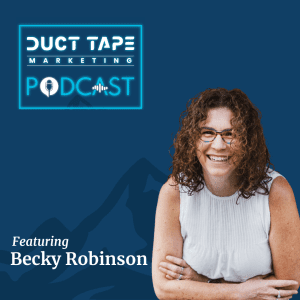
 

Weekend Favs June 24

Weekend Favs June 24 written by John Jantsch read more at Duct Tape Marketing

My weekend blog post routine includes posting links to a handful of tools or great content I ran across during the week.

I don’t go into depth about the finds, but I encourage you to check them out if they sound interesting. The photo in the post is a favorite for the week from an online source or one I took on the road.

  • Sivi – This tool turns your texts into a variety of visual content instantly using AI. It follows a human design process that generates multiple visual design variations within 2 minutes for your brand.
  • GA4 Auditor – This tool gives you a complete Google Analytics 4 audit report with a customized action plan in minutes and in just 3 steps. This will identify and fix any errors in your analytics account, so you can get the most out of your data.
  • 500apps – An All-in-One SaaS suite platform that provides 50 apps, extensions, and plugins to enhance your team’s productivity across all business departments. Their goal is to help you grow your business and run it like a Fortune 500.

These are my weekend favs; I would love to hear about some of yours – Tweet me @ducttape

If you want to check out more Weekend Favs you can find them here.


How To Turn Adversity Into Purpose Through Mindset

How To Turn Adversity Into Purpose Through Mindset written by John Jantsch read more at Duct Tape Marketing

Marketing Podcast with Siri Lindley

Siri Lindley, a guest on the Duct Tape Marketing PodcastIn this episode of the Duct Tape Marketing Podcast, I interview Siri Lindley. She is a two-time world champion triathlete and winner of twelve ITU World Cup races. She’s the top female triathlon coach in the world, she’s guided Olympic medalists and Ironman champions to not only become better athletes but also better people. Siri is also a life coach, keynote speaker, and the Founder of two non-profit organizations.

Her upcoming book Finding a Way: Taking the Impossible and Making it Possible. This life-giving guide is for readers who are feeling stuck between the life they want to live and the life that they’re living now. It gives you the tools and strategies you need to find a way through your struggles and on to triumph.

Key Takeaway:

Siri shares her inspiring journey emphasizing the importance of taking control of one’s life and mindset in order to overcome challenges and achieve personal growth. She explains the power of making conscious decisions, focusing on what one wants, and taking responsibility for one’s experiences. She attributes her survival and thriving to her belief in herself and the meaning she assigned to her challenges. Furthermore, she highlights how failure becomes an opportunity for learning and growth, while gratitude, support, and living with purpose and love are essential in everyone’s journey.

Questions I ask Siri Lindley:

  • [02:04] Your life has some pretty amazing chapters. So did you find a way to condense it into your book?
  • [04:46] How did you get involved in triathlon?
  • [06:22] At the top of your game you’re diagnosed with a disease that gave you around a 5% chance of survival. How did that change the game?
  • [08:52] How much of your beliefs do you attribute to actually surviving?
  • [12:23] I know you have accomplished a lot already, but I suspect that surviving when you weren’t expected to, drives you to say, who am I not to accomplish more, right?
  • [15:43] You coach athletes and non-athletes as a life coach. Is there really a difference in terms of how you break through?
  • [17:03] As a triathlete, how much of your success is mindset?
  • [20:47] Tell me a little bit about your nonprofits.

More About Siri Lindley:

More About The Agency Certification Intensive Training:

Take The Marketing Assessment:

Like this show? Click on over and give us a review on iTunes, please!

John Jantsch (00:00): Hey, did you know that HubSpot’s annual inbound conference is coming up? That’s right. It’ll be in Boston from September 5th through the 8th. Every year inbound brings together leaders across business, sales, marketing, customer success, operations, and more. You’ll be able to discover all the latest must know trends and tactics that you can actually put into place to scale your business in a sustainable way. You can learn from industry experts and be inspired by incredible spotlight talent. This year. The likes of Reese Witherspoon, Derek Jeter, Guy Raz, are all going to make appearances. Visit inbound.com and get your ticket today. You won’t be sorry. This programming is guaranteed to inspire and recharge. That’s right. Go to inbound.com to get your ticket today.

(01:03): Hello and welcome to another episode of the Duct Tape Marketing Podcast. This is John ch, and my guest today is Siri Lindley. She is a two-time world champion triathlete and winner of twelve ITU World Cup races. She’s the top female triathlon coach in the world, she’s guided Olympic medalists and Ironman champions to not only become better athletes but also better people. Siri is also a life coach, keynote speaker, and the Founder of two non-profit organizations: Believe Ranch and Rescue, and Horses in Our Hands Survivor and Thriver. And we’re gonna talk about her new book: Finding a Way: taking the Impossible and Making It Possible. So welcome to the show.

Siri Lindley (01:47): Well, thank you for having me, John. I’m thrilled to be here.

John Jantsch (01:51): So you took just like the most traditional path available to becoming a coach and author, and so your life has, and I’m sure you’ve spent a lot of time telling this, your life has some pretty amazing chapters. So have you found a way to kind of condense it into here’s, you know, here’s my background?

Siri Lindley (02:13): Well, you’re exactly right. And I think every single one of us have different chapters in our lives. And what I’ve realized in my life is that it’s been through my greatest challenges that I of course, experienced the greatest growth. And in those moments, you know, the decisions that I made in order to move out of a space of suffering are exactly the decisions that move me forward towards the life that I dreamed of living. But I think that my story, you know, as a kid, as a college student, I was overwhelmed with fear and anxiety. I was a student at Brown University, three sport varsity athlete, but on the inside I was just slowly dying. I was really suffering with anxiety. And in those days, people didn’t talk about anxiety, they didn’t talk about fear, they didn’t talk about ocd. So I thought I was just this crazy person.

(03:17): And this kind of led me to my greatest mentor, Tony Robbins, with his first book that he’d written Unlimited Power. And this book woke me up to the truth that I am the conductor of my own symphony of life. And if I don’t like the music I’m creating, which I didn’t, I was very unhappy. I’m the only one that has power to change me. And I think so often we forget that life is in our hands and we need to own the experience that we’re having because what we’re experiencing in life is a result of what we’re focusing on. The meaning we’re giving things and the decisions that we make, what we choose to do about it. And at that time, I was creating a tragedy. So I decided that instead of always focusing on everything that was missing, everything that was wrong, anding, that I had no control over everything that I didn’t wanna have happen, that I was gonna use the same discipline that I put into my studies and in my sports, and use that to discipline my focus in as many moments as possible to focus on what I wanted, what I loved, what I had, and what I could control.

(04:31): And that started, kind of took me out of this horrible space I was in at that time, leading me to wanting to figure out who the heck I am. Because are, yeah, sorry, you,

John Jantsch (04:43): You, you were an athlete, but you did you just wake up one day and say, I’m gonna try the hardest sport possible, and oh, and by the way, I can’t swim.

Siri Lindley (04:51): Right? So I’d been a field hockey, ice hockey and lacrosse player, but I, at the time when I found triathlon, I actually had just discovered that I was gay. And it was a big discovery that was scary at that time. And my father, my hero, didn’t respond very well to that. And I lost my father when he realized that I was gay. So this kind of set me on this desperate mission. Mm-hmm. to prove to myself that even though I was gay, I could achieve something that I thought was special, that I could make a difference in the world, that I could be loved, that I could respect myself and find a worthiness from within. And it was literally the day after our phone call where that was it. At that time, when I found triathlon, I went and watched a race, and I just loved that there were people of all ages, sizes, abilities, but they were all just like digging so deep to right.

(05:49): Find more within themselves. So even though I didn’t know how to swim after watching that, I said, this is what I wanna do. And for me, for my sake to earn my own love, my own respect, I am going to, one day I’m gonna set the, the, the goal that one day I’m gonna be the best in the world, which was ridiculous. My first race, dead last, my first race, I’m yelled at, you know, people laughing at me. But for me, there was a really important reason why I at least had to show up and lean in and try.

John Jantsch (06:21): So at the top of that game, you’re diagnosed with a disease that gave you somewhere around 5% chance of survival. So how did that change the game

Siri Lindley (06:34): In every way? I mean, it’s in that moment, I think I’d spent my lifetime up until that point wanting to find freedom from within, wanting to find freedom from my pain, freedom to be all of who I am. And I’d found it, you know, I’d found it. And then I get this diagnosis and it brought me to my knees. But in the same note, like I’ll never forget standing there with my wife, finally I’d found the love of my life. And the doctor is talking to me and saying, Siri, you know, you’ve got a myeloid leukemia, you’ve got a genetic mutation. And my wife is screaming at the top of her lungs, I hear his voice, and the story I’m hearing is this is the end. And I wasn’t willing to live that story. So in that moment, even though I didn’t believe it myself, I said, I’m gonna survive and I’m going to thrive.

(07:33): Now think about this, John, even though I didn’t like, did I believe that in that moment? No, I’m terrified. I’m brought to my knees, I’m devastated, but I couldn’t afford to live. Imagine how I would show up if I agreed that this is the end. Mm-hmm. , would I show up ready to fight and do whatever it takes and find a way and, you know, discipline my folks in every moment? No. If it’s the end, I’m gonna show up a lot different to I’m gonna survive and I’m gonna thrive on the other side. So what meaning do you give a challenge like that? What meaning do you give it? Are you giving it a meaning that’s gonna lead you to showing up in a way that is going to help you move towards what you want? Or are you showing up in a way that is going to ensure the end? It’s up to you. And even though in that moment when I said those words, I didn’t necessarily believe it, I needed to become the person that did believe that she would survive, that did believe that she would thrive on the other side. What would she do? Future me that survives this? What would she do? What actions would she take? What meaning would she give what’s happening and be her every single day until I became her?

John Jantsch (08:49): How, and I suspect this is still hard to talk about sometimes, but how much of that belief do you attribute to actually surviving

Siri Lindley (08:59): All of it? Because think about this. I mean, the meaning you give something determines how you show up, what energy you show up with, which then determines the actions that you take. And I believe that was the most important thing, was deciding, knowing that my outcome was to survive this, my outcome. And I remember saying it, you know, I walked into the first big meeting I had with my medical team, and when I walked in, I could see the looks on their faces. And it was that look of like, oh my God, she’s so young and this is so sad. And I walked in and I said, look, I’m gonna survive this and I’m gonna thrive on the other side. This is gonna be my most beautiful triumph. And if there is anyone here that doesn’t believe in that, I need you to leave. Because I need to surround myself with people that believe as much as I do that this is possible.

(09:57): So think about like, who are you surrounding yourself with mm-hmm. , and what are you clearly articulating what you want? And is everyone else that’s on, you know, are they on board? But the, you know, from that point in every single moment where I was deeply suffering, I mean, in my darkest moments, I would catch myself and I would say Siri, like focusing on how sick you are, how weak you are, how terrified you are, that is not gonna help you heal. So I would change the channel just to gratitude for the fact that I had health insurance, gratitude for my doctors, my donors, my mom who slept on the couch in the hospital every night. And that gratitude was the bridge from despair to hope. That gratitude gave me a little bit more energy where I could make, make better decisions on what to focus on, and thus fill myself with more of what I needed to actually take steps towards surviving. And we all can do this.

John Jantsch (10:58): And now let’s hear a word from our sponsor, marketing Made Simple. It’s a podcast hosted by Dr. JJ Peterson and is brought to you by the HubSpot Podcast Network. The audio destination for business professionals marketing made simple brings you practical tips to make your marketing easy and more importantly, make it work. And in a recent episode, JJ and April chat with StoryBrand certified guides and agency owners about how to use ChatGPT for marketing purposes. We all know how important that is today. Listen to marketing Made Simple. Wherever you get your podcasts.

(11:35): Hey, marketing agency owners, you know, I can teach you the keys to doubling your business in just 90 days, or your money back. Sound interesting. All you have to do is license our three-step process that’s gonna allow you to make your competitors irrelevant, charge a premium for your services and scale perhaps without adding overhead. And here’s the best part. You can license this entire system for your agency by simply participating in an upcoming agency certification intensive look, why create the wheel? Use a set of tools that took us over 20 years to create. And you can have ’em today, check it out at DTM world slash certification. That’s DTM world slash certification.

(12:22): So I have heard, you know, many people who have overcome such adversity survived, uh, when they weren’t expected to, you know, come out of the other side of that with like, well now I really, I have a debt to pay, right? I mean, I now have to, like, you had accomplished a lot already, but I suspect that that drives you to say, you know, who am I not to accomplish more?

Siri Lindley (12:43): 1000000%, John. I mean, you’re spot on with that. And you know, I lost a lot of friends that were on the same clinical trials as me, as me, and I’m not gonna live this life with survivor’s guilt. I’m gonna live this life with survivor’s responsibility, that I have a responsibility to bring every ounce of my soul into this world and to hopefully make a positive difference in the world and every human that I encounter. And that’s where this book was born. You know, that there was a very powerful moment as I, where I was really sick and I actually didn’t know, you know, God, what if I’m not here tomorrow? Mm-hmm. . And in a moment like that, you start thinking about, well, gosh, like is it okay if, like, if this is my last day, did I live my life in a way that, that I, I’ll be happy with?

(13:37): And as I thought about it, you know, there were certain things that, that were the most important to me. And that was, did I love with all my heart? Did I love everyone in my life? Did I show them love? Did I tell them I love them? Did I love what I did? Did I love myself? Like, like did I love with all my heart? Did I live fear fearlessly? Meaning did I say yes to things that scared the crap out of me? Yeah, I had, you know, I did triathlon, I sucked. That was scary. I did it. So that was fearless. But you know, there are other things I can do more. I can be more. And lastly, you know, did I make a difference in the world? And I had, you know, with my athletes, I touched their lives. I made a difference.

(14:25): But I thought, God, there’s just so much more that I can do. In that moment, John, in that moment of reflection that was really difficult in that moment, I realized what my purpose in life is. My purpose in life is to love with all my heart, to bring love into the world, and you know, to live fearlessly, to be an example, and to every single day try and make a difference in this world. And so when people ask like, why did I write this book now? It’s because this book is all those things. This book is my mission, this book is my purpose. This book delivers all of that. And for me, I just know that it’s gonna help so many people because this isn’t a book about me, it’s a book about me saying, Hey John, let me take your hand. You know, I’ll tell you my story, but now, you know, let’s do a little deep dive into what matters most to you, and let’s find a way for you to overcome challenges that seem insurmountable. Let’s find a way for you to make the impossible possible. And that’s my gift. And I know that hopefully it will be a gift to everyone that reads it.

John Jantsch (15:42): So, so you coach athletes and you also coach non-athletes as a life coach. Is there a difference, really? Obviously they have different, totally different goals and things, but is there really a difference in terms of how you break through

Siri Lindley (15:55): John? I love that question because I had a hilarious, so I had an athlete, Merinda Carre of four time world champion, coached her for 14 years. And just in the last couple of years, I’ve really moved away from coaching triathletes and more coaching humans. And I was having a conversation with her and she said, but Siri, you’ve always been a life coach. And I’m like, what are you talking about? She said, oh my God. Like, yes, you coach swimming, biking, and running, but you are much more a life coach than like a swim bike and run coach. And so it occurred to me that this isn’t anything different at all. I’m just actually calling it what it should have been called all along. So that’s such a good question. I love that you caught that because no, it’s the same thing. A minus the going to the pool and you know, showing people how to swim and all the technical details. But I’m just continuing everything that I’ve done for 25 years.

John Jantsch (16:56): Well, most life coaching is about mindset changing or mindset adopting. And I mean, as a triathlete, how much of your success is mindset?

Siri Lindley (17:07): I, I would say, and I tell my athletes this, I know people talk about 80% mental, 20% physical. Right? I actually think it’s more, I think it’s like 90% mental, 10% physical. And any time you see an athlete struggling at any point in their career, it’s a mental shift that’s needed, not a physical one. Yeah. And so for that reason, there is, it’s like, you know, you have a, a formula with your duct tape marketing, you have a formula and it’s, you know, you’re showing people how to achieve and how to repeat those results and to continue to, like, it’s the same thing with as we stay attuned to our mental state and what we’re bringing to the table, whether it be in business, in sport, and our lives and our relationships, as we pay attention to that and we put the same formula to that, you can have that continued success. And it is absolutely crucial. It’s staying, it’s keeping you connected to, you know, what matters most to you, why you’re doing this in the first place, and staying connected to that and staying connected to a mindset that is gonna see you every single day, no matter whether you’re in a good time or a bad time, it’s gonna see you moving forward, not back. And that’s the key.

John Jantsch (18:28): You know, it’s funny, I think a lot of times when people think of athletes, all, all they really see is race day. Right? And I always laugh, I, because I think entrepreneurs, you know, are, it’s race day every day, , you know, and sometimes I don’t think, you know, a good athlete, I mean a true, you train hard, you rest hard, , you know, you focus on all the, you know, all the routines. And I think a lot of times entrepreneurs just show up and it’s race day every day. And we sometimes don’t take care of, you know, ourselves to prepare, you know, for race day.

Siri Lindley (18:57): That’s right. And I think, you know, uh, the thing about being an athlete, you may have a race once a month, but it’s day after day, showing up, leaning in and doing the work. You know, it took me eight years from when I started triathlon to become a world champion. It didn’t happen overnight. And there was a lot of failure involved. And I think this is crucial to, let’s look at your definition of success and failure. Let’s create definitions of those two things that actually see you building momentum and succeeding every day. For me, success was progress. If I make a tiny bit of progress every single day, either physically, mentally, emotionally, I’m succeeding. And then for me, failure was learning. Mm-hmm. , every time we fail, that’s when we’re gonna learn the most. That’s when we’re gonna grow. That’s when we are gonna become the person we need to be to achieve the goal. So for me, even though I sucked and I’m failing coming in last, because I defined success as progress, failure is learning, I was always moving forward. And that’s what kept me going to get to the point where I needed to go.

John Jantsch (20:09): Yeah. I, from years of hindsight, um, observing this, I can say that, you know, I’ve gotten to the point in my business where if something doesn’t happen that it was, that I thought was supposed to, or that I thought I wanted to, I’ve really started as Pollyanna as this sounds, I’ve I’ve really started saying, okay, something else, Amma more amazing is supposed to happen. .

Siri Lindley (20:27): Yes. I love that attitude. And here’s the thing, that attitude serves you. It does. So why would you give it any other meaning that’s gonna make you feel bad or discourage you or you lose confidence? Like, don’t do that. Like give things a meaning that is actually gonna empower you and move you forward.

John Jantsch (20:45): Yeah. Tell me a bit about your, your nonprofits. You obviously there’s, I I can barely see a picture of a horse there as a part of it. So tell me a little bit about Rescue Ranch, I’m sorry. Believe Ranch and Rescue, and then Horses in Our Hands Survivor and Thriver.

Siri Lindley (21:00): RWell believe ranch and Rescue. We actually rescue horses from slaughter. 60,000 horses a year when we started, were being slaughtered for human consumption. And it was just a horrific practice. This horse came into my life and changed me in a matter of months. And when I got online and looked up, why did I need to rescue a horse, that’s when I realized what was happening. So that was about six years ago. Since then, we’ve saved 265 horses. Hmm. Most of whom have gone on to heal humans. So it’s come full circle. They are incredible healers, people with anxiety, trauma, P T S D, people facing, you know, really dire diagnoses. It’s just the work that we do almost every weekend is just so profoundly, uh, transformative for people. So, but from that, we’d rescued 265 horses and we thought, you know, this is a bandaid.

(22:00): So we formed another nonprofit horses in our Hands, which is a 5 0 1 C four, which is lobbying in Washington DC to actually pass a bill that will ban this once and for all. And through our Raising Awareness campaign, we’ve reached 84 million homes. Wow. Sent about 250,000 letters. And the numbers of horses being slaughtered has gone from 60,000 to 23,000 last year. So even though the bill hasn’t passed, our work has really had an impact on, in raising awareness, lowering that number. You know, 40,000 horses are still here today. Yeah. Thanks to our work. So it’s very important work for us because it’s saving the horses who are saving the humans, and that just feels like the ultimate privilege to do this kind of work.

John Jantsch (22:50): Awesome. Well, we didn’t get into chapter by chapter on, uh, finding a Way, but I really wanted to have, uh, people here a sense of you, because that comes through in the book as well. But, uh, please invite people to where they might connect or find, find the book, or whatever you wanna share.

Siri Lindley (23:05): Awesome. Well, finding a way, taking Impossible and making it possible forward, written by Tony Robbins, my greatest mentor.

John Jantsch (23:13): Yeah, I, I meant to point that out. I mean, you mentioned that was a book that really impacted you. Obviously Tony Robbins didn’t know who you were at that point, and now to come, you know, full circle with that to where he writes the forward and he does a testimonial video, that’s pretty, pretty awesome.

Siri Lindley (23:27): Yeah, I, it feels he’s just, he truly has lit the path for me, for my entire life without even knowing it. But to have him write the forward just means everything to me. So that’s pretty special. But if you want to download a, a free chapter text, GOFIRST to 6, 6 8, 6 6, and you’ll get a free chapter. Mm-hmm. . But most importantly, I hope that you’ll get online and buy the book. A dollar of every book goes to Feeding America. Tony is gonna match that. So $2 of every book goes to Feeding America and the rest, anything that comes to me is going to save horses. So it’s for a good cause. But most importantly, I believe that this book, should you give it a try, is gonna really change your life. I believe in that, and I’m so looking forward to sharing it with all of you. And I thank you, John, so much for offering me the opportunity to share a little bit of me and a little bit about this mission and purpose. It means so much to me. You’re amazing. I

John Jantsch (24:31): Love to work. Thank, thank you so much. I appreciate you stopping by the Duct Tape Marketing Podcast, and hopefully we’ll run into you one of these days out there on the road.

Siri Lindley (24:39): Can’t wait. Thank you, John.

John Jantsch (24:41): Hey, and one final thing before you go. You know how I talk about marketing strategy, strategy before tactics? Well, sometimes it can be hard to understand where you stand in that, what needs to be done with regard to creating a marketing strategy. So we created a free tool for you. It’s called the Marketing Strategy Assessment. You can find it @marketingassessment.co, not.com. Co. Check out our free marketing assessment and learn where you are with your strategy today. That’s just marketing assessment.co. Atd. Love to chat with you about the results that you get.

This episode of the Duct Tape Marketing Podcast is brought to you by the HubSpot Podcast Network.

HubSpot Podcast Network is the audio destination for business professionals who seek the best education and inspiration on how to grow a business.


Scaling Your Business Without Adding Overhead: The Proven Strategy

Scaling Your Business Without Adding Overhead: The Proven Strategy written by John Jantsch read more at Duct Tape Marketing

Scaling is the business owner’s dream, but it doesn’t always work out the way they imagined…

The reality is, growth and scale aren’t the same thing. A lot of times, you might be growing your business, seeing more revenue, and attracting more customers. Yet, instead of scaling upward, you’re scaling sideways. You’re running faster, spinning more plates, and despite the apparent growth, you’re working more and earning less. 

Does this resonate? If so keep reading.

In order for you to actually start scaling your business upward without adding unnecessary overhead, you’ll need to first shift your mindset. You have to transition from being the doer to the orchestrator. Get out of the weeds, stop focusing solely on the tactics, stop trying to actually play all of the instruments and instead start conducting the orchestra. 

How to Stop Scaling Sideways

In the chaos of scaling, it’s easy to get stuck in the cycle of running as fast as you can and trying to balance acquiring new customers with retaining existing ones. Sideways scaling will quickly drain your resources and leave you feeling overwhelmed.

So, how can you transition from being the doer to the orchestrator?

1. Define Your Package

You need a repeatable scope. Come up with a strategy or package that outlines what you do, how you do it, the expected results, and what it costs. This approach streamlines the process and sets clear expectations.  

Sometimes our clients don’t know what they actually need and our job is to give them what they need and help them understand why they need it. So if you can develop your value offer or package, and share the exact steps with your potential clients the path to growth will be clear for them and you will start to attract more of the right type of clients.

2. The Price is Right

It’s price which allows you to make the profit that you need to scale your business without adding overhead. When you have the right message and the right package, you attract the right clients who are willing to pay a premium because you have identified the problem that they are trying to solve.  

A few tips to decide how you should price your services are to focus on the top 20% of your customers,  go for quality not quantity, and work backwards from your growth targets. Here are some more tips on how to better price your services. 

Scaling Your Business Without Adding Overhead: The Proven Strategy

3. Build a Repeatable System for Fulfillment

The third part of scaling upward without adding overhead is creating a repeatable system for fulfillment. Once you’ve sold the package at a premium price, you need a system for delivering that service in a repeatable way. This allows you to delegate certain tasks to third parties, partners, or freelancers without having to hire more employees.

If you can successfully package your service, price it correctly, and develop a repeatable fulfillment system, you’re well on your way to scaling your business without adding overhead.

How to Scale Your Agency or Practice Without Adding Overhead In 7 Steps

Taking the time to invest in scaling your business can feel overwhelming. This workbook will break it all down for you in 7 easy steps that have helped our Duct Tape Marketing Certified Agencies grow and scale their business to 7, 8, 9 figures and beyond.

4. Climb the ‘Exit Ladder’

This may all sound great, but you may be wondering how to put all this together and where you will find the time. Well, that’s where the concept of the “Exit Ladder” comes in. If you’re ever going to create this package and develop partners, you need to start removing yourself from certain parts of your business.

The first step is to get out of the day-to-day admin work. There are people who would love to handle this for a fraction of what you can afford. Once you’ve done this, you can focus on creating a fulfillment system and developing partners.

Remember, scaling your practice without adding overhead is possible you just have to have the right system in place.