Category Archives: Small Business Marketing

Auto Added by WPeMatico

Model for Marketing Maturity, Stage One: Build

Model for Marketing Maturity, Stage One: Build written by John Jantsch read more at Duct Tape Marketing

Marketing Podcast with John Jantsch on the Model for Marketing Maturity, Stage 1: Build

A lot of small business owners hear about the latest trends in online marketing—AI, paid marketing, marketing automation—and begin to feel overwhelmed. There are already so many channels and tactics to consider, and it seems like there are new ones each day.

Of course, in an ideal world, your business would be taking advantage of all the available channels. But there’s no point in trying to jump ahead to the latest and greatest technology if you don’t have the basics under control.

That’s why I propose a specific model for marketing maturity. Made up of three stages—build, grow, and ignite—it encourages businesses to start with a solid foundation and work their way up to the final stage where all channels are being used, and you’re optimizing and maximizing your existing marketing assets.

Today, we’re going to take a look at the first stage, build. What goes into building the foundation of a business’s online marketing presence? There are five key elements you must include, and we’ll go through them here.

1. Marketing Website

The first step to getting online is building your website. A small business can’t survive today without one. It is the hub of your business’s online presence. And it’s not just about creating any old website, it’s about building one that is modern, accessible, and gets your story out there.

Websites today must be mobile friendly. Mobile sites are getting indexed first by search engines, and the vast majority of searches are now happening on mobile devices. If your website isn’t mobile friendly, you’re starting at a deficit.

Once you have cleared that first technical hurdle, you need to ensure that your website clearly articulates your promise to solve the greatest problem your audience has. It needs to tell the story of why your audience should trust you to do the job. If those most essential elements are missing, you shouldn’t pass go.

The other key to creating an effective website is having your full editorial plan and SEO approach in place before you begin the design or build process. Your website, content, and SEO techniques have all risen to the strategic level in terms of marketing importance, so your plan to get your website up-and-running must seamlessly incorporate those three critical elements.

2. Approach to Content

Your content must all work to tell the story of why a prospect should choose your business. This means leading with that value proposition on your home page. Each subsequent core page should build upon that message, and include video to tell your story.

A review funnel should also be a central component of your content program, particularly if you are a local business. These funnels are a way to stop bad reviews from being posted across various sites, and they make it easy for your happy customers to share their thoughts on Google, Yelp, Facebook, or any other platform of their choice.

Once you’ve built your content, you want to make sure the meta data (the titles and descriptions that display on search results) are keyword rich. It should be clear exactly what you do in your title tags, so that prospects looking to solve a problem understand immediately that you offer a solution.

3. Search Engine Optimization

SEO sounds confusing, but in reality it’s pretty simple. The most essential SEO component for any local business is making sure your business’s name, address, and phone number are correct on your website, and that that information is the same as what’s displayed on your Google My Business page. Just go onto Google and claim your profile there to make the appropriate changes and keep your information up to date.

If your business has moved, you’ve changed your name, or you find that there is conflicting information online, you can use a service like BrightLocal to ensure that your data is correct across all of the directories out there on the internet.

4. Social Media

The first step to building your social media presence is making sure you’re present on the major networks where your customers are. Claim your profiles, make sure your branding is all over it, include links back to your website, and ensure that it’s a good experience. Even if you don’t plan to be active on social media, these profiles still must be claimed and established, because they’re going to show up in searches related to your business.

In order to tackle the branding aspect, a free tool like Canva can help you create images that are the right dimensions for each kind of social media profile.

Once you’ve got the pages established, claimed, and branded, you can begin thinking about putting out some basic content. If you have promotions, products, or sales that you’d like your audience to know about, a channel like Facebook can be a great place to tell them about it. You don’t want every single post to be a promotion, but you can begin to get the word out there on social media.

You can also begin to show off a bit of your brand’s personality. I like to call these culture posts. How can you start talking about a “day in the life” of your business? Show off how a product is made. Share posts about the office birthday party of one of your colleagues. This allows your audience to see the real people behind the brand and builds trust with your audience.

5. Email Marketing

You already have a list, but what state is it in? Before you begin thinking about marketing campaigns, you need to do some list hygiene: how old is the list, how long is the list, and how relevant are the names on it?

If the list is full of people who haven’t purchased from you in five years, it’s time to get rid of those names. If there are people on there who have made a purchase in the last 24 months, those are contacts that are still valuable.

Once you’ve cleaned up your list, you can run a reengagement campaign. What’s the best way to reach back out to those who have bought from you in the past, to either get them to buy again or get them interested in doing something new (passing on a deal, referring us to their friends, or otherwise reengaging them)?

You also want to think about how to grow your mailing list. That’s where having calls to action on your website come in. And I don’t mean a tiny box at the bottom that says, “Sign up for our newsletter.” I mean offering up valuable information, which visitors can access if they share their email address. How about a free evaluation, comparison, or checklist?

You should also provide a variety of calls to action on your site. Multiple calls to action are ways to engage people no matter where they are on their individual customer journey. Different calls to action address the different needs of your various prospects or clients.

These are the basics of the build phase of the model for marketing maturity. In subsequent shows, I’ll talk about the grow and ignite phases. Once we have the foundation built here, we want to address paid lead generation, sales enablement, and the customer experience component—the factors that go into growing your marketing. Then once we add those, we’ll start talking about data, CRM tool, marketing automation and even AI. Stay tuned over the next week for the next two installments.

Like this show? Click on over and give us a review on iTunes, please!

The Benefits of Including Video on Your Website

The Benefits of Including Video on Your Website written by John Jantsch read more at Duct Tape Marketing

Marketing Podcast with John Jantsch on Including Video on Your Website

Video has become a foundational element in marketing. Why is video so important? It’s how people want to consume content. They want the ability to listen without reading, to be hands-free, and to just have the content coming at them.

There have been numerous studies demonstrating that the highest ROI for any marketing output is coming from short form video.

Types of Video You Need

There several kinds of video content you should be including on your website. Here are the categories of short form video you need.

1. What We Stand For

This video should go on the home page above the fold. It should be the first thing people see, and it should give them a sense of who you are, what you do, what you believe, and what your brand stands for.

Creating a video like this is one of the greatest trust-building activities today. So much of business happens online, but in the end, we don’t do business with a website or email address; we do business with people. An introductory video like this allows you to establish a human connection that makes your brand instantly relatable to people who land on your website.

2. Simplify Your Benefits

Video is also a great way to simplify the benefits to what you do. Sometimes reading through your products and services, particularly if you work in a complex or jargon-heavy industry, can make prospects glaze over. Video allows you to simplify difficult topics and introduce your products and services in an easily-consumable format.

3. Frequently Asked Questions

FAQ videos allow you to build trust and answer questions in a format that makes it easy for people to engage. Not only that, if you have any sites ranking for voice search, video FAQs are amazing for ranking. Videos answer the question in a simple form, and it’s something that Google really wants to see.

4. Personalized Team Bios

This also ties in with the idea of doing business with people, not some faceless business on the web. Sharing personal bio videos for salespeople, technicians, or customer service representatives allows visitors to put a face to a name (or email address) immediately. Particularly if you have a business where someone is coming out to the customer’s home to offer a service, it’s nice for customers to see a video first that gives them a sense of security and allows them to feel like the technician is a friendly face—even if they’ve never met before in real life.

How to Produce Your Videos

Producing video becomes easier each year. Access to high quality cameras and simple editing tools mean that you don’t need to be a Hollywood editor to create content that looks decent. Plus, the content and intent of the video is far more important than a high production value.

There are three basic ways to go about creating video content:

  • On your iPhone. When you use an external microphone and either a simple lighting setup or natural light, you can get great results on your phone’s camera.
  • In a studio. There are lots places that allow you to rent studio space, with access to professional lighting and video equipment, so that you can film all of your video over the course of one day for a low cost.
  • With a videographer. You can hire a videographer to come to your office and do a day of filming with you and your staff.

Video editing software is fairly easy to use, but if you don’t want to handle this on your own, it’s easy enough to find someone on a site like UpWork or Fiverr who can do basic, inexpensive editing.

You also want to transcribe your videos. Having the words close captioned on the screen is important. When someone is viewing the video on a mobile device or from their desk at work, they don’t want the sound on, disturbing those around them. That’s where captions come in; they can still get the full effect of the content without having to listen to the video.

Why Video Matters

Video keeps people on your website longer. This is not only important for the obvious fact that any visitor staying on your site longer is more likely to want to do business with you. It’s also a known SEO ranking factor. If people go to your site and stick around to watch a video that’s a few minutes long, Google notes that people are hanging around on your site, and that positively influences your ranking.

Google also owns YouTube, the largest video site in the world. They love to show video in their search results. When you optimize your videos by putting them on YouTube and embedding them in your site, you’re giving your video content a shot at ranking on Google for certain queries. If you’d prefer not to host your video content on YouTube, Wistia is another great site.

Beyond benefits with Google, video allows you to tell a story and create a connection in a way you simply can’t with the written word. Storytelling is at the crux of any good marketing effort, and video is certainly no exception.

Video Applications Beyond Your Website

Incorporating video into your website is only half of the game. There are other marketing channels that allow you to harness the power of video. Video ads can help you stand out and drive attention to your site. Video emails are a hot trend right now, and the technology here continues to improve.

Finally, you can create personalized video messages to send directly to clients and prospects. Let’s say you’re a web designer; you can share your screen and go through a prospect’s website, narrating issues you’ve identified and what changes you’d make to improve it. Not only does this give them highly personalized service, it’s quicker and easier for you to record a video than it is to type everything out in an email. We at Duct Tape Marketing like to use Loom for sending one-to-one videos.

Bonus Video Tip

Once you shoot and transcribe a video, you suddenly have a lot of content! You can use the audio from your video to include in a podcast. The written text from the transcription can be turned into one or more blog posts. Video is a great way to capture the initial content, which you can then spin out into a three-for-one deal: video, audio, and text.

Like this show? Click on over and give us a review on iTunes, please!

Klaviyo logo

This episode of the Duct Tape Marketing Podcast is brought to you by Klaviyo. If you’re looking to grow your business there is only one way: by building real, quality customer relationships. That’s where Klaviyo comes in.

Klaviyo helps you build meaningful relationships by listening and understanding cues from your customers, allowing you to easily turn that information into valuable marketing messages.

What’s their secret? Tune into Klaviyo’s Beyond Black Friday docu-series to find out and unlock marketing strategies you can use to keep momentum going year-round. Just head on over to klaviyo.com/beyondbf.

10 Things to Consider About Your Website in 2019

10 Things to Consider About Your Website in 2019 written by John Jantsch read more at Duct Tape Marketing

Marketing Podcast with John Jantsch on the 10 Things to Consider About Your Website in 2019

You’ve started a business and created your website. But that doesn’t mean your work here is done. Behaviors and trends change, your needs shift, and your website must continue to evolve so that it’s meeting your goals.

The first step is to think about what it is that you really want your website to do. Are you trying to get more readers or subscribers, make more sales, or generate more calls from prospects?

Before you go through the process of updating your site to best serve this newly identified goal, you want to begin by understanding how users currently experience your website. Consider using a tool that tests user experience. Something like Neil Patel’s Crazy Egg allows you to install a code on your website that produces a report of heat maps for each page. These maps show how and where people consume content on your site—where they click or hover, how they scroll, and what they’re really trying to do on each page.

Once you understand the basics of what you want accomplish and how your users want to interact with your site, you can go about planning and designing a website that serves both of your needs. The following ten tips will help guide you through the process.

1. Kill the Sliders

Carousels and sliders became incredibly trendy in web design over the last few years. They may look pretty, but the thing is: They’re bad user experience.

Web designers may push for them because of their ubiquity, but that doesn’t mean they’re the best way to showcase what your business does. Even if the web design expert recommends it, do not fall into the slider trap!

2. Start With a Promise to Solve a Problem

Customers aren’t looking for a product or service, they’re looking for a solution. What is it that you’re solving, and how are you doing it?

The problem you’re solving represents the starting point of any customer’s journey. They didn’t come to your website for a casual scroll through all of your products and services, they want to know—from the second they land on your site—that you understand their issue and have the means to solve it.

3. Bring Whitespace Back

Like any fashion, web design trends come and go. Your website can certainly look dated if there are stylistic elements that were popular in the past decade but are less so today.

The thing is, websites aren’t just about looks. They should be more able usability. What allows a visitor to consume content and move through the journey you want them to have in the easiest manner?

The answer is whitespace. Several years ago, the trend was to cram everything above the fold. Now, long-form scrolling homepages are very popular, and it’s because users don’t want to click anymore. They want to scroll through a journey and find all of the relevant information on one page.

When I talk about whitespace, it’s not a matter of having big blocks of it. It’s more about creating room for your content to breathe. Adding space between the lines of scrolling information allows you to draw more focus to the most important elements and information on your site.

4. Provide Fewer Choices

Don’t try to be everything to everyone. What is the intent for your business and your site? What do you want people to do?

Find your core difference and how it speaks to your ideal client, and go from there. Plus, you’ll want to understand how to feature the products and services that not only speak to this audience, but are also most profitable and provide the greatest opportunity for your business.

Creating a site that is vague and broad only wears people out and turns them off to the value of your offerings.

5. Put Strong Calls to Action in a Number of Places

While you’re not trying to be everything to everyone, you can also vary your calls to action slightly within the framework of your well-defined value proposition.

These calls to action should be specific, and you should be touting their value. Generic calls to action like “sign up for updates” don’t cut it anymore. What is an update, anyway, and why do your customers need it?

Focus instead on calls to action with concrete benefits. “Get a free quote” or “Get a free report on XYZ” are offers that can have real value for prospects. And if the call to action doesn’t speak for itself, put some text around it that emphasizes its value.

You can and should have three or four different calls to action. Some people are just looking to contact you, so a “call us today” call to action is right for them. But you also want to have calls to action that allow those looking for a deeper dive into your information the opportunity to learn more.

6. Build More Landing Pages

Landing pages are not necessarily built to rank for a key phrase. But they should be built for each of your ads, locations, products and services, so that you can drive people to things that have a specific intent or need.

When people are greeted with specific, relevant information when they land on your site, they’re more likely to trust you and want to learn more.

7. Create Hub Pages

We’ve been talking about the importance of creating content for many years, and some of you have taken that message to heart. But more often than not, the content is created, distributed on your blog, and then mostly forgotten about.

In order to put all of this content to work for you, it’s time to start internally linking the content you’ve written over the years. And to take it a step further: Start creating hub pages that are centered around your most important and relevant themes.

Not only does this create more value for your audience, who can then find all relevant information in one place, it also makes Google’s search rankings happy, providing you with significant SEO value.

8. Consider Mobile First

For most businesses 70 to 80 percent of views of your site are on a mobile device. If you want to see where your business falls, go into your analytics and check the device report. That will tell you how people are viewing your site.

If most of your traffic is coming from mobile devices, doesn’t it stand to reason that your website should be optimized to create the best experience on mobile? Designers sometimes lose sight of the focus on mobile—they work on desktops with giant screens, but that’s not the way the majority of people are consuming your site. Be sure to remind your designers not to forget about how to best serve your prospects and customers with your site’s design.

9. Assess Load Speed for Pages

How quickly your site loads is a significant ranking factor for Google. Not only that, but slow-loading sites are irritating for your users and create a bad first impression.

If you’re not sure where your site stands, check out the Google PageSpeed Insights tool. The tool will provide information on how your site loads on both mobile and desktop devices. If you’re not getting a green rating for both, speak with a programmer who can get your speeds up to where you want them to be.

Often the source of the problem is a technical issue that can easily be fixed by a professional.

10. Address Security Concerns

People are becoming increasingly worried about security these days. If you do not have HTTPS in front of your URL, you’re immediately eroding trust in your brand. An HTTPS certificate ensures that your site and the data you collect there are being properly encrypted and are protected from hackers.

All websites should have an HTTPS certificate, but this is particularly important if you’re collecting sensitive information from visitors, like their contact information or credit card numbers.

Google is now informing anyone on a Chrome browser whether the site they’re visiting is secure or not, and your rankings in Google search are being affected if you don’t have that certificate. Plus, when the first thing visitors to your site see is “Not secure” in the browser window, it doesn’t make for a great first impression.

Fortunately, most web hosting platforms are now including HTTPS certificates with their hosting services. If yours is a WordPress site, Pressable is a great hosting option. Investing a bit more in a high quality web host is worth it in the long run.

If you want to get better results from your website in 2019, it’s time to start thinking about these ten factors.

Like this show? Click on over and give us a review on iTunes, please!

Klaviyo logo

This episode of the Duct Tape Marketing Podcast is brought to you by Klaviyo. If you’re looking to grow your business there is only one way: by building real, quality customer relationships. That’s where Klaviyo comes in.

Klaviyo helps you build meaningful relationships by listening and understanding cues from your customers, allowing you to easily turn that information into valuable marketing messages.

What’s their secret? Tune into Klaviyo’s Beyond Black Friday docu-series to find out and unlock marketing strategies you can use to keep momentum going year-round. Just head on over to klaviyo.com/beyondbf.

The Three Elements of an Effective Total Online Presence

The Three Elements of an Effective Total Online Presence written by John Jantsch read more at Duct Tape Marketing

Marketing Podcast with John Jantsch on Total Online Presence

Business owners today understand that being visible online is important. But what does having an online presence really mean? It’s a lot bigger than just having a website and a Facebook page. And when you look at the statistics on how consumers behave online, it’s easy to understand why. Did you know that:

  • 77 percent of searches on mobile devices are followed up by an action within an hour;
  • 87 percent of potential customers won’t consider a business with low reviews/ratings;
  • 7 out of 10 consumers are more likely to use a local business if it has information on social media sites; and
  • 82 percent of small business owners claim their main source of new business is still referrals?

All of these statistics demonstrate the importance of having a total online presence that is fully integrated. That means that the total online presence shouldn’t supplant everything else you’re already doing—it needs to support it.

In order to make the most of the way that consumers interact with brands online, there are three fundamental elements of strategy for your online presence: website, SEO, and content. These are bigger than just tactics, they’re strategic components; as such, they need to be blended together in an effective and efficient way.

Below, we’ll take a look at the three elements of your total online presence, and how to get them working in tandem to bring you the greatest results.

Creating an Effective Website

The way that both search engines and people search has changed how websites need to work today. Your homepage isn’t just a placeholder and index for all of your links. It’s now the start of a journey—it’s where you build the know, like, trust, and try elements of your relationship with customers.

The first thing your homepage must do is demonstrate how you solve the biggest problem your prospects are facing. No one comes to a website looking for a product or service; they come looking for a solution to their problem. If you can prove that you understand their issue, then you can begin to talk about how you solve it (with your products and services).

The content on your homepage needs to back up your claims. Video is becoming an increasingly important element in building trust. A video featuring your team talking about your deep understanding of the problems your prospects face builds trust. Not only do they feel like you really know what you’re talking about, but the simple act of seeing your face and hearing your voice builds a personal connection that makes the trust grow even faster.

You also want to provide an evaluation or checklist in order to give prospects a way to try your approach. When they can see the way you work to solve their problem, they gain confidence in your ability to get the job done.

Beyond those basic content elements, your website also needs to address two major technical hurdles in order to be competitive today. First, it must work on a mobile device. In 2018, Google announced that they’d be using mobile websites, rather than desktop websites, as their main basis for indexing and ranking. This means that if you don’t have a mobile site (or you have one that isn’t optimized for mobile), you’re lagging behind your competitors and falling in Google search rankings. Second, security and privacy are becoming bigger and bigger concerns for consumers. After years of watching some of the giants like Facebook and Target stumble with online security, consumers are looking for small businesses who work hard to guard their personal information. This means ensuring that you have an HTTPS site and that you are encrypting any data you collect from visitors.

Search Engine Optimization

It’s Google’s world, we’re just living in it. Whether you like it or not, Google is the biggest player in the online game, and so a small business owner’s chief concern needs to be optimizing for Google. But at the same time, you can’t lose sight of your customers and optimizing for their human needs.

The first thing that any small business owner should do to ensure they’re ranking well with Google is take a deeper look at Google My Business. I’ve talked before on the podcast about the importance of this tool, but Google continues to build out this platform and further integrate it with other tools. In fact, I suspect that in 2019 it may become Google’s very own social platform, allowing small business owners to interact with their customers. But for now, at the very least, it’s the number one way in which small businesses are being found by people looking for local solutions.

This means you should be taking your Google My Business presence seriously. If you haven’t done so already, claim your business and make sure there are no duplicate entries. Ensure the category of your business is specific, and that the name, address, and phone number all sync up with what you have on your website. Add photos and videos, posts, and descriptions to your profile. You can even use Google My Business to connect directly with customers and prospects through text messaging.

You also want to be sure that your website is giving you the best shot at ranking locally. Fill your pages with local data, content, and resources. And beyond what is actually on your website for prospects and customers to find, you need to be paying attention to the metadata behind the scenes. Make sure your titles and descriptions are helping you rank for those search terms that matter most to your prospects.

Reviews are the final piece of the SEO puzzle. They have become a significant factor in how you rank. Businesses with few reviews or poor reviews will fall behind those with lots of good reviews. And as with all of the other elements of SEO, while reviews matter for rankings, they also matter for the people reading them. Having reviews—and good ones at that—will make prospects far more likely to give your business a try.

Content Beyond Blogging

Today, it’s pretty common for “content” to be used interchangeably with “blog posts.” But in reality, content is much bigger than that. Content drives every channel. Whether it’s advertising, email marketing, social media, community events, videos, referral offers, or text messaging, these are all forms of content (or at the very least channels where content is needed).

When you’re developing content, you need to be catering to every stage of the customer journey. A great way to do this is through the creation of hub pages. These pages allow you to structure your content around specific topics. When you centralize all of your knowledge on a given topic within a hub page, that allows the content to be shared more easily and to draw attention in ranking.

Beyond just creating a centralized page for relevant content, you want to be sure you’re marrying content upgrades to those hub pages. If you have a page that ranks, attach a free checklist or eBook so that you can begin using all of that content to capture leads.

I’ve Got My Strategic Elements—Now What?

As you can see, these three main elements of your total online presence all go hand in hand. This means that you also need to get your website, SEO strategy, and content working together to generate and capture leads, so that you can begin the process of nurturing them and converting them to customers.

Building an effective strategy is about addressing the needs of your prospects and customers all along their journey. Whether they’re in the earliest stages of the marketing hourglass, and are just coming to know and like your business, or they’re a repeat customer about to make a referral to a friend.

Every element of your strategy needs to be focused towards moving people along the hourglass, and this goes beyond just website, SEO, and content. Things like advertising, outreach, pay per click, and reviews all must work together to accomplish this task.

Fortunately, if you’re using these three major strategic elements as your guide, you’re able to structure the other tactics around those larger forces to create a marketing system that best serves the needs of your business and your customers.

Like this show? Click on over and give us a review on iTunes, please!

Asana logo

This episode of the Duct Tape Marketing Podcast is brought to you by Asana! Asana is a work management tool to keep your entire team on track. The Duct Tape team relies on Asana to unify communication, assign and delegate tasks, and manage deliverables for everything from individual meetings to big client projects.

To help support the show, Asana is offering our listeners an exclusive deal. You can get a free, 30-day trial. Just go to asana.com/ducttape.

Where Marketing Automation Fits Into the Customer Journey

Where Marketing Automation Fits Into the Customer Journey written by John Jantsch read more at Duct Tape Marketing

When companies incorporate marketing automation into their approach, they often focus on the middle of the marketing hourglass. They use the automation tool to stay in touch with existing customers or to reach out to prospects who are very near to making their first purchase.

However, marketing automation can be used throughout the entirety of the customer journey to great effect. When you’re smart about automating marketing processes, it frees you up to do more of the prospecting and lead nurturing work that only a real human can do, while taking some of the more tedious and time consuming parts of the marketing process off your plate.

Here, we’ll take a look at the various features that make up marketing automation, and how best to use them throughout the customer journey.

What is Marketing Automation?

Before we dive in, let’s provide a quick definition of marketing automation. It’s the process of using a software platform to automate some of your repetitive marketing tasks. It can be used across channels, and includes social media, email, and certain website actions.

The software allows you to group users by certain attributes or behaviors and to target them with messaging that is most relevant to them. For example, you might group people in the same geographic location together, or group people who have made multiple purchases from your business.

Marketing Automation for the “Know” Phase

At the very top of your marketing hourglass, people are encountering your brand for the very first time. Maybe they’re someone who’s in desperate need of the good or service your provide; maybe it’s someone with a passing interest in your field. How do you sort things out this early on in the game?

One of the first things that marketing automation tools can do is help you with lead capturing efforts. Using the same form across your website allows you to gather the same contact information for everyone who fills out the form. From there, you can begin the process of analyzing their attributes and behaviors to figure out whether or not they’re serious prospects.

Behavior scoring (otherwise known as lead scoring) asks you to take data on your existing clients to build a composite profile for your ideal prospect. Where do they live? What profession are they in? What kind of actions do you expect them to take before they convert?

When you know what your ideal prospect looks like, you can then use your marketing automation tool to compare each lead against this dream prospect. If they’re ticking most of the boxes, this is a lead you know is worth your time. They’re likely to convert, if you play things right, so it’s smart to spend some marketing dollars courting them.

Leads that fall completely outside of this ideal picture are likely not worth your time. They’re just not the kind of person that realistically needs or wants what your business offers, so no amount of time or money will result in them changing their mind.

Marketing Automation for “Like” and “Trust”

Once you’ve identified those leads that are worth approaching, you can begin to use your marketing automation tool to create an effective email campaign.

Marketing automation tools allow you to segment your audience so that you can send specific messaging to different groups of people based on their attributes and interests. It’s also possible to use the tool to personalize the email, setting it to auto-populate with name, company, and job title based on the information you have in your database.

For prospects, you can establish a set of prospecting emails that slowly and methodically introduce them to your company and the problems you can help them solve. Only 23.9 percent of all sales emails are even opened, so it will take several attempts to get a prospect’s attention.

You should start by creating a handful of emails that contain different offers so that prospects can come to know and like your business—an invitation to access a white paper on your area of expertise, an opportunity to join a monthly webinar that you hold, or an offer to book an introductory call with a member of your sales team.

You can then set these messages to send on a regular schedule, with a built-in trigger to turn off the next email in the set if the current email leads to a conversion.

Your marketing automation tool can also help you to tailor the content on your website to the profiles of your visitors. The tool can show specific content that you know will be valuable to a given prospect, and you can create dynamic content that is replaced based on actions a prospect has taken or interest that they’ve expressed in a particular topic. This level of personalization makes a prospect feel seen and heard, which goes a long way to building likability and trust.

Marketing Automation for “Try” and “Buy”

Once you’ve proven to prospects that you understand their specific needs and have the perfect solution for their problems, you begin to move them into the try and buy portion of the hourglass.

Using marketing automation to target them with messaging that is triggered by a specific action can be an effective tactic here. At this point you already know a bit about the prospect, so you can get even more specific about giving them information you know they’ll be interested in.

For example, let’s say a prospect has signed up for your company newsletter, you can use this action to then trigger messaging to drive them to the try phase in the hourglass. Maybe this means a pop-up on your website that invites them to a free trial of your service. Or perhaps it’s an email invitation to an upcoming event on the topic you cover in your newsletter, with a friends and family code so they can attend for free.

Once someone’s made their first purchase, you can set your system to automatically follow up with them. Send them a welcome email that gives them additional information on how to get the most out of their purchase. Then automatically send them an email again in a few weeks’ time to make sure they’re still happy and to offer support with any issues they may have encountered.

Marketing Automation for “Repeat” and “Refer”

You’ve already used your marketing automation platform to get your prospects to convert, but you can continue to use the tool to influence the remainder of their customer journey.

Once a customer has made a specific purchase, you can offer them related products or target them with communications that are focused on their areas of interest. In a recent Marketo survey, 78 percent of respondents said they would only pay attention to promotions that were related to their previous interactions with the brand. That means that most consumers would rather have no deal offered to them at all than have a generic offer sent their way.

Marketing automation can also help you to establish and maintain a strong referral base. With the ability to set up regular communication with your existing customers, marketing automation tools help you to stay top of mind so that customers are likely to have your name on the tip of their tongue when their friend asks for a referral in your field. Additionally, if you choose to establish a referral program, you can use email segmentation to stay in touch with members of that program, offer meaningful rewards, and target new leads coming to you via referral with specialized messaging.

In addition to the benefits that marketing automation provide you throughout the customer journey, the tools offer bigger-picture benefits as well. You should be using the data you collect on the effectiveness of your marketing efforts throughout the customer journey to refine each of the steps you take along the way.

Marketing automation tools compile a lot of information on the effectiveness of your marketing approach across channels, which allows you to identify holes, find logjams, and then invest the time in fixing those issues. When you have a better understanding of your complete marketing approach along the entire customer journey, you’re empowered to create one that is even more optimized for future customers.

The Top Four Marketing Trends for 2019

The Top Four Marketing Trends for 2019 written by John Jantsch read more at Duct Tape Marketing

Marketing Podcast with John Jantsch on 2019 Marketing Trends

‘Tis the season for end of year lists and content that’s looking to trends in the New Year. Rather than run through all of the ins and outs of what I see coming up on the marketing horizon, I’ve decided to focus on what I see as the four most important marketing trends for 2019.

If you’re a small business owner or a marketing consultant who works with small business teams, these are the trends you can’t afford to ignore.

1. Get Up to Speed on Google My Business

Google has been trying to crack the social media and small business ad platform code for a while. Some attempts, like Google Plus, have not worked, but it seems like they may have finally found their sweet spot with Google My Business. This is a tool where local businesses can advertise and consumers can find nearby businesses on mobile devices.

Over the past few months, Google has been more and more focused on the Google My Business platform. It’s become more feature-rich and useful for business owners, and I think it’s likely that it will become a sort of social CRM tool in the near future.

Google My Business

Photo courtesy of Google

What do I mean by that? In addition to the features like leaving reviews, finding directions, and making suggestions to edit the page, Google has recently added a feature where people can follow a Google My Business page. Not only that, Google’s recently introduced an app just for their Google My Business product.

These changes lead me to believe that they’re aiming to make Google My Business like a social network for businesses. This serves local business owners well. When someone starts to follow your company on Google My Business, that’s obviously a strong indicator that they’re interested in what you have to offer. This provides yet another channel for you to identify hot leads and connect with your fans.

If you’re running marketing efforts for a small business, then you should be paying close attention to all of these developments and additions to the platform and keeping pace with them accordingly.

Eventually, I anticipate that a business’s Google My Business platform will become a ranking factor in Google searches. The more followers you have on your page, the higher you’ll rank in search results. The quality of your business’s online assets and reviews are already ranking factors, so it’s not a leap to think that Google My Business will affect ranking in the future.

2. Focus on Retention

There’s an awful lot of work that goes into generating leads. It’s time, it’s money, it’s effort. This means that retaining leads is really where a business’s bread and butter lies. Research has shown time and again that it’s cheaper to sell to an existing customer than to go out and find a new one.

So what does that mean for your marketing efforts? It means you need to focus on your basic online presence. Existing customers will only stick around if their experience in interacting with you is one that builds trust. When you have a shoddy online presence that’s inconsistent or has big gaps in information, you make your customers doubt you. Have you ever thought twice about using a particular service provider because they had a bare bones website or they weren’t anywhere to be found on Yelp?

Retention is also about focusing on building a robust on-boarding process for existing customers. This needs to be a process that’s clear-cut and allows you to monitor results and make changes and improvements based on the data you’re seeing.

Finally, you need to make sure you’re creating real value for your existing customers. Build campaigns that really train them, events that are experiences that surprise and delight, and a referral process that provides true incentive for them to pass your name along to others.

CRM and marketing automation tools can help you manage these processes. These tools allow you to segment your audience so that you can easily guide, train, and over-communicate with the customers you already have so that retention stays high.

3. Embrace the Cloud

In recent years, the Cloud has become a bigger and bigger part of doing business. And small business owners have already begun to use cloud-based technology to improve their internal systems and processes. Cloud-based storage and communication systems have made it easier for distributed teams to collaborate and get things done.

However, the future lies in harnessing cloud technology to provide an even better customer experience. It’s not just about convenience or lowering cost, it’s become a part of the customer’s expectation that cloud technology is used to enhance the customer experience.

As you begin 2019, think about how you can use cloud-based tools that help with payment collection, online collaboration, and other customer service features to make your customer experience even more seamless.

4. Use Video Content Everywhere

We’ve been talking about content and we’ve been talking about video separately for years, but I think 2019 is going to be all about video content. Short form video content, in particular, is an important marketing trend. Studies continue to show that video content gets the most engagement and highest return on investment.

Developers and tech companies have caught wind of the trend as well. They continue to come out with new tools and products that make it easier for anyone to produce short and engaging videos that can be used for any and all marketing efforts.

Video isn’t just something splashy to put on your website’s homepage anymore. It can and should be used to provide meaningful content all throughout the customer journey. You may use it during the early phases to introduce the brand story and team members, but it can also be employed further along the journey to share content that establishes you as a thought leader in your industry (building trust with prospects), and later to provide in-depth tutorials for customers so that they can get the most out of their recent purchases.

You should be using video across channels, too. Video on your website is great, but also put your video content to use in ads, social media posts, and as a way to introduce your blog posts. When video is used in this way, it goes beyond being just a tool to becoming something that produces deep, meaningful content all along the customer journey.

I hope taking a look at these trends gets you excited about all of the wonderful marketing possibilities ahead in the New Year!

Like this show? Click on over and give us a review on iTunes, please!

Gusto Logo_full berry_small

This episode of the Duct Tape Marketing Podcast is brought to you by Gusto! Payroll and benefits are hard. Especially when you’re a small business. Gusto is making payroll, benefits, and HR easy for modern small businesses. You no longer have to be a big company to get great technology, great benefits, and great service to take care of your team.

To help support the show, Gusto is offering our listeners an exclusive, limited-time deal. Sign up today, and you’ll get 3 months free once you run your first payroll. Just go to Gusto.com/TAPE.

Why You Should Focus on Designing an SEO-Friendly Website (And How to Do It)

Why You Should Focus on Designing an SEO-Friendly Website (And How to Do It) written by John Jantsch read more at Duct Tape Marketing

Your website is the heart of your online marketing efforts. So it stands to reason that it should be built with marketing, rather than aesthetics, in mind. Yes, there is something to be said for having an appealing website, and you should certainly aim to design one that has both form and function. But the mistake that a lot of small business owners make is focusing on form exclusively, and that is where they miss a major opportunity.

Your website can be the most beautiful one in the world, but if you don’t focus on its function, then it’s all for naught. If you want to build a successful website, you need to start with a solid SEO framework to build a site that is easy to find and works seamlessly with your other online marketing efforts.

Why SEO Matters

Search Engine Optimization (SEO) is what gets new prospects onto your site. If someone does a Google search looking to solve a problem that they have, and your business is capable of solving that problem, you want your website to be the first one that they see. Think about your own browsing habits: How often do you look at the second, third, or fourth page search results on Google? If your site isn’t ranking on the first page of results, you’re not being seen by the majority of people.

Start with Keyword Research

Ensuring high rankings on search results is why it’s critical to begin the website design process with keyword research. Start by brainstorming the terms you would search for if you were looking for the good or service your business provides. This can and should be a long list—write everything down and don’t self-edit. Google Search Console can also help you identify the terms that are already driving users to your site, which might help you reframe your own thinking on the list.

Then begin to winnow the list down to 12-20 terms; some that speak to the fundamentals of your business and some that speak to a specific intent a user might have when searching. These keywords will inform all of your website design choices from here on out.

Think Like a Search Engine

The way that a human sees your site is very different from the way Google sees it as it crawls through sites looking for information relevant to a given search. You want to make sure that as much of your content as possible is in HTML text format. Images, Flash content, and Javascript are often not seen by search engines as they’re crawling sites, so if all of the important information about what your business does is displayed on your page within these dynamic formats, it’s possible that Google is skipping right past your website when looking for relevant words or phrases.

Using a tool like Google Cache Checker will allow you to see what your website looks like to Google. If your pages are showing up mostly blank, you know that search engines are missing out on crawling the majority of your content, so you’ll want to restructure your site to be more HTML heavy.

Consider Website Structure

In addition to thinking about the way a search engine will see your site, you want to make sure you’re building a structure that makes sense for SEO and for visitors.

Creating a site map can be a helpful way to think about content and flow. What information do you want to group together? What is the logical path that visitors will take when navigating your site? How can you make it easy for users to get from one relevant piece of information to another? And how can you structure your website in a way that enriches the customer journey and encourages users to move down the marketing hourglass?

Once you’ve thought about the user experience aspect of your site, it’s time to think about structure from an SEO perspective. Creating a site with crawlable link structure is critical to making sure that all of your content is seen by search engines. There are a number of reasons why your links might not be crawlable, including if they’re for pages that are hidden behind submission forms, if the links are within the aforementioned Java content that search engines aren’t able to see, or if there are hundreds of links on a given site (search engines will only go through so many links before hitting a limit).

Create Rich Content

Of course, this effort you’ve put into creating a site that’s easy to find, functional, and appealing will all be useless if your site has sub-par content.

As I’ve said before, the goal of this content should be to establish your business as a leading authority in your field. This valuable content will serve you across the board. It makes prospects come to trust you and moves them to the try and buy portions of the marketing hourglass. When you continue to generate new, rich content, it drives existing customers back to your site for more information, keeps you top of mind with those customers, and makes them more likely to repeat and refer.

Not only that, but when your website is filled with valuable content, and you continue to add more on a regular basis, you generate a stream of information that you can use to drive users to your site. You should be housing all of your content—blog posts, webinars, case studies, podcasts, white papers, and infographics—on your website. Then, as you share links to all of this valuable content on social media or via your newsletter, you’re directing all traffic back to your site.

A website, no matter how good it looks, is nothing without a solid approach to SEO. Your website is the most important piece of your online marketing strategy, and so investing the time, energy, and money in creating a site that ticks all of the boxes for form and function is a worthwhile endeavor.

Google Ads Changes Affecting Small Businesses

Google Ads Changes Affecting Small Businesses written by John Jantsch read more at Duct Tape Marketing

Marketing Podcast with John Jantsch on Changes to Google Ads

Google has recently made some drastic changes to their ads program—starting with a name change, from Google AdWords to Google Ads. Some of the changes are technical, like tweaks to the interface. Others represent fundamental shifts in the way Google views advertising. These will affect more than just your Google advertising efforts, but also how you approach other marketing tactics, SEO, and content.

Google is the dominant force in online advertising, so you can’t afford to ignore what they’re doing. Here, I’ll walk you through the most important changes and new features that small business owners need to be aware of.

Goodbye, AdWords

The biggest change is that we have known the primary Google ad tool as AdWords. Now, they’ve dropped Words, and it is just Google Ads. This is more than just a technicality, I think it signals a fundamental shift in the way they’re viewing advertising.

When Google originally launched their ad product, advertising was all about keywords, but times have changed. Google is so much more than just a search engine at this point, and the change in name reflects their omnipresence on the web.

The new name indicates a move towards a more comprehensive approach, one that will incorporate machine learning and behavioral tracking to better understand the true intent behind people’s actions online.

Google Ads on Your Desktop

One of the other significant changes small business marketers will see is that there is now an application you can download to your desktop: AdWords Editor.

Similar to the Facebook editor, the idea here is that you can now download your campaigns, work on them offline, and then upload them again. This means that you’re not stuck sitting on the platform the entire time, and can now get more work done if you’re offline and on the move.

Google Sheets Integration

If you’re not already familiar with Google Sheets, it’s essentially a free, online version of Microsoft Excel. The integration with the new ads program allows you to pull reporting from Google Ads and into Google Sheets.

Doing so allows you greater flexibility in parsing the data. You can filter by your own criteria, create reports, and track data more easily. This will be particularly useful for agencies or consultants who need to create reports for multiple clients.

New Comprehensive Campaigns

With their new advertising program, Google is providing additional support to small business advertisers, allowing those who don’t have the time or energy to create their own campaigns to leave that all in Google’s hands.

The skeptic in me feels that there is a tradeoff between convenience and value. They make it very easy for you to give them a budget and they’ll do the legwork, but you’re also handing over control and the appropriate measures to monitor and adjust how that money is spent. Without visibility into what’s actually being done to market your business, how can you understand how to get better results in the future?

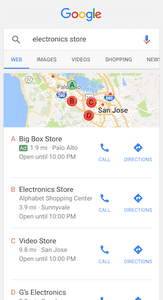
  • Google Local SearchLocal Ads: Google allows you to create one campaign that will propagate against search, maps, places, pages, display, and even YouTube. This means you only have to design one campaign to be used across all of their many platforms, while Google makes the decisions about how to best tailor the approach in each place.
  • Lead Ads: A new unit on YouTube, Lead Ads allows you to collect an email address through an ad message. This is similar to Facebook’s Lead Ads, which have been around for a while.
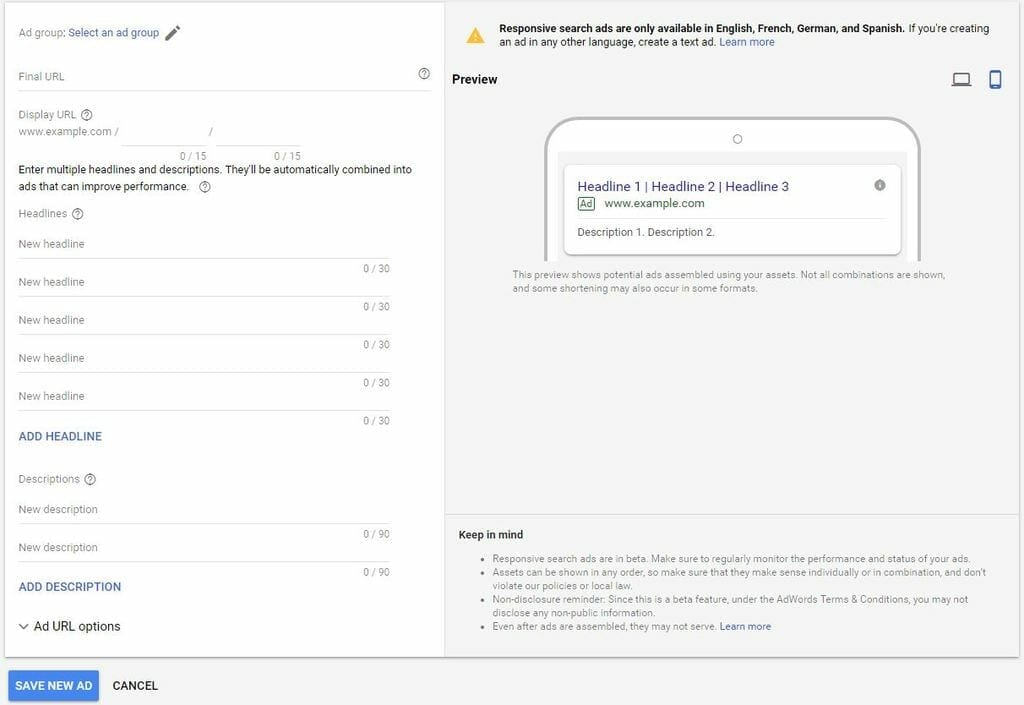
  • Responsive Search Ads: You create a pool of headlines and descriptions, and Google tests each of those possible combinations to determine which is most successful. Depending on how many concepts you create, you can end up with thousands of possible combinations—it’s A/B testing in hyperdrive. This is designed to help you lift click-through and conversion rates significantly.

Responsive Search Ads

What About Organic Search?

While these new campaigns are great for those who are taking advantage of the Google Ads platform, what about those marketers or small business owners who are putting all of their faith in the power of organic search?

These new ads will drive up conversion rates, as Google continues to do the analytics on what makes the most successful campaigns for its paid advertisers. In addition to being successful, these ads are also huge. They still contain extensions, and so they are going to take over. This will only serve to force organic results further and further down the page. Those users searching on a mobile device will have to scroll for a very long time before hitting the first organic result.

The message here for small business marketers is that you can’t ignore Google Ads. You still need to have a comprehensive marketing system with other tactics, including social media and content, as a means to get into organic search. But at the same time, you can’t ignore paid advertising.

Google Local Services Ads

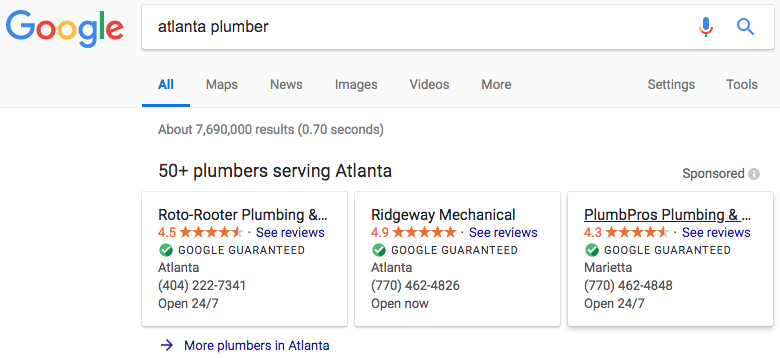
The last item, which does not impact everyone yet, is Local Services Ads from Google. Formerly known as Home Service Ads, Local Services Ads are currently focused on tradespeople, technicians, and providers of other services to homeowners, with plans to expand to additional categories.

Business owners must apply to be in this program and become “Google Guaranteed,” which means that they’ll have to clear a background check and Google will provide a money-back guarantee to anyone unhappy with the company’s services.

Google Local Services Ad

This comes at a price: Google does not send users directly to a website when they click on this type of ad. Google uses a tracking phone number so that they’re able to see which leads are generated from these ads; the business owner is then charged for those leads. And rather than charging a nominal fee per click, Google will now ask for $25-$100 per lead, depending on category and competition, because they’ve delivered a verifiable lead.

This new approach allows Google to be fully involved in the lead generation process, which gives them valuable information about the way people are searching for services and also allows them to charge small business owners a greater fee than they would for pay-per-click advertising.

As we see advertising moving more towards a focus on intent, a shift that is powered by machine learning and artificial intelligence, we will see Google Ads encroach more and more in the search space. Google has created a system that encourages you to give them more of your ad budget, and while you certainly can’t ignore Google Ads as a part of your overall strategy, I would argue that there’s still great benefit in attending to your other marketing channels.

If you are struggling with managing the rapidly-changing online advertising landscape, Duct Tape Marketing can do an audit for you. Our Total Online Presence Audit is a comprehensive review of your assets online, including your ads. We can assess your strengths and weaknesses, and point you in the right direction.

Like this show? Click on over and give us a review on iTunes, please!

How to Build Trust With Your Audience

How to Build Trust With Your Audience written by John Jantsch read more at Duct Tape Marketing

In my content, I often refer to the customer journey, or what I like to call The Marketing Hourglass, which includes the following stages: Know, Like, Trust, Try, Buy, Repeat and Refer.

All of these stages are important for moving customers closer to the sale (and beyond), but today I really want to focus on the Trust component of the journey as there are so many businesses who are lacking in this area.

The fact of the matter is, we’ll buy products we like, but we’ll rarely commit to an organization unless we trust them.

There are a ton of simple things a company can do to build this trust, they just aren’t always aware of what those things are, so let’s cover a few here.

Know your audience

I sure hope you’re not getting sick of me talking about this topic because I’m not going to stop any time soon. The best way to gain a person’s trust is to show you truly understand who they are and what it is that they’re experiencing. In order to best alleviate their problems and concerns with your expertise, you need to do your research to uncover who they are.

A few ways to get to know your audience include:

  • Reading past emails with customers and identify trends
  • Talk to your sales and support teams who have the greatest insight into what your customers are going through
  • Read reviews
  • Be observant on social media platforms and forums
  • Interview current customers

The more research you do, the better off you’ll be. It may be time-consuming, but it’s worth it.

Create content

Creating content shouldn’t come as a shock as content should be at the core of everything you do when it comes to marketing and attracting people to your business. To build trust with content, you must be helpful, educational, and consistent. You want people to be able to depend on you for the information they’re looking for.

Get a solid understanding of their pain points and write content that addresses those problems. Understand what your audience’s intent is and speak to it.

The one thing I want to stress is that you don’t want to sell using content in the trust phase. This is not the time for that. This is the phase where they are simply trying to get to know you and are doing their research to ensure you’d be the right choice. Selling during this phase won’t work because they often simply aren’t ready to buy. It could actually turn many people away.

When it comes to actually creating your content, whether it’s written, a video, a podcast, or any other format you’re focusing on, be conversational and personal. Your audience wants to read/see/hear something they can relate to. Develop the content as though you’re creating it for a single person. It will help you personalize it even more than if you were writing for a group of people.

Other writing tips to keep in mind include:

  • Keep paragraphs and sentences short (and video for that matter) so that people will actually consume the content.
  • Use rhetorical questions to make them feel like they are a part of the conversation.
  • When possible, avoid industry jargon.

Last, but certainly not least, use your content to tell a story. Storytelling will help you connect with your audience and show them the human side of your business. The ability to tell a person why your business does what it does through a story and how you illustrate it for their benefit is key.

Keep in mind, your audience needs to see themselves in the story which starts with their challenges, problems, and issues that they don’t know how to solve.

Use your website

To build trust, your website must make a good first impression, and to do so, be sure it includes the following:

  • A promise –  You need to make your audience a promise that will solve their problems.
  • A sub-promise – A sub promise is the trust factor and social proof that a company offers.
  • A clear call to action (CTA) – CTAs help to guide people through the customer journey and advise them on next steps.
  • Contact information – Consider using a little personality as well to make your audience want to contact you even more!
  • Visual branding – Integration of strategy, messaging, positioning, and brand is important is so important for a business to build trust.
  • Video – Video allows you to give people a real sense of who you are, what you stand for, and let people hear your story.
  • A list of problems – Identify the problems you solve and make it easy for website visitors to see them.
  • Show trust, proof, and authoritative elements, including quotes, client logos, association badges, client results, case studies, media recognition, and awards. These really are like currency in the trust phase.
  • Updated content – Show that you care about your own business and publish new content regularly.
  • Optimize for mobile – This should be a top priority of yours for a number of reasons, including trust building.
  • Show your personality – This will help to establish an emotional connection with your audience which will make them more likely to trust you.

Establish relationships

As mentioned above, the more you are able to establish relationships with your audience, the more likely they’ll be to trust you. A few tips to do this include:

  • Be empathetic and show that you care
  • Be responsive
  • Be genuinely interested in what they have to say
  • Be yourself
  • Be transparent
  • Ensure the communication you have with your audience is a clear two-way street

Bottom line? Be human.

General tips for building authority and credibility

In addition to my points above, there are a few general tips to keep in mind when establishing trust that I’ve listed below:

  • Build up your online reviews and testimonials. Work to improve them not only on your website, Google My Business listings, and social media but also on relevant industry sites (Houzz for interior decorator reviews, for example).
  • Know your unique point of difference. Show what separates you from the competition and make it clear for anybody who comes in contact with your business.
  • Understand your brand identity. Along with understanding your point of difference, you need to know your company’s voice and personality. This will help to humanize your business and establish those connections.
  • Go above and beyond.  Under promise and over deliver and don’t make promises you can’t keep.
  • Be predictable. If you were watching my content creation like a hawk, you’d know that I publish a post on Duct Tape Marketing every Tuesday, a post on the Duct Marketing Consultant Network site every Wednesday, a podcast episode every Wednesday or Thursday, a Consultant Tools post every Friday, and a Weekend Favs post every Saturday. Why? Because at this point people expect it. They trust I will give them useful content throughout the week which holds me accountable to give it to them. Remember, you want people to depend on you for the information they need, so you need to do your best to give it to them.

At the end of the day, in order to get people closer to the purchase, you need to get them to trust you, so do everything you can to help them do just that.

What trust-building tactics are you implementing that have worked for your business?

Mistakes Small Business Owners Make When Scaling Their Services

Mistakes Small Business Owners Make When Scaling Their Services written by Guest Post read more at Duct Tape Marketing

An increasingly global world means there is more competition than ever, and commoditization is a growing threat.

Businesses that scale the right way, are going to be positioned to increase market share as weaker players are sifted out.

Whether you’re growing to your first million in revenue, are well past that and are looking to make your business more automated so that you can profitably scale up, or have hopes of an exit in the near future, it’s imperative that you avoid the mistakes that I’ll be discussing in this post.

Doing so will help you scale with more profit, more ease, and less stress.

Curious as to what these mistakes are? Let’s dive in.

1. You’re too busy to grow

Being stuck in day-to-day tasks is a huge problem because you can’t actually grow the business. Your main job as the CEO is to think and come up with better ways to do things. You need to generate ideas to increase profits, enter new markets, and so on.

You can’t do this if you are married to your routine. You’ll be wearing blinders. And you’ll miss out on the numerous opportunities sitting right in front of you.

Does your alertness follow this curve? When are you most focused and productive?

How to fix it:

peak-time-no-drop-shaddow

  • Carve out at least 5-10 hours per week for growth
  • Start your day with crystal clear intention. Always create a plan for your day with the top 3 most important things you need to accomplish that day.
  • Work within the human natural alertness cycle by using your first “Power Hours” of each day on growth tasks.
  • Schedule email so that you aren’t living in your inbox. Do not check email until at least 11am if at all possible.

2. You’re trying to scale too soon

Many business owners try to scale too soon. Instead, they should first focus on making the business sustainable and bake in as much profit as possible.

Leverage first, then scale.

I often see business owners reach a hump that they can’t quite get over and it’s usually because their pricing structure cannot sustain profitable growth. They know they should increase prices, but fear creeps in.

Many experts may say “Just raise your rates,” but if it were that easy, everyone would have more profitable businesses.

The harsh reality is that clients might not be willing to pay you more.

Why? The answer is risk vs. reward. The risk is too high, and the reward is too low.

Clients are willing to pay much more if:

  • You offer a solution they truly want
  • Your client has access to funds
  • You can sufficiently lower the risk for them to make it a no-brainer

How to fix it:

leverage then scale your business

  • Leverage first, then Scale.
  • Work out that formula to be able to increase fees so you’ll have the resources to grow.
    1. Evaluate the kinds of problems your business can solve
    2. Evaluate your sweet spot by looking at what you enjoy, and evaluating unfair advantages.
    3. Evaluate client type that you can add the most value to
    4. Evaluate ways to better utilize your unfair advantage
  • Only after you’ve increased value, and fees should you scale. Look for cost advantages and ways to decrease the cost of delivery (I’ll dive into that further below).

I’ve seen those who leverage first and are able to double their revenue per client, with little or no growth to their team. It’s pure profit. It works. I’ve seen it work both in my own business and for others that I have worked with.

3. It’s all about you

Everything is about your process and the steps you take, instead of your client’s pain points, and what they want.

If you want to get lost in a sea of downward spiraling mediocrity, then keep focusing your website on the “me show” and only discuss your services, tools, credentials, and so on.

Instead, you should be discussing the problems your ideal prospects want solved. Make everything about them, and the solutions they want. They want their problem solved. End of story.

increase your fees

How to fix it:

  • Choose one painful $100k+ problem to solve, one client type, and one customized (not custom) outcome.
  • Guarantee it, and jack up your fees to price based on the value of the outcome.

4. You’re not solving a big enough problem

Going back to the last two mistakes, if the problem is too small, you cannot charge enough. The problem is rooted in the industry dogma of refusing responsibility for lackluster results.

It’s nearly impossible to sell results and offer some guarantee… if you are selling everything to everyone.

Ask yourself “how can this work for this business?”

Back to the actions in the last step, it’s by solving one painful problem, for one type of client, with one customized solution.

What outcome could you provide? And what needs to be in place to ensure success?

build value for your clients

An agency owner I know realized that for just one niche that they work with, they could consistently add an extra $1M per year to their business.

With this knowledge, the selling conversation shifted from “we are the best Facebook ad provider, we have great results, happy clients, books and awards…” to “we’re partnering with 10 [special niche] businesses that want to add an additional $1M this year without [thing they don’t want]. Is that something that interests you?”

It’s now a qualification process and the business is now able to more than double their fees.

Do you solve $10k problems, or $100k problems? $100k problems, or $1M problems?

Who could you work with where your service provides the highest dollar value?

Given a bigger outcome, and low enough risk, clients will happily invest more. Throw the hourly thinking out the window where either clients leave empty-handed or you leave tens of thousands of dollars on the table.

How to fix it:

  • Create a list of characteristics of past ideal clients you’ve gotten the best results for. What do these clients have in common?
  • Looking ahead, what do new clients need to have in place to be able to guarantee success?
  • Craft an irresistible offer and promise (it should scare you a bit).
  • Create your hit list, and sell!

Clients are demanding better. Are you ready to be part of the change that elevates the industry?

5. You’re too people focused

What do I mean by that?

Most business owners are too focused on finding the perfect staff, and not focused enough on developing their own perfect client solution and then plugging staff into defined roles as they scale their own methodology.

When your business is built around an employee’s skill sets, what happens when they leave? You need to start all over again recruiting, training, and developing this next ‘perfect’ person.

Instead, focus on how to scale a proven methodology and put the right people in place within your framework.

The services you scale are determined by your 80/20 framework. It can be divided into ‘brain skills’, and ‘hand skills’. Brains are more expensive, and in higher demand.

Are you as the owner doing ‘Brain’ work, ‘Hands’ work?

brains-and-hands

Optimize your best skills. Free up capacity for the Brain people to do their best work. Raise profit per project by having the Hands do the rest.

How to Fix:

  • Build your proven methodology by focusing first on the end outcome. Then reverse engineer the stages to where you start the engagement.
  • Breakdown the stages into smaller steps and tasks.
  • Delegate by needed skill level only for each task to optimize staffing budget (save time with my Rapid Delegation Script).

6. You’re not consistently marketing and selling every day

“I’m too busy to do marketing.” I hear this all the time.

This thinking keeps you stuck working with less profitable clients just to meet payroll. You may even have a couple of demanding clients who bring in too much of your income (and most of your problems). You’re afraid to rock the boat because the pipeline to replace the income is near empty.

There is a magical shift that happens in your business as you consistently, and proactively attract excess ideal clients. You become in control. You set your fees. You decide who you will, and who you will not work with.

Organic growth will happen if you are any good at what you do. But do you want to be like the little bird with its beak open waiting for the worm saying “Feed me, feed me?”

Or, are you attracting your best, most profitable, and enjoyable clients?

How to Fix:

  • Build a daily habit to block out time every day on your calendar and each out to 5 ideal prospects. Have one live conversation with someone who might be a prospective client. Every day.

7. You’re being reactive rather than being proactive

Most business owners are reactive. They fight fires, rather than prevent them. They tread water hoping to stay afloat when the next wave hits.

Being proactive is looking for ways to innovate within your company and increase profits. It’s staying ahead of the industry trends. It’s being intentional about the staff you want in your company and developing the kind of culture you want to create.

It’s about actually having a plan and working that plan every day.

growth plan

This seems basic, but most service business owners lack a clear plan to scale their business, so they spend years reaching their goals (that’s if they don’t burn out first).

Do you drive your business, or does your business drive you? This is one tiny hinge that moves a pretty big door.

If you are not clear and proactive about top things you need to accomplish every day to really move your business forward, you’re not in the driver’s seat.

If you are making any of these seven mistakes as you’re trying to scale your services, you’re making it much harder than it needs to be.

Avoiding these mistakes will help you:

  • Build a team that really supports you
  • Work with more ideal clients
  • Consistently and predictably deliver on your company’s promises
  • Increase revenue and get your life back

What mistakes are you making? What will you do this week to take the path to increased profitability and freedom in your business?


About the Author

Mandi Ellefson

Mandi Ellefson is the founder of the Hands-Off CEO. She helps service businesses and agencies achieve life balance, and productivity by freeing up to 20-50% of their work week and achieving cost savings gains of up to 67%. For a proven 5-step plan to scale your service the right way, download her Scalable Growth Roadmap.