Category Archives: John Jantsch

Auto Added by WPeMatico

Why You Should Read Business Books That Are Not About Business

Why You Should Read Business Books That Are Not About Business written by John Jantsch read more at Duct Tape Marketing

The Duct Tape Marketing Podcast with John Jantsch
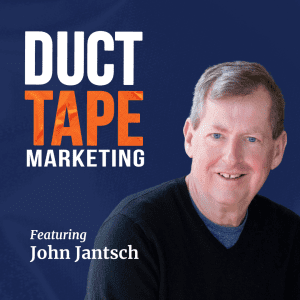
In this episode of the Duck Tape Marketing Podcast, I had the pleasure of being INTERVIEWED by Sara Nay. Sara Nay is the COO of Duct Tape Marketing. She oversees day-to-day operations to support the growth of Duct Tape Marketing and the Duct Tape Marketing Consultant Network.
She focuses on strategic planning, goal setting, and directing the company’s operations in support of its goals. And on a personal note, she’s also my daughter—which makes me “Pop Pop” to her kids!

In this episode, we change it up a bit as I become the interviewee. We explore my journey into entrepreneurship, why I started my own business, why I didn’t work for someone else (the answer will surprise you), my passion for small businesses, and the evolution of marketing over the years.

I reveal lessons from my polar opposite parents and my former fears about running a business.

We also dive into my favorite topic: the impact of AI on small businesses, the opportunities and challenges they face, and the importance of curiosity and innovation in business.

I wrapped up with a glimpse into my future aspirations—what might life look like after Duct Tape? And I answered the timeless question: What’s my all-time favorite business book?

Key Takeaways:

  • I started my entrepreneurial journey due to a lack of confidence in traditional employment.
  • Working with small businesses is both terrifying and gratifying.
  • Curiosity drives me to explore new marketing trends and technologies.
  • AI is not just a tool but a foundational element in marketing.
  • Small businesses can leverage AI for efficiency and personalization.
  • The buying intent of consumers remains strong despite market changes.
  • Experience helps entrepreneurs navigate ups and downs in business.
  • Marketing and innovation are the two pillars of a successful business.
  • Reading outside of business literature can inspire innovative ideas.
  • I envision a future where I write a work of fiction.

Chapters:

  • [00:00] Introduction to a Unique Podcast Experience
  • [02:01] The Journey into Entrepreneurship
  • [04:03] Passion for Small Businesses
  • [05:49] Curiosity and the Evolution of Marketing
  • [08:03] AI’s Impact on Small Businesses
  • [11:08] Opportunities and Challenges for Small Businesses
  • [13:52] Riding the Waves of Business
  • [16:21] Business Advice and Insights
  • [19:46] Future Aspirations and Legacy

Let us know if you’d like to see us make more shows like this!


This episode of the Duct Tape Marketing Podcast is brought to you by:

Oracle

Nobody does data better than Oracle. Train your AI models at twice the speed and less than half of the cost of other clouds. If you want to do more and spend less, take a free test drive at Oracle.

Testimonial (00:00): I was like, I found it. I found it. This is what I’ve been looking for. I can honestly say it has genuinely changed the way I run my business. It’s changed the results that I’m seeing. It’s changed my engagement with clients. It’s changed my engagement with the team. I couldn’t be happier. Honestly. It’s the best investment I ever made.

John Jantsch (00:16): What you just heard was a testimonial from a recent graduate of the Duct Tape Marketing certification intensive program for fractional CMOs marketing agencies and consultants just like them. You could choose our system to move from vendor to trusted advisor, attract only ideal clients, and confidently present your strategies to build monthly recurring revenue. Visit DTM world slash scale to book your free advisory call and learn more. It’s time to transform your approach. Book your call today, DTM world slash scale.

(01:00): Hello and welcome to another episode of the Duct Tape Marketing Podcast. This is John Jantsc, and doing something really crazy today. A couple things actually that we’re going to do a little different today. I’m going to be the guest and I’m actually going to be interviewed on my own show by none other than Sara Nay. Some of you have met her. She’s the head of operations at Duct Tape Marketing, but she’s also one of my daughters who has worked with me for 13 years.

(01:28): So we thought, let’s see what kind of questions she could come up with and hopefully you’ll find this entertaining. Now, another thing that we are experimenting with today, so hopefully cross our fingers. This works out there in LinkedIn land. We are actually streaming this live. This is the first podcast that I’ve streamed live, so we’ll see how that works out as well. Love to get any feedback in the comments if you would like to and ask questions in LinkedIn if you are so inclined. And we’ll just see how this goes. But for now, I’m going to turn this over to Sara. Are you going to introduce me or how’s this going to work?

Sara Nay (02:05): I think people know who you are at this point, but I was actually curious as you were talking through that. How many interviews do you think you’ve conducted over the years on this podcast where people have listened to you be the host?

John Jantsch (02:16): Yeah. Oh, be the host. So I started this show in 2005 and certainly have done a minimum of a hundred shows a year, some years actually more than that. So I dunno what that adds up to. But yeah, I think we’re over 2000.

Sara Nay (02:30): So you’ve possibly listened to John interview guests 2000 times or so at this point. So this will hopefully be a fun perspective to hear him being interviewed. So my first question to you, I want to go way back to when you started Duct Tape Marketing as an entrepreneur. And I want to know more about the reason of why you went into entrepreneurship versus getting a full-time job.

John Jantsch (02:52): And I tell this story in my last book, I haven’t been telling it for years, but now that I’m getting old, all the secrets come out. But I often felt like when I got out of school, I didn’t feel prepared to do necessarily anything, any skill. I didn’t have honors in degrees in college that would’ve made me stand out to employers. And so I really think of, a lot of it had to do with a lack of confidence almost that I could get a job I saw that my friends were getting. And so I really thought as silly as this sounds, because a lot of people actually think, no, I’ve got enough years of experience to go out there on my own now. And I actually thought, no, I better go out there on my own. I know I can hustle work and maybe that’ll turn into something.

Sara Nay (03:38): That’s great. And you chose the small business space. I know you didn’t originally start there, but what caused you to make that shift into the small business space?

John Jantsch (03:46): Yeah, like I said, I hustled work, which meant anybody that would talk to me, I’d say I could do that. How hard could it be? Yeah, sure, I could do that. So I got big projects, little projects, whatever came my way. But I did land some small business clients that needed marketing help and I knew I could figure out how to help them, and I just really enjoyed working with them. I often say there’s something equal parts terrifying and gratifying about working with that person where they’re actually writing the check. I mean, they’re making a decision to pay you or maybe some other expense. It’s not the big company that accounts payables just paying the bills and moving on the next day. So I really love that. And plus you got to see the results of your work. I mean, you actually could see that, hey, this is making a difference. And so I think that’s why I really chose to serve that market. And quite frankly, it was a very fragmented market, mean nobody was really serving them in the marketing space. So I saw a lot of opportunity there as well.

Sara Nay (04:45): And that leads to one of the next questions I was going to ask is what keeps you going after all of this time? So obviously I’ve seen a lot of passion over the years towards the small business audience. Would you say that’s been one of the things that’s contributed to you being able to continue this on for 30 or so years at this point?

John Jantsch (05:01): I think there’s a couple things. There’s no question I feel like I’m serving me. I mean, I am a small business, so I feel like I’m one of the brethren, and so that I think is really gratifying. I think another thing too is I really always often talk about curiosity being my superpower. I just love the new stuff. And so to keep doing this, I mean, you think about all the things that have happened in the last 30 years in marketing in technology, and I think if you didn’t love it and weren’t really curious about what’s new and how does this work and how can I apply this, you’d kind of get run over. And so I really think that’s added to my love of staying in this and really helping other people figure it out. And I think people look to our brand for that guidance. We’re not excited about the next new thing because it’s the next new thing, but we’re excited about it because it can help us do what we’re fundamentally here to do as marketers.

Sara Nay (06:01): And that curiosity piece, obviously there’s been a lot of evolution in the last couple years on the topic of ai, and we’ve as a company, been diving into AI quite a bit in terms of increasing our productivity and what we’re doing for our clients. And so just curious, well, I didn’t mean to use the word curious there, but how has this curiosity of yours allowed you to dive into the whole topic of AI on a deeper level?

John Jantsch (06:22): Well, it’s just another thing. I mean, if you think about it, I mean, since I’ve been doing this, I mean when I started this, we didn’t have the internet. We didn’t have websites. So it’s like, oh, the website’s another thing we got to figure out. And then, I don’t know, email, social media. I mean, just over the years some new thing is going to come. I think that AI in a lot of ways is going to be different in that it’s not a platform. It’s not even a tool really. I think it’s going to be a plumbing, it’s going to really be baked into pretty much everything we do. In fact, it’s been baked into many things that we do without our knowledge. It’s just when a tool called chat GPT came along and it was very easy for somebody who didn’t know anything about it, could actually now experience the results of AI that might actually benefit them.

(07:12): So I think that’s why at the last year and a half, you’ve seen so much buzz about it. But I just think that it’s a perfect example of curiosity. I mean, you can make AI do just about anything it seems like. And so now it really is up to your imagination. So to me, it’s like the perfect tool to really explore and find ways that maybe nobody’s even talking about it. Or a lot of times what happens is a new technology will come along and people will discount it because they’ll see the ways people are talking about it. There’s no shortage of get rich quick people that are back out there on the AI train trying to say, oh, take this course and you can make $5,000 a minute in your sleep. And so I think that turns a lot of people off. But what really excites me is when you can go, but I can do this little thing that’s going to make me more efficient, more profitable, is going to take away work that I don’t like doing anyway. I mean when you start looking at all the possibilities, it really is your only limitation, I think is your imagination and your curiosity.

Sara Nay (08:20): And talking back to the small business space as well, which is a lot of who we serve, how do you think AI is impacting that group specifically?

John Jantsch (08:29): Well, I think that, let’s talk about marketing. I mean, that’s one aspect, obviously where it’s pretty much impacting anybody because there are things that AI tools can do much more efficiently, and I would say in some cases more effectively than even humans. It’s very good at doing research, it’s very good at analyzing, let’s say your Google Analytics data. A lot of people look at that and go, oh, good, we had more hits or whatever. And to be able to say, no, tell me what we need to do differently. Tell me what we could do better. Tell me what our best opportunities are. And to have something that is basically a super computer with just very common language requests and prompts can now crush that data and really give you some insights back that are going to help you prioritize or help you certainly work better.

(09:17): We’re going to see personalization going to all new levels to where customer segments will be inside a database and they’ll be able to have AI look at who that person is and what their needs are and where they are in the buyer journey and what segment they’re in. And all of a sudden say, similar to say how Amazon says, oh, you read these three books, you’ll probably like these three books. Well, that’s going to start happening at a greater level for pretty much everybody. And I think that’s one of the things that these advances in technology do is they really democratize some of the things that the Amazons of the world have made an expectation. But at what cost, right? I don’t have tens of thousands of programmers that can make all this stuff work for me. Well, all of a sudden now, even the smallest business has that kind of computing power really in their hands.

(10:11): So I think that every element hiring, it’s certainly impacting for folks. I mean, AI can take 2000 resumes and really analyze them for exactly what you’re looking for. There’s always going to be a human element, but there was a great deal of that kind of repetitive work that doesn’t necessarily require a human element and frankly is work that is kind of mind numbing. There’s not a whole lot of humans that want to do it. And so I think you take things like that and all of sudden, now I know you and I have talked about this, all of a sudden now you’ve got people who were doers who are now really more managers of the doing. And I think that’s actually very empowering. A lot of people talk about, oh, it’s going to replace people. I think it’s actually has the opportunity to not only make people more successful and more efficient in their work, but I think empower them to actually do better and bigger things.

(11:08): AI might be the most important new computer technology ever. It’s storming every industry and literally billions of dollars are being invested. So buckle up. The problem is that AI needs a lot of speed and processing power. So how do you compete without cost spiraling out of control? It’s time to upgrade to the next generation of the cloud. Oracle Cloud infrastructure or O-C-I-O-C-I is a single platform for your infrastructure, database, application development, and AI needs. OCI has four to eight times the bandwidth of other clouds offers one consistent price instead of a variable regional pricing. And of course, nobody does data better than Oracle. So now you can train your AI models at twice the speed and less than half the cost of other clouds. If you want to do more and spend less like Uber eight by eight and Databricks Mosaic, take a free test drive@ociatoracle.com slash duct tape. That’s oracle.com/duct tape oracle.com/duct tape.

Sara Nay (12:11): Yeah, absolutely. And on this note too, what do you think are the opportunities for small business right now? And it doesn’t necessarily just have to be limited to ai. It can be anything. And also I’d love to hear what do you think are some common challenges that you see in the small business space as well?

John Jantsch (12:26): Well, I think the opportunity and the challenge are probably the same thing. I’ve been talking about how I think the last 10 years, some marketers have gotten pretty lazy because it was actually easy if you just followed Google’s rules, which they laid out, you could get search traffic. I’m not saying it was like magic fairy dust, but I mean, you did the things that they said you should do. You could get search traffic and you could get leads. The social networks were more than willing to sell all the data on their users. And so you could really target very specifically who might want your products and services. And so consequently, some businesses were able to grow pretty easily. Now of course, what’s happening is you look at the search results, you do any kind of search on Google, and they want you to accept the generative AI answer that they’re going to give you rather than clicking off to the website.

(13:16): That might also, frankly, they might’ve actually extracted that answer from. And so search is going to get much harder across the board. Industries are seeing 25 and 30% of their organic traffic just disappear overnight because people are getting the answers that they want without reading the blog posts that might also have a CTA on your website. And of course, third party data is going away. You can’t sell that data. And so consequently, all the ad platforms are actually increasing their pricing extremely. So that’s going to be the real challenge. But I think the real opportunity is the buying is not going away. The buying intent is not going away. People still need those products and services. And so businesses that I think can figure out how to actually make a real connection with prospects and with customers and really focus on brand strategy as well as campaign or marketing strategy, I think are going to be, I think the ones that really stand out today. So there’s a real opportunity, but it really does change the mindset to being less about demand creation and really more about organizing behavior and focusing very much on strategy.

Sara Nay (14:29): Yeah, absolutely. And building trust and guiding the customer journey and getting referrals, which I’m sure people, if they’ve heard you speak, I’ve heard you on those topics before. I want to take it back to you a little bit at this point. So as we said, you’ve been in business for quite some time. I’ve learned this from you and seen it. There’s a lot of ups and downs in business. And so I’ve struggled with that over the years is to say things are going to be okay, we’re going to get back on track. And so just from your perspective, what has helped you ride all of those waves over the years?

John Jantsch (14:57): Well, I think there’s no question that experience helps you. I mean, when you go through a couple of those ups and downs, you’re like, oh, okay, actually there was an opportunity in that we were, woe is me. But then you’re like, oh, wait a minute. There’s actually an opportunity or we can learn something from that. So you do that enough times, and I’m not saying it doesn’t take some resilience and some grit, and I certainly had times when I was very worrisome about putting you guys through college, all the things that every business owner goes through. But there’s no question that seeing it a few times and realizing, hey, not only is everything going to be okay, but we just actually, we have to start thinking about it differently. We have to start looking for where the opportunity is because it’s always there. And I think that helps kind of say, okay, yeah, this was a down month, but hey, every December is a down month or something along those lines.

(15:52): The experience really comes from that. There’s also an element of mindset that’s a piece of it as well. And I really often, my parents were very different people. My dad was very worried all the time. We had 10 kids, I don’t blame him, but he was worried quite often about something was going to go wrong, and my mom was the complete opposite. She was like, oh, nope, something different. This didn’t happen because it wasn’t supposed to. And I think that sort of optimistic mindset is certainly can be a real tool for entrepreneurs because you do have to really look for, we get very focused on what we want to happen or what we think should happen. And when it doesn’t, you can really get knocked off track. But if your mindset is okay, that wasn’t supposed to happen that way, where’s the opportunity or what is supposed to happen? I think that mindset, while it can be hard sometimes, really can take you a long way.

Sara Nay (16:46): Yeah, I like a lot of what you said there, but I agree with the learning aspect specifically. That’s something that I’ve really tried to shift my focus on is if we don’t reach a specific goal, it’s okay, what can we learn from this versus stressing out about it to do better next time around? So that’s great. I have a couple quick fire questions. Maybe these will be quick, maybe not, depends on what you have to say on ’em. But to wrap us up today, the first one I want to hear is what is the best business advice you have ever received?

John Jantsch (17:13): Dang, I’ve been asked that question so many times on the podcast that I’ve been on, and I don’t know that I have a great answer, but I always go back to early on in my journey, I read a book that was actually written in the fifties. Most people of my age are familiar with Peter Drucker, and the book was called The Practice of Management. And that book, I just remember, I’m not even sure really why I read it to be truthful. I wasn’t trying to understand management of a big corporation, which is what he wrote about, but he had a line in there that to this day, and you’ll see it quoted all the time because a lot of reference it, especially marketing people, but the quote in there was, the only two things in a business that matter are marketing and innovation. Everything else is a cost. And again, you’ll see that people quoting that all the time. But I remember reading that in the nineties perhaps when I was still consuming or when I started consuming a lot of business books. And I just remember thinking, okay, that idea of marketing and innovation, that marketing needs to be a system, that marketing needs to be a high priority, that marketing is everything really infused a lot of my thinking through the years,

Sara Nay (18:25): And this relates to that. It might be the same answer, but what’s the best business book you’ve ever read? Is it that one or is it a different one?

John Jantsch (18:33): So it’s actually sitting right here.

Sara Nay (18:36): There you go. He’s coming there.

John Jantsch (18:38): This is not a business book. And I tell people this all the time, that one of, and this may be just my curiosity bug, but one of the ways that I’ve gotten great business books or business ideas over the years is to read books that are not related to business. And this one is by Christopher Alexander. It’s kind of a classic, I don’t know if my camera’s going to pick it up, but it’s called The Timeless Way of Building. He’s an architect and he was talking about building communities, and there’s so many things that can be gleaned from things like math and science and architecture that apply to the industry that you’re in, but it’s just a different way of looking at it. A lot of times you read out business books, you read marketing books. You and I have laughed about this before. All those books on operation systems basically just are saying the same thing. They’re just coming up with different terminology for it. And I think that’s true of consistently reading business books. So my advice to people all the time is get out and read books that are completely unrelated, not just for your own knowledge, but to read them with a filter of how could I apply this to my business? Or are there ideas or terms in here that would apply to my business? A lot of the things that I think have become cornerstones of Duct Tape Marketing really came from other industries.

Sara Nay (19:59): I think that’s just showing your natural curiosity to go out and explore outside the box and think beyond the typical business world to find out some of these things. Okay, one last one. I lied. I’m going to throw one more in it and then we can wrap up. John’s obviously not going anywhere. Duct tape is his thing. He is been around for a long time, but I’m just curious, what’s next in your future? One day after Duct Tape Marketing Woodworking, there is

John Jantsch (20:20): No after Duct Tape Marketing.

(20:23): Well, maybe somebody who’s very familiar with Duct Tape Marketing will continue the legacy of Duct Tape Marketing. We’ll see if that happens. However, yeah, you mentioned woodworking. I love doing that. I’m really still very much in the amateur ranks, but I do like building furniture and things. I kid, and hopefully my wife can’t hear me right now, but I would like to write another book, but I want to write fiction. I would like to write a book of fiction. And I personally know that it’s a lot harder to write fiction than it is to write nonfiction. So a lot of people would say, oh, you’ve written books before. How hard could that be? But different beast. So I think when I really do wind down kind of daily work on in a business, I will probably try to figure that one out.

Sara Nay (21:06): All right. Well, you heard it here first. Everyone, John Jans is writing a fiction book coming out in 2028. Okay, we’ll say.

John Jantsch (21:16): Okay.

Sara Nay (21:16): All right. Well, that’s all I got for you today.

John Jantsch (21:19): Well, so let me ask you a question.

Sara Nay (21:24): Okay.

John Jantsch (21:26): What has it been like working for your father for coming up on 14 years now?

Sara Nay (21:33): Yeah, I know people actually ask me that sometimes. And it’s funny, I joke that I call you John more often than dad these days because often we’re in a business setting. And so John is just what is easy for me to say, which is pretty funny. I started

John Jantsch (21:48): What you referred to me as Hot pop to your kids.

Sara Nay (21:50): Yeah, my kids, that name. No, I think it’s been a really positive relationship, working relationship over the years. I started as an intern and we were just kind of both like, is this going to work out? Does this make sense? But I think one thing that’s really helped us over the years is we compliment each other well, in terms of our skillset. You’re more of the visionary, the forward thinker. I’m more of the operations systems process person. I’ve become, I think, more of that visionary over the years. But we’ve really, I think, had a positive relationship because we’ve complimented each other and also stayed in our lanes when we needed to as well.

John Jantsch (22:24): Awesome. Well, thank you for taking the host job today, and I’ll take back over and say those of you out there, thanks for joining us. Let me know if you like this chef, you like this idea. Maybe we’ll hear more from Sarah on an ongoing basis to talk about some of the marketing things that we talk about all the time. So again, thanks for taking a few moments to listen to the Duct Tape Marketing Podcast, and hopefully we’ll see you one of these days out there on the road.


Picture This! Marketing in [just] three Elements

Picture This! Marketing in [just] three Elements written by John Jantsch read more at Duct Tape Marketing

The Duct Tape Marketing Podcast with John Jantsch

In this episode, I discuss my framework for creating a one-page marketing strategy called the Duct Tape Marketing Snapshot. The framework is divided into 3 core elements: brand strategy, growth strategy, and customer strategy. Within each component, I ADRE, such as mission, vision, values, ideal client definition, unique value proposition, marketing channels, lead capture, lead nurture, trust-building, lead conversion, customer onboarding, customer experience, customer retention, customer expansion, customer referrals, and partner referrals.


Key Takeaways

  • The Duct Tape Marketing Snapshot is a one-page framework for creating a marketing strategy.
  • The framework is divided into three core elements: brand strategy, growth strategy, and customer strategy.
  • Each element has several components that must be addressed to create a comprehensive marketing strategy.
  • The framework helps businesses simplify and organize their marketing strategy.

Chapters

[00:00] Introduction to the Duct Tape Marketing Snapshot
[02:24] The Three Core Elements of a Marketing Strategy
[03:15] Addressing the Key Components of Brand Strategy
[05:36] Building a Growth Strategy: From Awareness to Lead Conversion
[09:48] Mapping the Customer Journey in the Customer Strategy


This episode was brought to you by:


This episode of The Duct Tape Marketing Podcast is brought to you by:

Nobody does data better than Oracle. Train your AI models at twice the speed and less than half of the cost of other clouds. If you want to do more and spend less, take a free test drive at Oracle.


Testimonial (00:00): I was like, I found it. I found it. This is what I’ve been looking for. I can honestly say it has genuinely changed the way I run my business. It’s changed the results that I’m seeing. It’s changed my engagement with clients. It’s changed my engagement with the team. I couldn’t be happier. Honestly. It’s the best investment I ever made.

John Jantsch (00:16): What you just heard was a testimonial from a recent graduate of the Duct Tape Marketing certification intensive program for fractional CMOs marketing agencies and consultants just like them. You could choose our system to move from vendor to trusted advisor, attract only ideal clients, and confidently present your strategies to build monthly recurring revenue. Visit DTM world slash scale to book your free advisory call and learn more. It’s time to transform your approach. Book your call today, DTM world slash scale. Hello and welcome to another episode of the Duct Tape Marketing Podcast. This is John janz and no guest today. I’m doing a solo show. I want to talk about something that I’ve been working on maybe for 15 years, but I finally got around to actually creating a framework that I would call as my version of taking marketing strategy and putting it onto one page.

(01:25): One page that really gives you the ability to capture all the essential elements of your marketing strategy. So certainly to use as an internal document, but I think it’s a great tool to also use as a creative brief or as a way to explain to somebody your business that you’re maybe trying to get to do some marketing work for you. Now, there’s a lot of research that goes into the various elements of this, but a lot of times we do marketing strategy and we spend days, months, weeks developing it, putting it into a document, and then that document goes into a drawer somewhere because it’s 40 pages or something. And so what I wanted to do was create something that could be something that you would come back and it would be the overview, if you will, that one-on-one page that you could share with people.

(02:12): You could print out, you could hang up, you could do lots of things with, I call it the Duct Tape Marketing Snapshot. And I want to go over the various elements in that. And I’ll also invite you, if you would like us to do this with you, go through an exercise with you. If you’d like to just see a copy of it, you can always reach me, reach out to me at john@ducttapemarketing.com and just put in the subject line marketing snapshot and I’ll send it out or we’ll discuss how this might apply to your business. But essentially what the snapshot does is it is broken up into, and those of you that are watching the video version of this in places like YouTube, we’ll see a graphic right now, which is the actual form itself that we created called the Marketing Snapshot. Those of you that I said will actually have it there if you want to go to the show notes as well, those of you that are just listening, otherwise, I will do my best to describe it as visually as possible.

(03:07): So essentially it’s broken up into three core elements, which are really the three core elements that I think a marketing strategy has to address. And that is your brand strategy, your growth strategy, and then your customer strategy. And this is really following the customer journey, if you will. It’s how people become aware of your brand. It’s certainly how you grow and turn them into customers and then what you do after they become customers. So it is a way for us to really address all the key areas and make sure that we’re not leaving something out. And I think that’s one of the things that’s the hardest about talking about marketing strategy to folks, is that it’s very confusing what it is. So I’ve tried to simplify it. I think marketers make marketing overly complex. So I’ve tried to simplify marketing strategy into those three buckets.

(03:53): Brand strategy, growth strategy and customer strategy. Alright. And then within those, there’s a total of 16 elements that we want to address. And these are things that they’re not going to be new to you necessarily, but I think that organizing them, I should say in this fashion, hopefully will give new light to how they apply to your business. So under the brand strategy, I mean we’re going to make considerations like mission, vision, values there. What’s the brand personality? I mean, how do you want to be perceived by your ideal clients by the market? What are some ways that you’re going to ensure consistency and messaging and visuals and customer interactions really across all the channels? Those are things that have to be part of your brand strategy, but clearly defining who your ideal client is. Certainly a component of it, and not just the demographics, but really what they believe, what they fear, the value that they’re looking for, how they like to buy, where they find their information.

(04:50): Those are all parts of that definition. I lean very heavily on this concept of core message. That is another key component of this idea and that is not the message that says who you are or what you do, but the message that clearly defines your unique value proposition, the promise to solve your ideal client’s greatest, greatest problem. That’s what we want to see in a core message. It is certainly useful to write down your mission, your why, really defining the underlying purpose of the values that are driving your business. I think that belongs in brand strategy certainly, and that belongs in something that any tool that you’re going to use to communicate your business and what it stands for. Certainly being able to share that publicly is great. And then the last piece I put in brand strategy is a consideration of what are the primary marketing channels that we are going to use to reach our ideal client?

(05:47): And I believe that this belongs in brand strategy because a lot of our reaching there is going to be just to create awareness, is going to be to build trust, and we want to make sure that we’re at least making a consideration about what are the most important channels for us to pursue and by comparison, what are the ones we should be leaving out of the mix? And I think that’s just having that consideration can be very helpful. Alright, now we move to the next category or the next big row or section in this, and that’s growth strategy. This is essentially how you plan to scale and grow your business. We’ve got the brand locked down. We know who we’re targeting. We know the message that we’re going to use to attract them and where we’re going to use that message. So now we need to say, okay, how do we create awareness for the brand?

(06:38): How do we attract new prospects? How do we get people to know about us? You’ll see in this tool that I heavily sprinkle in our concept of the customer journey called the marketing Hourglass. And its seven stages of know, like, trust, try, buy, repeat and refer. Awareness is all about quite often getting people to know you and consequently, hopefully to what you’re doing or what they see. And then ultimately to get them to trust you enough to want to go deep enough to find out if you can actually solve their specific problems and challenges. So after awareness plan, we have lead captures. So once somebody finds out about you and they start coming and visiting and maybe you’ve invited them through your social channels to work with you or to get some new, to get a checklist or to get an ebook or to get some content, then what’s your lead capture plan?

(07:30): How are we going to actually start capturing those leads so that we can continue to market to them or maybe a better way continue to build trust so that they want to go deeper. We have something on there called the brand love plan, and this is really just an admission that we need to intentionally think in how we’re going to foster a deep connection between our brand and our customers. I mean, what are some of the things that we can do to create advocates to create exceptional value, to create exceptional experiences? Having a thought about, wow, how are we going to wow people when they start to come in and surprise them and delight them? AI might be the most important new computer technology ever. It’s storming every industry and literally billions of dollars are being invested. So buckle up. The problem is that AI needs a lot of speed and processing power.

(08:22): So how do you compete without cost spiraling out of control? It’s time to upgrade to the next generation of the cloud. Oracle Cloud infrastructure or O-C-I-O-C-I is a single platform for your infrastructure, database, application development and AI needs. OCI has four to eight times the bandwidth of other clouds offers one consistent price instead of a variable regional pricing. And of course, nobody does data better than Oracle. So now you can train your AI models at twice the speed and less than half of the cost of other. If you want to do more and spend less like Uber eight by eight and Databricks Mosaic, take a free test drive@ociatoracle.com slash duct tape. That’s oracle.com/duct tape oracle.com/duct tape. A lot of companies do it, some do it without thought, but I guarantee you those great experiences that you’ve had with a lot of organizations, a great deal of that was intentional.

(09:21): So let’s consider that for ourselves. The lead nurture plan is the next element on here under brand love and that’s really what are we going to do to build trust and relationships really with the leads until they’re ready to buy. I mean, it is a journey. A lot of times people talk about how much marketing has changed and granted it’s changed a lot, but the thing that’s really changed the most is how people can buy now, how they choose the options they have available to them. And so a great deal of building trust enough to charge a premium to be seen as the obvious go-to is a lot about what you do in nurturing. Then we intentionally have, I think for a lot of businesses, trust is probably the most important element. It’s often not looked at as an intentional one, but what are we going to do to establish even the credibility and trust with an audience enough for somebody who is now looking at us deeply to say, okay, I’m going to exchange my money with you.

(10:20): And to me, the trust category to a lot of points, a lot of businesses that actually charge a premium that if you’ve ever paid more to get something because you trusted the result would be there, you trusted the brand was going to be there. Many of us have done that. Many of us have paid more and are willing to pay more when we trust that we will get the result from who we’re working with. So what are the ways that we’re going to build trust? Testimonials, case studies guarantees, transparent business practices, even who we associate with social proof. I mean, those are all things that are part of really the overarching marketing plan. That’s why they show up here on the snapshot. So the last two pieces in, or the last piece I should say in the growth plan is then your lead conversion plan.

(11:06): I mean, how are we going to convert those nurtured leads into paying customers? We need to have an actual process that can be taught that’s certainly aligned with what the customer needs, but then also aligns with the core message that we’re communicating that creates the buying experience itself is often where referrals and repeat business happen because even if we get a result for somebody, but the experience of getting there was not that great, we’re going to lose a lot of trust. And so what is our lead conversion plan that not only results in us converting a higher number of leads, but it’s also something we can scale, that we can start teaching to others. I think that’s where a lot of businesses really struggle is when the founder has been really good at selling and they end up being trapped because they’re the only ones who can sell because they’re really not even sure how they do it or why they do it and why they’re so successful at it.

(12:01): So when it comes time to hiring a sales team, they really flounder because there is no real process. So great to have at least a process. It doesn’t have to be the most perfect one. You’re always going to be refining it, trying to make it better. But if you don’t start with at least here is our process or our plan for lead conversion, you’re going to struggle. Alright, now we’re going to go to the third stage, which is the customer strategy. So this is where we’re going to map out the journey of everything that’s going to happen or that we hope happen once somebody becomes a customer. So we’re going to start with new customer onboarding plan. What’s the way that we’re going to create the most positive first experience for a new customer? So these are onboarding orientation. It’s amazing how often people don’t give this some thought and every new customer is brought in, has different expectations, a different experience, and it really dilutes the brand.

(12:59): So we’re going to map out what’s going to happen when somebody says yes when they become a new customer. It’s obviously going to be different for every business, but having a plan allows you to again, delegate and scale because everybody learns the plan and how to deliver the same experience, but it also really creates consistency in working with your business. And I think that a lot of times customers really crave that consistency and that’s part of the experience. Knowing what to expect and having it delivered as promised is really a great part of the experience. Speaking of experience, that’s the next one. What is going to be our overarching customer experience plan? So how are we going to ensure a consistently positive experience throughout the journey? So really mapping out everything we want to do. But this is also the place where getting feedback from existing customers to look for ways to continuously approve, having SOPs as part of the experience.

(13:56): We talked about the new customer, but certainly the ongoing fulfillment as well. The next two components of really are kind of the repeat bucket and that is your customer retention plan. What are we going to do to keep customers engaged, keep them coming back, retain them, sell them more. Maybe sell them other products, maybe sell them on another tier or layer of products and services. So really having tactics in place that are going to focus on, certainly measure, but focus on customer retention and things like loyalty programs and check-ins and just ongoing continuing education. That should be part of your plan. Don’t just wait for customers to call you and say, I need something. You should have a way that keeps you top of mind, keeps them coming back, keeps you in front of them in a way that allows you to introduce how you discover frankly, and then introduce how you can do more with them.

(14:51): And then what’s your customer expansion plan? How can you take your existing customers and increase the lifetime value, increase what you’re doing for them? One of the things I’ve discovered over the years is that about 20% of my customers would, and I’m not saying I’ve nailed this, about 20% of my customers would do five, 10 times the business they’re currently doing with me. If I intentionally take the time to discover what else they need, discover how else I can add value, discover how else I can solve more problems, bigger problems for them, there won’t be your entire customer base, but we all know that it is much easier to do more business with somebody you’ve already established trust with than it is to really jump or make people jump through all the hoops to become a new customer. Alright, the last two elements, your customer referral plan.

(15:45): I wrote an entire book called the referral Engine on this topic. It’s one that I’m very passionate about turning satisfied customers into brand advocates. You essentially through a referral are borrowing trust. How many times you’ve done this yourself? Somebody you said, boy, I need to find somebody to do X. Somebody says, Hey, don’t look any further. They solved this problem for me, or here’s how they did it. They’re awesome. The end of the sales journey, we stop. We call ’em up and say, when can you start? So that borrowed trust, that removal of risk is what makes referrals such a potent, we all know this, right? You all know it is such a potent channel. So having a plan to intentionally generate referrals from customers is how you really amplify your referability. You’re not going to get referrals unless you deserve them, but certainly once you deserve them, you have to really amplify that.

(16:41): And then the last piece of this is, it’s another element of referrals, but what I call the partner referral plan. So these are strategic partners. These are non-competing businesses that also serve your ideal client, that you could actually add value to their client base, add value to their business, to their offerings by working together in some fashion. That really gives them an incentive to put you in front of their audience. The right customer might have two or three referrals that they could give you, which is awesome, but the right strategic partner might actually fill your pipeline because they’ve got hundreds of potential folks that they could put you in front of. All right, so that’s it. That is the marketing snapshot. You can find it in the show notes. Or if you want to just reach out to me at john@ducttapemarketing.com, I’m happy to talk to you about how we could do that for your business as part of the strategy first process.

(17:38): Or if you just want to see a copy of the Marketing snapshot yourself, we’re happy to make it available to you in one way, shape, or form or another. So that’s it. Thanks for tuning in today. We love those reviews. If you give ’em it to Spotify or Apple or Google or wherever it is you get your podcasts, I’d love to hear from you. So if you just want to say hi, it’s also just John at Duct Tape Marketing. All right, take care, and hopefully we’ll see you one of these days soon out there on the road.


Why AI Continues to Suck at Original Content?

Why AI Continues to Suck at Original Content? written by John Jantsch read more at Duct Tape Marketing

The Duct Tape Marketing Podcast with John Jantsch

In this episode of The Duct Tape Marketing Podcast, I talk about the elusive: Content. What it is, What it’s been, and where it’s going. In other words, Air, King, and now AI-generated?

I refer to content not as a tactic but as the voice of strategy. But how can AI be used effectively in content creation?

With the approach of producing ‘Pillar Content’ and breaking it into subtopics. The best use of many AI tools is to ‘produce good content in the easiest way possible,’ which is video—producing and repurposing it into various formats.

I also discuss the ‘Content Sprint Methodology,’ which involves using AI to generate additional assets based on the original content.


Key Takeaways

  • Content is essential for building trust and authority.
  • AI can be a valuable tool for content creation, but it is best used to generate ideas and enhance original content.
  • Producing pillar content and breaking it into subtopics is an effective strategy for creating valuable and relevant content.
  • Using AI to create videos and repurpose content can save time and effort in content production.
  • The content sprint methodology involves starting with original content and using AI to generate additional assets


Chapters

[00:00] The Importance of Content in Marketing
[00:57] Using AI Effectively in Content Creation
[02:23] AI’s Limitations in Producing Original Content
[04:34] Producing Pillar Content and Subtopics
[05:58] Repurposing Content with AI
[08:48] The Content Sprint Methodology


This episode was brought to you by:


ActiveCampaign

Try ActiveCampaign free for 14 days with our special offer. Exclusive to new customers—upgrade and grow your business with ActiveCampaign today!


Wix

work in sync with your team all on one canvas, and reuse templates, widgets, and sections across sites. Create a client kit for seamless handovers and leverage best-in-class SEO defaults across all your Wix sites.


John Jantsch (00:00): I don’t believe that AI today is very good at producing original content. I use it all the time for ideation for like, what did I miss? Are there things that I should be saying here? Is there a research statistics to back this up? So I use it in that manner when I’m creating content, but here’s the way that we produce content. Hello and welcome to another episode of the Duct Tape Marketing Podcast. This is John Jantsch, and you got it. Another solo show, just me and the microphone. So I want to talk about content today. I used to stand on stages and say, content is king. Remember that? And then everybody got the message and really, content became air, really have to have it to play. Today, pretty much every single industry, obviously there are a lot of industries that realize education, building trust, building authority, those are things that go hand in hand with marketing, period.

(00:54): But pretty much every industry today, regardless, local businesses, construction businesses, plumbers need to have content today. And I actually refer to content, not as a tactic, but as the voice of strategy. Alright, with all of that set up, I want to talk about something I’m seeing a lot of right now. AI is a tool that certainly offers a lot of promise around the idea of content. Some people actually say it can produce all your content for you. However, I believe that what I see a lot of people doing is using content or using AI in some of the various new tools in the wrong way. And I think actually backwards would be how I would refer to it. I was in a presentation the other day and somebody was demonstrating some AI tools, and really it’s pretty easy. I’m kind of geek out on the coolness of some of the things that some of the AI tools can do and will increasingly be able to do.

(01:50): Kind of creepy. Cool, I suppose in some regards. But one of the things that I see a lot of people doing is there are now these tools out there that you can train to produce video with your avatar. It’ll look like you, it will talk like you sort of. And so what people are doing is they’re now just writing content or having AI create content, create scripts, feed it into this tool, and all of a sudden, voila, I’ve got video produced by ai. But then they spend a ridiculous amount of time trying to get it to sound like them, to say the things that they say, to have the tone that they have, even to be able to pronounce words in their industry the right way. And I think that while, like I said, there’s some coolness factor to it to be able to, I mean, I’ve seen people actually go and produce entire podcast with a host and a guest.

(02:44): Neither one of them actually does it. They produce a script, they produce the answers to the questions, they produce the podcast. And while it is one of those things that’s like, look what we did because we can, I’m not sure it’s, look what we did because we should. And here’s the main reason. I don’t believe that AI today is very good at producing original content. I use it all the time for ideation for what did I miss? Are there things that I should be saying here? Is there a research statistics to back this up? So I use it in that manner when I’m creating content, but here is the way that we produce content, and this is really more of a how to, not necessarily the structure of the content, but I’ll spend a minute on that. We produce what we call pillar content. So we come up with once a quarter, three core themes, and these are going to be themes that we know are ideal client or clients are looking for information on.

(03:37): And if they find it, I guess is another way of saying if they find this content and read it, it’s going to be useful in helping them understand why they might want to work with us. That’s sort of the filter, I guess. It’s not just, well, here, we should write about this trendy thing or that trendy thing. It’s what’s our core pillar content. It’s my pleasure to welcome a new sponsor to the podcast. Our friends at ActiveCampaign. ActiveCampaign helps small teams power big businesses with the must have platform for intelligent marketing automation. We’ve been using ActiveCampaign for years here at Duct Tape Marketing to power our subscription forms, email newsletters, and sales funnel drip campaigns. ActiveCampaign is that rare platform that’s affordable, easy to use, and capable of handling even the most complex marketing automation needs. And they make it easy to switch. They provide every new customer with one-on-one personal training and free migrations from your current marketing automation or email marketing provider.

(04:36): You can try ActiveCampaign for free for 14 days and there’s no credit card required. Just visit activecampaign.com/duct tape. That’s right, duct Tape Marketing podcast listeners who sign up via that link. We’ll also receive 15% off an annual plan. That’s activecampaign.com/duct tape. Now, this offer is limited to new active campaign customers only. So what are you waiting for? Fuel your growth, boost revenue, and save precious time by upgrading to ActiveCampaign today. Hey, digital marketers, this one’s for you. I’ve got 30 seconds to tell you about Wix Studio, the web platform for agencies and enterprises. So here are a few things that you can do in 30 seconds or less when you manage projects on Wix Studio. Work in sync with your team all on one canvas, reuse templates, widgets and sections across sites. Create a client kit for seamless handovers and leverage best in class SEO defaults across all your Wix sites.

(05:39): Alright, time’s up, but the list keeps going. Why don’t you step into Wix studio to see more? Now we’ll take that core pillar content and we’ll break it down into subtopics. And so for example, once we determine what that content is, some of the AI tools, the GPTs out there are really great, frankly at creating outlines. What are the subtopics that would go under this? I mean, you put in any industry and it’s pretty good at actually saying, here are the important things to know about any industry. So we actually do this same thing with clients. And if you’re out there thinking, how am I going to produce all this? Or you’re an agency that says, how can I produce all this for my clients? This is an exact approach that we teach or in some cases just do for our clients that are trying to build brand and build authority.

(06:27): So at the end of this, if you would like to know more about how we might be able to do that for you, it’s just john@ducttapemarketing.com is where I always tell people, just write to me and we’ll see what we can put together for you. But after we produce that topic list, then here is how we employ ai. I actually create videos just like if you’re watching this on YouTube, just like this one. I just stand in front of a microphone and I riff on the topic for five, 10 minutes. And when we have clients, we actually just interview them and let them riff for five or 10 minutes on the topic and we can coach them that way and get great video. But here’s what we get from that. First off, we generally speaking, get good content well, or at least it’s original content.

(07:12): It is from my thinking, it is from my point of view, it is the jargon that I use, the terminology or citing our own IP is going to show up in that video. So that’s a great starting point, but it also is an incredible way to train then an AI tool on how I speak, how I pause, how often I say there’s so many things that can be gained really just by having that original video on top of, as I said, the real starting point there is that we have good high quality original content. So I might actually just pick out one day and spend 60, 90 minutes and record 10 of these videos, which will then give my team enough ammo, frankly, to produce all the social posts, email newsletters, original videos, of course snippets. From that video. We employ all those tools to actually repurpose the content.

(08:07): And I think frankly, right now, today in what are we, almost in September of 2024, that is the best use of many of the AI tools is to produce good original content in the easiest way possible, which to me is video a lot easier than banging out a thousand words. I can talk all day long, A lot of the folks that we work with that remodeling contractor, getting them to write anything would be next to impossible, but getting them to talk for an hour about what they believe, what their process is, how to get the best out of this, new trends in appliances. I mean, they can talk for days on these. So it allows us to really capture a ton of original content and then we turn it into everything, including blog posts, of course, snippets of video I already mentioned LinkedIn posts, Facebook posts, X posts, Instagram reels.

(09:03): There’s just so many things that we can produce when we start with this video first. But then we can also take some of those videos and stack them. And now we’ve got, we can actually use the AI to say, create a course, take these 10 videos and create a course out of them. Obviously we had some thought into what the titles were and the topic and the through line of the 10 videos, but it can actually produce a complete course outline, complete with questions, complete with quizzes, complete with checklists. And so we can create lead capture devices out of that. So we’ll take a checklist or two, we’ll take a tool or two, and we will actually put it into the GPT and say, here, fill this out, complete this. Give me examples, samples. So we have something we call the marketing snapshot, which is our version of a marketing plan, kind of all on one page.

(09:54): Well, I can upload that tool that we’ve created and ask the GPT to fill it in for X industry, in fact, for 10 different industries. And all of a sudden now we’ve got samples that people can relate to and really maybe more thoroughly understand. So if you start my whole point, if you start with this original content in your voice or in your client’s voice, you can then work backwards tremendously producing all kinds of iterations of that good original content that’s in your voice, in your point of view, in your tone, using your industry jargon. So instead of thinking, how can I create these avatars to talk like me, talk like you, and use the transcript of that, which pretty much every one of these tools now produces right off the bat, use the transcript of that. Then to go out and produce all kinds of other assets.

(10:49): We call this the content sprint methodology. It’s something, as I said that we do for ourself, but we also do it for pretty much all of our clients, either inside of a full engagement or as a standalone. We’d be happy to do it for you as well. So that’s it for today. Use AI the right way. Use it for good. Hopefully we’re running into you one of these days out there on the road. Don’t forget, we love those reviews as well. If you’ve got any questions, comments, feedback, john@ducttapemarketing.com. That’s DU CT A PE marketing.com. All right, take care.

Testimonial (11:33): I was like this. I found it. I found it. This is what I’ve been looking for. I can honestly say it has genuinely changed the way I run my business. It’s changed the results that I’m seeing. It’s changed my engagement with clients, it’s changed my engagement with the team. I couldn’t be happier. Honestly. It’s the best investment I ever made. What

John Jantsch (11:50): You just heard was a testimonial from a recent graduate, the Duct Tape Marketing certification intensive program for fractional CMOs marketing agencies and consultants just like them. You could choose our system to move from vendor to trusted advisor, attract only ideal clients, and confidently present your strategies to build monthly recurring revenue. Visit DTM world slash scale to book your free advisory. Call and learn more. It’s time to transform your approach. Book your call today, DTM World slash Scale.


(Un)Limiting Beliefs

(Un)Limiting Beliefs written by John Jantsch read more at Duct Tape Marketing


 The Duct Tape Marketing Podcast with John Jantsch

In this episode of the Duct Tape Marketing Podcast, I aim to stir the pot in yet another solo show by sharing a distinct and uncommon point of view (or five) in marketing.

I’ve never really understood the insane popularity of Simon Sinek’s ‘Find your why notion.‘ I mean, it’s been said before, right? Maybe even better. My why is: Why is that particular video so popular?!

Regardless, Marketers often make marketing too complicated anyway. Fun fact: complexity in marketing is just disguised incompetence. Chasing trends is a recipe for failure, and you shouldn’t just repurpose your content but make it purposeful.

I also draw special attention to the significance of customer experience as the true differentiator and the importance of measuring marketing effectiveness. Stick around for 10 minutes of me crossing the line between fact and opinion as I share all I learned in my experience in the industry in a few words of wisdom, all in one belief system that you can adopt to run your agency better.


Key Takeaways (Or What I Believe)

  • Share a distinct and uncommon point of view about your business and its offerings to differentiate yourself in the market.
  • Focus on solving your ideal client’s problems rather than just promoting your products or services.
  • Create purposeful content and use marketing automation to personalize your interactions with customers.
  • Build long-term relationships with customers and prioritize customer experience as the true differentiator.
  • Measure the effectiveness of your marketing activities to avoid wasting time and money.
  • Use data to gain insights and make informed decisions.
  • Avoid unnecessary complexity in marketing and strive for simplicity and clarity.


Chapters

[00:00] Introduction and the Need for a Distinct Point of View
[03:25] Solving Problems and Building Relationships
[05:48] The True Differentiator: Customer Experience
[06:45] Measuring Marketing Effectiveness and the Importance of Data
[07:44] Avoiding Complexity in Marketing


This episode was brought to you by:

Oracle

Nobody does data better than Oracle. Train your AI models at twice the speed and less than half of the cost of other clouds. If you want to do more and spend less, take a free test drive at oracle.com/ducttape


Wix

work in sync with your team all on one canvas, and reuse templates, widgets, and sections across sites. Create a client kit for seamless handovers and leverage best-in-class SEO defaults across all your Wix sites.


John Jantsch (00:00): Complexity in marketing is just disguised incompetence. I believe that marketers make marketing too complicated and that chasing trends is a recipe for failure that no one cares about our products or services. They care about their problems getting those problems solved.

(00:20): Hello and welcome to another episode of the Duct Tape Marketing Podcast. This is John Jantsch and no guest again today. As you can see on the screen, if you’re watching the videos, just me solo podcast. So let’s call this one What I believe that’s the name of this episode. I was listening to a presentation on strategy and authority the other day, and really no surprise, that old chestnut of finding your why was mentioned as part of strategy and authority building. They talked about something that I think is a needed twist in this conversation. As a side note, I’ve never really understood the insane popularity of Simon Sinek’s Find Your Why Notion.

(01:01): I mean, other people had said that, hadn’t they? I mean, why is that particular video so popular? But I digress, and frankly, it’s mostly jealousy. So let’s move on. Alright, so finding your why that conversation mostly centers around purpose and beliefs. Sharing with the world that you believe, I don’t know, cats and dogs both deserve love or that the use or not use of the wildly divisive Oxford comma hurts no one. Or maybe even that you believe something universal. We should all love our neighbors. I mean, none of that is a bad thing, but I think those are things that might attract your ideal client, but I think they’re kind of nice to have when somebody’s considering buying from you. I mean, obviously the opposite. I hate kittens. That’s not a, that’s actually going to drive things away. But again, I think that those are, a lot of people focus there and that’s great.

(02:02): Having core beliefs inside of a business I think are great. But I think that there’s incredible brand value in sharing what you believe, especially, or in additionally when you share the distinct and perhaps not so common point of view about what your business does, how it’s different. I mean, it’s the unique value and say it in ways that are beliefs that are really kind of attacking an enemy almost so that some percentage of the market’s out there going, yeah, I not only believe that, but I hate it when people do X. So I think this is how you can start to differentiate your business in ways that addresses the problems that your ideal clients are trying to solve. So with that in mind, I’m going to give you an example, but I also hope to start some fights. I hope that I hear from listeners on this who either agree or wildly disagree with these ideas because I think that there is value in both of those.

(03:06): I’m not saying that I intentionally believe we should all create fights or that we should all create division or polarize markets, but I do think that if there’s not a tinge of, Hey, I believe that, or Hey, I don’t believe that there’s not a tinge of emotion in what you say to people about what you do and why you do it, then we’re probably missing the mark. Hey, digital marketers, this one’s for you. I’ve got 30 seconds to tell you about Wix Studio, the web platform for agencies and enterprises. So here are a few things that you can do in 30 seconds or less when you manage projects on Wix Studio. Work in sync with your team all on one canvas, reuse templates, widgets, and sections across sites. Create a client kit for seamless handovers and leverage best in class SEO defaults across all your Wix sites.

(04:00): Alright, time’s up, but the list keeps going. Why don’t you step into Wix studio to see more AI might be the most important new computer technology ever. It’s storming every industry and literally billions of dollars are being invested. So buckle up. The problem is that AI needs a lot of speed and processing power. So how do you compete without cost spiraling out of control? It’s time to upgrade to the next generation of the cloud. Oracle Cloud infrastructure or O-C-I-O-C-I is a single platform for your infrastructure, database, application development, and AI needs. OCI has four to eight times the bandwidth of other clouds offers one consistent price instead of a variable regional pricing. And of course, nobody does data better than Oracle. So now you can train your AI models at twice the speed and less than half of the cost of other clouds. If you want to do more and spend less like Uber eight by eight and Databricks Mosaic, take a free test drive@ociatoracle.com slash duct tape.

(05:07): That’s oracle.com/duct tape oracle.com/duct tape. So here I go. We sell marketing strategy. People hire us to create a marketing strategy to implement that plan in many cases and to help them build a brand, help them grow that brand, help them create more customer loyalty and retention. But I would like to believe that everything we do comes with the following point of view. I believe that marketers make marketing too complicated and that chasing trends is a recipe for failure that no one cares about our products or services. They care about their problems and getting those problems solved. Creativity without strategy is art. Sorry, graphic designers. But without strategy. It’s not marketing content without purpose is just noise. And boy, are we seeing a lot of noise these days. AI is making it very easy to create content without purpose. Marketing. Automation without personalization is spam. I’m guilty of this.

(06:14): I understand that it’s wrong. It’s just hard. So a lot of what we try to focus on is not just using these tools. How can we use them to personalize long-term? Relationships matter so much more than quick wins. So you stay in business for any amount of time and you will come to really appreciate that. One. Engagement without conversion is vanity. You see so many people just trying to build up their Facebook profile. I’ve got so many likes, so many followers. So there’s a place for all of that. But without conversion or without at least the thought of why we’re doing this for conversion, it’s simply vanity. Customer experience to me is the only true differentiator. So what I mean by that is so many people are out there trying to find their difference, their unique thing. We’re the purple people or we deliver faster than anyone else, whatever their kind of thing, that can be a competitive advantage.

(07:13): But what we sometimes forget is how the customer experiences. That differentiator is what actually makes it valuable. What actually makes it a true differentiator? If you’re not measuring, you’re guessing, sorry, another one that’s hard. But if we’re not measuring the effectiveness of all of our marketing activity, we are just guessing. Sometimes we guess, right? But sometimes we guess horribly wrong and don’t realize it wastes tons and tons of money. Tons and tons of time. And last one, ending on a data note. Data without insights is useless. How many marketing firms just throw out a report monthly report because they said they would to their clients? And without any kind of insight into why any of this matters, does any of this lead to or to us meeting our business objectives? Pretty useless. And then finally, I’m going to end on a harsh one. Complexity in marketing is just disguised incompetence.

(08:10): I think in a lot of cases there are marketers out there that want marketing to seem odd, SEO to be this really strange science that nobody can understand, and some of that really has to do with the fact that they can get away with murder when they do it’s disguised incompetence. So those are some of our whys. Those are some of what goes into those beliefs inform pretty much everything we do. At least I hope they do. It’s not perfect, but it’s the goal. It’s how we fulfill our unique point of view that marketing is simple when marketing is a system. So I’m going to leave you with the words of the well-known brand strategist, Dolly Parton. Here’s our job. Find out who you are and go be it. So I hope that I stirred the pot a little bit here. I hope to hear from you, John, at duct tape marketing.com. Obviously, if you’re somebody who owns a business out there and you’re thinking, Hey, that all made sense to me, maybe I should talk to them about how we can get our marketing system, reach out, john@ducttapemarketing.com. All right, take care out there. Hopefully we’ll see you one day soon. Out there on the road.

Testimonial (09:33): I was like, I founded. This is what I’ve been looking for. I can honestly say it has genuinely changed the way I run my business. It’s changed the results that I’m seeing. It’s changed my engagement with clients. It’s changed my engagement with the team. I couldn’t be happier. Honestly. It’s the best investment I ever made.

John Jantsch (09:49): What you just heard was a testimonial from a recent graduate of the Duct Tape Marketing certification intensive program for fractional CMOs marketing agencies and consultants just like them. You could choose our system to move from vendor to trusted advisor, attract only ideal clients, and confidently present your strategies to build monthly recurring revenue. Visit DTM.world/scale to book your free advisory. Call and learn more. It’s time to transform your approach. Book your call today, DTM.World/Scale.


Are You Ready to Be a Fractional CMO?

Are You Ready to Be a Fractional CMO? written by John Jantsch read more at Duct Tape Marketing


 The Duct Tape Marketing Podcast with John Jantsch

In this episode of the Duct Tape Marketing Podcast, I do a solo show exploring the misconceptions surrounding the role of the Fractional CMO. As businesses increasingly seek scalable marketing leadership, the demand for fractional CMOs has surged. But not so much the supply. Yes, there is some interest, but there’s a lot of noise and confusion surrounding this idea. People want to learn and are learning by doing but don’t feel quite there yet. If you’re one of those people reading this, Are you ready to put that title on your LinkedIn profile?


More so;

  • What does it mean to be a Fractional CMO?
  • What are the skills required?
  • How can this role significantly impact your agency’s growth strategy?


Key Takeaways:

  • Strategic Thinking: A fractional CMO must lead with strategy, developing comprehensive marketing plans aligned with business objectives. This approach ensures that every tactic and channel contributes to the company’s long-term goals.
  • Leadership: Many businesses lack strategic marketing leadership, especially in the $3 to $30 million range. A fractional CMO fills this gap by advocating for the customer and aligning marketing efforts with the broader business strategy.
  • Technical Skills: Besides strategy, a fractional CMO must possess strong technical skills to advise on and implement marketing technologies that optimize operations and enhance efficiency.
  • Industry Knowledge: A fractional CMO needs a broad understanding of various industries and extensive marketing experience. This knowledge allows them to tailor strategies that resonate with different market segments.
  • Data-Driven Decisions: The ability to analyze data and set measurable KPIs is essential. A fractional CMO must demonstrate the impact of marketing initiatives on the company’s bottom line, proving their value through continuous improvement.


Chapters

[00:38] Common Misconceptions: Where Trends don’t meet Scale

The common misconception about the role of a fractional CMO is that while the concept is trendy, the traditional model of working with a few clients part-time may not be scalable. Actually, we’re pretty sure it’s not. What’s needed is developing a more sustainable approach, one that allows fractional CMOs to serve businesses while also scaling their operations effectively.

[01:51] My Take on the Role Itself and Skills Required

Strategic thinking, leadership, and industry knowledge are critical components of the role. Understanding a business’s goals and aligning marketing strategies accordingly is essential, rather than just executing tactics.

[05:44] One word: Branding!

A world where traditional lead generation tactics like SEO and social media advertising are frankly becoming more challenging. a strong brand that builds trust and connects with buyers will be key to success in the coming decade.

[09:15] Leadership

In other words: Vision, direction setting, and aligning marketing strategies with your overarching business objectives. Leadership goes beyond just creating a plan—it’s about guiding the entire marketing function to support business growth.

[10:34] Your Customer’s Journey

Creating organized customer journeys is crucial for market expansion, and guess what? this responsibility falls squarely on the shoulders of a Fractional CMO. By designing journeys that customers ACTUALLY want to follow, your business can drive growth more effectively.

[12:00] Acquisition and Retention
A fractional CMO should focus on both customer acquisition and retention. They need to generate new leads and maximize the value from existing customers through retention strategies and memorable customer experiences that lead to repeat business and referrals.

[13:18] A Holistic View

The role of a Fractional CMO isn’t just about marketing—it’s about integrating sales, customer service, and even operational aspects to ensure that the entire business is aligned and working towards common goals. This comprehensive view is essential for delivering measurable impact and long-term success. But always remember to commit to continuous learning.

[09:01] Strategy First

Lastly, Strategy First! Every engagement should start with a well-defined marketing strategy that aligns with the business’s objectives. This strategy-first mindset allows Fractional CMOs to provide clear direction and measurable results, setting the stage for successful marketing initiatives.


This episode was brought to you by:


ActiveCampaign

Try ActiveCampaign free for 14 days with our special offer. Exclusive to new customers—upgrade and grow your business with ActiveCampaign today!


Wix

work in sync with your team all on one canvas, reuse templates, widgets and sections across sites. Create a client kit for seamless handovers and leverage best in class SEO defaults across all your Wix sites.


John Jantsch (00:00): Brand has always been important. I believe it’s going to become more important the next decade or so. Companies that develop a strong brand, a brand that helps connect with their buyer, helps build trust with their prospect, those are going to be the brands that I think Excel.

(00:15): Hello and welcome to another episode of the Duct Tape Marketing Podcast. This is John Jantsch and I’m doing a solo show today. Here’s the topic. So are you ready to be a fractional CMO? Are you ready to put that title on your LinkedIn profile? That’s what we’re going to talk about today. There’s a lot of noise around this idea, maybe some misconceptions. I want to talk about how I view this idea and whether or not the positioning makes sense for you. And I want to key in on that word positioning because to a large degree, that is one of the benefits of positioning yourself as a fractional.

(00:55): CMO should help you attract a client who is looking for strategy that wants something more than just. It also is a way for you to develop relationships with clients as a trusted advisor. So there’s a lot of benefits for it. I think that there certainly are some misconceptions. The traditional role that’s, frankly, it’s been around 10 years, it’s certainly gotten very hot and trendy right now, but the traditional role was somebody would have the experience and hang out a shingle, call themselves a fractional CMO, and they would work with maybe four clients, a fourth of their time to four different clients. Now, they might be paid really well for their time, but a pretty tough model to scale. So what we’ve been working on is helping agency owners, consultants, strategists, figure out a way to actually use the benefits of this model, but also to do it in a way that is scalable.

(01:50): But first, I want to talk a little bit about the skills and what I think the role is supposed to look like because what we are trying to do is I think every business, every size of business today, fractional, everything means something to them. They have hired people fractionally for a number of roles now, and so the concept of getting marketing leadership in a fractional way I think is very compelling. But I think now maybe it was companies that were over $30 million, they were maybe on the verge of hiring a CMO period and saw fractional as a way to save money. But I think the real market today is in that maybe, I don’t know, three to $30 million business that was probably not going to hire a CMO at all, but realizes they have a real gap in marketing leadership. So that’s really the model that we are addressing, or at least the democratization of the term, if you will, for how I view it.

(02:50): So let’s talk a little bit about what I think this role involves. So in terms of skills, certainly strategic thinking. I mean, it has to be strategy first. You have to lead with that as any way somebody is going to engage you. You’re not going to go in and just start diagnosing and saying, oh, you need this and this. There is going to be a period of developing strategy. I’ve said this word a couple of times and I think it’s really key leadership. Most of the folks that I’ve talked about in that range of three to $30 million do not have any strategic marketing or marketing leadership period. Typically, they’re very founder-driven organizations still, maybe they have a sales head of sales, but they really don’t have anybody that is advocating for marketing or frankly advocating for the customer. And that’s a big part of the leadership role.

(03:38): Technical skills are going to be important. Obviously, you’re going to encounter firms that need a lot of things fixed that need to start adding MarTech to the current stack of technology. So somebody who can actually come in and advise on what that should look like, how to automate things, how to stop doing things manually. That to me is going to be a big part of this role. Now, there’s also going to be a need for industry knowledge. Now, I don’t necessarily mean that you have to niche to be the fractional CMO for a certain industry, but I think that a broad range of industry knowledge, and maybe another way to say that also is marketing experience. You’ve just seen a lot of things. I think that’s probably key as well. I did a survey with databox and the fractional CMOs that we surveyed had, I think the greatest number was over 10 years of marketing experience.

(04:32): Now, that doesn’t necessarily mean CMO roles, but marketing experience. And I think that while I don’t think that’s necessary, that level is necessary for every client that you might serve, there’s certainly a need for some level of breadth of experience I think. So according to LinkedIn, 2022, emerging jobs report, demand and skills in data analysis, AI and strategy development are the three growing roles. So I think there are three growing needs in emerging jobs. So I think that’s going to run true of this role as well. So the role itself, strategy development, creating long-term marketing plans that aligned with business goals. That’s a key point here because I think there are a lot of marketers that can develop a brilliant strategy and a list of tactics and channels and campaigns that go along with it, but then somebody turns around and says, well, how does this help the business go where it wants to go?

(05:29): And so I think that’s certainly an element that a fractional CMO is going to bring is let me first understand your business goals and objectives, and then I can actually develop a marketing strategy to support those and not the other way around. I believe that brand, well, brand has always been important. I believe it’s going to become more important the next decade or so. The last decade, marketers got a bit lazy, frankly, because SEO, once you figured out how to make that work, it was a pretty easy way to generate leads. The social platforms were willing to sell you all the data on their users, and so consequently, you could really target with effective advertising. Both of those things are going to gradually go away or get much harder. And I think this idea of the companies that develop a strong brand, a brand that helps connect with their buyer, helps build trust with their prospect, those are going to be the brands that I think Excel.

(06:23): And that’s really how we’re going to have to stand out today. Most of the firms that hire you are going to want market expansion. They’re going to want to grow. So having a very strong background in how to actually, and I don’t know if it’s so much create demand. I know a lot of people will call it create demand, but I think organized behavior, organized customer journeys that people want to go down, that to me is how we’re going to expand market and then just optimizing performance. Certainly if you’re going to have a seat at the C-suite table, you are going to be talking about metrics. You’re going to be talking about the things that you can impact, the things that you can measure, and I think that’s really going to be a key role. It’s my pleasure to welcome a new sponsor to the podcast.

(07:11): Our friends at ActiveCampaign. ActiveCampaign helps small teams power big businesses with the must have platform for intelligent marketing automation. We’ve been using ActiveCampaign for years here at Duct Tape Marketing to power our subscription forms, email newsletters, and sales funnel drip campaigns. ActiveCampaign is that rare platform that’s affordable, easy to use, and capable of handling even the most complex marketing automation needs. And they make it easy to switch. They provide every new customer with one-on-one personal training and free migrations from your current marketing automation or email marketing provider. You can try ActiveCampaign for free for 14 days and there’s no credit card required. Just visit activecampaign.com/duct tape. That’s right, duct Tape Marketing podcast listeners who sign up via that link. We’ll also receive 15% off an annual plan. That’s activecampaign.com/duct tape. Now, this offer is limited to new active campaign customers only. So what are you waiting for?

(08:14): Fuel your growth, boost revenue, and save precious time by upgrading to ActiveCampaign today. Hey, digital marketers, this one’s for you. I’ve got 30 seconds to tell you about Wix Studio, the web platform for agencies and enterprises. So here are a few things that you can do in 30 seconds or less when you manage projects on Wix Studio. Work in sync with your team all on one canvas, reuse templates, widgets and sections across sites. Create a client kit for seamless handovers and leverage best in class SEO defaults across all your Wix sites. Alright, time’s up, but the list keeps going. Why don’t you step into Wix studio to see more the marketing leadership role? And this I think is probably the biggest leap for a lot of marketers because a lot of marketers felt like my job is create the plan, execute the plan, measure success and report back.

(09:12): But if we’re going to add this level of marketing leadership now, I think we’re talking about vision and direction setting, long-term marketing goals aligned with the business objectives, certainly focusing on competitive positioning, differentiating the brand, and what’s probably going to be crowded marketplace because every marketplace is crowded According to Deloitte, only 19% of companies align their operating model with their strategy. That’s going to be a big part of your job. Brand strategy is going to go beyond brand identity. It’s sad, but most marketers know this, but we still talk to a lot of folks that brand is logo. It’s your personality, it’s your message strategy that is really going to allow you to not only differentiate, but have a prospective client say, wait a minute, you’re talking about me. Why isn’t anybody else addressing the problem that you’re promising to solve? That goes a long way towards brand strategy and then obviously how you carry that out, how you act, how the company or how the prospect or client experiences you is all part of brand strategy.

(10:18): Harvard’s business review study found that consistent brand messaging can increase revenue by up to 23%. No shocker there. Alright, optimizing growth. I mean a lot of that’s going to be around channel selection, integrating campaigns, performance tracking, but let’s not forget good old customer journey. I think that is a great element of this idea of optimizing growth. And it goes hand in hand I think with a brand strategy. Another stat for you pulled a whole bunch of stats together to drive home these points. Forrester reports that companies using advanced analytics to optimize marketing channels see a 15 to 20% increase in marketing. ROI. No surprise there at all. It’s the hardest thing to do. It’s the hardest thing to get a business excited about doing, but it might just be the difference. Data-driven, you are going to be data-driven, KPI setting teaching actually, I mean a lot of the folks that you end up working with in this role are going to be looking for somebody to come in and say, you know what?

(11:22): We need to be, we need to be tracking these things. Here are the analytics tools that we need to put in place. Here is how I can teach everyone about the marketing p and l. And that’s really the way for continuous improvement. And that’s a big part I think of this role or at least. And now people may not actually be out there asking for that role, but it is the role that they need. And I think somebody who can position themselves as very data-driven along with very strategic and along with bringing leadership is going to have the package. Gardner found 74% of high performing marketing teams used data analytics to make informed decisions. Alright, acquisition and retention. I think that one way that somebody is a fractional CMO is really going to set themselves apart is to not just think about lead generation. So many marketers are hyper-focused on lead generation.

(12:17): Frankly, so many business owners, I just need more leads. Well, somebody who can actually help them get more business out of their existing clientele, how to retain and get repeat business and understand how to create a better customer experience that turns into referrals. That is going to be definitely an element of how to differentiate yourself as a fractional CMO. Alright, your road to success if you will. It’s going to take a very holistic view, and by that I mean we have to go beyond maybe what we think of as traditional marketing tactics and elements. We have to get into sales, we have to get into customer service. Again, if you would think about what a traditional CMO would do, they would sit in the csuite and they a meeting about what needs to happen to make marketing grow and they would be talking about all the elements across many aspects of the business, how the phone is answered.

(13:18): If we want to get completely granular. Those are things that somebody who is taking a holistic view is going to be very focused on because it all adds up to marketing. You are going to have to be able to prove your impact. My hope is that you are going to be charging much more maybe than you are today, but certainly more than somebody who’s just selling packages of tactics. However, that’s going to come with the price tag of being able to show measurable impact. So make sure that you are going in from the get-go saying, how do we map this to a business objectives? How do we set up the KPIs? How do I get access to the p and l so that I can understand what our cost to acquire a customer actually is? Those are things that if you’re going to take this role, you have to boldly demand that you gain access to those things because it’s going to be the only way for you to show measurable results and impact.

(14:19): And then lastly, you have to commit to continuous learning. One of the things that you will definitely do if you want to add value is that you will become the r and d department. Every new thing that comes along that maybe they’re reading about or maybe they’re hearing about in their industry meetings and things, that you’re the one that is going to be the voice of reason for it. No, we don’t need to follow that. Here’s how we can use that. This isn’t ready, this is ready. We need to go all in on this. You need to be the R department as well. And that’s just going to involve a commitment to continuous learning. I’ll leave you with one last statistic. Fractional CMO report in 2024 indicates that businesses with fractional CMOs are 36% more likely to achieve their long-term strategic goals that might be reason enough to pursue this avenue.

(15:16): Alright, hopefully that’s given you some food for thought, would love to visit with you. We actually have a program where we teach folks who maybe are not yet calling themselves fractional CMOs, or maybe they are calling themselves factual CMOs, but they’ve decided they want to find a way to scale this business. We actually give them a tool called Strategy first, which is a very scripted way to create a marketing strategy that has scope. I think one of the challenges a lot of folks have is they walk into a business. The business says, I need you to be my fractional cmo. Nobody defines what that role actually involves. We are trying to define it to package it, to make it something that somebody can scale. So just go to DTM world slash growth. We’ve got an ebook there on what we believe is the model of the future for being a fractional CMO. Lots of other resources. You can also find out about our certification program. All right, that’s it for now. Take care.

Testimonial (16:24): I was like, I founded, I founded. This is what I’ve been looking for. I can honestly say it has genuinely changed the way I run my business. It’s changed the results that I’m seeing. It’s changed my engagement with clients. It’s changed my engagement with the team. I couldn’t be happier. Honestly. It’s the best investment I ever made. What

John Jantsch (16:41): You just heard was a testimonial from a recent graduate of the Duct Tape Marketing certification intensive program for fractional CMOs marketing agencies and consultants just like them. You could choose our system to move from vendor to trusted advisor, attract only ideal clients, and confidently present your strategies to build monthly recurring revenue. Visit DTM world slash scale to book your free advisory call and learn more. It’s time to transform your approach. Book your call today, DTM World slash Scale.


The Ultimate Guide to Integrated Marketing Strategy: The Pyramid Framework

The Ultimate Guide to Integrated Marketing Strategy: The Pyramid Framework written by John Jantsch read more at Duct Tape Marketing


 The Duct Tape Marketing Podcast with John Jantsch

In this episode of the Duct Tape Marketing Podcast, I’m doing a solo show. I will talk about the marketing strategy pyramid and how it offers a comprehensive view of an integrated marketing approach that never ends. By refining and strengthening your strategy based on its core elements, you can effectively compete and dominate in your market.

Key Takeaway:

The marketing strategy pyramid provides a robust framework for developing a comprehensive strategy. The pyramid consists of three primary layers: brand strategy, growth strategy, and customer strategy, all built upon the foundation of your overarching business strategy.


Brand Strategy: Focus on identifying your ideal customer, refining your messaging to solve their biggest problems, and ensuring your visual identity supports your brand promise.

Growth Strategy: Employ tactics to attract, build trust, and convert prospects into customers. This includes content creation, advertising, and communication strategies that drive sales and create awareness.

Customer Strategy: Develop an excellent post-sale experience to wow customers, retain them, and generate referrals. This involves creating a seamless onboarding process, maintaining ongoing communication, and ensuring customer satisfaction.

Team Strategy: Ensure your team is aligned with your business, brand, growth, and customer strategies to deliver a consistent and high-quality experience.


Topics I Cover:

[00:00] Introduction to the marketing strategy pyramid.
John Jantsch explains the comprehensive nature of integrated marketing strategies and why they must be continuously refined and improved.

[01:34] The essence of marketing strategy.
Jantsch emphasizes that marketing strategy is about how you compete and dominate in your market, supporting overarching business objectives.

[03:17] The three layers of the marketing strategy pyramid.
A detailed breakdown of the pyramid’s layers: brand strategy, growth strategy, and customer strategy, and how they integrate to form a solid marketing approach.

[04:14] The foundational business strategy.
Before planning marketing activities, it is important to align marketing strategies with business goals and understand profit targets and market share objectives.

[05:12] Brand strategy components.
Identifying ideal customers, refining messaging, defining brand personality, and ensuring visual elements like logos and colors align with your brand promise.

[06:55] Growth strategy elements.
Discussing tactics for attracting and converting customers, including content creation, advertising, and sales communication.

[07:57] Customer strategy insights.
Highlighting the importance of a stellar post-sale experience, customer retention, and generating referrals to build a loyal customer base.

[09:01] Team strategy integration.
Ensuring that your team is aligned with your strategies and can deliver a consistent and high-quality customer experience.

By understanding and implementing the marketing strategy pyramid, you can create a seamless and effective marketing approach that supports your business objectives and drives growth.


John Jantsch (00:00): I think that this definition, this pyramid, this graphic, offers a much more comprehensive view of how integrated marketing or strategy needs to be. It’s not just a one-time thing that we do. It never ends. You’re always refining and making it stronger based on these three elements.

(00:25): Hello and welcome to another episode of the Duct Tape Marketing Podcast. This is John Jantsch and no guest today. I’m actually just going to chat solo today and I want to address a burning, burning question or one of those things out there that I think just has gone unanswered for too long, and that is what is marketing strategy. Now, don’t click off or next or set it at three times speed or whatever it is that you do to fast forward through things because you think you’ve heard this before. I think that I am going to present, or at least that’s my attempt today to present to you an idea about marketing strategy to show you once and for all what I believe is the way that we need to look at it. Now, there’s a lot of confusion on this. I know that if I poll 10 people, that I’m going to get 10 different answers on what marketing strategy is, and I’m going to suggest eight of them would be wrong or maybe just have one piece of it and certainly you turn to the Google and ask and you’re going to get presented a whole bunch of tactics.

(01:34): Marketing strategy is really the through line for how you’re going to compete. So if I were going to give it a kind of an emotional definition, it’s the place or the way you’re going to place the flag in the sand to say, here’s how we’re going to compete, or better yet, here’s how we’re going to dominate. But that’s probably not very helpful in terms of, okay, how do you do it or what do you do or how do you explain it? So I want to today to present to you something I call the marketing strategy pyramid to show you that there are components to this and that they all actually need to be integrated and working together. There is no one magic marketing strategy or marketing tactic. It’s really more about the integration, and that’s really what we do for when we work with clients, something we call strategy first.

(02:23): It’s what we also teach to other agencies to do, and it really is built on this pyramid, or at least I think this is the way we all need to start thinking about the comprehensive nature of marketing strategy. So I’m going to use this fancy tool here, stream deck to show you a slide at the same time I disappear into the corner of the slide. So if you’re just listening to this, you’re not seeing the graphic, but if you watch the video, or you certainly will have the graphic at Duct Tape Marketing, and when you go consume or if you go consume the actual post, imagine if you will, or those of you looking at it, can see it that there is a pyramid that has five layers to it, and the middle three layers are really the marketing strategy component. But even those, quite frankly, need to rest on the overarching business strategy.

(03:17): When we come in to work with somebody, and we are there primarily, or at least initially to create a marketing strategy, we don’t do it based on what we think they ought to do or what we think. There’s certainly of our experience we bring to it. But the main thing we are doing, the main thing, that marketing strategy and then the list of tactics to employ that strategy are there to do is support the overarching business objectives. So if growth is a business objective, if dominance in a market is a business objective, if retention say of clients is a business objective, then the marketing strategy is built around that and only that to begin with. So the very first thing we do in working with a client is try to understand where they’re going, try to understand the profit that they want to make in this business, try to understand the market share that they want to enjoy before we ever start really suggesting anything.

(04:14): And unfortunately, very few marketers actually take that approach. Very few business owners actually take that approach. They want to hire a marketer to generate some leads, and frankly, I think that leads them often to doing a whole bunch of things they shouldn’t do, let alone maybe not focusing on the things that are actually going to allow them to meet their marketing objectives. So that’s step number one. That’s job number one. Before we can even start going. But then what I want to suggest is that, or what we do is we then break marketing strategy into three distinct parts, brand strategy, growth strategy, and customer strategy. And the reason is that I believe that this is how somebody effectively moves through a business. This really reflects the marketing journey inside of marketing strategy. A lot of times people end marketing strategy with a clever tagline and colors and logos and call it a day.

(05:12): And what I want to suggest is a marketing strategy actually runs through the entire customer journey, the entire momentum that you’re trying to build inside of a journey. Now we use something called the marketing hourglass. I know many of you have heard me talk about that. That’s another tool that we use to reinforce this idea of the customer journey. But the three components, brand, strategy, growth strategy, customer strategy, brand strategy is where we will actually help identify who makes an ideal customer, narrow the focus to who makes an ideal customer, quite frankly, and really define the products and services that customer is looking for. We also are going to focus a great deal of attention on messaging. Are we promising to solve that ideal customer’s biggest problem as opposed to here’s what we sell, so nobody cares what we sell, they want their problem solved.

(06:03): So we’re going to focus the brand strategy on that. Then obviously things like personality, how do we want to be perceived? Are we fun? Are we very serious? Are we analytical? I mean, those are all things that come into the overarching decision about how we want to then produce things like content. And then lastly, and frankly, a lot of people put this first, when you say the word brand, we want to make sure that the names and colors and graphics and logos and things all support the message and the brand promise that we are trying to put out there. So that’s the first part of marketing strategy. The second then is probably the part that most people spend a lot of time on, and that’s the growth strategy. What are the actual tactics we’re going to use to attract, to build trust, to actually get people to try in some cases and then buy from us?

(06:55): So it’s all the sales things, it’s all of the communication. It’s a great deal of content that moves people through that stage. Certainly it’s advertising, it’s all the things that create awareness. And then the last piece of this is the customer strategy. Okay, what happens after somebody says yes? Do we have a marketing strategy or is part of our marketing strategy making sure that we have an amazing experience to onboard people, to really wow them in the first 90 days to communicate, to upsell and resell them, to retain them, to actually generate referrals? Those are all the components that go then into the customer strategy component of the marketing strategy pyramid. So everything is built on this base foundation of the business strategy. Those three layers of brand strategy, growth strategy, customer strategy, really allow us to intentionally focus on creating an amazing customer journey and attracting the right clients who expect to pay a premium.

(07:57): In fact, we’ll pay a premium now because we’ve focused on building trust, create a great buying experience, create a great customer experience. Those three things all get mapped together as we build a marketing strategy. And again, I think that this definition, this pyramid, this graphic offers a much more comprehensive view of how integrated marketing or strategy needs to be. It’s not just a one-time thing that we do. It never ends. You’re always refining and making it stronger based on these three elements. Now, I would be remiss if I didn’t add the fifth, the point of the pyramid, if you will, and that’s team strategy now. And quite often the business objectives, the brand strategy, the growth strategy, the customer strategy, are delivered by people in your organization, delivered by your team. Certainly as you grow, in many cases, you start having frontline people who are interacting with prospects and customers, and leadership is really not in tune with that.

(09:01): So you have to actually then understand how your business strategy, how your brand strategy, growth strategy, customer strategy, is both communicated and set into really a process that can be delivered by the team in the way that holds the brand promise, in the way that build allows you to build revenue and grow as your business strategy has suggested and certainly allows people to have a great experience anytime they’re interacting with anyone in your organization. So their overarching business really builds on this business strategy, has marketing strategy in the middle, and it’s really the cherry on top is then the team strategy that is going to deliver on all this. So you have to build it first, you have to then communicate it, and then you have to execute on it. But taking this, what I believe is a much more comprehensive view of marketing strategy is how you do it. So that’s it for today. If you would love to hear more about how we build that marketing strategy, certainly reach out John at Duct Tape Marketing and love to talk to you about building a marketing strategy for your organization that takes this comprehensive approach. You can also get some free resources at DTM world slash growth. Alright, till next time, take care.

Testimonial (10:25): I was like this founded. I founded. This is what I’ve been looking for. I can honestly say it has genuinely changed the way I run my business. It’s changed the results that I’m seeing. It’s changed my engagement with clients, it’s changed my engagement with the team. I couldn’t be happier. Honestly, it’s the best investment I ever made. What

John Jantsch (10:42): You just heard was a testimonial from a recent graduate of the Duct Tape Marketing certification intensive program for fractional CMOs marketing agencies and consultants just like them. You could choose our system to move from vendor to trusted advisor, attract only ideal clients, and confidently present your strategies to build monthly recurring revenue. Visit DTM world slash scale to book your free advisory call and learn more. It’s time to transform your approach. Book your call today, DTM World slash Scale.


2021 Trends for Small Business Marketing Consultants

2021 Trends for Small Business Marketing Consultants written by John Jantsch read more at Duct Tape Marketing

Marketing Podcast with John Jantsch 

In this episode of the Duct Tape Marketing Podcast, I am expanding on the theme of the trend I started last week. In my work, I spend a good deal of time with those in the marketing field, marketing consultants, coaches, agencies, and the like. Now, these folks are small business owners in their own right but working with them gives me specific insight into this group.

Today I’m going to discuss 5 of the biggest trends that will affect marketing coaches in 2021.

Trends for 2021 for Small Business Marketing Consultants

  • Coaching and consulting practices explode
  • More firms crowdsource talent
  • Social media engagement gets more specialized
  • People crave faster consumption
  • AI gets very practical
You can also read my 2021 Small Business Trends post here

Love the Duct Tape Podcast? Give us a review!


Manage your clients, websites and tasks.

This blog post is brought to you by GoDaddy Pro.

GoDaddy Pro offers a robust suite of free tools to web developers & designers to help them save time managing all their clients and sites. With GoDaddy Pro, you can easily shop for your client, monitor their sites, and manage all their WordPress websites from one place. Exclusive time-saving tools let you bulk update WordPress core, plugins and themes on multiple sites with one click, as well as automate WordPress backups, cloning and migrations, and so much more. Get real-time performance, security and uptime monitoring across all your client websites. Members also receive a 30% discount on new, qualifying products.

When you pair GoDaddy Pro with qualified WordPress and Ecommerce hosting plans, the benefits are even greater by including access to all premium features at no additional cost.

Learn more about GoDaddy Pro

2021 Small Business Trends

[00:00:00] Hello, and welcome to another episode of the duct tape marketing podcast. This

is John Jantsch, and I’m going to do a solo show. I think it’s been a little while I’m going to do

my annual wrap-up of the trends for 2021, I guess. It’s not a wrap-up isn’t it, it’s a prediction.

That’s a trends, for small business in 2021, but, you know, I love.

Testimonials reviews. I’d love to hear from you. Let me read one that just came in from a

tubblog. I know tubblog in the UK. Host John Jantsch is one of my go-to gurus for small

business marketing advice. And if you listen to his podcast, you’ll appreciate why John not

only shares some amazing wisdom himself, but he expertly interviews a host of the brightest

minds from the marketing space.

If you own a small business or work in marketing, then you’ll appreciate listening to this

show. Like I said, I love those who wouldn’t love those. I’d love to hear from you, if you

[00:01:00] appreciate and love to listen to this show, jump over to iTunes and give me a

review. All right. So every year for, I don’t know, the last 20 years or so, I’ve wrapped up the

year with my predictions for trends for the coming year.

And you know what I’m usually spot on. But that’s really more, I think, a Testament to the

fact that trends, I mean, they tend to creep up on us rather than overwhelm us. and, I think

that there’s also the fact that really was small business owners. You know, trends, have

usually kind of tipped, in the main, at least, I mean, we’ve been talking about it for a long

time before they honestly, you know, or something that small business owners really need

to.

Heed so, I mean, you think about like social media, mobile marketing, and even one that’s

going to show up today, you know, AI, we talked about those for a long time before they are

really practical, I think for many small businesses, but you know, then 2020 happened in

pretty much everything that might have sort of.

Slowly [00:02:00] crept in on anybody, you know, kind of came in untethered and proud and

announced itself. So, you know, trends really accelerated and became the fact, I think more

than a trend, I mean like zoo, right? I mean fact, everybody just did it, but it’s not a trend. I

think a new behavior that might’ve taken years to take hold is really now second nature.

I think for this year’s predictions and you’re going to, obviously a lot of people do these. I

think it’s going to take, a new level of insight or a different level of insight to curate the

trends. I think the trick this year is that, you know, the ability to spot the behavior that

emerges from a change.

I mean, kind of the forest trends, if you will. So for example, like is business travel going to

take a long time to recover? You know, our large conferences on hold for awhile. I mean, will

people come to expect 15 minute virtual meetings? I mean, even if they’re like in the same

office first together, so what did we make of some of this?

Now I know [00:03:00] that you can count on a lot of pundits out there that are going to

regurgitate the already worn line about marketers using this moment to become more

human. That businesses will be more about people and less about, I dunno, whatever it was

they were about before COVID, but I don’t. I think that we should be fooled into thinking

that that, and I hope that you don’t, that, that doing the same thing you were doing in a

different format is an innovation and that anything really in your industry, whatever industry

you’re in will look precisely the same, maybe ever again.

I think this year, the friction around change. I mean, literally we went to zero, right? Because

there was no choice. So I think you can expect some people to really try to claw back, you

know, what, what they knew. and I think you’re going to see a lot of other people. I mean,

completely reevaluate, restart everything.

I do think a lot of businesses are, are doing soul searching. [00:04:00] I know I have, I know

that’s occurred. but let’s not over simplify the result of it all. I think, forced to deal with the

change that we don’t fully understand. Has let’s really do some introspection of course, but

where law land is, frankly, anyone’s guests.

And that leads me to my first trend trend. Number one, paying attention becomes a survival

mechanism, you know, in 2021. I mean, as in most years, businesses thrive and survive due

to many factors, but I think next year, Those who kind of discover the shift of the moment

that stay very, very nimble, I think will be more equipped to evolve with their customers.

Like 2020 showed us, frankly, how fast everything can change and, and simultaneously how

fast we can respond and then change [00:05:00] and then respond or re respond. I think this

is the commercial version of, of present. Moment, mindfulness, I suppose. I mean, don’t take

anything for granted. Something that feels like momentum may just be abandoned for really

the feeling of the moment.

I mean, talk to your customers as much as you can. Not because they can tell you what they

want or need, because they can tell you how they’re feeling. And I think. Going forward. I

think we can expect fear and I don’t mean to be a cynic, but I think we can expect fear to be

a feeling, maybe the number one feeling for most of next year.

So tune your strategic strategic thinking to finding ways to, I don’t know, be the light in the

darkness. It’s a good way to say. All right. Number two, everything gets smaller. Now from a

practical standpoint, I mean, we’ve already seen this, right? I mean, conferences, meetings,

[00:06:00] gatherings of any sort, kind of contracted immediately.

And I think, I think to some extent, we’re all going to need to relearn how to gather again. I

mean, no matter how much we think we crave it. I think you’re going to expect to push for

less content, shorter videos, more intimate launches, mini courses, even, and, and the 142

page book instead of the classic 284 page book.

I think this trend will be driven by people’s desire for something that feels more personal.

Certainly not by, you know, the markets. Designed to get smaller. But speaking of design, I

think design is a true graphic design is it is a true barometer of change sometimes. And I

think you can already see online at least, and it’s already moved in that direction.

I mean, look at it. Look at the large headline fonts on websites, the muted color, almost a

watercolor splashes of retro illustrations and all the white space. On on webpages. I

[00:07:00] think that, that’s a, an indicator or a barometers of where I think some people’s

attitudes are going away or going as well, I should say.

and I don’t think smaller always means, just smaller. It also means less complex. I think you

can expect that to play out really in a, in a large dollop of nostalgia. you know, you think

about the visions of families riding around their neighborhoods on their bikes during 2021 or

2020, I should say.

I think that sparked an emotional desire for simplicity. All right. Number three, AI gets

practical. Okay. Of course, almost every trend article. then I think you can, kind of this year

were probably the last two or three years has talked about AI in some fashion. And I

mentioned it here as a trend. I do.

I. I do so really for some practical things it brings rather than the futuristic promise of, you

know, some sort of technological change now without getting too technical about the

workings, the mid [00:08:00] somewhere in the middle of the year, this year 2020 to, rolled

out, open AI, rolled out something called generative pre-trained transformer three, or you

might see it referred to as GPT three.

and I think in a lot of ways, It was a big leap that made AI useful for many applications. I

mean, instead of just being confined to the service or help desk bots on websites, it’s now

embedded in our basic typing. You, you might’ve actually even noticed this as you compose

an email out in Gmail, if you use Gmail or, or any of the Google suite of tools like Google

docs, I mean, the applications now, as you type

Suggest finishes to your sentences. And this isn’t just a, a feature that was added by Google.

I mean, this is AI powering routine tasks and it gets smarter. I actually wrote, this, This fall.

my latest book called the ultimate marketing engine. Here’s my plug for it. It’ll be coming out

with [00:09:00] Harper, from Harper Collins leadership in September of 2021 and planned to

hear from me about it.

But anyway, I wrote this book. It’s the first book I’ve written entirely in Google docs. how’s

amazed at how the suggested AI. don’t tell my editor this, but some cases, I think it helped

me right better, or at least, or at least it made it easier for me to write, sentences just from a

simple suggested start.

And I think you’re going to see a lot of tools. I’ve already started to uncover tools and

services and websites really aimed it at making, writing. Easier. I mean, the couple of tools

like headline and market muse is another great one. I think they’re going to change how

content is created. I think AI applications can write an article.

I mean, now based on just a handful of have fed in keywords now, is that going to be award-

winning pros? Well, maybe not at least right now, but you know, frankly, is that, is that blog

posts, you paid somebody $15 to write, you know, near as good [00:10:00] as AI, probably

not. But I think AI writers. I think those tools are righties to a place where they can get you

80% of the way there.

And then you, you know, the brilliant content strategists that you are, you can spend your

energy on making the, the content sparkle and, and, you know, getting it read by others that

becomes your job. I think this is going to shake up content creation, social posting agency,

and even though the entire freelance industry, pretty, pretty dramatically.

All right. Turn number four out of seven. Talent investment is back in style. So, you know,

most large businesses, I really have come to understand that there’s a real competitive

nature in attracting and retaining some of the best people. So they’ve, you know, they’ve

long invested heavily in recruiting and employee branding initiatives, but you know, small

businesses rarely can afford the, you know, the, the perks, to attract talent.

But one trend that I think is going to grow in the world of small business. [00:11:00] Is what

might be referred to as talent development. I mean, even if revenue is down and budgets

are tight, I predict that small business owners are going to see the wisdom of creating

training and mentoring opportunities, really in an effort to level up and develop and let’s

face it.

I mean, send a clear signal that their people aren’t important. Piece of their success. And I

think this has always been a big topic, big, important topic, but I think we’ll see a return to a

fundamental commitment to employee engagement around things like profit and skill

development. And I don’t think it’s going to be limited to big business only.

So if you’re out there listening to this and you have a training. Program or some way to help

people develop skills or mindset or even personal development. I think small business is

going to be a great target, for, the, the, the purchase of those types of things. All right.

Number five video gets personal again.

So. If, if [00:12:00] you’re a longtime reader or listener, and, and recall this, I said that last

year, so that’s the again, part, but I think there’s going to be another, evolution. I think it’s

going to continue to grow as a content medium. but I think it’s also going to, we’re going to

be a bridge to a couple of the other trends that I mentioned, already today, motion, it’ll be

the act of paying attention and getting smaller.

I think video, I don’t know, think of it as asynchronous virtual content. It’s going to take

another big leap and, and, and it’s going to bounce from the zoom screens that so many

people have been in front of to more personal, what I call one-to-one, you know, custom.

Personalized, platform. So for things like sales and technical support, and I think even as a

form of collaboration and commenting, internally, so tools like loom and BombBomb, you

know, I think they’re going to continue to grow and, I mean, face it, who wants to read four

paragraph email, you know, when you can just simply close your eyes, click [00:13:00] play

and get the message.

So I think you’re going to see more and more of that number six UX user experience. And

SEO search engine optimization get attached at the hip. So for a lot of years, it was pretty

fashionable to talk about the marriage of content and SEO. And I don’t know, now that

contents basically online air, I think it’s sort passe to even talk about those two concepts is.

As to right. but I think there’s going to be a newest HSA player in the SEO world making

waves, and that’s UX or user experience now UX isn’t, it’s not a new concept. I mean,

navigation, good navigation, at least as it is, user experience, content structure, you know,

those are, those are user experience.

I mean, so site speed, you know, how fast your site loads, how secure it is. I mean, those are

all part of the user experience, but, you know, Google, particularly with it’s, it’s just.

Obsession with this idea of a mobile first world or [00:14:00] point of view. I think they’re

going to raise the bar or at least the SEO bar, another notch next year.

So the three words that I think you’re going to have to come to terms with in 2021, and

those three words are core web vitals. So this isn’t. Meant to be a technical podcast. So I’m

going to have to leave it to you to, to research, what core web vitals is on your own, but

suffice it to say that slight sites, your website, any website that loads slowly or doesn’t

provide what Google thinks is a great mobile user experience.

You’re going to suffer in the SEO game. I mean, Google it’s typically mom about, you know,

how they rank things, but they’ve, they’ve actually gone as far as publicly claiming that in

2021, they plan to combine core web vitals with their other ranking signals. if you want to

dig into this a little bit, And there’ll be a link in the show notes.

my go-to source for education on anything to do with SEO, is, is my friend [00:15:00]

brianDean@backlinko.com. And you’ll, you’ll see that he’s done some work on core web

vitals, a highly recommend that you visit the show notes for this episode and, find back

linko.com. You could certainly do a search on your own and you’ll find it too, because after

all he’s really good at SEO.

All right. So, Oh, and, and, and another thing right now, core web vitals. It may, maybe those

of you that are Google search console people, and you should be, that you, you could see, I

don’t know, about six months ago. They started putting how your site ranks in these, in this

ranking factors that they call web, core web vitals, not how it ranks, but how they view it.

you know, good, bad or indifferent. All right. Number one or number seven, I guess the last

one, I think coaching. Ranks coaching as a profession, is, and, and as, as people actually

hiring coaches, been around for a long time, big industry on its own, I think the ranks of

coaching is, is really going to swell.

[00:16:00] You know, during 2020, a lot of people found corporate jobs. Weren’t so stable.

Or it’s so fun anymore. Maybe. I, you know, some people were laid off, and, and I think

started that coaching or consulting business. I, I, as many of you know, I have a network of

independent marketing consultants. So we saw a huge surge in interest from people jumping

out of corporate that just finally said, Hey, now’s the time to, to start that, that practice that

I’ve wanted to, I just think a lot of people took.

sometime during 2020 to kind of reconsider their life path in general. So my final prediction

is that the number of people who both decide to start coaching businesses, and those who

decide that that right now is the time to get our hierarchy coach. I think I. I think you’re

going to see that explode.

I think that coincides nicely also with the trend of, of businesses developing their people. I

think businesses are going to, to look for coaching and look for, opportunities to [00:17:00]

develop their people. And I just think that 2021 is going to be a year of recovery and

personal development. and you know, in some cases, one of changing priorities, so this

crystal ball stuff is fun, but more than anything.

my advice is this, stay curious this coming year, and you may indeed discover a new and

exciting chapter in business and in life because that’s the only thing that I know. The only

thing that I know is for certain is that change. Is it going to keep coming? All right. Take care.

Be well. And, hopefully we’ll see you one day back out there on the road.

2021 Trends for Small Business

2021 Trends for Small Business written by Jenna Jantsch read more at Duct Tape Marketing

Marketing Podcast with John Jantsch 

In this episode of the Duct Tape Marketing Podcast, I do my annual wrap up of 2020 in a way that predicts what is coming next year! I’ve been doing this post for the last 20 years and I’m usually spot on. That’s not a nod to my prediction ability but more to the fact that trends usually creep up on us and grow. So it’s more about paying attention than being able to predict the future.

Ah, but then 2020 happened, and anything that might have crept up on anyone pretty much arrived untethered and proud. Trends accelerated and became fact more than a trend – Zoom anyone? A new behavior that may have taken years to take hold is now instantly second nature.

Here is where I believe we are going next:

Predicted Trends for 2021 for Small Business

  • Paying attention becomes a survival mechanism
  • Everything gets smaller
  • AI gets practical
  • Talent investment is back in style
  • Video gets personal again
  •  UX and SEO get attached at the hip
  • Coaching ranks swell

Love the Duct Tape Podcast? Give us a review!


Manage your clients, websites and tasks.

This blog post is brought to you by GoDaddy Pro.

GoDaddy Pro offers a robust suite of free tools to web developers & designers to help them save time managing all their clients and sites. With GoDaddy Pro, you can easily shop for your client, monitor their sites, and manage all their WordPress websites from one place. Exclusive time-saving tools let you bulk update WordPress core, plugins and themes on multiple sites with one click, as well as automate WordPress backups, cloning and migrations, and so much more. Get real-time performance, security and uptime monitoring across all your client websites. Members also receive a 30% discount on new, qualifying products.

When you pair GoDaddy Pro with qualified WordPress and Ecommerce hosting plans, the benefits are even greater by including access to all premium features at no additional cost.

Learn more about GoDaddy Pro

2021 Small Business Trends

[00:00:00] Hello, and welcome to another episode of the duct tape marketing podcast. This

is John Jantsch, and I’m going to do a solo show. I think it’s been a little while I’m going to do

my annual wrap-up of the trends for 2021, I guess. It’s not a wrap-up isn’t it, it’s a prediction.

That’s a trends, for small business in 2021, but, you know, I love.

Testimonials reviews. I’d love to hear from you. Let me read one that just came in from a

tubblog. I know tubblog in the UK. Host John Jantsch is one of my go-to gurus for small

business marketing advice. And if you listen to his podcast, you’ll appreciate why John not

only shares some amazing wisdom himself, but he expertly interviews a host of the brightest

minds from the marketing space.

If you own a small business or work in marketing, then you’ll appreciate listening to this

show. Like I said, I love those who wouldn’t love those. I’d love to hear from you, if you

[00:01:00] appreciate and love to listen to this show, jump over to iTunes and give me a

review. All right. So every year for, I don’t know, the last 20 years or so, I’ve wrapped up the

year with my predictions for trends for the coming year.

And you know what I’m usually spot on. But that’s really more, I think, a Testament to the

fact that trends, I mean, they tend to creep up on us rather than overwhelm us. and, I think

that there’s also the fact that really was small business owners. You know, trends, have

usually kind of tipped, in the main, at least, I mean, we’ve been talking about it for a long

time before they honestly, you know, or something that small business owners really need

to.

Heed so, I mean, you think about like social media, mobile marketing, and even one that’s

going to show up today, you know, AI, we talked about those for a long time before they are

really practical, I think for many small businesses, but you know, then 2020 happened in

pretty much everything that might have sort of.

Slowly [00:02:00] crept in on anybody, you know, kind of came in untethered and proud and

announced itself. So, you know, trends really accelerated and became the fact, I think more

than a trend, I mean like zoo, right? I mean fact, everybody just did it, but it’s not a trend. I

think a new behavior that might’ve taken years to take hold is really now second nature.

I think for this year’s predictions and you’re going to, obviously a lot of people do these. I

think it’s going to take, a new level of insight or a different level of insight to curate the

trends. I think the trick this year is that, you know, the ability to spot the behavior that

emerges from a change.

I mean, kind of the forest trends, if you will. So for example, like is business travel going to

take a long time to recover? You know, our large conferences on hold for awhile. I mean, will

people come to expect 15 minute virtual meetings? I mean, even if they’re like in the same

office first together, so what did we make of some of this?

Now I know [00:03:00] that you can count on a lot of pundits out there that are going to

regurgitate the already worn line about marketers using this moment to become more

human. That businesses will be more about people and less about, I dunno, whatever it was

they were about before COVID, but I don’t. I think that we should be fooled into thinking

that that, and I hope that you don’t, that, that doing the same thing you were doing in a

different format is an innovation and that anything really in your industry, whatever industry

you’re in will look precisely the same, maybe ever again.

I think this year, the friction around change. I mean, literally we went to zero, right? Because

there was no choice. So I think you can expect some people to really try to claw back, you

know, what, what they knew. and I think you’re going to see a lot of other people. I mean,

completely reevaluate, restart everything.

I do think a lot of businesses are, are doing soul searching. [00:04:00] I know I have, I know

that’s occurred. but let’s not over simplify the result of it all. I think, forced to deal with the

change that we don’t fully understand. Has let’s really do some introspection of course, but

where law land is, frankly, anyone’s guests.

And that leads me to my first trend trend. Number one, paying attention becomes a survival

mechanism, you know, in 2021. I mean, as in most years, businesses thrive and survive due

to many factors, but I think next year, Those who kind of discover the shift of the moment

that stay very, very nimble, I think will be more equipped to evolve with their customers.

Like 2020 showed us, frankly, how fast everything can change and, and simultaneously how

fast we can respond and then change [00:05:00] and then respond or re respond. I think this

is the commercial version of, of present. Moment, mindfulness, I suppose. I mean, don’t take

anything for granted. Something that feels like momentum may just be abandoned for really

the feeling of the moment.

I mean, talk to your customers as much as you can. Not because they can tell you what they

want or need, because they can tell you how they’re feeling. And I think. Going forward. I

think we can expect fear and I don’t mean to be a cynic, but I think we can expect fear to be

a feeling, maybe the number one feeling for most of next year.

So tune your strategic strategic thinking to finding ways to, I don’t know, be the light in the

darkness. It’s a good way to say. All right. Number two, everything gets smaller. Now from a

practical standpoint, I mean, we’ve already seen this, right? I mean, conferences, meetings,

[00:06:00] gatherings of any sort, kind of contracted immediately.

And I think, I think to some extent, we’re all going to need to relearn how to gather again. I

mean, no matter how much we think we crave it. I think you’re going to expect to push for

less content, shorter videos, more intimate launches, mini courses, even, and, and the 142

page book instead of the classic 284 page book.

I think this trend will be driven by people’s desire for something that feels more personal.

Certainly not by, you know, the markets. Designed to get smaller. But speaking of design, I

think design is a true graphic design is it is a true barometer of change sometimes. And I

think you can already see online at least, and it’s already moved in that direction.

I mean, look at it. Look at the large headline fonts on websites, the muted color, almost a

watercolor splashes of retro illustrations and all the white space. On on webpages. I

[00:07:00] think that, that’s a, an indicator or a barometers of where I think some people’s

attitudes are going away or going as well, I should say.

and I don’t think smaller always means, just smaller. It also means less complex. I think you

can expect that to play out really in a, in a large dollop of nostalgia. you know, you think

about the visions of families riding around their neighborhoods on their bikes during 2021 or

2020, I should say.

I think that sparked an emotional desire for simplicity. All right. Number three, AI gets

practical. Okay. Of course, almost every trend article. then I think you can, kind of this year

were probably the last two or three years has talked about AI in some fashion. And I

mentioned it here as a trend. I do.

I. I do so really for some practical things it brings rather than the futuristic promise of, you

know, some sort of technological change now without getting too technical about the

workings, the mid [00:08:00] somewhere in the middle of the year, this year 2020 to, rolled

out, open AI, rolled out something called generative pre-trained transformer three, or you

might see it referred to as GPT three.

and I think in a lot of ways, It was a big leap that made AI useful for many applications. I

mean, instead of just being confined to the service or help desk bots on websites, it’s now

embedded in our basic typing. You, you might’ve actually even noticed this as you compose

an email out in Gmail, if you use Gmail or, or any of the Google suite of tools like Google

docs, I mean, the applications now, as you type

Suggest finishes to your sentences. And this isn’t just a, a feature that was added by Google.

I mean, this is AI powering routine tasks and it gets smarter. I actually wrote, this, This fall.

my latest book called the ultimate marketing engine. Here’s my plug for it. It’ll be coming out

with [00:09:00] Harper, from Harper Collins leadership in September of 2021 and planned to

hear from me about it.

But anyway, I wrote this book. It’s the first book I’ve written entirely in Google docs. how’s

amazed at how the suggested AI. don’t tell my editor this, but some cases, I think it helped

me right better, or at least, or at least it made it easier for me to write, sentences just from a

simple suggested start.

And I think you’re going to see a lot of tools. I’ve already started to uncover tools and

services and websites really aimed it at making, writing. Easier. I mean, the couple of tools

like headline and market muse is another great one. I think they’re going to change how

content is created. I think AI applications can write an article.

I mean, now based on just a handful of have fed in keywords now, is that going to be award-

winning pros? Well, maybe not at least right now, but you know, frankly, is that, is that blog

posts, you paid somebody $15 to write, you know, near as good [00:10:00] as AI, probably

not. But I think AI writers. I think those tools are righties to a place where they can get you

80% of the way there.

And then you, you know, the brilliant content strategists that you are, you can spend your

energy on making the, the content sparkle and, and, you know, getting it read by others that

becomes your job. I think this is going to shake up content creation, social posting agency,

and even though the entire freelance industry, pretty, pretty dramatically.

All right. Turn number four out of seven. Talent investment is back in style. So, you know,

most large businesses, I really have come to understand that there’s a real competitive

nature in attracting and retaining some of the best people. So they’ve, you know, they’ve

long invested heavily in recruiting and employee branding initiatives, but you know, small

businesses rarely can afford the, you know, the, the perks, to attract talent.

But one trend that I think is going to grow in the world of small business. [00:11:00] Is what

might be referred to as talent development. I mean, even if revenue is down and budgets

are tight, I predict that small business owners are going to see the wisdom of creating

training and mentoring opportunities, really in an effort to level up and develop and let’s

face it.

I mean, send a clear signal that their people aren’t important. Piece of their success. And I

think this has always been a big topic, big, important topic, but I think we’ll see a return to a

fundamental commitment to employee engagement around things like profit and skill

development. And I don’t think it’s going to be limited to big business only.

So if you’re out there listening to this and you have a training. Program or some way to help

people develop skills or mindset or even personal development. I think small business is

going to be a great target, for, the, the, the purchase of those types of things. All right.

Number five video gets personal again.

So. If, if [00:12:00] you’re a longtime reader or listener, and, and recall this, I said that last

year, so that’s the again, part, but I think there’s going to be another, evolution. I think it’s

going to continue to grow as a content medium. but I think it’s also going to, we’re going to

be a bridge to a couple of the other trends that I mentioned, already today, motion, it’ll be

the act of paying attention and getting smaller.

I think video, I don’t know, think of it as asynchronous virtual content. It’s going to take

another big leap and, and, and it’s going to bounce from the zoom screens that so many

people have been in front of to more personal, what I call one-to-one, you know, custom.

Personalized, platform. So for things like sales and technical support, and I think even as a

form of collaboration and commenting, internally, so tools like loom and BombBomb, you

know, I think they’re going to continue to grow and, I mean, face it, who wants to read four

paragraph email, you know, when you can just simply close your eyes, click [00:13:00] play

and get the message.

So I think you’re going to see more and more of that number six UX user experience. And

SEO search engine optimization get attached at the hip. So for a lot of years, it was pretty

fashionable to talk about the marriage of content and SEO. And I don’t know, now that

contents basically online air, I think it’s sort passe to even talk about those two concepts is.

As to right. but I think there’s going to be a newest HSA player in the SEO world making

waves, and that’s UX or user experience now UX isn’t, it’s not a new concept. I mean,

navigation, good navigation, at least as it is, user experience, content structure, you know,

those are, those are user experience.

I mean, so site speed, you know, how fast your site loads, how secure it is. I mean, those are

all part of the user experience, but, you know, Google, particularly with it’s, it’s just.

Obsession with this idea of a mobile first world or [00:14:00] point of view. I think they’re

going to raise the bar or at least the SEO bar, another notch next year.

So the three words that I think you’re going to have to come to terms with in 2021, and

those three words are core web vitals. So this isn’t. Meant to be a technical podcast. So I’m

going to have to leave it to you to, to research, what core web vitals is on your own, but

suffice it to say that slight sites, your website, any website that loads slowly or doesn’t

provide what Google thinks is a great mobile user experience.

You’re going to suffer in the SEO game. I mean, Google it’s typically mom about, you know,

how they rank things, but they’ve, they’ve actually gone as far as publicly claiming that in

2021, they plan to combine core web vitals with their other ranking signals. if you want to

dig into this a little bit, And there’ll be a link in the show notes.

my go-to source for education on anything to do with SEO, is, is my friend [00:15:00]

brianDean@backlinko.com. And you’ll, you’ll see that he’s done some work on core web

vitals, a highly recommend that you visit the show notes for this episode and, find back

linko.com. You could certainly do a search on your own and you’ll find it too, because after

all he’s really good at SEO.

All right. So, Oh, and, and, and another thing right now, core web vitals. It may, maybe those

of you that are Google search console people, and you should be, that you, you could see, I

don’t know, about six months ago. They started putting how your site ranks in these, in this

ranking factors that they call web, core web vitals, not how it ranks, but how they view it.

you know, good, bad or indifferent. All right. Number one or number seven, I guess the last

one, I think coaching. Ranks coaching as a profession, is, and, and as, as people actually

hiring coaches, been around for a long time, big industry on its own, I think the ranks of

coaching is, is really going to swell.

[00:16:00] You know, during 2020, a lot of people found corporate jobs. Weren’t so stable.

Or it’s so fun anymore. Maybe. I, you know, some people were laid off, and, and I think

started that coaching or consulting business. I, I, as many of you know, I have a network of

independent marketing consultants. So we saw a huge surge in interest from people jumping

out of corporate that just finally said, Hey, now’s the time to, to start that, that practice that

I’ve wanted to, I just think a lot of people took.

sometime during 2020 to kind of reconsider their life path in general. So my final prediction

is that the number of people who both decide to start coaching businesses, and those who

decide that that right now is the time to get our hierarchy coach. I think I. I think you’re

going to see that explode.

I think that coincides nicely also with the trend of, of businesses developing their people. I

think businesses are going to, to look for coaching and look for, opportunities to [00:17:00]

develop their people. And I just think that 2021 is going to be a year of recovery and

personal development. and you know, in some cases, one of changing priorities, so this

crystal ball stuff is fun, but more than anything.

my advice is this, stay curious this coming year, and you may indeed discover a new and

exciting chapter in business and in life because that’s the only thing that I know. The only

thing that I know is for certain is that change. Is it going to keep coming? All right. Take care.

Be well. And, hopefully we’ll see you one day back out there on the road.

Slow Page Speed Can Create a Bad Customer Experience

Slow Page Speed Can Create a Bad Customer Experience written by John Jantsch read more at Duct Tape Marketing

Marketing Podcast with John Jantsch

In this episode of the Duct Tape Marketing Podcast, I want to talk about a topic that is – warning – highly technical. This is a topic that I suggest you get help on, it’s one that is very important for your website, but is something that can easily overwhelm people. It’s important to listen to shows like this so that you can learn what to be asking people that you hire to get this done for your business.

Today’s topic is page speed or website speed, how fast your site loads when leads click on a link you sent them or that they found.

What You’ll Learn:

  • How Google uses this for ranking
  • How to test your site for speed
  • Tools to use if you are working with several sites
  • How hosting changes page speed
  • How plug-ins change page speed
  • What the major culprits are to slow page speed
  • How to fix slow page speed

Like this show? Click on over and give us a review on iTunes, please!


Zephyr logoThis episode of the Duct Tape Marketing Podcast is brought to you by Zephyr.

Zephyr is a modern, cloud-based CMS that’s licensed only to agencies. The system is lightweight, easy to use, and incredibly fast. And with an array of beautiful themes to choose from, you can get your clients’ websites up-and-running quickly and with less effort. Or, if you’d rather build a custom site, Zephyr includes agency services to be your plug-and-play dev shop.

Zephyr is passionate about helping agencies create great websites for their clients. To learn more, go to Zephyrcms.com.

How to View Customers More Like Members

How to View Customers More Like Members written by John Jantsch read more at Duct Tape Marketing

Marketing Podcast with John Jantsch

In this episode of the Duct Tape Marketing Podcast, I’m talking about a new book I’m working on. This book will be out in the fall of 2021 but I’m already deep in working on it. One of the major themes in the book is about how so many small businesses have been forced to pivot or change. Many of these pivots and changes have created growth in a very difficult time.

Growth in good times comes can come from being at the right place at the right time. But growth can still come in bad times from being important in the life of your customers. This has been so evident over the last year with the challenges the world has faced. Loyal customers are raising hands and choosing to support businesses that they want to stick around. This level of loyalty from customers comes from something different than doing your traditional lead generation. That’s what we are going to talk about in today’s podcast.

If you listen you will learn:

  • How to tackle referrals in the digital space
  • How marketing is changing
  • How people become customers
  • The customer journey that is part of a marketers job to control
  • How to view customers more like members

Like this show? Click on over and give us a review on iTunes, please!

.store logo

This episode of the Duct Tape Marketing Podcast is brought to you by .store.

Have you ever tried to find a domain name and been given  the message, “Sorry, that domain name is already taken!”? You are not alone! But with .store, a new domain extension for eCommerce and online stores, you will get the domain you want!

What’s more, www.yourbusinessname.store, instantly tells people your website is a “store” and lets your brand do the marketing for you! So, go ahead
and get the perfect, memorable website URL for your online store at www.get.store​.​