Category Archives: Content Marketing

Auto Added by WPeMatico

Transcript of Marrying Content with the Customer Journey

Transcript of Marrying Content with the Customer Journey written by John Jantsch read more at Duct Tape Marketing

Back to Podcast

Transcript

This transcript is sponsored by our transcript partner – Rev – Get $10 off your first order

Klaviyo logoJohn Jantsch: This episode of the Duct Tape Marketing podcast is brought to you by Klaviyo. Klaviyo is a platform that helps growth-focused eCommerce brands drive more sales with super-targeted, highly relevant email, Facebook and Instagram marketing.

Hello and welcome to another episode of the Duct Tape Marketing Podcast. This is John Jantsch and my guest today is Arnie Kuenn. He is the founder and CEO of Vertical Measures. He’s also the author, or I guess I should say co-author because he’s got a group that he wrote this book with, called Customer Journey: Your Audience Will Take This Journey With or Without You, Are You Prepared?

Arnie, thanks for joining me.

Arnie Kuenn: Thanks for having me John, appreciate it.

John Jantsch: As a fellow author I’m always curious how these team books go. How did you find writing a book with others in terms of … The obvious benefit is you didn’t have to write as much, but then you also had to organize people’s thoughts, didn’t you?

Arnie Kuenn: Yeah. The journey for me has been … I wrote my first book solo back in 2011 around content marketing, it was called Accelerate, and found that to be … Just so everybody who has ever written a book totally understands, it was ten times harder and took three times longer than anyone even tried to warm ne it would take.

John Jantsch: And then you had to sell the dang thing.

Arnie Kuenn: Well yeah. Actually we don’t do it so much to become best-sellers. In the business we’re in it’s more thought leaders and help maybe bring some clients in. We do hope it sells, but you’re right, absolutely, then you’ve got to go market it. The second book I wrote was called content marketing works and it was based on all the lessons learned in the years between Accelerate and Content Marketing Works and I actually co-authored that with my son who is in charge of marketing for our agency and that was a lot easier, even though we had to do some coordinating. He lived in Nashville at the time, I lived in Phoenix. It was fun to do with him but, of course, it was half the work, that was kind of nice.

About two years ago we came up with this idea for the book around the customer journey. We have 60 employees altogether but we have multiple subject matter experts and we were just having a team meeting and talking about it and said, well if each of you takes a section we could probably knock this out. That’s how the idea came about. It takes more coordination that way, a little bit less effort but a lot more project management, so to speak to get it done. That’s a long answer but that’s how that all formed and how we decided to do it this way.

John Jantsch: I know in the course of writing a book, some of my books have taken … By the time the editor was really getting to to it I may have written that chapter six months ago and they’re coming back and saying, “Well, you said it this way this time.” I can’t imagine doing that with six or eight people.

Arnie Kuenn: Right. Yeah. We did have one editor so that person interacted with the person who wrote that chapter or those chapters, but you’re right, there’s actually people who finished their work, actually just about what you said, six, seven, eighth months ago and really haven’t looked at it since and the book just got released this week and they’re almost having to refresh, “What did I write again?” And read it over again.

John Jantsch: Well congrats.

Arnie Kuenn: Well thank you.

John Jantsch: You chose the format of, I don’t know, are you calling it a fable? That’s kind of what they call this, right?

Arnie Kuenn: A fable, you said?

John Jantsch: Where you have a fictitious character who is actually going on this journey.

Arnie Kuenn: Yes.

John Jantsch: I think they call those books fables.

Arnie Kuenn: You’re probably right. Actually I never thought about it in a business reference, but yes.

John Jantsch: I think so.

Arnie Kuenn: Yeah.

John Jantsch: What was the decision about trying to present the information in that voice?

Arnie Kuenn: The first two, if you looked at them, they were really … I mean, they felt and really were how-to books, very step-by-step and I’m pretty pragmatic and so it just followed a system and a process and all that. This time we just set off saying we’re going to really try to make it a story. Even though it has lots of good information on how-to and all of that, we just really wanted to make it more readable and, like you say, pitch it more of a story.

We created a character, you’re right, who is in business but wants to go back to school to get an advanced degree. We tell the whole story of how she’s searching for a school to take some online classes and how she starts to go through part of her journey in the beginning but the school she’s doing research around hasn’t quite finished all of their content to map to all of the phases of her journey. She ends up finding another school who has more comprehensive content that takes her all the way through decision and advocacy and so she jumps over and ends up enrolling and taking classes there and then eventually has a better position in life. We just thought that story worked and we’re proud of it, but I guess we’ll find out over the next few months if everybody else likes it.

John Jantsch: That’s the whole story, I guess we’re done.

Arnie Kuenn: Yeah, that’s pretty much it.

John Jantsch: Let’s unpack this idea of a journey because, in fact, you graciously asked me to give a blurb for the book, which I did, because it’s a great book.

Arnie Kuenn: Yeah, I did. Thank you very much.

John Jantsch: I’ve been saying for a long time that everybody talks about this change in marketing and that change in marketing. I’ve been saying for a long time, I think the things that change most is the way people buy and that’s what we’re subject to, the whole buyer journey has changed so much that we have to … Our marketing now has to respond to that massive change. How would you describe the customer journey? It’s a hot topic right now but it’s also one of those that I see a lot of sort of mixed signals around what it means.

Arnie Kuenn: Yeah. We describe it in four steps. I know everybody has different views and funnels and you had described one that you had talked about for years, but ours pretty much follows awareness as a first step, then consideration, decision and advocacy. Our view is that awareness can happen very, very quickly. It could be you are scrolling through your Facebook feed and you see a drone that looks like maybe you will never break, but you weren’t planning on buying drone but you became aware that there’s one that looks good for you and so you click on the ad or whatever.

It could be you’re watching television at night and how we all sit with our iPads or our laptops in our lap and something just strikes you, maybe it’s a pair of shoes or a new car or whatever it might be. You awareness could happen, like I say, in moments and then you turn online generally and you start the consideration phase. You start doing your research and, like you said, that’s what’s really changed is the way we buy now. You and I are old enough to … I’m sure you used to go to car dealers, you decided you want a new car but you showed up at a dealer with a yellow pad of paper and a pen so you could go and ask questions and take notes and go to the next one.

Now when we go to the dealer we walk in with a printout that we researched online and we say, here’s what I’d like to order or buy. In fact, I even know your inventory, I want this car. You’re right, that’s just what’s changed, the way people buy. Anyway, you make that decision but now there’s this whole advocacy piece, which again referring to our age, we used to tell our neighbors or our coworkers about this good or bad experience we have, well now we turn online and we do a Yelp review or an auto dealer review or a Google review and so on. It’s just digital now.

John Jantsch: I think that’s where I see so many people kind of miss the boat on this. The old funnel kind of ended when that person squirted out of the bottom of the funnel and that was like, oh you’re done now.

Arnie Kuenn: Yeah.

John Jantsch: I think that today a much more significant part of marketing is what happens after somebody says yes and I think the companies that are really killing it are taking advantage of that.

Arnie Kuenn: I agree. Yeah. In fact, more and more of our clients, although this is kind of a while ago, Andy Beale, a friend of mine, he’s kind of specialized in the whole protecting your brand online and reputation management. Lately it seems some of our clients are coming back to us saying, “We do need a little bit of help here. We’re not getting … We need better reviews or we need …” Oh I can’t think of that, what’s the website where your employees go?

John Jantsch: Glassdoor.

Arnie Kuenn: Yeah, Glassdoor. “We need better Glassdoor, we need Yelp …”, whatever it might be. We’re seeing a lot and it’s true. All of us, not all of us, but a lot of times before we go to buy something that car or the shoes I was referencing earlier, one of the things we do in our research is to go look at their reviews, what are people saying about that brand and that product. Again, 20 years ago that just did not happen.

John Jantsch: Yeah. I think there were certain industries that that became important five, ten years ago but I think it’s everybody now because that data’s out there and the behavior of looking at reviews has become so commonplace. I have kids that are in their 30s and late 20s and that’s one of the first pieces of data they want to look at before they visit a …

Arnie Kuenn:  Yeah, sure.

John Jantsch: I think that behavior has kind of made that more significant.

I want to remind you that this episode is brought to you by Klaviyo. Klaviyo helps you build meaningful customer relationships by listening and understanding cues from your customers. This allows you to easily turn that information into valuable marketing messages. There’s powerful segmentation, email auto-responders that are ready to go, great reporting. If you want to learn a little bit about the secret to building customer relationships, they’ve got a really fun series called Klaviyo’s Beyond Black Friday. It’s a lot of fun, quick lessons. Just head on over to klaviyo.com/beyondbf, beyond Black Friday.

One of the things that you had mentioned, you and I were talking offline before, I use this marketing hourglass approach and that was kind of the idea behind The Hourglass was that once the funnel kind of came to the point where somebody bought, then it expanded again. I have seven stages in mine, but I think the thing that trips people up a lot of times, even people that are buying into this idea of awareness, consideration, decision, is that these aren’t necessarily nice, tidy little boxes. Dependent upon a person’s problem, their relationship to the problem, how much they know coming into the deal, they can really … How people go through those boxes can change dramatically, can’t it?

Arnie Kuenn: Oh, absolutely. Yeah. Actually, one of the things that we’ve worked on here at Vertical Measures the last couple of years is we’ve created something that if you see it, it looks almost too simple if I told you it took us hundreds of hours to do it. We call it The Growth Matrix. Down one side we list awareness, consideration, decision, advocacy, but across the top there’s things to come into play. We look at, do you have content in each of these areas and what kinds of content will people be searching for.

Like you just said, are they trying to solve a problem, is it a how-to, it it … Whatever might be there. Does it need to be optimized? Does it need to be promoted? How are we going to actually measure whether or not the awareness stage is working, the consideration state, decision, so on and so forth. You’re right, even in the simple little funnel, I guess this is, of those four buckets, it gets more complex when you look at it like I’m describing from left to right and figuring out what needs to all be in each of these phases for this all to work well.

John Jantsch: And then, let’s start with another matrix factor, you’ve got these dimensions of your matrix because if I’m a homeowner and my furnace breaks down, my decision process for hiring an HVAC contractor to come fix is quite different than if I just bought a new home and I want to see if there’s something I need to upgrade, isn’t it?

Arnie Kuenn: Oh, gosh yeah. We have timeframe, for example.

John Jantsch: Well and just what information I need, how I’m going to go about getting that information. But I think the HVAC contractor in question here has to kind of plan for both, right?

Arnie Kuenn: Probably, yeah. Because … You’re right, you might be looking to upgrade or maybe even look at solar or whatever as opposed to …

John Jantsch: Yeah, so now I need information whereas before I just needed to know who will get here the fastest.

Arnie Kuenn: Yeah, who could get here. I’m in Chicago and it’s ten degrees and my furnace just broke, right?

John Jantsch: One of the things that I think is great about the book is you, given your background, particularly you make a very direct connection to content in each of these stages. I think that’s another thing that’s missing. A lot of people just look at content of like, “Okay, we have to have good content that’s out there and we blog and there we go, we checked that of the box.” Most of that content, between you and me, is written for that person who has already figured out what their problem is and they’re just looking for somebody to solve it. It really misses many of the other stages, doesn’t it?

Arnie Kuenn: It does, but I will say that … What you just described to me would be someone who might be actually successful with their content marketing. If they’re actually creating content around solving people’s problems, they’re already a step ahead of what I would say most organizations are. Because to me, still my biggest frustration that’s been the same frustration for five or six years is I still see people guessing at the kinds of content they should create or they’re still trying to create clever, journalistic headlines as opposed to really understanding the pain points that their prospect is going through and understanding the journey that we’re talking about and really trying to match up content there.

But you’re right, most people tend, if they’re into it, tend to focus on consideration or getting very close to a decision, so maybe they’ll do versus content, John versus Arnie, to see which one’s better or whatever, but there can be really good awareness content created as well and most people are missing that totally.

John Jantsch: For example, I sell marketing consulting services, would you say that’s what your firm does, is that how you would describe what [crosstalk]

Arnie Kuenn: More or less. Yeah. We’re a digital marketing agency so we probably are a little bit different than you, but you’re probably I think more on the consulting side, we actually …

John Jantsch: We have a network of consultants so we do a ton of training and stuff too.

Arnie Kuenn: Yeah.

John Jantsch: But I always advocate, nobody ever, in America at least, has woken up and said, “I think I’m going to go get me some marketing consulting.”

Arnie Kuenn: Right.

John Jantsch: They’re really complaining about problems that … They’re not even saying, “I’m going to go get some strategy.” But most of their complaints or they’re, how do I fix the fact that everybody … All they want is a lower price? Why do my competitors always show up ahead of me in the three pack? Those are the things they’re going and looking for answers to and I think that if we’re not addressing that in the early stages we’re never going to get to the part where what you need is a marketing strategy.

Arnie Kuenn: Correct. I absolutely agree. Yep.

John Jantsch: How do you go about helping somebody understand just that? I think that’s … As you mentioned, I’ve been talking about this for a lot of years. How do you get … We work with a lot of small businesses and most of them are still focused on that, here’s what we sell. But the clients out there looking for a solution, they don’t even know what their problem is yet, so how do you get people focused on creating content, particularly for those early stages when … I really a lot of times think people just … The only thing they can articulate is that it hurts.

Arnie Kuenn: Right. We’ll go about it a couple of ways. One might be more of a story form. We’ll go in and if we can talk to the CEO or whoever might be the top of the food chain as possible, and if they aren’t quite getting it we’ll just ask them … Let’s just say you’re into golf and you wanted a new set of golf clubs. Tell us what kind of things you would search for on Google. We’ll literally walk them through so that the light bulb can go on in their head where they realize that their customers are doing exactly what they do, it’s just a different product line. It could be B2B, it could be whatever.

We just show them, if you had a concern, if your customers have a concern, what is the problem that your products or services solve and how do you imagine they would go about this when they’re doing the research on Google and blah, blah, blah. Then we’ll bring … The next level is data. We’ll try to anticipate it, we’ll show them search volumes, we’ll go in and show their competitors and say, your competitor owns this piece here because they’ve just got all sorts of content helping them solve their problem, whatever it might be. Go get a new marketing automation system. The boss told you to go get a new marketing automation system, finally gave you a budget, but you don’t know any so you turn to Google and you start researching. What does that research path look like? Usually, if we can get an audience and tell that story, the light bulbs start to go on and they start to get it.

John Jantsch: The thing that I love about where you started with that too is I so often see people that are saying, “Okay, how do we create awareness? How do we create consideration? How do we create discovery?” It’s all about how do we do this to get this done and I think what you just described is really the place that a lot of people miss and that’s this, how does the buyer actually go about finding a company like this?

Arnie Kuenn: Right.

John Jantsch: I just moved to town, I need a new car wash. How does that buyer actually go about finding a car wash? I think if we can learn that, then it becomes a matter of then filling in the blanks of what content you need, what tactics you need, what campaigns you need, where you need to be, right?

Arnie Kuenn: Yeah, absolutely. I think another beauty part of this is that you’re also having someone find you at the time that they have the need as opposed to other marketing is really counting on the masses and hoping that someone happens to become aware or see their ad or their product or a service at the time of their need. Where if they turn to Google and they start to search, you’ve already eliminated all the people who have no interest in your products if you followed that logic.

That’s the other beauty of counting on digital and having that content ready for them is if they’re doing that search and they’re clicking on your stuff, odds are they’re in a buying mode.

John Jantsch: As a practitioner, do you find that having that conversation of how would somebody become aware, what are the other ways they become aware? Do you find that actually makes the sales process of, well then we need to do SEO or then we need to do long-form content. Do you find that they sort of self-admit that’s what somebody would do so we better have that. Does that make it easier for you to make a case for some of the tactics that you recommend?

Arnie Kuenn: In a word, yes. We’ve tried to refine it over the years and generally it takes that kind of a story for those who haven’t quite adopted it yet for them to really understand how this works. Yep.

John Jantsch: But I do think that that helps them get … Everything just seems like all these tactics that everybody’s selling and I think that that focus on the journey kind of brings it down to … Even to the point where you start identifying, we better have a better onboarding process and we better have some way that we check in with them in two weeks. It really kind of brings the whole business together, I find.

Arnie Kuenn:  Yeah, absolutely. Even a little piece we haven’t talked about is lead nurture. You might have actually got them to show up to your site and they were a hot prospect at that moment, they downloaded your piece of content or whatever it might be, but what have you done now to stay in touch with them? That’s also part of the buying process is you think that through and you make sure each followup, whether it’s a series of seven or eight or whatever it might be, but each one makes sense to the next thing they might be concerned about. Just keep eliminating objections along the way with your lead nurture.

John Jantsch: Arnie, thanks for joining us. Great book. Customer Journey: Your Audience Your Audience Will Take This Journey With You or Without You, so true. Where can people find out more about you and certainly where can they acquire the book, Customer Journey?

Arnie Kuenn: They can learn more about us at a simple URL, verticalmeasures.com. Actually if they go to the website, I don’t know the URL, but if they just look at resources, our book is listed there. Next week, I don’t know when this will be broadcasted, but let’s say by March this will be live on Amazon and they can find it there as well.

John Jantsch: Awesome. Thanks for stopping in and hopefully we will run into you out there on the road in Cincinnati or somewhere like that.

Arnie Kuenn: Sounds good. Thanks for having me, John.

Marrying Content with the Customer Journey

Marrying Content with the Customer Journey written by John Jantsch read more at Duct Tape Marketing

Marketing Podcast with Arnie Kuenn
Podcast Transcript

Arnie KuennOn today’s podcast, I speak with Arnie Kuenn, an international speaker, author, and founder and CEO of Vertical Measures.

Prior to founding the digital marketing agency Vertical Measures in 2006, Kuenn founded several other businesses, including MediaChoice, an internet startup whose clients included the major television networks, plus music and movie studios.

Kuenn now runs his business and travels the world speaking and running training workshops on marketing. He is also the author of several books, including his latest, The Customer Journey: How An Owned Audience Can Transform Your Business. On this episode, we discuss the customer journey, and the role that effective content marketing plays in guiding buyers through the journey.

Questions I ask Arnie Kuenn:

  • What made you decide to write the book as a fable?
  • How would you define the customer journey?
  • What’s the connection to content throughout each stage of the customer journey?

What you’ll learn if you give a listen:

  • Why good content comes from understanding people’s pain points.
  • How putting yourself in the buyer’s shoes can help you identify gaps in your content.
  • Why digital marketing allows you to meet prospects at their time of need.

Key takeaways from the episode and more about Arnie Kuenn:

Like this show? Click on over and give us a review on iTunes, please!

Klaviyo logo

This episode of the Duct Tape Marketing Podcast is brought to you by Klaviyo. If you’re looking to grow your business there is only one way: by building real, quality customer relationships. That’s where Klaviyo comes in.

Klaviyo helps you build meaningful relationships by listening and understanding cues from your customers, allowing you to easily turn that information into valuable marketing messages.

What’s their secret? Tune into Klaviyo’s Beyond Black Friday docu-series to find out and unlock marketing strategies you can use to keep momentum going year-round. Just head on over to klaviyo.com/beyondbf.

Why Storytelling Can Help Your Business’ Bottom Line

Why Storytelling Can Help Your Business’ Bottom Line written by John Jantsch read more at Duct Tape Marketing

When you’re thinking about how to promote your business, it can be tempting to focus solely on your products and services. After all, when you boil any business down to its most essential element it is about getting consumers to purchase the product or service that’s being offered.

But how you reach the end goal of closing that sale is at the heart of any good marketing strategy. And the fact of the matter is, there are a lot of businesses out there that can offer consumers a solution that’s very similar to yours. Plus, with the internet, location is not a barrier in the same way it used to be. So how do you stand out from your global competition?

Storytelling is a great way to build a personal connection with your customers, which is the differentiator that will keep them coming back to you, year after year, rather than turning to your rivals.

It Instantly Establishes a Human Connection

In today’s digital age, it’s now possible to be a long-term customer of a business and never interact with an actual human being at the company. For online giants like Amazon, what keeps people coming back is the fact that their prices are competitive and they have everything you could ever want; Amazon is highly convenient.

As the owner of a smaller business, you’re never going to be able to compete with the likes of an Amazon on those fronts. You need to find another way to stand out. A human connection is the reason someone chooses to buy from a local business rather than the faceless multinational corporate.

When you embrace storytelling that shows off your business’s personality, highlights fun facts about your team members, and makes customers feel like they really know the people behind the brand, that establishes a meaningful, lasting connection. For some tips on how to build a human connection with storytelling, check out this post.

It Helps You Stand Out on Social

So much of online marketing now is about social media. And because the purpose of these platforms is creating connection and telling stories, they’re the perfect place to employ smart storytelling techniques.

This starts by embracing the platform you’re on. Storytelling on you company’s Twitter account will be handled in a very different manner than the storytelling you do on Instagram. Twitter is of course focused on the written word, while Instagram is about telling stories through images. Using these different media to weave together a cohesive story across platforms is another great way to build trust and brand awareness.

When prospects encounter your brand across various social media platforms, but are always met with the same voice and point of view, this establishes your business as trustworthy and authoritative. Plus, when you take the time to actually interact with people—provide direct answers to their questions, react to photos they share that are related to your business, or otherwise undertake personalized engagement—you make your fans feel seen and special.

Once you’ve made a good impression on social, that helps you drive those prospects to your website, where you can hit them with your comprehensive storytelling that’s designed to move them through the customer journey.

It Guides the Customer Through Their Journey

The customer journey is not as clear-cut as it used to be. Because there are a myriad of ways someone can encounter your brand for the first time, it’s trickier for marketers to create a clear path from first interaction through to repeat business and referrals.

However, brand storytelling on your website can help you achieve this goal. Your website is the one asset online where you have complete control of all the content, so take advantage of that. Design your site so that the home page immediately addresses the concerns of your prospects and tells them who you are and why you can help. A short video that shares your mission is a great, bite-sized way to let people know who you are.

From there, you want to structure your website in a logical way that moves customers through the stages of their journey, with storytelling as your guide. The home page is the start of the story: the solution you offer. The next pages should address the middle of the story: how you fix their problem and why you’re the right people for the job. The end of the story is where the prospect reaches out to learn more and become a customer.

It Drives Conversions

Sometimes business owners focus solely on the ultimate conversion: the sale. But in reality, there are multiple conversions all along the customer journey. If a first-time visitor to your website comes back again several days later, that is a conversion. If that person then requests a white paper on a topic of interest, that’s a conversion, too.

Using smart storytelling that’s targeted at prospects and customers based on where they are in their journey, is a great way to drive those conversions.

Think about it this way: let’s say you have a video that covers your company’s origin story. It tells a compelling story, and is great at grabbing the attention of prospects. But this asset is not going to serve you well with those repeat customers who already know your business’s history. They need another story that speaks directly to where they are in their history with your business, and drives them to make the next conversion on their journey (which, for a repeat customer would be to refer you to someone else).

This kind of customer you’d want to greet with another story. Perhaps you create a referral program and pair it with a note that explains why you’re so passionate about sharing your business’s solutions with the friends of your existing customers.

Just like you wouldn’t hand a toddler a copy of Wuthering Heights (or a high schooler a copy of Goodnight Moon, for that matter!), driving conversions is about greeting different people with different stories.

Storytelling is at the heart of any strong marketing strategy. Knowing what your business does best and sharing why you’re passionate about your work is the way to win trust (and customers). Effective storytelling will keep your bottom line healthy and your customers coming back for more.

How to Make Your Content Less Boring

How to Make Your Content Less Boring written by John Jantsch read more at Duct Tape Marketing

Think about the number of websites you visit on a given week. It’s a lot, right? We spend so much time consuming content online that after a while, it all starts to blend together.

Even if your website technically ticks all of the boxes, it will quickly fade into the background if the content is not designed to reach out and grab the viewer.

What can you do to spice up your website and make sure it sets you apart from your competitors? Read on, as I offer up some tips to make your content less boring.

Mix Up Your Medium

Remember being handed a copy of Moby Dick in high school english class, staring down at the tome, and being filled with dread? No matter how great the content is (and Herman Melville certainly knew how to write!), a giant wall of text can be intimidating.

The same goes for content on your website. Visitors are looking to quickly learn whether or not your business can solve their problem, so present that information in a variety of easily digestible formats.

Visuals and infographics are a great way to provide a high level summary of the products or services you offer. Video is an engaging way to not only quickly communicate your business’s mission, but also put a face to your company’s name and build trust and a human connection.

Keep Your Copy Lively

Of course, you do still need some copy on your website. When it comes to creating interesting website copy, there are a handful of basics to adhere to. First, you want to keep sentences and paragraphs short and snappy. Eliminate flowery prose and strings of unnecessary adjectives.

You also want to adopt a voice that is authoritative but approachable. Sure, you’re the industry expert, but that’s no reason to talk down to your readers. Steer clear of jargon and SAT words.

For even more tips on writing effective website copy, check out my previous post on the topic.

Lean Into Your Brand’s Voice

Tone matters. Writing like a robot won’t win you any fans. Of course, your tone will depend on the industry you’re in. A lawyer’s website will have a more serious, measured tone than a party planner’s site. But whatever your voice is, communicating with it makes a big difference.

Adhering to this principle is true for all elements of your website, from your value proposition on your home page to seemingly minor or throwaway pages.

Take a look at these examples of brands who have used 404 error pages as a way to still represent their brand and inject some fun and personality into what otherwise would be a nothing kind of page.

Every inch of your website is an opportunity to show visitors who you are and to build trust through consistent messaging. Take advantage of that fact and have fun!

Make it About Storytelling

If you’re at a loss on where to start with creating strong content, think first about storytelling. Start with your brand’s value proposition: what problem are you on a mission to solve?

From there, you can build out a cohesive story about why your brand is the one to take on that problem, and how your team’s passion and commitment will allow you to create wins for your customers.

Great storytelling is not only engaging, it also allows you to guide customers through their journey. When you think about the way you want them to encounter your brand as a story with a beginning, middle, and end, then you can arrange your content in a way that nudges them down that road sequentially.

Create Valuable Content

Above all else, you must be creating valuable content. What do I mean by that? I mean content that establishes you as an expert in your field, provides answers and guidance in a way that none of your competitors can match, and gives readers practical takeaways and actionable steps.

I also am using the term “content” more broadly than to describe just blog posts. Content is anything and everything on your website. Yes, that does mean your blog, but it also includes webinars, product guides, videos, podcasts, and everything in between! Get creative about the many ways in which you can share your knowledge with prospects and customers.

The internet is saturated with information. If you’re providing content that meets a clear purpose and allows the reader to walk away and effect positive change in their life right now, that’s the kind of content that is highly interesting.

There are millions of business websites on the internet. And with such a crowded field, it can be difficult to stand out. But when you embrace your business’s personality and expertise, and use that to drive all of your choices as you create your content, it’s possible to build a website that gets noticed.

The Top 5 Duct Tape Marketing Podcast Episodes for 2018

The Top 5 Duct Tape Marketing Podcast Episodes for 2018 written by John Jantsch read more at Duct Tape Marketing

In 2018, I had the opportunity to speak with an amazing group of guests on the Duct Tape Marketing Podcast. As the year draws to a close, I wanted to take a look back and share with you the five interviews with the highest number of downloads for the year.

If you enjoyed what you heard here, check out the full line-up of shows. We’ll be back the first week in January with all new episodes and guests.

Joey Coleman – How to Attract Customers and Keep Them Forever

Joey Coleman

Joey Coleman is a marketing expert and the Chief Experience Composer at Design Symphony. He has an eclectic background that includes selling custom research to Fortune 500 executives, racing along the Great Wall, juggling in front of the Taj Mahal, and singing a solo at the Kennedy Center. He’s the author of Never Lose a Customer Again: Turn Any Sale Into Lifelong Loyalty in 100 Days.

Biggest takeaway: Retention is really the key to your business’s longterm success. If you’re able to get involved in the customer journey earlier and stick around for longer, you can convince all of your first-time customers to become loyal, repeat ones.

Click here to listen to the episode.

Petra Kolber – Letting Go of Perfection in Order to Reach Your Goals

Petra Kolber

Petra Kolber is an expert in positive psychology and fitness. She has worked with the likes of Nancy Kerrigan, Dana Torres, and George Foreman and served as a consultant to companies including Reebok, Adidas, and Gatorade. She’s also the author of The Perfection Detox: Tame Your Inner Critic, Live Bravely, and Unleash Your Joy.

Biggest takeaway: When we attach negative emotions to the concept of perfection, striving for it can paralyze us. But when we give up the idea of being perfect and make small, sustainable changes to create new habits around our thinking, we can achieve great things.

Click here to listen to the episode.

Garrett Moon – How to Create Content that Stands Out and Gets Results

Garrett Moon

Garrett Moon is the CEO and co-founder of CoSchedule, the web’s most popular marketing calendar and the fastest growing startup in North Dakota. He’s also the author of 10x Marketing Formula: Your Blueprint For Creating ‘Competition-Free Content’ That Stands Out and Gets Results.

Biggest takeaway: When creating content, you need to get specific about the problem you solve for your customer and define the one specific action you’d like them to take as a result of consuming the content. When you do that, you’ll create content that leads customers to associate the solution of their problem with your brand.

Click here to listen to the episode.

Mike Blumenthal – How to Help Your Local Business Get Found Online

Mike Blumenthal is the undisputed king of local SEO. He is the owner of Blumenthals, one of the founders of Local U and GetFiveStars, a review service that helps local businesses.

Biggest takeaway: Proximity, prominence, and relevance are the three major determining factors in how you rank in Google search results. Blumenthal covers the ins and outs of how to give your business the best shot at dominating local search and making sure you get found.

Click here to listen to the episode.

David Mihm – Tips for Attracting Local Clients

David Mihm is a digital marketing expert for small businesses, co-founder of GetListed.org (now part of Moz Local), and founder of Tidings. He previously served as Moz’s Director of Local Search Strategy, where he led the development of Moz Local.

Biggest takeaway: Google’s search results are now comprehensive enough where a customer theoretically doesn’t need to visit your website to do business with you—they can get all the information they need to complete a transaction from Google. This is why optimizing your presence on Google is critical, and Mihm shares tips on how to get the best results for your business.

Click here to listen to the episode.

Is your favorite episode on the list? If not, we’d love to hear which one you enjoyed listening to the most!

For our podcast audience, we can’t thank you enough for your support over the years! If you like the show, click on over and subscribe and if you love the show give us a review on iTunes, please!

A Small Business Guide to Paid Content

A Small Business Guide to Paid Content written by John Jantsch read more at Duct Tape Marketing

If you’re a small business out in the world today, it can feel like your competition is everywhere. The ubiquity of the internet means that anyone, anywhere, can turn to any provider to get the goods or services they need. In an environment like that, what can you possibly do to stand out from the crowd?

In the past, advertising was the cornerstone of any plan to get your company’s name out there and to attract new business. However, with giants like Google now committing to filtering ads, and with customers being turned off by loud pop-up videos and irritating banners blocking a site’s content, focusing exclusively on advertising is becoming a less sustainable marketing model for businesses.

So what’s the alternative? Here we’ll take a look at paid content: what it is and what it can bring to your business.

Why Turn to Paid Content?

Content marketing is essentially a way for you to create deep connections with customers, establish yourself as an industry expert, and thereby drive sales. This content can be anything from blog posts to podcasts to e-newsletters.

Whatever form the content takes, it’s critical that it’s high-quality, informative, and results-driven content that really solves a problem your potential clients have. If you prove through your content that you understand their needs and that you have a means to meet them, you can become their go-to source for whatever good or service you provide.

The challenge, then, becomes getting that content in front of the right people. You know that old adage “If a tree falls in a forest and no one’s around to hear it, does it make a sound?” Same goes for content creation. You can be turning out some really impressive work, but if no one’s seeing the content you’re creating, it’s not doing anything for you.

Leveraging Distribution Platforms

Getting your content out there to a broader audience is exactly why some companies turn to distribution platforms. These platforms allow you to set a budget and timescale, and from there they work to put your content in front of a targeted audience that will find it the most interesting and useful. We’ve discussed this approach in the past, and while there are a lot of platforms for you to choose from, some of the most popular are covered here.

Content Distribution PlatformDistribution platforms will provide you with analytics, so you’re able to see which content is getting the most traction and can tailor your approach as you learn more about your audience. The greatest downside to these types of platforms is that the content still lives on the margins of web pages. Often located below the site’s content, they look like paid content, which may turn some potential readers off.
Sponsored Content on Trusted Publications

If you’re concerned about the look of content on a distribution platform, you may want to consider sponsored content instead.

While perusing your favorite online magazine or newspaper, it’s likely that you’ve come across a story that’s sponsored by a brand. Perhaps it’s a mattress store that’s written an article about the importance of a good night’s sleep. Or an athletic goods company that’s published a piece about how the proper running shoe can help marathoners beat their personal records.

These types of posts are imbedded in a publication and are designed to mirror the look, feel, and tone of other articles, but in reality, they’ve been paid for by marketers. This kind of paid content is beneficial in a few unique ways. First, it allows you to target the readers of whichever publication best aligns with the target audience for your good or service. It also provides an air of legitimacy for your advertising; if the reader trusts the publication, they’re likely to also trust your content that they find on its pages.

Facebook Posts and Google Searches

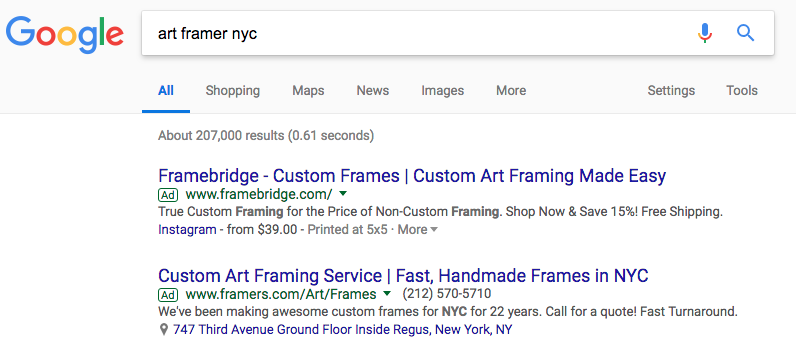
Similar in concept to the sponsored content approach, you may also consider placing sponsored posts on Facebook or paying for Google search ads. This is another form of native advertising, which again allows your content to blend in with its surroundings.

Google Search Ad

If someone happens upon a Facebook ad as they’re scrolling through their newsfeed, or sees a search result at the top of their Google results, they’re less likely to be put off in the same way they might be with a more obvious marketing tactic. Since these ads are intended to look like a part of the larger platform, readers don’t feel they’re being “sold” a product or service.

The New Approach to Influencer Marketing

When you think of influencer marketing, it’s possible that your mind jumps immediately to the Kardashians or another celebrity with a massive social media following. But the trend in influencer marketing is changing, and many marketers are now moving away from the celebrity endorsement.

In fact, in a recent study by Collective Bias, 70 percent of millennials said they’re more likely to buy a product that’s been endorsed by a non-celebrity blogger, rather than a celebrity. This is good news for smaller businesses, who can’t afford the seven-figure endorsement price tag that Kylie Jenner commands.

If you’re a small business, think smaller scale. Target influencers who are important to those in your desired network, and reach out to them. If you have a compelling pitch and are willing to send them a free sample of your product, they just may cover your business on their blog or give you a shout-out on their social media platforms.

There are a lot of small businesses out there, creating content and competing for the attention of potential customers. While this can make the world of content creation feel overwhelming, if you focus on creating quality content that really helps your target audience, and find ways to get this content in front of an ever-broadening audience, you can make the content creation approach work in your favor to drive revenues and expand your business.

The Value of Discoverable, Shareable, and Useful Content

The Value of Discoverable, Shareable, and Useful Content written by John Jantsch read more at Duct Tape Marketing

Marketing Podcast with John Jantsch About Creating Useful Content

There’s no way around it, there are a lot of marketing channels today. I’m counting eighteen as of now (which can obviously change very quickly).

When I started my business we had six or seven ways to reach our prospects and customers. A lot has changed.

One of the things that I think is important to understand, first off, is that you don’t have to play in every channel. That’s one of the things that causes a lot of stress with a lot of business owners and marketers today.

What you do have to do is get very good at playing in the right channels, and additionally getting very good at integrating those channels (or at least understanding how they support each other).

That’s a challenge for a lot of people. We look at social media, content, SEO, and PR, and we think that they’re all separate tactics out there doing separate jobs.

When you look at them together, and actually intentionally think about how they can support each other, you amplify the effect, or the impact, of each.

In this post, we’re going to focus on three of these channels: content, social media, and SEO.

While those are separate channels, content is air for marketing today. It really powers every step in the customer journey and is one of the most essential marketing channels out there.

In fact, it probably is not really even fair to consider it a channel anymore, because it’s like the gasoline that goes in the car. You really have to have it no matter what kind of car you have.

I want you to think these channels, and make sure the content you produce in each is discoverable, shareable and ultimately useful.

Discoverability

Discoverability is often seen as an SEO play, and frankly, that’s what it is, but content drives SEO today. There are many search terms that are competitive, so everybody is out there competing for the search terms that they want.

People try to rank by doing effective keyword research, using targeted messaging, and knowing a lot about their users. It’s a good idea to develop a sense of intent as well in order to implement on-page SEO best practices.

While this all helps to make your content discoverable, you have to start with a content strategy that says “yes, we want people to find that, but that’s not where we want them to stop.”

Shareability

Once the content is discovered, the degree that it is shared will determine how widely it is distributed. By thinking about shareability of content, you’re multiplying the impact of search engine results because shares are going to draw links and other important SEO signals. They are going to increase your audience, which is going to draw more people. 

If we build our content with the idea that we can get a higher share rate, one of the benefits to that is that you actually don’t have to produce a ton of content.

If you produce content that is focused on:

  • How to do something
  • Why to do something
  • Lists
  • Great headlines
  • Great calls to action in the content
  • Using impactful images
  • Mobile usage

Then you can build your SEO-optimized content and make it much more shareable.

Shareable content is going to evolve your social media. This is one of the best ways to think about your content in the social media space. Making your content shareable will help expand the reach of people outside of your immediate network.  

Useful content

As I said in the beginning, I think the ultimate measure of success of any SEO plan is the degree to which people who discover and share your content, also find that content useful enough to quote, bookmark, link to, and consume deeply.

This idea of linking your content together to make it even more useful is an important part of trust building in the journey. If people have a problem, they go out and search for a problem, not for your solution.

They may not associate what you offer with their problem, but they’re trying to get a problem solved.

If they go to your website make sure you address their problem and give them an entire guide for how to solve it. Link together eight or ten pages, or at least associate all of your related content to a topic in a way that you’ve packaged it to make it easy to consume.

That’s the content that people not only love to share, but they love to link and bring other people to it as well.

It’s the kind of content that is going to make your SEO more effective, and make your content more discoverable because Google sees the signals that are being sent to that content.

It’s the kind of content that is ultimately going to lead people to buy your products and services, because you’ve addressed their problem, and made it easy for them to consume the content. You built trust signals, which is going to help you show up on page one of Google, which is huge. 

You’re giving somebody a reason to dig in on their own, and discover that what you sell is going to actually solve their problem.

That’s how you have to think about content.

There are a couple of metrics that I love to look at when I’m trying to analyze somebody’s content. I use tools, like Ahrefs, to see the number of keyword phrases driving traffic to page one.

I also like to use a tool called BuzzSumo. One of the things that it will do is dive into your content from a social media standpoint and will answer questions like:

  • How much sharing is going on?
  • What kind of content gets shared the most?
  • Who’s linking to it?
  • Who’s Tweeting it?
  • What is the length and format of the content?

It really breaks down all the sharing activity that goes on in your content.

I love to look at that kind of shared data because in many cases it will clearly point to your best content that’s being shared. Most of the time, that’s longer content that is more in depth, and that people find very useful. 

The value of your organic traffic is also a tremendous metric to really allow you to see how you’re stacking up.

Typically, what happens is your content becomes more discoverable because it was useful. It’s more shareable because it was useful. So it’s like this vicious, positive cycle that ends up making your traffic and visits worth so much more.

The Role of Content Has Changed – Here’s How You Can Adapt

The Role of Content Has Changed – Here’s How You Can Adapt written by John Jantsch read more at Duct Tape Marketing

It wasn’t too long ago that you could follow the formula below to attract and generate leads for your business:

  • Develop a content upgrade, like an ebook
  • Gate it behind a form on a landing page
  • Drive people to your landing pages through blog posts, social media, advertising, and email campaigns
  • People see the offer on the landing page, are interested, and give their contact information in exchange for the content
  • Voila, you have a new lead that you can nurture to a sale

While content upgrades still work well as a lead capture tool, you need to now get creative with how to get eyes on it. The market is so saturated these days and so many businesses are now following this approach that it can be easy to get lost in all the noise.

I’ve been thinking about this for awhile now and began testing an approach that I had seen to start to emerge that I want to share with you. While my results have been significant, it may take time for business who are just getting started to see the same results, but in my opinion, it’ll be well worth it in the long run.

The key is to continue to position yourself as the expert in your field, and the best way to do this is to create and aggregate content into one place to show not only your visitors that you know what you’re talking about, but search engines as well.

Have I lost you? I hope not! To understand what I’m talking about, take a look at the details below.

Creating content – An evolved approach

As content continues to grow in importance for your business, it now must take on an elevated position in your strategy and planning.

The use of high-quality, education-based content has become a necessary ingredient in creating awareness, building trust, converting leads, serving customers and generating referrals.

Marketers these days have a lot in common with the traditional role of publishers. The good news is that the days of creating an infinite amount of thin content are over. You can create content less frequently, provided you structure it correctly and include a ton of value within it.

Today we have evolved into the “less is more” approach. Big content projects, even if there are only three per year, is better than writing a blog post every week, just because you think you should.

I’m currently experiencing great results with something that I’m calling Hub Pages. This is something many have already started doing and I understand why.

Content planning has really risen to the strategic level. It’s no longer an SEO tactic or simply content marketing. While we should certainly use it for those things, we must plan it at a foundational level.

At the risk of sounding like a broken record, content really is now air for your business as it impacts every channel, which elevates how we have to think about it.

Content becomes an asset over time

Content is no longer created for today or tomorrow. It is created as an asset that can be used throughout every stage of the Marketing Hourglass. Because of this, you need to think about the time and energy you need to invest to get it right.

Hub themes

local marketing

I’ve talked about the Total Content System for years and it’s really driven by what I’m starting to call “hub themes.” These themes can be monthly, quarterly, or whichever timeframe you think is best.

Let’s say the theme for the month is “local marketing.” You’d want to drive all the attention you have to this idea of local marketing, so one of the main tabs on your website may become “The Ultimate Guide to Local Marketing.

Instead of it just being a page that talks about local marketing services, it becomes a foundational page that has a tremendous amount of value about what local marketing is, with tons of resources and links that people can click through to for further information (it may even end up looking like a course).

All of the content you have pointing to it are like the sub-chapters of the hub theme. I not only have all of these internal pages driving back to this one hub page, I also include links to external, high-quality content on the page that can also be linked back to the hub page.

Hub pages are also a great way to organize existing content and get more use out of it. Driving it to, and including in, these hub pages is a great way to give old content new life.

With so many pages driving to one another, you’ll start to gain a lot of trust and authority from Google, which will eventually help to increase your rank in search engine results pages over time.

The role of content upgrades

Content upgrades are still the new free. When you put these hub pages together, still include content upgrades, like an ebook or webinar signup, on these pages. People will now see these content upgrades because you are driving more traffic to these pages and they are easier to rank for instead of individual posts.

So, what do you think about this approach? Have you started to implement these types of efforts in your business?

If you liked this post, check out our Guide to Building a Small Business Marketing Consulting Practice…see what I did there?

How to Fix a Broken Content Strategy

How to Fix a Broken Content Strategy written by John Jantsch read more at Duct Tape Marketing

Many businesses out there spend the last few months of the year planning their content strategy for the year ahead. They have color-coded spreadsheets completed, goals in the place, and the optimism that the next 12 months are going to be the best yet.

So, let me ask you a potentially awkward question: Are you on track to meet those goals? If the answer is no, don’t worry you are not alone, and there is still plenty of time to not only play catch up but to exceed the goals you originally set.

It’s OK to hit the restart button.

Through analytics and customer feedback, you should have insight into what’s working and what isn’t and should recognize the areas that need improvement.

If you’re stuck on how to turn your content strategy around, here are some tips to help you revitalize it.

Refocus your marketing message

When it comes to marketing these days, you must not only match your message to your ideal client, but you have to engage them and keep their attention as well.

Here’s something I’ve said for years, and will likely say it a few more times: Your clients and potential clients don’t care about your products or services (that’s not supposed to sound as harsh as it likely reads). What they really want is somebody to solve their problems.

If you can pinpoint what those are and succinctly explain how you address and solve those problems within your messaging, then you’ve basically won the golden ticket. Make it clear that you understand what they want and need.

Just remember, your messaging should not be about you.

Knowing your audience front and back will help you across the board when it comes to your content strategy. If you know how to speak to them and know what their trigger phrases are, you’ll be in a great place to move forward and take your marketing efforts to the next level.

Lastly, in addition to speaking to your audience with your messaging, be sure to also aligns it with your business goals, because at the end of the day, reaching those goals is what all of this is for.

Put the “must haves” on your website

When it comes to content revisions, it always surprises me when people don’t think to start with their website, the content hub. The role of your website is to help you:

  • Get found
  • Build trust
  • Educate
  • Inform
  • Nurture
  • Convert

To accomplish the areas above, you need to be sure your website has:

A promise

Add a promise above the fold on your homepage to show visitors that you understand the challenges they face. As mentioned in the previous section, you need to make them a promise that will solve their problems.

A call to action

Your call to action can be a number of things, including a request for more information, schedule a consultation, or download a free report. Just make sure it’s relevant and useful.

Video

In my opinion, this has gone from a “nice-to-have” to a “must-have” for small business. Video allows you to give people a real sense of who you are, what you stand for, and let people hear your story.

Trust elements

You need to have elements that build trust on your homepage, whether they are logos of current clients or testimonials for your audience to glance over. Make it easy for visitors to see them.

Content and content upgrades

Given the purpose of this blog post, this area should seem pretty obvious. To keep content on your website fresh, post to your blog frequently (have a blog feed on your homepage for easy access).

A content upgrade gives people the ability to download premium content in exchange for an email address or capturing a lead. If they download this content, it shows that they are interested in what you do. Use the information they provide you to nurture them through to the sale.

Core services

You likely have full pages dedicated to these services, but by adding short descriptions and images of each to your homepage as well, that link through to your service pages, you’ll also get additional SEO value.

Create a lead generation content plan

First and foremost, have a plan! So many people just wing it these days which often gets them nowhere. I find it helpful to create a theme for each month that all of your content can revolve around.

Each theme I use has a substantial topic related to my audience’s industry/pain points and represents an important keyword search term.

I also find it helpful to think about the themes as a book where each month represents a chapter in what will eventually make up a body of work by the end of the year.

Provide valuable information and use content upgrades to convert the readers of this information into leads. Try to personalize and add emotional components to your content as much as possible to really establish a connection with a reader. The more they feel that connection, the more likely they’ll be to convert into leads and eventually customers.

Also, keep in mind that you don’t always have to reinvent the wheel with your content. You can share relevant content from other sites on your social platforms to provide value to your audience. You can also repurpose content you already have, so, for example, if you have a podcast episode, transcribe it and turn it into a written blog post.

The more value you can provide on a consistent basis, the better off you’ll be.

Outsource your content

A big reason why content strategy falls through is that people run out of time and don’t end up creating the content they had planned on. Listen to me when I say “outsource that content!”

Of course, you should own your process and strategy but you do not need to create the content yourself. There are plenty of people out there that can do that for you. Some sites you can start with include:

I have a plethora of additional outsourcing tips that you can find here to help you get started.

It’s never too late to turn your content strategy around. Follow these tips, continue to track progress, and keep revising as necessary until you hit your goals.

If you liked this post, check out our Guide to Content Marketing for Small Business.

Why Podcasting Should Be A High-Priority Content Platform This Year

Why Podcasting Should Be A High-Priority Content Platform This Year written by John Jantsch read more at Duct Tape Marketing

I talked about the benefits of podcasting quite a bit last year, and with the new year up and running, I wanted to take the time to re-stress the value that podcasting can bring to your business ( I can’t even begin to explain the wonders it has done for mine). Plus, it’s actually very easy to set up and is a much more efficient use of your time compared to how long it takes to create other pieces of content.

If you haven’t already included it somewhere in your plans for the next 12 months, I highly recommend doing so, and here are a few of my reasons why.

1. Increased engagement

Let’s face it, these days, it’s hard to pay attention to content for extended periods of time. With podcasts, however, you can fit them into your day whenever it works best for you, making the consumption of this type of content for extended periods of time far more common than it is with other forms of content.

This gives you opportunities to showcase your knowledge in a way that you’re unable to otherwise. This goes without saying, but having your brand in front of your audience for extended periods of time can be extremely valuable.

2. Less competition

As of July 2017, there were around 350 million blogs from Tumblr alone. If that stat doesn’t show you how crowded the online space is, I don’t know what will.

Podcasting is different. While becoming increasingly popular year over year, there’s still significantly less competition in this space, making it easier for you to stand out with your target audience.

Podcasting still allows you to compete on an even playing field.

3. Establishes an emotional connection

Podcasting allows you to develop a deeper relationship with your audience. Hearing your voice frequently makes your audience feel like they actually know you. The more a person feels like they know you, the more likely they are to trust you, and in turn, buy from you.

Plus, if people feel a loyalty to you and your brand, they’ll be more likely to leave you positive reviews, which further builds on your trust and credibility.

4. Networking at its best

One of the big surprises to me was the relationships that you develop during an interview.

Reaching out to others to have them as a guest on your show is a great way to build your network. The more people you can connect with, the more you’ll increase chances of referrals, leading to more opportunities and business for your company.

What’s even cooler about networking on this platform is that you can network with people you would never be able to otherwise, like influencers and people you view as mentors or role models.

5. Catalyst for additional content

Creating content is essential to the success of a business today, but finding time to create a bunch of content can be difficult.

So, why reinvent the wheel? With podcasting, you can repurpose the material into other forms of content, such as video or a series of blog posts. Repurposing the content will also help you to further expand your reach because part of your audience may not consume audio-based content, but they may be avid readers and vice versa. See what I mean?

6. Monetization

You certainly don’t have to monetize your podcast if you don’t want to, but if you are interested in making money from your show, there are a number of ways to do that, including:

In general, a podcast is also a great way to build leads, so although the monetary benefits may not be immediate, the business in can bring you over time can be huge.

7. Podcast guesting provides new opportunities

Earlier in this post I discussed how having guests on your podcast can be great for networking, but you being a guest on another person’s podcast can provide the same benefits.

As you are interviewed on more podcasts, your reach begins to snowball. It’s a great way to get exposure with very little effort (far easier than taking the time to write a guest blog on another website).

A few other perks to keep in mind include:

  • Gives you access to an engaged audience outside of your own
  • You have virtually no preparation (the host does the majority of the work)
  • High production value will make the content more shareable
  • There will likely be show notes (and often transcripts) that will drive links back to your website (helping improve your SEO)

Now, in order to be truly effective with podcasting, be sure to have a clear vision of what you’d like to get out of it and know who you are targeting. Once you have those in place, dive in and start receiving the benefits discussed above.

Bottom line, in one interview, with little preparation, you can gain access hundreds or thousands of targeted listeners. Who wouldn’t want that? Do your research, set everything up, and get going.

If you liked this post, check out our Guide to Content Marketing for Small Business.