Author Archives: Trafficblast

AI and the Future of Marketing: Strategy, Human Value, and the CMO Role

AI and the Future of Marketing: Strategy, Human Value, and the CMO Role written by John Jantsch read more at Duct Tape Marketing

Catch the full episode: 

Peter BeneiEpisode Overview

In this episode of the Duct Tape Marketing Podcast, host John Jantsch is joined by Peter Benei, marketing leader and co‑founder of AI Ready CMO. They explore how artificial intelligence is reshaping marketing beyond tools, why strategic thinking and human judgment will matter more than ever, and how marketers and organizations need to adapt. Peter shares his grounded perspective on what AI will replace, what it won’t, and how roles like CMO are evolving in an AI‑driven landscape.

Guest Bio

Peter Benei is a seasoned marketing strategist with over 20 years of experience serving as CMO for tech scale‑ups and startups. He co‑founded AI Ready CMO, a platform and newsletter helping marketing leaders adopt AI through strategic frameworks, case studies, and community learning. His approach focuses on practical adoption of AI, emphasizing strategy and human judgment over hype.

Key Takeaways

  • AI Is Not Just Another Tool: AI’s impact is broader than previous marketing innovations—it changes operational workflows and organizational models.
  • What AI Will Change and What It Won’t: Content production will be automated, but human oversight, taste, and strategic judgment remain crucial.
  • Evolving Roles: CMOs will function as orchestrators of AI-enhanced workflows. Routine content roles may be replaced or reshaped.
  • Education in the AI Era: Liberal arts degrees and soft skills could gain renewed value for critical thinking and creativity.
  • Tool Consolidation: Major platforms like Google and Microsoft may absorb many single-purpose AI tools. Custom tool-building is easier than ever.

Great Moments (Timestamped)

  • 00:38 — AI vs Past Marketing Innovations
  • 03:08 — Strategic vs Hype‑Driven AI Adoption
  • 06:50 — What Will Change in Marketing Production
  • 08:56 — Human Skills That Remain Vital
  • 11:18 — New Resource Requirements in Marketing
  • 12:17 — Hiring for Judgment and Taste
  • 17:22 — The CMO of the Future
  • 20:04 — Consolidation of AI Tools
  • 22:45 — Example: AI‑Built Content Repurposing App

Inspiring Quotes

“Production of marketing materials will either be fully automated or come with a minimal barrier to entry.”

“Human in the loop—our judgment, empathy, and taste—will matter for a couple of years at least.”

“A CMO’s role is becoming more like an orchestrator of workflows where people work together with AI.”

“Within a year or two, most standalone AI tools will be extinct or absorbed into major platforms.”

Resources

Subscribe to the daily newsletter at AIReadyCMO.com for actionable insights on AI in marketing.

Sponsored by:

Duct Tape Marketing Strategy First Certification: For consultants, agencies, and fractional CMOs ready to lead with strategy.
Join our 3-day live Duct Tape Marketing Certification and license the proven Strategy First system, tools, and frameworks used for 30 years.
Get 1:1 support and join a community of serious marketers.
Learn more at dtm.world/certify

John Jantsch (00:01.442)

Hello and welcome to another episode of the Duct Tape Marketing Podcast. This is John Jantsch and my guest today is Peter Benei. He is a marketing leader and strategist with 20 plus years of experience as a CMO for tech scale-ups and startups. He co-founded AI Ready CMO, a platform and newsletter focused on helping marketing leaders adopt AI strategically, not just tool by tool, but through frameworks, case studies and community learning.

Peter Benei (00:01.57)

Thanks.

John Jantsch (00:30.39)

So guess what we’re going to talk about today? AI. Peter, welcome to the show.

Peter Benei (00:34.634)

Welcome and thanks for inviting me.

John Jantsch (00:38.028)

So given that you and I were just talking off air, you know, I’ve got 30 plus years, you’ve got 20 plus years, how in your mind has, does AI or the advent of AI different than say, websites and social media and search, you know, that kind of came along as tool? Would you say that it’s just another flavor or is it fundamentally different?

Peter Benei (00:43.341)

Yeah.

Peter Benei (01:04.052)

both, I guess. I had my own agency as well. Jesus, 20 years ago. and it was a social media agency. So at that time it was like, so Facebook business pages just got introduced and everyone was talking about the clue train manifesto markets are conversations and you know, this kind of stuff, social media, web two. I don’t know if you’re familiar with the market or Brian Solis.

John Jantsch (01:05.879)

Yeah.

John Jantsch (01:19.584)

Yeah.

John Jantsch (01:24.384)

Yeah. Yeah. Yeah. Yeah. Yeah.

Peter Benei (01:33.262)

Yeah, he was just about talking about the conversational prism and I don’t know. So everyone was talking about like, know, social media is a thing. And we had this agency, which was a social media agency. But again, that was a new thing. I don’t really think that the whole AI, whatever it is right now is…

John Jantsch (01:33.432)

Of course, yeah, Brian’s been on the show.

Peter Benei (02:02.4)

is new in a sense of tools and technology for marketers. These are just things that we need to learn and adapt to in general sense, like we did for, I don’t know, Facebook business pages at that time or, I don’t know, Squarespace websites. you can drag and drop websites again now. That’s interesting. Although I think the business model for agencies and marketing teams will be fundamentally changed

John Jantsch (02:22.53)

Yeah.

Peter Benei (02:32.184)

because of this new AI tool, AI capabilities, AI agent, whatever, AI. And I think that will be interesting to see. again, agencies also changed and marketing teams also changed 10, five, 20 years ago. So I think we just need to be familiar and open to adapt to this new change. So I don’t…

John Jantsch (03:00.31)

Well…

Peter Benei (03:01.078)

dramatize or strategize or panic around this. You just need to adapt.

John Jantsch (03:08.056)

Yeah, it’s funny. There was a period of time where you had social media marketing agencies and digital marketing agencies, right? It was just like, oh no, we’re this flavor. And now it’s just like, no, it’s all just marketing. Right. So what are the things you write about a lot? And, and I, you know, I’m a subscriber to your newsletter and I really, there are a lot of people out there writing about AI hype, you know, like look at what this thing could do. But I think you guys have take a very,

Peter Benei (03:12.206)

Hmm?

Peter Benei (03:19.693)

Yes.

Peter Benei (03:25.944)

Thank you.

John Jantsch (03:35.352)

Like you said, not necessarily a dramatic hype approach, a very almost stand back approach of saying, look, we have to remain strategic. Human beings have a role, but maybe it’s changed. And so I really appreciate that take. So let’s get in a little bit to the changing, like the AI plus strategy, you know, plus humans approach, because there’s certainly a lot of hand wringing right now around all these jobs that are going to be wiped out.

What are people going to do? So what do you, let’s just divide it. What do you think is going to go away that these tools actually do better than humans? And what do you think is going to actually stay and perhaps not for a long time be replaced by humans or by machines.

Peter Benei (04:05.486)

Thanks.

Peter Benei (04:21.922)

No, that’s a tempting and also interesting question. One thing that I want to reflect quickly, the focus on non-hype bullshit and sorry for calling that way, non-hype framing of this whole entire new trend was also personal choice of ours with the newsletter, but also a strategic choice as well.

Obviously everyone is hyping around this whole thing. we are personally, we are getting a little bit older, I guess. And we are just not interested in the, the, in the defocusing of our audiences. So we made the conscious decision to kind of like stand still and observe a little bit more with a strategic eye. So that’s one thing. Second.

John Jantsch (05:09.921)

Mm-hmm.

Peter Benei (05:18.232)

To your question, I would love to have an answer, but I’m not afraid to say that I don’t know. think during these times that are changing, it’s really hard to know what will happen. And we are just migrating, by the way, the news that are to another platform. And I had to reread the old stuff that we wrote. When I say old, like half a year ago.

John Jantsch (05:37.858)

Mm-hmm.

John Jantsch (05:47.832)

All right.

Peter Benei (05:48.174)

And that will be a context to your answer, by the way. And I just read what we’d wrote like half a year ago and everything was so beginning at that stage still. Everything changed so fast within a couple of months. New tools came out, new concepts introduced to the public. And I’m not talking about like agents, like more like, know.

John Jantsch (06:04.375)

Mm-hmm.

Peter Benei (06:14.818)

working together with AI, human in the loop, and these kind of stuff. It’s so hard to predict because within this small time frame, everything has changed. I think what we can do to answer this question, and sorry for it, it takes a little bit longer, is that to nail down the basics that we think that it will be changing. And I think there are a couple of things that will change. And one that I’m…

almost 100 % sure it will change is that production of marketing materials and like marketing production in a sense, like content production, shall we say, will be either fully automated or it will not come with a high barrier of entry. It doesn’t have a high barrier of entry right now either, but it will have like a minimum barrier of entry with AI.

John Jantsch (06:54.614)

Mm-hmm. Mm-hmm.

Peter Benei (07:14.254)

That means a lot for agencies, by the way, for marketing teams, because we create, mean, like 80 % of our work as marketers are creating content. Now, if the content creation is almost automated by AI, what do we do? Right? That’s the question. Now I don’t have the answer, but I’m sure that we won’t create that much and that amount of content within our workload and work time.

Second, AI is getting perfect or better, shall we say. It’s always, know, tomorrow’s AI is 10x better than today’s AI. But it’s still not perfect. And the reason why it’s not perfect is that it still needs the human, us, to course, supervise, review, edit, whatever. So I think the…

human in the loop or human in the addition working with the AI, it will matter for now, for a couple of years at least. And third, we need to think that if production is not our job anymore, but we still need it, then where do we need it? And I think that’s the answer for your question here, that we need to be able to form strategies.

And what is the strategy, by the way, understanding the client need with empathy and suggest process to achieve the goals. are goals and that’s it. Pretty much that’s the bare bones, simple strategy. How do we produce more? sorry. How do we produce better content? Because production wise, it will be automated, but it still has to be good. We need taste.

John Jantsch (08:56.45)

Right.

John Jantsch (09:09.698)

Right.

Peter Benei (09:11.106)

We need quality, we need judgment, we review supervision. And how do we work better with AI is that if we understand the workflows and the processes as a kind of like operator of the entire show. So I think strategy, like empathy, taste and operational efficiency or workflow knowledge should be…

and will be important for marketers. And I’m safe to say these.

John Jantsch (09:44.822)

Yeah, you, you. Well, and I think you raise a real, I think at least right now, one of the differentiators, the barrier to produce, to producing, quantity is gone. however, I think the barrier to producing quality is still a real differentiator.

Peter Benei (10:03.042)

Yeah. Yeah, I agree. agree. And it just, know, AI just like highlighted how not many of us have taste and how not many of us can produce great content and how most of the content that we’ve used so far anyway was, well, wouldn’t say garbage, but like, you know, mediocre. And I think it’s super important to…

to highlight that previously you needed resources to produce high quality content. So if you wanted to do a Super Bowl level advertising, you needed DDB or or or whoever big agency. If you wanted to do a global media campaign, you needed a media agency or an insane marketing budget to go with that.

John Jantsch (10:37.901)

Yes.

Peter Benei (11:02.638)

If you wanted to produce a content library of whatever you have, like 100 eBooks or shit, you need 10, 50, whatever, copywriters or marketers to do that. Similarly happening in other industries. So if you wanted to do the new John Wick movie, you needed a Hollywood studio and so on. can go on and on.

John Jantsch (11:18.338)

Thanks.

Peter Benei (11:33.184)

Now you don’t need these resources. You need a laptop and an idea and I don’t know, hundred dollars for API credits. And pretty much that’s it. That’s it. That’s all you need. And judgment and taste and strategic mindset. And, know, these kinds of stuff that are human in innate human values and abilities, which AI cannot produce.

John Jantsch (11:36.205)

Mm-hmm.

John Jantsch (12:02.658)

Well, so that begs the question then, if we are going to still have humans involved, do we need different humans? A lot of us. If we built an organization, say, to produce stuff, you know, the copywriters, the graphic designers, that their whole output was the stuff, do we now need to hire for taste and for judgment and for brand intuition?

Peter Benei (12:17.602)

Mm-hmm.

Peter Benei (12:27.83)

I yes. I’m not the person who will tell you otherwise. And I’m also not the person who is in the business who helps you to do that. But if I would be in the business, I would immediately start some sort of like a training company or anything around that that helps people who have like basic skills through studies. Like, I don’t know.

John Jantsch (12:28.92)

the

Peter Benei (12:57.806)

creative arts or whatever, and upgrading them to be able to use those skills in a refined manner for multiple purposes. In our case, marketing. So yeah, people and companies should hire Prudence.

John Jantsch (12:59.661)

Right.

John Jantsch (13:13.496)

And I think I’ve actually seen on your website, aren’t you producing some courses or some master classes or something around those? Yeah, yeah, okay.

Peter Benei (13:21.302)

Yeah, we do some workshops. We do some workshops, but we are not a training company. So, so we didn’t within AI ready CMO, if you like pave to go to get a paid member, you obviously have access to some sort of like a workshop training program and some studies, but we are not a training.

John Jantsch (13:26.551)

Yeah, yeah.

John Jantsch (13:40.994)

Right, right. Yeah, okay. So, would you… If somebody was, I don’t know, maybe coming out of school now or maybe trying to change careers or something, are there some roles or functions that you would say, hey, you should spend your time up-leveling your skills in this area?

Peter Benei (13:42.924)

And I don’t want to be a training company.

Peter Benei (13:52.334)

Hmm?

Peter Benei (14:03.608)

So I’m 44. That will be a long shot, I’m 44 and many of my friends have kids who are like 15 or 10 or 15 or 20 sometimes. And they all talk about the same thing. I like full honesty.

John Jantsch (14:30.84)

Mm-hmm.

Peter Benei (14:33.39)

They talk about what will these kids will do in five to 10 years, what kind of careers they will pursue and so on and so on. They are families. So I usually talk with the dads, obviously, and they are talking about, I need to send my kid to a university or college or whatever. I live in Europe, so I don’t know, they send it to Vienna or something. And how…

How should I pick which university they should go in and so on and so on? How should I help them? And they are clueless. And usually the close to good answer that I see, and again, this is a personal opinion, so treat it as is, usually the ones that are sending their kids to some sort of like art, history,

John Jantsch (15:10.776)

Mm-hmm.

Right.

John Jantsch (15:31.512)

Mm-hmm.

Peter Benei (15:32.782)

Literally something around these like soft things, which we call soft skills or soft studies.

John Jantsch (15:37.376)

Mm-hmm.

John Jantsch (15:41.495)

Mm-hmm.

Peter Benei (15:44.692)

I wouldn’t send my kid to engineering school right now. I wouldn’t send my kid to learn that become a developer or a lawyer or not even a doctor probably. I don’t think that these, I mean, these professions will exist obviously, but it will have a really huge competition that only the finest one will succeed or will be needed.

but if you have like a general arts degree or something around that, know usually, you know, treated as totally useless. I have one by the way. but still, so I studied history and sociology pretty much useless, I guess, but still. and I think these, these studies might be something that can be valuable because they, they teach you the basics of.

John Jantsch (16:22.922)

Right?

Peter Benei (16:43.64)

how to read, how to judge aesthetic things, and how to think critically, yes. How to think in context, so like historical context, let’s say. And I think these baseline knowledge skills, let’s say, I wouldn’t call them skills, but these things will be in, yes.

John Jantsch (16:49.89)

I to think critically.

John Jantsch (17:08.704)

It’s exposure really more than anything else, right? Yeah.

Peter Benei (17:11.746)

These will be inherently valuable than knowing the latest legal, whatever it is.

John Jantsch (17:14.274)

Yeah, yeah.

John Jantsch (17:19.308)

Yeah, yeah, yeah, which can be, yeah, queued up. How about CMOs? Are you, do you see that role going away? Do you see it, you know, changing inside of organizations to where it will not only look different, but it will have a different function?

Peter Benei (17:22.541)

Yes.

Peter Benei (17:38.232)

So we preach at AERA, the CMO is that the CMO role is becoming more like an orchestrator who is leading and creating these environments of workflows where people work together with AI and AI automation. And from the marketing org chart, like, know, junior, mid-manager, specialist.

John Jantsch (17:47.81)

Mm-hmm.

Peter Benei (18:07.128)

head off whatever and see. I do think that the CMO role will be the last one who will fall. Juniors probably will have the hardest time, especially, and also mid managers and specialists, because some of them need to pivot into something else because AI will just simply eat their field of expertise there.

but those people who are able to manage not just people, but workflows together. mixing the soft skills with, I wouldn’t say engineering level skills of workflow engineering, but more like, you know, operational level. I think these people will be valuable and these people will be the CMOs I think. But if you were a CMO and only created the marketing budget and.

John Jantsch (18:53.516)

Mm-hmm.

Peter Benei (19:06.306)

delegated the tasks and that’s it. Yeah, you probably will have a harder time in the upcoming years and you need to learn workflow efficiency, operational level execute and you know, these kinds of Or if you are on the other side, more like an operational person, you probably need to learn a little bit more soft skills and judgment and taste and you know, these kinds of stuff that we talked about so far.

John Jantsch (19:35.124)

So I want end on one kind of, there’s a bit of been a bit of a rant for me and I’m curious where you land on this. I think a lot of people were jumping at, my AI tool stack is these 17 tools because they all do one thing really well. And I think what I’ve said all along is I think the Googles and the Microsofts of the world are going to basically figure out how to build all of those best of class tools into their

Peter Benei (19:41.774)

Please.

Peter Benei (19:51.342)

Hmm.

Peter Benei (20:03.448)

Agree.

John Jantsch (20:04.696)

into their work tool that you buy for one price or that you’re already buying that now is just $10 more a month. And they will really kind of wipe out a lot of these one-off tools. I’m curious what you think of that.

Peter Benei (20:10.926)

I agree.

Peter Benei (20:18.094)

100%. I mean, this will be a hard argument because I 100 % agree with you. I can share you two examples. Two examples and one explanation on why people think that. I mean, especially, know, C level people and decision makers, they love throwing resources on problems. So yeah, they have like a tool.

John Jantsch (20:43.352)

Mm-hmm.

Peter Benei (20:48.174)

abundance, and they, and they buy shiny new tools every day. that’s fine. We understand it’s obviously not the right call. and even, even they don’t, they know it usually. and the two examples are, are simple ones. One, you actually mentioned off of air that you read the latest article that we, that we published. I mean, it’s not rocket science judge, just a Claude Cowork, came out.

John Jantsch (21:16.941)

Yes.

Peter Benei (21:18.282)

A funny thing, by the way, did Claude did it. mean, the Anthropic team did it with Claude code within half, one and a half a week. And no line of code were written by any engineers, all AI. So the learning there is that most of the tools will be irrelevant because startups

John Jantsch (21:29.848)

Mm.

John Jantsch (21:34.934)

Yes.

Peter Benei (21:45.674)

And AI tools just die every day because new tools will come out. Also don’t forget that the big ones, Google and the others, they have infinite resources, like infinite. They have infinite training data and AI lives on data. So just like one simple AI feature added to Google ads, let’s say.

We’ll probably kill 90 % of the AI tools out there right now overnight.

John Jantsch (22:20.972)

Well, they also, know, one thing people underestimate, they also have all the hardware.

Peter Benei (22:25.216)

And also the hardware. Well, in a sense business, that hardware doesn’t really matter that much, more like the data, but yeah, the hardware is important too. And the second thing is that, well, I’m really proud of it because it happened today. So sorry for sharing it with everyone right now on this podcast, but I built a content repurposing application. You literally, it does…

John Jantsch (22:26.584)

So it doesn’t cost them anything.

John Jantsch (22:35.49)

Yeah. Yeah.

John Jantsch (22:45.208)

You

Peter Benei (22:54.956)

A simple thing, you give an RSS feed to the application, in our case, our newsletter. We are only two people. So we don’t have social media managers and stuff. And because most of the content that we do is news-driven, so every day we publish something new. We cannot batch write stuff pre-time. So we only know the content on the same day.

and we need to share it on X and everywhere. And we spend a lot of time to repurposing this type of content, even if we use AI. So this app actually takes everything that we have, new posts, and repurpose it on different platforms. It self-learns, it does everything. It’s fully automated, it’s amazing. It has a UX, everything.

and I built it under an hour while I having breakfast at my kitchen table. I’m not kidding. And I don’t know how to code at all. Like I never coded a single line of code ever. And I will probably never will. Claude did it. just why prompting it. So the reason why I’m telling this, thing is that it’s so easy to build up something new now.

John Jantsch (23:58.336)

Yeah.

Peter Benei (24:21.134)

even for personal use that you probably end up and that’s like a wild guess and more like a futurism. But I might guess that within a year or two, we don’t really even have like small sasses for most companies. People just, you know, ramp up their own applications for their own computer, for their own personal use, for their own agency, for their own clients within an hour.

John Jantsch (24:21.186)

Yeah. Right.

Peter Benei (24:50.508)

works fine just for them.

John Jantsch (24:53.016)

Yes. Yes, yes.

Peter Benei (24:54.382)

So it’s interesting. So short answer to your question. mean, don’t really bother subscribing to 20-something AI tools. Probably 95 % of them will be extinct within a year or two and substitute by Gemini or other Google products or whatever. Or second answer, build your own.

John Jantsch (25:05.237)

Alright.

John Jantsch (25:21.632)

Yeah, yeah. Yeah, I’m curious. And again, you don’t have to answer this. can end on this. But I suspect that Google will build a cowork clone, you know, because you think of all the people have all of their stuff on Google Drive, and not just to be able to say, here, go consume all this. You’ve got to believe that’s coming. Well, Peter, I appreciate you.

Peter Benei (25:31.853)

Yeah.

Peter Benei (25:41.25)

Yes. And by the way, it’s interesting. Sorry, last sentence. I have to rant about Microsoft a little. It’s so interesting that you have all the documents on SharePoints and all the knowledge documents and stuff, and copilot is still. So it’s so weird. Anyway, sorry.

John Jantsch (25:46.794)

No, yeah, yeah.

Mm-hmm.

John Jantsch (26:01.909)

huh. Yeah. Yeah, yeah.

No, no, no, it has that typical Microsoft feel will land there. So Peter, I appreciate you taking a few moments to stop by. Is there some place you’d invite people to find out more about AI ready CMO?

Peter Benei (26:12.909)

Yeah.

Peter Benei (26:17.719)

Always.

Peter Benei (26:22.84)

Well, you just said it, AIReadyCMO.com. It’s free to subscribe. We share daily updates, daily intelligence. Every day it lands the one thing that you need to know about AI in marketing in your email box. Simple.

John Jantsch (26:25.954)

Yep, awesome.

John Jantsch (26:36.748)

Yeah, it is a newsletter that I read every day. appreciate it, All right, great. Well, appreciate you stopping by and hopefully maybe one of these days we’ll run into you on the road.

Peter Benei (26:42.476)

Thank you.

Peter Benei (26:50.358)

and anytime. Thank you very much for inviting me.

John Jantsch (26:51.797)

us.

The Marketing Operating System: Why Strategy Alone Isn’t Enough Anymore

The Marketing Operating System: Why Strategy Alone Isn’t Enough Anymore written by John Jantsch read more at Duct Tape Marketing

How to Move From Random Acts of Marketing to a Scalable, Predictable Growth System

Table of Contents

Introduction: Strategy Isn’t the Problem

For years, we’ve said it: Marketing is a system.

Most business owners nod in agreement. But very few actually treat it like one.

Instead, what we often find is this: campaigns are built in isolation, tools get added reactively, teams stay busy — but results stay unpredictable.

The problem isn’t strategy. It’s the lack of a system to run that strategy.

When Marketing Lacks a System, Everything Feels Harder

If your marketing feels disorganized, reactive, or overly dependent on a few high-performers to hold it together, you’re not alone. That’s not a marketing problem. It’s a systems problem.

Here’s what it looks like in the wild:

  • Priorities change week to week
  • Campaigns launch at the last minute
  • Results are hard to explain or scale
  • Tools and platforms aren’t integrated
  • Leadership doesn’t know what to invest in next

Even successful businesses experience this behind the scenes. Growth may be happening, but it’s fragile. It depends on effort and intuition, not structure.

Why Strategy Alone Falls Short

Most businesses have some kind of strategy — or at least a slide deck with one.

But strategy doesn’t:

  • Set monthly and quarterly priorities
  • Assign ownership across people and teams
  • Decide what gets launched — and what doesn’t
  • Convert insight into repeatable execution

Without a system, strategy becomes a one-time conversation instead of an ongoing guide.

What Is a Marketing Operating System?

A Marketing Operating System (MOS) is not software. It’s not a campaign calendar. And it’s not a tech stack.

It’s a structured approach for running marketing — all year long.

A solid MOS answers five essential questions:

  1. What matters most right now?
  2. Who owns what?
  3. How does work flow?
  4. How do we measure progress?
  5. How do we decide what to change next?

When these questions are consistently answered, marketing stops being reactive and starts compounding.

Want to find out if the MOS is right for your business? Book a strategy call

The 5 Core Components of a Marketing Operating System

Let’s break down what a functional, scalable MOS actually includes.

1. Strategy First

Every strong system starts with a clear direction. That means defining:

  • Your ideal client
  • Your positioning and point of differentiation
  • A short list of strategic priorities
  • The complete customer journey

This becomes your filter. Without it, your team defaults to what’s urgent — not what’s important.

2. Campaign Planning & Prioritization

Campaigns shouldn’t be surprises.

An MOS creates a predictable campaign rhythm that:

  • Ties directly to strategy
  • Sequences campaigns intentionally
  • Aligns outcomes with business goals
  • Gets planned quarterly, not in a rush

This creates calm, not chaos.

3. Roles, Workflows & Operating Rhythm

Without clearly defined responsibilities and workflows, marketing turns into guesswork — or worse, heroic efforts.

A true operating system outlines:

  • Who owns which parts of the engine
  • How tasks move from idea to execution
  • Where decisions are made
  • How internal teams and external partners collaborate

With this in place, marketing becomes scalable and sustainable.

4. Measurement That Informs Decisions

A healthy MOS doesn’t track everything — it tracks the right things.

Focus on:

  • A handful of critical KPIs
  • Signals that guide smart decisions
  • Regular (but not obsessive) review cycles

The goal isn’t to prove activity — it’s to enable better investment of time, money, and energy.

5. A Consistent Leadership Cadence

Systems don’t run themselves. Someone has to steer.

A Marketing Operating System needs a clear owner who:

  • Sets priorities
  • Makes tradeoffs
  • Interprets metrics
  • Guides iteration and improvement

Without this leadership layer, systems degrade and decision fatigue creeps in.

Why AI Makes This More Urgent — Not Less

AI has revolutionized how fast we can create and execute marketing tactics.

But AI can’t tell you what should be done.

And without a system, it can actually make the chaos worse — more content, more ideas, more busy work.

Within a Marketing Operating System, AI becomes leverage.

Outside of one, it’s just noise.

What Changes When You Install a Marketing Operating System

When you commit to running marketing as a system, things get noticeably better:

  • Strategy gets activated — not just documented
  • Campaigns align to real business goals
  • Teams know what to do and why it matters
  • Tools and data connect into workflows
  • Leadership finally sees the full picture

You stop reacting and start building momentum.

The shift isn’t about doing more — it’s about doing the right things with less friction.

This Is a Leadership Conversation

If marketing still feels like a recurring problem to solve, this is your moment to reframe the question.

Don’t ask:
“What should we do next?”

Ask:
“How should marketing operate inside our business?”

That shift leads to structure.
Structure leads to momentum.
Momentum leads to sustainable growth.

Conclusion: Less Friction, More Momentum

Marketing doesn’t fail because people aren’t trying.

It fails because it wasn’t designed to function well in the first place.

Installing a Marketing Operating System won’t eliminate the work.

But it will eliminate unnecessary confusion, misalignment, and wasted energy.

And that’s what makes marketing a driver of growth — not a source of stress.

Want to find out if the MOS is right for your business? Book a strategy call

FAQs: Marketing Operating System for Small Business

Q: What exactly is a Marketing Operating System?
A: It’s a structured approach to running marketing across your business. It connects your strategy to daily execution, planning, measurement, and leadership rhythm.

Q: Do I need special software to build this?
A: No. This is about process, not platforms. Tools support the system, but they don’t create it.

Q: How long does it take to install a Marketing Operating System?
A: Most businesses can establish the foundation in 30–60 days with the right guidance and ownership.

Q: Is this just for big companies with large teams?
A: Absolutely not. In fact, smaller businesses benefit most — because it reduces the chaos and helps small teams do more with less.

Q: How does this work with AI tools like ChatGPT or Jasper?
A: AI can amplify your system — but only if you have one. A MOS gives you the strategic and operational clarity to use AI effectively, instead of just generating more content.

How to Build a Complete Marketing Strategy That Drives Results: The Duct Tape Marketing Engine Framework

How to Build a Complete Marketing Strategy That Drives Results: The Duct Tape Marketing Engine Framework written by John Jantsch read more at Duct Tape Marketing

A Practical Guide to Building Your Brand, Attracting Ideal Customers, and Creating Remarkable Customer Experiences

Table of Contents

Introduction: Why Most Marketing Fails

Most small business marketing fails not because of a lack of effort, but because of a lack of alignment. Random tactics replace intentional strategy, and the result is wasted time, money, and momentum.

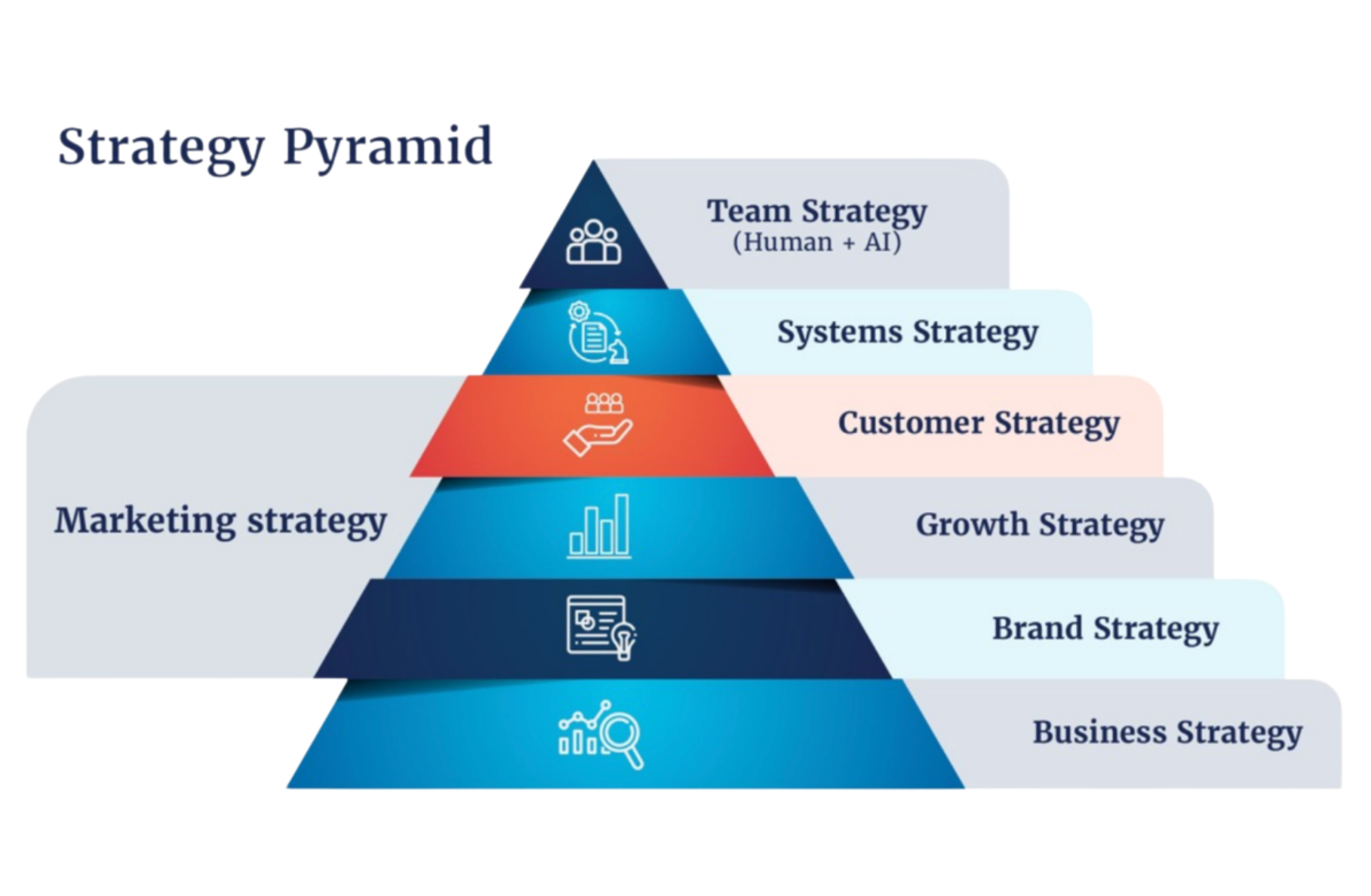
At Duct Tape Marketing, we fix that with a simple yet powerful framework: the Strategy Pyramid, anchored by three strategic elements—Brand, Growth, and Customer Experience (CX). These aren’t buzzwords. They’re the backbone of a complete, cohesive marketing system.

The Duct Tape Strategy Pyramid

What is it? A strategic framework that aligns your entire marketing effort with the full customer journey from awareness to advocacy.

The Three Strategic Layers:

  • Brand Strategy: Who you are, who you serve, what you stand for.
  • Growth Strategy: How you generate demand and convert it into revenue.
  • Customer Experience Strategy: How you create remarkable, repeatable experiences that turn buyers into raving fans.

To bring these to life, we build three engines in your Marketing Operating System (MOS):

  • Brand Engine
  • Growth Engine
  • CX Engine

These engines make strategy actionable.

Engine 1: Building a Value-Aligned Brand Engine

Your Brand Engine defines how your business shows up in the world. It’s not just about logos or color palettes (though those matter). It’s about values, messaging, tone, and emotional resonance.

Key Components:

  • Ideal Client Focus: Know who you’re for and who you’re not for.
  • Brand Positioning Statement: Clearly state the transformation you deliver: “We help [ideal client] get [core result] by [unique mechanism].”
  • Core Message Framework: Anchor your brand in story and proof.
  • Voice, Tone, and Visual Identity: Consistent, compelling, and aligned with your values.
  • Value-Aligned Personas: Build messages that resonate emotionally.

Deliverables:

  • Brand Guidelines
  • Messaging Framework
  • Visual Identity Refresh
  • Brand Style Board

Engine 2: Installing a Growth Engine That Converts

The Growth Engine is a repeatable system for attracting and converting value-aligned leads. The focus is on clarity and consistency—not chasing the latest tactic.

Key Components:

  • Lead Sources: SEO, referrals, partnerships, ads. Pick a primary channel.
  • Offers That Convert: Lead magnets, tripwires, consultations mapped to the buyer journey.
  • Conversion Paths: A defined path from awareness to sale (e.g., content → email → consult).
  • Follow-Up Systems: Email sequences, retargeting, outreach, automated, and human.
  • Measurement Dashboard: Track leads, CPL, conversion rates, and sales velocity.

Deliverables:

  • Offer Suite
  • Funnel Maps
  • Lead Nurture Sequences
  • Follow-Up SOPs

Engine 3: Delivering a Customer Experience Engine That Wows

Your CX Engine is how you deliver on your promises and turn customers into advocates. The first 100 days are critical—and we help you map that journey with purpose.

Key Stages of the CX Engine:

  • Welcome & Affirm – Reduce buyer’s remorse, reassure the decision.
  • Onboard & Activate – Get early wins, build confidence.
  • Deliver & Accomplish – Help them experience real results.
  • Deepen & Adopt – Provide ongoing support and insights.
  • Convert to Advocate – Capture reviews and referrals.
  • Sustain & Retain – Keep delivering value to reduce churn.

Supporting Tools:

  • First 100 Days Playbook
  • CX SOPs
  • Review and Referral System

Connecting the Engines to Campaign Execution

Once your engines are defined, campaigns become strategic execution, not isolated tactics.

The Campaign Builder System connects every campaign to:

  • A priority offer (from your Growth Engine)
  • A clear message (from your Brand Engine)
  • A remarkable delivery plan (from your CX Engine)

This is how you create marketing that works.

Action Plan: What We Could Build With You in the First 90 Days

If you’re a small business owner, you don’t need more marketing noise; you need a system that works. That’s what we install in your first 90 days.

Here’s what that looks like if we build it for you:

Days 1–30: Strategy First

  • Clarify your ideal client and what truly sets you apart
  • Define your core message and top 3 strategic priorities
  • Map the customer journey from first contact to advocacy

Days 31–60: Engine Builder Phase

  • Brand Engine: Establish positioning, tone, and a value-aligned messaging framework
  • Growth Engine: Identify primary lead channels, offers, and content assets
  • Customer Experience Engine: Design your first 100 days and review/referral system

Days 61–90: Campaign Design & Readiness

  • Select and define your priority offer(s)
  • Build a campaign plan tied to your engines
  • Prepare your content assets, calendar, and delivery system

By the end of 90 days, you have the roadmap for a complete Marketing Operating System: strategy-led, engine-driven, and ready to scale.

Ready to Stop Guessing and Start Growing?

If you’re tired of marketing that feels random and reactive, it’s time to install a system that actually works.

Let us build your Brand, Growth, and CX Engines—and turn your strategy into action.

Schedule a Discovery Call Today

We’ll walk you through how it works, what to expect, and whether it’s the right fit for your business.

FAQs: Answering Small Business Owners’ Top Questions

Q: I’ve tried marketing plans before—what makes this different?
A: Most plans are disjointed. Ours starts with strategy, then builds engines that create real momentum across your brand, lead generation, and customer experience.

Q: How long does it take to build all three engines?
A: Most businesses can define and activate their engines in 4–6 weeks, with early wins in the first 30 days.

Q: Do I need a big team to make this work?
A: Not at all. This system is built to scale with the resources you have today—whether you’re a solo owner or have a small marketing team.

Q: What if my messaging isn’t clear yet?
A: That’s exactly why we start with Brand Strategy. You’ll develop a clear positioning and message before you run another campaign.

Ready to Build Your Engines?

If you’re tired of disjointed marketing, the Duct Tape Marketing Engine Framework gives you a practical way to install a complete, aligned system that grows your business from strategy to execution.

Let’s build your brand, growth, and CX engines—one step at a time.

How to Capture Attention Without Clickbait

How to Capture Attention Without Clickbait written by John Jantsch read more at Duct Tape Marketing

Catch the full episode:


Carmine GalloEpisode Overview

In this episode of the Duct Tape Marketing Podcast, host John Jantsch welcomes back bestselling author, keynote speaker, and communication expert Carmine Gallo to discuss his latest audio-original book, Viral Voices: From TED Talks to TikTok. Carmine shares powerful insights into how persuasive communication principles, rooted in ancient rhetoric and modern neuroscience, can help anyone break through the noise in today’s fast-paced digital world. Whether you’re a marketer, entrepreneur, or aspiring thought leader, this episode unpacks why storytelling, structure, and a strong hook are more essential than ever.

Guest Bio

Carmine Gallo is a renowned communication coach, author, and former journalist. As president of Gallo Communications Group, he helps business leaders, entrepreneurs, and changemakers craft compelling messages. His previous bestsellers include Talk Like TED and The Presentation Secrets of Steve Jobs. His latest project, Viral Voices, is an audio-first book produced with Macmillan Audio that explores the art of persuasion in the era of digital content. Carmine contributes to Forbes and is a frequent speaker on communication strategy.

Key Takeaways

  • Why Audio-Originals Matter: Carmine explains the power of creating a book specifically designed for audio, blending performance, storytelling, and neuroscience for a richer experience.
  • The Neuroscience of Attention: From movement on screen to sentence structure, learn what actually hooks attention based on how our brains are wired.
  • The Timeless Power of Storytelling: Discover how ancient principles from Aristotle’s three-act structure to the hero’s journey still shape today’s most engaging content.
  • AI vs. Human Creativity: Why AI struggles with creativity and why human imagination and emotional storytelling remain irreplaceable.
  • Practical Tips for Marketers: How to structure your message, craft irresistible hooks, and use contrast and simplicity to persuade effectively on any platform.

Great Moments in the Episode

  • (01:22) – Why Carmine chose to make Viral Voices an audio-first book
  • (03:41) – The JFK speech breakdown: what makes a phrase “sticky”
  • (04:43) – Why the rules of persuasion haven’t changed, even if the platforms have
  • (06:14) – The ancient origins and modern power of storytelling
  • (08:03) – How Mr. Beast and Sahil Bloom use Aristotle’s three-act structure
  • (10:29) – Nvidia’s origin story: How Jensen Huang hooks an audience
  • (12:21) – Why movement grabs attention and what marketers can learn from neuroscience
  • (16:48) – AI can’t think different: What makes human communication irreplaceable
  • (20:13) – Richard Branson’s balloon crash: Why failure makes a better story

Notable Quotes

“If you learn the ancient art of persuasion, you’ll be able to stand out in the digital world, whether it’s TikTok, a TED Talk, or PowerPoint.”

“AI optimizes for correct grammar. Humans optimize for meaning.”

Where to Listen

Viral Voices is available on Spotify and major audiobook platforms.

Connect with Carmine Gallo

John Jantsch (00:00.856)

Hello and welcome to another episode of the Duck Tape Marketing Podcast. This is John Jantsch. My guest today is Carmine Gallo. He is an American author, communication coach, keynote speaker, and former journalist news anchor with decades of experience helping leaders communicate ideas that stick. He is the president of Gallo Communications Group and a contributor to places like Forbes Leadership Council, or channel, I should say.

He’s been on the show for some of his previous books. I think it was talk like Ted, at least. And today we’re going to talk about his newest book, Viral Voices from Ted Talks to TikTok, Persuasive Communication Skills for the Digital Age. So welcome, Carmen.

Carmine Gallo (00:29.527)

Mm-hmm. Yeah.

Carmine Gallo (00:43.19)

John, thank you. Congratulations on the success of your podcast and Duct Tape Marketing. Glad to see you’re still going strong since we last spoke about Talk Like Ted, which was a few years back.

John Jantsch (00:53.134)

Yeah. I thought you were going to say congratulations on like making it this long, you know, but, uh, but, uh, yeah, no, I’ve, I’ve, uh, I started my show in 2005. I just really thought it was going to be a cool medium. And, uh, so it, it, it is probably one of the longer running, you know, business marketing shows. So that’s why I’ve, you know, I people that I’ve had out on five, six times, you know, because they’ve written books, that many books over that period of time. So one of things I want to hit first is, um, this is an

Carmine Gallo (00:57.512)

Yeah.

Carmine Gallo (01:05.156)

Mm-mm.

John Jantsch (01:22.636)

what you’re calling an audio original book. And I think that’s kind of fascinating because it, know, most people just write a book and then the publisher says, well, let’s get that in a different format and make it audio. I will say that it’s come a long way. You know, now people are making them a little more performance based and their sound effects and things like that. But why’d you choose to go this route?

Carmine Gallo (01:47.16)

Isn’t it fascinating because you know me, I love to learn new things, experiment with new platforms. And so Viral Voices is what’s called an audiobook original that I wrote and produced in partnership with Macmillan Audio, which is a giant New York based publishing audiobook publisher. Unlike a traditional audiobook, which is in most cases a printed book read aloud,

John Jantsch (01:48.515)

Yeah.

John Jantsch (01:57.464)

Yeah.

John Jantsch (02:05.72)

Right, sure.

John Jantsch (02:14.167)

Mm-hmm.

Carmine Gallo (02:14.352)

And unlike what you do, which is an ongoing podcast, an audio original is 10 to 12 episodes on a specific topic written and produced entirely from scratch for the audio listener on Spotify and wherever people get their audio books. I think you’ll appreciate this, John, through exclusive interviews that I was able to conduct, but also using archived audio.

and archived speeches and history, I have the flexibility and the creativity to really dive deeper into advanced communication tactics like storytelling or vocal delivery or frankly the art and the science of persuasion. So for example, I was just thinking about this recently. I got to use archival sound of John F. Kennedy’s famous line in his inaugural speech, ask not

what your country can do for you, ask what you can do for your country. Then we cut to neuroscientists who I interviewed, who explain why that line sticks. Why is it sticky? Why is it one of the most memorable lines of the 20th century? Because of things like contrast, placing two opposing ideas back to back, symmetry. Both parts of the line are exactly the same in terms of syllables. Things like

John Jantsch (03:24.558)

Yeah.

Carmine Gallo (03:41.248)

replacing long words with short words, et cetera. So how does that apply to today? Well, if you think about AI, for example, what is the most common expression that you’ve heard recently on AI? And I bet you’ve heard this before. AI won’t replace you. Someone who uses AI will. John, it’s the same sentence. That is an example of contrast.

John Jantsch (04:00.238)

I’ve said it. I’ve said it.

Yeah,

Carmine Gallo (04:11.029)

And so you’ve said it, I’ve said it. I’ve heard Mark Cuban say it. I’ve heard Sam Altman say it. But again, what’s fascinating to me about this whole journey that I’ve been on over the last couple of years is that you can learn, if you learn the ancient art of persuasion, the ancient art, you’ll be able to stand out in the digital world, whether it’s on TikTok or a Ted stage or using PowerPoint, again, digital.

Because the tools of communication have changed, the human brain has not. Understand the fundamental science behind persuasion and you’ll be able to adapt to any new platform.

John Jantsch (04:43.874)

Yes.

John Jantsch (04:50.978)

Yeah, I mean

let’s go how far you want to go back caveman Aristotle. mean, they’re they’re known for actually persuasion. And you know, as you said, I mean, that’s really what they were capable of doing. And I do think, especially people that came up in the digital age, I think that a lot of marketers are like, no, the tools are it it changes everything. And it really is true. mean, fundamentally, we’ve got to get somebody who has a need to trust us enough to give them give us their money. I mean, that’s it, right?

Carmine Gallo (05:20.203)

Okay, here’s something I’ll tell all the marketers today. What’s the buzzword in marketing today? Storytelling. Well, I interviewed Yuval Noah Harari, a historian and an author of one of the most famous non-fiction books in the world, Sapiens. And he said that storytelling was a fundamental component of how our species became the apex predator, the dominant species of the world.

John Jantsch (05:35.534)

Mm-hmm.

Carmine Gallo (05:48.482)

because we had the unique ability to tell stories that encourage a large group of people to cooperate with one another. So folks, you did not invent storytelling. This goes back hundreds of thousands of years. But what’s fascinating to me is when I get to interview influencers and content creators who may not even know all that history.

John Jantsch (05:58.242)

Yeah.

Carmine Gallo (06:14.093)

but they’re still using the same tactics of storytelling that we’ve known about through hundreds of thousands of years. That’s interesting to me.

John Jantsch (06:22.786)

Yeah, mean, storytelling evolved before there was a written language. So there was no way to write down a story. It was passed from person elder to the next person. And I think you’re absolutely 100 % right. What are some of the best communicators? I know you talk a lot about Obama in the book, I think. Yeah.

Carmine Gallo (06:47.521)

Yeah, a little, yeah. I do a little bit because I interviewed Obama’s former speech writer. So it’s more about the words, why they use certain words. Yeah.

John Jantsch (06:53.562)

Yeah, yeah, Yeah, so what do they do that’s sort of radically different than, you know, especially marketers who are just tying in the hot cup product?

Carmine Gallo (07:04.915)

right now, especially, it’s really important that not only do you study great communicators of the past, but also take a look at the content creators and the influencers and digital marketers who do seem to get it right. And they’re creating really interesting, creative, and compelling video. Mr. Beast. Mr. Beast is a perfect example.

John Jantsch (07:12.716)

Yeah.

John Jantsch (07:28.905)

Mr. Beast, mean.

Carmine Gallo (07:34.188)

Gary Vaynerchuk often talks about the importance of telling a story. But here’s the interesting part. If you go back throughout history, you’ll know, and you know this, but not everybody does, John. This whole idea of having a storytelling structure, storytelling structure like the three acts structure goes back to Aristotle, all famous Hollywood films, nearly all of them fall into the three act structure. And that is set up, conflict, resolution. Here’s the status quo.

John Jantsch (07:38.327)

Yeah.

Carmine Gallo (08:03.617)

Here’s the world in which the hero lives in the ordinary world. Here’s the problem they face and here’s how they are going to resolve the problem and everybody lives happily ever after. Well, I started interviewing people who had a former career like Sahil Bloom is one of the guests who I’ve interviewed. Sahil Bloom was a finance guy on Wall Street and then created a newsletter and now has quite a popular and strong following on Instagram.

where he explains these complex financial topics in ways that people can understand. So I said, me through the structure. Mr. Beast has a similar structure. Here’s the way the world exists today. Here’s the status quo. Here’s what you’ve been doing. Here’s why if you continue to do what you’ve been doing, you’re gonna fall behind. And here’s the solution that you’ve been searching for. That’s how you get people hooked on a video. Hooked, that’s the other word they use.

John Jantsch (08:59.682)

Yeah.

Carmine Gallo (09:01.707)

All good content creators use the word hook. How am I going to hook you? More often than not, they are talking about the three act structure. Often not even knowing that it’s the three act structure that goes back to Aristotle. So I think if you understand storytelling, not just the buzzword, you can’t just say, well, tell a story. No, be deliberate about what that means. What does it mean to tell a story? What does it mean to have a structure?

By following these simple structures, you’ll be able to adapt into almost any means, especially on social media. You can create a short form video that’s perfectly adapted to the three act structure. But you need to understand the structure first, which is why I have one episode that’s just on the three act structure. I have another episode that talks about scenes within three act structure. And I’ll use people like Jensen Huang.

Jensen Wong may not be his household name, but Nvidia sure is. He’s the CEO and founder of Nvidia. Listen to his interviews, John. It’s quite fascinating. He always talks about starting at Denny’s. When people ask him about Nvidia and the founding of Nvidia and how it was created, he doesn’t start by talking about, it’s the first $5 trillion company and here are all the chips that we make that power the AI world.

John Jantsch (10:03.918)

Mm-hmm.

John Jantsch (10:13.358)

Mm.

Carmine Gallo (10:29.813)

Instead, he said, it all started at Denny’s, where me and a handful of, you know, and a couple of other friends met at the diner over pancakes and coffee. And we came up with this idea that eventually became Nvidia. But he repeats it in almost every interview. That to me is a hero’s journey. He’s not starting from the conclusion. He’s starting from the beginning. Where does the origin, the spark start? And you know this.

John Jantsch (10:47.043)

Yeah.

Carmine Gallo (10:59.955)

and all, most of the people listening to this know it better than average. If a story starts with humble beginnings, it’s more interesting on that arc. And that arc, by the way, at Nvidia has a lot of ups and downs too. And he takes people through this arc until today. That to me, that tells me he’s a storyteller. It makes people more interesting and engaging.

as marketers or speakers if you understand how to tell a powerful story.

John Jantsch (11:30.712)

So you mentioned the idea of a hook. And I think a lot of people use that in a lot of ways it’s become so important because attention is so fleeting. And so the idea of a hook is it’s like, give me three seconds. You got three seconds to tell me why I should listen to this, right? How, unfortunately that sometimes leads to clickbait and to, you know, to really abuse of that idea. So how do you use that effectively?

Carmine Gallo (11:44.099)

Mm-hmm.

Carmine Gallo (11:52.097)

Hmm? Sure.

Carmine Gallo (11:57.56)

First of all, it’s not new. I asked all these questions of neuroscientists and people who actually do a lot of brain research. None of this is new. John, do you know how nowadays people say movement? If you’re doing something on TikTok, it’ll stop the scroll. So you’ll have women putting on makeup while they’re talking, right? Yeah, they’re walking.

John Jantsch (11:59.618)

Yeah.

John Jantsch (12:05.453)

Yeah.

John Jantsch (12:15.896)

Sure.

or just even walking while they’re holding their camera, right? Yeah.

Carmine Gallo (12:21.613)

You’re walking talk, right. Well, guess what? John Medina, a famous molecular biologist who’s been studying the brain for some four decades told me, Carmine, that’s not surprising because movement captures your attention. It’s evolutionary. If something is moving, it could be a threat. Therefore, you focus on it. That’s the hook. They’re calling it a hook, but the point has always been the same.

John Jantsch (12:38.328)

Yeah. Yeah.

John Jantsch (12:45.058)

Yeah, yeah, yeah.

John Jantsch (12:49.122)

Yeah, yeah. Yeah.

Carmine Gallo (12:51.491)

People want to know almost immediately. Now, let’s separate this from the movement. I don’t want to get too confusing, but the hook is absolutely right. Whether it’s three seconds or seven seconds, there’s a lot of questions about that research as well. So don’t just say it’s three seconds or seven. No one really knows what it is, but it sounds good. Sort of like the 10,000, you know 10,000 steps.

John Jantsch (13:03.647)

Mm-hmm.

John Jantsch (13:10.028)

Yeah.

John Jantsch (13:17.006)

Well, I’ve always… Right.

Carmine Gallo (13:21.123)

Doesn’t necessarily, it’s more like 7,300 steps, but 10,000 sounds better. Okay, so let’s go with three or seven seconds. I’ve talked to neuroscientists who say this is not surprising because within the first few seconds of meeting somebody new, the brain is asking questions. Who is this person? Should I trust this person, friend or foe? And the other question it’s asking is, should I consume energy listening?

John Jantsch (13:27.65)

me.

John Jantsch (13:37.57)

Yes. Yeah.

John Jantsch (13:45.154)

Yeah.

Carmine Gallo (13:50.862)

to this person. Of course, hook. That’s a good point. Look, I don’t care if you start within three seconds or seven seconds, but I think the point is well established. Grab people’s attention early. You’re not writing a mystery novel where you have to save the whodunit for the end. Grab people’s attention early.

John Jantsch (13:52.79)

Yeah.

John Jantsch (14:09.242)

Yeah. Yeah. Yeah. Character development needs to be later. Right. You know, I’ve always said, cause a lot of times people say, how long should my video be? And I think this is the same, the true of the hook is your hook can be as long as it is not boring, as it is entertaining, as it is addressing the problem that I’m trying to fix. mean, so I think that’s how you have to look at it is people tune out cause they’re like, this isn’t for me.

Carmine Gallo (14:33.795)

Exactly. People don’t tune out because it’s an hour long podcast. They tune out because it’s boring. And I think you bring up a good point. I actually like podcasts like yours that are more like 20 minutes, because frankly, it is hard to keep people’s attention for more than 10 to 20 minutes. So you’d have to be really good, have an enormously compelling guest or topic.

John Jantsch (14:36.59)

Heck no. Right.

John Jantsch (14:47.714)

Yeah.

John Jantsch (14:53.55)

Yeah, that is.

Carmine Gallo (15:02.787)

But most people in general, and this is something else that’s well established in the science literature, will tune out of a presentation, no matter how interesting it is, after about 10 to 20 minutes. So again, why go on for an hour? If you’re giving a PowerPoint presentation to your boss, to a team, and they give you 45 minutes, don’t take 45 minutes. Deliver it in 15 minutes.

wait for the Q &A and if everybody gets done in 25 minutes, they’ll be much happier because they got some time back during their day.

John Jantsch (15:33.996)

Yeah, you’re hero. So from the neuroscience, were there any surprising insights that particularly are ones that most leaders overlook when they’re trying to be persuasive?

Carmine Gallo (15:48.17)

Yeah, there were so many. One of the reasons why I really enjoy doing this whole project is because I learned a lot of things I didn’t know. And I’m obsessed with this. I’ve been studying storytelling and communication skills and writing about it for more than 20 years, for about two decades now. I’m obsessed with it. I thought I knew a lot. There are a lot of things that I did not know, especially when it comes to the neuroscience of AI.

John Jantsch (15:49.742)

Come

John Jantsch (16:11.822)

you

Carmine Gallo (16:18.667)

And I think this is key. well, the reason why I didn’t know is because it is new. Most people don’t know this stuff. And if anyone ever tells you that they’re an AI expert and they know exactly how to crack the algorithm, don’t believe it. Don’t believe it. Because no one really does know. It changes every day. But the neuroscientists will tell you that here’s the interesting thing about AI.

John Jantsch (16:23.854)

Yeah.

John Jantsch (16:34.117)

Yeah. Well, it’s also changes every day too, so.

Carmine Gallo (16:48.291)

AI, as most of you know, most of your listeners know, does not have imagination. So set aside that whole argument about is it conscious? Is it sentient? Is it emotional? Is it human? No. No, they say. Most scientists, most neuroscientists, kind of, you know, they dismiss all that talk because they know what’s different. But here’s what they taught me.

John Jantsch (16:56.43)

you

John Jantsch (17:04.714)

Is it even intelligence? Right?

John Jantsch (17:14.946)

Yeah.

Carmine Gallo (17:18.527)

And here’s a great example. I have this in the Viral Voices audiobook. Did you know that if Steve Jobs had asked ChatGPT to come up with an ad campaign for Apple, it would not have written, think different, and then connect think different to real people like Albert Einstein and Nelson Mandela like the now famous Apple ad.

And so I asked some AI experts or people who study AI or work for chat, GBT and open AI, why? Why would it have not come up with something like Steve Jobs did? And they said, because that’s too creative. AI, here’s what I was told. AI optimizes for correct grammar. Humans optimize for meaning. So think different works.

John Jantsch (18:02.604)

Mm-hmm. Mm-hmm.

John Jantsch (18:09.837)

Yeah.

Carmine Gallo (18:14.999)

precisely because it breaks the rules. And that catches people’s attention because people like rule breakers, like Steve Jobs. It’s really fascinating, John. But if you start delegating everything to AI and not using it simply as a great tool to speed up content creation, to analyze, to research, to help you improve, if you start delegating too much, you lose your authentic human voice.

John Jantsch (18:23.758)

Yeah.

Carmine Gallo (18:44.631)

And then everything becomes AI slop. You you’ve heard of that term, right? AI generated content. So I think to survive, to thrive, especially in marketing today, you’ve got to stand out. You’ve got to be distinct. How? Be uniquely human and celebrate and amplify your uniquely human voice.

John Jantsch (18:44.845)

Yeah.

John Jantsch (18:48.396)

Yeah, yeah, yeah, yeah.

John Jantsch (19:01.197)

Yeah.

John Jantsch (19:07.886)

So in these books, this is a terribly unfair question, but in these books where people do lot of interviews with people, I always like to say, who is your favorite or most enjoyable interview?

Carmine Gallo (19:18.519)

Yeah. Richard Branson. I have Richard Branson in this audio book too. Richard Branson loves storytelling and of my, and you know, he’s, he’s just a fun guy. He’s really down to earth for being a guy who’s worth billions of dollars and who created Virgin. But he told me the funniest story that I have in this audio book. And that’s what I liked about audio books. I could actually talk to people and you get to hear their voice, not just.

John Jantsch (19:22.496)

Okay.

John Jantsch (19:29.666)

Mm-hmm.

John Jantsch (19:38.092)

Right, right.

John Jantsch (19:45.536)

Mm-hmm. Yeah, yeah, yeah.

Carmine Gallo (19:48.483)

printed quote. And so Richard Branson told me that, yeah, it’s very important to grab attention through the stories you tell. And he was talking about marketing and all that. And he said that when his, tried to, he was on a hot air balloon and he was trying to break the transatlantic record for crossing the Atlantic in a hot air balloon. And the first time it crashed, it crashed off the coast of Ireland. And it was, you know,

John Jantsch (19:56.43)

you

Carmine Gallo (20:13.858)

pretty dramatic. And so I’ve got some news footage, archival news footage from the scene. They almost lost their lives. I mean, it was pretty, it was very serious. But then Richard Branson, and only the way Branson can, said, actually it turned out to be a better story than if I had succeeded because we crashed into the Atlantic. And he goes, and if you take a look at the news footage, the last thing you see going down is a big hot air balloon with Virgin on it. And he said,

John Jantsch (20:17.495)

Mm.

Yeah, yeah.

John Jantsch (20:30.606)

Sure.

John Jantsch (20:38.126)

Virgin.

Carmine Gallo (20:43.18)

Carmine, a good story is not always a straight success story. You need tension, you need the mistakes and failures along the way. Brilliant, brilliant, but he was looking at it from a marketing perspective, he said, it was a much better story.

John Jantsch (20:47.054)

Yeah.

John Jantsch (20:54.691)

Yeah.

John Jantsch (20:59.854)

Well, Carl, and I appreciate you stopping by the duct tape marketing podcast. Where would you invite people to connect with you, learn about your work and maybe even find a copy of Viral Voices?

Carmine Gallo (21:11.618)

It’s a viral voices will be available on Spotify and any place you get your podcast. And if you’d like to know more about me or simply contact me, if you can remember a good Italian name like Carmine Gallo, I’m very easy to find on the internet. You can go to carminegallo.com or connect with me on LinkedIn. I love that platform as well.

John Jantsch (21:23.265)

you

John Jantsch (21:30.42)

I remember my parents did not drink much, but if they drank, it was Gallo wine. Awesome. Well, well again, thanks for stopping by and hopefully we’ll run into you one of these days out there on the road.

Carmine Gallo (21:36.226)

There’s a lot better wine these days, but I appreciate it. But I like my wine too.

Carmine Gallo (21:50.092)

You bet. Thanks, John.

You Can’t Self-Care Your Way Out of a Toxic Workplace

You Can’t Self-Care Your Way Out of a Toxic Workplace written by John Jantsch read more at Duct Tape Marketing

Catch the full episode:


Amy LenekerEpisode Overview

In this episode of the Duct Tape Marketing Podcast, John Jantsch interviews leadership consultant, speaker, and author Amy Leneker about her new book Cheers to Monday: The Surprisingly Simple Method to Lead and Live with Less Stress and More Joy. Amy shares her journey from burnout and chronic overwork to a leadership philosophy centered on stress transformation, joy strategy, and healthier workplace dynamics. Together they explore stress awareness, stress categorization, team culture, toxic positivity, work-life harmony, and practical leadership actions that can reduce stress and increase engagement and performance.

Guest Bio – Amy Leneker

Amy Leneker is a leadership consultant, keynote speaker, and author focused on helping leaders and organizations break free from chronic stress and create more meaningful, joyful work environments. After 25 years in leadership, including over a decade in the C-suite, Amy stepped away from traditional corporate life following a major burnout. She now guides leaders on how to recognize and transform stress and build cultures that support wellbeing and performance. Her forthcoming book, Cheers to Monday, offers a practical three-step framework to understand and solve work stress while fostering more joy at work and in life.

Key Takeaways

  • Recognize and Name Stress (00:58–02:40): Amy discusses how burnout forced her to realize she had normalized unsustainable work patterns. Awareness is the first step toward change.
  • Distinguish Between Eustress and Distress (02:08–03:02): Not all stress is harmful. Eustress can enhance performance, but distress—prolonged, unmanaged stress—undermines wellbeing and productivity.
  • Three-Step Stress Transformation Framework (02:53–03:39):
    • See it: Identify all stressors.
    • Sort it: Categorize stress into five actionable groups.
    • Solve it: Use a matrix to determine next steps and avoid analysis paralysis.
  • Teams Can Use the Framework Collectively (04:56–06:08): The approach is not limited to individuals or leaders. Teams and entire organizations can apply the method to improve shared dynamics.
  • Overcoming Resistance to Talking About Stress (07:00–07:29): Pushback often centers on time concerns and discomfort with emotional topics. Yet ignoring stress often continues until it hurts performance.
  • Joy Strategy vs. Toxic Positivity (08:03–08:53): True joy strategy is not forced positivity. Toxic positivity increases stress because it dismisses real challenges instead of addressing them constructively.
  • Culture and Systemic Stress (09:05–10:39): Organizational culture and systems can generate stress. Leaders and individuals must assess whether environments are conducive to wellbeing.
  • Trust as a Foundation for Change (10:48–11:27): Amy emphasizes that trust is essential before work on stress can be effective. Without trust, stress interventions do not work.
  • Role of HR and Individual Leaders (11:40–12:50): HR plays a critical role in addressing systemic issues like fairness, equity, harassment, and discrimination. However, stress cannot be outsourced to HR alone—it requires collective ownership.
  • One Practical Leader Action – Stress Ruler (13:05–13:53): Leaders can begin with a simple stress check: rating stress levels throughout the day on a scale of 0 to 10 to build self-awareness.
  • ROI of Reducing Stress (14:02–15:14): Reducing stress leads to measurable improvements. These include increased productivity, lower absenteeism, better engagement, and visible changes across the organization.
  • Generational Expectations of Work and Joy (15:23–17:12): Different generations have varied expectations of work and joy. Leaders should avoid assumptions and instead have open conversations with team members.
  • Work-Life Harmony vs. Balance (18:49–19:23): Amy prefers “work-life harmony,” which focuses on satisfaction across life domains rather than striving for a perfect but unrealistic balance.
  • Applicability to Small Businesses and Entrepreneurs (19:27–20:06): Stress and joy conversations apply universally. Whether in a corporate boardroom or a small business, the underlying dynamics are the same.

Great Moments (Time-Stamped)

  • 00:58 – Amy describes realizing she was a recovering workaholic only after burnout
  • 02:53 – The three steps of Amy’s stress transformation framework clearly explained
  • 05:39 – How teams can use the stress method together to improve dynamics
  • 08:31 – Distinguishing joy strategy from toxic positivity
  • 10:48 – Why trust must be addressed before stress can be reduced
  • 13:05 – The simple “stress ruler” tool any leader can start using immediately
  • 18:49 – How “work-life harmony” differs from traditional balance

Pulled Quotes

  • “You have to see it, sort it, and then solve it—because thinking alone will not get you out of analysis paralysis.”
  • “Stress is not all the same. Most people think it is, but once you categorize it, you can actually do something about it.”
  • “Toxic positivity does not just keep things where they are. It actually makes stress worse.”
  • “You cannot self-care your way out of a toxic work environment.”
  • “Trust is the foundation. If an organization is not willing to do work on trust, I decline the engagement.”
  • “Work-life harmony is not about perfect balance. It is about what feels satisfactory for you in this season of life.”

Where to Connect with Amy Leneker

  • Website: amyleneker.com
  • Book Release: Cheers to Monday releases March 24 and is available wherever books are sold.


John Jantsch (00:01.187)

Hello and welcome to another episode of the Duct Tape Marketing Podcast. This is John Jantsch. My guest today is Amy Leneker. She is an optimistic, joy-seeking, recovering workaholic turned leadership consultant, speaker, and author. After 25 years of leadership, including more than a decade in C-suite, she left the traditional corporate life to help leaders and organizations break free from chronic stress and rediscover joy at work and life. So we’re going to talk about her.

New book called Cheers to Monday, the surprisingly simple method to lead and live with stress and more joy. Live with less stress. I probably shouldn’t leave that word out, should I? And more joy. So Amy, welcome to the show.

Amy Leneker (00:40.684)

Hahaha

Thanks for having me, it’s so good to see you.

John Jantsch (00:47.103)

So what does a recovering workaholic look like just so we can set the baseline? And maybe more importantly, when did you realize something’s gotta change?

Amy Leneker (00:58.284)

Yeah, thank you. So this is what a recovering workaholic looks like. And I didn’t realize it until I burnt out. And I burnt out in a really horrible, epic way. And that’s when I realized I had been working too much for too long. just that the way I was working wasn’t working. And so moving forward, I had to take a really different approach to my…

John Jantsch (01:01.272)

You

Amy Leneker (01:25.566)

the way I was balancing work and life was just, it was not sustainable. So now I call myself a recovering workaholic because I think that pull to overwork is one that so many people can relate to.

John Jantsch (01:38.617)

Well, and thus the title, right? The idea that some people really hate the thought of Monday, right? And so you’re kind of trying to change that. It’s funny, I remember a book a few years ago, I don’t know if, I don’t know really how big it was. I just remember the title stuck with me. It was called Stress for Success. And I think that, I think one of the core tenets of the book was if you didn’t have a little, you know, little stress in your life, you weren’t going to succeed. That’s a pretty common, whether it’s taught or not, that’s a pretty common conception, isn’t

Amy Leneker (01:44.426)

Yes!

Amy Leneker (01:54.792)

Amy Leneker (02:08.494)

Yes, and it’s true to a certain degree. So the problem is that there are good types of stress. It’s called eustress. It’s the kind of stress that makes you perform better. But that’s not always the kind of stress people are experiencing at work. This just happened to me recently where a leader had said almost what the premise of that book that you just described and said, well, stress is good. It’s good for me. It’s good for my team, but not when it moves into distress. That’s when our performance starts to go down.

So understanding the differences is really important.

John Jantsch (02:40.985)

So in Cheers to Money, you actually reveal a three-step method to transform stress. So you don’t have to give away the whole book, but maybe just kind of in your own words, what are the three steps?

Amy Leneker (02:53.058)

Sure, no, and I’d love to give it away. I think I’m a horrible businesswoman, but I’m a great coach.

John Jantsch (02:57.511)

Now, I just knew it would take a little too much time to do the whole three steps,

Amy Leneker (03:02.414)

Yeah, so really quickly you’ve got to see it. You’ve got to name everything contributing to stress at work. And then secondly, we sort it into five actionable categories. Most people think all work stress is the same, but it’s not. So we sort it into categories that you can actually do something with. And then in step three with solve, there is a matrix where depending on where your stressor is on that matrix, it gives you the next guiding step. So many folks just get stuck.

in overthinking or analysis paralysis. And so this is designed to take that away and to allow you to really.

John Jantsch (03:39.151)

So that first step, I think a lot of times people actually have trouble or don’t even realize the amount of stress they have in their life. There was a great, I always blow it, but there was a line in the Scarlet Letter that the main character, the terrible things that were going on in her life went away. And it was then that she realized, I didn’t realize the stress until it was removed. And then I felt like the unweighting.

Amy Leneker (04:07.531)

and

John Jantsch (04:09.241)

How do people actually dig in and find out what is causing stress?

Amy Leneker (04:13.718)

I think it’s really about the awareness and it’s about doing exactly what you just described of asking yourself those questions. The problem is that we are moving at a pace that is so fast right now, not just at work, but in the world that very few people, at least very few of the people I work with are taking the time to ask themselves that question. So it’s asking it of yourself. It’s creating time and space to do it on your team because the last thing we want to do is be surprised.

And I work with leaders all the time who are surprised by the sheer amount of stress that their teams have been carrying. And so to be able to figure that out before we’re in a crisis situation is ideal.

John Jantsch (04:56.343)

So let’s talk about teams. I know that we’ve been talking a little bit about leaders, but entire teams kind of feel that same stress. Could a group of people use this framework to, again, to say we could have a better team dynamic if we understood? And I know the short answer to that is yes, that they could.

Amy Leneker (05:23.363)

huh. Yeah.

John Jantsch (05:25.721)

How do you also give permission? Because I think a lot of times people just feel like, don’t want to admit I have this stress or I don’t want to admit I need help. So how do you use it in more of a group setting to get everybody to buy in?

Amy Leneker (05:39.254)

And it’s really one of my biggest hopes for the book. The way that it’s set up is that for each of the different ideas, there is an action item, whether you are a leader or an individual contributor, there’s an action if you’re on a team, and then there’s an action if you’re the entire organization. Because the challenge that I saw, not just in research, but in my own life, is that many leaders would read these books. And then leaders would go back into the team and try to do this thing, and the team had no idea what was happening, or they would push back against it.

So that’s exactly right. Someone take his library card away. So that’s not this book. This book is meant to be read by everyone because unfortunately stress is not an individual problem. It can’t be solved by one person doing something differently. It really is a group effort. And so that’s my biggest hope is that it’s not just about a person getting relief. It’s about entire organizations.

John Jantsch (06:08.687)

And they said, John read another book.

You

Amy Leneker (06:38.69)

feeling that relief of less stress and more joy.

John Jantsch (06:42.191)

So when you, and I think in your bio, I’m not sure if I read that point, but I you work with some very, very large companies, Fortune 100 type companies. What’s the most common pushback or resistance that you get when you come in and start talking about mental health and stress and joy?

Amy Leneker (07:00.066)

Well, it’s interesting. So there is, there’s two. So the biggest one is around time. We don’t have time. We don’t have time for this. The second one is around, it feels too touchy feely. I was working with a group of engineers recently. They’re not going to want to do any touchy feely stuff. Well, then you probably hired the wrong consultant first of all, but no, it actually went great. It was a great, it was a great thing. So what’s interesting to me though, is that so often I get calls when things are not going well.

And that’s true for most consultants. Nobody calls us just because they want to tell us the good news. just what we’re not. So usually by the time I’m brought in, stress is so high that it’s manifested in ways that are hurting the bottom line. It’s hurting what’s really important to the organization. And so those two main concern drivers are usually gone by the time that I’m.

John Jantsch (07:29.081)

Yeah. Sure.

We just want to just take it up one more notch, please.

John Jantsch (07:55.309)

So a great deal of your work is around this idea of a joy strategy to reduce stress.

Amy Leneker (08:00.578)

Mm-hmm.

John Jantsch (08:03.289)

How does that differ from forced positivity?

Amy Leneker (08:07.242)

it is completely different. And I’m so glad that you asked because what we know, and we know this anecdotally, but I can actually back it up with data. led a national research study on the intersection of joy and stress in the modern workplace. And so we have data to back it up that toxic positivity grossly increases stress in organizations. so when, the hard thing,

John Jantsch (08:11.139)

you

Amy Leneker (08:31.926)

that I see with leaders. So many are well-intentioned, trying to do the right thing, but the toxic positivity, this forcing joy, this slap a smiley face sticker on it, it doesn’t just keep things where they are, it actually makes them worse. And so the two things are night and day, as far as I’m concerned and as far as what the research would say.

John Jantsch (08:53.967)

So, you know, most stress is probably caused and relieved by culture inside an organization. Would you say that’s a fairly accurate statement? So how does a workplace culture evolve, particularly if you’ve got employees that have been there a while, they’re pretty bought into this, it’s the way it is. Or maybe there’s even a fair amount of…

Amy Leneker (09:05.773)

Yes.

John Jantsch (09:21.071)

let’s say this gently, older generational leadership that says this is way it’s gonna be, how do you change, how do you evolve away from that hustle and burn?

Amy Leneker (09:30.989)

And I think that unfortunately the answer is not simple because I think sometimes the culture can change. There is actually a type of work stress called system stress, which is what you just described when the very systems that we operate within make our work harder. There’s also instances where it’s not going to change. And in those cases, that’s where as individuals, we have to do the cost benefit analysis of is this a place where I can be successful?

Can I be in this organ? Here’s a great example, John. So recently someone was telling me that they had landed their dream job. And she was describing how it was her dream job, but her boss didn’t listen to her. Her boss was shaming her in meetings. She was told she could take on this new project and then it was taken away from her. And I said, I’m a little confused because you say it’s your dream job, but everything you just described sounds like a nightmare to me.

John Jantsch (10:21.303)

Yeah

Amy Leneker (10:26.414)

And so even just that awareness of we name things one thing, but in reality, if there’s that much stress involved, it’s probably worth considering if it’s a good fit for you.

John Jantsch (10:39.343)

What do you, when you go into organizations, what have you found is the first thing that has to be repaired? I have an idea, but I’d love to hear your thought before somebody’s gonna accept, okay, yeah, we can make this change.

Amy Leneker (10:48.238)

Mm-hmm.

Amy Leneker (10:53.816)

Should we count to three and both say our answers to see if we have the right one? No, just kidding. So for me, it’s trust. Was that your guess? Yeah. When I work with organizations who are inviting me in, who want me to come work with them, if they’re not willing to do work on trust, then I decline the engagement because I cannot do work on stress if I can’t do work on trust. And organizations who don’t understand that, who aren’t willing to talk about that.

John Jantsch (10:55.887)

Okay, let’s go.

That’s what I was going to say! Ding ding ding ding ding!

Amy Leneker (11:22.42)

we’re not going to be a good match in terms of working together.

John Jantsch (11:27.535)

Where would this idea fit? mean, obviously most ideas like this have to come from the top, but what role would people operations or HR play in this?

Amy Leneker (11:40.303)

huge role and HR has a huge role, individuals also have a huge role and the only way it works is when everybody’s clear on what that role is. So we’ve done a lot of damage I believe in organizations where we’re telling people to take advantage of yoga on Wednesdays or leave early and get a massage. Like if self-care is a really good thing it’s not a stress strategy. You cannot self-care your way out of a toxic work environment and so to

John Jantsch (11:58.51)

you

Amy Leneker (12:07.979)

answer your question specifically about HR, there’s a huge role for HR in terms of is this a workplace that’s equitable? Is it fair? Are we ensuring we don’t have harassment, discrimination, retaliation, all of those things that create environments that you cannot unstress your way out of? And so I see HR as a really huge partner. I think some, and I say this because I’ve seen it happen, I think some go too far and try to delegate.

stress to HR. You can’t outsource it. You can’t hire me and outsource your stress. It really is an inside job. It’s the only way that it sticks. But HR is certainly a big piece of the puzzle.

John Jantsch (12:50.691)

So for somebody who’s listening to this, after they go buy your book, what’s one thing that you think, one practical change that a leader could say, okay, I’m gonna try this one thing and see what the impact is.

Amy Leneker (13:05.997)

Yeah. Yes, if they could only do one thing and they don’t even have to buy the book, though certainly again, terrible business woman. But if you only did one thing, it’s a really simple tool. Think of a stress ruler. So in your mind, picture a scale zero to 10 throughout the day, just check in how challenging is my stress.

And it’s just that simple, that little moment of awareness, whether you’re heading into a hard conversation or heading into a meeting with your team, just that moment of awareness where you can start to really understand where you are. You had asked earlier how I burn out. I would have no idea what my stress awareness was at that time. I had just tuned out to it. So if folks only did one thing, that’s what I would encourage them to do. Tune in and really figure out what that is for you.

John Jantsch (13:53.839)

So I’m sure in a sales conversation or when somebody’s inquiring about engaging your work, I’m sure the question of ROI comes up. so, A, how do you address that? Or B, do you actually have some statistics around retention and around productivity and around profitability?

Amy Leneker (14:02.893)

Yes.

Amy Leneker (14:14.455)

Yes, it comes up all the time. And I don’t know any consultants who don’t have to talk about what their ROI is. What usually happens the vast majority of time is I’m brought into an organization to work with a team, a specific team. Ideally, it’s the leadership team, because I love it when they go first, but that’s not often the case. But what happens inevitably is that three months down the road, six months down the road, folks are like, what’s going on? What’s happening to John’s team? What’s John doing over there?

And then suddenly I get a phone call from that person. So it usually is when other people in the organization see the tangible shift. This isn’t about showing up at work and being happy, though of course we want people to be happy. It’s about your work changes, your output changes, your absenteeism goes down, your productivity goes up. You actually start to see tangible changes.

when people are able to reengage, once that stress is lightened.

John Jantsch (15:14.169)

Talk a little bit about the generational differences. Certainly, I’m at the tail end of the baby boomers, so I hardly put myself quite in that group. But there was a kind hierarchical suck it up and your perk is you get paid for coming to work. That’s on one extreme. But then you certainly read a lot about Gen Z.

Amy Leneker (15:23.471)

Mm-hmm.

Amy Leneker (15:35.156)

Yeah. Uh-huh.

John Jantsch (15:43.535)

next generation, Gen AA, I guess we’re calling them, you know, that are really choosing work, not as a career, not as a job, but as, you know, as a part of their life fulfillment. So I would guess that to some degree, if you’re going to try to attract that workforce, this is an important topic, it?

Amy Leneker (16:04.077)

Yes, absolutely, because what you’re describing is really the culture of an organization. What are the expectations that I have? What are the behaviors that are in place? And we have different expectations. What I think is most important is to understand what we know from a systemic perspective. Like we can make generalizations about generations, but the most important thing leaders can do is to test those assumptions.

So rather than starting a new job and saying, John is of this generation, he must think this about joy, or he must think this about stress, using what we know from the data, using what we know from the research to inform those conversations, but then actually being curious, having enough trust between us that we can talk about that the way I’m doing something is actually causing you stress. So here’s a great example is that you can start to see differences in expectations of joy in generations.

So there are some who have more of an expectation that I am going to feel joyful at work. And others, I think about my dad. My dad never expected to feel joy, not just a day at work. He said to me, I never thought I would feel joy a minute at work. There was no expectation that I would ever feel joy at work. So again, not just a generational issue, but I can use that to inform conversations to see if that’s applying for other people too.

John Jantsch (17:12.559)

Yeah. Yeah.

John Jantsch (17:25.941)

So you’re only trying to help a billion people lead lives of stress. And I mean, that’s probably scratching the surface,

Amy Leneker (17:30.093)

Right, easy, Yes. Well, I hopefully helped you today so I can take one off that list. We’re gonna take off what?

John Jantsch (17:41.935)

So, all kidding aside, what does that future look

Amy Leneker (17:46.585)

What that looks like for me is that we are leading and living in a new way. This old compartmentalized way of thinking that how we are at work, we check ourselves, it’s not true because how we’re doing at work impacts how we’re doing at home and how we’re doing at home impacts how we’re doing at work. So my goal is that by creating healthier, happier workplaces, you’re not just making your work life better, you’re making your entire life better.

There was a recent study that showed 70 % of people who have gone through a recent divorce or a breakup attribute work stress as a key factor. And for Gen X, that number went up to 79. 79 % of people say that their work was a key factor in a divorce or a breakup. So we’ve got to do something different, not just for work, but for our families and our communities.

John Jantsch (18:43.577)

Well, that’s interesting because obviously there’s an entire body of work out there about this idea of work-life balance. But are you suggesting that a lot of people get it backwards?

Amy Leneker (18:49.954)

Yes.

Amy Leneker (18:54.145)

I am. And I have a training that is called work-life harmony, not balance. Because I think, especially for women, I think we’ve set ourselves up to fail. There is no way to achieve work-life balance. It just ends up in shame and blame and guilt and judgment. Work-life harmony is really different. Work-life harmony is how do I take these pieces of my life and put them in a way that’s going to be uniquely satisfactory to where I am in this season of my life.

John Jantsch (19:23.001)

Probably to date because your background is with larger corporations. We’ve talked a lot to that audience, I think. A lot of my listeners are entrepreneurs, very small businesses. How would you say that this relates to that?

Amy Leneker (19:27.108)

Mm-hmm.

Amy Leneker (19:37.123)

The skills are exactly the same. They are exactly the same. Whether you are in a boardroom at work or whether you are at happy hour with a friend or at the dinner table with your family, it’s the same conversation. The same conversation of where are we now? Where do we want to be? And is there a gap? Is there a gap in our stress? Is there a gap in the joy? And if there is, and I don’t, I’ve not yet participated in a conversation where there hasn’t been. I’m sure they’re out there. I’m sure, I’m sure they’re there somewhere.

John Jantsch (20:03.714)

you

Amy Leneker (20:06.735)

But if there’s a gap, then what are we going to do? Let’s come up with an agreement. Let’s come up with our plan of how we’re going to be very thoughtfully and intentionally doing something different. And in New Year’s a great time for these conversations. think there’s just something about when the calendar shifts that we have an opportunity to reflect on the old way versus a new way.

John Jantsch (20:28.269)

that you get to say we hired a new consultant and it’s her fault that we’re going through this now okay so let’s just let’s just get through it

Amy Leneker (20:30.863)

That’s true. Yes. Well, it’s funny you said that because I actually tell leaders to do that all the time. Leaders will say to me, you want me to ask my team if they’re stressed? I’m like, blame me. Say that you watch this podcast or you listen to this training. Blame me. Say that it’s weird. Say that it’s wacky. But I promise you, once you put that question out there, the data you get back is priceless.

John Jantsch (20:59.823)

So Amy, I appreciate you stopping by the Duct Tape Marketing Podcast. Where would you invite people to connect with you, find out about your work, and obviously discover Cheers to Monday?

Amy Leneker (21:09.667)

Thank you, amyleniker.com. The book comes out March 24th, but it’s available everywhere. Amyleniker.com is the best way.

John Jantsch (21:17.775)

Well again, I appreciate you stopping by. Hopefully we’ll run into you one of these days out there on the road.

Amy Leneker (21:22.595)

Thanks, John.

John Jantsch (21:27.341)

Oops.

6 Marketing Trends You Need to Focus on in 2026

6 Marketing Trends You Need to Focus on in 2026 written by John Jantsch read more at Duct Tape Marketing

Catch the full episode:

john jantsch (1)Episode Overview

In this solo episode of the Duct Tape Marketing Podcast, host John Jantsch shares six marketing trends he believes will shape 2026. Rather than speculative predictions, John focuses on developments that are already in motion and gaining momentum. He offers practical advice for businesses—especially local businesses—on how to leverage these trends for growth and visibility.

About the Host

John Jantsch is a marketing consultant, author, and creator of Duct Tape Marketing. With decades of experience helping small businesses grow, John is known for breaking down complex marketing concepts into actionable strategies. He hosts the Duct Tape Marketing Podcast to share insights, trends, and real-world advice for business owners and marketers.

Key Takeaways & Timestamped Highlights

00:00 – Introduction to the 2026 Trends

John sets expectations: these are not radical predictions, but important trends gaining traction that marketers should be preparing for.

01:30 – Trend #1: The Local Advantage Gets Louder

Local SEO and Google Business Profiles remain critical for local businesses. John emphasizes using your profile as a publishing platform—not just a directory listing—to enhance visibility in local search results. Ensure images, services, posts, reviews, and engagement are optimized. Local directories beyond Google can also influence local search signals.

03:48 – Trend #2: Real Is the New Viral

Authenticity wins. AI-generated content increases noise, but real, human stories, behind-the-scenes content, and genuine client experiences cut through the clutter. Avoid stock photos and generic messaging; share what only you can share.

06:13 – Trend #3: Mischief as a Marketing Strategy

Creative, unexpected, and offline experiences can generate buzz. Think handwritten notes, spontaneous events, unconventional collaborations, or local street team activities. These experiences fuel word-of-mouth and online amplification.

07:43 – Trend #4: Retention Is the New Acquisition

Retention and lifecycle marketing unlock profit. Instead of allocating most budget to new customer acquisition, prioritize onboarding, upsells, referrals, and reactivation. Loyal customers are a key source of sustainable revenue.

10:11 – Trend #5: The Rise of Trust Brokers

Move beyond big influencers. Micro-influencers and niche creators—trust brokers—hold sway within tightly engaged communities. Build long-term, reciprocal relationships rather than one-off sponsored posts.

11:30 – Trend #6: Be the Answer

Search is evolving from keyword ranking to fulfilling user intent. Produce content that genuinely answers questions, solves problems, and assists your ideal customer. Useful content attracts engaged visitors rather than fleeting traffic.

Memorable Quotes from the Episode

“If everything from your organization starts to sound like it came from a robot, you’re going to have trouble standing out.”

“Retention isn’t just a marketing technique, it’s where the real money hides in most businesses.”

“Be the answer. Give people content that actually helps them solve problems.”

Actionable Strategies From the Episode

  • Audit and update your Google Business Profile this week—treat it as an active content channel.
  • Commit to publishing at least one piece of authentic, behind-the-scenes content weekly.
  • Brainstorm one unexpected offline marketing activity each quarter to spark word-of-mouth.
  • Evaluate your customer journey—identify retention opportunities and lifecycle touchpoints.
  • Identify 3–5 niche creators aligned with your audience and develop partnership ideas.
  • Create content that answers real customer questions rather than chasing search algorithms.

Connect with John Jantsch

Visit the Duct Tape Marketing website for additional resources, tools, and episode archives. Follow John on LinkedIn for daily insights into marketing strategy and trends.


AI Works Best as a Teammate, Not a Tool

AI Works Best as a Teammate, Not a Tool written by John Jantsch read more at Duct Tape Marketing

Catch the full episode:  

Episode Overview

In this episode of the Duct Tape Marketing Podcast, John Jantsch speaks with Lauren Esposito, Chief Marketing Officer at Asymbl. They explore how the meaning of “hybrid workforce” has changed in the age of AI, why digital labor should be treated like human teammates, and what organizational shifts are necessary to succeed in the future of work.

Lauren EspostioGuest Bio – Lauren Esposito

Lauren Esposito is the Chief Marketing Officer at Asymbl, a workforce orchestration company helping businesses scale hybrid teams made of human and digital labor. Previously, she led global brand and media strategy at Salesforce and holds an MBA from Butler University.

Key Takeaways

  • Hybrid Workforce Redefined: AI-powered digital workers are now part of the team—not just tools.
  • Digital Labor as Teammates: To get ROI, organizations must manage and coach digital workers like employees.
  • Organizational Shift: Success requires business and IT collaboration; leaders must take ownership of AI implementation.
  • Start Small: Begin where you already use tech, then scale use cases as trust and understanding grow.
  • Customer Trust Matters: Automations must reduce friction and preserve human connection options.

Great Moments (Time-Stamped)

  • 00:43 – Asymbl’s mission: hybrid workforces with human + digital talent
  • 01:35 – Rethinking what “hybrid” means in the age of AI
  • 03:32 – The balance between fear and opportunity with AI
  • 05:41 – Why business leaders must own AI success
  • 10:27 – How to start implementing digital workers without disruption
  • 13:41 – Marketing digital labor to stakeholders and customers
  • 16:47 – Siloed data and the road to autonomous agents
  • 19:51 – Predicting the future of hiring and hybrid teams

Quotes

“When treated like part of your team, digital labor delivers more ROI than just using AI tools.”

“Start small. You don’t have to redesign everything—just get one job off your plate and build from there.”

Connect with Lauren Esposito and Assemble

Website: Asymbl LinkedIn: Lauren Esposito


John Jantsch (00:01.421)

Hello and welcome to another episode of the Duct Tape Marketing Podcast. This is John Jantsch and my guest today is Lauren Esposito. She’s a chief marketing officer at Asymbl, a leading global marketing strategies to drive brand growth. Before Assemble, she spent over a decade at Salesforce in senior leadership roles, including vice president of global brands and media and shaping brand strategy and audience engagement. Lauren holds an MBA from Butler University and combines strategic leadership with creative execution.

Elevator symbols market position. So, Lauren, welcome to the show.

Lauren Esposito (00:36.462)

Thank you, John. Excited to be here.

John Jantsch (00:38.367)

So I guess we ought to say you don’t have to give the full pitch, but let’s set the table. What’s a simple

Lauren Esposito (00:43.682)

Yeah, absolutely. So Assemble is a workforce orchestration company. And we bring together recruiting technology so you can hire your human workers, a digital labor advisory practice so you can onboard digital workers alongside them, and then really strong platform and technology expertise that brings it all together. And so essentially, we’re here to help businesses design, manage, and scale a hybrid workforce of both human and digital workers to drive more meaningful business impact.

John Jantsch (01:11.639)

You’ve practiced that. That was brilliant. So let’s, I’m glad you mentioned hybrid workforce, because that was going to be my first question. Pre-pandemic, maybe even somewhat before that, a hybrid workforce was some that worked from home and some that worked in the office. So how has that completely changed in the age of AI? The term hybrid workforce means something different now, doesn’t

Lauren Esposito (01:35.434)

Yes, definitely it does. mean, technology has been around for quite some time now, as well as our globalization and ability to work from anywhere. In this new frame, we kind of realized this term had new meaning in going through the AI explosion ourselves, right? As a small business with high growth, we were trying to implement a lot of these tools and technologies and agentic solutions.

And like many of us, we’re struggling with that. And we had a big aha moment when we realized it’s not just a tool or a piece of technology. If we think about this as a worker, like another part of our team, just like we would a new hire or an employee, we got so much more value and ROI out of it. So for us, that’s how we’re thinking about hybrid workforces too now. And so your digital labor.

John Jantsch (02:13.283)

Mm-hmm.

Lauren Esposito (02:25.868)

as a part of your workforce. It’s yes, the tools and technology, but it’s the way you implement and orchestrate that knowledge, that intelligence, that memory to get work done in the places you are.

John Jantsch (02:37.461)

Yeah, I see so many people that originally kind of latched onto AI tools as like, here’s just, here’s another tool to do things faster. And all they really were doing was moving one set of tactics to another bucket, so to speak. And in some cases working harder than ever, you know, rather than getting the efficiencies. So, you know, a lot of the talk around AI, you’re calling them digital workers, but you know, lot of people are still very much about, AI is going to replace people. And there’s a real risk and there’s a real fear. In fact, I

I read an article recently that said something like 93 % of workers use AI today and only about 27 % of them are admitting it. You know, because I think there’s this real fear that that’s going to wipe out the company. So you as somebody that’s trying to help people balance both of those, I mean, you’re bringing digital workers to places where humans work today. So how do you kind of balance that with, hey, this is going to be OK?

Lauren Esposito (03:32.407)

No, it’s a great question. I mean, full transparency had some of the similar feelings and thoughts myself. What I have experienced firsthand, though, I think is there are so many different AI solutions and tools offering features and functionality out there. And in these siloed ways, they’re far, far from replacing us, in my opinion, because

you know, humans are still very relational and the way that we transact still requires, right? Like strategic thinking, creative innovation, relationships, right? We’ve been promising in marketing for how long, you know, right message at the right time and the right channel. And we’re still hardly, you know what I mean? Delivering on that in a one-to-one way. And while I do think AI again, takes us a step closer to that, you know, it doesn’t speak with

emotion and empathy and compassion. doesn’t meet us, you know, from a design perspective there. So we really see it as a tool that’s elevating, you know, humans and employees into doing things that it feels more meaningful. I don’t have to be bogged down, you know, in data and in deep analysis or, you know, my research process can be elevated or some automations can be more trusted.

But there’s still a requirement for me to participate. And in this hybrid ecosystem, it really puts accountability on you as an individual to say, I’m going to build a digital worker to be a part of this team, just like I would an employee, I’m going to review, meet, coach, manage that individual, that worker. And so there’s really an intricate relationship in what we’ve seen that companies are getting success out of it. It can’t be a set it and forget it.

And AI can just do it on its own and it’s going to take over and replace us. Now, who’s to say where the technology goes and what that unlocks and the impact? Of course, there’s impact with any evolution, right, that we go through. But I’m choosing to remain an optimist in this one.

John Jantsch (05:41.781)

So if we’re gonna move from robots to teammates, which is what you’re suggesting, do there have to be some pretty big organizational shifts to make that real? I culturally, operationally, you’re gonna have a 30 minute one-on-one with your digital coworker. mean, how do organizations have to change to actually get a new mindset?

Lauren Esposito (05:44.674)

Hmm

Lauren Esposito (06:05.398)

I think it’s the best question you could have asked. Right now, a lot of organizations are seeing like, okay, it’s another tool of technology. My IT team is going to decide what right tools and technology are potentially the best for me, approve it, implement it, and set it up for me. The reality though is those configurations, implementations of those tools don’t often result in like really meaningful impact.

I’m sure you can get an outline or research, right? But they’re not really taking over jobs to be done and full outputs because it doesn’t have the memory and the context. So the biggest change is business leaders and right coming to the table to be a partner with IT and take accountability for the success of the AI. And what that means is, my IT department, you know, we just launched an SDR agent, you know, a couple months ago to help us right with our sales capacity. Our IT team.

didn’t have the experience to understand what a human SDR goes through, right, to drive high quality engagement and get results back. They needed us to come to the table and psychologically kind of map that out so that we could then say, well, what needs to be documented? What information? Where do we want to engage with that? You know, it’s not just in our CRM system, which is Salesforce. We also wanted to be notified in Slack when our SDR was closing the lead, right? Just like the rest of our sales team engages. So it’s thinking, you know, what,

What knowledge and information do they need? Where in the flow of work, right? Are they going to operate? And then yeah, you do need ongoing coaching. So that’s why we keep talking about as a part of your workforce strategy, because you’re, know, human employees don’t perform on day one. So you probably can’t expect your right digital workers to do that either. And it takes time to understand what you’ve provided to them. What are they capable of doing and not doing what

John Jantsch (07:45.591)

Yeah.

Lauren Esposito (07:55.734)

additional coaching and feedback might they need? What other information sources might they need to be connected to and so on? So we do have one-to-ones with our digital workers every week reviewing that output and optimization that we can feedback. But the cultural change for me was really when business leaders came to the table and realized like they’re fully responsible for this and IT is their partner and not the other way around.

John Jantsch (08:20.929)

Yeah, yeah, I’ve seen many people advise to don’t stick AI adoption in IT, you know, and forget it and say they’re gonna, you because it just won’t, it won’t work. On that same similar point, at least, I think a lot of people think, okay, I have a function to be done, I’m going to hire somebody for that, here’s going to be their job description. You know, okay, great, it’s gonna be a digital person, but you know, here’s the job description. So

Do they have to actually, do you believe that there needs to be different conversations about how work actually gets done? Who’s doing what? How roles are divided? This may be totally different than what we’ve done before because we’re dealing with a whole different flow and process.

Lauren Esposito (09:06.253)

Yeah, I mean, we’re so new to it that I think absolutely as we continue to iterate and learn and every business is different, right? We could all be using the same tools, but we still maintain competitive advantages because of the way we get work done, right? And the way that we think about our processes or the information and the individuality and uniqueness, right? That those employees bring. So similarly, you know, we did have to take a step back because

Conversationally, humans can exchange information, retain it, right? And act accordingly. And that’s not how digital workers do. You really have to document that. And that’s a new muscle, right? To really think about, well, how would I take that action? And what did I need to take that action? I needed access. I needed information. I needed maybe an approval, right? What have you. So it really is a reflection, you know, as much of like,

knowledge and information as process and, and efficiency that you want the beauty of it though. Because it does sound like a lot of work and it in upfront, I think it is right, start small, you don’t have to, to resolve your entire workforce and change your entire ways of doing things by any means, right? It’s just saying, hey, if I could get this one job to be done off my plate, it would free me up right to maybe take on some other so start there.

John Jantsch (10:13.027)

Yeah.

Lauren Esposito (10:27.631)

Start with where your technology investments already exist. Almost everyone has an AI application or solution for you. Build around what you know and play with it so you can learn. It’s there that then the aha moments happen and you can start to contextualize how vast this could go and prioritize your biggest use cases to drive value back for the business.

John Jantsch (10:51.619)

And how, I mean, what role does specialization play? Because again, you know, we’ve all worked in organizations where this is your job, but we also need you to take sales calls. And we also need you to design, you know, brochures. we, so now we can actually have five digital workers, right, that are very specialized in doing those tasks. So we have to think about the org chart differently, don’t we?

Lauren Esposito (11:03.918)

Yeah.

Absolutely. Yep. Yeah. There are so many shared, yeah, like actions, you know, across different functions, especially in small business, we all wear many hats.

And we’re kind of working on this idea and philosophy of digital twinning. So we’ve got an entire group of really seasoned and highly experts in our engineering department delivering value for our customers and solving some of their biggest business needs. Well, each of those engineers has different speciality and are called in for different things. So while the foundation of their digital twin

is similar in terms of what access it might have and what task it can perform and what information it has access to. The way they coach and manage it, right, varies. And so it also doesn’t have to be one-to-one. can now, I can partner, right, with my chief revenue officer, for example, on our SDR, you know, digital worker. And we both can kind of feed in.

and then they can expand much more easily and are much more adaptable than our human workforce. Right. So the benefit being, you know, capacity constraints are, you know, not fully removed, but, somewhat. and so you can think about that. Now the limitations I think of AI too, or just as if you’ve ever gone super deep, you know, in one of your chats, the more focused your engagement with a specific tool on a task, right. The more quality comes out of that. And that’s kind of the idea of like.

Lauren Esposito (12:40.735)

you might have to orchestrate multiple tools for different tasks, right, to accumulate what a worker is able to accomplish to drive an outcome. And that’s the, I think that’s a bigger shift than getting too lost in, who manages it and who’s this worker for? It’s really about just the collaboration to say, you know, here’s the outcomes we want to deliver and what, how do we best orchestrate the technology to help us do that?

John Jantsch (13:05.391)

your building’s

Lauren Esposito (13:07.388)

It’s not, you hear that? I’m here in Brooklyn and I live next to the fire department, so.

John Jantsch (13:08.879)

Hahaha

So you hear that multiple times a day, don’t you? So how are companies positioning this idea of hybrid workers as a way that kind of resonates with all the stakeholders that they might have to keep happy? Because again, we’re still seeing people have moved, but we’re still seeing fear, head in the sand, total adoption. mean, people are all over the place. So how are from a marketing perspective?

Lauren Esposito (13:14.892)

I do.

John Jantsch (13:41.155)

Because also, know, one of the stakeholders, big stakeholders, the customer. What does the customer think about the fact that a digital SDR is talking

Lauren Esposito (13:50.117)

No, a couple things inside of that. It’s so new that I don’t know that we’re seeing organizations adopt this yet. I am actually in the lab. We really came to market 90 days ago with this point of view, even a little bit more to start hitting it hard. And we were for sure ahead of the curve, but I’m seeing trends catch up to that. You’re seeing Salesforce talk about digital labor now. You’re seeing some of these big, you know, Accenture is starting to lean into this. I think.

John Jantsch (13:57.591)

Yeah.

Lauren Esposito (14:18.628)

The idea that we have to pivot who’s responsible for that investment and ongoing success is really big. the benefit too being once you kind of have that institutional knowledge.

it doesn’t go away, right? When your employees walk out the door, that can leave a gap in information on how things get done and set you back until you rehire. Here, you’re building that kind of brain, if you will, and that gets to stay with the business long term. So you’re retaining that, and that makes onboarding and future iterations there more successful. I do think we haven’t figured out where our consumer preference is yet.

you know, on how much we want to engage with it, right? I mean, I still call customer service and hit pound and zero over and over again, right? Until I can get a human on the line. And I imagine for many of us that might not change unless the experience really is so smooth, you know what I mean? That I’m getting exactly what I look for. you know, that’ll be an ebb and a flow, but I do believe that as humans, we’re always going to want an alternate path.

John Jantsch (15:07.747)

Yeah.

Lauren Esposito (15:30.448)

you know, into that human connection and relationship. And how do we as brands make sure that, you know, we think about that and give people choices and not just stick them, you know what I mean, in a workflow that they can’t get out of and being mindful of that consumer choice and empowerment, I think can build trust not only with your AI, right, or digital worker that they’re interfacing long term with you as the brand as well.

John Jantsch (15:41.251)

Mm-hmm.

John Jantsch (15:54.115)

Yeah, think the way I look at it is automations have to be a convenience for the user and not add friction. A lot of early on people have said, oh, we don’t have to talk to people if we put this up here. And so I think that that’s how people experience it. But I think companies are looking, because there are definitely times when that’s more convenient. Scheduling an appointment, doing things I don’t need to get on the phone for that, that’s more convenient. That’s a great use of it. One of the things that

Early on, think a lot of people adopted AI and it was very much, hey, this is an assistant. And we’re moving now towards, at least the talk is, we’re moving now towards autonomous agents who will actually be able to not only take action but make decisions. How big is the problem of siloed data making that a reality?

Lauren Esposito (16:47.414)

I mean, incredibly, right? Large. The reality is you still have to educate and train any of these tools and digital workers. So you have to have the right data. I think that it’s a big mix between cleaning it and kind of pile it and starting fresh of what you have and figuring out how to add things into it. But

Eventually what I think is kind of interesting and an example here to put it in practicality, right? We have some digital workers who are like assistants, right? Instead of having like an executive assistant right now. And so every meeting that I record, right? That assistant has access to and it summarizes those insights and then it can propose recommendations, right? hey, you got to take these actions today, Lauren. You said these were your priorities or what have you for the week.

And every time I keep loading in more conversations, let’s say I’ve changed a decision in a meeting and we decided to pivot on a project or do this, that digital worker is retaining that knowledge as well. And so I do think that bringing our current data in is much more difficult than the data that maybe you can start fresh with and like I said, just start feeding at my meetings.

But once it’s structured in a way that can be read and found and orchestrated into that brain successfully, I do think that the action and the autonomous part of it is quite intriguing in certain capacities to help propose and potentially resolve blockers and things like that and code.

John Jantsch (18:28.045)

Well, I think it’s more fundamental than that. totally agree with you. here’s what my experience is, even with very large companies. CRM’s here, sales pipeline’s here, who we have to follow up in customer service tickets is here, and none of these talk to each other, which is really going to make the dream of the autonomous agent pretty tough.

Lauren Esposito (18:42.853)

Yep. Yep.

Lauren Esposito (18:50.371)

Yeah, well, I don’t know if it’s like, I mean, fully autonomous, sure, but we have our digital workers who are working across all of those systems. And I completely am trustworthy of its accuracy and what it’s sharing with me. So I do think we’ve made a huge leap forward. know, it’s the how much of that

do you really want it running your business too? How much creativity, innovate? You don’t want to set it and forget it. So I think that there’s this, yeah, there’s the evolution aspect of just the natural way that we do business and we grow and we change and we pivot and we stay fresh. How do we empower ourselves to keep that up while agents are taking on the right work at the right time?

John Jantsch (19:42.723)

Well, and I think what’s going to be the real hurdle is trust. You know, how much are we going to trust that agent to make purchases for us, you know, and for businesses, you know, to like, oh, inventory is at this level, go buy, you know. And I mean, when are we going to fully trust that, you know, that level? Last question for you. Looking out five years, you could say five months if you want, because who knows? But what’s the workplace going to look like? How’s it going to be fundamentally different from today?

Lauren Esposito (19:46.063)

Mm.

Lauren Esposito (19:51.557)

Yep.

Lauren Esposito (20:13.263)

Yeah, we hired a chief digital labor officer. I think, you know, not that everyone is going to go out and hire one of those, but I do think that we’re going to see new ways of thinking about how to get work done for sure, which will require an evolution in the way that we hire, we train, we onboard and we skill our workforce.

John Jantsch (20:18.433)

Okay.

Lauren Esposito (20:40.843)

at the end of the day, talent and individuals, you can run from technology, but the more that you adapt, right, you’re going to be better fit for where I think the market is headed. And then at a high level, it’ll, I personally think you’re going to be thinking about digital workers for jobs before you think about the way that you hire human workers. And then the roles that you hire those humans in are going to look different because they’re going to be overseeing digital teammates.

you know, not just, you know, individual contributors or people leaders of people. So I really think it’s going to be a hybrid.

John Jantsch (21:16.003)

Well, as I hear you talk about a chief digital worker officer, think that’s what you said, labor officer, where does that lead to HR? And where are people ops? Yeah.

Lauren Esposito (21:22.609)

labor officer, yeah.

Yeah, and a core partner, right? Because the people ops side of it is very relational. And for us, have digital recruiters and digital people, digital workers that are helping, but they come together to think about, okay, great, where are we going to be making our workforce investments? What does that look like? There’s still a cost to these digital workers, right? And consumption and access and licensing, just like you would. it becomes a…

you know, a conversation, you know, in talent and the right jobs to be done being done by the right individuals, but it’s very much a partnership. I’ve heard a couple of people talk, well, this chief people officer are going to go away. And now that they’re the chief AI officer. I mean, that would be a very disruptive and scary future. I think if we start abandoning, you know what I mean? Our people tend to be our highest commodity of differentiation and value to our customers.

John Jantsch (22:25.891)

Well, Lauren, I appreciate you taking a few moments to stop by the Duct Tape Marketing Podcast. Is there anywhere you’d invite people to connect with you and learn more about Assemble?

Lauren Esposito (22:34.393)

Of course, thanks for having me, John. Folks can find Assemble at assemble.com. That’s A-S-Y-M-B-L.com or Lauren Esposito and you can find me on LinkedIn.

John Jantsch (22:45.603)

Again, appreciate you stopping by and hopefully we’ll run into you one of these days out there on the road.

Lauren Esposito (22:50.266)

Appreciate it, John. Thank you.

Why the Traditional Agency Model Is Broken and What Comes Next

Why the Traditional Agency Model Is Broken and What Comes Next written by Sara Nay read more at Duct Tape Marketing

The traditional agency model is no longer built for today’s small businesses. In this article, Sara Nay explains the anti-agency model and how strategy-first marketing, fractional leadership, and AI can help businesses own their marketing instead of outsourcing it blindly.

For the last 15 years, I have lived inside the agency world.

I have been an intern, a community manager, an account manager, a fractional CMO, and now the CEO of Duct Tape Marketing. I have seen this industry from nearly every angle. Inside the work, inside the relationships, and inside the pressure that agencies and clients both feel.

Here is the truth I could not ignore anymore.

The traditional agency model is broken.

Not because agencies are bad.
Not because marketers do not care.
But because the model itself no longer serves small businesses or the agencies trying to support them.

That realization is what led me to write Unchained: Breaking Free from Broken Marketing Models and to articulate what I call the anti-agency model.

Let me explain what I mean and why this moment matters more than ever.

Living the Agency Reality From Every Side

Over the years, I experienced the same challenges many agency owners quietly struggle with.

  • Constant scope creep
  • Difficulty scaling profitably
  • Burnout among team members
  • High client expectations with limited clarity
  • Pressure to do more faster and cheaper

At the same time, I have spent years on the sales side of our business talking with hundreds of small business owners. I heard the same frustrations over and over again.

“Marketing does not work.”
“I am paying an agency, but I do not know what I am getting.”
“I feel disconnected from my own marketing.”

Both sides were frustrated, and neither side was wrong.

The system simply was not designed for the reality we are in now.

What I Mean by the Anti-Agency Model

Let me be clear. This is not anti-agency.

We are an agency. We have been one for over 30 years. I love agencies and believe they play a critical role.

What I am against is a model where agencies:

  • Hoard execution
  • Operate as black boxes
  • Replace ownership with dependency
  • Compete on volume instead of leadership

The anti-agency model is anti that approach.

It is a strategy-first, AI-enabled approach that helps small businesses stop renting their marketing and start owning it, while agencies evolve into leadership partners instead of outsourced task machines.

anti agency model graphic

AI Changed the Rules Whether We Like It or Not

Before AI, it made sense for agencies to own execution.

  • Content
  • Social
  • SEO
  • Ads
  • Email

Small businesses simply did not have the resources or tools to handle that work internally.

That is no longer true.

AI has fundamentally changed what is possible for small teams. Today, small businesses can:

  • Keep execution closer to home
  • Operate with leaner internal teams
  • Use AI systems to handle heavy lifting
  • Focus human effort on thinking, judgment, and leadership

Here is the key.

AI does not replace strategy. It makes strategy more important.

Timeless Marketing Principles Still Matter

One thing has not changed, despite all the technology.

Marketing fundamentals still matter.

In Unchained, I spend a lot of time reinforcing timeless principles, including:

1. Deep Ideal Client Understanding

AI without clarity just creates noise.

If you do not deeply understand your client’s fears, motivations, and what keeps them up at night, AI will happily produce generic content that sounds like everyone else.

Strategy comes first. Then you train your tools.

2. Core Messaging and Differentiation

Your messaging, what makes you you, must be defined before automation enters the picture.

Otherwise, AI accelerates inconsistency instead of clarity.

The foundations have not changed.
The way we use them has.

The Real Danger of AI-First Thinking

The biggest mistake I see right now is businesses jumping straight into tools.

AI amplifies whatever already exists.
If you have chaos, it amplifies chaos.
If you lack clarity, it multiplies confusion.

That is why we now say:

Strategy before tactics.
Strategy before technology.

Ask these questions first.

  • What is the business trying to accomplish?
  • What role should marketing play?
  • How should the team be structured?
  • Where does AI actually help us move faster without losing direction?

Only then do tools make sense.

Why Fractional Marketing Leadership Matters More Than Ever

Most small businesses were never able to afford a traditional marketing org chart.

  • A CMO
  • Plus channel specialists
  • Plus support staff

AI changes that equation.

Today, the most effective structure looks like this.

  • Fractional marketing leadership responsible for strategy, budget, direction, and metrics
  • A lean internal team
  • AI systems supporting execution underneath

This allows founders to stay in their zone of genius. Selling, leading, and growing. Not becoming accidental CMOs.

And no, the title does not matter.
Call it a fractional CMO, marketing leader, strategist, or advisor.

What matters is that someone is leading marketing strategically, not just taking orders or doing tasks.

What This Means for Agencies

If you are an agency reading this, here is the hard truth.

Execution-only services are becoming a race to the bottom.

AI will continue to get better.
Small businesses will continue to bring more execution in-house.
Margins will continue to compress.

The opportunity is not to compete against AI.

The opportunity is to lead strategy, elevate humans, design systems, guide internal teams, and work with AI instead of against it.

Agencies that evolve into leadership partners will thrive.
Those that do not will struggle to stay relevant.

Two Steps You Can Take This Week to Start Owning Your Marketing

If you are a business owner and this feels overwhelming, start here.

1. Revisit the Marketing Strategy Pyramid

Clarify your business goals, your marketing strategy, and your team structure.

Do this before tools. Do this before tactics.

2. Audit Your Current Relationships

Ask yourself:

  • Do we have visibility into what is happening?
  • Do we understand why we are doing what we are doing?
  • Are we in control, or are we in the dark?

Ownership starts with clarity.

clarity control ownership

AI Is Not About Replacing People. It Is About Elevating Them.

One of the most powerful exercises we have done internally is asking our team to identify:

  • Human-led skills
  • AI-assisted skills
  • Tasks that could be fully automated

Not to squeeze more output, but to help people focus on work that matters more.

That is how businesses, and careers, get future-proofed.

Final Thought

This moment is not about choosing between humans and AI.

It is about choosing between ownership and dependency.

The businesses that win will not be the ones chasing every tool.
They will be the ones leading with strategy, clarity, and intention.

That is what Unchained is really about.

If you want to learn more, visit unchainedmodel.com or connect with me on LinkedIn.

Sara Nay Strategy Marketing Review

Sara Nay is the CEO of Duct Tape Marketing and the author of Unchained: Breaking Free from Broken Marketing Models. With more than 15 years of experience in the agency world, she has worked in nearly every role, from intern to fractional CMO, giving her a rare, full-spectrum view of what works and what no longer does in modern marketing. Sara is a leading voice in strategy-first marketing and the evolution of the agency model, helping small businesses and agencies stop renting their marketing and start owning it through clear strategy, strong leadership, and practical use of AI.

Are Algorithms Making Us Stupid?

Are Algorithms Making Us Stupid? written by John Jantsch read more at Duct Tape Marketing

Spotify Wrapped is a brilliant marketing play. Every year, millions of people gleefully share their top songs, favorite artists, and most-listened-to genres, essentially turning their personal data into free advertising for the streaming giant. But while it’s fun and feels personalized, it also sheds light on something deeper—and a little unsettling—about the world we live in today.

This year, my #1 song was “Boulder to Birmingham” by Emmylou Harris. It’s a beautiful, haunting tribute to Gram Parsons, her mentor, who died of a drug overdose. My wife and I sing along every time it plays. The thing is, I never asked Spotify to play that song. Not once. And yet, it kept showing up in my mix, again and again. Along with it were several John Prine tracks I didn’t seek out either. In fact, I didn’t actively choose any of the top songs Spotify says I loved this year.

This might sound like a minor quirk in an otherwise delightful digital experience, but it’s actually symbolic of a much larger issue. Increasingly, the world around us is being curated not by us, but for us, by algorithms that interpret our past behavior and then decide what we should see, hear, and engage with next.

Sure, this applies to music. But it also affects our news feeds, our product recommendations, our search results, our social media content, the ads we’re exposed to, and even the lies we’re told. The more we click, the more the algorithm “learns” about us. And the more it learns, the narrower our world becomes.

This is the filter bubble in action. Over time, our exposure to new ideas, unfamiliar perspectives, or even just different kinds of content diminishes. We’re not discovering anymore; we’re being fed what the machine thinks we already like, or worse, what will keep us clicking.

On the surface, this kind of personalization feels convenient. But in practice, it can be dangerously limiting. It traps us in echo chambers, reinforces existing biases, and makes it harder to challenge our assumptions or grow intellectually and emotionally. When the only ideas we hear are the ones we already agree with, how do we grow?

This isn’t just a tech problem. It’s a human one. And it has consequences that reach far beyond our Spotify playlists. It’s affecting how we think, how we relate to others, and how we understand the world. It’s part of what’s driving polarization, misinformation, and a culture of outrage. We’re not just being shaped by what we consume; we’re being shaped by what we’re allowed to consume.

It doesn’t have to be this way.

The good news is that we still have agency. We can choose to seek out opposing views. We can read books from outside our usual genres. (I’m not an architect, but Christopher Alexander is one of my favorite authors). We can listen to podcasts that challenge our thinking. We can actively resist the passivity that algorithms encourage. But we must do it intentionally.

Because left to their own devices, the algorithms will not feed us what we need—they will feed us what keeps us comfortable, entertained, and clicking.

I didn’t always see it this way. For a long time, I appreciated the convenience of curated content. But now I’m convinced: algorithms, as they are currently used, are making us intellectually lazy. They’re dulling our curiosity. They’re making us stupid—not in terms of raw intelligence, but in terms of awareness, perspective, and growth.

So here’s my challenge to myself—and maybe to you too: go out and discover something. Don’t wait for it to be served up by a machine. Curate your own experience. Choose what you want to see, hear, and learn next.

Because if you don’t, someone, or something else, will do it for you. And you might just find yourself singing along to a song you never chose in the first place.

The More Mindset: Rewiring Your Thinking for Purpose, Confidence, and Results

The More Mindset: Rewiring Your Thinking for Purpose, Confidence, and Results written by John Jantsch read more at Duct Tape Marketing

Catch the full episode:


Episode Overview

In this episode of the Duct Tape Marketing Podcast, John Jantsch interviews Diana Pagano—mindset coach, speaker, and author of The More Mindset. Drawing on neuroscience, quantum physics, and her own journey from struggle to success, Diana shares how to break mental barriers and rewire your mindset for greater fulfillment, confidence, and performance. Whether you’re stuck in fear or chasing success without satisfaction, Diana offers actionable ways to shift your thinking and step into your potential.

Diana PaganoGuest Bio – Diana Pagano

Diana Pagano is an entrepreneur, mindset coach, international speaker, and the author of The More Mindset: Break Mental Limits and Step Into Extraordinary Results. With a background rooted in personal and professional transformation, she helps high achievers overcome fear, burnout, and self-doubt using neuroscience-backed strategies. Diana’s mission is to guide others to become who they were meant to be—not by doing more, but by becoming more.

Key Takeaways

  • What “More” Really Means: “More” isn’t about doing more—it’s about becoming more aligned with your purpose and potential. (00:34–00:58)
  • Rewiring Your Brain with Neuroscience: Interrupting negative thought patterns and telling a new story can reshape your beliefs and outcomes. (01:35–03:53)
  • From Reality to Possibility: Your circumstances may be real—but how you respond to them shapes your future. Mindset drives frequency, energy, and opportunity. (04:18–07:21)
  • Fear as a Signal, Not a Stop Sign: Fear is often false evidence appearing real. Recognize it as a compass pointing to growth. (07:29–10:11)
  • Habits Without Mindset Don’t Work: Habits are important, but mindset is the foundation. Without the right beliefs, habits lack power. (11:42–12:39)
  • Rethinking Success and Identity: Achievements can become traps when tied to identity. True fulfillment requires balance, not burnout. (12:45–15:05)
  • Real Client Breakthroughs: Diana shares transformation stories from her coaching practice, where clarity and belief unlocked extraordinary growth. (15:11–19:48)
  • The First Step for Anyone Feeling Stuck: Change the channel. Interrupt negative thought loops and reframe your mental state to shift into possibility. (20:08–21:49)

Great Moments (Time-Stamped)

  • 00:34 – The true meaning of “more” in mindset
  • 01:52 – How neuroscience and the RAS system shape your actions
  • 04:18 – Diana’s story of growing up in poverty and reframing struggle
  • 07:57 – Understanding fear and false assumptions
  • 11:42 – Why habits alone won’t create real change
  • 13:11 – Chasing success vs. finding personal fulfillment
  • 15:19 – Coaching breakthroughs: Clarity, excitement, and results
  • 20:35 – Rescue inhaler mindset: change your mental channel

Quotes

“It’s not about doing more—it’s about becoming more of who you were meant to be.”

“Fear is often just false evidence appearing real. When you change the story, you change your outcome.”

“If you’re not excited about where you’re headed, what are the chances you’ll get there?”

Connect with Diana Pagano

Website: dianapagano.com
Book: themoremindset.com
Instagram: @iamdianapagano

John Jantsch (00:01.304)

Hello and welcome to another episode of the Duct Tape Marketing Podcast. This is John Jantsch and my guest today is Diana Pagano. She is a mindset coach, entrepreneur, international speaker and author of a book we’re going to talk about today, The More Mindset, Break Mental Limits and Step Into Extraordinary Results. Drawing on neuroscience and personal experience, helps high achievers break through fear, self doubt and burnout, unlock greater purpose, confidence and fulfillment.

Diana, welcome to the show.

Diana Pagano (00:31.606)

Thank you so much, John. Thanks for having me. I’m happy to be here.

John Jantsch (00:34.678)

So a lot of times I like to break down titles because know titles people stress over every word of a title. Publishers certainly do, authors certainly do. And so the word more shows up in this and I want to hear what you have to say about you know is this doing more or being more, thinking more? How does more work in terms of mindset?

Diana Pagano (00:41.452)

Get it perfect.

Diana Pagano (00:58.956)

I love that. Great question, John. I get asked that a lot, So it is not definitely, let me tell you what it’s not. It’s not about you doing more. It’s about becoming more of who you were meant to become, which a lot of times people think that, you know, they don’t have it all figured out. They don’t. They’re not ready to do that thing. And so it’s coming really breaking down those mental barriers that we place on ourselves. Hard for people to swallow sometimes because oftentimes this is my reality. But what can you do instead? And so it’s more about being more aligned and.

and really going from a limiting belief to an empowering, having a real empowering mindset to be able to do all the things that your heart desires.

John Jantsch (01:35.896)

So you talk about rewiring your mind with terms like neuroscience and neuroplasticity, which are actually even hard to say, let alone to comprehend. So how does that science work into this idea of rewiring?

Diana Pagano (01:52.652)

Absolutely, it’s all interrupting the pattern. So in science, the more, if you believe, and it’s more than just positive thinking, John, right? People say, oh, is this a positive thinking scenario? No, it’s deeper than that. So the way that we think as humans, first of all, it’s always based on a fundamental belief. Where did that belief start? It could have been in college, it could have been as a child, a 10-year-old. We cultivate these beliefs along the way in our lives. And so if you believe that you’re a person that

can never get to that level of success, for example. If you’re a person that says, I’ve always been a smoker, I can’t quit now, right? That’s going to determine what comes next. And the only way to change that pattern is for you to interrupt the pattern. And the way you interrupt the pattern from a neuroscience perspective is to tell yourself a new story. It sounds really simple and cliche, like is that it? I just have to tell myself something different? The reason why, because there was a part of our brain, our AES system in the back of our mind, our brain, this is how

We were created by God, whoever your God is, a higher self. We’re all governed in the same way. We have the same ingredients as Bill Gates, as Oprah, as the pope, you name it. They’re all the same. And here’s the thing. Here’s the kicker. The language that I say is going to either, A, move me forward in a direction, or keep me the same. Sometimes sabotage and hold you back. the feeling that comes with that,

is attached to either a belief that, it empowers me, I feel confident, or it’s self-sabotage, I’m questioning myself, or imposter syndrome, like I’m not a person that can do that thing, even though deep down in your heart, there’s that pulling that you want to do that thing, but there’s something holding you back. And so the way that we feel based on the thoughts that we have, based on the language, that we keep that narrative, that story alive, is then going to dictate, John, the action or inaction that we take, right? And so that comes with a vibrational energy.

And this is quantum physics. This is not some v-woo woo thing. It’s not something that I invented. It’s something that I learned and I’m so obsessed with, which is why I wrote the book.

John Jantsch (03:53.902)

Now I agree with you 100%, but when I hear you say, we’re made of the same stuff, I mean, I’m a white male who grew up pretty privileged. I actually believed I was gonna get a pony for my birthday every year, right? There are a lot of people that certainly, just telling them to change their mindset when their reality of where they are today is pretty tough. So how do you kind of, how do you work with that?

Diana Pagano (04:18.27)

I love that because, you know, oftentimes I’ve been told like I’m a realist. This is a reality. I am privileged, for example, right? Like I’m a first generation Mexican-American, grew up in San Diego from immigrant parents and a family of six in a two-bedroom apartment. I’m sure there’s worse stories than mine, but I came from nothing. And let me tell you that it doesn’t matter if I came from nothing or the next person that

had everything that money was no issue. But yet one person that came from nothing was successful and another person that maybe didn’t have such a bad life isn’t taking advantage of the tools and all the things, right?

John Jantsch (04:52.696)

probably just as bad or worse maybe.

Diana Pagano (04:56.36)

or worse sometimes. And you know, the biggest obsession, John, that I had in my life as my young adult life as an entrepreneur, really repeating the same cycles as my parents did as they were struggling entrepreneurs, is that one question changed my life. And that was, why are some people so successful and others struggle? It doesn’t matter if you’re white, if you’re Spanish, if you’re Mexican, Chinese, black, doesn’t discriminate your mind and the way that you were built foundationally.

right, foundationally is the same. So yes, some people have higher education, come from bigger society, the social circles are big, they never had to work hard to be in those rooms, right? And that’s great. A lot of times I feel privileged, and even though I didn’t come from anything either, right? But the kicker, John, is when you see something as real, and you see that, my gosh, my bank account is in the negative zone, or I’m going to lose my apartment, or I can’t pay my mortgage.

And Diana, you’re telling me to start thinking differently? Well, this is my reality, right? And I’m like, 100%, 100%, the fire might be in front of you, ready to take your house or take you. And I’m not saying that’s not a real thing, especially in California. A lot of people have lost their homes, right? There’s real tragedies that happen, right? If you lose something and you feel your life is over and you’re doomed, you’re vibrating in a different frequency than the other person that lost everything just like you did.

but now they’re vibrating at a different frequency of what else is possible. And here’s the kicker. Here is the kicker why most people either stay stuck or are too much of a realist and look at their situation and don’t do anything about it because they don’t have any faith, they don’t have a belief that if they do something, if they just ask the right questions, if they just look for more, whether it’s more clarity, more energy, more whatever it is that more is for the person, if they need more.

balance in their life, if they need more fulfillment and meaning in their life. It’s that, right? It’s almost like when you seek, you shall find, not to get biblical or religious, because I don’t do that. I definitely have some faith based in different chapters. But when you seek, you’re going to find. You’re going to find something, right? But when you don’t seek and you accept the circumstance as it is and do nothing, then you’re going to sink. But if you look at the circumstance, you’re like, hey, I don’t like it. It sucks. Heck, it burns sometimes.

Diana Pagano (07:21.728)

but I know that there’s something else and what else can I do with what I have? know, it’s all the perspective in your shifts that happen in your mind.

John Jantsch (07:29.614)

So there’s a lot of writing in this category about the idea that fear is there to teach you something and that self-doubt should be seen almost, I think you would call it a signal even rather than a flaw. What are some practical steps to start, if life has always told you to be afraid of this or that you’ve had instances where you caused you to doubt yourself, how can you start listening to those symbols and kind of almost use them as a compass?

Diana Pagano (07:57.58)

Absolutely, you know one of the things I talk about in my book and the more mindset John is fear is nothing short of F Which is false evidence appearing to be real in fact research shows right? There’s been research that shows that most of our negative thoughts that every human has on this planet most of it over 80 to 90 percent of your negative thoughts are actually false assumptions that we

make and convince ourselves that this is what it is. How many times, anyone even listening now, how many times, if you can think of it for a moment, how many times have you worried so much thinking that if you worried hard enough, the problem is going to go away. And it was off for nothing. Now, the other coin, for those of you that those realists, like, wait a second, Diana, there’s been real things. Family had cancer, families passed away. These are real tragedies, right?

That’s real, right? That doesn’t mean that it doesn’t happen to all of us. We’ve all had difficult times, but it’s who decides to get back up. Who decides to lean in on faith? Who decides to be the person that is going to beat the odds, right? And it’s not delusional thinking. People think, that’s delusional. That’s not the right way to think. But you know why, John? You know why when you think that way, when you say, maybe I can be the one that beats the odds. Maybe I can be the one to get out of my situation.

in a different circumstance than maybe my whole generation family have, right? When you just ask that, what happens is your reticular activating system, as I mentioned, it’s like antennas, they go up. And I say this in a way that I want to really break it down. They go up in a way where now you’re noticing opportunities, things, people, situations that you otherwise, your brain is all because you have. You’re the one telling your brain, I’m a person that can never catch a break. I’m the person that

I can’t reach a million dollars of business because I’ve never been able to exceed whatever amount that you’re in, right? I’m just giving you variables. You give your mind constantly stories that then build your identity and you attach it to yourself. So there’s no way your mom, your teacher, your mentor can tell you how amazing you are. You got this. Here’s an amazing strategy to change your life around. But you have to do the work. You have to show up. And you have to also be the biggest person that is going to impregnate all these

John Jantsch (09:49.87)

Mm-hmm.

Diana Pagano (10:11.788)

beliefs in your own conscious and unconscious mind to then vibrate differently and be able to then, why is one person attracting so much opportunities and another person doesn’t? It’s because the person that attracts opportunities believes that they’re a person, they’re a person that attracts opportunities. And you might say, how do you attract opportunities? By telling yourself that you do. And I challenge anyone to try to fight this. I’m telling you, just tell yourself, I attract all the right opportunities and even when things don’t go right.

There’s always something of value. Even when things don’t work out, they’re working out. When you believe life like that, I talk about this funny thing on different content that I’ve done. And it’s funny. I don’t know if you’ve used Waze or Google Maps or something. I translate that here. And I’m going to tell you why. When you have whatever journey you’re going on and situations that happen as they do to all of us, there’s something that happens that you’re like, oh my gosh, this isn’t working out.

I see it as Google Maps, right? Or Waze, you’re going down your journey. Maybe you’re going from, for me, I’m in Connecticut to New York. Does Waze tell you that, oh my gosh, there’s a snag in five miles and you know, you have to, it reroutes you back to your house. It doesn’t do that. It just pivots and takes you a different route. When you walk through life that way, it doesn’t make you delusional, but you’re just like, hey, there might be some things along the way that aren’t going to work out. But when you look at life that way that you’re so focused on where you’re headed.

That’s when you start creating more possibilities for yourself.

John Jantsch (11:42.318)

What role does habits play in change? mean, a lot of times people end up where they end up because they are hanging out with the wrong people or doing the wrong things, you know, habitually. There’s a lot of writing on atomic habits is of course one that comes to mind that really focuses on, just change this little thing and this little thing and this little thing. But you really focus on, got to change your mind first.

Diana Pagano (11:56.17)

Amazing.

Diana Pagano (12:05.196)

100 % because you can say, I’m going to do this thing. And here’s the kicker. I could say, every day I’m going to spend an hour making calls to customers. There’s a habit. Maybe you did two hours last week, but now you’re committing to one hour every day times five. That’s five hours a week. But your mind’s not right. Then you’re going to be playing the numbers game, like rolling the dice and hoping it lands on where you want it to land. Could you be successful playing the numbers game in sales? Sure. But why not?

do it on your terms. Why not live more intentional and on purpose and half the time? Life doesn’t have to be hard, right? And so habits are great, but if you don’t get your mind right, no habit in the world is gonna get you to that next level.

John Jantsch (12:39.181)

Yo!

John Jantsch (12:45.304)

Well, and I’m sure this plays into mindset. think how much does people’s maybe flawed notion of success play a role in them setting unrealistic goals or in them just always feeling burned out because they’ve got to grow or reach a certain status? How much does mindset actually come into maybe reorienting somebody’s view of what success actually means for them?

Diana Pagano (13:11.006)

Absolutely, you know, it’s a great question because sometimes we become we identify so much in our achievements I was there once upon a time, you know dated back, you know in my late 20s as a single mom Breaking records for real estate agents. I worked for remax and Scott’s style Arizona at the time And I just was achieving since I was a little kid, know I was I was I started really young to help you know even my parents with their bills and so all of a sudden it was just like this rat mouse chase of just

success, success. And for me, I was driven based on fear of what I knew, what I went through as a kid growing up and not having much stability. So I translate into what you’re saying because oftentimes people don’t know. They’re like, who am I if I’m not achieving success? If I’m not getting these awards or whatever it is that you’re doing, whether you’re an actor, right, or you’re just a top performer.

And you attach an identity. And that’s why getting a million dollars, getting, I’ve even had the privilege of meeting a billionaire in San Diego who’s worth $3.1 billion. And he wasn’t fulfilled. Because it’s more than just money in your bank account and success. When you’re chasing success, is that what is it that you’re really attaching to that? What is that going to do for you? There’s a meaning. There’s a feeling that you’re going for. you’ve never, people, recognition maybe plays a role.

But there is a part where mindset is one thing, but there’s also habits, as you mentioned. Habits alone aren’t going to get you there. You’ve got to have the right mindset. But understanding what’s important in your life, because we always make time for the things that we prioritize. For women, for example, you’re never going to miss doing your nails or your hair. For men, sometimes there are certain things that they do that is absolutely heck or high water. I have to do this thing. So it’s ensuring that what

lights your heart on fire personally and professionally that you make time for so that you’re not just going big in your business but then your personal life suffers. know, it definitely is both.

John Jantsch (15:05.486)

So you coach people on some of the things that you teach.

Diana Pagano (15:09.6)

I do.

John Jantsch (15:11.054)

mindset shifts that you’ve seen in other people that really have changed everything for them, where you’ve really unlocked something and it’s like that was the secret.

Diana Pagano (15:19.794)

Absolutely. Honestly, it’s such an honor. For me, John, I’m very results driven. So if I coach someone, I won’t take on anyone that I feel I won’t bring results. It’s not even me. It’s already in them. But as a coach, most coaches will understand this. It’s not about us fixing the problem or whatever is happening. It’s for us to allow our clients to see what it is that they’re missing. Sometimes people think, I just need clarity. I’m stuck. And it’s like, I’m sorry, I’m stuck. And I say, no, you actually don’t have much clarity. So the biggest thing.

Most times when I coach clients is the way that they’re seeing it, they’re so zoomed in on the problem. They’re so zoomed in on the lack that they’re not having. And so, right, it’s almost like take a back seat, take a breath and look back because they already have the answers. We’re always so divinely guided. Whether you know it or not, you’re always being divinely guided. You know, you know at your core what you need to do.

There’s that little voice that nudges us, even when we’re not doing the thing of, have gone to the gym, I missed it again. Or I told that customer I was going to call, or I didn’t do You know what you’re doing and what you’re not doing, right? So then you got to dig deeper of saying, what is it that you want? Where is it that you want to be? What is going to this place look like? The end of the target, right? It’s never ending, whatever your goal is. I mean, I had to sit someone down at the time. They were actually in real estate at the time. And I said to her,

It’s a 90-day program, and 90 days, I need to know that you’re going to achieve something greater than you ever thought possible. And that’s where my program came in. It was a 90-day program at the time. I said to her, you’re not taking this seriously. And she’s like, what? And I sat her down after this course, and it was actually live in person. And I said, you’re just not excited about it. And if you’re not excited about where you’re headed with absolute excitement, what’s the likelihood you’re going to get there?

And so she ended up breaking down, telling me she’s a breadwinner in her family, her son’s in travel baseball, and that this is how much she needs to cover bills and to cover the expenses of these traveling schedule. And I said, that’s it. Is that what life is about, to just barely get by? Right? And so that was there once upon a time. I know exactly what that felt like. And so I broke her down, and she did have some crazy transformation by the questions I asked her to allow her to see. And I said, you need to go bigger. This isn’t it.

Diana Pagano (17:37.938)

And who am I to tell you to go bigger in your business? But I knew at her core that she wanted more. But she was not able to see that she could. I said, so you have to do x amount of calls, x amount of appointments, x amount of listings, x amount of this, that, and the other. What’s the reason that you couldn’t do x, y, z? Or what’s the reason that you couldn’t get to? So I told her, I said, what’s that going to be? She says, well, if I doubled my revenue, that would be a dream.

I said, OK, could that be possible? So by the questions, here’s the thing about the brain, and this is what I talk about in the Moore mindset, is what you direct your brain to. It’s like a car. You’re driving, and you have a right lane, a left lane, and you’re like, going turn right, I’m going to turn left. You go right, it’s going to lead you somewhere. If you go left, it’s going to lead you to a different place. And so the way you view the things and the way that our brains work, everything

Everything even the bad stuff that I’ve had to happen in my life at some point unconsciously we have to believe That it’s possible at some point We had to see it as real and then we experience it and so she ended up true story three months later Not only doubling her revenue, but tripling it right and so these are stories that I love I may have a lot of stories even one coach that I was just talking to last week actually as recent as last week and she said I’ve never been able to get into these schools from that she’s from a different country in Lebanon and she says to you know

talked to these parents about parenting coaching, and no one could ever get in there. So I’ve never been able to. And I said, how come? And she goes, I said, says who? Well, that’s what they said. What did she just do? She accepted a belief from somebody else. But has she ever attempted to do the thing? And then she ended up reporting back to me later, actually, on LinkedIn. She sent me a message, she said, or it was a couple of weeks ago. And she said, I can’t believe it. I’m already going into two different schools.

So what it is, it’s awakening your mindset of how you view the things. If someone told you, I don’t care if everybody told you, I don’t care if it’s the news, I don’t care if it’s the highest whatever person, it’s what we accept as true because in that part, you’re being a realist. But in reality, what’s a realist? What you see is never what it is.

John Jantsch (19:48.526)

All right, so if somebody is listening and obviously they need to get.

John Jantsch (19:56.078)

or mindset shifts that if anybody came to you and said, you know, how can I get started? And you didn’t know who they were, what their goals were, anything. What’s like your go-to? Well, here’s a couple of things you need to start thinking about.

Diana Pagano (20:08.14)

Honestly, god, that’s a loaded question. I have so many things in the toolkit. But if I had to choose one, I would say, and this is something that, well, you know what’s funny? Yes, of course, it depends if we’re real. But you know what? It’s universal, honestly. The more mindset is catering to entrepreneurs, business leaders, people that reach the plateau, maybe a stay-at-home mom that just feels like she’s ready for more. It really doesn’t matter. So this is universal, and it’s evergreen. And this is what I’m going to tell you. And this is why I

John Jantsch (20:13.678)

You’re supposed to say, you’re supposed to say it depends. That’s the consultant answer, right? Good.

Diana Pagano (20:35.072)

believe and I hope in my heart that it will absolutely resonate with anyone. When you have a bad thought, I don’t care what it is, I wonder if my plane’s gonna be late, I wonder if the kids are gonna do-do-do-do-do, like all these things that just take on its own thing. It’s your job and your responsibility to interrupt the pattern and here’s what you do. It’s like a rescue inhaler. My son has asthma, right? It’s a rescue inhaler for the moment and there’s value in the rescue inhaler. Does it go to the root? No, but we can talk about that. The rescue inhaler is gonna allow you to get through.

And so I want you to imagine as if you have a remote control and you’re just changing the channel. So when you’re having all these what ifs, what ifs, what ifs, and it actually causes sometimes you feel anxious, right? It’s like watching a show and it’s like a horror movie. You’re going to feel like, a little tense. And then you’re watching a funny movie and you’re laughing, you’re more relaxed. And then you’re watching something that’s suspenseful. There’s no different.

What channel are you tuned into is going to dictate how you feel. And guess what? It’ll dictate the lack of action that you take or don’t take, or that you do take or that you don’t take. And that’s why just that little thing that you think about, OK, I don’t want to go to the gym. Well, don’t wait to want to go. This is called discipline. It is a habit that you need. Change the channel. The feeling that you get when you know you did something that you didn’t feel like doing. So you’re changing the channel, and you’re imagining something different.

John Jantsch (21:49.016)

Yeah.

Well, Diana, I appreciate you stopping by the Duct Tape Marketing Podcast. Where would you invite people to connect with you?

Diana Pagano (22:00.63)

Thank you so much. You can go to my website, dianapagano.com, and you can also go find my book. It’s probably on my landing page as well, but themormindset.com. And then I’m on social media, at I am Diana Pagano on Instagram and all the other channels that are on my website.

John Jantsch (22:14.966)

Again, appreciate you stopping by and hopefully we’ll run into you one of these days out there on the road.

Diana Pagano (22:18.752)

Thank you so much, John. It’s been my pleasure.