Author Archives: Trafficblast

Why Leadership Requires a Conscience: The Shift CEOs Can’t Ignore

Why Leadership Requires a Conscience: The Shift CEOs Can’t Ignore written by John Jantsch read more at Duct Tape Marketing

The Duct Tape Marketing Podcast with Andrew C.M. Cooper

In this episode of the Duct Tape Marketing Podcast, I interviewed: Andrew C. M. Cooper, author of ‘The Ethical Imperative: Leading with Consciousness to Shape the Future of Business,’.

We discuss the importance of ethical leadership and the impact of the pandemic on business practices. He emphasizes the need for companies to care about their employees and the issues that their employees care about. Andrew Cooper also explores the concept of turning in business and the cyclical nature of societal challenges. He suggests that companies should authentically align their actions with their values and navigate the balance between doing the right thing and the potential cost. Cooper also discusses virtual and mixed reality’s educational potential in understanding complex societal issues.


Key Takeaways

  • Ethical leadership is crucial in shaping the future of business
  • Companies need to care about their employees and the issues that their employees care about
  • Authenticity is key in balancing the potential cost of doing the right thing
  • Virtual reality and mixed reality have educational potential in understanding complex societal issues


Chapters

  • [00:00] Introduction: Andrew C. M. Cooper and ‘The Ethical Imperative’
  • [02:32] Leading with Consciousness: The Ethical Imperative
  • [05:17] The Impact of the Pandemic on Business Practices
  • [10:12] Navigating the Balance: Doing the Right Thing vs. Cost
  • [17:27] Exploring Complex Societal Issues through Virtual Reality
  • [20:36] Conclusion: Connect with Andrew C. M. Cooper


More About Andrew C.M. Cooper:


Like this show? Click on over and give us a review on iTunes, please!

Connect with John Jantsch on LinkedIn


This episode of The Duct Tape Marketing Podcast is brought to you by:

Oracle

Nobody does data better than Oracle. Train your AI models at twice the speed and less than half of the cost of other clouds. If you want to do more and spend less, take a free test drive at oracle.com/ducttape


Wix

work in sync with your team all on one canvas, reuse templates, widgets and sections across sites. Create a client kit for seamless handovers and leverage best in class SEO defaults across all your Wix sites.


Andrew Cooper & John Jantsch (00:00): Herbert Dow over Dow Chemical. He said the most effective way of working is to care for our employees and to see that they are happy and contented. That is a very different than if you fast forward post 1970 and you look at a CEO like Albert Dunlap. At Sunbeam, Albert said, employees don’t matter. The only thing that matters is shareholder value, which I think more often reflects a modern kind of pre 20th century view than what I previously described.

(00:32): Hello and welcome to another episode of the Duct Tape Marketing Podcast. This is John Jantsch. My guest today is Andrew CM Cooper. He’s a Fortune 500 executive attorney, inventor, lecturer, writer, and board director. Couldn’t decide on what clear he wanted, I guess. He’s currently the Associate General Counsel for Strategic Transactions and Mergers and Acquisitions at Meta Platforms Inc. He’s also the author of a book we’re going to talk about today, the Ethical Imperative, leading With Conscious to Shape the Future of Business.

(01:04): So Andrew, welcome to the show. Hey, John, thanks for having me. So I don’t want to get too sidetracked here, but I can’t help notice the saxophone in the background and the word inventor in your bio. So can you share what inventor, how that label got applied? Sure. Yeah. Like he said, sometimes I don’t think I can decide on a specific career path, so I try to embrace ’em all right. Actually, I helped to invent a method for landing unmanned aerial systems. So UAVs on top of UPS package cars, which matured into a US patent along with two other inventors. My primary vocation is a patent lawyer, so that’s kind of where the inventor came in. And then the saxophone, that thing is collecting dust over there in the corner is, I haven’t picked it up since maybe a few years now, but I played alto saxophone and band in school and just kept it around.

(02:00): I grew up in Kansas City, Missouri, and we liked to play Charlie Parker as our favorite son, but I think he used to play there a lot. I don’t know, did you see in my bio that I used to work out in Kansas City? No, I didn’t. You’re right. My very first law firm was ARDI and Bacon. Oh, sure. Of course. Out in Kansas City, Missouri. And my wife and I, we lived in Raytown. You probably know Raytown not far from there. Course, of course. Yeah. That’s great. Well, I’ve just completely upended up the topic for the show here. We better get into your book. So the title, ethical Impairment with Consciousness to Shape the Future of Business certainly is a topic that is, I would say has evolved, feels like there’s a whole lot more intentional information about this concept. Would you say that there is a generational aspect that is kind of driving that evolution?

(02:48): Without a doubt. I think the number of executives come from the old school School of thought. We have Milton Friedman approach to business. The only thing that matters is making profit, and that just doesn’t resonate these days with younger executives. And honestly, that is the reason I’ve wrote this book about every other show I do. I blame something else on the pandemic. Would you say that you actually refer to it as a pivotal event in kind of bringing this consciousness to the forefront, would you say Maybe it was happening, but that certainly accelerated it my entire career avoiding weighty issues like death, but the Pandemic brought it right to my doorstep. I was sitting in my office one day and I get a phone call and I pick it up and someone says, Hey, we’d like to get some services from you guys. I’m like, okay, this is a totally normal call, but why are you calling the legal department?

(03:39): I shouldn’t be talking to our marketing and sales guys. They’re like, yeah, no, you don’t understand what we need are refrigerated containers to hold dead bodies because our morgues are overflowing. And in an instant, my world was turned upside down to really start thinking about things like death. I had members on my team that suffered multiple deaths, one after the other, taking care of human beings became the primary concern during the, I think most executives will know during that period of time. And the truth is, I began journaling about what my team was going through, and that kind of matured into for earliest parts of the book. But the truth is the pandemic though it was a pivotal event, it didn’t change the way business was being done, that what really changed is who we were as people, what we cared about. There was one question that I think came to the top of everyone’s mind during the pandemic and is it’s, do you care about me?

(04:39): And that really put work in perspective for a lot of people. The relationship between work and worker changed, and because of that, our considerations as leaders to regain performance has to change as well. So you mentioned care about me, but is there also an aspect of do you also care about the things I care about, right, the dream, the planet, not like it’s disposable. I mean, would you say that, so I can have all the nice fess the show you care about me, but I also care about a lot of things out there. I mean, what element does that role in? It’s an enormous element. So I grew up in a small rural town in South Carolina called Walterboro, South Carolina on the wrong side of the train tracks. And my neighborhood was literally dirt easements. There were no paved roads. And I grew up in a single wide trailer, and I talk about the death of the Walterboro economy in my book.

(05:35): That was a result of the loss of industry. It was a real economic catastrophe, similar but not as deadly as the death of East Palestine, the railroad industry in East Palestine, Ohio, which recently had a catastrophic event. But what ends up happening when you grow up on the wrong side of the train tracks is that you realize that there are people over there that need help. And the first chapter of my book, it’s about forgotten towns. The second chapter is about forgotten people. And these are two groups, two things that organizations and leaders need to really focus on if they are to survive that tomorrow’s economy. I read recently some statistics that 84% of millennials give to charity, and that has only been going up by generation. Gen Z is right behind them on that. And in addition to giving, they want know, they want to work for organizations that they know care about, those issues that they care about.

(06:40): So it’s two things that, hey, where are the resources going? Where’s my money going? And then where is my time going? And I want to align my future with those two things because that’s where I see real value. That’s where I see care and concern. I wonder if you could unpack a concept because you talk about it as you have actually called it an existential challenge, the idea or the concept of turning in business. Yeah. So we are adding a generational junction. I really enjoy the book by Neil Howe, the For Turning, and I highly recommend it to the listeners. But the idea is that we are, there are some things that happen over and over again, their cyclical and a lot of ways. In a lot of ways we can look at the period that we’re in as businesses and as an economy similar to those who were to businesses pre 1970.

(07:38): So if you go back between 1920 and 1970, what you find are a generation of people. So you’ve got the silent and you’ve got the greatest generation working in businesses and organization, and they are navigating through what was a generation defining event. So you had the World War Wars, world War ii, and then just before 19 20, 19, 17 time period, you had a similar pandemic like event. And when you look at what CEOs cared about, you look at guys for example, like Thomas Watson at IBM or David Packard at hp. They were on record saying things like, to build a business that lasts, we must treat employees with the same care, respect and consideration that we give our best customers. That came from Thomas Watson, Herbert Dow over at Dow Chemical. He said The most effective way of working is to care for our employees and to see that they are happy and contented.

(08:37): That is a very different than if you fast forward post 1970 and you look at a CEO like Albert Dunlap at Sunbeam, he was famous for tearing companies apart. And Albert said, employees don’t matter. The only thing that matters is shareholder value, which I think more often reflects a modern kind of pre 20th century view than what I previously described. But the experiences that we’re having now in 2020, and for the next 50 years between 2020 and 2070 ish, we’re going to be experiencing a generation of people that are looking to reinvest in humans. Despite all the things you see on news about AI and technology taking over, there is going to be a re-engagement with humanity and the human condition to address the issues that were at the forefront back in the 1920s, in the 1930s and the 1940s, there is a new crusaded business, and my hope is that with this turning, executives will lean into conscientious behavior and conduct.

(09:49): Hey, digital marketers, this one’s for you. I’ve got 30 seconds to tell you about Wix Studio, the web platform for agencies and enterprises. So here are a few things that you can do in 30 seconds or less when you manage projects on Wix Studio. Work in sync with your team all on one canvas, reuse templates, widgets and sections across sites. Create a client kit for seamless handovers and leverage best in class SEO defaults across all your Wix sites. Alright, time’s up, but the list keeps going. Why don’t you step into Wix studio to see more AI might be the most important new computer technology ever. It’s storming every industry and literally billions of dollars are being invested. So buckle up. The problem is that AI needs a lot of speed and processing power. So how do you compete without cost spiraling out of control? It’s time to upgrade to the next generation of the cloud.

(10:48): Oracle Cloud infrastructure or O-C-I-O-C-I is a single platform for your infrastructure, database, application development, and AI needs. OCI has four to eight times the bandwidth of other clouds offers one consistent price instead of a variable regional pricing. And of course, nobody does data better than Oracle. So now you can train your AI models at twice the speed and less than half of the cost of other clouds. If you want to do more and spend less like Uber eight by eight and Databricks Mosaic, take a free test drive@ociatoracle.com slash duct tape. That’s oracle.com/duct tape oracle.com/duct tape. So one of the concepts of that book, I also read that a few years ago was this idea of cycles. Of course it’s turning and that there was a bottoming out that had to happen. Have we had fun? Have we bottomed down? I hope so. I hope so.

(11:49): We have seen, and I talk about this in the book, we’ve seen enormous challenges in the economy. If you just look at the banking sector, for example, and the number of bank failures that happened in rapid succession, if you look at all of the indicators of late stage capitalism where food prices are in some ways unmoored from their fundamentals. There was a time during this in post covid inflationary period where we were spending almost $8 for a carton of eggs and no one could really point to even after the supply chain issues were addressed. And I happen to know something about supply chain UPS for so many years that even after those issues were resolved, we saw heightened elevated costs. And so I think the consumer, and we’re seeing that ve out in a number of indices. It’s not just economically speaking where consumption is starting to soften, but we’re also seeing it in indices like social indices.

(12:51): So our politics has never been more and more raw and angry. And then if you look at things like how people are doing emotionally, I recently saw that male depression is an all time high male suicide is at an all time high. So when we look at various indicators, there are indicators that suggest we are close to bottoming out. My hope is that it’s a small implosion rather than an explosion. It’s funny as we talk about the cycles, of course, you and I have only experienced this one. I suspect there was a bottoming out in 1863 or 1864, the Civil War. That was probably a similar time. Right? So you mentioned along of your book, of course, is about the idea of leading with conscious. There are some companies right now that are trying to leave you conscious and it’s costing no dearly, it’s actually become, it’s entered a vernacular to Bud Light companies for doing what they think is the right thing.

(13:54): Right? So how do companies who are definitely afraid of that, maybe they have shareholders that are going to actually make them hold the light on them. How does somebody balance that very real potential cost with doing the right thing? Yeah, let me take one step back and just describe the book is the subtitles leading with conscience. And then I raise up the example of an archetypal executive, someone I call the conscientious executive. Conscientiousness and conscience are two different words, but they have the same root. The Latin root cia, which means knowledge of oneself, a sense of right, or a moral having a moral sense. And so in a way, they’re linked both words or by morality. The only difference is that conscience is the why we do a thing. It’s the normative question. And conscientiousness is more of the how we do a thing. If you look at in it’s considered a normal trait, one of the big five normal traits, and it generally relates to how someone shows up, how timely they are, et cetera.

(15:00): So it’s more of the how. So when I talk about leading with conscience, I’m really talking about the two prims of the words. So companies need to understand why they are doing a thing and they need to understand the appropriate way to do a thing, how they should do it. And to your point, there have been companies that struggle in navigating those two prisons. They may do one not the other. They may say, well, we believe in this principle, insert whatever principle trust. But then when it comes to the how, actually doing the thing, they score very lowly on trust. They don’t trust their employees, they don’t empower frontline managers. They go through cell checkout and you’ve got 10 cameras on you. It’s like, well, okay, I understand you save you trust, but you don’t demonstrate it in your actions. So in the book, I talk about a number of companies that have navigated that particular question.

(15:59): I juxtapose Chick-fil-A and Nike, two companies that are on different planets when it comes to their social position. And even some of their customers might be antagonistic to each other, right? If you buy Nike shoes, you may not eat a Chick-fil-A sandwich. But the truth is that both companies do a pretty good job of meeting both prisms of the conscientiousness test. They lean into who they authentically are, and then they also put their money where their mouth is in doing so. And I mean, I happily patronize both companies. I think that they’re both great, but really navigating to your question, navigating the challenge is going to be showing fidelity to those two things. And anytime a consumer detects that you are not being truthful to both of those things, they will sense the inauthenticity, they will sniff a mile away. And that’s where you’ve run into problems.

(16:54): The authentic word, even though it gets bantered around a lot these days. I mean, I think you’re absolutely right that companies that get in trouble is when they decide this is a good thing, this wouldn’t look good. We should put some solar panels on the building, as opposed to You’re absolutely right, as opposed to really being part of their DNA, right? That’s right. That’s right. That’s all about culture. And so I’m looking above your head in this image of listeners won’t be able to hear it, but I see an Oculus box up there. And I wanted to talk a little bit about, do you feel that there’s a way to, in some of these simulators, in some of these video games that are very real world, do you feel like there’s a way for people to experience or to understand complex societal issues using these two?

(17:39): I do. There are some studies out that validate the educational use case for virtual reality and mixed reality. One study that comes to mind, they examined students, children in primary school and their retention of information in two different contexts. The first context, they gave them a VHF video. And then after watching a video, it was like of marine biology, someone scuba diving and looking at fish. They were asked questions about what they saw and the kids in the brief discussion and answer session, the kids asked questions like, well, what does it take to be a marine biologist? How much did they make? What was that fish? Very surface level questions. But then when they did it again in the virtual reality context and immersive environment, the kids asked more questions that were topographically important to the subject matter. So they were asking things like how fish were related and how the marine life got understood certain interactions with other species of fish in the environment and what the equipment, how it functioned that the marine scuba divers were using. So there is some anecdotal and empirical evidence that suggests there can be greater learning in these environments. However, and I put a big, however, there we are entering into a time where it’s hard to tell what’s real and what’s not.

(19:09): I think it’s important to resist the urge to over index on technology over human connection. Technology has this interesting thing about it, and I say this as a technologist, right? As a patent lawyer, technology makes us more connected and disconnected at the same time. And it is very easy to engage in going down rabbit holes and losing yourself and to, especially with video games, for example, I’m also a gamer. I talk about that in the book. That’s easy to lose yourself in virtual games and then ignore those things which are real right in front of you. So on both scores, as a father, I have a daughter. I allow her access to technology and screen time in those use cases that make sense, and then I pull back in those that don’t. And I encourage every parent to do the same. Well, Andrew, I appreciate you taking a few moments to stop by the Duct Tape Marketing Podcast. Is there some place you would invite people to connect with you and obviously learn more about the ethical imperative? Oh, absolutely. The Ethical Imperative is available anywhere. Good books are sold to Barnes EDOs, Amazon, you name it. I have a website, andrew cooper.com. It’s andrew cooper.com. Happy to connect there or even on LinkedIn, just type in Andrew Cooper and Ethical Imperative and you should be able to find me. Awesome. Well, again, I appreciate you stopping by. Hopefully we’ll run into you one of these days out there. I

Testimonial (20:42): Was like, I found it. I found it. This is what I’ve been looking for. I can honestly, it has genuinely changed the way I run my business. It’s changed the results that I’m seeing. It’s changed my engagement with clients. It’s changed my engagement with the team. I couldn’t be happier. Honestly. It’s the best investment I ever made.

Andrew Cooper & John Jantsch (20:58): What you just heard was a testimonial from a recent graduate of the Duct Tape Marketing certification intensive program for fractional CMOs marketing agencies and consultants just like them. You could choose our system to move from vendor to trusted advisor, attract only ideal clients, and confidently present your strategies to build monthly recurring revenue. Visit dtm.world/scale to book your free advisory call and learn more. It’s time to transform your approach. Book your call today, DTM World slash Scale.

Weekend Favs August 17th

Weekend Favs August 17th written by John Jantsch read more at Duct Tape Marketing

My weekend blog post routine includes posting links to a handful of tools or great content I ran across during the week.

I don’t go into depth about the finds, but I encourage you to check them out if they sound interesting. The photo in the post is a favorite for the week from an online source or one I took on the road.

  • Adsby: A platform offering AI-driven marketing tools to create targeted advertising campaigns and content.

  • Group Collector: A tool that helps Facebook group admins collect email addresses and automatically add them to an email marketing service when new members join.

  • Candy Icons: A resource providing a wide variety of icons and illustrations for enhancing visual content in marketing materials and digital products.

These are my weekend favs; I would love to hear about some of yours – Connect with me on Linkedin!

If you want to check out more Weekend Favs you can find them here.

How to Master Product Launches: Strategies That Stand the Test of Time

How to Master Product Launches: Strategies That Stand the Test of Time written by John Jantsch read more at Duct Tape Marketing

The Duct Tape Marketing Podcast with Jeff Walker

In this episode of the Duct Tape Marketing Podcast, I interviewed Jeff Walker, a renowned expert in product launches with over 30 years of experience in the industry. Jeff Walker is best known for their groundbreaking strategies that have contributed to multiple successful launches, totaling over $1 billion in revenue. His deep understanding of market psychology and product positioning has made them a go-to authority for entrepreneurs and businesses looking to achieve lasting success.

In this episode, He explains why his much-anticipated revision of his book: Launch needed a revision in the first place and what makes a product launch truly successful, from the initial idea to post-launch strategies. We discuss the importance of timing, customer engagement, and the psychological triggers that can make or break a product’s entry into the market. Whether you’re a salesperson, a coach, launching a new product or looking to revamp your current strategy, this episode is packed with real world advice sure to stand the test of time.

Key Takeaways

With advice relevant 30 years ago and will continue to 300 years from now, Jeff Walker shares critical insights into mastering product launches, emphasizing the importance of understanding your market, perfect timing, and pre-launch audience engagement. He discusses leveraging psychological triggers like scarcity and social proof (here’s to you Apple, even with the planned obsolesce of their products they still manage record-breaking lines with every NPL) to drive sales and highlight the necessity of a solid post-launch strategy to sustain success and build customer loyalty.

Questions I ask Jeff Walker:

[01:15] What is PLM?

[01:43] What  updates are included in the revised edition of your book that would be particularly valuable for someone who purchased the original version?

[03:56] How do you address concerns from people who might think that following a formula means there’s only one way to achieve success?

[06:51] Would you say your success with this method developed organically or was it a case of trial and error?

[12:18] What are the most common mistakes you see people make when they try to follow your method, and where do they typically go wrong?

[14:58] For someone who’s just starting out and doesn’t have a product yet, what would you advise?

[21:39] Where can listeners find more information about your work?


Check out the new launch of PFL and Join his Launch Masterclass to discover the 3 simple steps to launch an online course, membership class or coaching program


More About Jeff Walker:


Like this show? Click on over and give us a review on iTunes, please!

Connect with John Jantsch on LinkedIn


This episode of The Duct Tape Marketing Podcast is brought to you by ActiveCampaign

Try ActiveCampaign free for 14 days with our special offer. Exclusive to new customers—upgrade and grow your business with ActiveCampaign today!


Jeff Walker (00:00): The reason it’s lasted so long is because it’s based on strategies as opposed to one hit wonders as opposed to short-term tactics. It’s rooted in psychology and the way our brains work. And so the formula has been working for coming up on 30 years now, and it’s going to keep on working for another 30, I think for 300.

John Jantsch (00:23): Hello, and welcome to another episode of the Duct Tape Marketing Podcast. This is John Jantsch. My guest today is Jeff Walker. He’s the creator of the Product Launch Formula, revolutionized online marketing with a step-by-step process that generated over a billion dollars in launches since pioneering the concept in 1996. His formula has become the gold standard for online entrepreneurial training. He lives in my favorite state of Colorado, way down in the corner of Durango, enjoys Outdoor Adventures and Family. We’re going to talk a little bit about his updated and revised version of his bestselling book Launch, how to Sell Almost Anything Online, build a Business You Love and Live the Life of You. So Jeff, the show.

Jeff Walker (01:07): Thanks, Jen. I’m really happy to be here.

John Jantsch (01:09): Been a long time since you’ve been on the show, but fortunately you and I got to bump into each other recently in Nashville, which is greatly connecting. So for the two people that don’t know, what is PLF?

Jeff Walker (01:21): PLF stands for Product Launch Formula and basically is a process and a system to launch your products online, whether you have an online course, a membership site, coaching program, any type of training like that, it’s also used for art and for books and even for widgets.

John Jantsch (01:43): Awesome. So I always like to ask in a revised book, updated book, you’re in the online space, a lot of stuff changes every day in there. What would you say to somebody who bought the original version? Like what’s new?

Jeff Walker (01:57): Yeah, what really changed? So Product Launch Formula is the reason it’s lasted so long. So as you mentioned earlier, I started developing it in the mid nineties. That was when I did my first launch, was 1997 and developed it, started publishing this as a course in 2005, came out with the first edition of the book in 2014. The reason it’s lasted so long is because it’s based on strategies as opposed to one hit wonders as opposed to short-term tactics. It’s rooted in psychology and the way our brains work. And so the formula has been working for coming up on 30 years now, and it’s going to keep on working for another 30, I think for 300 years. But the online world does change quite a bit. So with that in mind, I revised it and really what I went into deep in the book is social media, which really wasn’t, there was no social media when I started out, and even in 2014, it was definitely a thing, but it wasn’t a thing at the level it is now.

(03:04): And also paid traffic, the ability to, there’s just great ad platforms that there weren’t back in the day. So those are a couple of the really big things. And then one thing that’s really changed is the timing of the sequences. So Product Line Formula is built on sequences, well, it’s built on stories, sequences and mental triggers and the sequences. It used to be there was this pre-launch sequence and that was the star of the show. And then you would actually open up and start taking orders, and that was almost an afterthought, that portion what we call the open cart or the open cart sequence. And that has become the star of the show now. So a lot of the emphasis has shifted from, yes, I’d say it used to be the pre-launch with the open cart being an afterthought, and now the open cart is a full on major sequence.

John Jantsch (03:56): You mentioned when you were describing what it was that you have a lot of pretty big variety of use cases, right? Oh yeah. But somebody might read the word formula and think, oh, there’s one way to do it mean, how do you address that idea?

Jeff Walker (04:12): Yeah, I mean, it’s more, I think that marketing is often, there’s a science and then there’s the art. And within product launch formula, there’s certainly room for the art. And as formulaic as I try to make it because I’m teaching people to do it and the people I’m teaching, some of them are starting from absolute ground zero, have never sold anyone anything, have never done any marketing whatsoever. So I have to assume that’s where we’re starting from. But as you get more experience, there’s all kinds of room for creativity within the formula, the whole idea, it’s about delivering value before the sale. It’s about delivering. One of the ways I like to think about is the value. It’s value before reveal and before you reveal the full extent of what your offer is, you’ve already built great value for people. And then there’s this idea of desire before availability where you’re building up this desire before someone can get it. And if you look at the way, I mean, this is used by big companies, like Apple does this so well, yeah, I mean Hollywood does it. People

John Jantsch (05:24): Waiting around the block for the new thing, right?

Jeff Walker (05:27): Exactly. And that is possible, even if you don’t have a budget like Apple has or the Hollywood studios have or the big gaming companies have, we can absolutely do that by putting together a pre-launch where you walk people through a series of you define a problem that they have, whatever market or niche you’re in, whether it’s quitting smoking or learning meditation or having a better love relationship or building your business or hitting a better tennis serve. It doesn’t matter the people they’re there, they’re in your world because they want something different in their life. And our job is to either still deliver it, is basically to take away pain or deliver pleasure to people, give them more pleasure, take away pain from them. And so they have a series of problems. And if you can solve those problems through your pre-launch and not like the big overarching problem, but if you can start to thin slice some of the things that are keeping them up at night, and you can define those problems really well and then start to solve some of them in the pre-launch, then that just, it builds trust. It builds relationship, but it also builds anticipation that they’re going to want to get whatever the thing is.

John Jantsch (06:52): Would you say that this sort of came about organically, like 1995, I was on 9, 9 2. We were all trying to figure out, Hey, how can I make money on this thing? So you created something and worked. People started asking you, Hey, Jeff, how’d you do that? Would just kind it. Yeah,

Jeff Walker (07:10): That’s exactly it mean. So when I started, I started publishing a newsletter in 1996, and it was about the stock market. And that’s something I had some knowledge on, and I don’t even think I ever told you this, but I started that newsletter, a free newsletter back when there very many free newsletters there. No,

John Jantsch (07:27): We called ’em Easy or something like that, right?

Jeff Walker (07:30): And there weren’t very many, and I think there was probably about zero free ones about the stock market back then. There might’ve been couple. And I actually started publishing that because I needed some to put something on my resume to help me get into grad school. So it’s just by these ridiculous, ridiculous path people started subscribing to that newsletter. And then after I had about six or eight or 900 people, and I’m like, oh, maybe they’ll buy something from me. But at that point, there was no teaching or training about marketing online in 1996. It just didn’t exist. And I had no sales or marketing experience. And furthermore, I thought I had this feeling messed up feeling about marketing and messed up feeling about sales that if I asked them for money for something that they would hate me. And so I decided to romance them, and I gave them a whole bunch of really high quality content, and that gradually led it to the sale. And that one seed of an idea has led all these years later, my students have done a billion dollars in sales. It’s just ridiculous.

John Jantsch (08:38): You mentioned the idea that there is a psychological strategy or psychological component, a lot of this, so you talk a lot about authority and scarcity. Reciprocity. So how do you bake that in a way that doesn’t seem manipulative, but also certainly does the job?

Jeff Walker (08:58): So there’s all these mental triggers, and the pre-launch gives you this amazing time to use those triggers and one of them authority you mentioned, and you absolutely have to lead with authority anytime you’re doing any type of marketing, even if you’re just doing content marketing, if you’re just getting people to try to pay attention to your message out in social, you have to establish some authority or else there’s just no reason for them to pay attention to you. So anytime, any presentation you give of any sort, anywhere, you have to tell people why they should pay attention to you. Now, there’s elegant ways to do this, and there’s clumsy ways to do it, like

John Jantsch (09:41): The picture in front of your jet.

Jeff Walker (09:43): Yeah, right, exactly. I think one of the best ways to do it is to deliver real value and to show up and know what you’re talking about, not have the intro that I just had on this podcast where I was stumbling over myself trying to describe what PLF was. But yeah, so I think authority is a big one you want to lead with, and reciprocity is a mental trigger where if you give something to someone, they want to give something back to you. And when you are giving true value in your pre-launch and it doesn’t cost anything, that’s not manipulative, you’re just giving value. But it does develop reciprocity. So yeah, I mean, I think with a lot, any type of marketing, there’s ways to go to the dark side, and I hope my clients aren’t doing that because I think the reality is if you just show up and you deliver real value, you’ve automatically built up authority and you’ve built up reciprocity and you’ve built up likability. And so yeah, those triggers are built right in all the way through the process.

John Jantsch (10:46): Where I see people, what I was talking about, I’m sure none of your students do this, but we’ve all seen the oh sale ends at midnight every day for the next six months. The sale ends at midnight. And so it’s just manipulative, it’s, it’s not honest and authenticated. It’s my pleasure to welcome a new sponsor to the podcast. Our friends at ActiveCampaign, ActiveCampaign helps small teams power big businesses with the must have platform for intelligent marketing automation. We’ve been using ActiveCampaign for years here at Duct Tape Marketing to power our subscription forms, email newsletters, and sales funnel drip campaigns. ActiveCampaign is that rare platform that’s affordable, easy to use, and capable of handling even the most complex marketing automation needs. And they make it easy to switch. They provide every new customer with one-on-one personal training and free migrations from your current marketing automation or email marketing provider.

(11:46): You can try ActiveCampaign for free for 14 days and there’s no credit card required. Just visit activecampaign.com/duct tape. That’s right. Duct Tape Marketing podcast. Listeners who sign up via that link will also receive 15% off an annual plan. That’s activecampaign.com/duct tape. Now, this offer is limited to new active campaign customers only. So what are you waiting for? Fuel your growth, boost revenue, and save precious time by upgrading to active campaign today. So tell me this, you have had lots of success, but I’m sure that you have heard from a person or two, this just doesn’t work, Jeff, for me, what are the common mistakes that people make when they invest in your program? Start to try to follow it. Where do you see ’em fall down if you do?

Jeff Walker (12:36): I think there’s a couple ways, and one of ’em is the people that are just amazing salespeople. And the incredible salespeople, often they have a sales message or a pitch that they’re used to giving. And as an aside, I don’t like the word pitch. I always use the word offer. So I’m using that intentionally here where these folks have a pitch and what they do is they’re like, oh, pitch. And I’d see it in your formula. You usually put out three pieces of pre-launch content. Well, I’ll take my pitch and I’ll just cut it into three pieces. I’ll take my webinar and I’ll make it three 20 minute segments instead of a 60 minute segment that’s not following the formula, that’s not delivering value. So I think the people that are just really good at selling, and I don’t consider myself one, I’ve gotten, I’m really good at marketing. I’ve gotten pretty darn good at selling, but it’s been a long journey for me to get there. But the people that are just natural salespeople, the one that can sell sand in a desert, they get into trouble because

John Jantsch (13:39): They don’t want to waste the time on all that other shelf. Right,

Jeff Walker (13:41): Exactly. Maybe they don’t need to. I don’t know. Maybe they don’t. So that’s one. And the other one is where people, they just get enamored with is, oh, deliver value before the sale. I love that. And then they just teach and teach and teach. And they’re like, if I teach, you say, I’ll put out three pieces of pre-launch content. I know I’ll do three hour trainings. And so they don’t actually follow the formula because the reality is you can easily over teach. And when you over teach what you’re asking people to invest a lot of time with you before they’ve really truly chosen to invest with you monetarily, but also emotionally and intellectually, intellectually. So if you’re just like, I’ll tell you what, for free, just give me your email and I’m going to give you a Harvard MBA. It’s going to take you about three years to get through it, but that’s okay because it’s going to be great. And even if you delivered that, no one when they give you an email is prepared to spend three years getting an MBA and the same. They’re not going to go through three or four hours of training with you until you’ve moved them

John Jantsch (14:51): Or establish some value of that. It’s like, I’m not going to invest the time because I don’t know if it’s any good. Right.

Jeff Walker (14:57): Exactly.

John Jantsch (14:58): Exactly. So alright. What do you tell the person that says, well, okay, I don’t any, I don’t even have a course. Can I make this work or do I need to go to work on sort of the preprint stuff?

Jeff Walker (15:10): Yeah, I, so I think first of all, you need to start anyone who’s building an online business, anyone who’s building any business, you need to start to build an audience. I would start that immediately. And the great thing is you can start that on social these days, but then you want to move people off of social onto an email list. So you want to start to build that audience. And as you build that audience, I consider myself a publisher. It’s like when I’m on the ski lift and someone asks me what, I’m a publisher, that’s what I do. I put out, well, these days often it’s video, but I put words and thoughts and video out into the world, and I think we all need to do that. And the great thing is when you’re just starting out and you don’t have an audience yet, you don’t have to be amazing.

(15:59): Like John, you and I, were at this point now where if we’re going to publish something, there’s an expectation that we’re going to be pretty good because we’re experts in our field. We’re perceived as experts in our field. But when you’re first starting out, no one’s paying attention. You have time to practice and get your chops down and find your voice and find the hooks in your message and find what it is you’re going to bring to the world. I think that almost every one of us, I think probably every one of us has something we can bring to the world that we can teach something that people, what do people come to you to ask you about? What seems like incredibly easy to you but seems hard to other people and some of the niches that people have had success in? John, there was two guys. They had a six figure launch, so a hundred thousand dollars launch teaching people how to scream. And I was like, they wrote in, after they went to the court, they did this launch, they wrote in, they said, yeah, we thought screaming. And I’m like, okay, we got to get these guys on a call and find out what this is. And it turns out that it’s for, I’m like, it’s for screaming for heavy metal, for heavy metal, vocal, how

John Jantsch (17:12): To scream. I was going some sort of mental health release or something, but

Jeff Walker (17:16): Turns out there’s a technique for it, and they knew how to do it, so they taught it. You only had someone teaching sword fighting. It goes on and on, the different types of things. So I think pretty much all of us have something we can bring to the world. I am a big fan of this, what I call a wisdom business, where you’re, whatever you spent time learning how to do, you could show other people how to do it.

John Jantsch (17:41): And what’s interesting too, I think a lot of people underestimate this idea that everybody’s on the continuum of their journey somewhat. So people that have read all the books and gone to all the courses, maybe they’re farther along in their journey, but there’s definitely people back here starting their journey that you can teach something to. I think that’s a lot of times when people, they read your book and they think, I got to be like Jeff, but Jeff serves a certain audience. There’s a whole lot of people out there that your stuff, they’re not ready for your stuff.

Jeff Walker (18:10): And the reality is there’s more people at the beginning. There’s more beginners in any market because everyone starts as a beginner. If you’re teaching guitar, there’s some people that are masters, Eric Clapton, the masters, but there’s a lot more people that just bought the guitar because everyone starts, Eric Clapton bought a guitar one day. Everyone starts and only a few people get to the expertise. So it’s like a pyramid. There’s just more beginners in any field.

John Jantsch (18:41): Yeah, I hesitate. We’re violent at the end of our time. I hesitate at opening up new still, but how has AI impacted what you do and what marketers do in your view?

Jeff Walker (18:51): Well, obviously we’re still in the second inning in the AI revolution, I think. So we don’t know where it’s going to go. I just have no idea right now where it’s at is, I think it’s great for ideation.

(19:10): It is absolutely amazing. I’ve spent my life over the last 30 years becoming a very good copyright. I’m really good at putting words together that convince people to move forward with me. And those words might be delivered via an email, via a blog post, via social media or a script that I say on video. And it’s something I do I’m great at, I’m proud of, but it’s not necessarily an easy thing to do. I’ve spent three decades getting better at it, but right now you can use AI and cut out the first 80% of that. So I think it makes it a lot.

John Jantsch (19:50): You can tell it to write like Gary Halbert

Jeff Walker (19:54): And it won’t write like Gary Halbert. In fact, John, just in the last week I was going back and reading the old Gary Halbert letters. For those of you don’t know, Gary Halbert’s, one of the legends of copywriting. He’s passed away quite a number of years ago now, but one of the absolute legends. But I think AI can get you the first 80% there. AI can help you design a course. AI can help you brainstorm hooks, AI can help you brainstorm lead magnets. It’s just it’s

John Jantsch (20:23): Pain points,

Jeff Walker (20:25): Right? Get to know your avatar. Yeah,

John Jantsch (20:28): I’ve signed it really good at, it’s terrible at creating original content in my view right now, but it’s pretty good at repackaging your good original content. And so for me, for a lot of marketers, you start with something really good. And now because we want to maybe or make sense for us, participate in a lot of different platforms, you can actually take that original content and make it through the podcast. But again, you can’t tell it, write me a 700 word blog post on X or it’ll be pretty garbage.

Jeff Walker (20:58): But something a lot of people struggle with is avatar research avatars, your ideal client. And because a lot of us are more advanced, if you are the guitarist who’s this amazing guitarist now, and you’re trying to remember what it was like to be a newbie because you want to teach some newbies, it’s hard to remember what it’s like. But you can go to AI and ask AI what it’s like to be a newbie and what the concerns are and what the hopes and dreams and fears are. And it’s really good at that.

John Jantsch (21:26): And I think the hopes and courage and dreams, when I picked up the guitar, had more to do with Patty McCormick than learning how to play the guitar. A lot of junior high guitarists. Right,

Jeff Walker (21:36): Right.

John Jantsch (21:37): Well, Jeff, it was awesome catching up with you. Where can people find more about your work and certainly pick up a copy of the updated revised launch?

Jeff Walker (21:46): The book is called Launch. It’s available anywhere books are sold, including Amazon, and there’s all the different types of versions there. Then you can find more about the product launch formula at product launch com. I’ve always got all kinds of great free resources there for you to have.

John Jantsch (22:05): Yeah, and depending upon when you’re listening to this, I know you have a new launch of PFL coming up, and we will let people know where that is. But again, following you listening to this, you’ve can find the latest and greatest.

Jeff Walker (22:18): John, this is great. Thank you.

John Jantsch (22:20): My pleasure. Hopefully we’ll run into one of these days out there on Highway 50.

Testimonial (22:35): I was like, found it. I found it. This is what I’ve been looking for, I can honestly say has genuinely changed the way I run my business. It’s changed the results that I’m seeing. It’s changed my engagement with clients. It’s changed my engagement with the team. I couldn’t be happier. Honestly. It’s the best investment I ever made.

John Jantsch (22:51): What you just heard was a testimonial from a recent graduate of the Duct Tape Marketing certification intensive program for fractional CMOs marketing agencies and consultants just like them. You could choose our system to move from vendor to trusted advisor, attract only ideal clients, and confidently present your strategies to build monthly recurring revenue. Visit DTM.world/scale to book your free advisory call and learn more. It’s time to transform your approach. Book your call today, DTM.World/Scale.

Are DMs the new Cold Calls?

Are DMs the new Cold Calls? written by John Jantsch read more at Duct Tape Marketing

” target=”_blank” rel=”noopener”>

In this episode of the Duct Tape Marketing Podcast, I interviewed Sean Malone, a leading expert in the sales industry and a pioneer in leveraging direct messaging (DM) as a powerful tool for high-conversion sales. With the shift in consumer behavior and the increasing saturation of traditional sales channels, Sean Malone sheds light on why DMs are quickly becoming the new cold calls and how sales teams can harness this untapped powerhouse to drive better results. He explains that integrating DMs into your sales-management strategy could be the key to unlocking more personalized, efficient, and successful sales processes.

Key Takeaways

We’ve all experienced the declining effectiveness of traditional cold calls, but have we explored the potential of DMs as a high-conversion sales tool?

DMs might just be the final frontier for your business sales strategy. Sean Malone and I discuss DMs, which are emerging as a critical component of modern sales-management strategies. As DMs continue to be a sacred place for most people online, he emphasizes the importance of understanding the nuances of DM communication, including personalization, timing, and the art of crafting a compelling message that resonates with potential clients—not just anybody.

You want a potential client, a lead, not just a dead end, so perhaps don’t pitch until the 5th DM. Incorporating DMs into your sales-management toolkit is a strategic approach that balances automation with a human touch. He explains the benefits of DMs in building stronger customer relationships, increasing engagement, and ultimately driving higher conversion rates. In this episode, you’ll learn how to optimize your sales-management practices with DMs, why they’re becoming an essential sales tool, and how to leverage this approach for your agency’s success.


Questions I ask Sean Malone:

[01:29] I noticed you’ve built eight companies while reading your bio. Were any ventures that didn’t go as planned, or did they all succeed?

[03:56] Mastering sales has been a consistent theme throughout your journey. Would you agree that sales expertise has significantly impacted your success?

[06:13] You and your partner, Chris, developed a prospecting system now integrated into your software. Could you walk us through the critical elements of this system?

[12:10] With your use of technology, tasks that once took hours can be completed much faster. Do you find DM conversations more effective than traditional cold outreach methods? What makes DMs stand out?

[14:16] You’ve mentioned that the key is getting the conversation started, whether it’s through phone, email, or DMs. Are DMs particularly effective at initiating these conversations, even if there’s a risk of miscommunication later on?

[17:57] Where can our listeners connect with you and learn more about Flowchat?


More About Sean Malone:


Like this show? Click on over and give us a review on iTunes, please!

Connect with John Jantsch on LinkedIn


This episode of The Duct Tape Marketing Podcast is brought to you by:

Oracle

Nobody does data better than Oracle. Train your AI models at twice the speed and less than half of the cost of other clouds. If you want to do more and spend less, take a free test drive at oracle.com/ducttape


Wix

work in sync with your team all on one canvas, reuse templates, widgets and sections across sites. Create a client kit for seamless handovers and leverage best in class SEO defaults across all your Wix sites.


Sean Malone (00:00): The one thing that’s different about dms, and actually the numbers prove it, is that when somebody sends you a dm, if it’s good messaging, you don’t discard it. What do you do? You click on that person’s profile and you creep on them a little bit on social. Make sure that they’re real, and then if they’re real and you like their stuff, then you come back and you respond. This is why dms have a high response rate way higher than anything else. And then if you’re not a clown, when you’re actually chatting in dms and you do it well, then you can start actually converting higher than any of the other methods of communication.

John Jantsch (00:32): Hello and welcome to another episode of the Duct Tape Marketing podcast. Is this John Jantsch My guest today is Sean Malone. He’s the co-founder and CMO of flowchat.com, a software tech company that is refined how people use dms for business agency owners and founders Turn to Flow Chat to set up an effective social selling system using dms seeking automation and one click power. Sean’s built eight companies. It’s first to achieve multiple six figures annually. The next four reached multiple seven figures, and the last two exceeded 10 million sales a year is aims for Flow Chat to become his first $100 million company. So Sean, welcome to the show.

Sean Malone (01:12): Hey, John, thank you so much for having me. I’m so grateful to be here, man, you’re a legend, obviously you writing the books that you’ve written in, so I’m really honored and humbled just to be here and chatted with you today. So thanks for the time.

John Jantsch (01:23): Well, I appreciate those kind words. So when I was reading your bio, I built eight companies. I kept wanting to hear about the total bomb. Was there not a total bomb in there?

Sean Malone (01:34): There’s plenty of bombs in there, I think. Yeah, for sure. Where do we start? Holy cow. This takes me back into when I was 15, I was pushing the shop room for my dad and I was learning, I was watching him. He had immigrated from South Africa to America when I was a young kid, and he just had this work ethic that I still haven’t seen rivaled Today. He was working like 120 plus hours a week, I guess maybe he had to because we moved here with little to nothing. And so he just started to just building stuff on his own. He’s a metal just by trade. He ended up, he was selling metal as a day job, and then he started a small business on the end, which was a import export cookware business. And so that’s where I really kind of started to learn entrepreneurship and I just kind of saw what it took to actually do it.

(02:24): And so then I went off into college and I started my own little auto detailing company. I would say that one kind of bombed. I got it to the point where I was doing work for the city and I was cleaning cop cars and some of those types of vehicles. And then my college career kind of came to an end and I didn’t know what to do. And so I just kind of gave the business away, even though it was making some pretty healthy money. It was, I don’t know, I’d say it’s probably making about 15,000 a month, but when you’re a college kid, that’s a lot of cash. So after that, I started selling as a manufacturer’s rep. I did pretty good, made a bunch of commission, ended up buying my first electronics manufacturing company, and that one I started, I think I negated a lot of failure in the early part of it because I always had somebody that was kind of in the game that knew how not to fail.

(03:15): And so I think it goes a long way to talk about mentorship. But that business, I grew that one from about 250,000 a month in revenue to, well, we were doing about 8 million a year, so that was almost, it was, it’s probably like 650 to, yeah. So I basically doubled that, tripled that business in about a couple of years, and that one got sold out from underneath me without me knowing. I was actually on a sales trip in California and my business partner called me back. He’s like, emergency, and I come back and there was no emergency. He just ended up selling a company without telling me in two weeks, which kind of hurts. Well,

John Jantsch (03:50): I was halfway kidding. But I mean, obviously you learned a lot from every one of those experiences. One of the things that seems to me that was a through line through all of your experience, your journey, including where you’re today, is mastering sales. Would you say there’s an element of that in that? So in fact, I think I saw another interview where you talked about being kind of a sales training junkie along the way. So I talked about Flow Chat being a software tech company, but would you say that at its heart it’s really a selling enablement tool?

Sean Malone (04:26): Yeah, definitely. Tech, sales, enablement, tech, I call us a communications organization. I’d say that’s probably better fit genre than anything else that we want. And like you said, yes, so I learned a tremendous amount of, throughout my journey was all sales related stuff. So I came out of college and I said, Hey dad, how do I make a boatload of cash? And he said, there’s three options. First option, are you a CEO? No, I’m 21. I don’t know what those letters mean. He’s like, are you an entertainer? No, I can’t sing or dance. He’s like, well, you better go and learn sales.

John Jantsch (05:03): Oh, he forgot another one. Can you throw a hundred mile an hour change up with your left hand? That would’ve been another good one.

Sean Malone (05:08): That would’ve been another great question. And the answer to that is also no, but yeah, and so then he said, you better go learn sales. So I was like, okay, great. So I took a job sales so I could learn sales, and I was terrible. I think that was probably my biggest bomb. I made 2,400 cold calls and I never booked a single appointment. That’s really bad. That’s like 80 calls a day for six weeks straight. And I was about done with it. I was like, this sales thing is stupid. I’m done. And I told my dad and my dad was like, don’t quit. I was going to quit. And he was like, go to the library and read a book. Okay, cool. Well, I went to the library, I picked up a Tom Hopkins, how to master the artist selling stuff book. And I was like, oh, there’s a theory. I can get really good at this. I was good at theories in school. I can definitely do that here again. And so that’s really where I started my junkie, I guess down the path. And 500 K later in my own investments of learning every selling system you could think of, I really distilled it down to there’s five to seven things you have to do in every sales situation, and if you do those things consistently, you’ll always win. That’s kind of the idea.

John Jantsch (06:14): So you and your partner, Chris, developed a prospecting system that you use today and have really built into this software. Can you give us the high level? You kind of mentioned five things. I suspect that the five things are in it.

Sean Malone (06:29): So the last start of prospecting is one side and then high ticket sales is on the other side or sales, I guess I should say. And so here’s how it came to be. So we had our software company that completely burned me out, the first one, and I almost took my own life because I was in a very dark place, and we could go really deep on that story anytime you want, but I’ll skip over that for the highlight of where we at. So at that time, my coach, Russell Brunson says, because like, what do we do? We just sold this software company that was doing lots and lots and we were doing 10 million plus a year. We ended up selling it, and we were like, what do we do now? We didn’t even know. And he said, well, what are you good at? And we said, sales.

(07:06): And he said, all these online entrepreneurs, all these agency owners, these SaaS founders, they don’t like to do sales. Like, oh, cool. So we called ’em up, Hey, do you not like to do sales? Yeah, every one of ’em like, yeah, we don’t want to do sales anymore, Sean, fix it. And we’re like, well, we know how to hire on board and train sales teams. You want us to do that for you? And boom, our agency was born. So we find five clients, showed ’em how to hire onboard and train sales teams, and then we showed ’em how to close deals in their warm market. We were doing sales training, and then about five months in, they had big gains in those first couple of months we were actually closing deals with them. And then five months in, they come back and they’re like, Sean and Chris, thank you for the sales team, but now I can’t sleep at night because I don’t know how to put more leads in front of the salespeople that you just built for me.

(07:55): And we’re like, oh, well, we have a system for that that we’re using even before the internet existed. Just put this in your business. It’s direct conversation. One-to-one at scale. Here’s the system how to work. Every one of ’em hit a home run. After about six months of that, Chris and I looked at each other, we’re like, that is more important than all the other stuff that we were doing in the first place. And so how do we do that at scale? And then one of our friends was like, you should do a mastermind. And so then we launched a mastermind and we did a $25,000 three months of put this in your business, nine months of advanced sales coaching to close the deals that the system created had 83% success rate of the dozens of businesses going through the system. And about two years into 18 months into that, one of our clients is like, you guys need a software.

(08:37): And so it was like, okay. We ended up, our messaging ran into our CTO’s messaging and what do you do? I have a software, but I have no clients. What do you guys do? We have hundreds of clients, but we have no software. What if we just did that? And so that was what happened in 2020. We kind of merged, acquired, did the whole thing, redressed the whole thing, and then we brought a hundred clients into this thing and saw how it worked and everything broke, whatever. It was great. And then we put another a hundred clients in, more stuff broke, and eventually we got the machine just ripping. And so now we’ve been into it four years. And really what it does at a high level is it allows anybody at any time to go anywhere and find, connect, nurture, and close deals through dms, personal messenger, dms, and it does it just more than one or two platforms.

(09:23): We actually work on 14 of them. The idea is based on three principles. First one universally importing or extracting what we call suspects. Then we have a qualifier, turns ’em into prospects, and then we take them through basically. So universally importing from anywhere on social at any time, go to a Facebook group, whichever one, click one button and click the whole group list. Go to your post that has thousands of comments, reactions and engagements. Click one button, get ’em all right. That was the idea. Second one was Pipeline view or Kanban Trello style board, but we built it for personal dms and as soon as we launched it, everyone copied it, which is great validation. And then the last principle was that of reporting, because anyone does anything organic, their reporting is usually really messy. So that’s really in a high level of what Flow Chat does. It sits in front of A CRM. It allows you to filter out all the bad and only put the really good into a system like a HubSpot or Salesforce or a pipe driver, a go high level or anything like that.

John Jantsch (10:26): AI might be the most important new computer technology ever. It’s storming every industry and literally billions of dollars are being invested. So buckle up. The problem is that AI needs a lot of speed and processing power. So how do you compete without cost spiraling out of control? It’s time to upgrade to the next generation of the cloud. Oracle Cloud infrastructure or O-C-I-O-C-I is a single platform for your infrastructure, database, application development, and AI needs. OCI has four to eight times the bandwidth of other clouds offers one consistent price instead of a variable regional pricing. And of course, nobody does data better than Oracle. So now you can train your AI models at twice the speed and less than half of the cost of other clouds. If you want to do more and spend less like Uber eight by eight and Databricks Mosaic, take a free test drive@ociatoracle.com slash duct tape.

(11:24): That’s oracle.com/duct tape oracle.com/duct tape. Hey, digital marketers, this one’s for you. I’ve got 30 seconds to tell you about Wix Studio, the web platform for agencies and enterprises. So here are a few things that you can do in 30 seconds or less when you manage projects on Wix Studio, work in sync with your team all on one canvas, reuse templates, widgets and sections across sites. Create a client kit for seamless handovers and leverage best in class SEO defaults across all your Wix sites. Alright, time’s up, but the list keeps going. Why don’t you step into Wix studio to see more? Do you find that, I mean you’ve really built, obviously you’re using technology to do some things that used to take hours to do, right? And do you find though that DM conversations in particular are more effective, different, say because there’s tons of people doing cold outreach, similar sort of approach. So what have you found has been really the driver of, or why you’ve really leaned into dms?

Sean Malone (12:36): So great question, and it kind of goes along the case of your book. You find your ICP and you speak with them in the right way, you’re going to have the right thing. So we just made it so that you can do that at scale. And I think if you look at the methods of communication, there’s usually there’s five, but I’ll say the main four are phone calls. So if you have phone calls, you get spam risk, you don’t even answer, you get a text message, you still don’t know who it is from, unless the words are dead on perfect, you’re probably not going to respond to the text, even though text has highest open rates, has a very low response rate because of that reason. Then you’ve got email marketing, which is you’ve got CAN SPAM and GDPR and A two P and all this other stuff that’s happening now, deliverability down, you’ve got MPP from Apple, there’s all this stuff that’s happening there.

(13:22): So email is a source, right? So you’ve got phone, text, email, but then you have dms. And the one thing that’s different about dms is that it’s better than I think all of them. And actually the numbers prove it is that when somebody sends you a dm, if it’s good messaging, you don’t discard it. What do you do? You click on that person’s profile and you creep on them a little bit on social to make sure that they’re real. And then if they’re real and you like their stuff, then you come back and you respond. This is why dms have a high response rate way higher than anything else. Open rates similar to text, but response rates for dms are the highest. And then if you’re not a clown, when you’re actually chatting in dms and you do it well, then you can start actually converting higher than any of the other methods of communication. I’ve just seen this over the course of almost 30 years in the sales games, like one-to-one communication, if you can do it at scale is pound for pound the best.

John Jantsch (14:16): So really the trick, if you will, is getting the conversation that’s whether it’s on the phone or email or whatever it is. And what you’re suggesting is that the dms have been more effective at getting the conversation. You can still fumble the ball, but you’re not even in the game if you don’t get the conversation.

Sean Malone (14:34): Yeah, I mean, just from a sure volumes perspective, if we looked at, let’s say a hundred is the number, if you’ve cold call a hundred people, you might get two to answer. Just statistically, if you text a hundred people, you’re usually going to get about, I’d say 75 of those people will open your text, but you’re only going to have about six or eight of ’em that respond. Emails send a hundred emails, you’re getting five opens. Maybe two people actually read it, but the dms is different. If you send a hundred dms and you’re really good, you’ll probably get 50 or so people to open those dms. But if your profile is in alignment, you’ll get 30 to 40 responses. So if you’re actually looking at the stuff that truly matters, this is why dms I think is just superior to everything else that’s out there.

John Jantsch (15:27): And maybe the day will come, especially with the success of a platform like yours. But do you find that there’s some people that get angry about a text or get angry about an unsolicited email? Do you find that dms will eventually fall into that category?

Sean Malone (15:44): Yeah, I mean, people will throw shade at any which way that you market to them or sell to them at any time, and dms are no different. But the thing is about dms or text message or any form of communication, if you do it wrong, everyone’s going to hate on you. But if you do it well, then it’s okay. And there’s a few strategies that work really well and for whatever reason, completely unbeknownst to me, when people get into the dms, they just try to just vomit verbally on everybody and sell them everything from one single message. When you can’t do that, it’s like if you go to a live event, you don’t walk up to John Jans and say, Hey, man, do you want to buy my stuff? It’s really amazing. You’d be like, get out of my face. But most people speak that way in dms, which is really unfortunate.

John Jantsch (16:32): Have you found that certain types of businesses do better or this is more suited, or do you feel like this is something that used correctly, could be used by just about any type of business?

Sean Malone (16:43): I think used correctly could be used by any type of business, but there are a few niches and verticals that really hit pretty well. I think business to business and then a lot of business to consumer. If it’s brick and mortar, that’s really a really suited very well for this type of technology because all we’re doing is the same thing that we would be doing anyways. In the old days, you’d get a phone book and a bunch of numbers, right? Today you have technology like ours where you can just go to a Facebook group and collect the whole list. That’s like getting a phone book. And so now you was like, oh yeah, I got the phone book. Let’s use some automation to just filter it down to the ones that I really want to start speaking with. And then you don’t even go, you keep going. Another filtering mechanism is like, let’s send out a series of our first messages to get some responses, and that’s the big key. When you’re DMing, remember, we don’t try to sell in our first message. We don’t even try in our second or third or fourth message. Usually you don’t even ask for anything like a call until message is six, seven, eight, nine. They say 80% of sales deals are closed at 13 touch points. Well, getting engagement usually takes four to six of ’em, right? So it’s like if you design it right, it works really well. Awesome.

John Jantsch (17:53): Well, Sean, I appreciate you taking a few moments to drop by the Duct Tape Marketing Podcast. Is there someplace you’d want to invite people to connect with you and learn more about Flow Chat?

Sean Malone (18:01): Yeah, so just flowchat.com. Fl O-W-C-H-A t.com. Go check out the site and then if you want to talk directly with me, just look me up on Facebook and say that John sent you my way. We’ll take care of you nicely. Awesome. Yes.

John Jantsch (18:15): Again, I appreciate you dropping by and hopefully we’ll run into you soon. I usually say on the road, but you’re just down the road, so we ought to get together soon. Anyway,

Sean Malone (18:24): Let’s go have a lunch. I would love it. Love it, love it.

Weekend Favs August 10th

Weekend Favs August 10th written by John Jantsch read more at Duct Tape Marketing

My weekend blog post routine includes posting links to a handful of tools or great content I ran across during the week.

I don’t go into depth about the finds, but I encourage you to check them out if they sound interesting. The photo in the post is a favorite for the week from an online source or one I took on the road.

  • Funnelytics: Visualize and optimize your customer journeys to align marketing strategies with actionable insights.

  • SpiderNow: Improve your website’s SEO, speed, and performance through comprehensive scans.

  • Marketing Ideas by Tom Orbach: Receive weekly powerful marketing tactics inspired by successful startups.

These are my weekend favs; I would love to hear about some of yours – Connect with me on Linkedin!

If you want to check out more Weekend Favs you can find them here.

The Ultimate Guide to Integrated Marketing Strategy: The Pyramid Framework

The Ultimate Guide to Integrated Marketing Strategy: The Pyramid Framework written by John Jantsch read more at Duct Tape Marketing


 The Duct Tape Marketing Podcast with John Jantsch

In this episode of the Duct Tape Marketing Podcast, I’m doing a solo show. I will talk about the marketing strategy pyramid and how it offers a comprehensive view of an integrated marketing approach that never ends. By refining and strengthening your strategy based on its core elements, you can effectively compete and dominate in your market.

Key Takeaway:

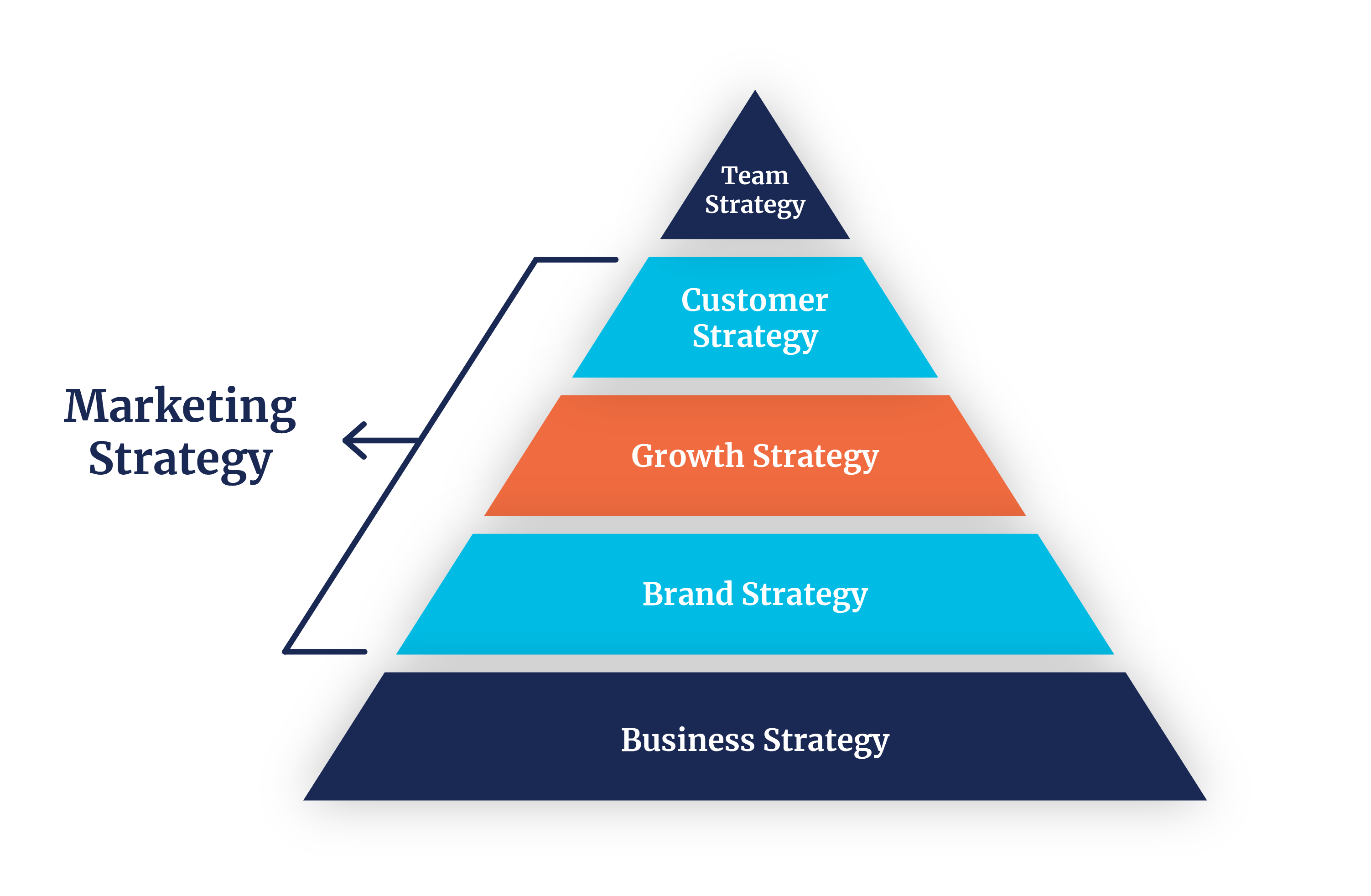
The marketing strategy pyramid provides a robust framework for developing a comprehensive strategy. The pyramid consists of three primary layers: brand strategy, growth strategy, and customer strategy, all built upon the foundation of your overarching business strategy.


Brand Strategy: Focus on identifying your ideal customer, refining your messaging to solve their biggest problems, and ensuring your visual identity supports your brand promise.

Growth Strategy: Employ tactics to attract, build trust, and convert prospects into customers. This includes content creation, advertising, and communication strategies that drive sales and create awareness.

Customer Strategy: Develop an excellent post-sale experience to wow customers, retain them, and generate referrals. This involves creating a seamless onboarding process, maintaining ongoing communication, and ensuring customer satisfaction.

Team Strategy: Ensure your team is aligned with your business, brand, growth, and customer strategies to deliver a consistent and high-quality experience.


Topics I Cover:

[00:00] Introduction to the marketing strategy pyramid.
John Jantsch explains the comprehensive nature of integrated marketing strategies and why they must be continuously refined and improved.

[01:34] The essence of marketing strategy.
Jantsch emphasizes that marketing strategy is about how you compete and dominate in your market, supporting overarching business objectives.

[03:17] The three layers of the marketing strategy pyramid.
A detailed breakdown of the pyramid’s layers: brand strategy, growth strategy, and customer strategy, and how they integrate to form a solid marketing approach.

[04:14] The foundational business strategy.
Before planning marketing activities, it is important to align marketing strategies with business goals and understand profit targets and market share objectives.

[05:12] Brand strategy components.
Identifying ideal customers, refining messaging, defining brand personality, and ensuring visual elements like logos and colors align with your brand promise.

[06:55] Growth strategy elements.
Discussing tactics for attracting and converting customers, including content creation, advertising, and sales communication.

[07:57] Customer strategy insights.
Highlighting the importance of a stellar post-sale experience, customer retention, and generating referrals to build a loyal customer base.

[09:01] Team strategy integration.
Ensuring that your team is aligned with your strategies and can deliver a consistent and high-quality customer experience.

By understanding and implementing the marketing strategy pyramid, you can create a seamless and effective marketing approach that supports your business objectives and drives growth.


John Jantsch (00:00): I think that this definition, this pyramid, this graphic, offers a much more comprehensive view of how integrated marketing or strategy needs to be. It’s not just a one-time thing that we do. It never ends. You’re always refining and making it stronger based on these three elements.

(00:25): Hello and welcome to another episode of the Duct Tape Marketing Podcast. This is John Jantsch and no guest today. I’m actually just going to chat solo today and I want to address a burning, burning question or one of those things out there that I think just has gone unanswered for too long, and that is what is marketing strategy. Now, don’t click off or next or set it at three times speed or whatever it is that you do to fast forward through things because you think you’ve heard this before. I think that I am going to present, or at least that’s my attempt today to present to you an idea about marketing strategy to show you once and for all what I believe is the way that we need to look at it. Now, there’s a lot of confusion on this. I know that if I poll 10 people, that I’m going to get 10 different answers on what marketing strategy is, and I’m going to suggest eight of them would be wrong or maybe just have one piece of it and certainly you turn to the Google and ask and you’re going to get presented a whole bunch of tactics.

(01:34): Marketing strategy is really the through line for how you’re going to compete. So if I were going to give it a kind of an emotional definition, it’s the place or the way you’re going to place the flag in the sand to say, here’s how we’re going to compete, or better yet, here’s how we’re going to dominate. But that’s probably not very helpful in terms of, okay, how do you do it or what do you do or how do you explain it? So I want to today to present to you something I call the marketing strategy pyramid to show you that there are components to this and that they all actually need to be integrated and working together. There is no one magic marketing strategy or marketing tactic. It’s really more about the integration, and that’s really what we do for when we work with clients, something we call strategy first.

(02:23): It’s what we also teach to other agencies to do, and it really is built on this pyramid, or at least I think this is the way we all need to start thinking about the comprehensive nature of marketing strategy. So I’m going to use this fancy tool here, stream deck to show you a slide at the same time I disappear into the corner of the slide. So if you’re just listening to this, you’re not seeing the graphic, but if you watch the video, or you certainly will have the graphic at Duct Tape Marketing, and when you go consume or if you go consume the actual post, imagine if you will, or those of you looking at it, can see it that there is a pyramid that has five layers to it, and the middle three layers are really the marketing strategy component. But even those, quite frankly, need to rest on the overarching business strategy.

(03:17): When we come in to work with somebody, and we are there primarily, or at least initially to create a marketing strategy, we don’t do it based on what we think they ought to do or what we think. There’s certainly of our experience we bring to it. But the main thing we are doing, the main thing, that marketing strategy and then the list of tactics to employ that strategy are there to do is support the overarching business objectives. So if growth is a business objective, if dominance in a market is a business objective, if retention say of clients is a business objective, then the marketing strategy is built around that and only that to begin with. So the very first thing we do in working with a client is try to understand where they’re going, try to understand the profit that they want to make in this business, try to understand the market share that they want to enjoy before we ever start really suggesting anything.

(04:14): And unfortunately, very few marketers actually take that approach. Very few business owners actually take that approach. They want to hire a marketer to generate some leads, and frankly, I think that leads them often to doing a whole bunch of things they shouldn’t do, let alone maybe not focusing on the things that are actually going to allow them to meet their marketing objectives. So that’s step number one. That’s job number one. Before we can even start going. But then what I want to suggest is that, or what we do is we then break marketing strategy into three distinct parts, brand strategy, growth strategy, and customer strategy. And the reason is that I believe that this is how somebody effectively moves through a business. This really reflects the marketing journey inside of marketing strategy. A lot of times people end marketing strategy with a clever tagline and colors and logos and call it a day.

(05:12): And what I want to suggest is a marketing strategy actually runs through the entire customer journey, the entire momentum that you’re trying to build inside of a journey. Now we use something called the marketing hourglass. I know many of you have heard me talk about that. That’s another tool that we use to reinforce this idea of the customer journey. But the three components, brand, strategy, growth strategy, customer strategy, brand strategy is where we will actually help identify who makes an ideal customer, narrow the focus to who makes an ideal customer, quite frankly, and really define the products and services that customer is looking for. We also are going to focus a great deal of attention on messaging. Are we promising to solve that ideal customer’s biggest problem as opposed to here’s what we sell, so nobody cares what we sell, they want their problem solved.

(06:03): So we’re going to focus the brand strategy on that. Then obviously things like personality, how do we want to be perceived? Are we fun? Are we very serious? Are we analytical? I mean, those are all things that come into the overarching decision about how we want to then produce things like content. And then lastly, and frankly, a lot of people put this first, when you say the word brand, we want to make sure that the names and colors and graphics and logos and things all support the message and the brand promise that we are trying to put out there. So that’s the first part of marketing strategy. The second then is probably the part that most people spend a lot of time on, and that’s the growth strategy. What are the actual tactics we’re going to use to attract, to build trust, to actually get people to try in some cases and then buy from us?

(06:55): So it’s all the sales things, it’s all of the communication. It’s a great deal of content that moves people through that stage. Certainly it’s advertising, it’s all the things that create awareness. And then the last piece of this is the customer strategy. Okay, what happens after somebody says yes? Do we have a marketing strategy or is part of our marketing strategy making sure that we have an amazing experience to onboard people, to really wow them in the first 90 days to communicate, to upsell and resell them, to retain them, to actually generate referrals? Those are all the components that go then into the customer strategy component of the marketing strategy pyramid. So everything is built on this base foundation of the business strategy. Those three layers of brand strategy, growth strategy, customer strategy, really allow us to intentionally focus on creating an amazing customer journey and attracting the right clients who expect to pay a premium.

(07:57): In fact, we’ll pay a premium now because we’ve focused on building trust, create a great buying experience, create a great customer experience. Those three things all get mapped together as we build a marketing strategy. And again, I think that this definition, this pyramid, this graphic offers a much more comprehensive view of how integrated marketing or strategy needs to be. It’s not just a one-time thing that we do. It never ends. You’re always refining and making it stronger based on these three elements. Now, I would be remiss if I didn’t add the fifth, the point of the pyramid, if you will, and that’s team strategy now. And quite often the business objectives, the brand strategy, the growth strategy, the customer strategy, are delivered by people in your organization, delivered by your team. Certainly as you grow, in many cases, you start having frontline people who are interacting with prospects and customers, and leadership is really not in tune with that.

(09:01): So you have to actually then understand how your business strategy, how your brand strategy, growth strategy, customer strategy, is both communicated and set into really a process that can be delivered by the team in the way that holds the brand promise, in the way that build allows you to build revenue and grow as your business strategy has suggested and certainly allows people to have a great experience anytime they’re interacting with anyone in your organization. So their overarching business really builds on this business strategy, has marketing strategy in the middle, and it’s really the cherry on top is then the team strategy that is going to deliver on all this. So you have to build it first, you have to then communicate it, and then you have to execute on it. But taking this, what I believe is a much more comprehensive view of marketing strategy is how you do it. So that’s it for today. If you would love to hear more about how we build that marketing strategy, certainly reach out John at Duct Tape Marketing and love to talk to you about building a marketing strategy for your organization that takes this comprehensive approach. You can also get some free resources at DTM world slash growth. Alright, till next time, take care.

Testimonial (10:25): I was like this founded. I founded. This is what I’ve been looking for. I can honestly say it has genuinely changed the way I run my business. It’s changed the results that I’m seeing. It’s changed my engagement with clients, it’s changed my engagement with the team. I couldn’t be happier. Honestly, it’s the best investment I ever made. What

John Jantsch (10:42): You just heard was a testimonial from a recent graduate of the Duct Tape Marketing certification intensive program for fractional CMOs marketing agencies and consultants just like them. You could choose our system to move from vendor to trusted advisor, attract only ideal clients, and confidently present your strategies to build monthly recurring revenue. Visit DTM world slash scale to book your free advisory call and learn more. It’s time to transform your approach. Book your call today, DTM World slash Scale.


The Power of Hospitality: Secrets to Successful Retreats

The Power of Hospitality: Secrets to Successful Retreats written by John Jantsch read more at Duct Tape Marketing

The Duct Tape Marketing Podcast with AJ Wilcox

In this episode of the Duct Tape Marketing Podcast, I interviewed Kevin Rains, an expert in the hospitality industry and founder of Dappled Light Adventures, a company specializing in creating unforgettable retreat experiences. Kevin Rains is renowned for his innovative approach to hospitality and ability to transform ordinary spaces into extraordinary destinations. His background in community building and family-man personality offer a comprehensive guide to building and managing successful business retreats.

Kevin Rains’ love for nature and extensive experience with hospitality and retreat management provides listeners with practical tips and advanced techniques to enhance their retreat offerings. He explains the importance of understanding guest needs, the role of personalized experiences, and creating a welcoming environment that encourages relaxation and connection. This episode is a must-listen for anyone looking to elevate their business retreats and achieve outstanding results.

Key Takeaways

We’ve all considered a business retreat to rejuvenate our teams, but have we considered what makes them truly successful?

Kevin Rains and I discuss the rising popularity of business retreats and their unique advantage in fostering team cohesion and innovation. He stresses the importance of crafting personalized experiences and creating an environment that feels like a home away from home.

Kevin Rains shares strategies for effective retreat planning and execution, emphasizing the need for clear goals and robust logistical support. He states that attention to detail, understanding guest preferences, and creating memorable moments are essential for driving satisfaction and repeat visits. In this episode, you’ll learn how to design impactful retreats, why personalization matters, and why all these strategies are crucial for long-term success in the hospitality industry.


Questions I ask Kevin Rains:

[01:20] Could you share your background, especially your successful journey with your auto body business, and what led you to where you are today?

[03:06] What inspired you to start this venture? Was it purely a business opportunity, or was there a deeper drive, perhaps influenced by your ministry?

[04:26] What challenges did you encounter in turning a private residence into a retreat center? Were there issues with zoning, neighbors, or large-scale construction?

[06:29] You mentioned focusing on short-term rentals like Airbnb. Now, you’re shifting towards hosting retreats. What are you learning about what you need to offer for such events?

[10:59] How do you plan to impart the same connection with the land to your guests as you have? Is it challenging to create that ambiance for temporary visitors?

[12:47] What differences have you noticed between hosting business retreats and family reunions? Are there unique challenges or advantages?

[16:29] What are the logistics for hosting events? How many people can attend, and do you offer catering services?

[18:47] Do you have any advice for families or individuals considering starting their retreat center?

[19:55] For those unfamiliar with the area, Can you describe the location of your retreat center in central Kentucky?

[21:09] Where can people find more information about your facility, Dappled Light?


More About Kevin Rains:


Like this show? Click on over and give us a review on iTunes, please!

Connect with John Jantsch on LinkedIn


This episode of The Duct Tape Marketing Podcast is brought to you by ActiveCampaign

Try ActiveCampaign free for 14 days with our special offer. Exclusive to new customers—upgrade and grow your business with ActiveCampaign today!


Kevin Rains (00:00): Women tend to to talk to each other face to face. Men like to be facing the same direction. It feels safer for them to share more openly. So having these two seater UTVs going off road and we’re driving together and there’s an adventure element, once again, it allows…

John Jantsch (00:20): Hello and welcome to another episode of the Duct Tape Marketing Podcast. This is John Jantsch. My guest today is Kevin Rains. He’s a devoted husband, father of three and grandfather who’s always embraced the joys of the outdoors. As a former body shop owner, entrepreneur, marketer, off-road writer and fisherman, some of my favorite things there, Kevin has prioritized family nature throughout his life. In 2021, he and his family transformed their 50 acre property in zoo Kentucky into a haven for outdoor adventures and simple living where they’ve created lasting memories for over 15 years. So Kevin, welcome to the show.

Kevin Rains (00:57): Thank you. Honored to be on excited.

John Jantsch (00:59): You and I have known each other for some time, like everybody knows each other these days right on the internet, but I’ve followed your journey, entrepreneurial journey, especially in the autobody days. So I thought this is a little different take on a show, but I frankly, I’ll just be honest, I had a personal interest in learning about it, so why not record it? So maybe give us a little background because I know you had a very successful autobody business that I believe you sold, and so I’d love to hear a little bit about your journey as an entrepreneur and then obviously where we are, where you got to today.

Kevin Rains (01:34): Yeah, so I started my career in the ministry actually in my twenties and early thirties. Pivoted into the family business when I was 33 and felt like I had a bit of a knack for that and started to grow in large part thanks to your books and learning. Coming out of Bible college, they did not teach marketing, so I had to learn it from John Jansch, and I learned step by step course by course, book by book, pieced it together. Eventually grew to five locations. So we went from doing about $250,000 a year in revenue to doing over $12 million a year in revenue and private equity. Came knocking on my door, wasn’t interested. They told me their number. I was interested, and that shifted quickly. So I thought I was going to retire. I was 50 51 at the time and thought, this is it. I’m going to kind of cash you out and do a lot of fishing.

(02:25): And quickly realized that I was not made for retirement. So my kids came to me and said, Hey, let’s do something different. Let’s do something else. I said, what do you want to do? They said, why don’t we start by developing these 50 acres we’ve owned for at that point, 18 years in zoo, Kentucky, and here we are, we’re building it out. We have 10, sorry, 11 rentable structures on the property. Now after a couple years, we’ve been doing a short-term rental business, and we’re pivoting now into more of a retreat business. So it’s been 80% short-term rental, 20% retreats. We’re just going to try to flip the script on that and go 80% retreats, 20% short-term rental starting in 2025.

John Jantsch (03:05): Well, first off, maybe what was your inspiration? I mean, what made you think, other than this is a what I want to do next or a business opportunity, was there any sort of driving, I’m envisioning the ministry playing a part, maybe even in just the retreats. I mean, was there any drive towards we want to have this place where people can gather?

Kevin Rains (03:24): Yeah, definitely. It’s not connected to any religious tradition. Our retreat center is not, but as a pastor, I would take retreats. I’d go to different, I went to monastery for a week at a time, at least twice a year, and that would fill me up and fill the pipeline with ideas and things that I could teach on to the church and all that. And it’s just always been a part of my personal formation as a person and how I’ve lived my life. And one of the things we talked about as a family is we have a high value for hospitality. So we said, what can we do to open this property up? We had really protected it for almost 20 years, 18 years, just for our family. And then we thought through the gift of hospitality, what would it look like to really open this up, use some of the resources we had gotten from the sale of our businesses and put those to work in a setting where we could invite more people onto this property. So I think that was the inspiration was kind of like my early formation going on retreats and then our family deciding together, we want to use our gift of hospitality and open it wide up.

John Jantsch (04:26): So what challenges did you run into turning a private resident, zoning, crazy neighbors, whatever it might be, and just even construction, large scale construction. What did you learn? What were the challenges? How hard was it?

Kevin Rains (04:43): So when we started this in 21, we didn’t have any utilities on the property. So my family would go there. We would basically be, at first, we would just literally camp and over time we’d get a trailer, but we didn’t have any running water, so we’d have to carry our water in. There was no place to really prepare foods. We had to learn to cook over the open fire. We eventually built a yurts on a cliff edge on one side of the property that became the foundation for a cabin that we built. It was kind of an off-grid cabin for all that time. So the earliest challenges were actually not zoning, believe it or not, that part of the world, central Kentucky, they don’t care what you build, as long as it’s like, honestly, I can’t think of it. We went to the building department and said, please give us any warning or restriction because we want to do this, right? They said, honey, it’s your property. You all do what you want. And we’re like, okay, well, we did. And cooling all those utilities on was probably the biggest challenging. So we wanted to bury the utilities. So we have, there’s no electrical lines running on the property, so everything’s in the ground, the water, the electric internet, everything is run under our driveway now. And then we branch out from there to the various structures.

John Jantsch (05:52): And then most of the buildings then outbuildings were built from scratch. Well, then

Kevin Rains (05:58): That’s correct. Yeah. We had a contractor come in and they started drilling posts in the ground and we built decks and then we put tents on top of those. Now we’re building a 2000 square foot, we call it the rookery, which is a place where birds gather because all of our tents are named after birds because they’re elevated in the canopy, so they’re kind of in the tree, like tree house type places. So we’re calling it the rookery, and it’s going to be a couple thousand square feet with a 2000 square foot deck. So great place for retreats to gather in that space.

John Jantsch (06:29): So I think we were chatting a little bit before we jumped on the air, and you said that to date, it’s been a lot of short-term rental, Airbnb kind of thing, but you are now really trying to move towards people having retreats, maybe coming in, reserving the whole facility. Are you just kind of learning what you have to offer for that kind of thing, ways to, whether they’re activities or adventures that you need to add? What’s that going to look like, you think?

Kevin Rains (06:55): Yeah, great question. So the area is really well known and it balloons in population on the weekends and in certain seasons. So there’s an underground kayaking area, there’s canoeing, there’s rock climbing all around us. There’s guided hikes and climbing. So there’s all kinds of, it is an outdoor enthusiast dream because of the way the cliffs are constructed. And we have great hiking on our property and we have access to Daniel Boone National Forest coming off of our property. So we’ve hiked, I think we hiked seven miles one direction with no trail in the national forest, just to see how far we could get and if we ran into anything, saw nothing. So we have this beautiful playground and we’re just introducing people to it. There’s a 200 foot waterfall that cascades off of our property into the national forest. People can hike down there. So we’re trying to think of some things we could do maybe eventually like a ropes course or some other things on property. But the area is so rich with opportunity. We feel like our main role is really to host people and create a very comfortable place for them to be as a base of operations for their own adventures.

John Jantsch (08:04): I’m curious, how are you running this as a family business then? The kids are all, everybody’s involved. So I’m curious, how has moving to hospitality business in a way changed any impacted your family dynamic at all? Because obviously that’s different than going to work and working on the cars now we’re hosts. What has that done to the family dynamic? I’m curious.

Kevin Rains (08:25): It’s been interesting. So it was a chance for my kids to kind of elevate into, because at the time they were coming into my business, we were already three, four shops at that time, ended up with five. So they kind got slotted as customer service reps or helping me manage the part room or something kind of simple. My daughter helped me organize my office and create an operations manual for our office team at the time. She was 17, believe it or not. But I did put ’em into some roles. It may have been a little bit outside to give them a chance to spread their wings, but now it feels like they’re really kind of at the top of an organization that’s going to grow over time. So we’re starting fairly small. We’ve invested a few million dollars at this point. So it’s definitely starting to be built out.

(09:12): We’re not seeing a big return on that. So they’re having to think through how do we do marketing? How do we sell retreats? How do we handle HR for this size of organization? So they’re learning the resource constraints that I had early on as a business owner. I’m letting them experience that as we go. And the secret for me is like I don’t care if it turns money for the next couple years, but at some point it’s going to need to so I can be patient even though I watch them kind of freak out about trying to get the break even.

John Jantsch (09:46): It’s my pleasure to welcome a new sponsor to the podcast. Our friends at ActiveCampaign. ActiveCampaign helps small teams power big businesses with the must have platform for intelligent marketing automation. We’ve been using ActiveCampaign for years here at Duct Tape Marketing to power our subscription forms, email newsletters and sales funnel drip campaigns. ActiveCampaign is that rare platform that’s affordable, easy to use, and capable of handling even the most complex marketing automation needs. And they make it easy to switch. They provide every new customer with one-on-one personal training and free migrations from your current marketing automation or email marketing provider. You can try ActiveCampaign for free for 14 days and there’s no credit card required. Just visit activecampaign.com/duct tape. That’s right. Duct Tape Marketing podcast listeners who sign up via that link. We’ll also receive 15% off an annual plan. That’s activecampaign.com/duct tape. Now, this offer is limited to new active campaign customers only.

(10:51): So what are you waiting for? Fuel your growth, boost revenue and save precious time by upgrading to active campaign today. I’m curious, you talked about a lot of people that really love outdoors experiences. It’s not just the doing, it’s actually the being in a relationship with land. I’m curious if bringing guests onto that, if that’s going to, are you going to be able to impart that same sort of feeling or ambiance, and I’m making some assumptions that you have for the land itself now that you’re bringing in guests that are going to be there very temporarily. How do you get them to experience that?

Kevin Rains (11:29): Yeah, that’s a great question. I would say that initially a lot of the retreats that we’re running are people that we know love and trust to use your language. So we’re being very selective about some of the early days of people that we do bring on to the property. They share many of our values. They understand how important this space is to our family. Now through the short-term rental, there’s been a lot of people on the property that we don’t really know,

(11:55): But it’s been an opportunity to get to know other people and to bring them into the fold. So I travel down as often as I can. My son travels down very regularly and we have an onsite property manager as well who welcomes people onto the property. So I think having eyes on the property is helping us feel a little level of comfort about, it’s just not come one come all. We have a gate at the front and we’re kind of making it a secure environment for people to feel safe and to have an experience that their family can enjoy. And we make it clear that this is really for families

John Jantsch (12:30): Just because a lot of my listeners expect me to talk about business and entrepreneurial ventures. Have you had business retreats? And if so, what have you learned from doing those? Because I’m sure they run a little differently. And again, I’ll stop there and just ask one question at a time. What have you learned from hosting some business retreats and how they kind of differ from say, the family reunion?

Kevin Rains (12:54): Yeah, great. It’s interesting. One of the things I found that I actually love is when you get men in particular around a fire, sometimes there’s an adult beverage and a cigar involved in that as well. But the fire, the adult beverage is cigar. The relaxed environment, it really tends to open people up, especially men who may not be as open with their feelings or how they’re really doing or peeling that onion or not trying to posture or position. So I’ve taken several retreats that led several retreats there with small business owners from my area who want to scale, who want to leave a legacy, who want to do what my family’s been able to do and enjoy that space with them and get them into an environment where they can start to open up. So I love getting around that fire. Sometimes there’s tears, there’s always laughter.

(13:42): It’s a place of transparency. Transparency. The other thing that we do along those lines is we have side-by-side, kind of those off-road vehicles. And I don’t know, I’d have to do a little more research on where this came from, but I’ve heard that women tend to talk to each other, face-to-face. Men like to be facing the same direction. It feels safer for them to share more openly. So having these two seater UTVs going off road and we’re driving together and there’s an adventure element, once again, it allows some of those walls to fall. So retreats for me are really about helping business owners lower their defenses and get real and honest about what’s really going on in their life and their business.

John Jantsch (14:27): So on that vein, have you seen a lot of times, I do a lot of events and we some struggle with how much downtime or playtime versus say, working on whatever it is. Ostensibly we came there to work on have you seen some mixes or best practices or even ways in which people have incorporated those two

Kevin Rains (14:51): Of the opinion? And it may not be the majority opinion that whatever needs to be talked about will get talked about. So I go very low on the curriculum side for my retreats, and I trust my own facilitation skills in that moment to kind of pull the group together to talk about what we need to talk about. Sometimes it is a business topic and I’m more than comfortable talking through those topics as well as family or personal challenges that they may be facing. So we’re not trying to pigeonhole people and say, come to a retreat, and you end up crying and sharing your heart and going through all the layers, and it’ll be like therapy. That’s not the point. It’s just the point is to let them be the curriculum so the content comes out of whatever they bring into the retreat versus me having a script or a pre-packaged. I love teaching, I love content, I love books. But I also think there’s, the wonderful thing about retreats is it’s kind of open-ended, and I can bring some of those things I’ve learned to bear on their real call ’em live animals, whatever live animals they come with, we wrestle with those

John Jantsch (15:59): Well, and even people that go to conferences constantly comment on, I heard some good things in the meeting rooms or in the keynote, but it was the three or four conversations I had at break that really made the difference. And you hear that all the time, and I do think there’s a real feeling by event organizers still like, let’s pack a whole bunch in. But sometimes you just bring people together around an idea and just see what happens.

Kevin Rains (16:23): That’s it. I think it could

John Jantsch (16:24): Feel scary, but yeah. So let’s go over the numbers. How many people could come to an event? Is it get catered? I mean, what are the logistics?

Kevin Rains (16:37): Yeah, so if you could imagine that the 10 rentable structures, each of the tents are set up very well appointed hotel rooms. We have large like queen size or even king size mattresses, Tempur-Pedic, wonderful pillows. They’re beautifully designed. They’re probably a few hundred square foot. I think they’re 310 square feet each. So it’s a big space of big room. So you could put one person. So when I do men’s retreats, one guy in each tent, so they have solitude. If we do a couple’s retreat, then it’s like obviously two per tent. So if it’s a couple’s retreat, easily 25 people. And then we work with a local barbecue joint. There’s a kind of a grass fed beef that does hamburgers and tacos. Also in our area, we partner with local restaurants to bring food on. The rookery that we’re building is going to have a nearly almost like commercial grade kitchen in it. And our dream is to bring chefs down for certain retreats so that there can be meals prepared on site that are healthy, beautiful, and delicious. So that’s the dream. But I’d say our retreats tend to be anywhere from five to six people all the way up to 25, even 30 once the rry is completed.

John Jantsch (17:56): And any plans for making it a hundred person place or is this kind of the intimate sort of scope that you want?

Kevin Rains (18:04): Yeah, so I have a partner in that area and we’ve bought up more property down there. So we have about 500 acres in that area, and we’re currently using seven acres. So yeah, the long-term answer is yes, we plan to go bigger, but we want to get really good at those five to 25 retreats before we start thinking about more conference level type stuff.

John Jantsch (18:31): So any advice that you would give now? I don’t know that there’s going to be a lot of people listening to say, I’m going to build a retreat center myself. But to majorly pivot, whole different industry, whole different skillset, whole different customer based, different vibe, everything. Is there any advice or something you’ve learned along the way to somebody, a family or an individual that was contemplating their next thing?

Kevin Rains (18:55): I would say that I’ve learned most of what I’ve gained over the last 20 years of being in business applies to what I’m doing now. So there’s not a huge disconnect. It’s still we want to do great customer service now we call them guests. Previously, I called them customers. But really it’s the same idea. We’re dealing with people that need to be cared for and given an effortless experience and done, they need to be communicated with in a way that’s meaningful and helpful to them. So a lot of those skills are highly transferable, I would say if somebody’s considering a big pivot to feel like you’re not starting over, you’re just taking what you’ve learned and you’re applying it in a different context. And for us, it’s like any fears that I had around, could we do this or not? Over the last two years have been completely set aside. Our confidence is very high that we can make this happen, drawing on the skills we’ve learned in our previous enterprises.

John Jantsch (19:55): So how would you describe where Z Kentucky is?

Kevin Rains (19:59): It is in central Kentucky, so it’s probably about an hour east of Lexington, so it’s not easy to get to. It’s a couple hours from Cincinnati, an hour from Lexington, a couple hours from Louisville. So some of those major metropolitan areas, like three hours from Nashville. So it’s not always easy to get to the payoff is the cliff edges. We could have bought property a lot closer, but to have these 200 foot soaring cliffs on one whole side of our property, you can’t get that within an hour of Cincinnati. So we feel very lucky to have what we have.

John Jantsch (20:34): Yeah, I spent some time, what’s the national park in Kentucky? Down in Southern. It’s a cave, wind cave or something like that. Right?

Kevin Rains (20:41): Mass

John Jantsch (20:42): Cave. Mass cave. There we go. So I’m envisioning some of that same limestone.

Kevin Rains (20:46): It’s a lot of limestone, some sandstone, Mitch, which makes it really good for climbers. I don’t know a lot about climbing. I’m not built for climbing. I’m more built for podcasts. But the climbers tell me the way the rock formed down there, it’s just ideal. So it’s a world-class. It shows up in almost every climbing magazine every month

John Jantsch (21:03): Somehow. Oh wow. Wow. Awesome. Well, Kevin, again, I appreciate you stopping by the Duct Tape Marketing podcast. Where would people connect with you or certainly find out about a facility, which I don’t even think we’ve mentioned. The name Dappled Light, is that right?

Kevin Rains (21:17): Yeah, that’s right. Dappledlightadventures.com. So dappledlightadventures.com, everything’s there. You could see our facilities, you could reach out. If you email us there, you’ll get to my son Isaac. But would love to have any dialogue with people who are interested either in retreats, talking about a business pivot or want to talk about the hospitality industry. Things that we’ve learned in our first two years. I’m an open book.

John Jantsch (21:40): Alright, awesome. Again, I appreciate you stopping by. Hopefully we’ll run into you soon. One of these days out there on the road.

Testimonial (21:55): I was like this. Found it. I found it. This is what I’ve been looking for, I can honestly say has genuinely changed the way I run my business. It’s changed the results that I’m seeing. It’s changed my engagement with clients. It’s changed my engagement with the team. I couldn’t be happier. Honestly. It’s the best investment I ever made.

John Jantsch (22:11): What you just heard was a testimonial from a recent graduate of the Duct Tape Marketing certification intensive program for fractional CMOs marketing agencies and consultants just like them. You could choose our system to move from vendor to trusted advisor, attract only ideal clients, and confidently present your strategies to build monthly recurring revenue. Visit DTM.world/scale to book your free advisory call and learn more. It’s time to transform your approach. Book your call today, DTM.World/Scale.

Weekend Favs August 3rd

Weekend Favs August 3rd written by John Jantsch read more at Duct Tape Marketing

My weekend blog post routine includes posting links to a handful of tools or great content I ran across during the week.

I don’t go into depth about the finds, but I encourage you to check them out if they sound interesting. The photo in the post is a favorite for the week from an online source or one I took on the road.

  • FlowChat: a tool for managing social media conversations and leads, automating outreach, and enhancing engagement across platforms.
  • Muraena: an AI-driven B2B lead generation platform that automates the process of finding and engaging potential clients to improve sales.
  • UpMyInfluence: a B2B sales consulting agency that helps businesses build authority and generate high-ticket sales through personalized sales strategies and relationship-building.

These are my weekend favs; I would love to hear about some of yours – Connect with me on Linkedin!

If you want to check out more Weekend Favs you can find them here.

Mastering LinkedIn Ads: Transforming Clicks into Clients

Mastering LinkedIn Ads: Transforming Clicks into Clients written by John Jantsch read more at Duct Tape Marketing

The Duct Tape Marketing Podcast with AJ Wilcox

In this episode of the Duct Tape Marketing Podcast, I interviewed AJ Wilcox, a LinkedIn Ads expert and founder of B2Linked, a company specializing in LinkedIn Ads account management. Wilcox is renowned for his in-depth knowledge of LinkedIn’s advertising platform and his ability to optimize ad campaigns for maximum ROI. His insights provide a comprehensive guide to transforming clicks into clients through effective LinkedIn Ads strategies.

AJ Wilcox’s extensive experience with LinkedIn Ads offers listeners practical tips and advanced techniques to enhance their B2B marketing efforts. He explains the nuances of LinkedIn’s advertising tools, the importance of targeting the right audience, and how to create compelling ad content that resonates with professionals. This episode is a must-listen for marketers leveraging LinkedIn Ads to drive business growth and achieve substantial results.

Key Takeaways

I know we’ve all clicked on a Facebook ad or two before, but have we clicked on a LinkedIn ad? Though we see them every time.

AJ Wilcox and I discuss LinkedIn ads’ rising popularity and unique advantage in B2B marketing. He stresses the importance of optimizing ad spend and creating high-impact content. He shares strategies for effective targeting and measuring success, ensuring every dollar spent contributes to achieving marketing goals. He states clear messaging, strong visuals, and robust targeting options are essential for driving engagement and conversions.

In this episode, you’ll learn how to hack LinkedIn Ads, why Meta struggles to compete, and why all these strategies are essential for long-term agency growth.


Questions I ask AJ Wilcox:

[01:56] What challenges do B2B clients face when using LinkedIn ads effectively, and why do they often find them expensive and inefficient?

[04:45] Can you explain why many businesses struggle with LinkedIn ads and how your approach differs to ensure success?

[05:35] How does the concept of thought leadership integrate with LinkedIn ads? Can you describe the process and benefits of using a boosted post strategy?

[08:21] What common pitfalls should be avoided when running LinkedIn ads to maximize their effectiveness and avoid wasting money?

[14:29] Do you have a specific methodology for managing LinkedIn ads, especially for those new to it or managing multiple clients?

[15:50] Does LinkedIn offer a business manager platform similar to other social media networks?

[18:30] How effective is the strategy of selling a low-ticket item first to convert LinkedIn ad leads into long-term customers?

[19:37] Where can people learn more about your work or connect with you for further insights on LinkedIn advertising?


More About AJ Wilcox:


Like this show? Click on over and give us a review on iTunes, please!

Connect with John Jantsch on LinkedIn


This episode of The Duct Tape Marketing Podcast is brought to you by ActiveCampaign

Try ActiveCampaign free for 14 days with our special offer. Exclusive to new customers—upgrade and grow your business with ActiveCampaign today!


Testimonial (00:00): I was like, I found it. I found it. This is what I’ve been looking for. I can honestly say it has genuinely changed the way I run my business. It’s changed the results that I’m seeing. It’s changed my engagement with clients. It’s changed my engagement with the team. I couldn’t be happier. Honestly. It’s the best investment I ever made. What

John Jantsch (00:17): You just heard was a testimonial from a recent graduate of the Duct Tape Marketing certification intensive program for fractional CMOs marketing agencies and consultants just like them. You could choose our system to move from vendor to trusted advisor, attract only ideal clients, and confidently present your strategies to build monthly recurring revenue. Visit DTM world slash scale to book your free advisory call and learn more. It’s time to transform your approach. Book your call today, DTM World slash scale.

(01:03): Hello and welcome to another episode of the Duct Tape Marketing Podcast. This is John Jantsch. My guest today is AJ Wilcox. He is a LinkedIn Ads Pro who founded b2linked.com, the LinkedIn ads agency in 2014. He’s managed over 150 million in spend on the platform and he’s an official, or his company is an official LinkedIn partner. He is also the host of the LinkedIn Ads Show podcast has managed five of the world’s top 10 LinkedIn ads account. So aj, welcome to the show.

AJ Wilcox (01:35): Thanks so much, John. I’m excited to be here.

John Jantsch (01:37): I think we’re going to be, I saw your name somewhere. I’m speaking marketing profs maybe, or agents have Change Marketing World

AJ Wilcox (01:44): Or Inbound Agents of

John Jantsch (01:45): Change for sure. Okay. All right. So one of those coming up, depending upon when you’re listening to it, the fall of 2024, so I was saying all air. I wanted to have a LinkedIns ads specialist on the show because I hear from so many of our clients, particularly B2B clients who feel like, Hey, my target market is on LinkedIn, but I can’t figure out how to do LinkedIn ads. I’ve tried, they’re just expensive. So give me the high level. Maybe start with why everybody else is failing and you’ve cracked the code on it. What are they doing wrong?

AJ Wilcox (02:15): Yeah, so LinkedIn ads, as you compare it with any other platform, they look very similar, especially to Meta, but they act very differently. The really big positive we get, this is the reason why people, they just, even if they failed at LinkedIn ads, they keep getting drawn back, no substitute for the audiences that you can reach there. You can target people by their job title, their seniority, their size of company, their industry, and it just goes on and on. So LinkedIn owns, they have an absolute monopoly on our business data. So if you’re trying to reach a specific B2B professional, it’s the only way to go. But the challenge that everyone finds is, wow, the costs are three to five times higher than meta. They’re oftentimes in line with Google, and when you’re paying bottom of funnel kinds of prices, but your traffic acts like top of funnel, there’s always going to be a little bit of friction there.

John Jantsch (03:07): Well, one of the things that I find, I mean I’ll be the first minute. I mean, I don’t hang out on Facebook and frankly I go to LinkedIn for some engagement and things, but I’ve probably clicked on ads in Facebook. I don’t know that I’ve ever clicked on an ad in LinkedIn. Is that just me? Is that because the environment is so different that they haven’t kind of gamified it the way that the Facebook seems to have? Again, I’m willing to be completely wrong on this, but I, I’m in the same camp as the people that I haven’t been able to figure it out either. So help me out. Is the environment different in a way that makes us respond to ads differently there?

AJ Wilcox (03:45): It definitely could be. We find that when we launch a normal ad, because a normal ad will show as being from a company and you see a company post, come down your feed and you’ve never seen or heard of that company before. Most of the time you’re just going to keep scrolling. We see the average click-through rate being half of a percent, so 200 people scroll past your ad, one’s going to click on it on average. All of that changes when just last year, LinkedIn released something called Thought Leader ads. This is the ability to promote an individual’s post on LinkedIn and we see click-through rates. Being anywhere between about 2% on the low end to 11% is as high as I’ve seen. And so I think the fact that it’s coming from an individual, not a faceless organization, totally changes those mechanics.

John Jantsch (04:31): And you opened the door there. I was going to go certainly down the thought leader ads track because it seems, I mean definitely what you just explained, I’m more on LinkedIn. I’m way more likely to engage with a person, and in a lot of ways that’s what you’re saying a thought leader ad is. Tell me a little bit about how it works. Like you do a post and then that ad, it’s almost like a boosted post if

AJ Wilcox (04:53): You will. Exactly, yeah. You’re boosting an individual’s organic post that they put on LinkedIn, and it used to be that it could only be an employee, so they had to be an employee of your company in order to boost. But here, just a few months ago, they gave us the ability now we can boost anyone’s post so long as they have to give approval. So this opens us up to influencer promotions, customer testimonials, all of those kinds of things that are

John Jantsch (05:21): Well, or even just agencies, right, running the campaigns. Right. Yeah. You probably couldn’t do that before. So is it kind of one of those things where the consensus is, oh, LinkedIn ads don’t work, so people are not paying attention, and then this thought leader ad now is for people to get it or is really rocking it. Would you say that there’s an, why aren’t people using it more, I guess is the real question there?

AJ Wilcox (05:46): It’s an apt question. They’re really difficult to make work. You have to have a lot of things in place to even be able to sponsor one of these posts, so you have to really know what you’re doing. I think that’s keeping most people from trying ’em out. But to your first question, why is everyone saying LinkedIn ads don’t work? I think I know what it is. I think it’s because one reason is LinkedIn has a whole bunch of pitfalls in your way as you go to create the campaign. So we can sure talk about what those things are that are making people pay too much. But I think there’s also this aspect of people, they start advertising and they go, well, if I’m paying 10 to $16 a click, I better send them right to a demo

John Jantsch (06:29): To talk to sales. And

AJ Wilcox (06:30): We know cold audiences, they are not ready to talk to someone. They’re not ready to start a product trial, they’re not ready to get a demo. They’re still in research mode. And so if you start out by showing these perfect, ideal cold audiences, your talk to sales ad, they’re not going to respond and you’re going to say it doesn’t work. If you can segment things, sorry, not segment. If you can give them in the right order, first touch with them is something valuable and interesting. Second touch is something a little bit more involved. Maybe the third touch is where you finally get to say, okay, now do you want a demo? Talk to someone in sales. When we set up the funnel that way we actually do see actual results.

John Jantsch (07:09): Yeah. So you mentioned the word demo in terms that maybe are more related, like software companies. Are there industries or types of businesses that you see this working for? You mentioned a couple. I mean, imagine the high ticket consultant or even agencies. Is it working for service type businesses like that as well?

AJ Wilcox (07:30): Yeah, it’s mostly B2B because especially if we’re paying 10 to $16 a click on average, most B2C does not have that high of a ticket, but we do see some B2C working, so it’s mostly B2B. We’ve seen products and services work equally. It’s really LinkedIn, add this access to this audience that you can’t reach any other way. And as long as you approach them the right way, giving them the things that are engaging to them, then they’ll respond no matter what kind of product you have.

John Jantsch (08:00): So you started to mention, especially DIYing is a little tough on this platform, Swiss, I always find ’em frustrating because as soon as you figure ’em out, then they completely change where everything went. But what are some of the things that you have found like on Google Ads? I mean, if you just follow the path that Google tries to take you down, you’re going to spend three times as much money. So what are some of the pitfalls in LinkedIn ads or some of the things that people need to definitely watch for so that they get at least the most at or at least not waste their money?

AJ Wilcox (08:32): Oh yeah, several I could cover, but just for brevity, I’ll cover the very biggest ones. First one is after you design who your audience is, there’ll be a little checkbox that LinkedIn auto checks called LinkedIn audience expansion. We’re already paying a premium LinkedIn, please don’t put irrelevant audiences into our audience and say that you’re helping us, you’re not. So always uncheck that box. Another recommendation is down a little bit below that. LinkedIn will sometimes yes and sometimes no. Include the LinkedIn audience network. And when you advertise to the audience network, these are people who are supposedly the LinkedIn members, but when they’re around the web on trusted sites, sounds really cool. And when you advertise, you see, oh, I’m getting higher click through rates. My cost per click is a 10th of what I’m used to on LinkedIn. This looks great, but we don’t see very much quality come from that traffic. And a hundred percent of your traffic will go to the audience network and none to LinkedIn, so not super worth it.

John Jantsch (09:34): It’s my pleasure to welcome a new sponsor to the podcast. Our friends at ActiveCampaign. ActiveCampaign helps small teams power big businesses with the must have platform for intelligent marketing automation. We’ve been using ActiveCampaign for years here at Duct Tape Marketing to power our subscription forms, email newsletters and sales funnel drip campaigns. ActiveCampaign is that rare platform that’s affordable, easy to use and capable of handling even the most complex marketing automation needs. And they make it easy to switch. They provide every new customer with one-on-one personal training and free migrations from your current marketing automation or email marketing provider. You can try Active Campaign for free for 14 days and there’s no credit card required. Just visit active campaign.com/duct tape. That’s right. Duct Tape Marketing podcast. Listeners who sign up via that link will also receive 15% off an annual plan. That’s activecampaign.com/duct tape. Now, this offer is limited to new active campaign customers only. So what are you waiting for? Fuel your growth, boost revenue and save precious time by upgrading to ActiveCampaign. Today.

AJ Wilcox (10:47): When you go to pay LinkedIn, there’s the section that’s all the bidding and budgeting. The default bidding method that they set there and that they recommend to everyone is called Maximum Delivery. And it’s a pay by the impression, and LinkedIn can bid as high as they want in order to spend your budget for the day. And so we find that’s the most expensive way to pay for your traffic 90% of the time. And they’ve actually hidden the option for manual cost per click bid, which is the lowest. And so I always recommend always start manual cost per click bids significantly less than what LinkedIn recommends because their recommendations are trying to pad their pocket not yours. And if you can get past those three initial roadblocks, chances are you’ll probably pay a third as much as what you would’ve. Yeah, I

John Jantsch (11:34): Always loved those recommended bids. It’s like, here’s what we recommend, you should pay us. Exactly. It’s like, wait a minute,

AJ Wilcox (11:41): Should I just hand you my wallet and you

John Jantsch (11:43): Just take

AJ Wilcox (11:43): Whatever you want and give it back.

John Jantsch (11:45): Talk a little bit about creative. I mean, have you seen, again, this changes all the time, I suspect, but what’s working right now? Is it the same thing that’s working well in the feeds for ad creative? Yes, of course. Yeah. So what does that look like?

AJ Wilcox (11:57): I noticed as I’m scrolling through my organic feed, just seeing what my friends are posting and other thought leaders, I get a feel for what engages me. And I generally use that to come up with ideas for creative video is working really well, but it’s not just any video, it’s personal video. So just like you and I are talking right now, if an ad pops up in your newsfeed and it’s someone giving you good advice, sharing a viewpoint, someone who’s authoritative, even if it’s only 15, 20 seconds, that’s going to perform really well, people eat that up and you can retarget anyone who’s watched at least 25% of that video to show them another touch. We see that if it’s single image featuring faces is great, especially if the photographic of an image, sorry, photographic image of a person, if they’re either looking directly at the camera or if they’re looking towards the call to action, that performs really well. And we’re also finding that documents are working really well and it’s not just, I’m going to upload my whole white paper or something like that. It’s you design each page of the document, like it’s a blown up version of, here’s one big stat, flip to the next slide. Here’s one big stat or one main takeaway. Those also tend to be performing really well.

John Jantsch (13:20): Talk a little bit about segmenting again on some of the traditional, or I should say other ad markets. You want to segment small and have your ads be very relevant to that segment is a similar type of activity on LinkedIn.

AJ Wilcox (13:36): Very much. I’ve heard a lot of people who advertise on meta saying, Hey, we used to micro segment and choose these very specific audiences, and now we find that the broader we go, the better it performs. LinkedIn is totally the opposite. I think it’s LinkedIn just doesn’t have the same level of data that Meta has. And so even though LinkedIn says, we recommend that your audiences have at least 300,000 people in them, oh wow, I recommend segmenting those down to 20,000 to 80,000. Keep a really small, tight segment ‘EM based off of specific job titles or departments or seniority industries, company sizes, you can get really specific and then treat all of your data a private focus group where you get to see how each of those segments performs and reacts to your ads.

John Jantsch (14:22): And I’m sure everybody has their own way to organize, but in terms of structure, campaign structure, how you keep things straight, do you have a methodology that you really have developed that again, especially when you’re working with multiple clients, it’s really important, but just for that person trying to do it themselves, are there some tips?

AJ Wilcox (14:41): Oh, absolutely. I name all my campaigns. There’s this natural reaction to name a campaign after the asset that you’re advertising. So if a marketer goes, Ooh, I just got this new ebook, I want to go publish, they go in and they create a campaign and they call it ebook. And we don’t do that. What I highly recommend is you name your campaign after the things about that campaign that won’t change. So the things that won’t change about that campaign, the ad type that you’ve chosen, the objective that you’ve chosen, those all stay the same. You’re going to add all this targeting. Maybe it’s like these job titles at this size of company in this geography, put all of that in the campaign name. And now as you’re looking through all your campaigns trying to keep things straight, you have this one entity. It’s an evergreen entity that anytime you want to show that kind of ad to that audience, you can put in it. And that campaign’s going to live forever. Otherwise you’re just creating like, here’s an ebook, here’s a guide, here’s a thought leader. And all of these campaigns just clutter up your account and after they’ve served their purpose, you throw ’em away. And then LinkedIn never gets a chance to learn from your history.

John Jantsch (15:50): So do they have, showing my ignorance here, do they have a business manager type of platform? Yeah. Okay.

AJ Wilcox (15:56): Yeah, they totally do. I would say it’s fairly recent. We’ve gotten in the last couple of years, but it’s actually gotten a lot better in the last couple of years.

John Jantsch (16:04): So you mentioned retargeting. That’s a fairly new capability on LinkedIn ads, isn’t it?

AJ Wilcox (16:10): Yeah, it’s had the ability to retarget website visitors since, I want to say 2017, but LinkedIn keeps adding all these others because retargeting your website visitors is totally based off of you having a cookie in your browser.

John Jantsch (16:24): And

AJ Wilcox (16:25): IOS devices wipe the cookie. Mozilla doesn’t store it either. There’s lots of reasons why people would delete their cookies in between, so it’s not all that great. LinkedIn realized that and said, well, hey, when someone is logged into the platform, we know who they are and all we have to do is pay attention to what it is that they’re clicking on and interacting with. So now we can create what we call engagement based retargeting audiences. I can go to LinkedIn and say, Hey, build an audience of anyone who’s watched at least 50% of one of my video ads in the last 180 days. And it can go, oh, I remember all the people who did that. I’m going to build that. And then two days later, I have an audience to target. They have a whole bunch of different retargeting audiences like this, and I don’t know of any other ad platform that has that capability that many different ways of building these retargeting audiences.

John Jantsch (17:18): When you launch campaigns on LinkedIn, you probably have a hypothesis about what will work, how do you approach testing ad copy, ad creative segments the whole bit? I mean, how do you go about really launching a bunch of things to see what works?

AJ Wilcox (17:33): Yeah, we could definitely go really deep here, but in general, when a client comes to us and they say, here’s an audience we want to go after, I’m trying to define what is an AB test going to look like? So if they came and said, Hey, we have three different podcast episodes. We want to try advertising here, I’m going to say, alright, let’s test episode against episode. We have a lot of things, but if they came to us and just said, we only have one guide. This is our big research report that we do every year, I might suggest, Hey, let’s come up with two different variations or four different variations, all that are covering that same asset. And then let’s test and find out which assets are more interesting to your audience and what wording imagery are you using to try to draw people in. And so we design everything like an AB test to gather later and find out what works to which segment of the audience.

John Jantsch (18:30): A very common funnel for marketers is, let’s sell a low ticket item. Obviously they become a buyer of that low ticket and then we’ll sell them other things. Do you find that working that works pretty well on Facebook? Do you find that type of approach or anybody running that kind of buy the $12 ebook kind of thing?

AJ Wilcox (18:49): Not great on LinkedIn, because the cost per click is so high, you’d have to have a really high conversion

John Jantsch (18:55): Rate. So there’s no way to get your ad spend return. Yeah, okay. Yeah, makes sense. So it really is, so to summarize a bit, the thought leader ads really kind of promoting education and just what you talked about, the thought leadership is really the approach that you’re seeing the most effective

AJ Wilcox (19:12): And realize that these audiences you want to go after because they’re perfect for you, they’re not ready to buy until they’ve had multiple positive interactions with you. So quit jumping right to the bottom of the funnel with these audiences and warm ’em up. Use the retargeting to graduate them down to where they’re going to be more open to that kind of interaction.

John Jantsch (19:32): Yeah. Awesome. Well, aj, it was great catching up with you. Has spent a few moments on the Duct Tape Marketing podcast. Is there somewhere that you would invite people to learn more about your work or connect with you somehow?

AJ Wilcox (19:42): Yeah, if they go to b2linked.com, that’s our website. So there’s plenty there. There’s our podcast, our blog. I’d also love for you to connect with me on LinkedIn. Find me, I’m AJ Wilcox, and just make sure you send me a custom connection request. Just say you’ve heard me on John’s show, and then I’ll make sure I see it and accept the connection. I share. Lots of good stuff there.

John Jantsch (20:03): Awesome. Again, I appreciate you spending a few moments. I look forward to seeing you when we’re both out there on the road.

The Hidden Factor in Leadership: How Trauma Impacts Your Team

The Hidden Factor in Leadership: How Trauma Impacts Your Team written by John Jantsch read more at Duct Tape Marketing

The Duct Tape Marketing Podcast with Kelly Campbell

In this episode of the Duct Tape Marketing Podcast, I interviewed Kelly Campbell, a trauma-informed leadership coach and the author of Heal to Lead: Revolutionizing Leadership Through Trauma Healing. Kelly Campbell specializes in guiding leaders to integrate trauma awareness into their leadership styles, fostering supportive and effective team environments.

With a deep understanding of how unprocessed trauma can influence behavior and leadership dynamics, They offer an interesting perspective and a novel lens for transforming workplace culture.


Key Takeaways

What is Trauma, and do we have enough (that’s right) enough of it?

Kelly Campbell defines trauma as “unintegrated energy and information” that overwhelms the nervous system, affecting how leaders respond to stress and interact with their teams. We discuss the critical role of trauma-informed leadership in creating a supportive and innovative work environment. By acknowledging and addressing personal and collective trauma, leaders can enhance trust, collaboration, and psychological safety within their organizations.

We probably won’t go as far as to call it a “safe space” as, according to them, only your employees can determine that. But a “supportive environment,” for sure.

T – Trauma

L – Leadership

C – Consciousness

Kelly Campbell emphasizes the importance of self-awareness in leadership. They explain that many leaders unconsciously exhibit people-pleasing or controlling behaviors, which can undermine team morale and productivity. Through self-reflection and trauma healing, leaders can shift from reactive to responsive behaviors, understand their internal biases, and foster a culture of openness and growth.

Understanding and integrating trauma-informed leadership practices improves individual well-being and drives organizational success by enhancing employee engagement, innovation, and retention.


Questions I ask Kelly Campbell:

[01:42] How would you define Trauma?

[03:29] Could you discuss the prevalence of trauma and its impact on leadership roles?[06:16] Can you share examples of how trauma has influenced leadership behavior in both positive and negative ways?

[05:42] What are some organizational benefits of implementing trauma-informed leadership practices?

[07:57] In your experience, how can organizations better equip their leaders with the necessary skills beyond technical abilities?

[16:02] How do you address the challenges faced by leaders who lack exposure to diverse experiences and knowledge?

[19:04] Why do you compare some of your methods to therapy, and how do leaders typically respond to this approach?

[21:13] Where can listeners connect with you and learn more about your Heal to Lead program?


More About Kelly Campbell:


Like this show? Click on over and give us a review on iTunes, please!

Connect with John Jantsch on LinkedIn


Testimonial (00:00): I was like, I found it. I found it. This is what I’ve been looking for. I can honestly say it has genuinely changed the way I run my business. It’s changed the results that I’m seeing. It’s changed my engagement with clients. It’s changed my engagement with the team. I couldn’t be happier. Honestly. It’s the best investment I ever made. What

John Jantsch (00:17): You just heard was a testimonial from a recent graduate of the Duct Tape Marketing certification intensive program for fractional CMOs marketing agencies and consultants just like them. You could choose our system to move from vendor to trusted advisor, attract only ideal clients, and confidently present your strategies to build monthly recurring revenue. Visit DTM world slash scale to book your free advisory call and learn more. It’s time to transform your approach. Book your call today, DTM World slash scale.

(01:03): Hello and welcome to another episode of the Duct Tape Marketing Podcast. This is John Jantsch. My guest today is Kelly Campbell. Kelly speaks and writes about trauma, leadership and consciousness, something she calls the new TLC. She’s also the author of Heal to Lead, revolutionizing Leadership Through Trauma Healing. Kelly is a trauma-informed leadership coach to emerging and established leaders who know they’re meant for more. So Kelly, welcome to the show.

Kelly Campbell (01:33): Hey John. Thank you so much for having me.

John Jantsch (01:35): Alright, so we’re going to talk a lot about trauma, pretty weighty topic perhaps, but let’s maybe start with how do you define trauma?

Kelly Campbell (01:44): Yeah, that’s a great place to start because I think that there’s a lot of misconception around that. A lot of people have this idea that it has to be something that’s really big and really impactful, and that’s not actually true. So trauma, the way that, or the definition that I’ve come across that I love the most is really just unintegrated energy and information. So I’ll say that a different way just for everyone to wrap their heads around When we have situations or experiences where our nervous system doesn’t have the ability to cope with them, that becomes trauma and that’s how trauma is stored in our body. So it’s really just an overwhelm of the nervous system, and so when I say it’s unintegrated information, the nervous system’s inability to integrate what it’s being given or what it’s on the receiving end of, that’s where if that remains unresolved or unprocessed, that’s where we get into tricky territory and where it becomes problematic because then it’s kind of floating around and coming back and really causing some maladaptive behaviors. But we’ll get into all of that as we continue to talk.

John Jantsch (02:52): It sounds like when you talk about energy that is lucid almost sounds like the electrical cord that’s frayed in some places and it’s like you never know what kind of damage it’s going to cause. Right?

Kelly Campbell (03:04): That’s a great analogy. That really is a great analogy when a cord that’s electrified gets cut and it almost has a mind of its own, right? Yeah. Something else driving you. And so that’s why sometimes you might have a reaction or a response that feels to the other person very just not in line with what the reaction should be or what they’re expecting, and sometimes it’s because of that loose wire that you’re talking about.

John Jantsch (03:29): I don’t want to be a complete downer, but I’m getting ready to be the statistics on some horrible things that happen to people that cause trauma are pretty sad. But as a whole, especially since you’ve definitely broadened the definition of trauma, how many in 10 people that are in, especially as you apply to leadership, leadership roles, I mean, is this really impact how big a deal is this, I guess is what I was saying?

Kelly Campbell (03:54): Yeah, 10 out of 10.

John Jantsch (03:56): Yeah,

Kelly Campbell (03:56): It’s 10 out of 10 because here’s the deal, none of us have had a perfect childhood, and this isn’t about blaming your caregivers or your parents. This is about really understanding how trauma impacts all of us, and that could be what some people call Big T trauma, those big impactful, more obvious things. Maybe being in a household where your parents were getting divorced or maybe you grew up in a war torn country where safety, physical safety was a big deal and not available to you. So things that have shaped your worldview that were very impactful, that’s what we typically call big T trauma. We think about those things along the lines of the ACEs study, the CDC and Kaiser Permanente study from the late 1990s, and it kind of gave us a framework of 10 to 12 things, two of which I just mentioned, but that’s not where it stops.

(04:51): So if it stopped there, then maybe we could say, all right, well that might’ve impacted two thirds of people. If we broaden that a little bit and understand the reality of the situation. My nervous system and your nervous system are two different nervous systems. So what might be impactful to you might not be to me and vice versa. So when we’re younger and we have what we might call small t traumas, things where or experiences where we’re made to feel embarrassed or shame or abandoned or betrayed or humiliated, all of these other, I would call them maybe like death by a thousand paper cuts, right on their own, they might be impactful, but many times the small T traumas are continuous. And so that’s where it really starts to erode our sense of self and really becomes the foundation for how we see ourselves in the world.

John Jantsch (05:42): Well, I’ve always felt that leadership, good and bad is really an act of or lack of self-awareness. And there’s a whole lot of people that I suspect listen to this. I threw myself in this category, frankly, say, nothing really bad happened to me. I mean, I can’t identify really anything, and I was never hungry. I was never bullied, those kinds of things. So somebody who maybe is thinking that, how do you uncover the fact that you’ve said every single one of us has this at some level?

Kelly Campbell (06:14): Yeah. Well, you’ve touched upon it a little bit already. You are automatically thinking, I never went hungry. I was never neglected. I never maybe had physical abuse. Those are only big T traumas. So you’re not thinking about all of the other times when

John Jantsch (06:29): I did have a teacher that told me I would never amount to anything one time, I do remember that one. And

Kelly Campbell (06:33): The fact that you can recall that lets me know that actually did impact you. And there might’ve been other things along those lines where even if they were just verbal, we tend to downplay, oh, well, it was just verbal or get over it kid, or that made you tougher or you had to overcome something. This whole resilience culture, those things over time really do impact. And so what you touched upon before about self-awareness, if you’re self-aware enough to understand that when you get feedback, for example as a leader and all of a sudden you feel angry, you feel defensive, you want to be right, you want to challenge it. That might indicate that there might be something in your past where that a similar situation had occurred and maybe you feel like you’re being, I don’t know, accused of something that isn’t true. So I would kind of maybe try to trace that back. If it’s me, I’m going to try to trace that back a local functional detective, but that’s not really what matters. What matters more is, are the ways in which you’re showing up as a leader creating psychological safety for other people? Are you showing up in ways where you’re inviting curiosity and innovation and collaboration with your teams? And if you’re reactive versus responsive to different things, then you’re not creating those environments. So that self-awareness piece is really important.

John Jantsch (08:00): So how have you seen some of the things we’re talking about show up in maybe good ways and bad ways for people that are either aspire to be leaders or in some cases thrust into leadership roles?

Kelly Campbell (08:12): Yeah, yeah. I mean, emerging and established leaders we’re all human, so it’s just one has a little bit more experience than the other. Some of the ways I see this sort of manifest, and I talk about in the book, I talk about this bifurcation between, or not even bifurcation. It’s really a spectrum between people, pleasing leaders and people controlling leaders. And you and I can be each of these things or pieces of these things on any given day. So people pleasing might look like taking on a lot on your plate, maybe because you’re taking so much on and you’re trying to make sure that everyone else has a great experience, making sure everyone’s happy on your team, you’re going to take on so much that some things are inevitably going to fall, and so you become a little unreliable. You might also be pleasing to other people with a little bit of an underlying motivation.

(09:09): Again, this is subconscious. You’re not doing this consciously, but you want the attention or praise or gratitude from your employees. And so if you don’t get that, if you’re pleasing and trying to make their lives happier and you don’t get that respect or even reciprocation, you might start to get resentful, then you might become a little passive aggressive. There’s all of these really interesting and very nuanced ways. Sometimes they’re not as visible as others. So that’s more on the people pleasing end, on the people controlling end of the spectrum. It’s a lot more obvious and it’s a lot more predictable. So these are your authoritative, get over it. We don’t have time for those emotions in the workplace. Taking credit for other people’s work, making sure that some people don’t get promoted because they maybe are too much of a threat to your authority or your power. Speaking down to other people, making sure that you keep that balance of power at all times. Again, sometimes these things can be conscious, but most times they’re not. So lots and lots of ways that shows up. And then of course that trickles down into the organization, whatever kind of organization you run.

John Jantsch (10:25): Would you say that these trait traits, behaviors that you’re describing, I mean aren’t unique to the workplace? I mean, they show up at the little league manager and they show up at church. I mean, it’s kind of just people being who they are, conscious or unconscious. Would you say that’s true?

Kelly Campbell (10:43): A hundred percent. And that’s a great point is that this isn’t just relegated to a boardroom or something like that. This really is the little league coach who’s power hungry and yelling at the kids. We’ve all seen these things and many times we have been these things or are these things. So it’s easy to see it in other people. It’s a little harder to recognize it in yourself.

John Jantsch (11:10): So far, at least we’ve probably been talking about at the personal level. Let’s talk a little bit at the organizational level. People bring you into organizations to maybe work with folks that maybe they’ve identified something that needs to be worked on, or maybe it’s just, Hey, we know we’ll all be better people with this work. But organizationally, what have you seen have been some of the benefits of people really saying, Hey, our leaders, they don’t just need to know how to run good meetings. They also have some of the, do we still call ’em soft skills that show up or don’t show up? What have you seen organizationally?

Kelly Campbell (11:49): Yeah, so leaders who, in general, leaders who are more self-aware, who are actively working on their own healing, their own trauma, they do create more supportive environments. Some people say psychologically safe. I try to lean away from terms safe spaces because my personal belief is that I cannot create a safe space for another person. I can create a supportive growth environment for my team or my employees. They are the ones who say whether they feel safe in that environment or not. So I’ll just say that. But creating those or those supportive environments really comes with that and that work that you’re doing on yourself. Therefore, in the organization, those employees are going to feel more like they can bring their full selves. They can maybe voice opinions, voice risks, voice threats, voice feedback without repercussion. So now you have more trust created inside of the environment.

(12:49): When you have more trust created, you’ve got more collaboration, more innovation. That all trickles down to the bottom line if you run a for-profit organization. So we see this in so many different ways. It could be everything from employee retention and employee engagement to innovative new ideas kind of think tank mentality where again, it’s all rooted in trust. And so if I feel like I can really be myself and I can voice the things in a very conscious way that I think are going to improve the team, the work, whatever the things are that we do here, then the whole organization just feels different. And when you say soft skills, and I talk about feeling these things have been historically pushed away for such a long time because we came from the industrial revolution where everything was productivity focused factory. If somebody got sick or couldn’t do a job, then we just remove them. But that’s very expensive today, and it’s also just not the right way to do business. I think part of that also comes from this different level of consciousness that we’re bringing to business. That business in general is not there solely to make money. We’re here to develop relationships, to develop our people, to see the sustainability of an organization over time. And that shortsighted, very, that older, more antiquated mindset didn’t think that way. It was like short term decisions get to the bottom of it.

John Jantsch (14:31): People were assets,

Kelly Campbell (14:33): People were assets or yeah, you could say it that way. You could say it that way. But yeah, I mean there’s a million benefits of this work.

John Jantsch (14:42): So as fortunately, companies have become much more intentional about diversity and inclusion, has that presented challenges for leaders who that’s a new environment for them?

Kelly Campbell (14:58): Sure, sure. Of course. I mean, I think I would be remiss if we didn’t talk about that for people who have benefited from the systems that we have been in for a very long time, hundreds of years. It’s a new environment. And especially some of the leaders that I work with that are cisgender, heterosexual male, it is a new environment for them. And so again, they have to encounter their own biases, their own prejudices. That’s part of the healing work. That’s part, there’s so many different aspects of trauma and so many different aspects of how we become who we are as leaders, and we’re just gathering lots and lots of information from the time that we were born up until the time of right now when we’re in our leadership role. So that is something that can be challenging for them. And also, again, they have to be willing and courageous to encounter that and to engage with it if they’re going to change

John Jantsch (16:00): And do cisgender white 60-year-old male. Right. So I think you were talking about me in some regards. Do you find that some of it’s just lack of exposure, lack of experience, lack of knowledge? Certainly an openness, but in some cases just I’ve never, it’s almost like I don’t know how to respond or react or even operate in this environment. Yeah,

Kelly Campbell (16:22): I think two things come to mind mean on the extreme level, it’s hard to hate up close. So the more that you have exposure and the more that you feel connected to and start to understand and empathize with other people who are different from you, you’re going to start to see them as human and not this other. And so I think that’s just part of it to your exposure question. For sure, for sure. There are a lot of people, leaders who maybe have employees who have different pronouns than they’re used to. If I’m encountering people like that where it’s like, oh, I just want to be honest. These pronouns, they’re hard for me. It’s like, okay, well then all you’re lacking is practice, right? Because you use they and them and their all the time in your language. So let’s talk about that. Let’s practice that. My pronouns are they, she. So let’s talk about that.

John Jantsch (17:17): And I think that’s a helpful dialogue, no question. Especially

Kelly Campbell (17:20): When there’s no judgment coming from either party, right?

John Jantsch (17:25): Yeah, that’s one of my favorite Mr. Rogers quotes. It’s hard not to someone once you know their story.

Kelly Campbell (17:30): That’s

John Jantsch (17:30): It.

Kelly Campbell (17:32): I just got chills. I love Mr. Rogers did a lot of good for us.

John Jantsch (17:35): Who does? So tell me how you work with somebody. It’s just typically somebody, probably, there are a variety of ways, but what’s a typical engagement that somebody would say we need to bring Kelly in?

Kelly Campbell (17:46): So I mean, it really depends. There could be some among a leadership team, and in some cases I’m working with the entire leadership team. In those situations, I’m coaching each of the leadership team members individually, and we’re also doing group sessions, depending upon where they are. The group sessions sometimes can be in person, and I’m pretty close to New York City. So if that is available, then we will do that for part of the in-person group team sessions. But it’s really about, in the one-on-one sessions, it feels more like therapy than anything else because we’re talking about the business, but we’re talking about how does the leader show up in ways that they aren’t necessarily proud of or that they would like to change? Or if they’re complaining about someone, we flip that around and we say, okay, well, how is that situation mirroring some way in which you want to be different? Or why is that the behavior of this employee or this other leadership team member? Why is that actually rubbing on you? What is it about them that you actually see in yourself? And they’re like, and think about that. And so in order to have those kinds of conversations, again, you just need to be willing and courageous.

John Jantsch (19:04): It’s interesting, you referred to it as therapy, and I imagine in a lot of ways it is for people because we don’t often get the opportunity to actually look at that, to have somebody question us on, well, have you thought about why that exists? I mean because just a bundle of reactions half the time. And so the idea that somebody’s asking us to think about how something occurred and how it could be different, I’m sure you get two types. I’m sure you get some resistance to that. And I’m sure you also get people that are like, this is the first time I’ve been able to explore this.

Kelly Campbell (19:37): I think more often it’s the latter, only because by the time someone is seeking out coaching, and particularly the kind of coaching that I do enough to say, I think the problem might be me. And I really think that in order to work through this conflict or help the organization as a whole, we need to change. Or maybe they’re in a period of transformation with the company or the organization. They’re enough to say, yeah, I think part of the stumbling block or part of what needs to actually evolve here is me. And that’s the interesting thing about coaching is I’m not doing anything. This is not right.

John Jantsch (20:19): I’m not fixing, you’re not prescribing,

Kelly Campbell (20:21): Definitely not prescribing. That’s psychiatry, but not fixing. I’m holding these clients as whole and complete and perfect as exactly who they are. What I’m doing is empowering them to figure out what they want to change and how they want to get there, what that looks like for them. And I’m really just holding that space and asking them very poignant questions to try to get them to think differently without an agenda. So sometimes a leader might come to me and say, I don’t know which way I want to go. Do I want to stay in this organization, or do I want to actually exit? And I say from the beginning, I don’t have an agenda here. Whichever way you go, that’s what I’m supporting. And we navigate that together and sometimes we’re together anywhere from six months to 18 months. Wow.

John Jantsch (21:10): Well, Kelly, I appreciate you taking a few moments to stop by the Duct Tape Marketing Podcast. Is there someplace you would invite people to connect with you and obviously find out more about Heal to Lead?

Kelly Campbell (21:18): I mean, everything about my work and the book is all on my website. Obviously with my background in marketing, I wanted to make that easy. So website is just klcampbell.com.

John Jantsch (21:28): Awesome. Well, again, I appreciate you. Hopefully we’ll run into you one of these days out there on the road.