Author Archives: Trafficblast

Weekend Favs November 23rd

Weekend Favs November 23rd written by John Jantsch read more at Duct Tape Marketing

My weekend blog post routine includes posting links to a handful of tools or great content I ran across during the week.

I don’t go into depth about the finds, but I encourage you to check them out if they sound interesting. The photo in the post is a favorite for the week from an online source or one I took on the road.

  • Notta is a transcription service that converts audio and video into text, facilitating easy note-taking and content creation.
  • SurveySparrow is an online survey platform that transforms surveys into engaging, conversational experiences, aiming to enhance response rates and gather actionable insights.
  • Deckoctopus is a presentation tool that streamlines the creation of professional slides, offering templates and design elements to simplify the process.

These are my weekend favs; I would love to hear about some of yours – Connect with me on Linkedin!

If you want to check out more Weekend Favs you can find them here.

How to Ask The Right Questions Using Thoughtful Curiosity

How to Ask The Right Questions Using Thoughtful Curiosity written by John Jantsch read more at Duct Tape Marketing

The Duct Tape Marketing Podcast with Dr. Amber L. Wright

In this episode of the Duct Tape Marketing Podcast, I had the pleasure of interviewing Dr. Amber Wright. Dr. Amber L. Wright is a communication expert, coach, facilitator, and former communication professor. She helps organizations improve how they make their people feel seen, heard, and valued. As an executive coach and speaker, she guides leaders to express their highest selves with authentic authority and grace. Her popular TEDx Talk, “Ask Better Questions to Build Better Connections,” has inspired people around the world to become stronger communicators in their everyday lives. Dr. Wright has been featured in Fast Company, Essence, and Mashable, and is the creator of Can We Talk? Cards – 50 questions designed to take the guesswork out of small talk.

We talk about the importance of asking the right questions to foster better connections and how self-awareness and active listening are crucial in effective communication, especially in business settings. Dr. Wright’s emphasis on making others feel seen and heard and how thoughtful curiosity can enhance interpersonal relationships. Our conversation also touches on navigating different personalities within teams and strategies for resolving conflicts.

Key Takeaways:

  • Every relationship begins or ends with a question.
  • Asking open-ended questions invites more profound reflection.
  • Self-awareness is essential for effective leadership.
  • Listening to understand is more important than listening to reply.
  • Thoughtful curiosity helps in asking appropriate questions.
  • The relationship with oneself is the most important.
  • Questions can help challenge limiting beliefs.
  • Understanding personality differences improves team communication.
  • Conflict resolution requires understanding the other person’s perspective.
  • Engagement in conversations can be enhanced through thoughtful questions.


Chapters:

  • [00:00] The Power of Questions
  • [03:06] Feeling Seen and Self-Awareness
  • [05:54] The Art of Listening
  • [09:02] Engaging in Business Conversations
  • [12:06] Intrapersonal Communication and Self-Reflection
  • [15:03] Navigating Different Personalities
  • [18:02] Conflict Resolution Strategies

More About Dr. Amber L. Wright:

  • Check out Amber L. Wright’s Website
  • Connect with Amber L. Wright on LinkedIn


John Jantsch (00:00)

Hello and welcome to another episode of the duct tape marketing podcast. This is John Jantsch and my guest today is Dr. Amber Wright. She is a communication expert, coach, facilitator and former communication professor. She helps organizations improve how they make their people feel seen, heard and valued. As an executive coach and speaker, she guides leaders to express their highest selves with authentic authority and grace. Her popular TEDx talk, Ask Better Questions to Build Better Connections has inspired people around the world to become stronger communicators in their everyday lives. So do I call you Dr. Amber, Dr. Wright? Either way, welcome to the show.

Dr. Amber Wright (00:41)

Thank you. can call me Dr. Amber. Amber’s just fine as well.

John Jantsch (00:45)

So let’s start with referencing your TED Talk. Why questions? Why are questions so powerful? Or why do you suggest that’s the medium for better connections?

Dr. Amber Wright (00:58)

That’s because every relationship that we ever enter into, personal or professional, begins or ends with a question. What’s your name? How are you? Are you single? Are you hiring? In the middle of it, what are we doing? Is this working? Is this not working? Is it over? So having that realization is the impetus of my work and in the sense that knowing that right why aren’t we better at asking questions since they’re so important.

John Jantsch (01:28)

Yeah. So as I listed that list of questions you gave as examples there, I mean, in some cases they’re almost punctuation to conversations, right? They’re almost not real questions. Like when somebody says, how are you? Do you ever really give that some thought? Well, let me think about it. But you do talk about the right questions though. can you give some examples of what you would suggest are powerful sort of right questions? I know they’re probably different different situations, but let’s go there for a

Dr. Amber Wright (01:52)

Yeah, I frame a better question or a right question, a good question as one that is open ended, obviously, and that also serves as an invitation. It invites the person to reflect. And I tell often, and I say this in my talk, my TEDx about how when my teenager now, when she was in grade school, I’d pick her up and say, how was your day? That’s technically an open ended question, but a better question is, what was the best part of your day?

John Jantsch (02:30)

Yeah.

Dr. Amber Wright (02:30)

today. That gives her an invitation then to reflect on her day and we can have a richer discussion as a result.

John Jantsch (02:38)

It’s much easier question to answer too, right? I mean, how was your day? I don’t know. Let me think. What did I do all day? Whereas a very specific question, I think, I mean, in a lot of contexts is easier for us. One of the pieces, you know, it’s in your bio and I know you talk about it in the talk is this idea of feeling seen. And I think that’s, it seems like that’s become a pretty common or almost trendy thing to say.

Dr. Amber Wright (02:42)

Dude, yeah.

John Jantsch (03:06)

And I wonder if you could make that practical for us. What does that mean?

Dr. Amber Wright (03:12)

I think when you make someone feel seen, there’s something about kind of quietly saying, I see you. And that comes by way of just paying closer attention. It’s noticing that, you know, someone on your team is tearful on a call or maybe they are off camera for some reason consistently. It’s noticing when it’s the drop of the shoulders non-verbally. It’s the role of the eye in a meeting. It’s being able to kind of notice the things that are happening around you in both times of chemistry and in conflict and be able to say, I see how you might be feeling disappointed by X, Y, and Z thing. How can I support you?

John Jantsch (03:40)

Thanks

Dr. Amber Wright (03:58)

To see someone is to acknowledge them.

John Jantsch (04:02)

So what are some of the kind of most, well, let me back up. was going to ask you for most, like, there’s lots of applications, lots of uses for this technique, if you will. But what are you, what role does self-awareness play in this? Right? I mean, as I listened to you talk about that idea of, I mean, you have to really be very aware of yourself, I think, to understand what’s going on in the other person’s world.

Dr. Amber Wright (04:32)

Absolutely. And that is the harder work that’s at play. I give keynotes and talks to leadership teams all the time. And to be a good leader, think the first thing, the first rule of order is to know thyself. You got to know who you are as a person because then that impacts the way that you show up as a leader. So then just interpersonally, who am I as a person?

John Jantsch (04:50)

Right, right.

Dr. Amber Wright (04:59)

How do I take in information? How am I energized? Do I prefer introversion, extroversion? That’s why personality assessments are so popular because they help give us language to grow in our self-awareness, to describe what it’s like to experience us as people. And I like to encourage people to do that work because it can be such a good investment in all of your interpersonal and professional relationship dynamics. Self-awareness is so key.

John Jantsch (05:26)

So I could create a list. In fact, I have created a list of questions that I plan to ask you, or at least something close to those.

Dr. Amber Wright (05:32)

Yes.

John Jantsch (05:37)

Equally important, as important as, maybe more important than the question is actually hearing what the person said. Right? I mean, so most of us are, I would say the majority of people are not great listeners. How key is that role?

Dr. Amber Wright (05:54)

You’re on a roll here, John. think after self-awareness, it’s listening. I always say we have two ears and one mouth for a reason so we can listen twice as much as we speak. And that is another layer of the deeper work. Are we slowing down enough to pay attention and to listen to understand, not only to reply. Many times we were just listening for that on-ramp to be able to say whether that person is right or wrong about whatever they’re telling you. And that’s not true active listening. And I think that’s why some people are so bad at it because it takes intention to say, I’m going to look you in the eye. I’m going to be present with you and pay attention to what you’re saying so that I can respond thoughtfully.

John Jantsch (06:37)

And let’s face it, you have to kind of care about what they’re saying.

Dr. Amber Wright (06:44)

Yeah, I think that’s relative. Because you might not, but it’s still worth it to pay attention.

John Jantsch (06:50)

Yeah, yeah, yeah. Do you want to give a couple examples? A lot of my listeners are business owners, entrepreneurs, or they work in team leaders and things of that nature. What are some examples of the different places, say, in a business that this is important? mean, we’ve got customers, some of them are happy, some of them are not so happy. We’ve got team members, we’ve got prospects in selling environments.

Dr. Amber Wright (07:14)

Okay, cool.

John Jantsch (07:19)

You know, is this what you’re talking about? Questioning a skill that we ought to bring to every one of those situations.

Dr. Amber Wright (07:25)

Absolutely. You can’t solve the client’s problem if you’re not listening to what they tell you. When you ask them the question, what’s the biggest challenge you’re having right now? And listening intently for the answer. And then that’s where we paraphrase and say, well, what I hear you saying is you’re struggling with your marketing or your messaging isn’t landing with your potential clients. This is how I can help you with that. So listening is paramount just as much as and asking really thoughtful questions as well.

John Jantsch (07:58)

Yeah, and I know just in my own selling situation, certainly in my own leadership role with my organization, if I just lecture, people check out pretty fast. And so certainly questioning is a way to keep engagement, keep attention too, isn’t it? mean, we all, it’s almost like in school, like if you think the teacher’s gonna call on you, you’re gonna pay more attention, right?

Dr. Amber Wright (08:10)

Yeah. Yeah.

John Jantsch (08:24)

Even if all they’re doing is repeating back what you said. I mean, how much of that is almost a tactic in some ways to keep people engaged?

Dr. Amber Wright (08:34)

It’s a lot of it is and I think that’s why it’s important for us to be thoughtful about how we show up and how we engage. You mentioned earlier the example of how we say things like, how are you doing? Even though that’s a question, we use it as a punctuation statement. I don’t answer. My answer to that is I’m good, thank you. Because I want to pause and say, do I really want to ask this person how they’re doing?

John Jantsch (08:55)

Yeah, yeah.

Dr. Amber Wright (09:02)

If I know that I don’t have time to actually listen. And that helps me to kind of slow down enough to be thoughtful about that. And that’s what I think that can be of service to us as business owners and entrepreneurs. Again, are we asking thoughtful questions and are we listening intently for the responses?

John Jantsch (09:20)

How much awareness may be the right word, but I know sometimes people, they’re clearly, they’ve clearly listened to you or had coaching from you. So they’re asking me questions, but I don’t know them well enough to feel like that’s a question I should answer to you. know, somebody before I meet them or even on LinkedIn, you know, will say, what are you most excited about, you know, this year in your business? And I’m like, I don’t even know who you are.

Dr. Amber Wright (09:32)

Hahaha! Mm-hmm. Yeah.

John Jantsch (09:50)

That seems like too far of a reach. So, you know, how do you kind of meter out like what’s an appropriate question given the level of our relationship?

Dr. Amber Wright (10:01)

That I think comes down to being able to just keep your finger on the pulse of the environment. know, that’s such thing as reading the room and engaging. Or if I’m at a networking event or if I’m at a conference, I’m meeting somebody for the first time. I’m not going to tell them my whole life story. I some people do, but you know, I’m going to be thoughtful and going to be mindful. So I use what I call thoughtful curiosity and that is to inquire without being intrusive.

John Jantsch (10:07)

Yeah, yeah.

Dr. Amber Wright (10:24)

And that takes, it goes back to that big I word of intention, that takes me thinking about like, all right, if I’m going to this event, how do I want to show up and how do I want to engage with people? And then let that inform the types of questions that you ask. So for example, if you’re meeting someone for the first time, instead of just the, what do you do? You can say, what inspires you about your work? It’s a more thoughtful question, but it’s not intrusive. And it’s a better question, just, so what do you do? Right? So it’s that kind of intention that I’m speaking of.

John Jantsch (10:56)

All right, so let’s say your intention is awesome, and you ask a question like that, and it really goes to like a dark or negative place, you right off the bat. And you’re like, wow, I really wasn’t trying to go there. How do you handle situations that kind of go off, you know, where you were intending to go?

Dr. Amber Wright (11:17)

That goes back to being just a good human, I think. If someone responds and they’re just like, well, you know, I threw my back out, my wife left me, I’m having a bad day. You know, I’m sorry to hear that today’s not going well for you. I hope that it gets better. And then you let it go.

John Jantsch (11:20)

well, we’re done here. If that’s your answer, we’re done here. Right, right, right, right. Yeah. Right. Okay, so we’re talking about asking questions to others. I do a lot of meditation practice and a lot of the teachings around meditation are getting kind of the questions we ask ourselves out of the way or at least not holding us back. How do we frame questions we ask ourselves in a way that are going to be the right questions?

Dr. Amber Wright (11:53)

I love that you asked that question, John. It’s one of my favorite things to do, to talk about, because I say so often we focus on interpersonal communication. We don’t think enough about intrapersonal communication. So the number one relationship that you have in this world is the one that you have with yourself. So these same principles apply to how we talk to ourselves. I don’t meditate heavily, but I’m a journaler.

John Jantsch (12:14)

Right.Mm-hmm.

Dr. Amber Wright (12:31)

And that’s my opportunity to say, what’s going on girl? How are you really feeling about such things or about whatever is going on in your life? what do you want to do about it? What are you thinking about it? And just again, it’s another invitation for reflection so that I can grow in my self-awareness. I love communicating with myself and I talk out loud that, you know, I’m not ashamed to admit it. I talk out loud and I think that all of those things are in service to us getting to know ourselves better, which informs the way that we show up.

John Jantsch (13:04)

So let’s stay on that track a little bit. I mean, some of the questions that I think we ask ourselves, they’re sometimes deeply rooted in what all of our stories have been, right? And some of those really are limiting, that come from limiting beliefs. How do we, let’s say we’re saying, I want to stop doing that. I want to get out of that. Are there questions or are there practices that we can use to challenge our own limitations?

Dr. Amber Wright (13:31)

wow, that’s an excellent question, John. I think is the answer to that. And what I mean by that is what’s my issue? Really? How am I feeling? Really? That’s when we can dig a little deeper and get to the true heart of the matter. And a question that was very helpful to me that I listened, I heard in a book that I listened to last year, the author said, when it comes to defining or deciding what your true wants are, she says to ask yourself. If I knew that it would work out and I knew nobody would be mad at me, what would I want then? Wow, it was such a powerful tool to get me to reflect. So that’s when you can get as honest as you can because you’re the one that has to live with your truth. Yeah.

John Jantsch (14:28)

That’s what’s holding us back, right? All right, so let’s go back to teams again. Sometimes teams are made up of people that have vastly different personalities. So are there ways to, like some people, man, you come in, you ask them the most direct question you can, and they’re all about it. And then there are definitely other people that are like, no, we got to go through about eight layers of this before we’re to get anywhere deep, right? So how do you…

Dr. Amber Wright (14:38)

Yes.

John Jantsch (14:55)

How do you approach those situations where you’ve really got vastly different personalities that you need to communicate?

Dr. Amber Wright (15:03)

This is why I love, again, personality assessments. I’m a certified MyArch Greggs practitioner, for example, and we use those tools because if I’m onboarded to your team and I’m working at Duct Tape Marketing now, we’re sitting down, we’re having this meeting, and I say, you know, the way that I like to take in information is I need a lot of details, but you as the CEO are an idealist person, it’s helpful for me to know that.

John Jantsch (15:06)

Yeah.

Dr. Amber Wright (15:26)

I think sometimes on teams, don’t spend enough time talking about our individual selves and our individual approaches to the way that we work. And then we end up with some misunderstandings, miscommunications, challenges, conflicts, because I’m taking it personally that John is a big ideas person and he doesn’t give me the details that I need in order for me to feel secure to do my job. So I think carving out spaces for us to actually say, what is your communication style? What is your conflict style?

John Jantsch (15:55)

Yeah.

Dr. Amber Wright (15:55)

What is your leadership style? And being able to talk about that, I think can then empower and equip teams to work more efficiently. We just, we’re so busy we don’t have time doing it.

John Jantsch (16:03)

Do you think people know the answers to that? Like, have you asked me what’s my conflict style? I don’t know. Do I know? It’s usually like to run, but…

Dr. Amber Wright (16:14)

Also, you’re an avoider. Avoiding, competing, collaborating, compromising, accommodating. My avoiders are my runners.

John Jantsch (16:26)

Actually, I’ve gotten much better about that. So let’s talk about conflict for a minute. are there particular, I mean, in situations where, you know, sometimes there’s emotions involved, but sometimes there’s just really deeply not agreeing opinions. For example, tomorrow, depending on those of you when you’re listening to this, tomorrow’s election day in the United States, and there seem to be really differing opinions, very strong on different sides.

Dr. Amber Wright (16:43)

Mm-hmm. Yes.

John Jantsch (16:55)

You know, is there a way to mitigate conflict or to try to, you know, try to be seen and see, you know, that other person when you have really strong differing opinions.

Dr. Amber Wright (17:02)

Yeah, that’s a loaded question. But I think that my answer to that is no. I think when comes down to, when we were talking about handling conflict effectively, like a mature grownup is one to consider the other person’s perspective. I don’t think we do that enough. And taking a moment to think about like, if I’m this person or I’m in their shoes, can I see things from where they’re coming from?

John Jantsch (17:10)

You don’t have to name any names.

Dr. Amber Wright (17:38)

Having the wherewithal to name what the issue actually is, because sometimes we get caught up in the sparks of conflict, and that draws us away from the actual issue. And if we can stay focused on what the issue actually is, and name it and frame it in such a way we use this device called iStatements to say, I felt this way when you did x thing.

John Jantsch (17:47)

Yes, yes, yes.

Dr. Amber Wright (18:02)

It’s less about the behavior of the person themselves, but really about how you reacted to the choice that they made. That allows for more fruitful conversation, but we’ve got to tamp all of the sparks down a little bit so that we can get to the heart of the matter and actually resolve the thing. But we’re so impatient. We want to yell. We want to argue. We want to be right. Those are my computers in conflict. Someone’s going to lose and it’s not going to be me, right? So understanding.

John Jantsch (18:26)

Yes.

Dr. Amber Wright (18:28)

There’s such thing as time, place and manner for everything, but just kind of also then making a point to say, I didn’t really enjoy what happened in the meeting the other day. Things got heated. Can we circle back and come back to this tomorrow at two o’clock and have a discussion about it when we’ve been able to both think about our differing perspectives. But, you know, that takes more effort than sometimes we have the time to give.

John Jantsch (18:51)

So you’re saying name calling is like off the table. Is that what you’re saying?

Dr. Amber Wright (18:54)

If you want to, you write that in your journal. Write the name calling in your journal. That’s where you can tell yourself the whole truth. Just for you and you alone.

John Jantsch (19:02)

All right, so I’m going to put you on the spot. What is your favorite question to ask somebody, particularly maybe somebody you’re just meeting for the first time?

Dr. Amber Wright (19:13)

It’s the question that I used earlier, what’s the best part of, what’s been the best part of your day today? Because you’re gonna get a different answer every time. So I’m gonna ask you that if I can. What’s been the best part of your day today, John?

John Jantsch (19:17)

Yeah, you know, I live in the mountains, and we got about eight inches of snow last night and, I just think that, well, it’s, it’s pretty magical to wake up and have eight inches of snow if, unless you just really don’t like it.

Dr. Amber Wright (19:30)

Wow. There you have that. I love that. And that then is going to come from me to ask you more questions like, wow, you know, how do you manage living? Exactly. You got it.

John Jantsch (19:45)

That’s right. I’ve invited you now, right, instead of you prying. Instead of you prying. Absolutely. Well, Amber, it was awesome having you take a few moments to stop by the Duct Tape Marketing Podcast. Is there someplace you’d invite people to connect with you and learn more about your work?

Dr. Amber Wright (20:02)

Absolutely. The hub of all things, Dr. Amber Wright is wordswellsaid.com. I’m also active on LinkedIn. If you search for my full name, Dr. Amber Wright, you’ll see me there, my little pink sweater. So definitely connect with me there. And I’ve had such a good time talking to you today.

John Jantsch (20:19)

Awesome. Well, again, I appreciate you taking a few moments and maybe we’ll run into you one of these days out there on the road.

Dr. Amber Wright (20:25)

Not in snow in the mountains.

John Jantsch (20:29)

Not everyone’s cup of tea, that’s for sure.

Dr. Amber Wright (20:32)

Absolutely. Thank you, John.


Why You Should (Never) Play It Safe

Why You Should (Never) Play It Safe written by John Jantsch read more at Duct Tape Marketing

The Duct Tape Marketing Podcast with Chase Jarvis

In this episode of the Duct Tape Marketing Podcast, I interview Chase Jarvis. Chase Jarvis is an award-winning artist, entrepreneur, and one of the past decade’s most influential photographers. He’s created campaigns for major brands like Apple, Nike, and Red Bull, and directed Portrait of a City, earning an Emmy nomination. His fine art has been showcased globally, and he contributed to the Pulitzer-winning Snowfall story in The New York Times.

As a tech innovator, Jarvis created Best Camera, the first photo-based social networking app, and wrote the bestseller Creative Calling. He also founded CreativeLive, an online learning platform acquired by Fiverr in 2021, where over 50 million students have honed their creative skills.

In his new book Never Play It Safe, Jarvis dives deep into the power of safety and focused attention as key drivers of success. We examine strategies for conquering self-doubt, uncover the transformative impact of play in our lives, and underscore the essential role of practice in mastering any skill. Jarvis passionately reminds us that life’s most rewarding experiences often await beyond the boundaries of our comfort zones and urges us to focus intently on what truly matters.

Key Takeaways:

  • Safety is often a construct that holds us back.
  • What we focus on defines our reality.
  • Attention is a superpower that shapes our experiences.
  • Self-talk is crucial; we must be kind to ourselves.
  • Playfulness is essential for creativity and joy.
  • Everyone starts as a beginner; it’s part of the journey.
  • Success is often a result of consistent practice.
  • Practices and habits are crucial to achieving our goals.
  • Unfortunately we are influenced by those who have given up on their dreams.
  • We must challenge societal norms about success and safety.

Chapters:

  • [00:00] Introduction to Chase Jarvis and His Journey
  • [02:51] Defining Safety and Its Impact on Creativity
  • [05:50] The Role of Attention in Achieving Success
  • [08:49] Overcoming Self-Doubt and Imposter Syndrome
  • [11:59] The Importance of Play in Life and Work
  • [14:54] The Power of Practice in Mastery
  • [17:57] Conclusion and Where to Find Chase Jarvis


More About Chase Jarvis:


This episode of the Duct Tape Marketing Podcast is brought to you by: Oracle

Nobody does data better than Oracle. Train your AI models at twice the speed and less than half of the cost of other clouds. If you want to do more and spend less, take a free test drive at Oracle.


Testimonial (00:00): I was like, I found it. I found it. This is what I’ve been looking for. I can honestly say it has genuinely changed the way I run my business. It’s changed the results that I’m seeing. It’s changed my engagement with clients. It’s changed my engagement with the team. I couldn’t be happier. Honestly. It’s the best investment I ever made.

John Jantsch (00:16): What you just heard was a testimonial from a recent graduate of the Duct Tape Marketing certification intensive program for fractional CMOs marketing agencies and consultants just like them. You could choose our system to move from vendor to trusted advisor, attract only ideal clients, and confidently present your strategies to build monthly recurring revenue. Visit DTM world slash scale to book your free advisory call and learn more. It’s time to transform your approach. Book your call today, DTM World slash scale.

(01:02): Hello and welcome to another episode of the Duct Tape Marketing Podcast. This is John Jantsch. My guest today is Chase Jarvis. He’s an award-winning artist entrepreneur. In one of the past decades most influential photographers, he created campaigns for major brands like Apple, Nike, and Red Bull, and directed Portrait of a City earning an Emmy nomination. He’s also a founder of Creative Live, an online learning platform acquired by Fiverr in 2021, which where over 50 million students have honed their creative skills. But he’s out with a new book called Never Play It Safe, A Practical Guide to Freedom, creativity, and a Life You Love. So Chase, welcome back to the show.

Chase Jarvis (01:46): John, thanks for hosting. It’s nice to see your face. It’s been a little bit,

John Jantsch (01:49): It’s been a little bit, I have fond memories of Creative Live.

Chase Jarvis (01:54): I

John Jantsch (01:54): Got to do two shows there. It was a lot of fun. You really did something very significant there. Well,

Chase Jarvis (01:59): Thank you. Those were impactful shows that you put together and grateful to have had you on the platform. That was certainly ahead of its time, and it was fun to see the world finally recognized. What would that be? About 12 years after we started the company that, wow, hey, online learning is a really, it’s a big thing. Who knew? Yeah, it’s fun to be on the other side of that as well. That was acquired in 21 as you said, and I got to rest a little bit goof off. And then when I thought, what do I really want to spend my time doing? It was very much writing a little bit about the lessons I’d learned along the way and that gave birth to never play it safe.

John Jantsch (02:37): So as an author, I know that certainly authors and publishers pick apart titles every word in a title. Right? So let’s start, I know this is a crazy question, but how do you define safety, especially safety that holds people back, right?

Chase Jarvis (02:51): Sure, yeah. It’s important to acknowledge that this is not about belts and sunscreen. It’s not about emotional or physical safety. All of things are very important in life. The kind of safety that I’m talking about when I take on this book, this topic is the kind of safety that keeps us stuck living the lives that other people are trying to prescribe for us. The thing that is on this side of our fear and our comfort zone, and part of the reason that I ended up working on this particular book and titling the book as such is I realized when I sort of deconstructed my own experiences and having had a show and a podcast of my own where I’ve done more than a thousand episodes and many of our mutual friends are some of the world’s most creative and talented entrepreneurial people. And it turned out that when I sort of did the research on myself and folks like you and others, that man, everybody reports that all of the best stuff in their lives was on the other side of risk, on the other side of discomfort.

(03:51): So I started to ask the question, well, how can we get better at reliably going there? The word, the sort of analog is safety, because when we are taking risks or we are outside of our comfort zone, we feel unsafe sometimes in our head, mostly in our head, a little bit less in our body. But how do we get good at going there if all the best stuff in life is over there? So that was the topic of the book and how I think about the term safety. Again, the title of a book is meant to get you to pick it up, and it is, I want to make sure that people know it’s like, Hey, seat belts are real sunscreen’s. Good, let’s keep up with that stuff, but let’s, how do we get at the best stuff in life?

John Jantsch (04:31): It’s sort of playing small.

Chase Jarvis (04:33): We get

John Jantsch (04:34): Talking

Chase Jarvis (04:35): Out of living our dreams by people who’ve given up on theirs. So we end up taking advice from the wrong subset of people, the people who haven’t done what we want to do or people who are themselves afraid for us. And sometimes this is our parents, our career counselors, our peers, they have great intentions in mind, which is what makes it tricky and why so many of us fall short of our potential. There’s no evil overlord. Someone is not out there trying to keep you down. People want you to be safe, but what they’re really talking you out of is the safety, the fear that they have for if you took that chance and went after that career that only 1% of the world has. Or it turns out though, that’s again where the best stuff is and how most of us are going to feel most alive.

John Jantsch (05:23): And I wonder since this wasn’t my original question, but since you went down that path, I mean is some of that fear, especially a lot of times, like you said, they wouldn’t do that leap, but is there also a fear that you’ll be more than me, that you won’t need me anymore? I mean, is that the genesis of some of that

Chase Jarvis (05:44): Advice? It is, and it’s generally not. I think people that, especially people that are close to us, they want the best for us, but just their understanding of what is the best for us is filtered through their own filter of what’s good for them or their perception of what’s good for us. So most of those things, while you make a very valid point that some people, this is usually in the peer landscape,

(06:09): Don’t want us to leave them in the dust and go on some grand adventure when they chose to play it safe. But I think the takeaway is that there’s so many inbounds, so many inputs to our decision frameworks and processes, and it’s really managing those inputs and categorizing them appropriately that this book is about. It’s like no one’s out to wants you to live small and most of the people that are giving you advice love you very much. And still the cultural message is we celebrate people who’ve taken great risk and have helped move culturally. Society, technologically, conceptually, artistically helped us move forward, and yet we’re reluctant to take those steps in our own lives. So this is really about how do we untangle the programming and in the same way that we’re largely talked out of our creativity, you know, can walk into any first grade classroom and say, who wants to come to the front of the room and draw me a picture?

(07:12): Every hand goes up. So we get talked out of that stuff, this awareness that we are creative and it’s very similar. We get talked out of our dreams by people who think we should be all the things that their parents and the generation before, and that’s what our aspirations should be. So this is like, wait a minute, who are you to define my aspirations? Realizing that we get again talked into or out of so many of these things and how do we both acknowledge and maintain our own sort of independence and get to do the things in life that really light us up?

John Jantsch (07:50): So the book is arranged around seven, what you call levers, and I was on an AM radio show one time for one of my books, and the host had clearly not read a word of the book. And so they’re doing the interview and he goes, chapter two is called this, tell me about that. And I’ve hesitate to do that, but your book, your titles, your levers all start with one word. And I feel like we could do an entire show on tell me about attention

Chase Jarvis (08:14): Because

John Jantsch (08:16): I mean, it is pretty obvious the way you’ve arranged it. These are things that hold people up. And so I would suggest, because you call it the superpower, that attention is kind of the linchpin to starting this whole process.

Chase Jarvis (08:30): It really is. And yeah, thanks for inviting the reader to know a little bit or the listener to know a little bit about essentially when I deconstructed my successes and failures and the successes and failures of so many of our peers and friends and ordinary people who’ve lived extraordinary lives, there’s a very clear pattern that a handful of things, the same thing sort of creativity that I mentioned earlier that are native within us, but that we sort of give up on or get talked out of by just cultures messaging that man, if we actually just paid attention to some of these things and reconnected with these parts of ourselves, that’s what people who have really tapped into the best stuff in life, that’s all they’re doing. So I do trot out there’s seven levers, seven tools that live net natively within us. And the most important, and the first one in the book is attention because whether, I guess we’re largely taught to get attention, that’s how you stand out and that’s how your business becomes successful.

(09:34): That’s how you find a mate. And yet what we know about attention is that the people who are the best in the world at directing attention, at focusing at paying attention to what matters to them and what is important and can eshoo distractions and are eshoo the things that aren’t important or will make a difference in success or failure or fulfillment, that’s actually where the gold is. Because what we pay attention to literally defines the experience that we have of life. And I gave a really very challenging and heartfelt difficult example in the book Viktor Frankl, if you may be familiar with his work, he wrote an amazing book called Man’s Search for Meeting, which was about his time in 1942 in a concentration camp. And man’s search for meeting is a master class, a master work in what you pay attention to defines your existence.

(10:30): Now Viktor Frankl was in the middle of the most horrific thing that humanity may have ever known and is managing through. He’s a professional trained psychologist, so he’s got some additional skills above and beyond what our normal skill rate is, but he’s unable to have an experience that is filled with meaning and connection even in the most difficult circumstances. Now, fortunately for everyone who’s listening to this, you are not in that situation and yet it’s still true, like what you pay attention to where you direct your attention, it is the experience of your life. If you think things are hard and the world is difficult because all you’re doing is glued to social media, then that’s what your experience is going to be. By contrast, if you spend time doing what you love around people who care about you and in a connected community and get a healthy dose of nature, then you’re going to have a different experience of life so that we can control. That is what I’m calling attention to and that this is a trainable, it’s a skill that we ought to stay connected with.

John Jantsch (11:40): AI might be the most important new computer technology ever. It’s storming every industry and literally billions of dollars are being invested. So buckle up. The problem is that AI needs a lot of speed and processing power. So how do you compete without cost spiraling out of control? It’s time to upgrade to the next generation of the cloud. Oracle Cloud infrastructure or O-C-I-O-C-I is a single platform for your infrastructure, database, application development, and AI needs. OCI has four to eight times the bandwidth of other clouds offers one consistent price instead of a variable regional pricing. And of course, nobody does data better than Oracle. So now you can train your AI models at twice the speed and less than half of the cost of other clouds. If you want to do more and spend less like Uber eight by eight and Databricks Mosaic, take a free test drive@ociatoracle.com slash duct tape. That’s oracle.com/duct tape oracle.com/duct tape. You see on social media, as you mentioned all the time, people posing the idea of imposter syndrome, which is really to me is sort of saying, I don’t trust myself or I mean, how much of that do you see playing a role that there’s almost like a self-sabotage that goes on because I don’t trust myself enough to actually do this thing, so I’m going to distract myself with something else.

Chase Jarvis (13:09): It’s so true, John, and I think it’s a smart point to bring up in the book. I frame it as such that, but the world does some dirty work on us by telling us the things that we should be and what we should do and whatnot, but we actually do the dirtiest work on ourselves. The most important words that we say are the ones that we say to ourselves and to me being able, this goes hand in hand with attention. What messages are we giving ourselves? Of course, if the world wants us to be either accountants or doctors or lawyers, when we really want to be a YouTuber, an artist or a race car driver, I’m not articulating one is more virtuous than the other, but there are dominant paradigms and if we buy into that and start telling ourselves stories about who we were yesterday and what we can possibly do achieve or how we can be connected or fulfilled in this life, then again, we are the ones that we’re in conversations with most, right between our ears.

(14:19): So the goal in learning to pay attention or to direct attention is that what you feed yourself matters and choosing to feed yourself not junk food is out. It has a tremendous downstream effect on what’s possible with our one precious life. So as you mentioned, imposter syndrome and there’s all sorts of other, I guess, related things that, look, we can’t pretend that these things don’t exist, but what if we developed the muscle that when we made a mistake, it wasn’t that we talked so nasty to ourselves, but what if of ourselves as experience, what kind encouraging thing would we say like, Hey, that’s not like me. Next time I’m faced with this, I’m going to do X instead of Y. That’s how we would talk to our friends, and yet we don’t have that relationship with ourselves way too often. So this particular chapter is trying to get us to realize words matter, what we say to ourselves, matter matters, and that we’re actually in charge of that.

(15:22): Whether we think so or not, the world is happening for us and it’s our job to do what we can get in the driver’s seat and pay attention to the things that truly do matter. What if you started, there’s that famous exercise and we’ll play it here for anyone who if as soon as you get the gig, then stop playing and listen. If you haven’t played before, then follow along and it goes like this. Look around wherever you are right now and notice for me take 10 seconds and count everything in your field of view. That’s red. Go ahead now just look around and count everything in your field of view. That’s red and you’re kind of going, okay, 1, 2, 3, 4. I mean right now the truth is you’re even calling things that are sort of rust. You’re calling them red too to do as many things as you can to chalk up all the things you’re looking for.

(16:12): Now the question is how many blue things did you see? And you’re like, wait a minute. That’s the punchline. You see exactly the things that you’re looking for. So how does that extend had we extend this metaphor to our lives? Well, what we pay attention to and what we’re looking for, what messages we are telling ourselves between our ears really, really matters downstream to what we see in the experience that we have. So if you can decide that you’re going to be open to a universe of colors or that you are especially going to look for things that light you up rather than the blueprint, as I mentioned earlier, that social media might have us believe or an imposter syndrome would have us believe, then that’s what you’re going to see. So how do we get out of the backseat, get into the driver’s seat, and again, the phrase that stop playing it safe because the world wants you to be safe. Your biology thinks that in choosing to become a YouTuber or to pursue your passion or to eshoo the, let’s call it the career that your career counselor or that your parents wanted for you, that’s somehow riskier. But the truth is it’s all risky. How risky is it to park the desires that you have for this one precious life until it’s too late? I would say that’s the ultimate risk.

John Jantsch (17:30): So a lot of two people when they decide, I’m not going to play it safe, I’m going to go all in, right? I’m going to go for it. Sometimes that leads to blinded like I’m on the goal, nothing else matters. And lever five is play the most important work we do. And I would suggest, especially since you’ve called it the most important work we do, it’s probably the one that people counterintuitively forget.

Chase Jarvis (17:53): Absolutely. And what I like to think about in terms of that is success leaves clues. So think about the time, and this is, anyone can do this right now, while if you’re sitting in traffic or walking on the walking path or on, you’re at the gym with us in your ears right now. Think about the times where you felt the most lit up, the happiest, most playful, the highest version of yourselves. I promise you there was levity in your day-to-day in moment to moment, there was joy, there was connection. And yet whether this is our puritanical roots or the culture, this work hard culture, this grindy culture that we have become a part of or that’s memeable on social media, it ignores that playful part of ourselves and that’s playfulness and joy. That’s the engine of life. It truly is. And the world might have you believe otherwise that the tortured artist is really where the best work comes from.

(18:54): And yet look at the people who’ve had really long, fruitful, rich, connected careers and have been doing what they’re doing for a really long time. This joy, this playfulness, it can be brought to anything even to work. Again, watch an 8-year-old, you say, okay, it’s time to pick up your toys. And they might be disappointed that they’ve got to pick up at their toys, but they’re going to make room noises while they’re running around the room, grabbing the toys and picking up their stuff. That’s our natural state is to seek, find and engage in play. And yet as an adult, we somehow disconnect from that thinking that, oh, it’s all about work and play is something that we only do after all of the work is done. Well, let me tell you, there’s never a time where all of the work is done. So do not deny this great state that it pays dividends to be in for some future time that never comes.

John Jantsch (19:50): So you’re not supposed to have favorites, I suppose. But my favorite is practice. And the reason, I mean, that sounds really boring, the grunt work, right? But you have a set of principles in there that I think by themselves really are a masterclass. And I think a lot of people, I was talking to somebody who’s a writing coach and he said, you won’t believe how many people show up and say, I want to write a fiction book, but I’ve never written one. I’ve never taken any classes I’ve never practiced. And it’s like, no, it’s all practice and it’s being okay with being really bad, but that’s not what people want to hear. It’s like I want the magic pill. But to me it’s my favorite because I think it really is what brings it to the heart.

Chase Jarvis (20:32): Absolutely. And there’s nothing like if you can’t be willing to look foolish beginning something, then you will do nothing because we’re all terrible at everything when we start out. Think of how basic, if you had an able-bodied child watching them learn to walk,

(20:53): It looks like it’s the most difficult thing in the world. And yet we all walk around completely unconscious. If you’re an able-bodied person and without thinking about it and everything, including something as basic as that takes practice, why then would we think that that career we want the outcomes that artistic, the master work of fiction that we completed, why would we think that we could somehow become, do that without a whole lot of stumbling and some really important good foundational habits, IE practices to go with it? And the reason there are manyfold, but one is that now we can see the best in the world do their thing effortlessly at any time by just picking up our phone, staring at it for five minutes. You don’t see the iceberg of work underneath the surface. You just see someone who’s the best in the world that unlike thousands of years ago when we were in tribes and we watched someone start to not know how to hunt, then to become the best hunter in the tribe, we watched it with our own eyes and it made sense to us. Now we just see what appears to be effortless brilliance everywhere. Well, I’ll tell you what, underpins every person you look up to, admire, appreciate for the things that they have done or the people they’ve become in their life is a set of really profound, often very basic practices that they’ve put into play and that’s available to you. It’s just understanding what practices, what habits are going to get you to your desired outcomes.

John Jantsch (22:27): Well, chase, I appreciate you taking a moment to stop by the Duct Tape Marketing podcast. It is always so great to visit with you. Another excellent book. Where would you invite people to connect with you or certainly find a copy of Play It Safe,

Chase Jarvis (22:41): Never Play It Safe is available everywhere books are sold and Amazon will ship it to you wherever you are. If you can support your local, that’s cool too. And I’m just Chase Jarvis everywhere on the internet. So Instagram, YouTube, Twitter x, I don’t know what they call it anymore, but I’m just Chase Jarvis everywhere. I’d love to connect with you. I’ve got a popular email newsletter if you like, these tidy bits. But John, just hat tip to you for running such a tight ship and building the community that you have over there. And I love Duct tape and grateful to always be welcome to feel welcome here and to be a guest on the show. Thanks for having me.

John Jantsch (23:15): Alright, well again, thanks for stopping by and hopefully we’ll see you one of these days out there on the road.


Weekend Favs November 16th

Weekend Favs November 16th written by Jordan E read more at Duct Tape Marketing

My weekend blog post routine includes posting links to a handful of tools or great content I ran across during the week.

I don’t go into depth about the finds, but I encourage you to check them out if they sound interesting. The photo in the post is a favorite for the week from an online source or one I took on the road.

  • Albert.ai is an autonomous AI marketing platform that manages digital advertising campaigns across multiple channels. It optimizes campaigns by analyzing data in real-time and making decisions to enhance performance.
  • SalesAPE.ai is an AI-powered sales assistant designed to engage and qualify leads through personalized conversations via email, SMS, or messenger services. It automates lead engagement, qualification, and scheduling, aiming to increase sales efficiency and conversion rates.
  • Ohai.ai is an AI-driven platform that offers virtual meeting assistants to enhance productivity during online meetings. It provides features like real-time transcription, action item tracking, and meeting summaries to streamline collaboration and follow-ups.

These are my weekend favs; I would love to hear about some of yours – Connect with me on Linkedin!

If you want to check out more Weekend Favs you can find them here.

Personalize Employee Benefits By Granting The Right To Choose

Personalize Employee Benefits By Granting The Right To Choose written by John Jantsch read more at Duct Tape Marketing

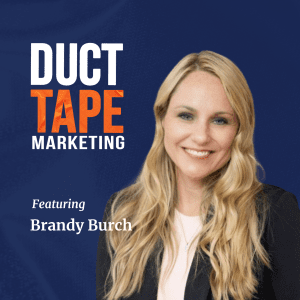
The Duct Tape Marketing Podcast with Brandy Burch

In this episode of the Duct Tape Marketing Podcast, I had the pleasure of interviewing Brandy Burch, CEO and co-founder of BenefitBay, a company innovating the employee health benefits industry through Individual Coverage Health Reimbursement Arrangements (ICHRAs).

With a vision to make health benefits more accessible and customizable, Brandy has rapidly expanded BenefitBay and helped redefine how employers approach employee health coverage by ensuring fair and equal purchasing power.

We discuss the evolution of employee health benefits, the advantages of ICHRAs for employers and employees, and the complexities involved in implementing these arrangements.

From Tech-first inexperienced health benefit startups to the burden of having too many choices, Brandy Burch explains that DIYing health benefits internally is not all it’s cracked up to be and giving employees a say in what benefits they choose from pets to fertility can be an enormous BENEFIT to seeking talent, as an agency.

Brandy Burch also shares insights on risk management, the role of BenefitBay in the market, and the importance of personalization in employee benefits. The conversation also touches on the challenges female CEOs face in the insurance industry and the unique advantages of Kansas City as a tech hub for health benefits innovation.

Key Takeaways:

  • ICHRAs provide employees with more choice in health benefits.
  • Employers can budget more effectively with defined contribution models.
  • The complexity of ICHRAs requires careful partner selection.
  • BenefitBay acts as a software service to streamline the process.
  • Personalization in benefits is becoming increasingly important.
  • Kansas City is a growing hub for health tech innovation.
  • Female CEOs face unique challenges in the insurance industry.
  • Employers can attract talent by offering personalized benefits.
  • Risk management is crucial when transitioning to ICHRAs.
  • The market for individual health plans is competitive in many states.

Chapters:

  • [00:00] Introduction to Individual Coverage Health Reimbursement Arrangements (ICHRAs) and BenefitBay
  • [01:08] The Evolution of Employee Health Benefits
  • [02:44] Understanding  ICHRAs
  • [05:00] Benefits for Employers: Cost and Budgeting Advantages
  • [06:43] Risk Management in ICHRAs
  • [09:41] BenefitBay’s Role in the Market
  • [10:32] Target Audience: Who Benefits from ICHRAs?
  • [12:27] Mitigating Chaos in Transitioning to ICHRAs
  • [14:25] Attracting Talent with Personalized Benefits
  • [15:47] Trends in Employee Benefits
  • [19:10] The Shift Towards Personalization in Benefits
  • [20:17] Kansas City: A Hub for BenefitBay
  • [22:56] Challenges for Female CEOs in the Insurance Industry

More About Brandy Burch:


Brandy Burch (00:00): Can you hear my dog?

John Jantsch (00:01): I can. This is a dog friendly show.

Brandy Burch (00:03): This is a live dog friendly show. Yeah, there are a lot of rules around ensuring that individuals aren’t discriminated against and ratios are met and affordability calculations based on what’s available in their market and ensuring that their employer is not classing people unfavorably and everyone’s getting equal and fair purchasing power. So it is complex, but really what it means is we’re going to be able to access our benefit dollars and make the choice that’s right for our family.

John Jantsch (00:32): Hello and welcome to another episode of the Duct Tape Marketing Podcast. This is John Jantsch. My guest today is Brandy Burch. She is a CEO and Co-founder of Benefit Bay, a Kansas City based company innovating the employee health benefits industry through individual coverage health reimbursement arrangements. That’s a mouthful. Hopefully we’ll unpack it with a vision to make health benefits more accessible and customizable. Brandy has led Benefit Bay’s rapid expansion and helped redefine how employers approach employee health coverage. So Brandy, welcome to the show.

Brandy Burch (01:08): Thanks, John. Thanks for having me.

John Jantsch (01:11): I mean, I definitely want to unpack an I-C-H-R-A because I usually talk about marketing and not necessarily insurance, but a lot of my listeners are business owners and employers and it’s certainly a topic that will be of interest. But before we get into that, I’m just curious, was there something that had you sitting around one day and said, I need to start a company that does I ccra?

Brandy Burch (01:38): No, that was not something I was envisioning or thinking about. I was actually at a different software company and was really introduced to the idea and asked to join this startup vision and actually started as the operations lead, not the CEO. So I was part of the founding team and got to build it from the ground up, but our CEO left a year in and then I’ve been leading the Reign since then. So it wasn’t something I was sitting around on my couch thinking about, but it absolutely was something that I was solving throughout my career because I was in business, I was a business operator for my entire career and I was a purchaser of benefits, which are one of your largest spends when you’re running a small company or any size company.

John Jantsch (02:24): So we have, as part of our employee benefits, we have a health insurance coverage for employees. And I imagine most listeners are fairly familiar with how those work. There are different arrangements that you can do in different pays and things, but so how significantly different is an individual coverage health reimbursement or maybe before we even get into the difference, what is it?

Brandy Burch (02:46): What is really defined contribution? So it is an employer’s ability to set a bucket of dollars aside for the health benefit and allowing the individual to choose. It’s much more complex than that because there are a lot of rules around ensuring that individuals aren’t discriminated against and ratios are met and affordability calculations based on what’s available in their market and ensuring that their employer is not classing people unfavorably and everyone’s getting equal and fair purchasing power. So it is complex, but really what it means is we’re going to be able to access our benefit dollars and make the choice that’s right for our family. That’s the definition of what it’s a large acronym. Yeah,

John Jantsch (03:29): So you hit on really probably what’s a key part of it. I mean most, at least in my experience, I could be wrong on this, but most benefit plans are like, here it is, do you want it? Do you want your spouse in it? I mean that’s pretty much the decision. So what you’re suggesting is this is vastly different in that you have a lot of choice.

Brandy Burch (03:49): Yeah, you have a lot of choice. And I know you mentioned you’re in Colorado. I’m in Kansas City, the average market has 68 to 133 plans to choose as an individual. So you’re up to the market of all the carriers in your plan design. You have HMOs and EPOS and PPOs, and you have HSAs and you have the flagship brands and the Aetnas and the Cignas and the Kaisers and the United Healthcares, which you also have option to be in a community health related product. And so maybe you have a Denver Health Plans, maybe you have a Connecticut, if you’re in Connecticut now you have an ability to purchase that and your employer likely wouldn’t have purchased that because they would’ve needed something that fits everyone in all 50 states. So they would’ve had to have purchased a larger network product that is more expensive. You may decide to buy something that is more community-based, direct primary care driven, something that you are really passionate about that’s driven by a hospital system. There are a lot of hospital system carrier plans that are out there, and so that allows that individual to be put back into the driver’s seat, but also make a more conscious decision with those dollars that matters more to their family for access to care.

John Jantsch (04:57): Alright, so theoretically, and I’m going to come back to that, that’s a better idea for the employee because it gives them choice. I mean, we can argue maybe I’m the employer and I’ve done all the research and I’m telling you this is the best plan. Maybe that’s an option, but what’s the benefit for the employer? Is this cheaper? Is this easier? You’ve already said it’s complex, so what’s the benefit for the

Brandy Burch (05:19): Employer? Yeah, I mean, in the Colorado market, it’s cheaper in the Kansas, Missouri market, not necessarily. So in 34 of the states right now, individual products are priced competitively to a large margin to group insurance. So the employer would benefit by going to this model because the employee has higher purchasing power with lower dollars. So that drives the budget down. In addition, it allows you to budget because you set a defined contribution model, it’s always $800 or $450 or $650 for that employee that’s seated in that class that you’ve modeled out. It’s not, oh, does that employee have seven children? Now they’re going to break the bank because I’m doing something over here that’s going to be different. It’s going to be a set defined contribution and there may be an additional child add-on that. You could decide as an employer, but you can budget.

(06:14): And I think that’s the biggest piece. And if you budget significantly higher than lower cost silver products, you do not have to change your budget every year as an employer. They’re having to change it every year because the rates going up 6, 10, 19 31 51. The types of rate increases we’re seeing are pretty significant. And then if you were an employer in self-insurance, you’re now getting out of that risk pool because self-insurance, although it sounded really exciting for employers to manage their risk and manage their cost and drive care saving behaviors of their employee populations, that’s a lot of administration. It’s also a lot of work. And then if you end up with one or two laser claimants, you’re suddenly in a balance sheet risk problem. And so that allows that employer to budget and just stay out of the risk game.

John Jantsch (07:03): So speaking of risk, obviously you just pointed to one, but this versus sort of the traditional one carrier path, does this approach actually aid in reducing risk for employers as well?

Brandy Burch (07:17): It does. I would say the only area of risk for employers in ICR is choosing the wrong partner.

(07:26): Anytime there’s a new market, you’re going to have a lot of startups, you’re going to have a lot of people wanting to disrupt it from different ways. However, not all startups are created equal from a compliance perspective or from an insurance acumen perspective or from an ability to become licensed and appointed with a carrier. Right? Your technology tool set has to meet a certain level of guidelines. Your engineers need to be in the US there are various types of risk that exist out there when you decide to go with something that’s new and a disruptor and you don’t vet your technology providers. I also would say a lot of the technology providers are going direct to the employer and cutting out the broker. I feel there’s a risk there because who is going to be the consultant in that situation? Who is providing that advice and who is holding that technology provider accountable?

(08:17): Now the employer’s back in that business of trying to manage something. So I would recommend that to eliminate a risk, you’re always working with a broker still, and you’re not trying to just go with a technology provider who’s trying to now become an insurance agency and now become a direct to employer sales agent because the insurance acumen and knowledge that needs to be at that table needs to include those other pieces. It needs to be that they’re bringing a quote every year to the employer of what is best for you this year. And icra, even though I’m an ICRA provider, may not be best for you every year. Maybe you suddenly are in Kansas and Missouri and you have 300 employees because you acquired a company. Kansas and Missouri is about 10 to 15% higher unless there’s a certain geographic population that works out there on individual rates. So you need an honest person at the table with you who’s not trying to just cut your consultant out of the conversation to win those dollars.

John Jantsch (09:17): So do you consider Benefit Bay a broker or do you consider yourself a marketplace or a software? I mean, how do you characterize yourself?

Brandy Burch (09:25): Yeah, we consider ourselves software as a service and we consider ourselves the chosen partner of those employers and brokers. So we add value in this chain where we’re taking away that administrative lift, that decision making at a large population. Imagine you’ve got 2000 employees. Your broker nor your HR team, can handle 2000 employees going through a decision that they’ve never had. They’ve never had the permission to make themselves. They’ve traditionally just had a carrier, an HSA and a PO

(09:56): Or maybe a buy up and a buy down. So I’ve got two choices. I’ve got one carrier, I’ve got two paycheck choices, that’s all I’m deciding on now. You’ve got the paycheck choices, the carrier choices, the type of plan choices. So benefit based steps in that gap as a partner to the broker because these brokers as well haven’t been selling individual products. So they were selling group products and they’ve become experts in their states and now they have to be experts in every state. And so we stand in that value chain there and then we solve the technology gap for the carriers on taking a large group population in individual products.

John Jantsch (10:34): So are you suggesting then that there’s a certain size company that this makes sense or does it make sense for a 20 person company

Brandy Burch (10:44): It makes sense for the sub 50 in a certain way? Benefit Bay does not specialize in the on exchange market enrollments. That’s an under 50 lives. You are subsidy eligible, you could remain subsidy eligible for your employees. So there may need to be an on exchange enrollment that’s dealing with healthcare.gov or that’s dealing with an on exchange product. There’s a lot of long wait times and hold times. We are looking to service those larger employers. So I would say for us it’s more of a 200 plus employer size that we service up into the thousands. What we do see is there is a great company called Stretch Dollar that’s doing the sub 30 really well. And so we refer any groups that try to come to us in that area to them, but they don’t utilize a broker, right? Because it’s a smaller group, it’s not going to have enough commission for a broker to, and so they’re able to play as the broker and as the technology system. But in the same respect, they don’t service up over 50 because there’s a lot of compliance laws around the over 50 employer space. Those are called applicable large employers. And we service those well. So we have a partnership. They’re sitting in tech, well, actually I think they sit in Pennsylvania and San Francisco. Can you hear my dog?

John Jantsch (12:00): I can. This is a dog friendly show. This

Brandy Burch (12:02): Is a live dog friendly show.

John Jantsch (12:06): I can’t hear your dog. I was actually going to tell you. I could see you were starting to fidget about it. So let me ask you this then let’s, I don’t know, pick a number. Anything over a hundred. To me migrating to this would seem like chaos, right? And so I assume that I would think that would be one of the reasons a big company might actually go, maybe I see some benefit, but the chaos to change isn’t worth it. So how do you mitigate that?

Brandy Burch (12:34): Yeah, we mitigate that by speaking to how we’ve solved the problem and we’ve thought about it. How does a group insurance experience work? And this individual experience really is similar. The only difference is when they get to that enrolling in your benefits, we’ve all done it. We’ve all enrolled in our benefits and have been admin. When they get to the enrolling in their benefits, it’s just that they get to put in their healthcare providers and they get to search for things that matter to them. And they get to decide, I want a gold product, or I want a PPO, or I want an HSA or I want to only go to this carrier. It matters to me and they take care of me. And so they actually get to filter down what it is that matters to them. Once they select that product, we submit the application to the carrier for them through technology, and then we facilitate the payments in a lump sum for the business. So the business is able to just have one deduction via a CH that we pull. And then each of these payments are individual on behalf of the individuals, but we expose all of that the way the employers used to. So our largest group right now enrolled is 3,430 employees. Imagine 3,430 employees sitting across 49 states. Actually,

(13:46): Those employees are going to make vastly different choices than they would if they were on group. This employer thought about going back to group, they surveyed their employees because they were having a technology solution that wasn’t doing a great job. They ended up just switching technology solutions, which was significantly important for us because we were able to deliver a better experience. But in that scenario, they looked to go back to group and their employees were like, no way we get to choose now. What are you going to dump us in? I get to be in the plan that matters to me here, and I get to have a better product than if you would’ve narrowed us down to a larger network, it would be more expensive. So we have seen it’s a little stickier once it gets going though, once you give someone a right to choose, it’s kind of hard to be like, no, I’m just going to decide for you now. Right?

Testimonial (14:30): I was like, I found it. I found it. This is what I’ve been looking for. I can honestly say has genuinely changed the way I run my business. It’s changed the results that I’m seeing. It’s changed my engagement with clients. It’s changed my engagement with the team. I couldn’t be happier, honestly. It’s the best investment I ever made.

John Jantsch (14:46): What you just heard was a testimonial from a recent graduate of the Duct Tape Marketing certification intensive program for fractional CMOs marketing agencies and consultants just like them. You could choose our system to move from vendor to trusted advisor, attract only ideal clients, and confidently present your strategies to build monthly recurring revenue. Visit DTM world slash scale to book your free advisory call and learn more. It’s time to transform your approach. Book your call today, DTM world slash scale. Well, benefits play a large role in attracting and retaining talent. So would you say that companies would even have the ability to maybe promote that as a differentiator? As a benefit, I mean, and play a role in retaining and attracting?

Brandy Burch (15:39): Yes. I would say that is true. I see that a lot in our Northeast clients because Icra has been around a little longer and competing well in that market. And so we see that they’re advertising that on their websites. They’re saying, you get to choose by over X number of health plans that they’ve given back two and a half million of cost share from the employee’s paychecks with this program. And so also, most of the employers, when they do see this savings, they invest in other benefits. So then they improve the benefits package overall. They’re adding additional disability payments paid by the employer or life insurance at X of your salary, or they’re allowing you to spend those dollars in some other product that matters to you and your family, whether it’s pet insurance or something else. So I find that’s a motivating product to employees to be able to have access to that.

John Jantsch (16:31): Yeah, yeah. So since we mentioned pet insurance, are you seeing it, are there some trends that you’re seeing in employee benefits that people are really trying to push the boundaries on?

Brandy Burch (16:42): Yeah, I feel like employers are trying to have a more engaged employee population. They’re trying to offer a lot of new mom or new parent type benefits. They’re trying to offer infertility. For those that have concerns with infertility, they’re offering mental health, virtual mental health, virtual care, zero access to those types of programs as add-ons. I think all of that’s really important to have access to as an employee. And then individuals can choose which piece of it matters to them. And if they would’ve tried to add infertility to an entire population, it would’ve been insurmountable. But if they’re able to just add it for those who need it, then it is something that matters. And there’s a lot of really great startups out there in these types of spaces. Kansas City has a couple marma and Leva apps that are around surviving that first year as a mom or a nursing mom or a new parent. And those are really engaging and keep your employee feeling like you care that they’re returning to work and they’re not sleeping and all of the things, how do you survive that? Where’s the network online that can help me get those materials? So seeing a lot of those types of engaging and rather than our employer knowing our health outcomes, which happens in current traditional group insurance,

(17:56): They’re able to access through a lot of the big brother tools around drug usage and claims. They’re able to know what’s going on in our family rather than them having that type of overbearing access in the individual side. You just get to make an individual decision with your dollars. They don’t get to know that you’re maybe getting cancer treatments

Brandy (18:15): If

Brandy Burch (18:16): You don’t want them to know. So there’s a little bit of that that I’m seeing as an evolution of this personal choice. Also, holding carriers accountable to deliver actual customer service and to deliver payments on our claims timely to approve services that we need. Because if we’re in the driver’s seat of our benefit dollars, we could be brand loyal or

Brandy (18:43): Not,

Brandy Burch (18:45): But if our employer is or our broker is, we really are voiceless in those types of service outcomes.

John Jantsch (18:53): Yeah. Yeah. And while you talked about the positive benefits of working with a broker, there probably are some negatives where a broker is like, Hey, I get more commission over here. I’m going over here. So

Brandy Burch (19:07): I mean, every industry, there’s going to be motivators that are driven by greed. There’s going to be motivators that are driven by fear. And I think that we have carriers that are motivated that way. We have brokers that are motivated that way, and we have employers that are sometimes motivated by just doing what’s easiest. And if I change carriers and get a better outcome, that’s even noisy. And I’m nervous about that because Susie or Tom may be mad.

Brandy (19:33): And

Brandy Burch (19:33): So sometimes getting that better outcome requires a little friction, and that’s why benefits have kind of evolved to where they are. I think a lot of people just keep status quo, even if it goes up year after year, because it’s all that fear around personal benefits and changing them and causing any type of outcome to anyone on your team. And recruiting has been hard the last five years it’s been employee’s market. No one wants to upset the apple cart,

John Jantsch (20:01): Right? Right. Hard to replace people. It really is. So I kind of hear you saying that if there’s an overarching trend, it is personalization of the benefits, right? I mean, is that a good way to say it? Yeah,

Brandy Burch (20:13): I think it’s personalization of the benefits. I think it’s the last area that we haven’t been able to personalize, right?

(20:20): I describe this as favorable legislation, like when pensions move to 401k and allow your investment dollars and make your decisions after a few poor decisions based on lifelong service to a company and your retirement’s gone, you were able to move to individuals have the accountability to invest their benefit dollars and to invest those appropriately. Now, some don’t do what’s right with their actual benefit dollars, don’t access those. And that does happen on the healthcare side. They may not use all the dollars available to ’em. They may go with the lowest price product because they don’t use their benefits or they don’t want anything out of pocket. And it goes back to a personal accountability. And I think we need to get there, especially for our own health and improving health outcomes. Right.

John Jantsch (21:09): I’m curious if there, you and I talked before we started, I grew up in Kansas City. I’m curious, is there any reason that Kansas City is a good place for benefit Bay two b? Was it started there for a reason or that just happened to be where the players were?

Brandy Burch (21:23): It really was founded in Omaha by Zach Harris, the CEO. And when I took the seat a year later in April of 22, I moved into Kansas City and the reason why I moved into Kansas City is one, I’m here, but two, there’s a great tech hub in Kansas City around health tech. We have a ton of health techs that are of all, we have a lot of investment from larger ecosystem players in this market. It’s a great market to have a work from home role and recruit. There aren’t as many companies in Kansas City allowing the flexibility of working remote.

(21:58): And when you have a remote first company and you’re in Kansas City, I feel like the recruiting is really easy for us. I wasn’t having as much luck in Omaha, and I think it’s because there’s a long tenure of large insurance ecosystems there and a lot of enterprise business where people are very comfortable and confident in their compensation, in their benefits and in their retirements package. To go to a startup I think was a little more risky in that market. In Kansas City, I’m not feeling like people have that aversion. They’re saying, oh, that sounds fun. I want to be a part of this. You mean I get shares, I get to be remote, I get to do the commute with my family or a handle to school drop off. And the motivation here, we’ve been able to hire 26 people in market. So now we do kind of have a hybrid work location downtown, and people can come if they want, but Tuesdays and Thursdays tends to be when we’re all heading in there. No one wants to deal with the commute Monday, Wednesday, Friday, I guess. But I do think the recruiting, the tech ecosystem was really important and the investment ecosystem is really great here. Casey Rise just introduced me to a great partner within CVS Aetna, and you just never know when those types of networks and really support your growing startup. And I feel like everyone’s here to lift each other up in this community.

John Jantsch (23:22): I would agree with that sentiment. My final question really is there probably aren’t a lot of CEOs that are females in your particular industry. Is that first off, is that correct? Is that changing? Has that presented a hurdle? How have you navigated that?

Brandy Burch (23:37): It is correct. You’ve

John Jantsch (23:38): Got four questions by the way to answer any one of ’em you want.

Brandy Burch (23:41): It’s correct. Across all industries, there are limited female CEOs in insurance, even less so in venture backed companies, even less, right? So we are a venture backed company. It is tough to raise capital as a female in a VC world. It is tough to raise capital in a non-original founding role of an organization. You have to survive that transition of a founder nuisance that people may feel that’s on the cap table and they have to believe that you are the one leading the company and that you can do this and you didn’t lose team members talent. The tech didn’t serve it, and you were able to keep your customers. So that has been some things that I’ve had to overcome. I think the biggest thing is there’s one other female CEO in this industry right now. I think the biggest thing is being able to transfer experience rather than I haven’t been a part of the Facebook or some other tech startup

(24:43): And I wasn’t necessarily an Ivy League grad. So those two things have been hard in a tech startup world. What I think has allowed us to be successful is that we are operators as an overall team, and our VP of engineering was in large insurance carrier technical development, and then cancer research, technical development. We come with the expertise to the technology solution rather than come with the technology skillset or background of being in serial startups. We come with various small business, medium-sized business grit and experience. So I think that’s made us successful. It’s made it hard though, to start that journey from here to here. Now here, everyone loves us, but you’ve already got your proof point, so 400% growth. And so it’s a little better when the numbers are black and white and then they can’t really go to all those other things to make a decision.

John Jantsch (25:42): The intangibles.

Brandy Burch (25:43): Yes, exactly.

John Jantsch (25:45): Well, Brandy, again, I appreciate you taking a few moments to share the story with the Duct Tape Marketing Podcast. Is there anywhere you’d invite people to find out more about Benefit Bay and your work?

Brandy Burch (25:55): Yeah, I’d go to benefit bay.com or you could follow us on LinkedIn Benefit Bay or Brandy Birch, CEO, and founder of Benefit Bay on my profile.

John Jantsch (26:04): Awesome. Well, again, I appreciate you spending a few moments. Hopefully I’ll run into you one of these days when I’m back in Kansas City

Brandy Burch (26:10): For sure, John, Chris Hotten. Now you’re going to be hearing about it all the time. It’s hot in Colorado, so now you’ll have a little experience there. We are going to grow 300% in Kansas City, so it’s starting to move,

Brandy (26:23): But

Brandy Burch (26:23): That 300% is based on, we used to have one to two customers and now have Right. Pulling uphill climb. Yeah. It’s

John Jantsch (26:30): Harder to do that every year.

Brandy Burch (26:32): Exactly. Yeah. Thanks John. Take care.


Why You Should Read Business Books That Are Not About Business

Why You Should Read Business Books That Are Not About Business written by John Jantsch read more at Duct Tape Marketing

The Duct Tape Marketing Podcast with John Jantsch

In this episode of the Duck Tape Marketing Podcast, I had the pleasure of being INTERVIEWED by Sara Nay. Sara Nay is the COO of Duct Tape Marketing. She oversees day-to-day operations to support the growth of Duct Tape Marketing and the Duct Tape Marketing Consultant Network.
She focuses on strategic planning, goal setting, and directing the company’s operations in support of its goals. And on a personal note, she’s also my daughter—which makes me “Pop Pop” to her kids!

In this episode, we change it up a bit as I become the interviewee. We explore my journey into entrepreneurship, why I started my own business, why I didn’t work for someone else (the answer will surprise you), my passion for small businesses, and the evolution of marketing over the years.

I reveal lessons from my polar opposite parents and my former fears about running a business.

We also dive into my favorite topic: the impact of AI on small businesses, the opportunities and challenges they face, and the importance of curiosity and innovation in business.

I wrapped up with a glimpse into my future aspirations—what might life look like after Duct Tape? And I answered the timeless question: What’s my all-time favorite business book?

Key Takeaways:

  • I started my entrepreneurial journey due to a lack of confidence in traditional employment.
  • Working with small businesses is both terrifying and gratifying.
  • Curiosity drives me to explore new marketing trends and technologies.
  • AI is not just a tool but a foundational element in marketing.
  • Small businesses can leverage AI for efficiency and personalization.
  • The buying intent of consumers remains strong despite market changes.
  • Experience helps entrepreneurs navigate ups and downs in business.
  • Marketing and innovation are the two pillars of a successful business.
  • Reading outside of business literature can inspire innovative ideas.
  • I envision a future where I write a work of fiction.

Chapters:

  • [00:00] Introduction to a Unique Podcast Experience
  • [02:01] The Journey into Entrepreneurship
  • [04:03] Passion for Small Businesses
  • [05:49] Curiosity and the Evolution of Marketing
  • [08:03] AI’s Impact on Small Businesses
  • [11:08] Opportunities and Challenges for Small Businesses
  • [13:52] Riding the Waves of Business
  • [16:21] Business Advice and Insights
  • [19:46] Future Aspirations and Legacy

Let us know if you’d like to see us make more shows like this!


This episode of the Duct Tape Marketing Podcast is brought to you by:

Oracle

Nobody does data better than Oracle. Train your AI models at twice the speed and less than half of the cost of other clouds. If you want to do more and spend less, take a free test drive at Oracle.

Testimonial (00:00): I was like, I found it. I found it. This is what I’ve been looking for. I can honestly say it has genuinely changed the way I run my business. It’s changed the results that I’m seeing. It’s changed my engagement with clients. It’s changed my engagement with the team. I couldn’t be happier. Honestly. It’s the best investment I ever made.

John Jantsch (00:16): What you just heard was a testimonial from a recent graduate of the Duct Tape Marketing certification intensive program for fractional CMOs marketing agencies and consultants just like them. You could choose our system to move from vendor to trusted advisor, attract only ideal clients, and confidently present your strategies to build monthly recurring revenue. Visit DTM world slash scale to book your free advisory call and learn more. It’s time to transform your approach. Book your call today, DTM world slash scale.

(01:00): Hello and welcome to another episode of the Duct Tape Marketing Podcast. This is John Jantsc, and doing something really crazy today. A couple things actually that we’re going to do a little different today. I’m going to be the guest and I’m actually going to be interviewed on my own show by none other than Sara Nay. Some of you have met her. She’s the head of operations at Duct Tape Marketing, but she’s also one of my daughters who has worked with me for 13 years.

(01:28): So we thought, let’s see what kind of questions she could come up with and hopefully you’ll find this entertaining. Now, another thing that we are experimenting with today, so hopefully cross our fingers. This works out there in LinkedIn land. We are actually streaming this live. This is the first podcast that I’ve streamed live, so we’ll see how that works out as well. Love to get any feedback in the comments if you would like to and ask questions in LinkedIn if you are so inclined. And we’ll just see how this goes. But for now, I’m going to turn this over to Sara. Are you going to introduce me or how’s this going to work?

Sara Nay (02:05): I think people know who you are at this point, but I was actually curious as you were talking through that. How many interviews do you think you’ve conducted over the years on this podcast where people have listened to you be the host?

John Jantsch (02:16): Yeah. Oh, be the host. So I started this show in 2005 and certainly have done a minimum of a hundred shows a year, some years actually more than that. So I dunno what that adds up to. But yeah, I think we’re over 2000.

Sara Nay (02:30): So you’ve possibly listened to John interview guests 2000 times or so at this point. So this will hopefully be a fun perspective to hear him being interviewed. So my first question to you, I want to go way back to when you started Duct Tape Marketing as an entrepreneur. And I want to know more about the reason of why you went into entrepreneurship versus getting a full-time job.

John Jantsch (02:52): And I tell this story in my last book, I haven’t been telling it for years, but now that I’m getting old, all the secrets come out. But I often felt like when I got out of school, I didn’t feel prepared to do necessarily anything, any skill. I didn’t have honors in degrees in college that would’ve made me stand out to employers. And so I really think of, a lot of it had to do with a lack of confidence almost that I could get a job I saw that my friends were getting. And so I really thought as silly as this sounds, because a lot of people actually think, no, I’ve got enough years of experience to go out there on my own now. And I actually thought, no, I better go out there on my own. I know I can hustle work and maybe that’ll turn into something.

Sara Nay (03:38): That’s great. And you chose the small business space. I know you didn’t originally start there, but what caused you to make that shift into the small business space?

John Jantsch (03:46): Yeah, like I said, I hustled work, which meant anybody that would talk to me, I’d say I could do that. How hard could it be? Yeah, sure, I could do that. So I got big projects, little projects, whatever came my way. But I did land some small business clients that needed marketing help and I knew I could figure out how to help them, and I just really enjoyed working with them. I often say there’s something equal parts terrifying and gratifying about working with that person where they’re actually writing the check. I mean, they’re making a decision to pay you or maybe some other expense. It’s not the big company that accounts payables just paying the bills and moving on the next day. So I really love that. And plus you got to see the results of your work. I mean, you actually could see that, hey, this is making a difference. And so I think that’s why I really chose to serve that market. And quite frankly, it was a very fragmented market, mean nobody was really serving them in the marketing space. So I saw a lot of opportunity there as well.

Sara Nay (04:45): And that leads to one of the next questions I was going to ask is what keeps you going after all of this time? So obviously I’ve seen a lot of passion over the years towards the small business audience. Would you say that’s been one of the things that’s contributed to you being able to continue this on for 30 or so years at this point?

John Jantsch (05:01): I think there’s a couple things. There’s no question I feel like I’m serving me. I mean, I am a small business, so I feel like I’m one of the brethren, and so that I think is really gratifying. I think another thing too is I really always often talk about curiosity being my superpower. I just love the new stuff. And so to keep doing this, I mean, you think about all the things that have happened in the last 30 years in marketing in technology, and I think if you didn’t love it and weren’t really curious about what’s new and how does this work and how can I apply this, you’d kind of get run over. And so I really think that’s added to my love of staying in this and really helping other people figure it out. And I think people look to our brand for that guidance. We’re not excited about the next new thing because it’s the next new thing, but we’re excited about it because it can help us do what we’re fundamentally here to do as marketers.

Sara Nay (06:01): And that curiosity piece, obviously there’s been a lot of evolution in the last couple years on the topic of ai, and we’ve as a company, been diving into AI quite a bit in terms of increasing our productivity and what we’re doing for our clients. And so just curious, well, I didn’t mean to use the word curious there, but how has this curiosity of yours allowed you to dive into the whole topic of AI on a deeper level?

John Jantsch (06:22): Well, it’s just another thing. I mean, if you think about it, I mean, since I’ve been doing this, I mean when I started this, we didn’t have the internet. We didn’t have websites. So it’s like, oh, the website’s another thing we got to figure out. And then, I don’t know, email, social media. I mean, just over the years some new thing is going to come. I think that AI in a lot of ways is going to be different in that it’s not a platform. It’s not even a tool really. I think it’s going to be a plumbing, it’s going to really be baked into pretty much everything we do. In fact, it’s been baked into many things that we do without our knowledge. It’s just when a tool called chat GPT came along and it was very easy for somebody who didn’t know anything about it, could actually now experience the results of AI that might actually benefit them.

(07:12): So I think that’s why at the last year and a half, you’ve seen so much buzz about it. But I just think that it’s a perfect example of curiosity. I mean, you can make AI do just about anything it seems like. And so now it really is up to your imagination. So to me, it’s like the perfect tool to really explore and find ways that maybe nobody’s even talking about it. Or a lot of times what happens is a new technology will come along and people will discount it because they’ll see the ways people are talking about it. There’s no shortage of get rich quick people that are back out there on the AI train trying to say, oh, take this course and you can make $5,000 a minute in your sleep. And so I think that turns a lot of people off. But what really excites me is when you can go, but I can do this little thing that’s going to make me more efficient, more profitable, is going to take away work that I don’t like doing anyway. I mean when you start looking at all the possibilities, it really is your only limitation, I think is your imagination and your curiosity.

Sara Nay (08:20): And talking back to the small business space as well, which is a lot of who we serve, how do you think AI is impacting that group specifically?

John Jantsch (08:29): Well, I think that, let’s talk about marketing. I mean, that’s one aspect, obviously where it’s pretty much impacting anybody because there are things that AI tools can do much more efficiently, and I would say in some cases more effectively than even humans. It’s very good at doing research, it’s very good at analyzing, let’s say your Google Analytics data. A lot of people look at that and go, oh, good, we had more hits or whatever. And to be able to say, no, tell me what we need to do differently. Tell me what we could do better. Tell me what our best opportunities are. And to have something that is basically a super computer with just very common language requests and prompts can now crush that data and really give you some insights back that are going to help you prioritize or help you certainly work better.

(09:17): We’re going to see personalization going to all new levels to where customer segments will be inside a database and they’ll be able to have AI look at who that person is and what their needs are and where they are in the buyer journey and what segment they’re in. And all of a sudden say, similar to say how Amazon says, oh, you read these three books, you’ll probably like these three books. Well, that’s going to start happening at a greater level for pretty much everybody. And I think that’s one of the things that these advances in technology do is they really democratize some of the things that the Amazons of the world have made an expectation. But at what cost, right? I don’t have tens of thousands of programmers that can make all this stuff work for me. Well, all of a sudden now, even the smallest business has that kind of computing power really in their hands.

(10:11): So I think that every element hiring, it’s certainly impacting for folks. I mean, AI can take 2000 resumes and really analyze them for exactly what you’re looking for. There’s always going to be a human element, but there was a great deal of that kind of repetitive work that doesn’t necessarily require a human element and frankly is work that is kind of mind numbing. There’s not a whole lot of humans that want to do it. And so I think you take things like that and all of sudden, now I know you and I have talked about this, all of a sudden now you’ve got people who were doers who are now really more managers of the doing. And I think that’s actually very empowering. A lot of people talk about, oh, it’s going to replace people. I think it’s actually has the opportunity to not only make people more successful and more efficient in their work, but I think empower them to actually do better and bigger things.

(11:08): AI might be the most important new computer technology ever. It’s storming every industry and literally billions of dollars are being invested. So buckle up. The problem is that AI needs a lot of speed and processing power. So how do you compete without cost spiraling out of control? It’s time to upgrade to the next generation of the cloud. Oracle Cloud infrastructure or O-C-I-O-C-I is a single platform for your infrastructure, database, application development, and AI needs. OCI has four to eight times the bandwidth of other clouds offers one consistent price instead of a variable regional pricing. And of course, nobody does data better than Oracle. So now you can train your AI models at twice the speed and less than half the cost of other clouds. If you want to do more and spend less like Uber eight by eight and Databricks Mosaic, take a free test drive@ociatoracle.com slash duct tape. That’s oracle.com/duct tape oracle.com/duct tape.

Sara Nay (12:11): Yeah, absolutely. And on this note too, what do you think are the opportunities for small business right now? And it doesn’t necessarily just have to be limited to ai. It can be anything. And also I’d love to hear what do you think are some common challenges that you see in the small business space as well?

John Jantsch (12:26): Well, I think the opportunity and the challenge are probably the same thing. I’ve been talking about how I think the last 10 years, some marketers have gotten pretty lazy because it was actually easy if you just followed Google’s rules, which they laid out, you could get search traffic. I’m not saying it was like magic fairy dust, but I mean, you did the things that they said you should do. You could get search traffic and you could get leads. The social networks were more than willing to sell all the data on their users. And so you could really target very specifically who might want your products and services. And so consequently, some businesses were able to grow pretty easily. Now of course, what’s happening is you look at the search results, you do any kind of search on Google, and they want you to accept the generative AI answer that they’re going to give you rather than clicking off to the website.

(13:16): That might also, frankly, they might’ve actually extracted that answer from. And so search is going to get much harder across the board. Industries are seeing 25 and 30% of their organic traffic just disappear overnight because people are getting the answers that they want without reading the blog posts that might also have a CTA on your website. And of course, third party data is going away. You can’t sell that data. And so consequently, all the ad platforms are actually increasing their pricing extremely. So that’s going to be the real challenge. But I think the real opportunity is the buying is not going away. The buying intent is not going away. People still need those products and services. And so businesses that I think can figure out how to actually make a real connection with prospects and with customers and really focus on brand strategy as well as campaign or marketing strategy, I think are going to be, I think the ones that really stand out today. So there’s a real opportunity, but it really does change the mindset to being less about demand creation and really more about organizing behavior and focusing very much on strategy.

Sara Nay (14:29): Yeah, absolutely. And building trust and guiding the customer journey and getting referrals, which I’m sure people, if they’ve heard you speak, I’ve heard you on those topics before. I want to take it back to you a little bit at this point. So as we said, you’ve been in business for quite some time. I’ve learned this from you and seen it. There’s a lot of ups and downs in business. And so I’ve struggled with that over the years is to say things are going to be okay, we’re going to get back on track. And so just from your perspective, what has helped you ride all of those waves over the years?

John Jantsch (14:57): Well, I think there’s no question that experience helps you. I mean, when you go through a couple of those ups and downs, you’re like, oh, okay, actually there was an opportunity in that we were, woe is me. But then you’re like, oh, wait a minute. There’s actually an opportunity or we can learn something from that. So you do that enough times, and I’m not saying it doesn’t take some resilience and some grit, and I certainly had times when I was very worrisome about putting you guys through college, all the things that every business owner goes through. But there’s no question that seeing it a few times and realizing, hey, not only is everything going to be okay, but we just actually, we have to start thinking about it differently. We have to start looking for where the opportunity is because it’s always there. And I think that helps kind of say, okay, yeah, this was a down month, but hey, every December is a down month or something along those lines.

(15:52): The experience really comes from that. There’s also an element of mindset that’s a piece of it as well. And I really often, my parents were very different people. My dad was very worried all the time. We had 10 kids, I don’t blame him, but he was worried quite often about something was going to go wrong, and my mom was the complete opposite. She was like, oh, nope, something different. This didn’t happen because it wasn’t supposed to. And I think that sort of optimistic mindset is certainly can be a real tool for entrepreneurs because you do have to really look for, we get very focused on what we want to happen or what we think should happen. And when it doesn’t, you can really get knocked off track. But if your mindset is okay, that wasn’t supposed to happen that way, where’s the opportunity or what is supposed to happen? I think that mindset, while it can be hard sometimes, really can take you a long way.

Sara Nay (16:46): Yeah, I like a lot of what you said there, but I agree with the learning aspect specifically. That’s something that I’ve really tried to shift my focus on is if we don’t reach a specific goal, it’s okay, what can we learn from this versus stressing out about it to do better next time around? So that’s great. I have a couple quick fire questions. Maybe these will be quick, maybe not, depends on what you have to say on ’em. But to wrap us up today, the first one I want to hear is what is the best business advice you have ever received?

John Jantsch (17:13): Dang, I’ve been asked that question so many times on the podcast that I’ve been on, and I don’t know that I have a great answer, but I always go back to early on in my journey, I read a book that was actually written in the fifties. Most people of my age are familiar with Peter Drucker, and the book was called The Practice of Management. And that book, I just remember, I’m not even sure really why I read it to be truthful. I wasn’t trying to understand management of a big corporation, which is what he wrote about, but he had a line in there that to this day, and you’ll see it quoted all the time because a lot of reference it, especially marketing people, but the quote in there was, the only two things in a business that matter are marketing and innovation. Everything else is a cost. And again, you’ll see that people quoting that all the time. But I remember reading that in the nineties perhaps when I was still consuming or when I started consuming a lot of business books. And I just remember thinking, okay, that idea of marketing and innovation, that marketing needs to be a system, that marketing needs to be a high priority, that marketing is everything really infused a lot of my thinking through the years,

Sara Nay (18:25): And this relates to that. It might be the same answer, but what’s the best business book you’ve ever read? Is it that one or is it a different one?

John Jantsch (18:33): So it’s actually sitting right here.

Sara Nay (18:36): There you go. He’s coming there.

John Jantsch (18:38): This is not a business book. And I tell people this all the time, that one of, and this may be just my curiosity bug, but one of the ways that I’ve gotten great business books or business ideas over the years is to read books that are not related to business. And this one is by Christopher Alexander. It’s kind of a classic, I don’t know if my camera’s going to pick it up, but it’s called The Timeless Way of Building. He’s an architect and he was talking about building communities, and there’s so many things that can be gleaned from things like math and science and architecture that apply to the industry that you’re in, but it’s just a different way of looking at it. A lot of times you read out business books, you read marketing books. You and I have laughed about this before. All those books on operation systems basically just are saying the same thing. They’re just coming up with different terminology for it. And I think that’s true of consistently reading business books. So my advice to people all the time is get out and read books that are completely unrelated, not just for your own knowledge, but to read them with a filter of how could I apply this to my business? Or are there ideas or terms in here that would apply to my business? A lot of the things that I think have become cornerstones of Duct Tape Marketing really came from other industries.

Sara Nay (19:59): I think that’s just showing your natural curiosity to go out and explore outside the box and think beyond the typical business world to find out some of these things. Okay, one last one. I lied. I’m going to throw one more in it and then we can wrap up. John’s obviously not going anywhere. Duct tape is his thing. He is been around for a long time, but I’m just curious, what’s next in your future? One day after Duct Tape Marketing Woodworking, there is

John Jantsch (20:20): No after Duct Tape Marketing.

(20:23): Well, maybe somebody who’s very familiar with Duct Tape Marketing will continue the legacy of Duct Tape Marketing. We’ll see if that happens. However, yeah, you mentioned woodworking. I love doing that. I’m really still very much in the amateur ranks, but I do like building furniture and things. I kid, and hopefully my wife can’t hear me right now, but I would like to write another book, but I want to write fiction. I would like to write a book of fiction. And I personally know that it’s a lot harder to write fiction than it is to write nonfiction. So a lot of people would say, oh, you’ve written books before. How hard could that be? But different beast. So I think when I really do wind down kind of daily work on in a business, I will probably try to figure that one out.

Sara Nay (21:06): All right. Well, you heard it here first. Everyone, John Jans is writing a fiction book coming out in 2028. Okay, we’ll say.

John Jantsch (21:16): Okay.

Sara Nay (21:16): All right. Well, that’s all I got for you today.

John Jantsch (21:19): Well, so let me ask you a question.

Sara Nay (21:24): Okay.

John Jantsch (21:26): What has it been like working for your father for coming up on 14 years now?

Sara Nay (21:33): Yeah, I know people actually ask me that sometimes. And it’s funny, I joke that I call you John more often than dad these days because often we’re in a business setting. And so John is just what is easy for me to say, which is pretty funny. I started

John Jantsch (21:48): What you referred to me as Hot pop to your kids.

Sara Nay (21:50): Yeah, my kids, that name. No, I think it’s been a really positive relationship, working relationship over the years. I started as an intern and we were just kind of both like, is this going to work out? Does this make sense? But I think one thing that’s really helped us over the years is we compliment each other well, in terms of our skillset. You’re more of the visionary, the forward thinker. I’m more of the operations systems process person. I’ve become, I think, more of that visionary over the years. But we’ve really, I think, had a positive relationship because we’ve complimented each other and also stayed in our lanes when we needed to as well.

John Jantsch (22:24): Awesome. Well, thank you for taking the host job today, and I’ll take back over and say those of you out there, thanks for joining us. Let me know if you like this chef, you like this idea. Maybe we’ll hear more from Sarah on an ongoing basis to talk about some of the marketing things that we talk about all the time. So again, thanks for taking a few moments to listen to the Duct Tape Marketing Podcast, and hopefully we’ll see you one of these days out there on the road.


Weekend Favs November 9th

Weekend Favs November 9th written by John Jantsch read more at Duct Tape Marketing

My weekend blog post routine includes posting links to a handful of tools or great content I ran across during the week.

I don’t go into depth about the finds, but I encourage you to check them out if they sound interesting. The photo in the post is a favorite for the week from an online source or one I took on the road.

  • Content at Scale leverages AI to generate SEO-optimized blog posts that often pass AI detection tests, producing content with a human-like quality suitable for high-volume content needs.

  • Lexica Art is an AI-driven image generator that creates visually striking and brand-consistent graphics, offering marketers a unique alternative to generic stock photos for enhancing visual content.
  • Skai is an AI-powered platform that optimizes omnichannel marketing strategies by collecting and analyzing unstructured data to provide actionable insights, helping marketers make informed decisions across various platforms.

These are my weekend favs; I would love to hear about some of yours – Connect with me on Linkedin!

If you want to check out more Weekend Favs you can find them here.

Consult with Ease: Personalize Your Customer Stragtegy Using AI

Consult with Ease: Personalize Your Customer Stragtegy Using AI written by John Jantsch read more at Duct Tape Marketing

The Duct Tape Marketing Podcast with David Edelman

In this episode of the Duck Tape Marketing Podcast, I had the pleasure of interviewing David Edelman, a seasoned digital transformation and marketing expert.

As CMO, Edelman guided Aetna (now part of CVS Health) through becoming a digitally oriented, customer-centric brand. He built McKinsey’s Digital Marketing Strategy Practice and had leadership roles at BCG and Digitas. Repeatedly recognized by Forbes as one of the “Most Influential CMOs in the World” and by AdWeek as one of the “Top 20 Marketing and Technology Executives,” his work has attracted over 1.1 million followers to his LinkedIn blog. Currently, David advises top executives on AI and personalization.

In this episode, we dive into the ever-evolving world of personalization in business, uncovering the game-changing role of AI in redefining how companies connect with their audiences. Edelman emphasizes the importance of creating customer experiences at scale and the competitive advantage that effective personalization has.

Edelman explores the advantages of personalization, while highlighting the ongoing challenges of overstepping boundaries—a pitfall many of us have encountered firsthand. He shares practical examples of how AI enhances customer interactions and tackles concerns about data privacy and the potential discomfort of overly personalized marketing. The conversation also touches on the challenges marketers face in content creation and the need for more thoughtful, effective communication strategies.

Key Takeaways:

  • Personalization is about creating customer experiences at scale.
  • AI enhances personalization by analyzing customer data.
  • The privacy factor in personalization must be managed carefully.
  • 70% of consumers are comfortable with data use for value.
  • Speed of learning is crucial for competitive advantage.
  • Companies often have more data than they realize, but it’s siloed.
  • AI can help integrate data from various sources effectively.
  • Successful personalization can lead to increased customer satisfaction.
  • Content should be bite-sized and easily digestible for consumers.
  • Empowering customers with their data can enhance their experience.


Chapters:

[00:00] Introduction to Personalization in Business

[02:59] The Role of AI in Personalization

[06:00] Navigating the Privacy Factor of Personalization

[08:54] Competitive Advantage through Personalization

[12:02] Practical Applications of AI in Customer Experience

[14:53] Content Creation and AI’s Impact

[17:56] Successful Examples of Personalization

More About David Edelman:

This episode of the Duct Tape Marketing Podcast is brought to you by:

Oracle

Nobody does data better than Oracle. Train your AI models at twice the speed and less than half of the cost of other clouds. If you want to do more and spend less, take a free test drive at Oracle.

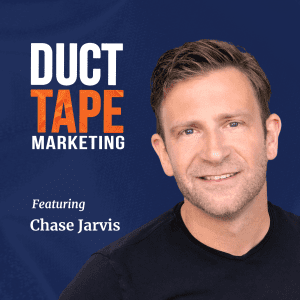
Testimonial (00:00): I was like, I found it. I found it. This is what I’ve been looking for. I can honestly say it has genuinely changed the way I run my business. It’s changed the results that I’m seeing. It’s changed my engagement with clients. It’s changed my engagement with the team. I couldn’t be happier. Honestly. It’s the best investment I ever made.

John Jantsch (00:16): What you just heard was a testimonial from a recent graduate of the Duct Tape Marketing certification intensive program for fractional CMOs marketing agencies and consultants just like them. You could choose our system to move from vendor to trusted advisor, attract only ideal clients, and confidently present your strategies to build monthly recurring revenue. Visit DTM world slash scale to book your free advisory call and learn more. It’s time to transform your approach. Book your call today, DTM world slash scale.

(01:05): Hello and welcome to another episode of the Duct Tape Marketing Podcast. This is John Jantsch. My guest today is David Edelman. He’s a long time advisor on digital transformation and marketing, and as a CMO, David guided Aetna now part of CVS Health through becoming a digitally oriented customer centric brand. He built McKinsey’s digital marketing strategy practice and has also had leadership roles at BCG and Digitas currently advises top executives on AI and personalization, and we’re going to talk about his upcoming book, his new book, personalized Customer Strategy in the Age of ai. So welcome to the show, David.

David Edelman (01:46): Thank you, John. Pleasure to be here.

John Jantsch (01:48): So this may seem like a silly question, but I think it’s probably important to set this baseline to start with. How are you defining in the context of business personalization?

David Edelman (02:00): Yeah, sure. In the early days, and this was really early back in 1989 when I first started playing in this area, before the internet, it was really just focused on marketing, using customer data to target to do a bit more matching of a name. And then in the internet area it became retargeting. What we are talking about now though is with all the AI tools that are available, it is not just about marketing, it’s about a customer experience. It’s about creating experiences at scale that use a customer’s information to give them back value and then to constantly get better as you learn what somebody responds to, what they like, what they tell you about. And it’s a way of competing. It’s actually your value proposition, not just simply the way you try to push sales.

John Jantsch (03:04): So you mentioned AI already. So can we give me some examples of how ai, I mean we went from, like you said, being able to put somebody’s name into an email field, a first name field, and now we’re going to ai, which theoretically can say, Hey, I know every data point in this customer’s history or this customer’s journey, and because of that, I can not just put their name in there, but I can actually, it’s kind of like Amazon recommending, oh, these are books you’re probably going to like type of thing. So what are the big ways that AI is really impacting the approach to personalization?

David Edelman (03:46): Yeah, sure. And it’s not just generative ai, it’s a whole range

(03:50): Of capabilities that are coming together. Let me give you an example and just show how AI plays a role in all of this. So you’ve got the digital natives like Spotify, Uber who work with you, but there’s others who are starting to move into this as well. So for example, a few years ago in the town I was living in Lexington, Massachusetts, they offered an incentive for buying solar panels. And that opened up a floodgate of marketing, just crazy amounts of marketing. But one company sent me a physical mailing that said, you Edelman at this address can save 20% on your annual energy bills. There’s a personalized URL in here that’ll explain how with sungevity type the URL into the computer and I get a Google Earth image of the roof of my house with solar panels superimposed on it down the right rail. They calculate how much energy those panels can generate based on my longitude and latitude, the east west orientation of my roof.

(05:03): They even had tree cover examples in there. And then they use Zillow to get the square footage of my house and use that to calculate how much energy I would use over the course of a year. So they had the numerator and the denominator and that gave them 21.3% savings. So there’s a whole bunch of AI going into that. So they’re interpreting, they’re looking at all of these Google Earth images in our town to try to then figure out which are the ones that could generate at least 20% savings. So that’s not generative ai, that’s more machine learning calculation capability, predictive modeling that’s going into that. Then they used a generative AI capability to generate the roof of my house with the solar panels on top. Then on an ongoing basis, they’re monitoring how much energy I actually generate, and they’re using that to balance load and decide when to sell energy back into the grid. What’s the right time for doing that? Again, that’s predictive modeling. So there’s a whole bunch of capabilities here. And then when I actually talked to the chief marketing officer of Sun Jevity, she was telling me how they constantly test and learn to figure out how to even make this work, and they were using AI capabilities to do multivariate testing, to set up the test cells

John Jantsch (06:40): And

David Edelman (06:40): Manage all of the different variables. So there’s a number of different AI capabilities that are stitching together to make these kinds of experiences possible.

John Jantsch (06:51): So that leads me dangerously close to an idea that I was going to present. At what point does that get creepy? It can know too much. Or maybe more practical example. There are industries healthcare that are highly regulated, right? I mean, so at what point does that its ability to know surpassed my, surpassed the point where it’s a good experience for me,

David Edelman (07:15): The creepiness factor comes up all the time, John, and it’s real, and we’ve got to constantly think about what will make somebody feel uncomfortable. I was chief marketing officer of Aetna, so health insurance company where one of the things we were doing was marketing to people help them to encourage them to do healthier behaviors. So if they could do healthier behaviors, they’d be healthier, they’d save money, we’d save money, everyone would be good. But you have to be super careful about how you’re doing that, how you’re identifying people, what information is shared, the security behind it. We were incredibly vigilant about all of that and doing so in a way that had security guidelines through the whole thing. So I think it’s just critical to think about the customer. Too much of where AI could go is just bombarding people who you think have done a certain kind of behavior and then they’re wondering, how did you know this? You’ve got to take the customer’s perspective. How would they react? How are you adding value? As part of the work that I did with the BCG in writing the book, we surveyed thousands of consumers in the US and other countries. 70% of people said they were comfortable with companies using their data to help them get value, but 75% said they stopped doing business with brands who used it

John Jantsch (08:50): Inappropriately.

David Edelman (08:52): So you’ve got to really think through from the customer’s perspective.

John Jantsch (08:58): Well, and I think that’s probably true of all technology. I mean, if it actually makes a better experience for me or makes it easy for me to do something like online scheduling, I’ll do it all day long. But if they use it as a tool to, so I don’t ever have to talk to you the phone systems and things where you can’t actually talk to somebody when you want to do that. I think that it’s similar with ai, right? We’re always going to want something that adds value. We’re always going to resist something that either creates friction or a bad experience,

David Edelman (09:26): And that’s our whole thing with personalization. It’s about experience that make it simpler, easier, faster, enable you to discover new things.

Testimonial (09:36): It’s

David Edelman (09:36): About empowering the customer, and we talk about that in the book that you have to start by thinking through how can you empower somebody using this information about them?

John Jantsch (09:47): AI might be the most important new computer technology ever. It’s storming every industry and literally billions of dollars are being invested. So buckle up. The problem is that AI needs a lot of speed and processing power. So how do you compete without cost spiraling out of control? It’s time to upgrade to the next generation of the cloud. Oracle Cloud infrastructure or O-C-I-O-C-I is a single platform for your infrastructure, database, application development, and AI needs. OCI has four to eight times the bandwidth of other clouds offers one consistent price instead of a variable regional pricing. And of course, nobody does data better than Oracle. So now you can train your AI models at twice the speed and less than half of the cost of other clouds. If you want to do more and spend less like Uber eight by eight and Databricks Mosaic, take a free test drive@ociatoracle.com slash duct tape.

(10:44): That’s oracle.com/duct tape oracle.com/duct tape. Yeah, so the book presents a lot of examples of personalization that I think a lot of people might look at as, oh yeah, that’s something we ought to be doing that’s clever or that’ll make a better experience. But you really, the main premise of the book is that this is a serious competitive advantage. In fact, you actually have a formula in the book to calculate what personalization might be worth, and one of the key elements of the formula is speed of learning. So you want to take any, that was sort of a question. You want to take any component of that and break it down because you really to focus on the idea of competitive advantage?

David Edelman (11:29): Yeah, absolutely. So one of the most important things about personalization is having data and AI lives off data and you want data to be able to make predictive modeling and to make sharper and more granular and more timely predictions. You also want to be able to just simply know more contextually about your customer. That’s appropriate. And so the formula that we’ve put in, and admittedly it’s a bit of an abstraction, but it’s n which is the number of observations that you have times the velocity, the speed by which you can test and learn and collect more data squared.

John Jantsch (12:17): Because

David Edelman (12:17): The more you can collect data, the more you learn, the more you’re understanding the variations that AI thrives on. AI wants all those variations. It wants to understand the underlying correlations to those variations, and the more you can test and learn, the faster you can get that out the door, the more you can build up your knowledge base. And then the other side of speed that’s important is you can also act faster on it so that when you find out something about someone, often it’s a question of in the moment in real time, well, how fast can you act? That’s a critical area for assessing value. So we say the value from personalization, the advantage you can get is based on how much data you can get on your target customer base and then your speed of refreshing and acting on that knowledge squared.

John Jantsch (13:14): Okay, so what’s the constraint for most companies? I’m guessing it’s n they don’t really have access, right?

David Edelman (13:21): Well, it’s n most companies actually have access to more data than they realize, but it’s broken up all over the company.

(13:30): So they may have some marketing data, customer service data, sales data, product usage data, but they haven’t thought about it from a cross-functional way to bring it together. And AI tools now can actually make the integration of data easier than it ever was before. For example, there’s a tool from a company called Narrative called Rosetta, like the Rosetta Stone, and it looks at one dataset, understands its schema, looks at a second, understands that schema, and writes the code to combine the data sets and normalize them. So companies are using this. The trade desk uses this, for example, for importing data from its clients and mixing it with all its own data to do targeting for personalized, for programmatic buying and others. Pepsi uses this, Nielsen uses this, and it’s a way to leverage the power of AI to bring more data together upon which you can apply ai.

(14:30): So one thing is actually deliberately thinking about how to bring that data together. The second is speed. Most companies take six, maybe even 12 weeks to get programs out the door. And especially if you’re in a business like financial services or healthcare where there are compliance issues, it can take forever, but you can redesign your processes to be faster, still meeting all those compliance hurdles, but it’s a different way of operating. It’s getting people all together in a room with the right kinds of tools to be able to come up with ideas for tests, get them out the door, get everyone together instead of having a waterfall and setting up appointments. Oh, two weeks we can get together. No two minutes we’re together. Let’s just make the decisions. So it’s a different way of operating. So it’s a data mindset and then a focus on speed.

John Jantsch (15:27): Can you give some practical examples? Again, you’re talking about ways in which you would start thinking differently about this, but can you give some practical examples that you’ve seen where people have actually used AI very effectively to create better experiences for customers?

David Edelman (15:45): Yeah, sure. So I mean, one just that we all see, and maybe it’s gone a bit too far, is the Starbucks app. So Starbucks, when you open the Starbucks app in 300 milliseconds, you get a tailored experience that uses AI to know who you are, where you are, you near work, near home, maybe you’re just simply traveling someplace, what time of day it is. So what are you likely to want during that time of day? Do you tend to order food, what you’ve ordered before? Do you order on special, do you have points you can use? And all of that leads to an incredibly simple interface for you to just simply place your order. And there’s examples of that in B2B, Cisco, the food delivery company, S-Y-S-C-O does something very similar. They deliver to eating establishments all over this country, and if you’re a procurement manager for a restaurant, you open your Cisco app. Same kind of thing is happening where the AI is looking at all of those data points and bringing it together. And in the case of Cisco, even knowing what they’ve gotten, the warehouse because it’s food and some things they may want to move and offer on a discount because it might be appropriate for your menu. There’s things like that where you can just see it immediately and it makes your ordering, for example, so much more streamlined.

John Jantsch (17:17): Let’s go back to marketers. One of the biggest frustrations marketers have is that the ever-growing need for content seems to be the beast that they cannot feed enough to. So I think there’s some pretty obvious ways that ai, a lot of marketers, I think are realizing, Hey, AI is great at repurposing, which helps us content at scale. I wonder where you fall on maybe where it is today and maybe where it will be. It seems to me that AI is not very good at producing original content.

David Edelman (17:47): No, not yet. I mean, it depends on your need and the category you’re in. I mean, if you’re just trying to create simple product ads, okay, AI can do that. If you’re trying to create things that have some degree of emotion, there are advances that are making it easier, you should have a human in the loop. I think what AI can do though is unlock a lot of ideation

(18:11): And help you quickly see what something might look like and then you can adapt it. I think the biggest challenge that we all face as marketers from AI is just overwhelming customers because you can create so much more and frankly, so much more crap. And so people are going to start turning it off, they’re going to unsubscribe, and some companies have already started seeing this, and so less is more. It’s got to be smarter about when you’re reaching out, what you’re reaching out with, the way the content actually renders itself versus just simply bombarding the hell out of someone who happened to visit some content on their site.

John Jantsch (18:56): I wonder how, there’s one thing that I don’t think a lot of content marketers talk about, and this is I think both B2B and B2C is I think we sometimes underestimate how the consumers of that content are also using ai. So we write this beautiful 50 page ebook white paper that we spend a lot of time and energy on, and they feed it into chat GPT and say, give me the five things I need to know here. So if that dynamic is as big as I think it is, what does that tell marketers that they need to be doing with their content? Is that just something we’re going to have to learn to live with?

David Edelman (19:33): Well, I think a, it’s something you’ll live with. If you send overwhelming stuff to people, I think again, sending even a 15 page, not 50, but one five even, that’s a lot. So can you make it bite-sized chunks? Can you make it simpler? Videos? I’m a big believer in simple videos. One of the things we did, for example, at Aetna, when you get your health insurance, do you really understand that most people don’t. They’re confused, they don’t understand. So they call into the call center, they go out of network, they’re not happy, and that cost us money. So we use the service that was called Sunday Sky to create personalized videos for every member when they onboarded, you would get John, your specific health plan, who in your family was covered? Who had a primary care relationship with a doctor? If you didn’t, here are five that are near you that are taking new patients. Click here to schedule. That’s a power of content. That’s an experience. 70% of people watch the three and a half minute video, and we got it down to really simple language calls to the call center went down, satisfaction went up. People even opened our emails more often after we sent that.

John Jantsch (20:59): Are there a couple of examples of companies big and small that you see out there that are doing this well?

David Edelman (21:06): Yeah, sure. So I mentioned Cisco, the food delivery company, which I think is really good. Another great example in financial services is Voya. So they do employee benefits and generally you’ve got your 401k and your financial, and then you’ve got your healthcare and you may have personal investments and it’s all over the place and it doesn’t come together. They have invested in intermingling all of that into one interface that they call my voyage, and you can add your own information into it, and then they’ve put AI on it. That is pretty much agnostic, and I’ve seen it in action. It doesn’t bias us towards Voya. It’s just saying, what’s best for you in terms of making decisions of where, for example, to put the next dollar of your benefits, should you be saving in a health savings account? Should you put it in the 401k? And they’ve won most trusted financial service institutions since this has come out. They’ve been growing share, and so they’ve helped people essentially activate their own data, that it was scattered all over and they’ve brought it together, put intelligence on top of it and helped you make sense of it and use it to make decisions. That’s a powerful example of using personalization, just change the value prop.

John Jantsch (22:36): Awesome. Well, David, I appreciate you taking a few moments to stop by the Duct Tape Marketing Podcast. Where would you invite people to connect with you and obviously find a copy of personalized customer strategy in the age of ai?

David Edelman (22:48): Yeah, sure. So you can easily connect with me on LinkedIn and you can find the book personalized on Amazon. It’s right there. It’s actually number one in customer relations. It was one of the top new releases last week, so we’re very excited about it. I would love to hear stories of new ideas that the book sparks.

John Jantsch (23:09): Awesome. Well, again, appreciate you taking a few moments. Hopefully we’ll run into you on these days out there on the road. David.


Run Highly-Effective Teams By Creating Principle-Based Habits

Run Highly-Effective Teams By Creating Principle-Based Habits written by John Jantsch read more at Duct Tape Marketing

The Duct Tape Marketing Podcast with Kory Kogon

In this episode of the Duct Tape Marketing Podcast, I had the pleasure of interviewing Kory Kogon, Vice President of Content Development at FranklinCovey. With over 25 years of business expertise spanning frontline roles to executive leadership, she brings a deep understanding of how to apply FranklinCovey’s world-renowned content to drive success within organizations. Her insights into the strategies and principles for building exceptional leaders, robust systems, and winning cultures demonstrate how FranklinCovey’s blended learning solutions create real, practical impact—enabling the critical behavior changes needed for transformational results.

She is a co-author of the #4 Wall Street Journal bestseller The 5 Choices: The Path to Extraordinary Productivity, and Project Management Essentials for the Unofficial Project Manager. 

In this episode, we discuss the enduring relevance of The 7 Habits of Highly Effective People 35 years after its release and explore how these principle-based habits can be applied in contemporary settings. Kogon shares her insights on being proactive, the importance of empathy in communication, effective time management, and fostering a culture that embraces these habits. She also touches on the significance of well-being in the workplace and how organizations can support their employees’ mental health.


Key Takeaways:

  • Habit one, be proactive, is foundational for leadership.
  • Empathy in communication is critical in today’s world.
  • Time management is about prioritizing what’s truly important.
  • Building a culture around the Seven Habits takes time and effort.
  • Well-being is essential for productivity and effectiveness.
  • The principles of the Seven Habits remain unchanged over time.
  • Organizations must listen to their employees’ needs for well-being.
  • Effective leaders model the behaviors of the Seven Habits.
  • Understanding others’ perspectives can prevent miscommunication.

Questions I asked Kory Kogon:

[00:00] Introduction to the Seven Habits
[03:05] The Importance of Being Proactive
[06:06] Understanding and Empathy in Communication
[09:01] Time Management and Prioritization
[12:02] Building a Culture of the Seven Habits
[14:58] Well-Being and the Seventh Habit

More About Kory Kogon:

This episode of the Duct Tape Marketing Podcast is brought to you by:

Oracle

Nobody does data better than Oracle. Train your AI models at twice the speed and less than half of the cost of other clouds. If you want to do more and spend less, take a free test drive at Oracle.

Testimonial (00:00): I was like, I found it. I found it. This is what I’ve been looking for. I can honestly say it has genuinely changed the way I run my business. It’s changed the results that I’m seeing. It’s changed my engagement with clients. It’s changed my engagement with the team. I couldn’t be happier. Honestly. It’s the best investment I ever made.

John Jantsch (00:16): What you just heard was a testimonial from a recent graduate of the Duct Tape Marketing certification intensive program for fractional CMOs marketing agencies and consultants just like them. You could choose our system to move from vendor to trusted advisor, attract only ideal clients, and confidently present your strategies to build monthly recurring revenue. Visit DTM world slash scale to book your free advisory call and learn more. It’s time to transform your approach. Book your call today, DTM World slash scale.

(01:02): Hello and welcome to another episode of the Duct Tape Marketing Podcast. This is John Jantz. My guest today is Kory Kogon. She’s Franklin Covey’s vice president of content development and a senior leadership consultant with over 25 years of business expertise from the frontline to the executive team. She understands the application of Franklin Covey’s world-renowned content within organizations, including the strategy and principles necessary to build great leaders systems and winning cultures. So we’re going to talk a little bit about, this is almost a revisit. We’re going to talk a little bit about the seven Habits of Highly Effective People. A book that was out actually came out last century, has sold millions and millions and millions of copies and certainly is as rings as true today as probably ever. So Kory, welcome to the show.

Kory Kogon (01:52): Oh, thank you so much for having me, John. It’s a pleasure.

John Jantsch (01:55): So you continue to evolve and create content around the whole Seven Habits concept, but give me a little bit of what’s your history with Franklin Covey with maybe with the Seven Habits Library?

Kory Kogon (02:14): Well, we will take you back just a Scot before that. I’ve been with Frank Company for 18 years, so had the pleasure and honor of knowing Steven before he passed away in 2012. But prior to that, I was the vice president of worldwide operations for a global franchise company. And so myself and the CEO ensured that we had a seven habits culture.

(02:39): I was a franchise organization and around the world, a seven habits culture. And so my familiarity started there and it was only sort of by accident, but not really that I ended up at FranklinCovey. And so as a consultant first, and then as part of the practices around productivity and leadership. So my familiarity with Seven Habits goes way back to implementation within small businesses and then bringing that practical business experience with me to FranklinCovey, to blend it with things like the Seven Habits to really help organizations across sectors move forward. So that’s a little bit about my journey.

John Jantsch (03:24): So whenever an author or we’re talking about a book that’s like 200 ways to do X or seven habits or whatever the number might be, I always like to tease people and say, do you have a favorite favorite of the habits?

Kory Kogon (03:42): Yes, I do Habit one. Habit one, be proactive, which is the habit of choice. And I’ll tell again, very practical, very pragmatic. I’m an operations executive. Steven talks about being proactive, not reactive. So as a leader in particular or as an individual contributor, being reactive to everything makes you come off as victimized and just not as somebody who makes things happen. And Steven talks about the space between stimulus and response, and that’s why it’s my favorite because if I’m good at, okay, something’s triggering me before I hit the send button, can I count to 10 and think about what outcome I really want? And my whole career has been like that. To me, that’s being proactive and it saved me both personally and professionally many, many times. So happy one is very foundational and truly for me it is totally my favorite one.

John Jantsch (04:44): Well, and I recall in interviewing both Steven and his son Steven. Hm. Is that right? Hm.

Kory Kogon (04:51): Steven hr.

John Jantsch (04:52): Oh, hr, sorry, got

Kory Kogon (04:54): That. I’m sorry. Stephen. MR Covey,

John Jantsch (04:56): Steven, Mr. Boy, we both are messing it up. Steven, Mr. I remember some reference to Vitor Frankl in

Kory Kogon (05:03): His work

John Jantsch (05:03): Actually in that particular habit.

Kory Kogon (05:07): And again, just we say you have the power to choose your response. And again, Viktor Frankl was a terrible experience and just we learned a lot from how he handled the circumstances he was in. So you choose, you get very self-aware that we call it emotional intelligence in this day and age, self-awareness, get very self-aware to just before you, whatever circumstance you’re in, how can I think about how to deal with it in a way that I can live through it?

John Jantsch (05:40): Yeah, between stimulus and response, there is a moment and in that moment lies our freedom.

Kory Kogon (05:44): There you go.

John Jantsch (05:45): I think is the actual quote. Would you say because of your familiarity, sort of a long familiarity with the work, has the world changed in a way that has changed of those habits? Have any of those habits become more relevant? Just kind of talk to me a little bit about the evolution, I guess, of over 35 years.

Kory Kogon (06:05): Yeah, so the thing about the Seven Habits is that it is principle based.

(06:13): And I was just rereading this morning, Dr. Covey’s, when he was asked these questions, I was reading a transcript of an interview and he was so clear before he passed away in 2012, and we feel the same today. So even we just spent millions of dollars in relaunching and contemporizing the workshop, the course around the seven habits, and the habits didn’t change, the principles didn’t change, just how we applied them in a contemporary way that people really can consume and remember and do something with. So it’s how you point these principles and habits. And as Steven would say, as the more turbulent, the more challenging the world gets, the more important these habits and principles are. And that’s a true statement.

John Jantsch (07:08): So I’m going to, you didn’t ask me to, but I’m going to tell you my favorite. And that is seek first to understand, then to be understood. I think that a lot of miscommunication, and I asked the question about has the world evolved or changed, I feel like we’re in this moment where that habit is probably more important than I can ever remember it being.

Kory Kogon (07:30): I really appreciate that. And I didn’t want to interrupt you before, so I didn’t ask you that question. And I’ve taught this hundreds of thousands of times I think, and keynoting it now and speaking to groups as we’re relaunching and since the pandemic. I’m with you, John, because with the remote hybrid, the state of the world, there’s a lot of pain going on. And whether a personal or professional, if you are not listening, empathically to others, seeking first understand and putting yourself in others’ shoes and sort of not absorbing, but acknowledging the pain they might be in or the excitement that they’re in, and really understanding them without trying to fix things and do the whole autobiographical listening thing, giving them space and empathy to really feel safe, to be able to have a conversation and move to action. So I’m with you, it has become critical that whether you’re in a family, in a small business or a big business, that you are listening to each other deeply.

John Jantsch (08:43): I remember a story from the book that really, I remember drove that point home so much that we have absolutely no, especially a stranger, we have absolutely no idea what’s going on in their life. And there was a story about a man on a bus and he had, I dunno if you recall it, but there were children that were being unruly and he wasn’t paying attention to them at all. And everybody thought how rude that was, and he should take those children, take care of ’em. Well, turns out the story is his wife has just passed and nobody, you have no idea what it is going on in somebody’s life. And I think that story and that lesson really probably, or that principle really probably impacted me at a really early time in my career, probably more than anything.

Kory Kogon (09:24): Yeah, it’s a classic story around a paradigm. And Steven says, I was like, why doesn’t he get ahold of his kids? Whatever. So we had a paradigm shift, and that is really the basis of the seven habits is how do we help people become very, very aware that the way we think about things may not be exactly that and how we behave and show up in the world. Maybe if we were open to examining our paradigms, we could make good changes that make us more effective. And don’t go down those kinds of rabbit holes like Steven did with making that kind of assumption.

John Jantsch (10:04): AI might be the most important new computer technology ever. It’s storming every industry and literally billions of dollars are being invested. Buckle up. The problem is that AI needs a lot of speed and processing power. So how do you compete without cost spiraling out of control? It’s time to upgrade to the next generation of the cloud. Oracle Cloud infrastructure or O-C-I-O-C-I is a single platform for your infrastructure, database, application development, and AI needs. OCI has four to eight times the bandwidth of other clouds offers one consistent price instead of a variable regional pricing. And of course, nobody does data better than Oracle. So now you can train your AI models at twice the speed and less than half of the cost of other clouds. If you want to do more and spend less like Uber eight by eight and Databricks Mosaic, take a free test drive@ociatoracle.com slash duct tape.

(11:02): That’s oracle.com/duct tape oracle.com/duct tape. So this book was probably the first place I was introduced. I mean the whole four quadrant thing has been around since consulting was invented, but it was the first place where I really saw a clear picture of the idea of the stuff that’s nagging you but it’s not important and the important stuff that is also needs to be done or is the most impactful. That idea of, I don’t think he called it time management necessarily, but it was really more along the lines of if you just stay focused on the important stuff that’s actually going to be high payoff, then that’s probably all you need to focus on.

Kory Kogon (11:51): Yeah. So that’s habit three first things and that became so popular and important. He sort of blew that up into a bigger book and first it was achieving focus, achieving highest priorities. Now we have the five choices, the path to extraordinary productivity and the time matrix is a core part of that because, and he did call it time management, it’s a time matrix where you really have a process by which you can synthesize, let me get really clear on what’s most important, and then how do I make sure that I’m mitigating or eliminating the things that may be less or not important. So your brain needs a process, and so the time matrix is really helpful to that.

John Jantsch (12:35): Well, and we work with a lot of entrepreneurs, some of our solopreneurs, and what gets in the way with them so often is there’s things that they’re doing that they shouldn’t be doing at all. But then there’s certainly things that somebody else, one of my great examples, get that off your plate delegate that there’s lots of people who actually enjoy doing that. And I think that once people get to the point where they’re like, yeah, I shouldn’t be doing this. That’s not important. I can delegate this because frankly I don’t like doing it anyway, then all of a sudden you’re like, okay, maybe I do have the time for the important stuff.

Kory Kogon (13:08): It is, I’m sorry.

John Jantsch (13:10): I was just going to say it’s hard for people though because we’re just so focused on like, oh no, this thing is yelling in my ear so I better do it.

Kory Kogon (13:18): And I like to call from the neuroscience world labeling and reappraising. If I just write down, take the time to really write down what’s important. Tell you even and working in my past in the franchise business and helping support small businesses, we found that some of the entrepreneurs would do bookkeeping or go sweep the floor because they didn’t want to go out and sell. So they sort of knew. So there’s a whole psychology around some of that. And when you have a framework and you have a process, and again, that’s what effectiveness is all about, what are the tools that can support how I can get really clear on what’s important and come to terms with those things that maybe I shouldn’t be doing? Because if I don’t do that, I’m not going to achieve my end in mind of a successful business.

John Jantsch (14:07): How have you seen leaders? Because sometimes when you read some of these kind of bigger principles, they feel very much like leadership training and leadership skills. But in an effective organization, we have to also drive those down throughout whatever ranks. So how have you found leaders have been effective at not just embracing this but not because there is kind of a danger of buying courses and buying, it’s like, here go to this stuff. But how do you, have you seen organizations make seven habits almost a culture?

Kory Kogon (14:44): It’s a very good question. It’s not easy. I mean, it’s a very real question you’re asking. We’ve had clients that I can’t name here, but that have been with us for 25 years as seven habits companies and we were in my prior organization as well, and we made it part of the culture, what we know. I’ll tell you what my executive chairman used to say, Kory, if you want to win a championship game, you can’t just read a book, even if it’s the seven habits, you can’t just read a book or watch a video. He said, if you want to win the game, I’m not going to say to you, Kory, go watch a video on how to throw the ball and show up on Saturday to play the big game. And so our whole philosophy is around that. And with the seven habits, it’s a surround sound, how do we and Steven created the maturity continuum to give you an accessible, memorable framework and the see do get model around behavior change.

(15:45): And beyond that it’s how do we consume or digest these principles and the pragmatic practices that go along with it and really encourage people to practice it and speak the language over time. And so what’s the sustained learning to really turn it into a culture? And I think that small wins along the way really helped that. So our organizations really, they have posters up, they’re speaking the language, they’re behaving what they’re learning and small fires with groups of people start to people look in and go, Hey, wait, what are they doing? It looks like they’re doing great. I want some of that. So it takes work, but it’s certainly doable. And we’ve had some great organizations that really everybody speaks the language of the seven habits.

John Jantsch (16:36): So to me, over the last 20 years, one of the most gratifying things to see is a lot of the things that we’re talked about in this book, time management, better leadership skills, better communication skills, were all things seen as hard skills for leaders to learn. This book was really one of the first that the seventh habit sharpened the saw that MINDBODY spirit maybe are all a part of this in terms of you being effective. And one of the most gratifying things I’ve seen is the last, over the last 20 years, that’s become a very mainstream thought as well, hasn’t

Kory Kogon (17:07): It? Wellbeing? So wellbeing more than ever as people are working harder than ever

(17:14): And all of that. So we still, even in our new program, it is you have to sharpen saw, and Steven always said it again, even reading this morning, he said, the more high tech, the more high touch, and I do a lot of work around the implementation of AI and human capability and hybrid intelligence and all that. And I read that and I thought he was, so before his time on it, wellbeing is key, sharpen the saw. He said, you can’t do the first six habits without sharp because I find it incredibly difficult to pause and just be the kind of person I should be, whether it’s at home or at work, but it is right at the top. The younger generations will not work in organizations that do not have substantial things around how are you going to help me with my wellbeing? Seven habits are no seven habits. It’s a mandate.

John Jantsch (18:15): And I think that that was brought into sharp focus. I think after the pandemic, the whole quiet quitting thing that people talked about, a lot of it was like, I’m not getting charged recharged here. I think I’ve made a decision to leave. So I think that that habit is one that a lot more companies are at least coming to terms with.

Kory Kogon (18:38): Absolutely. And all kinds of quiet, quitting resignation, all of those things. And even with the economy changing and companies doing some layoffs and all of that, the younger generations are not going back. I mean, it is really significant for them to have a sense that an organization will care about their wellbeing. And I know there’s organizations today out there that are like, Nope, you need to work 24 hours a day or you can’t work here. And people will make their choices. But principally people, humans have to sharpen the saw. And that’s why that’s a timeless principle at a very timely point in the world right now.

John Jantsch (19:22): And it’s funny, it’s one that people say, oh, I don’t really have time to take to do that. Well, I think science proves it, but anecdotally, I can tell you if I exercise, I do better work. And so I take the hour to do that. I’m going to be way more productive the next three, four hours doing the work. So while it may seem counterintuitive, it certainly science backs it as a way to actually be more productive.

Kory Kogon (19:50): And in the new course we even have in there just a little research on the detriment of back-to-back zoom meetings or teams meetings, whatever you’re on, and the stress levels by not taking breaks. So I mean, it’s really critical. And whether it’s leaders or personally we go, we can’t see it. It’s like Steven, if you remember the famous line, he said, are you too busy driving your car to stop to get gas? It’s the same thing here. So into our overwhelm, we can’t see it. And unfortunately we know that over statistically, we know that over half of people will not do something about burnout until they are burnt out, which is terrible.

John Jantsch (20:37): Yeah, yeah. It’s like boiling the frog.

Kory Kogon (20:40): Exactly.

John Jantsch (20:42): You don’t realize it because it just happens gradually and then it happens all at once.

Kory Kogon (20:46): Right. So very timeless principle as habits its own. That’s right.

John Jantsch (20:50): So Kory, I appreciate you taking a moment to stop by the Duct Tape Marketing Podcast. Is there somewhere you’d invite people to tell us a little bit about how somebody can consume the course or where they might find out more?

Kory Kogon (21:02): Sure. Very simply, just go to www franklincovey.com and on the homepage you’ll probably see a lot about our launch. If not just search seven habits. But it should come right up for you, right in the middle of a big launch world tour right now. So thanks John for asking.

John Jantsch (21:20): Awesome. All right, well again, I appreciate you stopping by the podcast and hopefully we’ll run into you one of these days out there on the road.


Weekend Favs November 2nd

Weekend Favs November 2nd written by John Jantsch read more at Duct Tape Marketing

My weekend blog post routine includes posting links to a handful of tools or great content I ran across during the week.

I don’t go into depth about the finds, but I encourage you to check them out if they sound interesting. The photo in the post is a favorite for the week from an online source or one I took on the road.

  • Turtl uses AI to create personalized, interactive content experiences, enhancing reader engagement and providing insights into content performance.

  • PathFactory leverages AI to recommend relevant content to users, facilitating personalized content journeys that increase engagement and accelerate the buyer’s journey.
  • PaveAI transforms Google Analytics data into actionable insights using AI, helping marketers identify key performance drivers and optimize their strategies accordingly.

These are my weekend favs; I would love to hear about some of yours – Connect with me on Linkedin!

If you want to check out more Weekend Favs you can find them here.