Category Archives: SEO

Auto Added by WPeMatico

How to Optimize Your Website for Voice Search

How to Optimize Your Website for Voice Search written by John Jantsch read more at Duct Tape Marketing

As we are all aware at this point, voice recognition technology is continuing to get better and better, in fact, it is now believed to be 95% accurate. As users, we’re adapting to this new voice revolution rather quickly (almost 1/4 of mobile search queries are voice search), yet marketers and SEO specialists seem to be lagging behind a bit when it comes to optimizing for this new way to search.

If you’re in the marketing world, it’s time you start paying attention to voice search optimization to help you show up in search results via this method.

While optimizing for voice search requires slightly different tactics than the search engine optimization techniques we’re used to, they can benefit your website as a whole, regardless of how a person is searching for you, so implementing these best practices is really a win-win.

Aim for the Featured Snippet

Position zero, or Google’s featured snippet, is now the most coveted spot in search engine results pages for many reasons, but becoming the top result for voice search is now one of them.

A featured snippet is meant to be a quick answer to a question (as shown in the screenshot below), which is typically what people are looking for when they are using voice search.
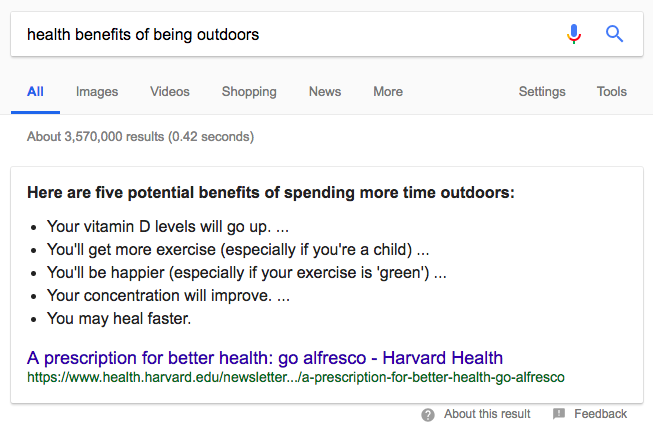
voice search optimization

If you are able to land this spot in results pages, you’ll be more likely to be the result found in voice search results. According to a survey by Backlinko, 40.7% of all voice search answers came from a Featured Snippet.

With the featured snippet, simple answers (such as asking a celebrity’s age) are answered directly as they are facts. For more expert/opinion-based posts, search engines will pull content from websites they think are the best fit to answer the question.

Helpful tips to get to that desired spot include:

  • Knowing and addressing your audience’s intent
  • Doing your keyword research
  • Creating high-quality content that answers questions
  • Implementing SEO best practices
  • Focusing on easy-to-follow formatting

At the end of the day, aiming for the Featured Snippet should be a top priority regardless of how people search, but it can really give you an extra boost with voice search.

Optimize for certain types of keywords

As most people in the marketing world know, when it comes to SEO, keywords are, well, key. They are at the core of your content strategy and help you identify and respond to audience intent.

When it comes to voice search, you need to think about keywords and SEO a bit differently as these search queries tend to be a bit longer than type-based search. Because of this, you really need to put an emphasis on long-tail keywords.

Additionally, when people use voice search, they’re typically more conversational than when they type terms into a search box. Be sure to create content around conversational phrases. Having an FAQ page on a site or Q&A related blog posts can be easy for search engines to pull from since questions typically come across as being more conversational. I like using Answer the Public to find questions related to search terms I’m trying to rank for. I definitely encourage you to check it out!

When it comes to SEO, I don’t really condone shortcuts as SEO should be looked at as a marathon, not a sprint, however, research is showing that there are some common trigger words that may help with voice search that you could add to your target keyword phrases to help you get found through voice search. These terms include, but are not limited to:

  • Buy
  • Get
  • Find
  • Top rated
  • Closest

Granted, don’t include these in all of your content, but you may want to consider sprinkling them in here and there.

Understand schema markup

If you’re asking yourself what schema markup is, I highly recommend starting your research (and don’t be deterred by code, this is important stuff!). Not only does it bode well for search optimization in general, it may also be one of the most important factors to ranking for voice search.

In a nutshell, schema markup helps search engines understand the content on a page. By including it on your website, you make it very clear what that page is all about, making it easy for search engines to scan.

Invest in mobile optimization

For SEO in general right now, it is imperative that your website is mobile-friendly. Google primarily cares about user experience and are now pulling the experience on mobile devices over a desktop for SEO. I’d recommend moving to a responsive design and ensuring mobile site speed is quick to avoid penalty.

Since so many voice searches are done via mobile device it’s essential you are optimized to help get found in mobile results.

Focus on content

While this may seem like a no-brainer at this point in the SEO game, there are a few specific tips that you should pay attention to specifically when it comes to voice search:

  • Ensure your content is simple and easy to read
  • Aim to write long-form content (roughly 2,000 words) as that’s typically what Google pulls from for voice search
  • Answer your audience’s questions and solve their problems with your content
  • Write/speak naturally in your content (this goes back to people using conversational phrases when using voice search)
  • Share your content on social media regularly, as those tend to perform better with voice search

Stick with SEO basics

Lastly, don’t forget about the basics of SEO. The more you follow those best practices, the more Google will reward you. Just because there are new aspects to consider doesn’t mean you should forget about the existing elements.

  • Be sure to optimize on-page elements with relevant keywords including URL, page title, header tags, alt text, meta description, and within the copy itself.
  • Build a backlink and review strategy.
  • Ensure your site is secure.
  • Focus on page speed (according to Backlinko, the average voice search result page loads in 4.6 seconds (52% faster than the average page).

I say this all the time but it never seems to be enough: build out your total online presence. Create the best user experience you can and you’ll see the benefits roll in.

Quick Fixes to Turn Your SEO Around

Quick Fixes to Turn Your SEO Around written by John Jantsch read more at Duct Tape Marketing

Let me be clear, SEO is absolutely a marathon, not a sprint. To do it well, it takes a lot of time and effort and needs to be a continuous practice.

With that being said, there are a few low-hanging fruit items that you can address first that can help turn your SEO efforts around (or kick them off) quickly.

Interested in what I’m talking about? Read on.

Focus on keywords with intent

With the way people search online these days, the key to SEO is understanding your user’s intent. What problems, questions, or goals do they have?

Did you know that if you’re already ranking on the first page of Google, providing the best answers within your content to questions your audience is searching for can potentially land you a featured snippet in search engine results pages? That’s huge!

People may express problems in ways that turn into key phrases, so content today has to be customer-focused.  To discover your customer’s intent, look at emails that you’ve sent. Talk to your sales or service reps. What questions are they answering?

I also find that tools such as Keywordtool.io and Answer the Public are extremely useful because they turn up actual questions people ask about specific terms, which is one of the best ways to find intent in a search phrase.

In addition to intent-based keywords, looks at the keywords your competitors are using as well and brainstorm ways to target those in order to compete in search rankings.

Use these target keywords within your content to help get found online.

Find and fix broken links

No matter how great your website is, broken links happen. External website URLs changes, pages get taken down, the list goes on. While it’s common, having broken links on your website can have a negative impact on SEO (404 errors are a big issue). It all ties back to Google wanting to provide their users with the best customer experience possible.

If you find a broken link on your website, either remove it or update it to the current link (or swap it out with an even better, more current one).

There are numerous tools you can use to identify these links without having to manually go through each page on your site. One of the tools I highly recommend using is Google Webmaster Tools. With it, you can not only identify broken links, but you can also see how your site looks from Google’s perspective.

Moving forward, if you decided to change any URLs on your site or remove any pages, be sure to set up redirects that drive to an existing page to avoid getting penalized.

Develop a backlink strategy

Link building is the new networking and is essential for your SEO efforts.

When I talk to business owners I often hear that link building is one of their biggest challenges, so they don’t always put a lot of effort into it because it can become burdensome and frustrating for them. Trust me, it doesn’t have to be that way.

They key is to create amazing content (this ties back into your keyword research strategy as well). By creating linkable assets, such as videos, how-to guides, infographics, and podcasts, you’ll be able to attract backlinks from other sites that want to link to that content. Share this content on your social platforms, via email, and with your strategic partners to help them spread the word with their networks.

In addition to creating this amazing content on your site, consider:

  • Being a guest on a podcast – check out the numerous benefits of this tactic here
  • Guest blogging on a credible site
  • Leveraging partnerships – Consider writing testimonials for your partners and include a link back to your site in the review.
  • Networking in person – Build those relationships!
  • Getting added to citations and directories

Don’t forget to add internal links throughout your site either. This can also help boost your SEO and it’s within your control.

At the end of the day, reputable backlinks will help to keep your site relevant in search engines.

Focus on the basics

It’s always good to go back to the basics and focus on your on-page SEO. Here are some tactics to keep in mind:

  • Include your target keyword or keyword phrase in your page title, meta description, H1 tags, URL, and organically within your page (don’t keyword stuff)
  • Ensure the page title is less than 65 characters and that the meta description is between 50 and 300 (this limit was increased this year)
  • Add internal and external links to your pages and posts
  • Label the image alt text with the topic you’re writing about

Additionally, do a review of your blog posts and optimize past content. See what links are dated and update them. Do your keyword research and see if there are newer and better keywords to target for the posts. Swap out old CTAs and replace with new ones. Keep your content current and show Google you’re staying active. It will benefit your SEO efforts.

Lastly, do a crawl of your site to ensure there isn’t any duplicate content. While this may sound like a no-brainer, after you’ve been developing content for awhile, it can be difficult to pinpoint what you’ve already written about (it could have been created years ago!). While writing about the same topic is OK, just make sure the content itself is unique from page to page or post to post.

That’s it for today! What low-hanging fruits have you grabbed onto that have produced good results for your business?

The Most Effective SEO Tactics of 2018 Thus Far

The Most Effective SEO Tactics of 2018 Thus Far written by John Jantsch read more at Duct Tape Marketing

We’re almost halfway through the year (what?!), which makes it a good time to start taking a look at what’s working as it relates to your SEO efforts so that you can plan accordingly moving forward. We’ve seen a lot of people increase their SEO budgets this year, which isn’t surprising, as it’s a significant piece of your marketing puzzle.

Here are the SEO tactics that seem to be working thus far.

Master keyword research

The importance of keyword research hasn’t changed over the years, but how we approach them has.

Your keyword strategy is the driver behind your content efforts (and in turn, your SEO efforts). Keywords should be used to identify user intent and search behavior.

Focusing your content on long-tail keywords gives you a better chance to match the intent of the person searching for you.

I’ve been using my keyword research to help me identify content hub themes every month.

Content hubs are fully foundational pages that have tremendous amounts of value about what the theme is, with blogs and other resources that people can click through to for further information.

I not only have internal pages driving back to this one hub page, I also include links to external, high-quality content on the page that can also be linked back to the hub page.

With so many pages driving to one another, you’ll start to gain a lot of trust and authority from Google, which will help your SEO efforts.

Think about the context of your content

As many marketers know at this point, Google’s primary job is to provide people with an excellent user experience, and because of this, they want to make sure their users get the best possible content provided to them based on the search criteria they’re looking for.

Gone are the days that you can just skim over a given topic. Today, you must take a deep dive into what you’re trying to cover so that a user can get all of the information they’re looking for in one place.

I’ve seen people say your post needs to be 2,000 words to be effective, however, I say use as many words as necessary to get your point across thoroughly. What’s worse than not hitting 2,000 words, is rambling on about nothing for the last 1,000 of those words. Think quality over quantity.

Focus on link-building

When I talk to marketers I often hear that one of their biggest challenges is link building, and because of this, putting a strong effort towards it is often put on the backburner, but this is a big problem.

Although rules and tactics have changed over the years, the heart of SEO still revolves around content and links. Without great content, you’ll never get links, so if you’re looking for a place to get started, create that amazing content. By creating linkable assets, you’ll be able to attract backlinks from other sites that want to link to that content.

Now, don’t forget internal links either. Linking to other content on your site can also help boost your SEO and it’s a low hanging fruit to grab onto.

Improve CTR

What you find on Google’s search engine results pages has changed over the years with different types of ads, answer boxes, and so on (that’s as of today, who knows what will show up tomorrow).

With so many places to click through to, it’s no wonder that click-through rates (CTR) on SERPs has declined for companies over the past few years.

So, how do you avoid this? Master the art of developing CTAs and copy that scream to be clicked on. This applies to ad copy as well as copy that shows up in your organic posts (such as the copy that can be found in your page titles and meta descriptions).

Optimize for mobile

Have you heard of Google’s mobile-first index? It’s exactly how it sounds. Google is now ranking search results based only on the mobile version of the page as opposed to taking both mobile and desktop versions into consideration. This makes sense from a customer experience standpoint as the majority of Google searches are done on a mobile device these days.

This is not good news for people who have put the majority of their time and effort towards desktop functionality.

Moral of the story is if your website isn’t mobile optimized, you’re going to take a hit when it comes to SEO. Some people think they can get by with their website being technically mobile friendly, but that doesn’t mean it’s perfectly optimized. Keep your visitors’ experience in mind and make sure the mobile version provides the best one possible. It will increase your odds to get found on search.

Use video and other visual elements

According to Cisco, online video will make up 80% of all online traffic by 2021. That number is startling, but does it really surprise you? It’s hard to ignore video, this medium can be so engaging!

So, while us marketers have been talking about video for years now, it’s time to really get serious about it.

Seems like a foreign concept? Start with YouTube! Not only is it easy to use and embed on your site, YouTube is the world’s second largest search engine and it’s owned by Google, which, from an SEO standpoint is a major plus (have you started seeing YouTub videos appear in Google Image search yet?).

In addition to video, be sure to include relevant and intriguing images on your site to help break up the written content on a page. Check your image file size to make sure it isn’t too large as that could slow down your site speed (a red flag for Google).

Be a guest on a podcast

I talked about this topic earlier this year but believe in the power of it, so I thought I’d revisit the topic, although you don’t commonly hear about it as a best practice for SEO. Here are a few of the benefits you’ll receive by being a guest on a podcast:

  • Access to a highly engaged audience
  • Easier than writing guest blog posts
  • You’ll establish real emotional connections
  • It becomes a highly shareable piece of content
  • You’ll gain credibility
  • Potential for online reviews

Combine the points above and you’ll create a recipe for SEO success.

Keep things fresh

Google wants to see that your site is active. In lieu of constantly posting new content, figure out ways to re-purpose existing content as well as ways to update that content. This can really help your SEO efforts without always having to reinvent the wheel.

Seems like a lot? It is, but don’t forget you have the ability to outsource these tactics to a specialist if you don’t think they can get done in-house.

Are you implementing the tactics mentioned above? What are you struggling with the most? What tactics are you seeing success with?

The Value of Discoverable, Shareable, and Useful Content

The Value of Discoverable, Shareable, and Useful Content written by John Jantsch read more at Duct Tape Marketing

Marketing Podcast with John Jantsch About Creating Useful Content

There’s no way around it, there are a lot of marketing channels today. I’m counting eighteen as of now (which can obviously change very quickly).

When I started my business we had six or seven ways to reach our prospects and customers. A lot has changed.

One of the things that I think is important to understand, first off, is that you don’t have to play in every channel. That’s one of the things that causes a lot of stress with a lot of business owners and marketers today.

What you do have to do is get very good at playing in the right channels, and additionally getting very good at integrating those channels (or at least understanding how they support each other).

That’s a challenge for a lot of people. We look at social media, content, SEO, and PR, and we think that they’re all separate tactics out there doing separate jobs.

When you look at them together, and actually intentionally think about how they can support each other, you amplify the effect, or the impact, of each.

In this post, we’re going to focus on three of these channels: content, social media, and SEO.

While those are separate channels, content is air for marketing today. It really powers every step in the customer journey and is one of the most essential marketing channels out there.

In fact, it probably is not really even fair to consider it a channel anymore, because it’s like the gasoline that goes in the car. You really have to have it no matter what kind of car you have.

I want you to think these channels, and make sure the content you produce in each is discoverable, shareable and ultimately useful.

Discoverability

Discoverability is often seen as an SEO play, and frankly, that’s what it is, but content drives SEO today. There are many search terms that are competitive, so everybody is out there competing for the search terms that they want.

People try to rank by doing effective keyword research, using targeted messaging, and knowing a lot about their users. It’s a good idea to develop a sense of intent as well in order to implement on-page SEO best practices.

While this all helps to make your content discoverable, you have to start with a content strategy that says “yes, we want people to find that, but that’s not where we want them to stop.”

Shareability

Once the content is discovered, the degree that it is shared will determine how widely it is distributed. By thinking about shareability of content, you’re multiplying the impact of search engine results because shares are going to draw links and other important SEO signals. They are going to increase your audience, which is going to draw more people. 

If we build our content with the idea that we can get a higher share rate, one of the benefits to that is that you actually don’t have to produce a ton of content.

If you produce content that is focused on:

  • How to do something
  • Why to do something
  • Lists
  • Great headlines
  • Great calls to action in the content
  • Using impactful images
  • Mobile usage

Then you can build your SEO-optimized content and make it much more shareable.

Shareable content is going to evolve your social media. This is one of the best ways to think about your content in the social media space. Making your content shareable will help expand the reach of people outside of your immediate network.  

Useful content

As I said in the beginning, I think the ultimate measure of success of any SEO plan is the degree to which people who discover and share your content, also find that content useful enough to quote, bookmark, link to, and consume deeply.

This idea of linking your content together to make it even more useful is an important part of trust building in the journey. If people have a problem, they go out and search for a problem, not for your solution.

They may not associate what you offer with their problem, but they’re trying to get a problem solved.

If they go to your website make sure you address their problem and give them an entire guide for how to solve it. Link together eight or ten pages, or at least associate all of your related content to a topic in a way that you’ve packaged it to make it easy to consume.

That’s the content that people not only love to share, but they love to link and bring other people to it as well.

It’s the kind of content that is going to make your SEO more effective, and make your content more discoverable because Google sees the signals that are being sent to that content.

It’s the kind of content that is ultimately going to lead people to buy your products and services, because you’ve addressed their problem, and made it easy for them to consume the content. You built trust signals, which is going to help you show up on page one of Google, which is huge. 

You’re giving somebody a reason to dig in on their own, and discover that what you sell is going to actually solve their problem.

That’s how you have to think about content.

There are a couple of metrics that I love to look at when I’m trying to analyze somebody’s content. I use tools, like Ahrefs, to see the number of keyword phrases driving traffic to page one.

I also like to use a tool called BuzzSumo. One of the things that it will do is dive into your content from a social media standpoint and will answer questions like:

  • How much sharing is going on?
  • What kind of content gets shared the most?
  • Who’s linking to it?
  • Who’s Tweeting it?
  • What is the length and format of the content?

It really breaks down all the sharing activity that goes on in your content.

I love to look at that kind of shared data because in many cases it will clearly point to your best content that’s being shared. Most of the time, that’s longer content that is more in depth, and that people find very useful. 

The value of your organic traffic is also a tremendous metric to really allow you to see how you’re stacking up.

Typically, what happens is your content becomes more discoverable because it was useful. It’s more shareable because it was useful. So it’s like this vicious, positive cycle that ends up making your traffic and visits worth so much more.

How to Create A Mobile Website That Gets Found By Google

How to Create A Mobile Website That Gets Found By Google written by John Jantsch read more at Duct Tape Marketing

Here’s the thing, as a society, we’re constantly on the go and Google has adapted to this sort of lifestyle. Because of this, in order for your website to succeed to it’s fullest capacity today, it needs to work well on mobile devices.

Just because it’s ranking well on a desktop does not mean the same results will translate over to search results on your phone. It has never been more important for you to have a mobile-friendly website.

There are a plethora of additional factors you need to keep in mind when it comes to mobile optimization that I’m not going to include in this post, but in order to get started, you need to lay the foundation of the website, which I plan to help do for you with the information below.

The three options for mobile website configuration

When it comes to getting found by Google on mobile devices, there are really only three ways to set up your site for mobile. I should warn you, I’ve listed the three below in the order of the one I least recommend to most recommend, so be sure to keep reading to find out my top recommendation.

Separate URLs

With this configuration, you have the desktop version of your site as well as a mobile version of your site. Your site will detect the type of device a user is using and will direct them to the best URL for that device.

The thing is, this type of setup is rather time intensive and difficult to manage for numerous reasons, one of them being that these mobile websites have a lot of SEO issues (which kind of defeats the purposes of trying to build a site that will get found by Google).

Dynamic Serving

With this setup, all of your content is on the same URL, but every user sees different code depending on the device they’re using. This is better than the option above, but it’s not without its own problems (for example, it often mixes up the two versions). Plus, as we all know, technology is always changing, and if a new device gets invented, guess what? You’ll need to create content for that new device.

Responsive design

Ding, ding, ding! Here’s is the one I recommend you go with. With this configuration, your page’s content and layout respond to each user depending on their device (without the need to separate URLs or use different code). This is definitely best practice these days.

Plus, it’s SEO friendly (Google even recommends this method), so if for no other reason, I’d say go this route for that alone.

Mobile landing page best practices

At the end of the day, the goals of your marketing efforts are likely to get people to convert, so you must ensure your landing pages are as efficient as possible to do just that. Keep the following in mind when you put them together:

  • Make them responsive (hopefully, you paid attention to the last section of the post)
  • Avoid adding images with large file sizes as this will impact load time (more information on the importance of site speed below)
  • Add your call to action above the fold – In fact, include the majority of the important information near the top of the page as well.
  • Get to the point. Make it clear what problems you’re solving and what your visitor will get in return.
  • Keep PDF formatting in mind. If you have somebody download, say, a content upgrade, like a guide that’s in a PDF format, remember, those don’t always format well on phones. Consider including mobile-appropriate formats instead.
  • Make buttons “thumb friendly” – Don’t make them too small or out of place; your thumb needs to be able to navigate the screen.

Why speed matters

Site speed has historically been a ranking factor for search engine results pages, but it’s moving closer and closer towards the spotlight. At the end of the day, Google wants to provide users with the best experience possible, and let’s face it, nothing is more annoying than when a site loads slowly.

Not to scare you, but Google actually recommends that your mobile site loads under a second. This is definitely easier said than done, but it’s a good goal to strive for.

I’d recommend checking out Google PageSpeed Insights to see how quickly your site loads on mobile devices. It will also give you recommendations on what to change to help your site load more smoothly.

Some of the recommendations may include:

  • Compress your images – reducing file size can help speed up load times
  • Cache your site
  • Load above the fold content first
  • Cut down on redirects

To make sure everything is functioning properly, it’s important to implement Google Analytics on your site so that you can track performance. Wherever you see any shortcomings, be sure to address them promptly.

As you can see, the good news is that as intimidating as it may sound, it really isn’t that difficult to create a mobile website these days. The hard part is simply getting started.

If you found this post helpful, be sure to check in throughout the rest of the month as I’ll be writing more about the topic of mobile optimization, including mobile content, mobile campaigns, and mobile email. Stay tuned!

How to Rank Well for Your Brand-Driven Queries in Google

How to Rank Well for Your Brand-Driven Queries in Google written by Guest Post read more at Duct Tape Marketing

How long ago did you search for your brand name? I assume you think your Google search reputation is pretty OK?

Well, let me tell you: Searching just for the company name isn’t enough. Imagine someone searching for [your-company-name scam] or [your-product-name alternative]. Don’t you want to make sure your site ranks #1 for those queries?

People are researching companies using online search more and more:

  • Less than 30% of customers want to talk to a salesperson to learn more about a product, while over 60% use a search engine to learn more about it. (HubSpot, 2016)
  • B2B researchers do 12 searches on average prior to choosing a specific platform to work with. (Google, 2014)
  • 7 in 10 Internet users search online for information about others, including managers they are going to work with, companies they are going to buy from, etc. (source)

It’s highly important to rank #1 for search queries that contain your brand name because those are people who already know your brand: They are most likely to engage and buy. Don’t lose those customers!

1. Identify Those Brand-Driven Questions

The first step is to identify all possible search queries that your company name can come up in. If you own a fairly well-known company, you can simply treat your brand name as a core term and use your favorite keyword research platform to generate a list of keyword suggestions containing that core term.

If you own a startup that is just entering the market, there may be not many people searching for your company yet. In this case, keyword research tools won’t help much because they only catch pretty high-volume search phrases.

A workaround to this is to take a more established competitor’s name and run keyword research tools for it.

As an example, if I were entering a market with a new online photo editor, I’d research Google search queries containing [canva] and then see which of those phrases can be applied to my own tool. Using a tool like Serpstat, here are brand-driven phrases that I got:

How to Rank Well for Your Brand-Driven Queries in Google

You can export the whole list into Excel to keep playing with its sorting and formatting options.

Pay attention to Google Suggest results!

One thing not to forget here is what people see when they start typing your brand name in Google’s Search because that impacts their searching behavior:

How to Rank Well for Your Brand-Driven Queries in Google

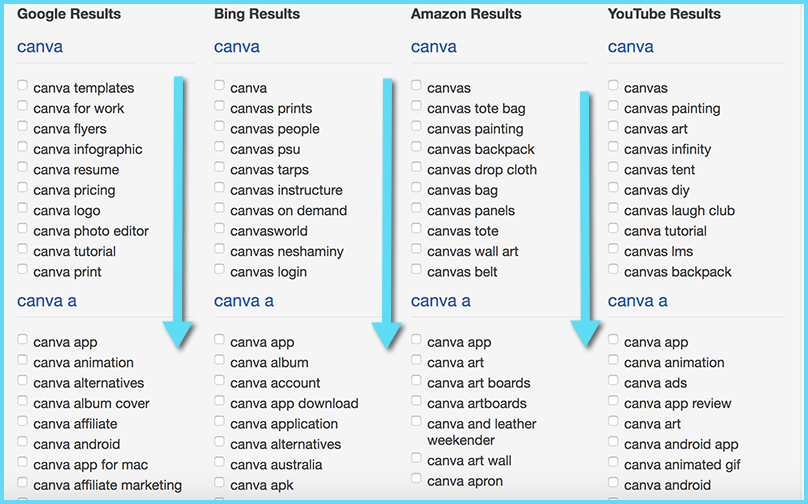
You can use a free tool called Bulk Suggest to generate all types of suggestions people see when typing your business name (or your competitor’s business name) in Google, Bing, Amazon or Youtube:

How to Rank Well for Your Brand-Driven Queries in Google

You can export those too and then merge with your keyword research spreadsheet.

Keep An Eye on Those Answer Boxes!

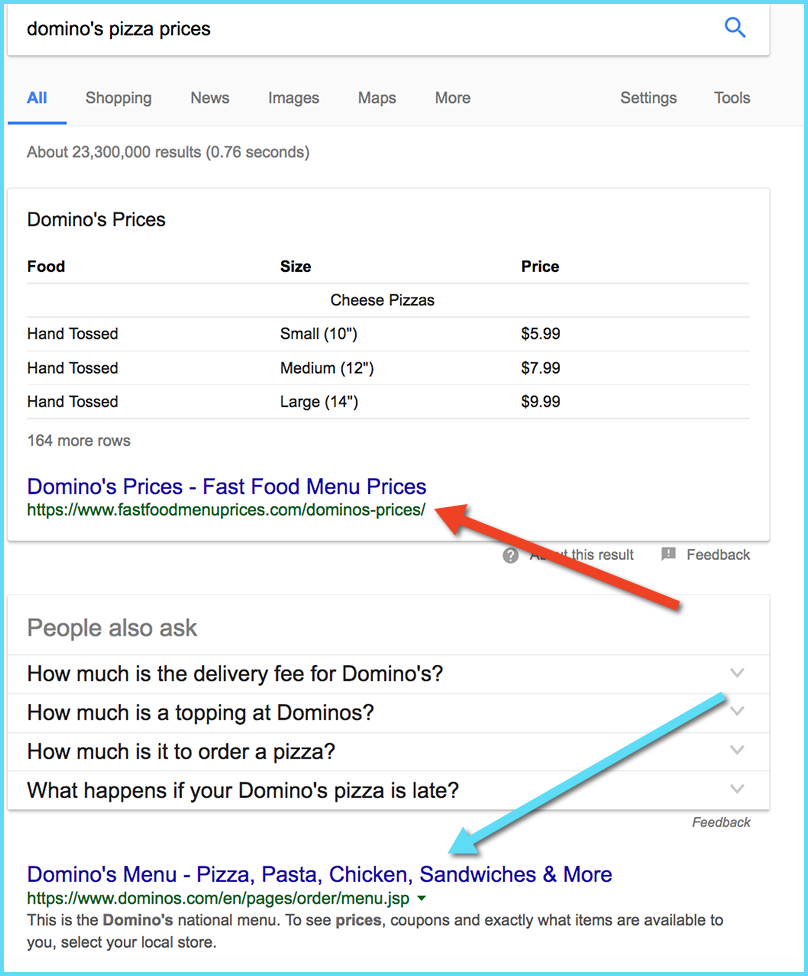
Another important thing to note while doing your keyword research is to keep an eye on those answer boxes Google features on top of search results. In many cases, even for branded search queries, a third-party website can be featured in the box stealing most of the clicks from the actual brand. Here’s an example: Look how Domino’s Pizza ranks #1 for its branded query [domino’s pizza prices], yet that first position is almost invisible due to someone else being featured as a quick answer for this brand:

How to Rank Well for Your Brand-Driven Queries in Google

These cases should be noted as highly important: Analyze those featured results and try to snap the featured position from them. Here’s a good guide on optimizing for featured snippets. Let it be your priority.

Search Google for every branded query you come up and make sure nothing like this is happening for your brand.

2. Organize Those Keywords

With so many keyword suggestions, it’s hard not to get lost in them.

I like Serpstat because it also helps in clustering those keyword lists that help optimize one page for a group of keywords instead of just one.

How to Rank Well for Your Brand-Driven Queries in Google

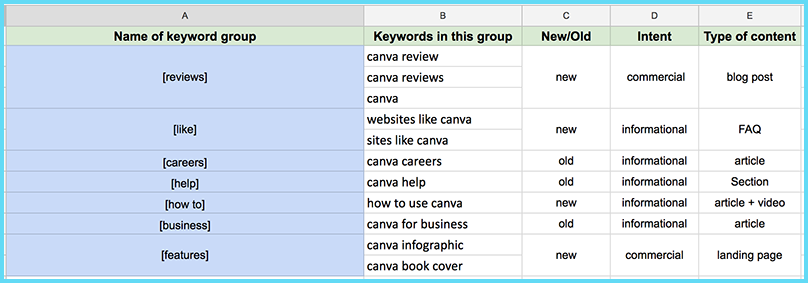
Clustering your keywords is your first step to getting those lists organized: You break your brand-driven queries into subtopics and sections and then figure out where each group should fall into.

You can use the same spreadsheet you got as an export from Serpstat to further organize your list. For example, your multiple labels for each keyword may be:

  • New / Old content: Should you create a new content to cover this keyword group or do you already have a page addressing it?
  • Informational / Commercial intent: Does the query reflect an informational intent or does it indicate that the user is ready to buy something for you? Your page should target the customer’s intent.
  • Type of content: If it is informational, what type of content should you create? It could be a blog post, an FAQ page, a commercial landing page or a blog post announcing something.

Make yourself a copy of this free spreadsheet to work on your brand-driven keyword lists:

How to Rank Well for Your Brand-Driven Queries in Google

3. Create On-Site Content

Your goal is to create enough content that answers all your (or your competitors’) customers’ questions. That’s the only possible way to rank for those queries but it will also keep your sales and customer support teams happy because (1) They will get fewer repetitive questions and (2) they will be able to refer customers to a solid resource on your own site whenever they get an already-covered question.

The third item in the above list of labels will help you determine the best plan as to where to cover a specific group of keywords. Chances are, you’ll want to create a separate section covering all types of questions your customers may have about your brand. Here’s a great list of WordPress themes that can help you create an FAQ section, a knowledge base, and a support forum.

How to Rank Well for Your Brand-Driven Queries in Google

4. Create Off-Site Content

Here’s one thing to note here: In most cases, your domain name will be able to take one position (maybe two if you are lucky) for each search query. But since these are all queries with your brand name, it’s very important that you rank for ALL of them and, if possible, “own” the top 5 rankings for as many of these as you can.

Imagine those users who scroll through a top result and click your competitor’s link talking about this topic and mentioning your brand? This is a lost customer who meant to come to YOU!

That being said, you need to go beyond hosting content on your own site. You need to optimize off-site assets to rank for many of those terms.

Here are a few ideas for you to try:

1. Use Linkedin “Showcase” Feature

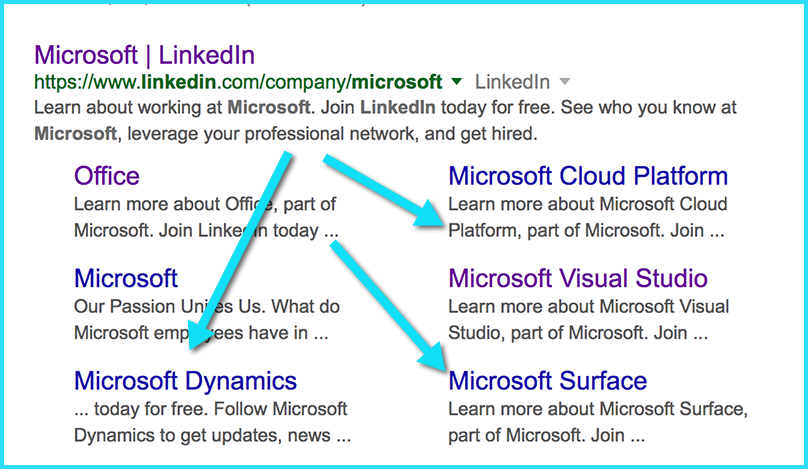
Create Linkedin Showcase Pages for each of your products and services. These rank well and are easy and fast to put together!

How to Rank Well for Your Brand-Driven Queries in Google

2. Create lots of video walk-throughs and guides

YouTube videos well and also they get those Google rich snippets that attract clicks and work great for brand awareness building.

How to Rank Well for Your Brand-Driven Queries in Google

3. Put together a video course and put it up on Udemy and similar sites

Free video courses are a great way to build additional content assets which collect leads and get ranked in Google for your brand terms. If you decided to take step #2 above, you can also use those videos for the course!

5. Collect More Questions!

Don’t stop at collecting those search queries. Again, those are questions enough people type into the search box for them to be caught by keyword research tools and Google Suggest algorithm. But those are not ALL questions that may include your or your competitor’s brand.

Set up tools and processes that will allow you to monitor real-time questions and also research natural-language queries people use to talk to each other and your sales and support teams. Continue growing your on- and off-site knowledge bases as more questions come! This way you’ll always be one step ahead of your competitors, both in search and beyond.

Here are two ways you can do that:

5.1 Monitor Social Media to Develop More Content

Search your brand name and your competitors’ names on Twitter and use a social media management dashboard to monitor all of those search results within one dashboard. Cyfe is a great dashboard that allows you to create an unlimited amount of widgets for free.

How to Rank Well for Your Brand-Driven Queries in Google

As soon as you spot questions concerning your brand, answer it immediately on Twitter and pass over to your content team to cover it in more detail in your on-site knowledge base.

5.2 Collect Customers’ Questions from Your Teams Working with Them

Another way to monitor what actual people may be wondering about your brand right now is to talk to your sales and customer support teams. They deal with your customers on a daily basis answering tons of questions.

Encourage them to record all those questions for your marketing team to be able to monitor them regularly. Salesmate is a great solution because it gives you tools to record everything concerning any lead and distribute the information between the teams. It’s a very efficient way to record and organize any sales information, including those questions people ask over the phone or in the emails.

How to Rank Well for Your Brand-Driven Queries in Google

Your Cheatsheet for Ranking Well for Your Brand-Driven Queries in Google

I have put together all the steps and recommended tools for each step in this one-page cheatsheet you can download for free here.

Steps Tools
1. Identify brand-driven queries for your brand name or your competitor’s name or both Serpstat
1.1 Collect Google Suggest results for your brand name or your competitor’s name or both Bulk Suggest
1.2 Research whether there are “featured results” for your brand-driven results and if so, make it your priority to get featured there Google search
2. Group keywords by topic and organize them by intent and type of content you’ll create to address each of them Excel or Google Spreadsheets
3. Start working on content to target as many brand-driven queries as possible. Consider setting up an FAQ section or a support forum or both to build them up as more brand-driven queries are identified WordPress themes and plugins
4. Create off-site content assets that will allow you to hold more than just position #1 for brand-driven queries Linkedin, Youtube, Udemy, etc.
5.1 Monitor Twitter search for your brand and your competitor’s brand name to identify more customers’ questions to build content around Cyfe
5.2 Work with your sales and customer teams to identify even more questions actual customers ask regularly and add those to your content plan Salesmate

[Download this checklist as PDF here]

Have you been researching your brand-driven queries and building your content strategy around them? Please share your tools and tips!


About the Author

Jessy TroyJessy Troy is an experienced writer and freelance editor who runs Social Media Sun, an online magazine for social media managers. Follow her on Twitter as @JessyTroy

Powered by WPeMatico