Upskilling Your Team for What’s Next written by John Jantsch read more at Duct Tape Marketing
Catch the Full Episode:
 Overview
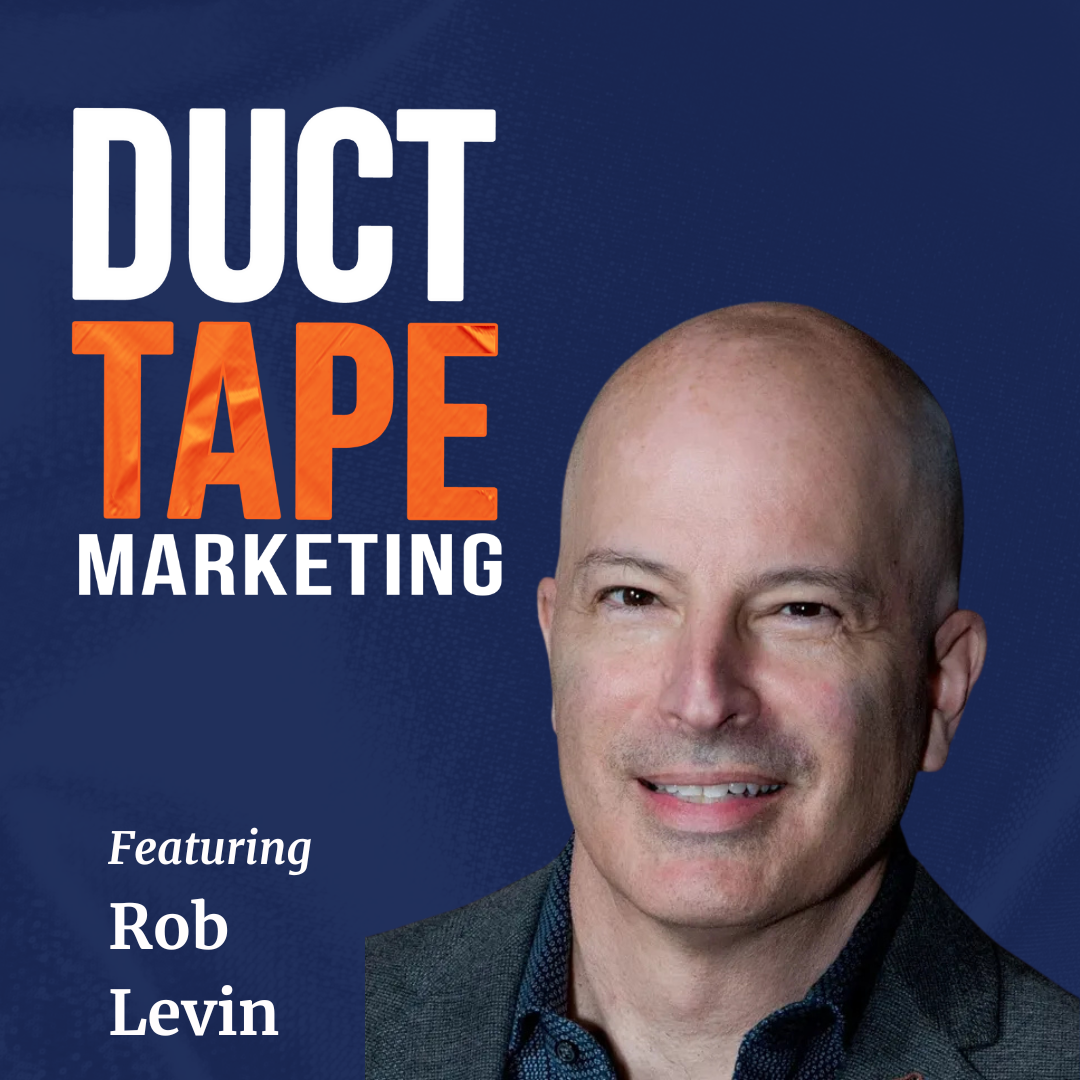
In this episode of the Duct Tape Marketing Podcast, John Jantsch interviews Rob Levin, serial
entrepreneur, chairman and co-founder of Work Better Now, and author of
The New Talent Playbook: The Ultimate Guide for Building Your Dream Team.
With over 30 years of experience helping small and mid-sized businesses solve persistent
talent challenges, Rob shares why the traditional hiring “playbook” no longer works. He
explains how the pandemic, generational shifts, remote work, and artificial intelligence
have fundamentally changed the talent landscape.
The conversation explores the hidden talent crisis facing SMBs, why culture is more critical
than ever, how to rethink KPIs in a remote-first world, and what it really means to become
an AI-first organization. If you’re still managing talent like it’s 2016, this episode offers
a roadmap for building a future-ready team.
Guest Bio: Rob Levin
Rob Levin is a serial entrepreneur and business growth expert with more than three decades
of experience helping small and mid-sized businesses thrive. He is the chairman and co-founder
of Work Better Now, a company that empowers U.S.-based SMBs to access highly skilled remote
professionals, particularly from Latin America, to overcome hiring bottlenecks and build
high-performing teams.
Rob is the author of The New Talent Playbook: The Ultimate Guide for Building Your Dream Team,
where he outlines a modern approach to talent strategy in an era defined by remote work,
rapid technological change, and AI disruption.
Key Takeaways
1. The Talent Crisis Is Really a Talent Shift
Despite headlines about layoffs, many small and mid-sized businesses still struggle to fill
critical roles. The skills needed to succeed in large enterprises often do not translate to
the owner-minded, adaptable talent required in SMBs.
2. The Old Hiring Playbook Is Obsolete
Many business owners are still operating as if it’s 2016. Power dynamics have shifted, top
performers have more leverage, and younger generations prioritize culture and meaning at work
more than previous generations.
3. Culture Is a Strategic Advantage
A clearly defined set of core values is the foundation of a strong culture—especially in remote
and hybrid environments. Companies should hire and fire based on core values and intentionally
build a culture that embraces change.
4. Remote Teams Require Structure and Over-Communication
In a remote environment, clarity and communication must be intentional. Weekly meetings,
consistent updates, and well-defined KPIs are essential to maintaining alignment and accountability.
5. KPIs Benefit Employees as Much as Employers
Well-designed KPIs are not just management tools—they give employees clarity on expectations and
what it means to “win” in their role. A lack of KPIs often signals unclear leadership rather than
poor employee performance.
6. Upskilling Is a Competitive Imperative
As technology and AI reshape roles, companies must identify the new capabilities they need and
aggressively invest in training. Affordable and high-quality education is widely available, and
businesses should leverage it.
7. Business Owners Must Lead the AI Shift
Before expecting teams to use AI effectively, business owners must gain hands-on experience
themselves. Understanding AI’s capabilities firsthand enables leaders to redesign workflows,
not just automate existing tasks.
8. Move from Doing the Work to Managing AI
The future of many roles will involve managing, refining, and validating AI output rather than
executing routine tasks. Organizations must help employees transition from task execution to AI
supervision and optimization.
9. Become AI-First, Not AI-Improved
Rather than using AI to enhance existing workflows, companies should rethink processes from the
ground up with AI doing much of the heavy lifting. This mindset shift can dramatically improve
productivity and scalability.
10. Global Talent Expands Your Competitive Edge
Expanding your hiring reach beyond local markets—across the U.S., Latin America, and beyond—opens
access to skilled professionals and helps solve persistent hiring bottlenecks.
Great Moments from the Episode
- 00:03 – Introduction to Rob Levin and The New Talent Playbook
- 01:14 – Why the talent market has fundamentally changed since the pandemic
- 02:15 – From “They’re lucky to have a job” to employee leverage
- 04:11 – Why layoffs don’t solve the SMB talent shortage
- 06:02 – Understanding the hidden talent crisis
- 08:27 – Identifying new capabilities and upskilling your team
- 10:53 – Why business owners must take hands-on AI training
- 11:56 – Becoming an AI-first organization
- 13:20 – Why culture matters more than ever
- 14:23 – Managing culture in remote and fractional teams
- 16:41 – Why KPIs are more for employees than employers
- 18:26 – Using AI as a thought partner for performance measurement
- 19:45 – What Rob would update in the AI chapter today
- 21:28 – Addressing employee fears about AI replacing jobs
- 22:42 – Where to find The New Talent Playbook and connect with Rob
Quotes
“There’s such a long list of changes, but the biggest one is that the old talent playbook just doesn’t work anymore.”
“KPIs are actually more for the employee than the employer. They give clarity on what winning looks like.”
“Don’t just use AI to improve a workflow. Redesign the workflow so AI is doing the heavy lifting.”
“You’re only scratching the surface of what AI can do for your company if you’re not using it as a thought partner.”
Resources Mentioned
- The New Talent Playbook: The Ultimate Guide for Building Your Dream Team by Rob Levin
- Work Better Now – Nearshore talent solutions for SMBs
- National Federation of Independent Business (NFIB) hiring trend surveys
Connect with Rob Levin
John Jantsch (00:03.266)
Hello and welcome to another episode of the Duct Tape Marketing Podcast. This is John Jantsch. My guest today is Rob Levin. He’s a serial entrepreneur and business growth expert with more than 30 years of experience helping small and mid-sized businesses thrive by solving their most persistent talent challenges. He’s the chairman and co-founder of Work Better Now, a company that empowers US-based SMBs to access highly skilled remote professionals, particularly.
from Latin America to overcome hiring bottlenecks and build teams that drive growth and innovation. But today we’re going to focus on his newest book, the new talent playbook, the ultimate guide for building your dream team. So Rob, welcome to the show.
Rob Levin (00:46.516)
Thanks, John. Great to see you.
John Jantsch (00:48.632)
So.
You were before we even got started, you were talking about the speed of change and that’s really what’s going to be my first question. I mean, you’ve worked with, I’ve worked with small businesses for decades. in your view, what’s changed the most about hiring in the last, I was going to say five years, but I I could say five months, I guess. And what, what prompted you to write the new talent, playbook?
Rob Levin (01:14.184)
Yeah, and I’m going to if it’s okay, John, I want to go beyond hiring. I just want to talk about talent in general. And a ton has changed. And in fact, what the reason the reason I wrote the book is I still I saw how the talent market changed. And I can talk a little bit about that. But I also saw how business owners were still
John Jantsch (01:18.638)
See you soon.
Rob Levin (01:35.142)
running the same talent playbooks, if you will, as if it was 2016. And a lot really changed in the pandemic. So let’s talk about what’s changed. There’s such a long list. I’ll mention a few things. Number one, younger, let’s put it this way. And now it’s arguable whether this happens every generation or so or not. But younger generations in the workforce, at least I’m hearing this from business owners like myself, Gen Xers.
baby boomers, the younger generations of the workforce work differently than the older ones do. And I think a lot of business owners are having trouble understanding that. The biggest change perhaps out of all of them, and I have so many of them, but the one I think to focus in on is…
It’s and you wouldn’t know this from reading the headlines, but it’s there’s I used to call it a talent crisis. In fact, in the book, I call it a talent crisis. I’m not calling it a talent shift where it’s really hard for small and mid-sized businesses to find the talent that they need. And this cascades to the point where it also means that they may be holding on to employees that are not the right people for them to grow going going forward. And and one way to think about
how people’s mindsets have not yet changed is you and I are old enough to remember when you used to hear bosses say something like, they’re lucky to have a job, right? And there’s still people with a similar type mentality and that has totally changed. A lot of the power, if you will, and I don’t really like to look at it that way, but it’s a way that people understand has shifted the employee side, particularly those top performers that we all want in our business.
John Jantsch (03:07.862)
Right, right.
John Jantsch (03:20.32)
Mm-hmm.
John Jantsch (03:26.638)
You know, it’s interesting you met at the outset of that. You mentioned the idea that, you know, probably every generation thinks this and I, and I, I suspect there’s some truth to that, but it feels like the gap’s bigger now because it’s, it feels like a bigger shift. Again, I’ve only been through one generation, so to speak. Uh, but it feels like it is, um, you know, talk to me a little bit about the fact that I like, I’m talking to a lot of people, uh, uh, a lot of my peers, a lot of your peers, you know, have kids getting out of college. Um, and.
They’re saying, you know, it’s terrible out there. The job market’s, you know, absolute disaster out there, you know, for people coming out of college. And yet, you you just referenced the idea that the leverage is actually kind of with the job seeker. So how do you kind of balance that?
Rob Levin (04:11.624)
That’s a great, great question. I have two kids in college and I’m worried about their job prospects. I’m actually telling them to start their own businesses. So if you look at the headlines, the headlines are mass layoffs, right? True. The headlines are AI is going to take jobs away, which I believe is true. And it may even start, it may start to be happening right now. That said,
John Jantsch (04:20.7)
I’m
Rob Levin (04:39.634)
You know, in a business, when you’re running your own business, you don’t have an HR department, you don’t have a training department, or most companies don’t have a training department. What are you dealing with? You need people that have experience, that have an owner’s mentality, you need that in a small business, you don’t get that, you know, somebody working in a large business rarely has that, you don’t necessarily need that skill set. In fact, you probably don’t want that skill set in a larger business.
And you need somebody you you meet need somebody with at least some experience Those people are hard to find and the thing also thing to remember is like well, you know, you might say well All of these layoffs are happening So these people are now available the skill sets that you need to thrive in a large business are not necessarily the same skill sets That are needed in a small or mid-sized business and the data backs this up You’re probably familiar with NFIB National Federation and it’s been around forever. They do they do a survey or poll. I think it’s
John Jantsch (05:31.79)
Sure.
Rob Levin (05:36.682)
every month. And you’ll routinely see, I think it’s about a third of small and mid-sized businesses cannot fill roles.
John Jantsch (05:45.198)
Thanks
John Jantsch (05:48.504)
So one of the things you talk a lot about and you mentioned it a couple of times, I wonder if you could kind of lay out this idea of the hidden talent crisis that you’ve really been speaking so much about.
Rob Levin (06:02.418)
Yeah, it’s pretty much what we’re talking about. It’s just really hard to find great talent, at least within the US, and we could talk about.
One of the chapters of book is about, you know, expanding your reach, not only expanding it so that you can hire people remotely throughout the U.S. or maybe throughout North America, but also Latin America, even even Asia. So you have that and a lot of companies also where they’re struggling is the other thing that’s changing beyond talent is everything else in business, right? So technology is driving so much change. A.I. is, of course, a great example. I don’t have to tell you marketing has changed how much in the past five years.
John Jantsch (06:34.638)
Yeah, yeah.
Rob Levin (06:43.408)
compared to the past 20 or 30 years, right? And what does this mean for small and mid-sized businesses? It means that they need new capabilities. And their current employees, if they…
John Jantsch (06:45.102)
Sure. Yep.
Rob Levin (06:54.79)
Hopefully there’s an opportunity to upskill them, which is a big part that I think I dedicate about half of a chapter to upskilling your current employees to bring in those new capabilities in your company. if your people are not upskillable, if you will, then you have a serious problem on your hands, especially if it’s hard to hire the people that have those capabilities that you need to bring into your company.
John Jantsch (07:10.894)
Mm-hmm.
John Jantsch (07:20.558)
Yeah, so there’s a couple of things to unpack there. I would suggest, you know, a lot of people talking about all these jobs going away. In one hand, they are, but I think what they’re doing is they’re shifting to a new set of, you know, capabilities that somebody needs to have. So yeah, some of the routine stuff that you just needed somebody that, you know, that could put in the hours to do the tasks, those are certainly are going to be things that AI does pretty well. And those jobs are going to go away, but
by the same sense, this idea then of who’s making decisions about what’s good and what’s bad, what’s the right decision, what’s not, what’s on brand, what’s not. I I think those people are going to remain humans, but they might either need to be different humans than you have today, or as you said, upskill. So how do you take somebody that you hired essentially to do tasks, because that’s how you saw the role, who now really needs to do something that
you didn’t hire them for, they may be capable of doing, but you didn’t hire them for that. I mean, how do you make that assessment, but then also how do you make that leap?
Rob Levin (08:27.24)
Yeah, so let’s do this in a general sense and then we can drill down to AI because I think AI is very specific.
situation, although AI probably has a lot to do with the new capabilities that a lot of companies, need. So the first thing to do is identify the new capability you need in your company. So, you know, I’m talking to Mr. Marketing here. So, you know, the marketing capabilities have are, are, changing. And the first thing you have to do is recognize, well, what is it that you need? And then the question is, is, you know, do I have somebody on the marketing team that is up skillable? Do they have the.
Do they have the desire to learn something new? Do they have that ability? Do they have the ability to not only learn it, but then bring that capability internal? And here’s the good news about all of this is that
the training, you if it’s a new capability, you’re have to look external for training, which is totally fine. In fact, companies should get really aggressive about this because there’s so much good training out there. Much of it is low cost, if not free. You know, for example, on the marketing side, HubSpot, all of the major CRM and marketing platforms are all offering training, teaching you exactly what needs to be done. Because a lot of this a lot of the changes in marketing, of course, are technology based. So again, identifying what you know, what is
John Jantsch (09:27.224)
Yes.
Rob Levin (09:46.146)
it that I need and then finding the person in your company, giving them the time to do it, obviously paying for any fees that might be there and having an understanding with that person that look, I’m going to invest in the training for you. This is good for you and your career. I do expect that you bring those capabilities in and then when they do that, be prepared to give them a promotion and the raise that they’re probably looking for. Everybody wins. talking about AI, AI in
particular, my personal opinion on this, having done this myself, is that I think every business owner needs to go through a hands on AI course first, you need to really understand what the capabilities of AI are. Before you can start to look at people on your team. All right, I need you to, you know, pick up this AI capability, let’s say with marketing or with operations or, etc. I think the owner needs to have some level of understanding
And in my opinion is that you need to do some hands-on AI training yourself first. I think everybody needs to do that.
John Jantsch (10:53.646)
Well, I think in a lot of ways, what’s holding some people back is it’s going to require, I think, a total mindset shift. You know, there are definitely people who are looking at AI and just saying, oh, we can do that task that used to be done by this person faster, you know, as opposed to like restructure how they even think about their organization. And so I think, I think in some cases, you know, instead of diving into how does this tool work, it’s more how do I structure my entire organization, you know, for a new reality.
Rob Levin (11:23.698)
Right, and that’s why I think.
that the owners AI training that they should go through has to be hands on because then you’ll actually start to see what the when you actually start to build something with AI, a light bulb will go will probably go off in your head and you’ll see what what what AI is capable of. And then we’re using the term at work better now. We’re using the term AI first. We’re now which which what that means is not to use AI to improve an existing workflow. But let’s have let’s have that workflow totally
John Jantsch (11:29.934)
Yeah.
John Jantsch (11:36.13)
Right.
John Jantsch (11:47.726)
Mm-hmm. Mm-hmm.
Rob Levin (11:56.304)
redesign where AI is doing a lot of the heavy lifting. And of course, that’s going to come with a lot of retraining of our team to go from doing the work to managing the AI agent or what bot or whatever you want to call it that’s going to be doing the work. you know, there’s another fundamental thing that really should happen.
before all of this. And this is a big part of how the talent game has changed a lot over the past 10 years with an emphasis on the past few. So culture in your group that has always been important, it is by far more important than ever. It is so important today. And why is that? Well, number one, I just give you a few data, not data points, but sound bites for this. Number one, the younger generations, and there are, there’s plenty of good workers
John Jantsch (12:30.051)
Yes.
Rob Levin (12:47.082)
those younger generations. Culture matters a lot to them. Culture, meaning, right? So that alone should wake everybody up and say, hey, this isn’t something maybe I focused on in the past, but I’m gonna start focusing on it now. And I dedicate a whole chapter in the book on it.
But also, not only just having a healthy culture, but let’s have a culture of accepting change and figuring out how to harness change as opposed to, you know, kind of push it off to the side, which a lot of people are still doing.
John Jantsch (13:20.366)
So there’s a couple issues I was going to bring culture up. So perfect segue. There’s a couple of things that I know are dear and dear, dear and dear to you because it really impacts the business work better now structure. So when you mentioned culture, you know, a lot of organizations, small businesses today, you know, this used to just be, you know, a foreign thing, but today have fractional just about everything. They bring in contractors to do certain jobs.
Certainly Work Better Now’s entire business model is placing employees who are remote. So how do you manage culture? It’s obviously one way to do it in an organization where everybody’s there, they’re all in the seats, you have the company lunches. I mean, you do a lot of the things that can build some of that. How do you manage that when you have part-time people, you have remote people, you have…
you folks that are from different cultures, you know, for example, as Work Better Now really supports them. I’m curious if you ever get any pushback from that, you know, that very thing.
Rob Levin (14:23.604)
We used to get a little bit, it’s going away rapidly. So in terms of our experience, but what I will also tell you is that in my opinion, and this has worked for us, it worked better now, in my opinion, the starting point is defining your core values, right? So in other words, your core values are essentially like, what do want our culture to be?
John Jantsch (14:40.334)
All right.
Rob Levin (14:45.364)
So for example, some of ours is we put our talent first, we believe in excellence, and so on and so forth. And we recognize on those, we hire based on them. When we have to fire, we fire based on those. So there’s a little bit of clarity there, starting with those core values. Then the next thing you do in a remote environment, and by the way, it doesn’t matter whether somebody’s in three states over or the next continent over, remote’s remote, is we over-communicate.
We over communicate. we have a weekly staff meeting that we have. We have teams. have updates on teams. We reiterate anything that’s important on email. It’s really, really important to over communicate. Then I’ll also add that KPIs in a remote environment, KPIs are important period, but KPIs for every job and several KPIs when possible for every single role in the company is extremely
important because at least now you have something you can measure people on. And then also, this is one that I only talk a little bit about it in the book, but it’s been coming up in conversations a lot more lately, is something as simple as clarity.
You know, I was talking with a business owner last week. can’t remember what the role was that they were discussing in their company. It was actually in my, in one of my CEO peer groups. And I said, you know, the way you’re talking about this, I don’t think you made it very clear. And this is a very polished business owner. I don’t think you made it very clear what your expectations were. And then I don’t think you had the proper check-ins to make sure that this person was on track. So when people are in the same office.
It’s a little easier, right? There’s the water cooler. You just kind of roll your chair back and say, hey, how are we doing with this project? In a remote environment, you need a little bit more structure. That’s also where the communications come into play.
John Jantsch (16:41.72)
Yeah. You you mentioned that KPIs and I think a lot of people don’t realize that those are a two way street as well. You know, I mean, lot of business owners are like, I’m giving you these so that, you know, I know if you’re on track measuring you, but I’ve talked to a lot of employees. They’re like, thank God you gave me these. I have, so I know what I’m supposed to do here. I know how to win. Because I think a lot of times it’s just like, do the work and you know, hope everybody’s happy. And so I think that,
Rob Levin (17:01.748)
That’s right.
John Jantsch (17:11.22)
we sometimes probably underestimate those KPIs are as much for that employee as they are for us.
Rob Levin (17:17.492)
think they’re actually more for the employee. And if anything, when I see a company that doesn’t have KPIs, more often than not, what has happened is that the employer or the manager, whomever it is who has the responsibility of overseeing somebody, has not really figured it out themselves what’s important in its role. So how can you have clarity?
John Jantsch (17:20.13)
More? agree.
John Jantsch (17:36.812)
Right? Right. Right. Yeah.
Rob Levin (17:41.172)
you know, when you yourself don’t know. And it’s not okay to say, I know it when I see it, because it doesn’t work when you’re on the receiving end.
John Jantsch (17:47.438)
Yeah. You know, and one of the beauties of AI quite frankly is that you can go to a chat GPT or whatever tool, you know, even if it hasn’t been trained that much and you can actually ask it what here’s our goal. You here’s what we’re trying to do. What should we be measuring? I mean, instead of trying to sit around and go, okay, I need to write all these job descriptions and KPIs or whatnot, you know, just, just have a conversation with these tools and, and it, you know, it,
may not be tuned 100 % to you because it’s kind of doing the average of what the world does out there, but it may be a great way to start rather than you just saying, don’t know where to start.
Rob Levin (18:26.514)
Yeah. You know, I, what, what, one of the things that frustrates me even pre AI, but certainly now in this AI world is when somebody’s like, well, I’m going to do it this way, as opposed to actually trying to research the best practice, which pre AI you can do based on an internet search now with AI, right. it’s, it’s inexcusable to not have tapped into this wealth of knowledge, right.
John Jantsch (18:42.914)
Sure.
John Jantsch (18:51.554)
Benchmark your industry no matter what the size your business is, right? Yeah, exactly.
Rob Levin (18:54.098)
Yeah. And by the way, you know, yes, absolutely, you should be doing this and for every role and that’ll help you come up with the KPIs and projects and even qualitative ways to assess people and communicate what the role is all about. But let’s also be clear, John, and you and I know this and I hope everybody’s understanding this. You’re only scratching the surface about what with what AI can do for your company by using it as a thought partner, which is what we’re talking about.
John Jantsch (19:21.966)
Yeah, yeah. I’m curious, what have you learned since you wrote the book and since you’ve been out there talking to people about the book? I asked that question specifically or maybe because I’ve written books and I just always know that like I’ll have conversations or I’ll go on speaking and somebody will say something to me. I’ll go, dang, I wish I would have put that in the book. That’s great. I’m curious if you had any of those a-ha’s.
Rob Levin (19:45.78)
Well, it’s slightly different. The biggest aha I have is what we were just talking about. the AI chapter of my book was written a little over a year ago. you know, now what’s in there still applies, which what I said a little over a year ago was experiment and encourage everybody to experiment. By now, yeah, you have to do that, by the way, you should do that. Now it’s take a course and figure out.
What are some of the biggest challenges you have in your business and how can AI help you with those challenges, not only as a thought partner, but actually in doing the work? then you have to start to think about…
And if I was writing the book today, this is what would be in it regarding AI is how do you get your team to go from doing the work to managing the AI, refining it, checking the results? Because AI is not going to get it perfect all the time, but it’s going to do a great job in a lot less time. And again, we’re only scratching the surface on what the capabilities are.
John Jantsch (20:52.152)
Well, it’s interesting. mean, you could, you could really point to that as maybe the major mind shift that the companies need to have is to start encouraging employees to, to do just what you said. How can you get AI to do this work? Especially a lot of the routine kind of stuff. But I’m sure you’re hearing from people that are, you know, the employee is like, yeah, work myself out of a job. Great. So I do see that fear, you know, is that a lot of companies are just going into people and saying,
figure out how to use AI to do your job. And I think the implied issue with that is like, then I won’t have a job.
Rob Levin (21:28.884)
Right. Which, which, you know, I guess it’s on us employers to, to manage that. And I can tell you what we’re doing at Work Better Now, which is we’re telling everybody, look, this is the direction we’re going in. We’re going to provide the training and then it’s on the employee really to pick up the ball and to do it. And we told everybody we are not, we have no plans on any layoffs. We are expanding, we’re growing. And with AI, we just hopefully are not going to have to add.
John Jantsch (21:35.939)
Yeah.
Rob Levin (21:58.46)
a lot of headcount, right? And yet, you know, we’ll we should see improved outcomes. And I think this is an opportunity for all of our employees, because we are going to work, I guess you can say kind of like pioneering, you know, company or space in our size. And, you know, we we’re making it very clear, like, look, as long as you figure this out, again, we’re providing the training, you know, your your job is safe. In fact, your job is going to be more important
John Jantsch (22:12.812)
Yes.
Rob Levin (22:28.374)
than ever.
John Jantsch (22:29.944)
Yes, be more productive. Well, Robert, I appreciate you taking the moment to stop by the Ductate Marketing Podcast, anywhere you want to invite people to find out more, to connect with you, of course, but then also find out more about your work and find out more about your writing.
Rob Levin (22:42.472)
Yeah, you can just search for New Talent Playbook if you want to pick up a copy of the book or New Talent Playbook Substack or podcast. Just Google that in and it’ll pop right up. And of course, if you are looking for offshore talent, near shore talent in our case, that’s WorkBetterNow.com.
John Jantsch (22:59.286)
Well again, appreciate you stopping by and hopefully you’ve dug out of that snowstorm in New York.
Rob Levin (23:04.936)
Yeah, thanks, John, and great to see you. Thanks for having me on show.
Sign up to receive email updates
Enter your name and email address below and I’ll send you periodic updates about the podcast.

